South China Morning Post
scmp.com
6 stories credited to South China Morning Post
Latest story Apr 15, 2026 · on ChamberLight since Apr 2026
A story can appear as several articles (copies of the same piece), so counts of stories and of articles differ.
Scores for South China Morning Post
Writing quality not enough rated stories yet: 4 of 10. How it is measured
Scores last checked Sep 25, 2026.
Stories ChamberLight collected, by month
Stories credited to South China Morning Post, by publication date. ChamberLight collects articles that mention the officials it tracks, so this shows its own coverage of this source, not how much the source publishes.
- Stories from South China Morning Post
- Shaded: ChamberLight collected no stories, or almost none, from any outlet (a gap in its collection, not in the outlet’s publishing)
Show as a table
| Month | Stories | All outlets |
|---|---|---|
| March 2026 | 2 | 1,043 |
| April 2026 | 4 | 4,538 |
| May 2026 | 0 | none collected |
| June 2026 | 0 | none collected |
| July 2026 | 0 | none collected |
| August 2026 | 0 | 1 (collection gap) |
| September 2026 | 0 | 1,320 |
Top topics
Share of this source’s stories tagged with each topic. A story can carry several topics, so the shares do not add up to 100%.
- Budget/Spending4
67% of 6 stories · 31% across all outlets
- Ethics/Corruption3
50% of 6 stories · 58% across all outlets
- Defense/Military2
33% of 6 stories · 25% across all outlets
- Economy2
33% of 6 stories · 26% across all outlets
- Foreign Policy2
33% of 6 stories · 29% across all outlets
- Infrastructure2
33% of 6 stories · 8% across all outlets
- Education1
17% of 6 stories · 3% across all outlets
- Immigration1
17% of 6 stories · 13% across all outlets
The thin mark on each bar is the topic’s share across all outlets.
Who they cover
Party of the officials these stories are mainly about, across all 7 officials named. A story counts once for each official it is mainly about, so the split is over 9 story–official pairs, from 6 stories.
- Republican56% · 5 pairs
- Democrat33% · 3 pairs
- Party not recorded11% · 1 pair
Most covered
Stories mainly about each official, and their share of the source’s 6 stories.
Article tone
ChamberLight’s article analysis assigns each story a tone toward the official it covers. It describes the coverage of that official, not South China Morning Post’s stance, and reader votes do not change it. 6 stories.
- Good Look
- 2 (33%)
- Mixed
- 4 (67%)
- Informational
- 0 (0%)
- Bad Look
- 0 (0%)
Challenges to these scores
No one has challenged a score on this page yet. Anyone can; editors publish every outcome here.
Articles served from scmp.com
9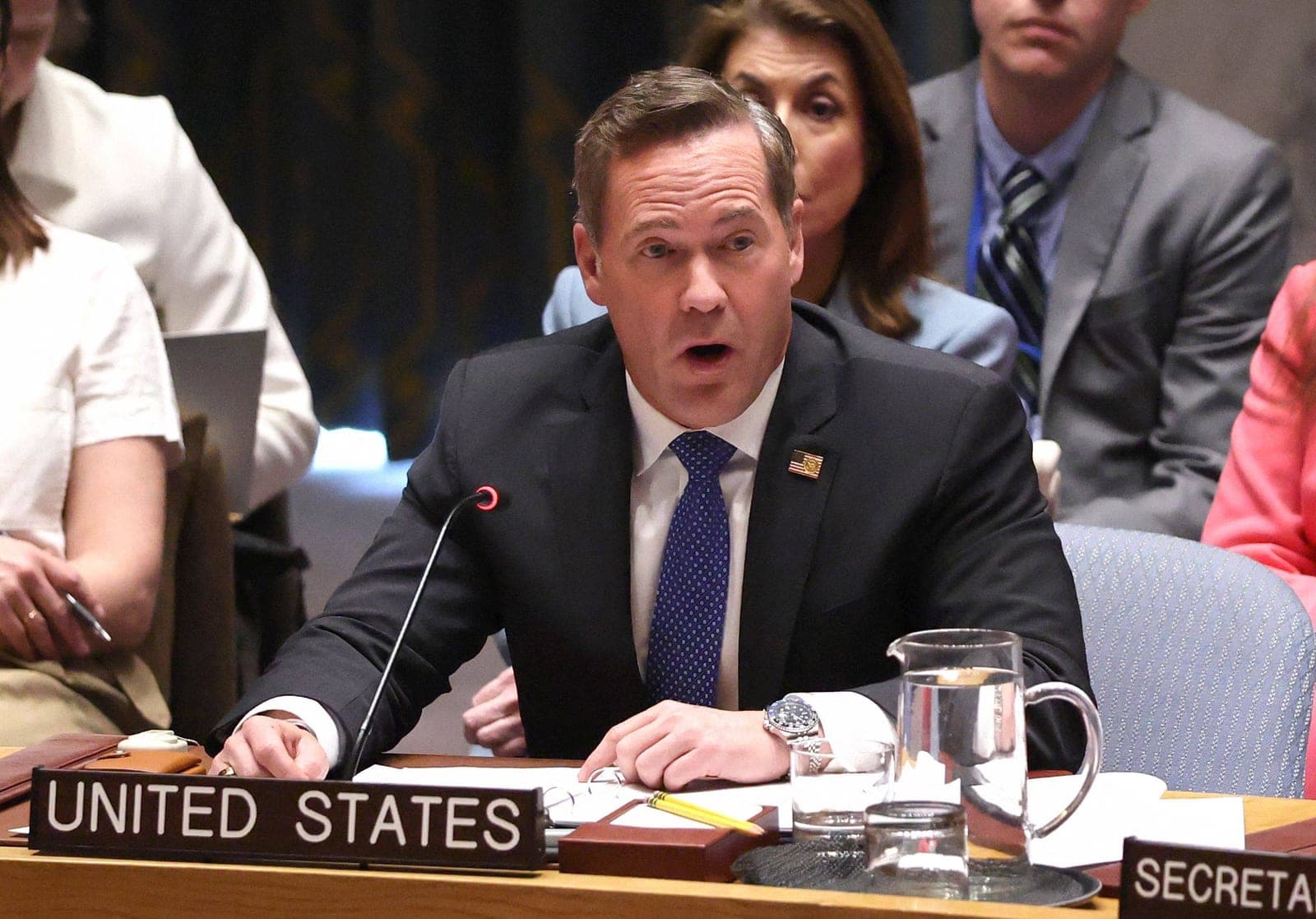
US envoy Waltz touts ‘America first’ policy, budget cuts in Senate swipe at UN
2026.04.15 21:50 US Ambassador to the UN Mike Waltz speaks after a United Nations Security Council meeting earlier this month. Photo: AFP Washington’s senior envoys to the United Nations took a victory lap in Senate testimony on Wednesday over the US-inspired cuts and efficiency drive at the multilateral agency, even as they slammed its inability to end the conflict in Ukraine, stem the Iran war started by the US and Israel or curb China’s growing clout. Mike Waltz, US ambassador to the UN, touted the US$570 million in UN budget cuts, 3,000 fewer jobs and the US decision to pull out of several UN agencies, even as he defended US President Donald Trump’s threats against Nato allies and comments that “a whole civilisation will die” in Iran. “So there is a mean tweet with a regime that’s genocidal, chants death to America,” Waltz told the Senate Foreign Relations Committee. “You’re going to talk about some tough language, and the result of it was diplomacy. The result of it was the highest meeting in the history of the United States and the Iranian regime, with the return to the ceasefire.” Waltz said the Trump administration has unabashedly approached the UN from the perspective of “America first” and what the institution is doing for US farmers, companies and values. Washington would continue to support UN agencies such as the World Intellectual Property Organisation and the International Telecommunication Union, as well as other standard-setting bodies, while eschewing those it saw as a lost cause, such as the Human Rights Council. “The UN has to stop doing stupid things,” said Jeff Bartos, US Ambassador to the UN for Management and Reform, who is spearheading much of the US-led cost-cutting and efficiency drive. “We’re not getting our money’s worth there.” Although Democrats on the committee expressed support for streamlining some of the UN’s cumulative waste and “bloat”, they used the opportunity to push back forcefully against the Trump administration’s version of diplomacy. “Many Americans would agree with ‘America first’. But most people in America would not agree with America alone,” said Senator Tim Kaine, representing Virginia. “Folks see the president trash-talking allies, talking about Canada as the 51st state, an invasion of Greenland connected to a Nato ally. They look at a president willy-nilly imposing tariffs on allies, including allies with which we are in trade surplus, like Australia.” Democrats also acknowledged, however, that Waltz’s portfolio did not include Iran war planning, and he was attracting their frustration in part because he was the first administration official to appear before Congress since the war started. The Trump administration, they added, has failed to consult with allies, clearly explain its objectives in attacking Iran or even appeared to anticipate the closure of the Strait of Hormuz and its impact on global oil prices. “We were not briefed on an imminent threat,” said Chris Coons, a Democrat from Delaware. “We were not presented with information in either a classified setting or an open setting that justified the idea that there was an imminent threat.” A plume of smoke rises from buildings after an explosion in Tehran last month. Photo: Xinhua Waltz might have been involved in the war’s planning, however, if he had not been demoted from National Security Adviser after mistakenly inviting a journalist to a national security planning session on a commercial platform. China also came under criticism for its long game at the UN, seeding the organisation with interns and junior officers over many years, allowing them to rise to power. Analysts, however, said this is a practice many nations follow. And China, as the second-largest UN contributor, is entitled to significantly more staff positions than it currently has, given its financial support under the system’s “desirable ranges” geographic policy. “China poses the greatest political threat to the United States over the long term. That threat is global, it is systematic, and it includes a sustained effort by the Communist Party to shape and in many cases dominate international organisations,” said Senator Ted Cruz, a Republican from Texas. “China has taken over international organisations, made them unaccountable, and used them to advance Chinese interests against the United States and our allies. This pattern has been repeated over and over again across dozens of international organisations.” But Jeanne Shaheen from New Hampshire, the senior Democrat on the committee, called out the Trump administration for joining China, Russia and North Korea in February on the fourth anniversary of Russia’s invasion of Ukraine in refusing to condemn Moscow’s actions or demand a ceasefire. “The United States is becoming increasingly isolated from our partners in multilateral forums,” she said. “Alliances multiply American power. But unfortunately, instead of working with Nato allies like France, Germany and the United Kingdom, the administration has been criticising them for refusing to join the US effort in the Strait of Hormuz.” “As a result, we are now operating without shared burden, political cover or international legitimacy.” Shaheen said she recently returned from a bipartisan trip to Japan, South Korea and Taiwan. “What we heard consistently is that as the United States pulls back, China is stepping in more aggressively.” 获取更多RSS: https://feedx.net https://feedx.site
US envoy Waltz touts ‘America first’ policy, budget cuts in Senate swipe at UN
2026.04.15 21:50 US Ambassador to the UN Mike Waltz speaks after a United Nations Security Council meeting earlier this month. Photo: AFP Washington’s senior envoys to the United Nations took a victory lap in Senate testimony on Wednesday over the US-inspired cuts and efficiency drive at the multilateral agency, even as they slammed its inability to end the conflict in Ukraine, stem the Iran war started by the US and Israel or curb China’s growing clout. Mike Waltz, US ambassador to the UN, touted the US$570 million in UN budget cuts, 3,000 fewer jobs and the US decision to pull out of several UN agencies, even as he defended US President Donald Trump’s threats against Nato allies and comments that “a whole civilisation will die” in Iran. “So there is a mean tweet with a regime that’s genocidal, chants death to America,” Waltz told the Senate Foreign Relations Committee. “You’re going to talk about some tough language, and the result of it was diplomacy. The result of it was the highest meeting in the history of the United States and the Iranian regime, with the return to the ceasefire.” Waltz said the Trump administration has unabashedly approached the UN from the perspective of “America first” and what the institution is doing for US farmers, companies and values. Washington would continue to support UN agencies such as the World Intellectual Property Organisation and the International Telecommunication Union, as well as other standard-setting bodies, while eschewing those it saw as a lost cause, such as the Human Rights Council. “The UN has to stop doing stupid things,” said Jeff Bartos, US Ambassador to the UN for Management and Reform, who is spearheading much of the US-led cost-cutting and efficiency drive. “We’re not getting our money’s worth there.” Although Democrats on the committee expressed support for streamlining some of the UN’s cumulative waste and “bloat”, they used the opportunity to push back forcefully against the Trump administration’s version of diplomacy. “Many Americans would agree with ‘America first’. But most people in America would not agree with America alone,” said Senator Tim Kaine, representing Virginia. “Folks see the president trash-talking allies, talking about Canada as the 51st state, an invasion of Greenland connected to a Nato ally. They look at a president willy-nilly imposing tariffs on allies, including allies with which we are in trade surplus, like Australia.” Democrats also acknowledged, however, that Waltz’s portfolio did not include Iran war planning, and he was attracting their frustration in part because he was the first administration official to appear before Congress since the war started. The Trump administration, they added, has failed to consult with allies, clearly explain its objectives in attacking Iran or even appeared to anticipate the closure of the Strait of Hormuz and its impact on global oil prices. “We were not briefed on an imminent threat,” said Chris Coons, a Democrat from Delaware. “We were not presented with information in either a classified setting or an open setting that justified the idea that there was an imminent threat.” A plume of smoke rises from buildings after an explosion in Tehran last month. Photo: Xinhua Waltz might have been involved in the war’s planning, however, if he had not been demoted from National Security Adviser after mistakenly inviting a journalist to a national security planning session on a commercial platform. China also came under criticism for its long game at the UN, seeding the organisation with interns and junior officers over many years, allowing them to rise to power. Analysts, however, said this is a practice many nations follow. And China, as the second-largest UN contributor, is entitled to significantly more staff positions than it currently has, given its financial support under the system’s “desirable ranges” geographic policy. “China poses the greatest political threat to the United States over the long term. That threat is global, it is systematic, and it includes a sustained effort by the Communist Party to shape and in many cases dominate international organisations,” said Senator Ted Cruz, a Republican from Texas. “China has taken over international organisations, made them unaccountable, and used them to advance Chinese interests against the United States and our allies. This pattern has been repeated over and over again across dozens of international organisations.” But Jeanne Shaheen from New Hampshire, the senior Democrat on the committee, called out the Trump administration for joining China, Russia and North Korea in February on the fourth anniversary of Russia’s invasion of Ukraine in refusing to condemn Moscow’s actions or demand a ceasefire. “The United States is becoming increasingly isolated from our partners in multilateral forums,” she said. “Alliances multiply American power. But unfortunately, instead of working with Nato allies like France, Germany and the United Kingdom, the administration has been criticising them for refusing to join the US effort in the Strait of Hormuz.” “As a result, we are now operating without shared burden, political cover or international legitimacy.” Shaheen said she recently returned from a bipartisan trip to Japan, South Korea and Taiwan. “What we heard consistently is that as the United States pulls back, China is stepping in more aggressively.” 获取更多RSS: https://feedx.net https://feedx.site
US envoy Waltz touts ‘America first’ policy, budget cuts in Senate swipe at UN
2026.04.15 21:50 US Ambassador to the UN Mike Waltz speaks after a United Nations Security Council meeting earlier this month. Photo: AFP Washington’s senior envoys to the United Nations took a victory lap in Senate testimony on Wednesday over the US-inspired cuts and efficiency drive at the multilateral agency, even as they slammed its inability to end the conflict in Ukraine, stem the Iran war started by the US and Israel or curb China’s growing clout. Mike Waltz, US ambassador to the UN, touted the US$570 million in UN budget cuts, 3,000 fewer jobs and the US decision to pull out of several UN agencies, even as he defended US President Donald Trump’s threats against Nato allies and comments that “a whole civilisation will die” in Iran. “So there is a mean tweet with a regime that’s genocidal, chants death to America,” Waltz told the Senate Foreign Relations Committee. “You’re going to talk about some tough language, and the result of it was diplomacy. The result of it was the highest meeting in the history of the United States and the Iranian regime, with the return to the ceasefire.” Waltz said the Trump administration has unabashedly approached the UN from the perspective of “America first” and what the institution is doing for US farmers, companies and values. Washington would continue to support UN agencies such as the World Intellectual Property Organisation and the International Telecommunication Union, as well as other standard-setting bodies, while eschewing those it saw as a lost cause, such as the Human Rights Council. “The UN has to stop doing stupid things,” said Jeff Bartos, US Ambassador to the UN for Management and Reform, who is spearheading much of the US-led cost-cutting and efficiency drive. “We’re not getting our money’s worth there.” Although Democrats on the committee expressed support for streamlining some of the UN’s cumulative waste and “bloat”, they used the opportunity to push back forcefully against the Trump administration’s version of diplomacy. “Many Americans would agree with ‘America first’. But most people in America would not agree with America alone,” said Senator Tim Kaine, representing Virginia. “Folks see the president trash-talking allies, talking about Canada as the 51st state, an invasion of Greenland connected to a Nato ally. They look at a president willy-nilly imposing tariffs on allies, including allies with which we are in trade surplus, like Australia.” Democrats also acknowledged, however, that Waltz’s portfolio did not include Iran war planning, and he was attracting their frustration in part because he was the first administration official to appear before Congress since the war started. The Trump administration, they added, has failed to consult with allies, clearly explain its objectives in attacking Iran or even appeared to anticipate the closure of the Strait of Hormuz and its impact on global oil prices. “We were not briefed on an imminent threat,” said Chris Coons, a Democrat from Delaware. “We were not presented with information in either a classified setting or an open setting that justified the idea that there was an imminent threat.” A plume of smoke rises from buildings after an explosion in Tehran last month. Photo: Xinhua Waltz might have been involved in the war’s planning, however, if he had not been demoted from National Security Adviser after mistakenly inviting a journalist to a national security planning session on a commercial platform. China also came under criticism for its long game at the UN, seeding the organisation with interns and junior officers over many years, allowing them to rise to power. Analysts, however, said this is a practice many nations follow. And China, as the second-largest UN contributor, is entitled to significantly more staff positions than it currently has, given its financial support under the system’s “desirable ranges” geographic policy. “China poses the greatest political threat to the United States over the long term. That threat is global, it is systematic, and it includes a sustained effort by the Communist Party to shape and in many cases dominate international organisations,” said Senator Ted Cruz, a Republican from Texas. “China has taken over international organisations, made them unaccountable, and used them to advance Chinese interests against the United States and our allies. This pattern has been repeated over and over again across dozens of international organisations.” But Jeanne Shaheen from New Hampshire, the senior Democrat on the committee, called out the Trump administration for joining China, Russia and North Korea in February on the fourth anniversary of Russia’s invasion of Ukraine in refusing to condemn Moscow’s actions or demand a ceasefire. “The United States is becoming increasingly isolated from our partners in multilateral forums,” she said. “Alliances multiply American power. But unfortunately, instead of working with Nato allies like France, Germany and the United Kingdom, the administration has been criticising them for refusing to join the US effort in the Strait of Hormuz.” “As a result, we are now operating without shared burden, political cover or international legitimacy.” Shaheen said she recently returned from a bipartisan trip to Japan, South Korea and Taiwan. “What we heard consistently is that as the United States pulls back, China is stepping in more aggressively.” 获取更多RSS: https://feedx.net https://feedx.site
US envoy Waltz touts ‘America first’ policy, budget cuts in Senate swipe at UN
2026.04.15 21:50 US Ambassador to the UN Mike Waltz speaks after a United Nations Security Council meeting earlier this month. Photo: AFP Washington’s senior envoys to the United Nations took a victory lap in Senate testimony on Wednesday over the US-inspired cuts and efficiency drive at the multilateral agency, even as they slammed its inability to end the conflict in Ukraine, stem the Iran war started by the US and Israel or curb China’s growing clout. Mike Waltz, US ambassador to the UN, touted the US$570 million in UN budget cuts, 3,000 fewer jobs and the US decision to pull out of several UN agencies, even as he defended US President Donald Trump’s threats against Nato allies and comments that “a whole civilisation will die” in Iran. “So there is a mean tweet with a regime that’s genocidal, chants death to America,” Waltz told the Senate Foreign Relations Committee. “You’re going to talk about some tough language, and the result of it was diplomacy. The result of it was the highest meeting in the history of the United States and the Iranian regime, with the return to the ceasefire.” Waltz said the Trump administration has unabashedly approached the UN from the perspective of “America first” and what the institution is doing for US farmers, companies and values. Washington would continue to support UN agencies such as the World Intellectual Property Organisation and the International Telecommunication Union, as well as other standard-setting bodies, while eschewing those it saw as a lost cause, such as the Human Rights Council. “The UN has to stop doing stupid things,” said Jeff Bartos, US Ambassador to the UN for Management and Reform, who is spearheading much of the US-led cost-cutting and efficiency drive. “We’re not getting our money’s worth there.” Although Democrats on the committee expressed support for streamlining some of the UN’s cumulative waste and “bloat”, they used the opportunity to push back forcefully against the Trump administration’s version of diplomacy. “Many Americans would agree with ‘America first’. But most people in America would not agree with America alone,” said Senator Tim Kaine, representing Virginia. “Folks see the president trash-talking allies, talking about Canada as the 51st state, an invasion of Greenland connected to a Nato ally. They look at a president willy-nilly imposing tariffs on allies, including allies with which we are in trade surplus, like Australia.” Democrats also acknowledged, however, that Waltz’s portfolio did not include Iran war planning, and he was attracting their frustration in part because he was the first administration official to appear before Congress since the war started. The Trump administration, they added, has failed to consult with allies, clearly explain its objectives in attacking Iran or even appeared to anticipate the closure of the Strait of Hormuz and its impact on global oil prices. “We were not briefed on an imminent threat,” said Chris Coons, a Democrat from Delaware. “We were not presented with information in either a classified setting or an open setting that justified the idea that there was an imminent threat.” A plume of smoke rises from buildings after an explosion in Tehran last month. Photo: Xinhua Waltz might have been involved in the war’s planning, however, if he had not been demoted from National Security Adviser after mistakenly inviting a journalist to a national security planning session on a commercial platform. China also came under criticism for its long game at the UN, seeding the organisation with interns and junior officers over many years, allowing them to rise to power. Analysts, however, said this is a practice many nations follow. And China, as the second-largest UN contributor, is entitled to significantly more staff positions than it currently has, given its financial support under the system’s “desirable ranges” geographic policy. “China poses the greatest political threat to the United States over the long term. That threat is global, it is systematic, and it includes a sustained effort by the Communist Party to shape and in many cases dominate international organisations,” said Senator Ted Cruz, a Republican from Texas. “China has taken over international organisations, made them unaccountable, and used them to advance Chinese interests against the United States and our allies. This pattern has been repeated over and over again across dozens of international organisations.” But Jeanne Shaheen from New Hampshire, the senior Democrat on the committee, called out the Trump administration for joining China, Russia and North Korea in February on the fourth anniversary of Russia’s invasion of Ukraine in refusing to condemn Moscow’s actions or demand a ceasefire. “The United States is becoming increasingly isolated from our partners in multilateral forums,” she said. “Alliances multiply American power. But unfortunately, instead of working with Nato allies like France, Germany and the United Kingdom, the administration has been criticising them for refusing to join the US effort in the Strait of Hormuz.” “As a result, we are now operating without shared burden, political cover or international legitimacy.” Shaheen said she recently returned from a bipartisan trip to Japan, South Korea and Taiwan. “What we heard consistently is that as the United States pulls back, China is stepping in more aggressively.” 获取更多RSS: https://feedx.net https://feedx.site
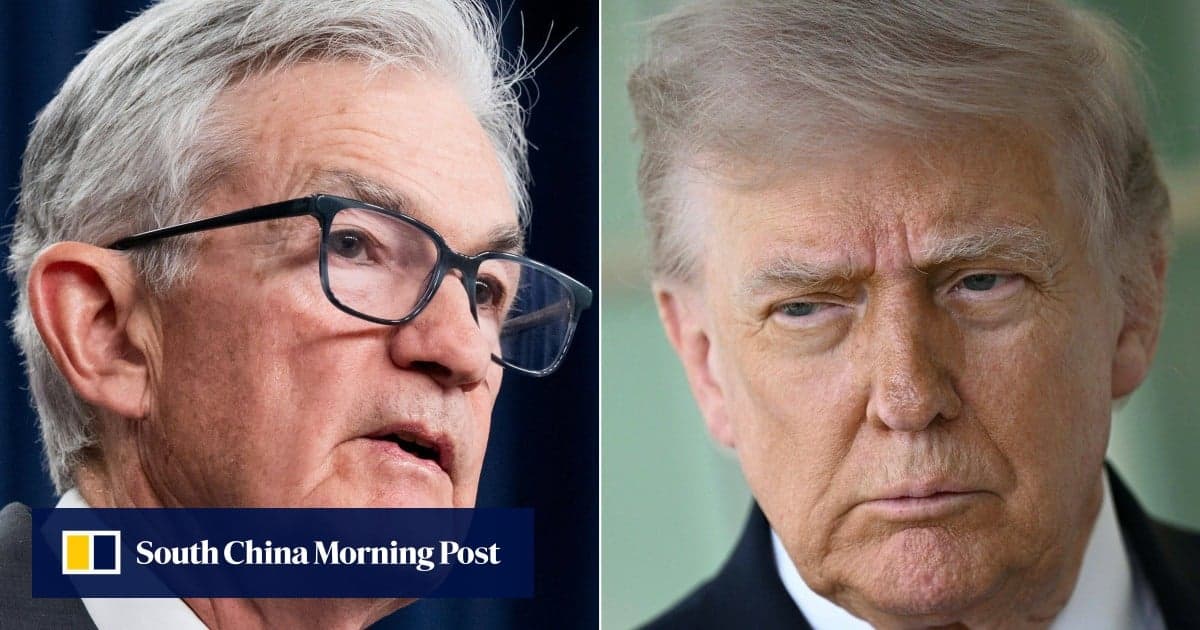
Trump threatens to fire Fed chair Powell if he doesn’t step down ‘in time’
2026.04.15 13:50 A combination of pictures shows US Federal Reserve Board Chairman Jerome Powell (left) and President Donald Trump. Photo: AFP US President Donald Trump has said he will fire Jerome Powell if the Federal Reserve chair does not step down “in time”, adding that he will not drop the Justice Department investigation into the central bank leader. “I’ll have to fire him, OK, if he’s not leaving on time. I’ve held back firing him. I’ve wanted to fire him, but I hate to be controversial,” Trump said in an interview with Fox Business. “I want to be uncontroversial. But he will be fired,” he said in the interview taped on Wednesday and aired on Thursday. Powell’s stint as the leader of the central bank expires in May, but his term on Board of Governors does not end until 2028. Trump did not clarify the timeline for which he would seek to remove Powell. Powell has said that if his successor is not confirmed before his term as chair ends in May, he would serve as chair pro tempore. The Fed has conferred that temporary designation in the past on a board member to lead the institution when the chair role was vacant. The US Federal Reserve building in Washington. Photo: Reuters Trump allies have hoped that Powell would also resign his board seat when his time leading the central bank comes to a close this spring. Powell, however, has said he has “no intention” of resigning from the board until the Trump administration’s investigation by the Department of Justice into a building renovation project is “well and truly over”. But in the interview, Trump suggested he had no plan to end the investigation. “Whether it’s incompetence, corruption or both, I think you have to find out. I really do; I think you have to find out,” he said. The investigation could also delay getting Powell’s designated successor, Kevin Warsh, confirmed. North Carolina Senator Thom Tillis, a key swing voter on the banking committee, has praised Warsh but insists he will block confirmation until the Justice Department probe is resolved, calling the investigation a threat to the Fed’s independence. That sets up a potential showdown between Trump and Powell in the coming weeks that is likely to morph into a legal battle testing the limits of Trump’s power. The president has also sought to oust Fed Governor Lisa Cook, a case which has gone to the Supreme Court and has yet to be decided. Despite Tillis’ stance, the Senate Banking Committee has scheduled an April 21 confirmation hearing for Warsh. US prosecutors made a surprise visit to the Fed’s offices in Washington on Tuesday, but were denied entry to the site.

American train bosses planning to fleece World Cup fans heading to New York matches
A top US lawmaker called on Fifa to pay for World Cup public transport costs on Tuesday following a report that local authorities in New Jersey are planning massive price rises during the tournament. Senate Minority Leader Chuck Schumer, a Democrat, said on X that football’s world governing body – which stands to earn US$11 billion from the tournament – should foot the bill for transport costs to World Cup venues. Schumer was responding to a report in The Athletic on Tuesday which said New...

Madness or bluster? Trump’s apocalyptic language raises key questions
2026.04.08 06:20 US President Donald Trump speaking to reporters at the White House on Monday. Photo: AP The president who yearned for a Nobel Peace Prize and once revelled in the appearance of solving conflicts turned to the language of annihilation as he struggled to find a resolution to his war of choice in Iran. US President Donald Trump’s latest threat over the Iran war hit a new extreme on Tuesday as he warned “A whole civilisation will die tonight, never to be brought back again”, if Iran failed to make a deal that included reopening the vital Strait of Hormuz. The Republican president’s comments drew shock around the globe, with condemnation in the US coming from Democrats, some “Make America Great Again” supporters who have since broken with Trump, and the first American pope. Some fellow Republicans suggested his comments were a negotiating tactic. It followed his threats in recent days that he would be “blasting Iran into oblivion” and “back to the Stone Ages!!!” He said he would blow up bridges and civilian power plants, which experts in military law said could constitute a war crime. And on Easter morning, he wrote on his social media account: “Open the F***in’ Strait, you crazy b*******s, or you’ll be living in Hell.” Just over an hour before his 8pm deadline (8am Wednesday Hong Kong time), Trump announced he was pulling back from his threats of widespread strikes, subject to Iran agreeing to a two-week ceasefire and to reopen the Strait of Hormuz. Iran’s Supreme National Security Council said it had accepted a two-week ceasefire in the war. Trump’s intensifying warnings of widespread and seemingly indiscriminate destruction were a sea change from his January pledge to the people of Iran that “HELP IS ON ITS WAY” after a brutal crackdown on protests. They were the antithesis of the peacemaking image he spent much of the last year trying to cultivate as he sought a Nobel Peace Prize. And, most urgently, they raised questions about whether the president was threatening actions that could be considered war crimes, whether he was considering using a nuclear weapon or whether it is all bluster. They also prompted critics to question the US president’s mental health. Trump on Monday defended his profane language, saying he used it only to make a point, and that he was “not at all” concerned that his threats could amount to a war crime. In response to the criticism Trump’s comments received, White House spokeswoman Anna Kelly said in a statement: “As President Trump has said, Iran can never have a nuclear weapon, and the Iranian people welcome the sound of bombs because it means their oppressors are losing. The President will always stand with innocent civilians while annihilating the terrorists responsible for threatening our country and the entire world with a nuclear weapon. Greater destruction can be avoided if the regime understands the seriousness of this moment and makes a deal with the United States”. Senator Todd Young, an Indiana Republican and a Marine Corps veteran, said that what Trump was “clearly trying to accomplish” was to “bring this whole effort to a close and that’s the best way to preserve lives and property and reduce suffering”. Demonstrators protest against military action in Iran outside the White House. Photo: Reuters “The president clearly, to me, wants to increase the amount of leverage he has immediately so that we can bring this conflict to a close and avoid further bloodshed or suffering from the Iranians, from the Americans or from any other people.” Senator Ron Johnson, a Wisconsin Republican and a stalwart Trump ally, said Monday before the president’s annihilation warning that he hoped Trump’s threats to bomb power plants and bridges were bombast. “I am hoping and praying that President Trump is, this really is bluster. I do not want to see us start blowing up civilian infrastructure. I do not want to see that,” Johnson said on a podcast. “We are not at war with the Iranian people. We are trying to liberate them.” Inside the White House, two officials who spoke to Reuters on the condition of anonymity said Trump’s incendiary rhetoric was generally seen as a negotiation tactic, not an indication that he plans to annihilate Iran or use nuclear weapons. “He’s creating leverage through unpredictability,” one of the officials said. “He wants Tehran to blink.” But Democratic leaders in the House said in a joint statement that Trump’s “statement threatening to eradicate an entire civilisation shocks the conscience”. Their Senate counterparts said it was “a betrayal of the values this nation was founded on, and a moral failure”. Pro-government demonstrators in Iran’s capital after the ceasefire had been announced. Some burned American and Israeli flags in the street. Photo: West Asia News Agency via Reuters Pope Leo said any attacks on civilian infrastructure violate international law and called the president’s comments “truly unacceptable”. Former Georgia Republican congresswoman Marjorie Taylor Greene, once a stalwart Maga supporter who has since turned critic of the president, suggested invoking the 25th Amendment, under which the vice-president and a majority of Cabinet members declare a president unfit for office and remove him. “Not a single bomb has dropped on America. We cannot kill an entire civilisation. This is evil and madness,” she wrote on X. Right-wing TV host Tucker Carlson called Trump’s Easter Sunday comments the “first step toward nuclear war” ex-White House press secretary Anthony Scaramucci called him a “crazy person” and sought Trump’s removal from office, and conspiracy theorist Alex Jones asked on his INFO WARS show: “How do we 25th Amendment his ass?” Former Democratic vice-presidential candidate Tim Walz meanwhile said “the President has lost his mind”. But Trump himself brushed off questions about his mental health, when asked by an Agence France-Presse journalist at a briefing at the White House on Monday. Members of the media raise hands to ask questions during a press conference by US President Donald Trump on Monday. Photo: AP “I haven’t heard that,” Trump said in response to a question about critics saying his mental state should be examined following his “crazy b******s” comment. “But if that’s the case, you’re going to have to have more people like me.” Roseanne McManus, a professor of political science at Penn State University whose research has focused on international security and how countries signal their intentions in ongoing or potential conflict, said presidential threats of force traditionally had some restraint and subtlety. But Trump, dating back to his first term, has broken with those norms, she said. That was most notable when he warned North Korea in 2017 that it would see “fire and fury like the world has never seen” if it made more threats against the US, raising fears of a nuclear escalation. He later said he and North Korean leader Kim Jong-un “fell in love”, and the threats largely stopped. Since returning to the White House last year, he has made more incendiary threats and moves. Last summer, he joined Israel in striking Iran’s nuclear sites, a move that came before a self-imposed timeline for action ran out. Earlier this year, he launched a brazen strike that captured Venezuela’s Nicolas Maduro, and brought him to the US for trial. He has also suggested using military force to take control of Greenland and has said he believes he’ll have “the honour of taking Cuba” soon, but he has so far not followed through on those threats. Trump has referred to his unpredictability as an asset, McManus said, and has seemed to lean into the “Madman Theory”, attributed to former US president Richard Nixon, that aims to deter adversaries by convincing them he is unpredictable enough to carry out an extreme action. His actions over the last year, along with increasingly frequent over-the-top threats in recent days to Iran, seem to show that “He has been leaning into the strategy to a greater extent in his second term”. “I think the fact that Trump is willing to shatter these norms with his rhetoric could suggest that he is not restrained by the same sorts of things that would restrain a normal leader,” she said. Additional reporting by Agence France-Presse and Reuters

Trump administration touts plan for ICE at airports amid criticism from union, Democrats
2026.03.22 22:20 Travellers stand in long queues at Atlanta Hartsfield-Jackson International Airport on Sunday in Atlanta, Georgia as travel disruptions continue. Photo: Getty Images / AFP US President Donald Trump’s border tsar said on Sunday that having immigration agents bolster short-staffed Transportation Security Administration (TSA) teams will speed up airport queues but the union for TSA workers said that does not solve what they see as the underlying problem of pay. In appearances on Sunday news shows, US border tsar Tom Homan and Transport Secretary Sean Duffy argued that Immigration and Customs Enforcement (ICE) staff can help with airport security screening, starting on Monday, even though they have not been specifically trained for it. “When we deploy tomorrow, we’ll have a well thought-out plan to execute,” Homan said on CNN’s State of the Union programme. Tens of thousands of TSA agents have been working without pay for weeks because of an impasse between Democrats and Republicans in Congress over funding the US Department of Homeland Security (DHS), the parent agency of ICE and TSA. Trump announced on Saturday that ICE agents would be sent to airports unless Democratic lawmakers agree to fund DHS. Democrats have criticised the department’s immigration operations that have killed US citizens and sparked public outrage, demanding a change in rules. Some 10 per cent of TSA employees have been absent from work in recent days, with the rate even higher at major airports in Atlanta, New York City and Houston, leading to lengthy queues for passengers trying to get to their gates. Hundreds of TSA agents have simply resigned, according to their labour union and TSA. “ICE will do the job far better than ever done before!” the president, a Republican, wrote in a Sunday morning social media post. US border tsar Tom Homan. Photo: The Minnesota Star Tribune / TNS Details of how ICE agents would help with the queues were scant, although Homan told CNN a plan would be in place by the end of the day “to move those lines along”. Homan and Duffy, in separate interviews, had different ideas about how the ICE agents might be deployed. Homan said he doubted ICE agents would operate X-ray baggage and passenger screening machines because they did not have experience. Duffy, in contrast, said ICE agents “know how to pat people down, they know how to run the X-ray machines”. The labour union representing TSA workers criticised Trump’s decision, saying their members spend months in training learning to detect explosives and weapons. “Our members at TSA have been showing up every day, without a pay cheque, because they believe in the mission of keeping the flying public safe,” Everett Kelley, National President of the American Federation of Government Employees, said in a statement. “They deserve to be paid, not replaced by untrained, armed agents who have shown how dangerous they can be.” Unlike TSA employees, the government has continued to pay ICE agents through a separate funding provision while lawmakers debate whether ICE funding should be tied to new rules and procedures. Democrats have said new rules are needed after masked ICE agents fatally shot two US citizens in the streets of Minneapolis earlier this year, who had come out to protest against or observe Trump’s unprecedented deportation surge in Minnesota. Hakeem Jeffries, a New York Democrat and the minority leader in the US House of Representatives, told CNN that his caucus is open to a separate funding agreement for TSA employees while lawmakers debate measures to “get ICE under control”. But there has been little movement on an actual deal so far, especially in the Senate. “We have an obligation to not fund an agency that is acting this lawlessly,” Senator Chris Murphy, a Connecticut Democrat, told NBC’s Meet the Press programme.
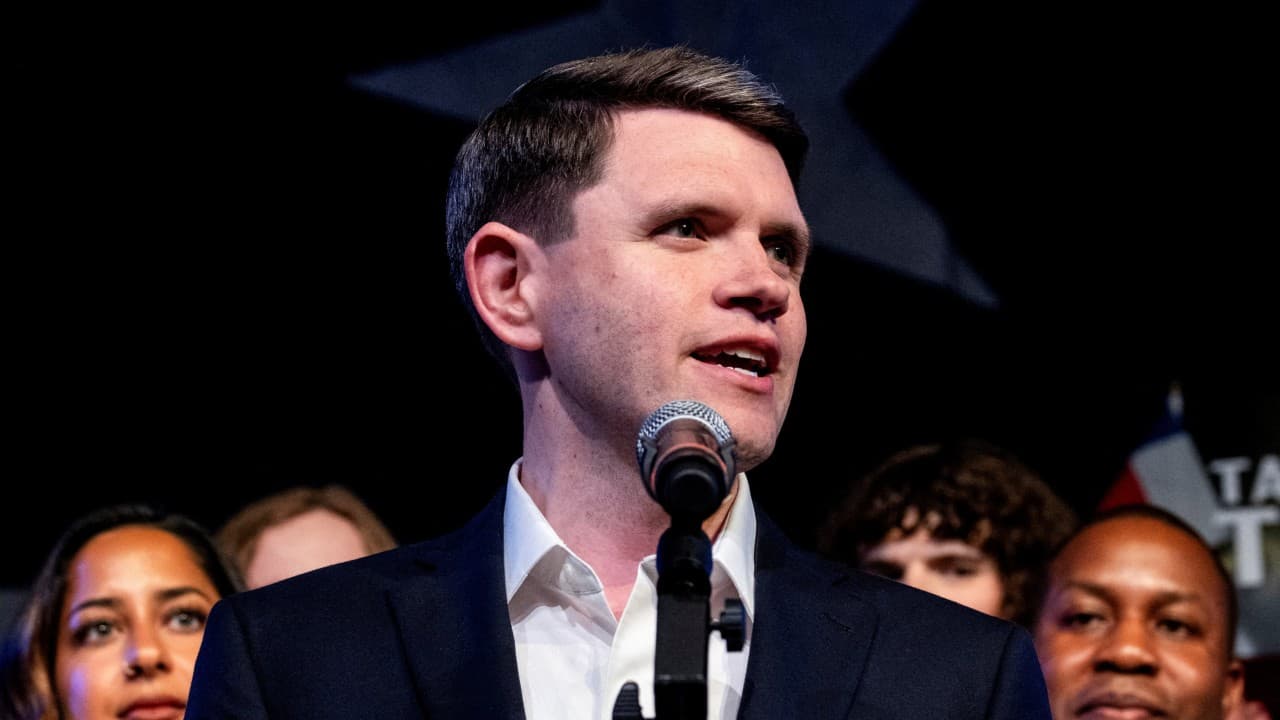
Texan James Talarico: is this the face of Democrats’ 2026 US midterm hopes?
James Talarico barely mentioned Donald Trump when he finally got to give his victory speech on Wednesday night as Democrats’ nominee for US Senate in Texas. But the 36-year-old state lawmaker is now a frontman for the left’s opposition to Trump, not just in his own state but around the country. With his victory over US congresswoman Jasmine Crockett, the state lawmaker from Austin will test whether a smiling message of unity and change is enough to answer voters’ frustrations amid discord at...