5 stories credited to Straight Arrow News
Latest story Apr 21, 2026 · on ChamberLight since Apr 2026
A story can appear as several articles (copies of the same piece), so counts of stories and of articles differ.
Scores for Straight Arrow News
Writing quality not enough rated stories yet: 5 of 10. How it is measured
Scores last checked Sep 25, 2026.
Stories ChamberLight collected, by month
Stories credited to Straight Arrow News, by publication date. ChamberLight collects articles that mention the officials it tracks, so this shows its own coverage of this source, not how much the source publishes.
- Stories from Straight Arrow News
- Shaded: ChamberLight collected no stories, or almost none, from any outlet (a gap in its collection, not in the outlet’s publishing)
Show as a table
| Month | Stories | All outlets |
|---|---|---|
| April 2026 | 5 | 3,707 |
| May 2026 | 0 | none collected |
| June 2026 | 0 | none collected |
| July 2026 | 0 | none collected |
| August 2026 | 0 | 1 (collection gap) |
| September 2026 | 0 | 1,320 |
Top topics
Share of this source’s stories tagged with each topic. A story can carry several topics, so the shares do not add up to 100%.
- Budget/Spending4
80% of 5 stories · 31% across all outlets
- Economy3
60% of 5 stories · 26% across all outlets
- Criminal Justice2
40% of 5 stories · 19% across all outlets
- Labor/Unions2
40% of 5 stories · 4% across all outlets
- Ethics/Corruption1
20% of 5 stories · 58% across all outlets
- Healthcare1
20% of 5 stories · 8% across all outlets
- Immigration1
20% of 5 stories · 13% across all outlets
- Taxes1
20% of 5 stories · 5% across all outlets
The thin mark on each bar is the topic’s share across all outlets.
Who they cover
Party of the officials these stories are mainly about, across all 9 officials named. A story counts once for each official it is mainly about, so the split is over 9 story–official pairs, from 5 stories.
- Democrat56% · 5 pairs
- Republican44% · 4 pairs
Most covered
Stories mainly about each official, and their share of the source’s 5 stories.
Article tone
ChamberLight’s article analysis assigns each story a tone toward the official it covers. It describes the coverage of that official, not Straight Arrow News’s stance, and reader votes do not change it. 5 stories.
- Good Look
- 2 (40%)
- Mixed
- 2 (40%)
- Informational
- 0 (0%)
- Bad Look
- 1 (20%)
Challenges to these scores
No one has challenged a score on this page yet. Anyone can; editors publish every outcome here.
Articles served from san.com
9
Exclusive: Records show cities rack up legal fees over ICE detention centers
Cities across the country are spending hundreds of thousands of dollars – and in at least one case, $1 million – on legal fees tied to the federal government’s plans to expand immigration detention centers, a Straight Arrow News investigation has found. The public funds, which taxpayers often expect to go toward fixing potholes and hiring new teachers, have covered the cost of court battles over zoning rules, federal contracts and access to information about detention plans in local communities. In some cases, those disputes escalated quickly, pulling cities into months-long litigation with little clarity on how far the costs could climb. In Leavenworth, Kansas, that fight turned into a year-long legal battle over local control. In Newport, Oregon, officials went as far as seeking outside fundraising to pay for legal fees. And in Merrimack, New Hampshire, preliminary steps to prepare for a potential facility came with legal costs. Leavenworth, Kansas Leavenworth, Kansas, racked up more than $1 million in taxpayer-funded legal fees during its court battle with CoreCivic, the country’s largest private owner and operator of correctional and detention facilities. Emily Curiel/The Kansas City Star/Tribune News Service via Getty Images The fight centered on a former prison building operated by CoreCivic, which closed in 2021 due to a history of documented safety failures and jurisdictional disputes. To prevent a repeat, the city passed an ordinance in 2012 requiring any prison or detention facility to obtain a special use permit — the same requirement applied to day cares, bars near schools and casinos. When CoreCivic tried to reopen the site for Immigration and Customs Enforcement (ICE) detainees without seeking the permit, the city sued. Leavenworth Mayor Nancy Bauder told Straight Arrow News she was concerned during the litigation about potential expenses being passed along to the taxpayers. “We didn’t know if we were [going to win], but if they can come in and roll over us and say ‘I don’t need a permit’ then anyone can come in and do that,” Bauder said. “That’s not right. It’s our law and they need to follow our law.” After a year-long battle, and with city funds running out, CoreCivic agreed to obtain a special use permit. As part of the agreement, the company will reimburse the city for legal fees. “We could not continue to fight it,” Bauder told SAN. READ MORE: How ‘no detrimental effect’ became the basis for new ICE detention centers “We wanted to work collaboratively with city staff to address concerns raised by the community as part of the special use permit process, and we are grateful for that collaboration,” a spokesperson for CoreCivic told SAN in an email. “This collaboration has resulted in both a staff recommendation for approval of our special use permit application, as well as an affirmative vote from the Planning Commission and City Commission.” Emily Curiel/The Kansas City Star/Tribune News Service via Getty Images Bauder, who personally opposed reopening the facility, ultimately supported approving the special use permit with 17 strict conditions designed to give the city real local control and ongoing oversight. “If they don’t do one of those things that we have on that list, we pull the permit and it’s done — they’re closed,” Bauder said. Under its new name, the Midwest Regional Reception Center (MRRC), the facility began housing ICE immigrant detainees in March 2026. As of April 10, 2026 – the most recent date for which data is available – seven people were detained at the facility, which has a capacity for 1,002 detainees, according to the Transactional Records Access Clearinghouse, a nonpartisan research center at Syracuse University. Leavenworth is far from the only city that has put up a fight against an incoming detention center. Newport, Oregon Joe Sohm/Visions of America/Universal Images Group via Getty Images A similar legal and financial strain is unfolding in Newport, Oregon. Last fall, federal contractors began quietly evaluating the city's municipal airport — home to a critical U.S. Coast Guard rescue helicopter — as a potential site for an immigration detention center. In October, concerns erupted publicly after the helicopter was abruptly relocated by the U.S. Coast Guard to North Bend, roughly 100 miles south of Newport, with no explanation. Hundreds of people packed into town hall meetings demanding the helicopter’s return. The helicopter is personal for the city. Taunette Dorsey, a member of Newport Fisherman’s Wives posted a video to Facebook about a time her father, a fisherman, issued a mayday that his boat was going down when she was little. “And if it wasn’t for a rescue helicopter, I would’ve lost him,” she said. Robert Alexander/Getty Images Within weeks of the helicopter’s relocation, U.S. District Judge Ann Aiken found its removal both endangered fisherman and broke procedural rules. She ordered the Coast Guard to immediately return it. In December, the state of Oregon sued to block any construction of the detention facility. Newport, Lincoln County and the Newport Fishermen’s Wives all became involved in litigation against the Department of Homeland Security. The city has spent approximately $368,000 in legal fees, according to records obtained by SAN. The records show that at one point, city council became so concerned by the legal costs that the council asked the Greater Newport Chamber of Commerce to facilitate private contributions to fund the ongoing legal fees via GoFundMe. That fundraising never came to fruition, a spokesperson for the chamber told SAN. While the attorney general, Lincoln County and Newport Fishermen’s Wives have also filed suit, the records detailing those costs have not yet been received. Newport Mayor Jan Kaplan and members of the city council have not responded to SAN’s repeated interview requests. In February, Oregon Democrats, including U.S. Rep. Andrea Salinas, wrote to DHS to “express deep concern and strong opposition to any plans to open or expand (ICE) detention facilities in Oregon.” The group demanded detailed information about ICE’s plans, citing concerns over safety, transparency, humanitarian standards and lack of notice to local communities. Heather Diehl/Getty Images In late March, Acting ICE Director Todd Lyons responded directly to Salinas, stating the agency has “no intentions of putting up a facility in Oregon” and is “not currently planning to expand current detention facilities or open any new long or short-term detention facilities in Oregon.” Despite the written assurance, both Salinas and local leaders remain skeptical. READ MORE: Salt Lake City is in a drought. Can it spare water for an ICE detention center? “I didn’t trust they were serious and that they were gone for good,” said Salinas, whose district does not include Newport. “In addition to the costs that it takes to file a lawsuit, a little town doesn’t have the capacity to add… God knows how big they were planning to make this facility,” she told SAN. “It would’ve been catastrophic for a small town.” Salinas said the state shouldn’t have to bear the brunt of legal costs, either. “They too have to go through all these fights and spend all this money.” Kaplan isn’t convinced the legal battle is over. “The meter is still running … it will be over when it’s over,” he said during an April 6 city council meeting. “I think we need to be very cautious in understanding that we’re holding them off. But there’s a court process and they could end the court processes by choosing to settle… but that’s not happening.” ICE did not respond to SAN’s questions about why the agency is no longer moving forward with plans for a detention facility in the area. Salinas told SAN the money spent has been well-spent so far, adding the helicopter is necessary for saving lives. “You cannot put a price tag on human life and safety.” Even in towns where plans are eventually scrapped, the mere proposition of a facility can trigger thousands in legal fees. Merrimack, New Hampshire In Merrimack, New Hampshire, where records obtained by SAN show the town spent roughly $8,000 on outside counsel, Town Manager Paul Micali told SAN the fees were necessary due to the lack of communication and transparency the town received from DHS. “We were trying to get ready to see what we could and couldn’t do [if a detention center was established],” Micali said. “It allowed us to start with how to proceed if need be.” In February, New Hampshire Gov. Kelly Ayotte announced DHS would not be moving forward with plans for the detention center. Unlike Leavenworth, Merrimack and Newport are not being reimbursed for the money spent on legal fees. This direct transfer of local funds from public infrastructure into federal litigation spans the country – from the Northeast to the Midwest and West Coast. But the fight between local control and federal action pushes even deeper into the nation’s fabric. Aaron M. Sprecher/Getty Images In January, city leaders in Kansas City, Missouri told SAN they were blindsided to learn DHS and ICE had quietly toured a warehouse, pegged for one of ICE’s “mega” detention sites — a 900,000 square foot building. The tour came amid a push from the White House to increase capacity for detainees. Within hours of DHS ’s visit, Kansas City’s city council passed an ordinance to block applications to expand detention facilities not owned or operated by the city through Jan. 15, 2031. As the cost of due diligence is passed onto local governments, leaders must decide whether it’s worth spending taxpayer money to push back against plans for federal detention centers. Leavenworth Mayor Nancy Bauder said the year-long legal battle was incredibly stressful. “But,” she said. “It was worth it. We gotta get reimbursed. This is tax money.” Round out your reading Work for food: New SNAP rules reshaping who gets to eat. How Iranians actually feel about regime change and war. Feds warn that Russians may hack your internet router. Why? The truth behind a medical condition that never existed. We’re building a new Straight Arrow. Help us shape our future by taking our survey.
Kennedy faces congressional questions on budget cuts, health spending
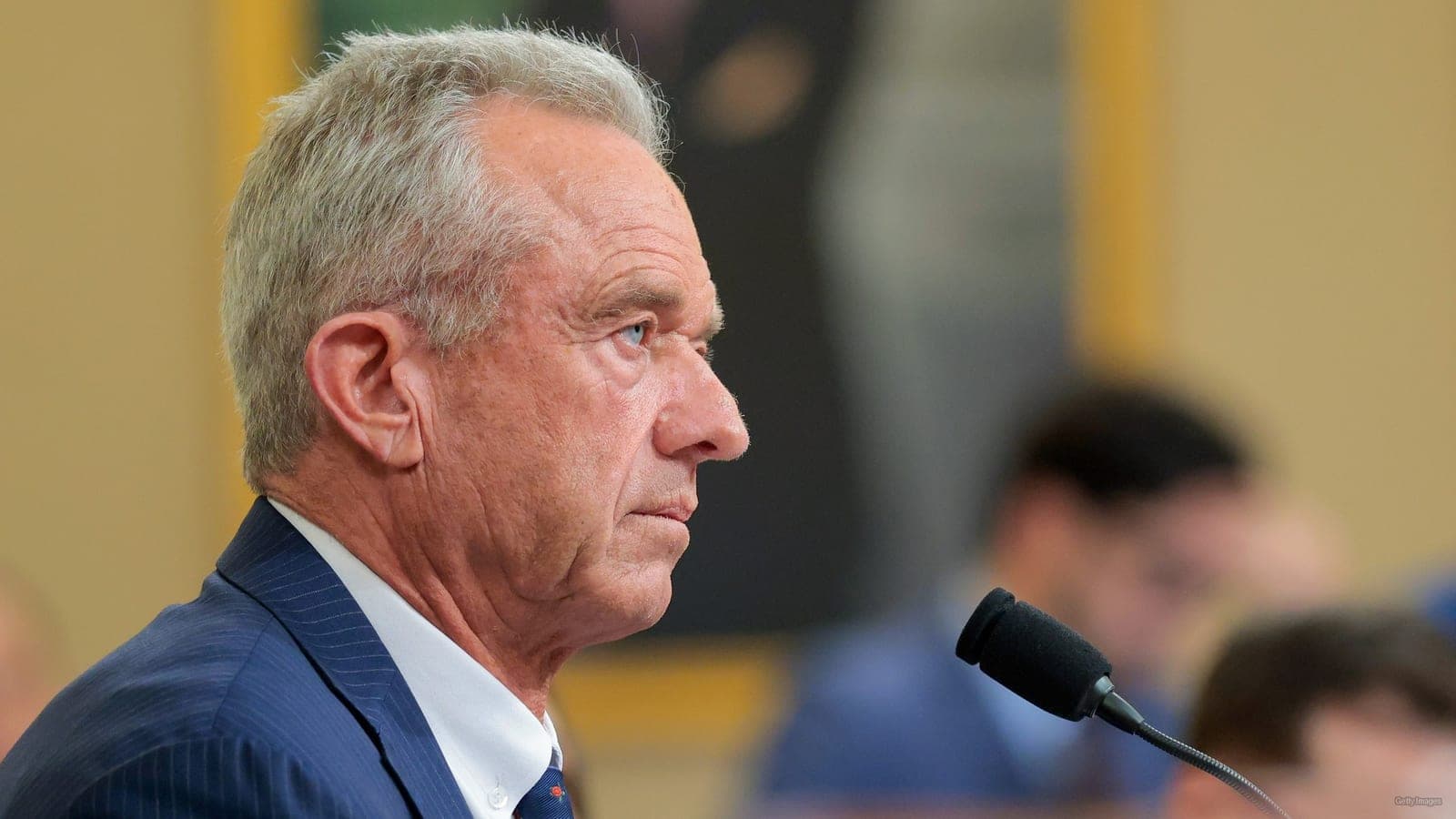
Health Secretary Robert F. Kennedy Jr. testified before Congress on Thursday for the first time this year, appearing before the House Ways and Means Committee in the first of seven hearings scheduled over the coming week. Much of the hearing focused on rising health care costs, budget cuts and Kennedy’s controversial statements on vaccines and autism. Democratic lawmakers criticized Kennedy for his lack of medical expertise and for promoting what they described as “dangerous conspiracy theories.” Republicans were largely supportive. But lawmakers from both parties raised concerns about the administration’s uneven approach to addressing waste, fraud and abuse, pointing out that President Donald Trump has pardoned or commuted the sentences of at least three major perpetrators of fraud in the health care industry. Health spending, budget cuts, tariffs The committee’s chairman, Rep. Jason Smith, R-Mo, opened the session by outlining several major challenges facing Americans, including rising health care costs and a health care system that incentivizes treating rather than preventing illnesses. Smith applauded the initial disbursement of a $50 billion rural health fund and efforts by the Trump administration to combat fraud, waste and abuse — highlighting the $3.5 billion in Medicare hospice fraud uncovered in Los Angeles County alone. But Rep. Richard Neal, D-Mass., the ranking Democrat on the panel, criticized the administration’s rhetoric and actions on vaccines and autism, including what he described as baseless claims linking the condition to Tylenol use during pregnancy. “Nothing has changed about the science of vaccines,” Neal said. “We need people not to be preyed upon by demagoguery, and there should not be a politicization of these issues.” Several other lawmakers criticized Kennedy over his remarks about vaccines and recent policy changes at the Department of Health and Human Services, with some warning they threaten American lives. Kennedy has repeatedly questioned the safety of certain vaccines; raised concerns about a possible link between vaccination and autism and argued that vaccine safety testing and oversight are insufficient. In January, Jim O’Neill, then acting director of the Centers for Disease Control and Prevention, announced that it removed six vaccines from the national immunization schedule. Prior to that, the CDC revised long-standing guidance on the hepatitis B vaccine for newborns, recommending it only for infants born to mothers who test positive for the virus, rather than universally for all newborns. Last month, the CDC voted to create a new diagnostic code — an administrative label used by doctors and insurers to document and track specific medical conditions in patient records and billing systems — for vaccine-related injury. Kennedy told lawmakers he is “pro-safety,” not “anti-vaccine.” Neal pointed to the department’s proposal to slash $1 trillion from health care funding over several years, warning it could put 440 hospitals at risk of closing “so we can have a tax cut for the wealthiest among us.” Health care spending has increased fivefold since 2000. As of 2024, the U.S. spends more than $5 trillion on health each year, accounting for 18% of the country’s GDP. Neal said that while health care costs were already high, soaring prices now have "a lot to do with tariffs and Iran.” In the past decade, U.S. pharmaceutical imports have more than doubled in value, from $73 billion in 2014 to over $215 billion in 2024. Trump imposed several tariffs on pharmaceutical products, including, most recently, a 100% tariff on certain patented medicines and ingredients, and a 15% tariff on medicines imported from Japan, South Korea and some European countries. He said tariffs would not be collected from companies that agree to “most favored nation” pricing. He also said tariffs would be reduced to 20% for firms that shift manufacturing to the U.S. It remains unclear whether tariffs have already translated into higher drug prices, as pharmaceutical pricing is typically negotiated through long-term contracts, meaning any impact may be delayed. While implementing tariffs, the Trump administration has also engaged in direct negotiations with drugmakers to lower prices for certain drugs; those deals could offset some tariff-related increases, though the effects are likely to vary across drugs and markets. However, industry analysts project that tariffs could significantly raise costs — potentially increasing U.S. drug spending by tens of billions of dollars annually — and warn that higher input prices may exacerbate shortages, forcing providers to rely on more expensive alternatives. The left-leaning Center for American Progress reported that several insurers blamed tariffs on drugs for driving up premium costs for 2026. In Oregon, for example, tariffs accounted for 2.7% of a proposed premium increase, according to the center. There is no clear evidence that Americans are paying more for drugs, medical supplies or health services specifically because of the Iran conflict. However, rising energy costs tied to the near-closure of the Strait of Hormuz are beginning to ripple through parts of the health care supply chain. BASF Pharma Solutions, a major supplier of chemicals used in drug manufacturing, announced price increases of up to 20% on some products, while shipping costs have climbed as carriers impose surcharges. The conflict has also disrupted helium production in the Middle East, raising concerns about potential shortages for U.S. health systems, where MRI machines alone account for roughly 17% of the nation’s helium demand. House Republicans reportedly are mulling routing $200 billion allocated for health to fund the Iran war. Fraud, waste and abuse In Thursday’s hearing, both Republican and Democratic lawmakers criticized the administration’s uneven approach to rooting out fraud, waste and abuse, which the president has identified as a key priority. Neal argued that the administration’s efforts appear to disproportionately punish ordinary Americans with minor roles in fraud, while some higher-level perpetrators have received leniency. He noted that Trump has pardoned or commuted the sentences of several individuals convicted of large-scale fraud. Last year, Trump commuted the 50-year prison sentence of Lawrence Duran, owner of the mental health care company American Therapeutic Corp., who had been convicted in an $87 million Medicare fraud scheme, to time served. Trump also pardoned nursing home operator Joseph Schwartz, who was convicted in a $39 million employment tax fraud case. Paul Walczak, a former Florida nursing home operator, also received a full presidential pardon 12 days after being sentenced for failing to pay more than $7 million in employment taxes withheld from employee paychecks. Rep. Lloyd Doggett, D-Texas, raised additional concerns, noting that HHS last year reinstated 850 insurance brokers who had been suspended in 2024 for enrolling individuals in Affordable Care Act plans without their knowledge. Kennedy did not know whether those brokers had been investigated prior to reinstatement and did not respond to further questions about whether they faced penalties. Lawmakers also pressed Kennedy on Medicare reimbursement rates that have failed to keep pace with rising health care costs, warning that the gap is placing growing financial strain on clinics and physician practices, particularly those in rural and underserved areas. They also raised concerns about a recent policy allowing insurers to use artificial intelligence to review Medicare claims and incentivize cost reductions. The Wasteful and Inappropriate Service Reduction (WISeR) Model, launched in January, introduces prior authorization into traditional Medicare — which has not historically relied on it — using AI to assess the appropriateness of certain services. While the policy is intended to reduce unnecessary care and control spending, Rep. Suzan DeIBene, D-Wash., said it was already forcing patients in her state to be denied medically necessary treatment.
Kennedy faces congressional questions on budget cuts, health spending
Health Secretary Robert F. Kennedy Jr. testified before Congress on Thursday for the first time this year, appearing before the House Ways and Means Committee in the first of seven hearings scheduled over the coming week. Much of the hearing focused on rising health care costs, budget cuts and Kennedy’s controversial statements on vaccines and autism. Democratic lawmakers criticized Kennedy for his lack of medical expertise and for promoting what they described as “dangerous conspiracy theories.” Republicans were largely supportive. But lawmakers from both parties raised concerns about the administration’s uneven approach to addressing waste, fraud and abuse, pointing out that President Donald Trump has pardoned or commuted the sentences of at least three major perpetrators of fraud in the health care industry. Health spending, budget cuts, tariffs The committee’s chairman, Rep. Jason Smith, R-Mo, opened the session by outlining several major challenges facing Americans, including rising health care costs and a health care system that incentivizes treating rather than preventing illnesses. Smith applauded the initial disbursement of a $50 billion rural health fund and efforts by the Trump administration to combat fraud, waste and abuse — highlighting the $3.5 billion in Medicare hospice fraud uncovered in Los Angeles County alone. But Rep. Richard Neal, D-Mass., the ranking Democrat on the panel, criticized the administration’s rhetoric and actions on vaccines and autism, including what he described as baseless claims linking the condition to Tylenol use during pregnancy. “Nothing has changed about the science of vaccines,” Neal said. “We need people not to be preyed upon by demagoguery, and there should not be a politicization of these issues.” Several other lawmakers criticized Kennedy over his remarks about vaccines and recent policy changes at the Department of Health and Human Services, with some warning they threaten American lives. Kennedy has repeatedly questioned the safety of certain vaccines; raised concerns about a possible link between vaccination and autism and argued that vaccine safety testing and oversight are insufficient. In January, Jim O’Neill, then acting director of the Centers for Disease Control and Prevention, announced that it removed six vaccines from the national immunization schedule. Prior to that, the CDC revised long-standing guidance on the hepatitis B vaccine for newborns, recommending it only for infants born to mothers who test positive for the virus, rather than universally for all newborns. Last month, the CDC voted to create a new diagnostic code — an administrative label used by doctors and insurers to document and track specific medical conditions in patient records and billing systems — for vaccine-related injury. Kennedy told lawmakers he is “pro-safety,” not “anti-vaccine.” Neal pointed to the department’s proposal to slash $1 trillion from health care funding over several years, warning it could put 440 hospitals at risk of closing “so we can have a tax cut for the wealthiest among us.” Health care spending has increased fivefold since 2000. As of 2024, the U.S. spends more than $5 trillion on health each year, accounting for 18% of the country’s GDP. Neal said that while health care costs were already high, soaring prices now have "a lot to do with tariffs and Iran.” In the past decade, U.S. pharmaceutical imports have more than doubled in value, from $73 billion in 2014 to over $215 billion in 2024. Trump imposed several tariffs on pharmaceutical products, including, most recently, a 100% tariff on certain patented medicines and ingredients, and a 15% tariff on medicines imported from Japan, South Korea and some European countries. He said tariffs would not be collected from companies that agree to “most favored nation” pricing. He also said tariffs would be reduced to 20% for firms that shift manufacturing to the U.S. It remains unclear whether tariffs have already translated into higher drug prices, as pharmaceutical pricing is typically negotiated through long-term contracts, meaning any impact may be delayed. While implementing tariffs, the Trump administration has also engaged in direct negotiations with drugmakers to lower prices for certain drugs; those deals could offset some tariff-related increases, though the effects are likely to vary across drugs and markets. However, industry analysts project that tariffs could significantly raise costs — potentially increasing U.S. drug spending by tens of billions of dollars annually — and warn that higher input prices may exacerbate shortages, forcing providers to rely on more expensive alternatives. The left-leaning Center for American Progress reported that several insurers blamed tariffs on drugs for driving up premium costs for 2026. In Oregon, for example, tariffs accounted for 2.7% of a proposed premium increase, according to the center. There is no clear evidence that Americans are paying more for drugs, medical supplies or health services specifically because of the Iran conflict. However, rising energy costs tied to the near-closure of the Strait of Hormuz are beginning to ripple through parts of the health care supply chain. BASF Pharma Solutions, a major supplier of chemicals used in drug manufacturing, announced price increases of up to 20% on some products, while shipping costs have climbed as carriers impose surcharges. The conflict has also disrupted helium production in the Middle East, raising concerns about potential shortages for U.S. health systems, where MRI machines alone account for roughly 17% of the nation’s helium demand. House Republicans reportedly are mulling routing $200 billion allocated for health to fund the Iran war. Fraud, waste and abuse In Thursday’s hearing, both Republican and Democratic lawmakers criticized the administration’s uneven approach to rooting out fraud, waste and abuse, which the president has identified as a key priority. Neal argued that the administration’s efforts appear to disproportionately punish ordinary Americans with minor roles in fraud, while some higher-level perpetrators have received leniency. He noted that Trump has pardoned or commuted the sentences of several individuals convicted of large-scale fraud. Last year, Trump commuted the 50-year prison sentence of Lawrence Duran, owner of the mental health care company American Therapeutic Corp., who had been convicted in an $87 million Medicare fraud scheme, to time served. Trump also pardoned nursing home operator Joseph Schwartz, who was convicted in a $39 million employment tax fraud case. Paul Walczak, a former Florida nursing home operator, also received a full presidential pardon 12 days after being sentenced for failing to pay more than $7 million in employment taxes withheld from employee paychecks. Rep. Lloyd Doggett, D-Texas, raised additional concerns, noting that HHS last year reinstated 850 insurance brokers who had been suspended in 2024 for enrolling individuals in Affordable Care Act plans without their knowledge. Kennedy did not know whether those brokers had been investigated prior to reinstatement and did not respond to further questions about whether they faced penalties. Lawmakers also pressed Kennedy on Medicare reimbursement rates that have failed to keep pace with rising health care costs, warning that the gap is placing growing financial strain on clinics and physician practices, particularly those in rural and underserved areas. They also raised concerns about a recent policy allowing insurers to use artificial intelligence to review Medicare claims and incentivize cost reductions. The Wasteful and Inappropriate Service Reduction (WISeR) Model, launched in January, introduces prior authorization into traditional Medicare — which has not historically relied on it — using AI to assess the appropriateness of certain services. While the policy is intended to reduce unnecessary care and control spending, Rep. Suzan DeIBene, D-Wash., said it was already forcing patients in her state to be denied medically necessary treatment.
Kennedy faces congressional questions on budget cuts, health spending
Health Secretary Robert F. Kennedy Jr. testified before Congress on Thursday for the first time this year, appearing before the House Ways and Means Committee in the first of seven hearings scheduled over the coming week. Much of the hearing focused on rising health care costs, budget cuts and Kennedy’s controversial statements on vaccines and autism. Democratic lawmakers criticized Kennedy for his lack of medical expertise and for promoting what they described as “dangerous conspiracy theories.” Republicans were largely supportive. But lawmakers from both parties raised concerns about the administration’s uneven approach to addressing waste, fraud and abuse, pointing out that President Donald Trump has pardoned or commuted the sentences of at least three major perpetrators of fraud in the health care industry. Health spending, budget cuts, tariffs The committee’s chairman, Rep. Jason Smith, R-Mo, opened the session by outlining several major challenges facing Americans, including rising health care costs and a health care system that incentivizes treating rather than preventing illnesses. Smith applauded the initial disbursement of a $50 billion rural health fund and efforts by the Trump administration to combat fraud, waste and abuse — highlighting the $3.5 billion in Medicare hospice fraud uncovered in Los Angeles County alone. But Rep. Richard Neal, D-Mass., the ranking Democrat on the panel, criticized the administration’s rhetoric and actions on vaccines and autism, including what he described as baseless claims linking the condition to Tylenol use during pregnancy. “Nothing has changed about the science of vaccines,” Neal said. “We need people not to be preyed upon by demagoguery, and there should not be a politicization of these issues.” Several other lawmakers criticized Kennedy over his remarks about vaccines and recent policy changes at the Department of Health and Human Services, with some warning they threaten American lives. Kennedy has repeatedly questioned the safety of certain vaccines; raised concerns about a possible link between vaccination and autism and argued that vaccine safety testing and oversight are insufficient. In January, Jim O’Neill, then acting director of the Centers for Disease Control and Prevention, announced that it removed six vaccines from the national immunization schedule. Prior to that, the CDC revised long-standing guidance on the hepatitis B vaccine for newborns, recommending it only for infants born to mothers who test positive for the virus, rather than universally for all newborns. Last month, the CDC voted to create a new diagnostic code — an administrative label used by doctors and insurers to document and track specific medical conditions in patient records and billing systems — for vaccine-related injury. Kennedy told lawmakers he is “pro-safety,” not “anti-vaccine.” Neal pointed to the department’s proposal to slash $1 trillion from health care funding over several years, warning it could put 440 hospitals at risk of closing “so we can have a tax cut for the wealthiest among us.” Health care spending has increased fivefold since 2000. As of 2024, the U.S. spends more than $5 trillion on health each year, accounting for 18% of the country’s GDP. Neal said that while health care costs were already high, soaring prices now have "a lot to do with tariffs and Iran.” In the past decade, U.S. pharmaceutical imports have more than doubled in value, from $73 billion in 2014 to over $215 billion in 2024. Trump imposed several tariffs on pharmaceutical products, including, most recently, a 100% tariff on certain patented medicines and ingredients, and a 15% tariff on medicines imported from Japan, South Korea and some European countries. He said tariffs would not be collected from companies that agree to “most favored nation” pricing. He also said tariffs would be reduced to 20% for firms that shift manufacturing to the U.S. It remains unclear whether tariffs have already translated into higher drug prices, as pharmaceutical pricing is typically negotiated through long-term contracts, meaning any impact may be delayed. While implementing tariffs, the Trump administration has also engaged in direct negotiations with drugmakers to lower prices for certain drugs; those deals could offset some tariff-related increases, though the effects are likely to vary across drugs and markets. However, industry analysts project that tariffs could significantly raise costs — potentially increasing U.S. drug spending by tens of billions of dollars annually — and warn that higher input prices may exacerbate shortages, forcing providers to rely on more expensive alternatives. The left-leaning Center for American Progress reported that several insurers blamed tariffs on drugs for driving up premium costs for 2026. In Oregon, for example, tariffs accounted for 2.7% of a proposed premium increase, according to the center. There is no clear evidence that Americans are paying more for drugs, medical supplies or health services specifically because of the Iran conflict. However, rising energy costs tied to the near-closure of the Strait of Hormuz are beginning to ripple through parts of the health care supply chain. BASF Pharma Solutions, a major supplier of chemicals used in drug manufacturing, announced price increases of up to 20% on some products, while shipping costs have climbed as carriers impose surcharges. The conflict has also disrupted helium production in the Middle East, raising concerns about potential shortages for U.S. health systems, where MRI machines alone account for roughly 17% of the nation’s helium demand. House Republicans reportedly are mulling routing $200 billion allocated for health to fund the Iran war. Fraud, waste and abuse In Thursday’s hearing, both Republican and Democratic lawmakers criticized the administration’s uneven approach to rooting out fraud, waste and abuse, which the president has identified as a key priority. Neal argued that the administration’s efforts appear to disproportionately punish ordinary Americans with minor roles in fraud, while some higher-level perpetrators have received leniency. He noted that Trump has pardoned or commuted the sentences of several individuals convicted of large-scale fraud. Last year, Trump commuted the 50-year prison sentence of Lawrence Duran, owner of the mental health care company American Therapeutic Corp., who had been convicted in an $87 million Medicare fraud scheme, to time served. Trump also pardoned nursing home operator Joseph Schwartz, who was convicted in a $39 million employment tax fraud case. Paul Walczak, a former Florida nursing home operator, also received a full presidential pardon 12 days after being sentenced for failing to pay more than $7 million in employment taxes withheld from employee paychecks. Rep. Lloyd Doggett, D-Texas, raised additional concerns, noting that HHS last year reinstated 850 insurance brokers who had been suspended in 2024 for enrolling individuals in Affordable Care Act plans without their knowledge. Kennedy did not know whether those brokers had been investigated prior to reinstatement and did not respond to further questions about whether they faced penalties. Lawmakers also pressed Kennedy on Medicare reimbursement rates that have failed to keep pace with rising health care costs, warning that the gap is placing growing financial strain on clinics and physician practices, particularly those in rural and underserved areas. They also raised concerns about a recent policy allowing insurers to use artificial intelligence to review Medicare claims and incentivize cost reductions. The Wasteful and Inappropriate Service Reduction (WISeR) Model, launched in January, introduces prior authorization into traditional Medicare — which has not historically relied on it — using AI to assess the appropriateness of certain services. While the policy is intended to reduce unnecessary care and control spending, Rep. Suzan DeIBene, D-Wash., said it was already forcing patients in her state to be denied medically necessary treatment.
How taxpayers are liable for sexual misconduct by members of Congress
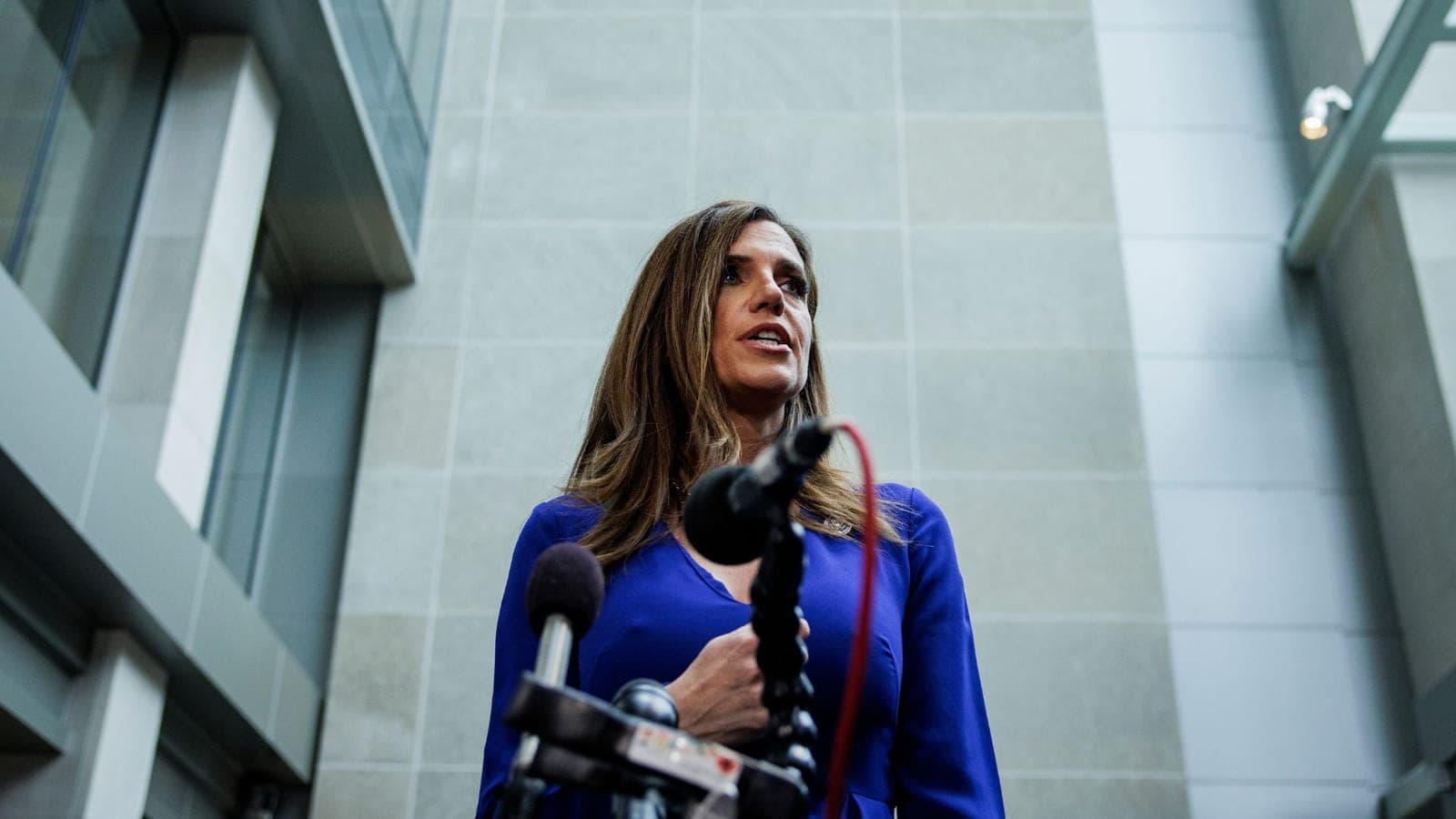
In early March, Rep. Nancy Mace, R-S.C., stood on the House floor to force a vote on a resolution that would have released details from all reports of sexual misconduct and harassment by members of Congress. Her motions followed reports claiming her colleague, Rep. Tony Gonzales, R-Texas, had an affair with a staffer who later died by suicide. The vote on the resolution, 357 to 65, showed rare bipartisan agreement — to defeat Mace’s proposal. The resolution’s defeat underscored a long history in Congress of dealing with sexual misconduct by lawmakers mostly in private. While some have resigned under pressure, including Gonzales and Rep. Eric Swalwell, D-Calif., few have faced public punishment. The issue came to the surface in recent days after multiple publications reported that women had accused Swalwell of sexual assault. Swalwell denied the allegations but suspended his campaign for California governor and then resigned from Congress. That’s a time-honored tradition. In 1976, for example, The Washington Post published an article accusing Rep. Wayne Hays, D-Ohio, of paying his mistress $14,000 in public funds. He denied the allegations, but when The Post interviewed his alleged mistress, who was his former secretary, she said, "I can't type. I can't file. I can't even answer the phone." Less than a month later, Hays resigned. The fund nobody talks about Before 1995, U.S. lawmakers were exempt from about a dozen major workplace laws, such as the Civil Rights Act, the Americans with Disabilities Act, the Age Discrimination in Employment Act and the Fair Labor Standards Act. To address the double standard, lawmakers that year passed the Congressional Accountability Act. "For years, Iowans have asked me, 'Why doesn't Congress have to follow the same laws as we have to follow?’” Sen. Chuck Grassley, R-Iowa, said in 2025. “The American people expressed that they were fed up with government-knows-best and a Washington mindset that applied rules for thee, but not for me." The law required Congress to use the same employment laws that apply to the private sector and the executive branch. It created the Office of Compliance to administer claims and resolve disputes. The office — or more specifically, an account it oversees — has been the focus of widespread scrutiny. The taxpayer-funded account has been called a harassment “slush” fund since it provides monetary settlements to people who file complaints if they go through mediation. The payments are public record. The details of the allegations, however, remain hidden. Since its inception, the fund has paid out more than $17 million in 264 cases, according to GovTrack. In addition to sexual misconduct, the payments cover such matters as overtime disputes, disability claims and violations of family-leave requirements. The first documented case of taxpayer money from this account being used to settle a sexual harassment claim against a member involved Rep. Blake Farenthold, R-Texas. His former communications director sued him in December 2014, accusing him of gender discrimination, sexual harassment and creating a hostile work environment, Politico reported. Both parties reached a settlement agreement of $84,000 the next year but his identity wasn’t revealed until 2017. Former Rep. Jackie Speier, D-Calif., who was also assaulted as a congressional staffer, told NPR she thought it was unfair that those in the private sector are fired immediately but lawmakers are allowed to stay even after the taxpayer bails them out. “I mean, when you think of the private sector, a CEO has a relationship with some subordinate, and he's gone, or she's gone,” Speier said. “But in Congress, not only are you not gone, you get to continue to serve, so to speak, and collect your check.” Congress makes reforms The #MeToo movement forced Congress’ hand to address issues with the 1995 accountability act. But some believe the changes didn’t go far enough. In December 2018, Congress passed the awkwardly named Congressional Accountability Act of 1995 Reform Act. It changed the name of the Office of Compliance to the Office of Congressional Workplace Rights, expanded certain protections to unpaid staff, mandated a biennial survey of the legislative branch workplace environment and changed the way it resolved claims. One of the most significant changes was requiring members to personally reimburse the Treasury if the settlement involved the member’s personal conduct. Reimbursement has conditions and taxpayer funds are still taken out first. Resignations also stop investigations, so if a lawmaker is in the middle of an inquiry and resigns, he or she doesn’t have to pay back the money. But what the law didn’t do was remove the secrecy of the original law. All the names of the members who used the fund are still hidden from the public. That was what Mace’s resolution addressed. "The fact that taxpayer dollars are being used to basically pay off people's sexual harassment — that's wrong,” Rep. Anna Paulina Luna, R-Fla., told Axios in February. The gender divide Mace’s resolution came shortly after the allegations against Gonzales came to light, following months of rumors. Her proposal would have given the Ethics Committee 60 days to publicly release all reports related to investigations into sexual harassment or sexual misconduct involving members of Congress or their aides. But there was an important clarification: her resolution would have required redactions to protect the victim. Despite this, the proposal failed. The Ethics Committee’s leaders said Mace’s resolution “could chill victim cooperation and witness participation in ongoing and future investigations,” Roll Call reported. The most vocal of the supporters were women, especially conservative Republicans who had no political incentive to align with Democrats. Mace, who has spoken publicly about being a sexual assault survivor, framed the vote starkly. "This is a good old boys club, and women that come to work on the Hill need to be respected, whether you're a member of Congress and a female or you're a female staffer,” she told NBC News. Paulina Luna was also sincere about her support. "We just had a member of Congress literally sexually harass a woman that then lit herself on fire and you guys all protected him. My own side, your side,” she said. Mace framed the issue as bipartisan. "Both parties colluded to protect predators,” Mace said. “They voted to keep sexual harassment records buried, and they did it together." Will any real change happen? The biggest issue preventing change is the way the Ethics Committee is set up. Since it has jurisdiction only over current members, investigations automatically cease when an accused member resigns. Even if members resign under a cloud, they are still entitled to collect their pensions — unless they are convicted of one of 31 specific felonies. Lawmakers can take a pension if they are 62 years old and have been in Congress for five years. So, while Swalwell and Gonzales, who are in their 40s, won’t be able to receive it immediately, taxpayers will ultimately pay them an average of just under $60,000 per year in pension benefits. Despite the setbacks, Mace isn’t stopping. The House Oversight Committee approved her motion to subpoena the Office of Congressional Workplace Rights for settlements made before 2018. That subpoena process is still active, according to The Hill. Attention is now moving to two other members facing scrutiny: Rep. Sheila Cherfilus-McCormick, D-Fla., and Rep. Cory Mills, R-Fla. The Ethics Committee recently found Cherfilus-McCormick guilty of using federal COVID-19 relief funds in her congressional campaign, and she faces federal charges over the matter. The Ethics Committee has opened an investigation into allegations of financial and sexual misconduct by Mills. Both have denied wrongdoing and remain in office. Sen. Andy Kim, D-N.J., agreed with Mace that something needs to change regarding congressional ethics complaints. "Whatever we are doing when it comes to misconduct on Capitol Hill,” he told PBS’ Lisa Desjardins, “it's not working.”
How taxpayers are liable for sexual misconduct by members of Congress
In early March, Rep. Nancy Mace, R-S.C., stood on the House floor to force a vote on a resolution that would have released details from all reports of sexual misconduct and harassment by members of Congress. Her motions followed reports claiming her colleague, Rep. Tony Gonzales, R-Texas, had an affair with a staffer who later died by suicide. The vote on the resolution, 357 to 65, showed rare bipartisan agreement — to defeat Mace’s proposal. The resolution’s defeat underscored a long history in Congress of dealing with sexual misconduct by lawmakers mostly in private. While some have resigned under pressure, including Gonzales and Rep. Eric Swalwell, D-Calif., few have faced public punishment. The issue came to the surface in recent days after multiple publications reported that women had accused Swalwell of sexual assault. Swalwell denied the allegations but suspended his campaign for California governor and then resigned from Congress. That’s a time-honored tradition. In 1976, for example, The Washington Post published an article accusing Rep. Wayne Hays, D-Ohio, of paying his mistress $14,000 in public funds. He denied the allegations, but when The Post interviewed his alleged mistress, who was his former secretary, she said, "I can't type. I can't file. I can't even answer the phone." Less than a month later, Hays resigned. The fund nobody talks about Before 1995, U.S. lawmakers were exempt from about a dozen major workplace laws, such as the Civil Rights Act, the Americans with Disabilities Act, the Age Discrimination in Employment Act and the Fair Labor Standards Act. To address the double standard, lawmakers that year passed the Congressional Accountability Act. "For years, Iowans have asked me, 'Why doesn't Congress have to follow the same laws as we have to follow?’” Sen. Chuck Grassley, R-Iowa, said in 2025. “The American people expressed that they were fed up with government-knows-best and a Washington mindset that applied rules for thee, but not for me." The law required Congress to use the same employment laws that apply to the private sector and the executive branch. It created the Office of Compliance to administer claims and resolve disputes. The office — or more specifically, an account it oversees — has been the focus of widespread scrutiny. The taxpayer-funded account has been called a harassment “slush” fund since it provides monetary settlements to people who file complaints if they go through mediation. The payments are public record. The details of the allegations, however, remain hidden. Since its inception, the fund has paid out more than $17 million in 264 cases, according to GovTrack. In addition to sexual misconduct, the payments cover such matters as overtime disputes, disability claims and violations of family-leave requirements. The first documented case of taxpayer money from this account being used to settle a sexual harassment claim against a member involved Rep. Blake Farenthold, R-Texas. His former communications director sued him in December 2014, accusing him of gender discrimination, sexual harassment and creating a hostile work environment, Politico reported. Both parties reached a settlement agreement of $84,000 the next year but his identity wasn’t revealed until 2017. Former Rep. Jackie Speier, D-Calif., who was also assaulted as a congressional staffer, told NPR she thought it was unfair that those in the private sector are fired immediately but lawmakers are allowed to stay even after the taxpayer bails them out. “I mean, when you think of the private sector, a CEO has a relationship with some subordinate, and he's gone, or she's gone,” Speier said. “But in Congress, not only are you not gone, you get to continue to serve, so to speak, and collect your check.” Congress makes reforms The #MeToo movement forced Congress’ hand to address issues with the 1995 accountability act. But some believe the changes didn’t go far enough. In December 2018, Congress passed the awkwardly named Congressional Accountability Act of 1995 Reform Act. It changed the name of the Office of Compliance to the Office of Congressional Workplace Rights, expanded certain protections to unpaid staff, mandated a biennial survey of the legislative branch workplace environment and changed the way it resolved claims. One of the most significant changes was requiring members to personally reimburse the Treasury if the settlement involved the member’s personal conduct. Reimbursement has conditions and taxpayer funds are still taken out first. Resignations also stop investigations, so if a lawmaker is in the middle of an inquiry and resigns, he or she doesn’t have to pay back the money. But what the law didn’t do was remove the secrecy of the original law. All the names of the members who used the fund are still hidden from the public. That was what Mace’s resolution addressed. "The fact that taxpayer dollars are being used to basically pay off people's sexual harassment — that's wrong,” Rep. Anna Paulina Luna, R-Fla., told Axios in February. The gender divide Mace’s resolution came shortly after the allegations against Gonzales came to light, following months of rumors. Her proposal would have given the Ethics Committee 60 days to publicly release all reports related to investigations into sexual harassment or sexual misconduct involving members of Congress or their aides. But there was an important clarification: her resolution would have required redactions to protect the victim. Despite this, the proposal failed. The Ethics Committee’s leaders said Mace’s resolution “could chill victim cooperation and witness participation in ongoing and future investigations,” Roll Call reported. The most vocal of the supporters were women, especially conservative Republicans who had no political incentive to align with Democrats. Mace, who has spoken publicly about being a sexual assault survivor, framed the vote starkly. "This is a good old boys club, and women that come to work on the Hill need to be respected, whether you're a member of Congress and a female or you're a female staffer,” she told NBC News. Paulina Luna was also sincere about her support. "We just had a member of Congress literally sexually harass a woman that then lit herself on fire and you guys all protected him. My own side, your side,” she said. Mace framed the issue as bipartisan. "Both parties colluded to protect predators,” Mace said. “They voted to keep sexual harassment records buried, and they did it together." Will any real change happen? The biggest issue preventing change is the way the Ethics Committee is set up. Since it has jurisdiction only over current members, investigations automatically cease when an accused member resigns. Even if members resign under a cloud, they are still entitled to collect their pensions — unless they are convicted of one of 31 specific felonies. Lawmakers can take a pension if they are 62 years old and have been in Congress for five years. So, while Swalwell and Gonzales, who are in their 40s, won’t be able to receive it immediately, taxpayers will ultimately pay them an average of just under $60,000 per year in pension benefits. Despite the setbacks, Mace isn’t stopping. The House Oversight Committee approved her motion to subpoena the Office of Congressional Workplace Rights for settlements made before 2018. That subpoena process is still active, according to The Hill. Attention is now moving to two other members facing scrutiny: Rep. Sheila Cherfilus-McCormick, D-Fla., and Rep. Cory Mills, R-Fla. The Ethics Committee recently found Cherfilus-McCormick guilty of using federal COVID-19 relief funds in her congressional campaign, and she faces federal charges over the matter. The Ethics Committee has opened an investigation into allegations of financial and sexual misconduct by Mills. Both have denied wrongdoing and remain in office. Sen. Andy Kim, D-N.J., agreed with Mace that something needs to change regarding congressional ethics complaints. "Whatever we are doing when it comes to misconduct on Capitol Hill,” he told PBS’ Lisa Desjardins, “it's not working.”
How taxpayers are liable for sexual misconduct by members of Congress
In early March, Rep. Nancy Mace, R-S.C., stood on the House floor to force a vote on a resolution that would have released details from all reports of sexual misconduct and harassment by members of Congress. Her motions followed reports claiming her colleague, Rep. Tony Gonzales, R-Texas, had an affair with a staffer who later died by suicide. The vote on the resolution, 357 to 65, showed rare bipartisan agreement — to defeat Mace’s proposal. The resolution’s defeat underscored a long history in Congress of dealing with sexual misconduct by lawmakers mostly in private. While some have resigned under pressure, including Gonzales and Rep. Eric Swalwell, D-Calif., few have faced public punishment. The issue came to the surface in recent days after multiple publications reported that women had accused Swalwell of sexual assault. Swalwell denied the allegations but suspended his campaign for California governor and then resigned from Congress. That’s a time-honored tradition. In 1976, for example, The Washington Post published an article accusing Rep. Wayne Hays, D-Ohio, of paying his mistress $14,000 in public funds. He denied the allegations, but when The Post interviewed his alleged mistress, who was his former secretary, she said, "I can't type. I can't file. I can't even answer the phone." Less than a month later, Hays resigned. The fund nobody talks about Before 1995, U.S. lawmakers were exempt from about a dozen major workplace laws, such as the Civil Rights Act, the Americans with Disabilities Act, the Age Discrimination in Employment Act and the Fair Labor Standards Act. To address the double standard, lawmakers that year passed the Congressional Accountability Act. "For years, Iowans have asked me, 'Why doesn't Congress have to follow the same laws as we have to follow?’” Sen. Chuck Grassley, R-Iowa, said in 2025. “The American people expressed that they were fed up with government-knows-best and a Washington mindset that applied rules for thee, but not for me." The law required Congress to use the same employment laws that apply to the private sector and the executive branch. It created the Office of Compliance to administer claims and resolve disputes. The office — or more specifically, an account it oversees — has been the focus of widespread scrutiny. The taxpayer-funded account has been called a harassment “slush” fund since it provides monetary settlements to people who file complaints if they go through mediation. The payments are public record. The details of the allegations, however, remain hidden. Since its inception, the fund has paid out more than $17 million in 264 cases, according to GovTrack. In addition to sexual misconduct, the payments cover such matters as overtime disputes, disability claims and violations of family-leave requirements. The first documented case of taxpayer money from this account being used to settle a sexual harassment claim against a member involved Rep. Blake Farenthold, R-Texas. His former communications director sued him in December 2014, accusing him of gender discrimination, sexual harassment and creating a hostile work environment, Politico reported. Both parties reached a settlement agreement of $84,000 the next year but his identity wasn’t revealed until 2017. Former Rep. Jackie Speier, D-Calif., who was also assaulted as a congressional staffer, told NPR she thought it was unfair that those in the private sector are fired immediately but lawmakers are allowed to stay even after the taxpayer bails them out. “I mean, when you think of the private sector, a CEO has a relationship with some subordinate, and he's gone, or she's gone,” Speier said. “But in Congress, not only are you not gone, you get to continue to serve, so to speak, and collect your check.” Congress makes reforms The #MeToo movement forced Congress’ hand to address issues with the 1995 accountability act. But some believe the changes didn’t go far enough. In December 2018, Congress passed the awkwardly named Congressional Accountability Act of 1995 Reform Act. It changed the name of the Office of Compliance to the Office of Congressional Workplace Rights, expanded certain protections to unpaid staff, mandated a biennial survey of the legislative branch workplace environment and changed the way it resolved claims. One of the most significant changes was requiring members to personally reimburse the Treasury if the settlement involved the member’s personal conduct. Reimbursement has conditions and taxpayer funds are still taken out first. Resignations also stop investigations, so if a lawmaker is in the middle of an inquiry and resigns, he or she doesn’t have to pay back the money. But what the law didn’t do was remove the secrecy of the original law. All the names of the members who used the fund are still hidden from the public. That was what Mace’s resolution addressed. "The fact that taxpayer dollars are being used to basically pay off people's sexual harassment — that's wrong,” Rep. Anna Paulina Luna, R-Fla., told Axios in February. The gender divide Mace’s resolution came shortly after the allegations against Gonzales came to light, following months of rumors. Her proposal would have given the Ethics Committee 60 days to publicly release all reports related to investigations into sexual harassment or sexual misconduct involving members of Congress or their aides. But there was an important clarification: her resolution would have required redactions to protect the victim. Despite this, the proposal failed. The Ethics Committee’s leaders said Mace’s resolution “could chill victim cooperation and witness participation in ongoing and future investigations,” Roll Call reported. The most vocal of the supporters were women, especially conservative Republicans who had no political incentive to align with Democrats. Mace, who has spoken publicly about being a sexual assault survivor, framed the vote starkly. "This is a good old boys club, and women that come to work on the Hill need to be respected, whether you're a member of Congress and a female or you're a female staffer,” she told NBC News. Paulina Luna was also sincere about her support. "We just had a member of Congress literally sexually harass a woman that then lit herself on fire and you guys all protected him. My own side, your side,” she said. Mace framed the issue as bipartisan. "Both parties colluded to protect predators,” Mace said. “They voted to keep sexual harassment records buried, and they did it together." Will any real change happen? The biggest issue preventing change is the way the Ethics Committee is set up. Since it has jurisdiction only over current members, investigations automatically cease when an accused member resigns. Even if members resign under a cloud, they are still entitled to collect their pensions — unless they are convicted of one of 31 specific felonies. Lawmakers can take a pension if they are 62 years old and have been in Congress for five years. So, while Swalwell and Gonzales, who are in their 40s, won’t be able to receive it immediately, taxpayers will ultimately pay them an average of just under $60,000 per year in pension benefits. Despite the setbacks, Mace isn’t stopping. The House Oversight Committee approved her motion to subpoena the Office of Congressional Workplace Rights for settlements made before 2018. That subpoena process is still active, according to The Hill. Attention is now moving to two other members facing scrutiny: Rep. Sheila Cherfilus-McCormick, D-Fla., and Rep. Cory Mills, R-Fla. The Ethics Committee recently found Cherfilus-McCormick guilty of using federal COVID-19 relief funds in her congressional campaign, and she faces federal charges over the matter. The Ethics Committee has opened an investigation into allegations of financial and sexual misconduct by Mills. Both have denied wrongdoing and remain in office. Sen. Andy Kim, D-N.J., agreed with Mace that something needs to change regarding congressional ethics complaints. "Whatever we are doing when it comes to misconduct on Capitol Hill,” he told PBS’ Lisa Desjardins, “it's not working.”
Should striking workers get paid unemployment? More states eyeing it
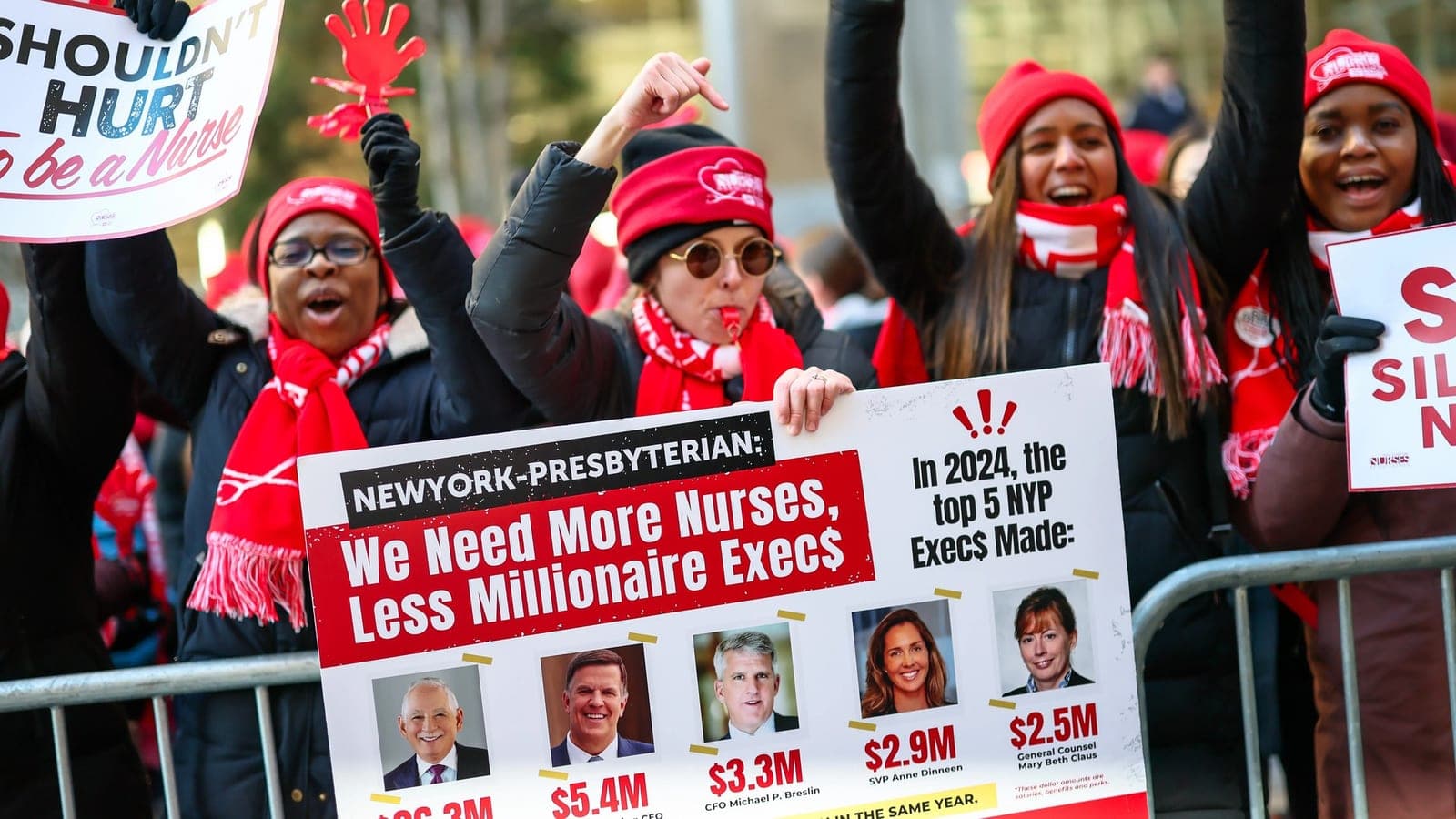
Labor strikes are about pain. Profit loss for the company and wage loss for the worker. But more states are moving to ease some of that harm to striking workers, at the cost of their unemployment funds. Lawmakers at the state and federal levels are pushing to let workers who go on strike collect unemployment benefits. In states where it’s already allowed, it represents a major boon to unions that would otherwise pay striking workers out of their dues-funded accounts. New York, New Jersey, Washington and Oregon — all with Democratic governors and Democratic majorities in each legislative chamber — are the only states that allow workers to collect unemployment benefits while marching on picket lines. Labor groups argue that the measure evens the playing field between employers and workers while keeping money flowing into the local economy at a marginal cost to unemployment funds. “Providing unemployment benefits to striking workers — and to all workers whose employment is impacted by strikes or lockouts — supports the right to strike and aligns with the purpose of the unemployment insurance (UI) system,” the National Employment Law Project said in a policy paper. The business community says unemployment for striking workers amounts to paying union members for walking off the job, since the coffers are filled by employers paying state and federal payroll taxes. “Striking workers are not seeking work; they’re withholding it,” said Stephanie Ferguson Melhorn, executive director of workforce and international labor policy at the U.S. Chamber of Commerce. “That’s a choice, not a layoff.” More states looking to follow suit Delaware, Massachusetts, Ohio, Hawaii, Illinois and several others have seen legislation in recent years to join the small group of states allowing UI for striking workers. In Illinois, lawmakers considered an amended House Bill 2565 in committee on Wednesday. If enacted, it would allow striking workers to collect unemployment two weeks after walking off the job. "By modernizing these provisions, the bill promotes stability for workers and their families while retaining a balanced and predictable framework for employers in the state," said Rep. Dave Vella, D-Loves Park, who is also the bill’s sponsor. Members of the business community say the change would increase union members' willingness to strike and extend the duration of stoppages. Even though the majority of strikes involve large corporations, opponents said the change would also affect small businesses, which could see higher unemployment taxes. “The UI trust fund is facing deficits this year, with more funds projected to flow out than flow in. This financial balance is paid for by employers," said Noah Finley, director of the National Federation of Independent Business Illinois Chapter. "Small businesses should not be left holding the bag for labor disputes at large businesses and corporations." The committee voted in favor of the bill. Too much for California In 2023, California Gov. Gavin Newsom vetoed legislation that would have given unemployment benefits to striking workers in his state. In his veto message, Newsom said the state’s unemployment trust fund is outdated and approaching insolvency. Adding the burden of paying strikers could further exhaust the funds that out-of-work residents rely on. “Now is not the time to increase costs or incur this sizable debt,” Newsom said. Lawmakers couldn’t muster the votes to override the veto. Connecticut vetoes Connecticut Gov. Ned Lamont has vetoed similar legislation multiple times, saying that covering workers who voluntarily walk out would undermine the purpose of unemployment benefits. “Unemployment Trust Fund exists to provide support to individuals who are out of work through no fault of their own, and its long-term sustainability is critical,” he said in his June 2025 veto message. “Extending benefits to individuals actively participating in labor disputes — even after a period of time — alters the fundamental purpose of the program.” Federal effort Rep. Donald Norcross, D-N.J., introduced federal legislation last fall that would implement the practice nationwide. “Any union worker knows that going on strike is always the last resort,” he said in a statement. “The Empowering Striking Workers Act will make sure no worker is forced to choose between standing up for their rights and putting food on the table. His bill and identical legislation in the Senate have not moved since their introduction.

Does the end of taxes on tips actually help workers?
LAS VEGAS — Hospitality workers in Las Vegas hoped the nationwide “No Tax on Tips” provision would provide relief after a sharp decline in tourism. Results have been mixed. The tax provision, as part of 2025’s One Big Beautiful Bill Act, allows eligible workers to deduct up to $25,000 of voluntary tips from federal taxes until 2028. The measure was made to give immediate financial relief to and increase take-home pay for service workers such as kitchen waitstaff, beauty salons, bartenders or delivery drivers. Members of Las Vegas’ powerful Culinary Union, for example, welcome these benefits as tourism took a significant hit last summer. As Nevada relies on tourism and hospitality to survive, it has significantly affected workers, housing and the state’s economy far deeper than other cities nationwide. Rising unemployment and housing costs have contributed to recent down years in Las Vegas, where unemployment rates are among the country’s highest. (Photo by Justin Sullivan/Getty Images) Why are some workers calling the no tax on tips law a letdown? Ted Pappageorge, the culinary union’s treasurer, said while he welcomes the provision, it hasn’t gone far enough to make a difference to many members. He said deductions apply only to certain types of tips, which excludes automatic gratuities, such as those often added to large parties or banquet services, and phases out for those making $100,000 a year. Married couples must file jointly to qualify and dampen the impact of the tax break from $25,000 to $12,500 per person, creating what he considers a “marriage penalty.” “What this amounted to was a [small tax] credit and it has significant restrictions. This is not of anything of real substance,” Pappageorge told Straight Arrow News. “Some will take advantage of it, but they feel let down by these promises.” The Culinary Union is actively engaging lawmakers like Nevada Congressman Steven Horsford to amend the legislation nationwide before the next tax season. Horsford has proposed the TIP Improvement Act, which expands upon the tax code on a national level. “It’s the main industry here to raise your kids and hopefully own a home. This is a company town,” Pappageorge told SAN. “Trump to his credit put the issue on the table but it is a mixed bag with many flaws.” The bill includes making the tax changes permanent, fixes the marriage loophole, allows the use of a verified taxpayer identification number so immigrant workers are not excluded, protects gratuity payments and eliminates subminimum wages for tipped workers nationwide. Nevada is one of only seven states that pay tipped workers beyond the federal sub-minimum wage of $2.13 an hour. (Photo by Justin Sullivan/Getty Images) How is declining tourism and automation affecting Las Vegas tip earnings? “This bill was shaped by direct conversations with the Culinary Union and tipped hospitality workers who know exactly how these tax changes hit their paychecks,” Congressman Horsford said in a statement. “Tips should never substitute for a real, livable wage. We are going to keep pushing until this relief is permanent, fair and truly built around the workers who earn tips every single day.” Bellman Joe Spica told SAN he was let down by the tax provision, especially in the wake of declining tourism. On a good day, he can make $100 in tips; on a slow day, it can be less than $30, he said. “The harder part is that we’re getting less people, and the people coming are tipping way less,” Spica said. “The middle class is getting squeezed really hard, and when they feel it, we feel it.” According to the Las Vegas Convention and Visitors Authority (LVCVA), tourism dropped 7.5% in 2025, the lowest since 2021 during the height of the COVID-19 pandemic. Some local economic experts predict the city will make a comeback; however, recent LVCVA data show visitor and room occupancy have improved from last year. “I think it’s fair to say we lost a huge swatch of the working class. The prices are just skyrocketing,” Spica told SAN. “Every good we need to survive is going up. When we’re feeling the squeeze, they do too. And the trips to Vegas go with it.” In addition to fewer visitors, Spica says his and others’ jobs progress toward automation also lessens tip earnings as kiosks, locked luggage-storage units and other options become available. According to one study, more than 90% of hospitality jobs on the Strip are at risk of automation. “Fewer interactions with customers can mean fewer opportunities to earn tips,” Spica said. “There’s no way a robot can take my job, they can’t handle the service or questions. But I think we’re dangerously approaching this cliff where automation is around the corner.” (Photo by Chris Delmas/AFP via Getty Images) Will raising the minimum wage for tipped workers help or hurt restaurants? While Las Vegas stakeholders believe in raising the minimum wage for tipped workers, the reaction is unfolding differently in other parts of the country. In Chicago, the Illinois Restaurant Association has pushed back against Mayor Brandon Johnson’s veto to raise the tipped minimum wage to match the city’s $16 an hour wage. Sam Toia, the association’s president, said that tipped workers — who make $12.62 an hour — already earn competitive pay when tips are included and that higher wages could force restaurants to cut staff, raise prices or close altogether. Toia specifically cited Washington, D.C. Initiative 82 as a warning. The initiative, which raised the city’s subminimum wage from $5.32 an hour to the city’s standard $17.50, gutted the restaurant industry, causing as many as 4,000 workers to lose their jobs and 70% of restaurants to cut worker hours. According to Toia and the Illinois Restaurant Association, 86% of tipped restaurant servers in Chicago believe they will earn less if the tip credit is eliminated; 87% of tipped employees believe the current system works and does not need to be changed. “Everytime you raise the minimum wage or do away with tip wages, the restaurants have to raise menu questions. You lose some customers because they can’t afford to eat,” Toia said. “They start cutting hours as a result, and they shrink their menu and close their restaurants earlier. This will devastate the restaurant scene in this city.” Supporters of wage increases, however, say relying on tips leaves workers vulnerable to economic swings. Cass Shum, an associate professor at the University of Nevada, Las Vegas who studies workplace conditions in hospitality, said the policy's limitations highlight the instability of tipping as a major source of income. “If you have a week of bad days, you don’t know how you’re going to pay for food or housing,” she said. “That affects not just financial stability, but performance and well-being.” Shum has argued that Americans are growing fed up with tipping altogether. A 2023 Pew Research Center study found that more than 72% of Americans tip in more place than they did five years prior, with more Americans opposing (40%) than favoring (24%) businesses suggesting tip amounts to their customers. Tip-based systems can widen and reinforce current racial biases as well, Shum said. Studies have shown workers of color earn less in tips than white workers do, and women who work service jobs like bartending endure and are expected to accept sexual harassment for higher tips. Like Spica, she also said the increase in automation will lead to workers tipping less or that the tips would not go to human workers. “It is better to guarantee a stable livable income rather than rely on the generosity of customers,” Shum told SAN. “Change is always scary but it doesn’t mean the current system is acceptable.“