8 stories credited to Responsible Statecraft
Latest story Sep 15, 2026 · on ChamberLight since Apr 2026
A story can appear as several articles (copies of the same piece), so counts of stories and of articles differ.
Scores for Responsible Statecraft
Writing quality not enough rated stories yet: 6 of 10. How it is measured
Scores last checked Sep 25, 2026.
Stories ChamberLight collected, by month
Stories credited to Responsible Statecraft, by publication date. ChamberLight collects articles that mention the officials it tracks, so this shows its own coverage of this source, not how much the source publishes.
- Stories from Responsible Statecraft
- Shaded: ChamberLight collected no stories, or almost none, from any outlet (a gap in its collection, not in the outlet’s publishing)
Show as a table
| Month | Stories | All outlets |
|---|---|---|
| March 2026 | 2 | 897 |
| April 2026 | 4 | 4,538 |
| May 2026 | 0 | none collected |
| June 2026 | 0 | none collected |
| July 2026 | 0 | none collected |
| August 2026 | 0 | 1 (collection gap) |
| September 2026 | 2 | 1,320 |
Top topics
Share of this source’s stories tagged with each topic. A story can carry several topics, so the shares do not add up to 100%.
- Ethics/Corruption7
88% of 8 stories · 58% across all outlets
- Foreign Policy7
88% of 8 stories · 29% across all outlets
- Defense/Military6
75% of 8 stories · 25% across all outlets
- Agriculture1
13% of 8 stories · 2% across all outlets
- Budget/Spending1
13% of 8 stories · 31% across all outlets
- Economy1
13% of 8 stories · 26% across all outlets
The thin mark on each bar is the topic’s share across all outlets.
Who they cover
Party of the officials these stories are mainly about, across all 15 officials named. A story counts once for each official it is mainly about, so the split is over 19 story–official pairs, from 8 stories.
- Republican58% · 11 pairs
- Democrat32% · 6 pairs
- Independent11% · 2 pairs
Most covered
Stories mainly about each official, and their share of the source’s 8 stories.
- 1Donald TrumpR3 stories · 38%
- 2Bernard SandersI2 stories · 25%
- 3Marco RubioR2 stories · 25%
- 4Charles SchumerD1 story · 13%
- 5Deb FischerR1 story · 13%
- 6Don BaconR1 story · 13%
- 7Gregory MeeksD1 story · 13%
- 8Joe WilsonR1 story · 13%
- 9John FettermanD1 story · 13%
- 10Katie BrittR1 story · 13%
+ 5 other officials (5 story–official pairs)
Article tone
ChamberLight’s article analysis assigns each story a tone toward the official it covers. It describes the coverage of that official, not Responsible Statecraft’s stance, and reader votes do not change it. 8 stories.
- Good Look
- 0 (0%)
- Mixed
- 7 (88%)
- Informational
- 0 (0%)
- Bad Look
- 1 (13%)
Challenges to these scores
No one has challenged a score on this page yet. Anyone can; editors publish every outcome here.
Articles served from responsiblestatecraft.org
19
Massie tells RS why he went after Hegseth and not Trump
Rep. Thomas Massie (R-Ky.) tells Responsible Statecraft that he is initiating eight articles of impeachment against Secretary of Defense Pete Hegseth because Congress has “exhausted every other remedy to make things right.” After a speech on the floor Tuesday, Massie said is forcing a vote on the articles in the House, which would likely happen on Thursday before the chamber recesses for the midterms. The resolution is quite a brief against Hegseth, covering U.S. military actions in Iran, Yemen, and Venezuela, as well as accusing Hegseth of minimizing civilian deaths and abridging freedom of speech. Impeachment votes are privileged in the House, which means the measure can bypass the rules and go straight to a floor vote after debate. The articles would have to get a motion, however, which would require a majority vote. It is not clear how many Democrats would vote for it. Democrats just killed a resolution to impeach President Donald Trump by one of their own, Rep. Al Green (D-Texas). We spoke to Massie on Tuesday. Responsible Statecraft: Why are you bringing this about right now? Rep. Thomas Massie: Because we have exhausted every other legislative remedy to make things right. We are at the point now where Hegseth is just ignoring the law. He's ignored the concurrent (War Powers) resolution. He ignored the 60-day limit. They never reached the threshold required under section 2-C under the War Powers resolution of 1973. He's severely degraded the DoD's ability to winnow out civilian targets from their target list. There is an active and ongoing war that should be stopped immediately, and I think this is an effective way to do it. It's literally the only legislative remedy that I could think of that might work. RS: I would imagine the timing is important because the House is leaving until after the midterm elections in November. Massie: Yeah, and the Speaker has to schedule a vote within 48 hours. I suspect there will be a motion to table; that's usually w
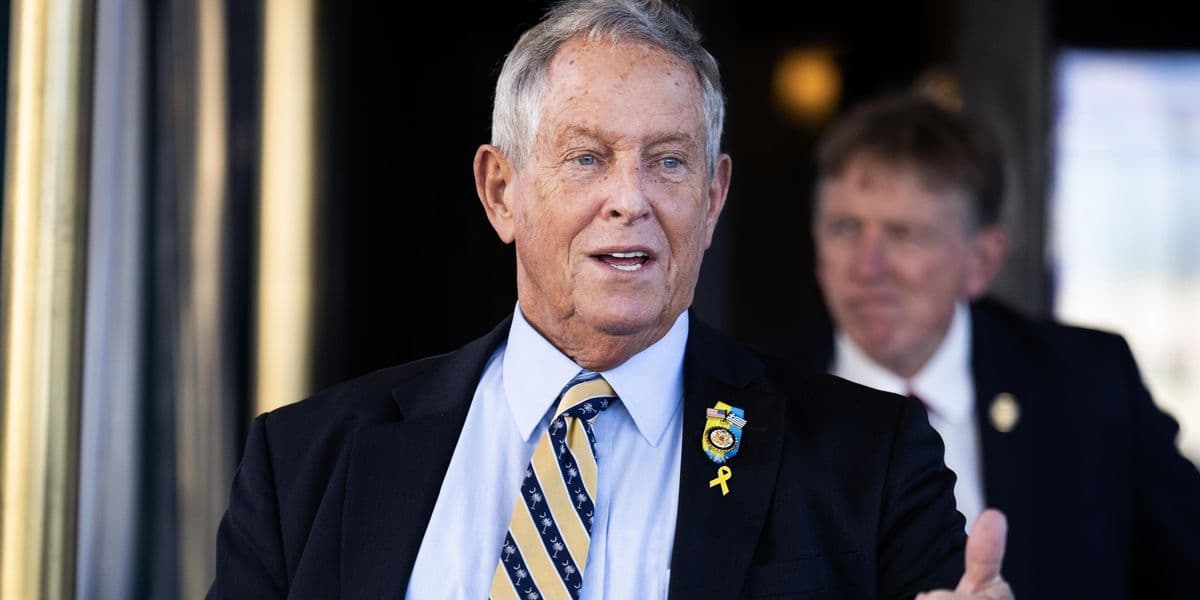
Unchecked, Joe Wilson's Serbia crusade may blow up in our faces
On August 27, Reps. Joe Wilson (R-S.C.) and Bill Keating (D-Mass.) introduced the SRBIJA Act, which would impose sanctions and visa restrictions on “malign actors” accused of undermining democracy, the rule of law, human rights, and stability in the Western Balkans. The proposed legislation also threatens sanctions on Serbia if Belgrade maintains its relationships with Russia, China, and Iran. The initiative comes as Serbia prepares for snap parliamentary elections next month, following nearly two years of anti-government protests and shortly after Washington and Belgrade launched a new Strategic Dialogue. In Serbia’s polarized political environment, supporters of President Aleksandar Vučić portray Wilson and Keating as hostile foreign actors seeking to dictate Belgrade’s foreign policy, while opponents of the government largely see the SRBIJA Act positively and hope it will “ultimately lead to [Vučić’s] downfall,” said Nikola Mikovic, a Serbian geopolitical analyst. The SRBIJA Act’s sponsors hope their legislative push will pressure Belgrade to abandon its delicate balancing act between the West, Moscow, and Beijing. But the bill could instead give Vučić an opportunity to strengthen the geopolitical narrative that he has shrewdly navigated a multipolar world, which resonates with many Serbian voters and has helped keep him at the helm. Engaging Belgrade pragmatically The SRBIJA Act does not represent the Trump administration’s approach to Serbia, underscored by the newly established Strategic Dialogue. Launched in July, it provides an institutional framework for continued bilateral engagement and cooperation across areas including energy and economics. The Trump administration will not abandon that framework because of a single bill in Congress. Vladimir Trapara, a Belgrade-based political analyst, said the congressional initiative “stands poor chances of success” and argued that its failure could, if anything, help boost the Serbian government’s popularity at
Unchecked, Joe Wilson's Serbia crusade may blow up in our faces
On August 27, Reps. Joe Wilson (R-S.C.) and Bill Keating (D-Mass.) introduced the SRBIJA Act, which would impose sanctions and visa restrictions on “malign actors” accused of undermining democracy, the rule of law, human rights, and stability in the Western Balkans. The proposed legislation also threatens sanctions on Serbia if Belgrade maintains its relationships with Russia, China, and Iran. The initiative comes as Serbia prepares for snap parliamentary elections next month, following nearly two years of anti-government protests and shortly after Washington and Belgrade launched a new Strategic Dialogue. In Serbia’s polarized political environment, supporters of President Aleksandar Vučić portray Wilson and Keating as hostile foreign actors seeking to dictate Belgrade’s foreign policy, while opponents of the government largely see the SRBIJA Act positively and hope it will “ultimately lead to [Vučić’s] downfall,” said Nikola Mikovic, a Serbian geopolitical analyst. The SRBIJA Act’s sponsors hope their legislative push will pressure Belgrade to abandon its delicate balancing act between the West, Moscow, and Beijing. But the bill could instead give Vučić an opportunity to strengthen the geopolitical narrative that he has shrewdly navigated a multipolar world, which resonates with many Serbian voters and has helped keep him at the helm. Engaging Belgrade pragmatically The SRBIJA Act does not represent the Trump administration’s approach to Serbia, underscored by the newly established Strategic Dialogue. Launched in July, it provides an institutional framework for continued bilateral engagement and cooperation across areas including energy and economics. The Trump administration will not abandon that framework because of a single bill in Congress. Vladimir Trapara, a Belgrade-based political analyst, said the congressional initiative “stands poor chances of success” and argued that its failure could, if anything, help boost the Serbian government’s popularity at

Is the US prepping for a military operation in Cuba?
Even with its hands full in an unpopular, costly and deadly war in Iran, the Trump administration seems to be ramping up preparations for military action in Cuba following weeks of relative calm between the two countries. On Tuesday, news outlet Zeteo reported that “officials at the Pentagon and elsewhere in the US government were quietly given a new directive that came straight from the Trump White House (to)...ramp up preparations for possible military operations against Cuba.” Citing two sources familiar with the matter and another briefed on it, Zeteo reported that President Trump has grown increasingly frustrated with Cuban President Miguel Diaz-Canel’s open defiance of threatening remarks from U.S. officials amid a near-total oil blockade imposed by Washington. This has led Trump to consider abducting some members of the Cuban leadership in an operation akin to the one that ousted Venezuelan President Nicolas Maduro in January. This, according to Zeteo, would be the presumed end result of the Justice Department’s broad-ranging inquiry into Cuban government leaders for “drug, immigration, economic and violent crimes, with a goal of bringing fast indictments,” the New York Times recently reported. The Zeteo scoop comes after Trump told reporters at the White House on Monday that “we may stop by Cuba after we’re finished with this,” in reference to the U.S. war with Iran. This, despite the denial by a top Pentagon official last month that the administration was “rehearsing for an invasion of Cuba or actively preparing to militarily take over the island.” Soon after the Zeteo report was published, Sen. Tim Kaine (D-Va.) told El Nuevo Día that he was planning to line up a War Powers Resolution vote in the Senate sometime next week to prevent the administration from taking military action against Cuba that is not explicitly authorized by Congress. Kaine, who said that “regime change in Cuba should not be a U.S. priority,” sent a letter signed by 51 other members of Congress to Trump earlier this month condemning the ongoing U.S. fuel blockade of Cuba. “By engineering an accelerated energy collapse,” the letter asserted, “your administration has shifted responsibility for Cuba’s suffering away from the Cuban government and squarely onto the United States.” Diaz-Canel, for his part, has recently gone on a U.S. media blitz, mostly reiterating his preference for dialogue and cooperation with Washington while also declaring that Cuba plans to fight if the U.S. launches a military attack. “If we need to die, we’ll die,” he told Kristen Welker on NBC’s “Meet the Press.” Meanwhile, the pretexts for continued U.S. escalation against the island seem to be mounting, with Axios reporting Tuesday that the Trump administration has informed Congress that it believes the Cuban government has been complicit in supplying Russia with up to 5,000 troops for its war in Ukraine, an accusation that the island’s authorities vehemently deny. “The public record does not prove Havana officially dispatched all Cuban fighters," the administration’s five-page unclassified report stated. “However, there are significant indicators that the regime knowingly tolerated, enabled, or selectively facilitated the flow." The narrative that Cubans — who amid an ongoing humanitarian crisis have sought economic opportunities abroad, including through visa-free travel to Russia — are fighting in the Ukraine war was wielded by U.S. diplomats last October to garner opposition to an annual U.N. resolution condemning the 66-year-old U.S. trade embargo. The report is expected to be brought up in a much-anticipated House Foreign Affairs Committee hearing on Thursday featuring the State Department’s top official for Latin America, Michael G. Kozak, sources tell RS. The alleged preparations for military operations in Cuba follow an apparent easing of bilateral tensions in late March, when the U.S. decided to allow a Russian oil tanker to dock at Cuba’s Matanzas port with 730,000 barrels of crude, providing the island with temporary relief from its energy crisis. Cuba subsequently released 2,010 prisoners in the largest mass amnesty in over a decade. After Cuba authorized U.S. embassy officials in Havana to import fuel for their own operations, another Russian oil tanker — the U.S.- and EU-sanctioned Universal, which belongs to the state-owned Sovcomflot — set sail for the Caribbean. The ship passed through the English Channel last week and is estimated to arrive in Cuba on April 29. On Wednesday, Russian Foreign Minister Sergei Lavrov told reporters in China that his country is committed to continue sending oil to Cuba as humanitarian aid. That fuel is already being used to resume electricity generation through two Turkish powerships operating off Cuban coasts. They had left the island last year due to high operating costs and the lack of available fuel, according to operator Karadeniz Holdings. The agreement to permit Russian fuel shipments came on the heels of moves by the U.S. to authorize fuel sales to Cuba’s private sector and boost humanitarian aid to the country’s hurricane-stricken eastern region. Cuba, for its part, released political prisoners through Vatican mediation, loosened restrictions on private enterprise, and authorized Cuban Americans to own and invest in businesses on the island without residing there. At the same time, Cuban officials reiterated on multiple occasions that they invite the U.S. to be involved in Cuba’s economic transformation. Toward those ends, Cuba recently announced the liberalization of the state agricultural system, the decentralization of public administration, and increased access to hard currency through state-owned financial institutions, although further details on the implementation and scope of these decisions remain to be seen. Citing Trump administration officials, U.S. government media outlet Martí Noticias reported this week that the grandson and bodyguard of former Cuban president Raúl Castro, who met with State Department envoys in February, even tried to deliver a letter on official Cuban government letterhead to President Trump last weekend through a private-sector emissary who was allegedly returned to the island given his lack of official accreditation. The failed effort, which has not been reported in English-language media, reportedly sought direct access to Trump by circumventing Secretary of State Marco Rubio, a longtime proponent of regime change in Havana who has said that Cuba’s announced reforms are not sufficient, demanding instead wholesale political and economic transformation on the island. As diplomatic advances between the two countries seemingly stall, renewed threats of U.S. military action against a small island off U.S. coasts could become a useful distraction for an administration dealing with a quagmire of its own creation in the Middle East, which has resulted in the death of over a dozen U.S. servicemembers, soaring gas prices during an election year, and a downgraded economic growth forecast that could trigger a global recession. While Trump has reportedly not yet made up his mind on military action in Cuba — and it remains unclear what exactly the administration’s long-term strategy on the island might be — some members of Congress are not waiting until after a strike is launched. “If another nation were blocking U.S. access to oil, as the Trump administration is doing with Cuba, Americans would see it as an act of war,” Kaine said. “These wars, including any new attack against Cuba, are illegal without a vote in Congress.”
Is the US prepping for a military operation in Cuba?
Even with its hands full in an unpopular, costly and deadly war in Iran, the Trump administration seems to be ramping up preparations for military action in Cuba following weeks of relative calm between the two countries. On Tuesday, news outlet Zeteo reported that “officials at the Pentagon and elsewhere in the US government were quietly given a new directive that came straight from the Trump White House (to)...ramp up preparations for possible military operations against Cuba.” Citing two sources familiar with the matter and another briefed on it, Zeteo reported that President Trump has grown increasingly frustrated with Cuban President Miguel Diaz-Canel’s open defiance of threatening remarks from U.S. officials amid a near-total oil blockade imposed by Washington. This has led Trump to consider abducting some members of the Cuban leadership in an operation akin to the one that ousted Venezuelan President Nicolas Maduro in January. This, according to Zeteo, would be the presumed end result of the Justice Department’s broad-ranging inquiry into Cuban government leaders for “drug, immigration, economic and violent crimes, with a goal of bringing fast indictments,” the New York Times recently reported. The Zeteo scoop comes after Trump told reporters at the White House on Monday that “we may stop by Cuba after we’re finished with this,” in reference to the U.S. war with Iran. This, despite the denial by a top Pentagon official last month that the administration was “rehearsing for an invasion of Cuba or actively preparing to militarily take over the island.” Soon after the Zeteo report was published, Sen. Tim Kaine (D-Va.) told El Nuevo Día that he was planning to line up a War Powers Resolution vote in the Senate sometime next week to prevent the administration from taking military action against Cuba that is not explicitly authorized by Congress. Kaine, who said that “regime change in Cuba should not be a U.S. priority,” sent a letter signed by 51 other members of Congress to Trump earlier this month condemning the ongoing U.S. fuel blockade of Cuba. “By engineering an accelerated energy collapse,” the letter asserted, “your administration has shifted responsibility for Cuba’s suffering away from the Cuban government and squarely onto the United States.” Diaz-Canel, for his part, has recently gone on a U.S. media blitz, mostly reiterating his preference for dialogue and cooperation with Washington while also declaring that Cuba plans to fight if the U.S. launches a military attack. “If we need to die, we’ll die,” he told Kristen Welker on NBC’s “Meet the Press.” Meanwhile, the pretexts for continued U.S. escalation against the island seem to be mounting, with Axios reporting Tuesday that the Trump administration has informed Congress that it believes the Cuban government has been complicit in supplying Russia with up to 5,000 troops for its war in Ukraine, an accusation that the island’s authorities vehemently deny. “The public record does not prove Havana officially dispatched all Cuban fighters," the administration’s five-page unclassified report stated. “However, there are significant indicators that the regime knowingly tolerated, enabled, or selectively facilitated the flow." The narrative that Cubans — who amid an ongoing humanitarian crisis have sought economic opportunities abroad, including through visa-free travel to Russia — are fighting in the Ukraine war was wielded by U.S. diplomats last October to garner opposition to an annual U.N. resolution condemning the 66-year-old U.S. trade embargo. The report is expected to be brought up in a much-anticipated House Foreign Affairs Committee hearing on Thursday featuring the State Department’s top official for Latin America, Michael G. Kozak, sources tell RS. The alleged preparations for military operations in Cuba follow an apparent easing of bilateral tensions in late March, when the U.S. decided to allow a Russian oil tanker to dock at Cuba’s Matanzas port with 730,000 barrels of crude, providing the island with temporary relief from its energy crisis. Cuba subsequently released 2,010 prisoners in the largest mass amnesty in over a decade. After Cuba authorized U.S. embassy officials in Havana to import fuel for their own operations, another Russian oil tanker — the U.S.- and EU-sanctioned Universal, which belongs to the state-owned Sovcomflot — set sail for the Caribbean. The ship passed through the English Channel last week and is estimated to arrive in Cuba on April 29. On Wednesday, Russian Foreign Minister Sergei Lavrov told reporters in China that his country is committed to continue sending oil to Cuba as humanitarian aid. That fuel is already being used to resume electricity generation through two Turkish powerships operating off Cuban coasts. They had left the island last year due to high operating costs and the lack of available fuel, according to operator Karadeniz Holdings. The agreement to permit Russian fuel shipments came on the heels of moves by the U.S. to authorize fuel sales to Cuba’s private sector and boost humanitarian aid to the country’s hurricane-stricken eastern region. Cuba, for its part, released political prisoners through Vatican mediation, loosened restrictions on private enterprise, and authorized Cuban Americans to own and invest in businesses on the island without residing there. At the same time, Cuban officials reiterated on multiple occasions that they invite the U.S. to be involved in Cuba’s economic transformation. Toward those ends, Cuba recently announced the liberalization of the state agricultural system, the decentralization of public administration, and increased access to hard currency through state-owned financial institutions, although further details on the implementation and scope of these decisions remain to be seen. Citing Trump administration officials, U.S. government media outlet Martí Noticias reported this week that the grandson and bodyguard of former Cuban president Raúl Castro, who met with State Department envoys in February, even tried to deliver a letter on official Cuban government letterhead to President Trump last weekend through a private-sector emissary who was allegedly returned to the island given his lack of official accreditation. The failed effort, which has not been reported in English-language media, reportedly sought direct access to Trump by circumventing Secretary of State Marco Rubio, a longtime proponent of regime change in Havana who has said that Cuba’s announced reforms are not sufficient, demanding instead wholesale political and economic transformation on the island. As diplomatic advances between the two countries seemingly stall, renewed threats of U.S. military action against a small island off U.S. coasts could become a useful distraction for an administration dealing with a quagmire of its own creation in the Middle East, which has resulted in the death of over a dozen U.S. servicemembers, soaring gas prices during an election year, and a downgraded economic growth forecast that could trigger a global recession. While Trump has reportedly not yet made up his mind on military action in Cuba — and it remains unclear what exactly the administration’s long-term strategy on the island might be — some members of Congress are not waiting until after a strike is launched. “If another nation were blocking U.S. access to oil, as the Trump administration is doing with Cuba, Americans would see it as an act of war,” Kaine said. “These wars, including any new attack against Cuba, are illegal without a vote in Congress.”
Is the US prepping for a military operation in Cuba?
Even with its hands full in an unpopular, costly and deadly war in Iran, the Trump administration seems to be ramping up preparations for military action in Cuba following weeks of relative calm between the two countries. On Tuesday, news outlet Zeteo reported that “officials at the Pentagon and elsewhere in the US government were quietly given a new directive that came straight from the Trump White House (to)...ramp up preparations for possible military operations against Cuba.” Citing two sources familiar with the matter and another briefed on it, Zeteo reported that President Trump has grown increasingly frustrated with Cuban President Miguel Diaz-Canel’s open defiance of threatening remarks from U.S. officials amid a near-total oil blockade imposed by Washington. This has led Trump to consider abducting some members of the Cuban leadership in an operation akin to the one that ousted Venezuelan President Nicolas Maduro in January. This, according to Zeteo, would be the presumed end result of the Justice Department’s broad-ranging inquiry into Cuban government leaders for “drug, immigration, economic and violent crimes, with a goal of bringing fast indictments,” the New York Times recently reported. The Zeteo scoop comes after Trump told reporters at the White House on Monday that “we may stop by Cuba after we’re finished with this,” in reference to the U.S. war with Iran. This, despite the denial by a top Pentagon official last month that the administration was “rehearsing for an invasion of Cuba or actively preparing to militarily take over the island.” Soon after the Zeteo report was published, Sen. Tim Kaine (D-Va.) told El Nuevo Día that he was planning to line up a War Powers Resolution vote in the Senate sometime next week to prevent the administration from taking military action against Cuba that is not explicitly authorized by Congress. Kaine, who said that “regime change in Cuba should not be a U.S. priority,” sent a letter signed by 51 other members of Congress to Trump earlier this month condemning the ongoing U.S. fuel blockade of Cuba. “By engineering an accelerated energy collapse,” the letter asserted, “your administration has shifted responsibility for Cuba’s suffering away from the Cuban government and squarely onto the United States.” Diaz-Canel, for his part, has recently gone on a U.S. media blitz, mostly reiterating his preference for dialogue and cooperation with Washington while also declaring that Cuba plans to fight if the U.S. launches a military attack. “If we need to die, we’ll die,” he told Kristen Welker on NBC’s “Meet the Press.” Meanwhile, the pretexts for continued U.S. escalation against the island seem to be mounting, with Axios reporting Tuesday that the Trump administration has informed Congress that it believes the Cuban government has been complicit in supplying Russia with up to 5,000 troops for its war in Ukraine, an accusation that the island’s authorities vehemently deny. “The public record does not prove Havana officially dispatched all Cuban fighters," the administration’s five-page unclassified report stated. “However, there are significant indicators that the regime knowingly tolerated, enabled, or selectively facilitated the flow." The narrative that Cubans — who amid an ongoing humanitarian crisis have sought economic opportunities abroad, including through visa-free travel to Russia — are fighting in the Ukraine war was wielded by U.S. diplomats last October to garner opposition to an annual U.N. resolution condemning the 66-year-old U.S. trade embargo. The report is expected to be brought up in a much-anticipated House Foreign Affairs Committee hearing on Thursday featuring the State Department’s top official for Latin America, Michael G. Kozak, sources tell RS. The alleged preparations for military operations in Cuba follow an apparent easing of bilateral tensions in late March, when the U.S. decided to allow a Russian oil tanker to dock at Cuba’s Matanzas port with 730,000 barrels of crude, providing the island with temporary relief from its energy crisis. Cuba subsequently released 2,010 prisoners in the largest mass amnesty in over a decade. After Cuba authorized U.S. embassy officials in Havana to import fuel for their own operations, another Russian oil tanker — the U.S.- and EU-sanctioned Universal, which belongs to the state-owned Sovcomflot — set sail for the Caribbean. The ship passed through the English Channel last week and is estimated to arrive in Cuba on April 29. On Wednesday, Russian Foreign Minister Sergei Lavrov told reporters in China that his country is committed to continue sending oil to Cuba as humanitarian aid. That fuel is already being used to resume electricity generation through two Turkish powerships operating off Cuban coasts. They had left the island last year due to high operating costs and the lack of available fuel, according to operator Karadeniz Holdings. The agreement to permit Russian fuel shipments came on the heels of moves by the U.S. to authorize fuel sales to Cuba’s private sector and boost humanitarian aid to the country’s hurricane-stricken eastern region. Cuba, for its part, released political prisoners through Vatican mediation, loosened restrictions on private enterprise, and authorized Cuban Americans to own and invest in businesses on the island without residing there. At the same time, Cuban officials reiterated on multiple occasions that they invite the U.S. to be involved in Cuba’s economic transformation. Toward those ends, Cuba recently announced the liberalization of the state agricultural system, the decentralization of public administration, and increased access to hard currency through state-owned financial institutions, although further details on the implementation and scope of these decisions remain to be seen. Citing Trump administration officials, U.S. government media outlet Martí Noticias reported this week that the grandson and bodyguard of former Cuban president Raúl Castro, who met with State Department envoys in February, even tried to deliver a letter on official Cuban government letterhead to President Trump last weekend through a private-sector emissary who was allegedly returned to the island given his lack of official accreditation. The failed effort, which has not been reported in English-language media, reportedly sought direct access to Trump by circumventing Secretary of State Marco Rubio, a longtime proponent of regime change in Havana who has said that Cuba’s announced reforms are not sufficient, demanding instead wholesale political and economic transformation on the island. As diplomatic advances between the two countries seemingly stall, renewed threats of U.S. military action against a small island off U.S. coasts could become a useful distraction for an administration dealing with a quagmire of its own creation in the Middle East, which has resulted in the death of over a dozen U.S. servicemembers, soaring gas prices during an election year, and a downgraded economic growth forecast that could trigger a global recession. While Trump has reportedly not yet made up his mind on military action in Cuba — and it remains unclear what exactly the administration’s long-term strategy on the island might be — some members of Congress are not waiting until after a strike is launched. “If another nation were blocking U.S. access to oil, as the Trump administration is doing with Cuba, Americans would see it as an act of war,” Kaine said. “These wars, including any new attack against Cuba, are illegal without a vote in Congress.”
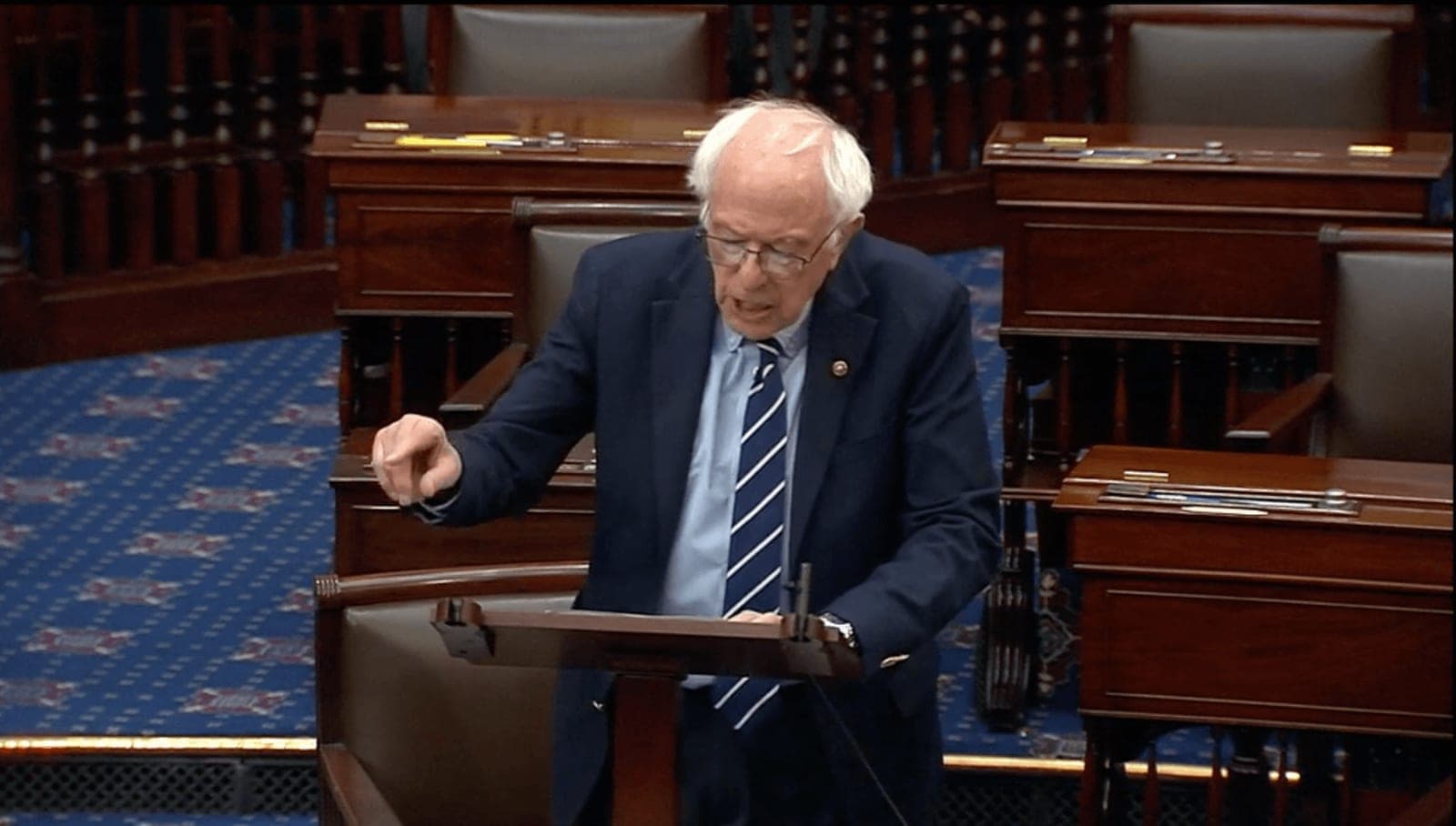
Senate again fails to block weapons to Israel
Another effort to limit U.S. arms shipments to Israel failed in the Senate on Wednesday as the body voted down a pair of measures that would block certain military sales to the country. The two joint resolutions of disapproval — one targeting a $150 million sale of 1,000-pound bombs and the other a $300 million sale of bulldozers — failed by votes of 36-63 and 40-59, respectively. The votes marked the fourth effort to restrict arms sales to Israel since the start of the war on Gaza in October 2023. The vote count marked a meaningful improvement — some are even calling it ‘historic — over the most recent similar effort in July 2025. At that time, 27 Democrats voted to block the sales, which was considered progress. As in that vote, a larger number of senators opposed the transfer of military equipment more closely associated with use in the West Bank. (In July, three more Democrats voted to block the transfer of automatic rifles distributed to settlers than voted to block the sale of certain bombs.) “As Israeli forces again use US weapons to decimate civilian towns and villages, this time in Lebanon, and violations continue in Gaza and the West Bank, Senate Democrats are making clear that there is a new consensus forming in Washington: US arms sales must comply with US and international law, without exception,” John Ramming Chappell, an adviser at the Center for Civilians in Conflict, told Responsible Statecraft. Cavan Kharrazian, senior policy advisor at Demand Progress, called the vote “historic” adding that “[t]he Overton window is shifting, and Congress is finally starting to catch up with the majority of Americans who don’t think we should keep spending taxpayer dollars to ship more weapons to Israel.” Only seven Democrats voted against both resolutions: Sens. Chuck Schumer (D-N.Y.), Chris Coons (D-Del.), Catherine Cortez-Masto (D-Nev.), Kirsten Gillibrand (D-N.Y.), Richard Blumenthal (D-Conn.), John Fetterman (D-Pa.), and Jacky Rosen (D-Nev.). The bulldozer vote — which aimed to restrict the possible sale of Caterpillar D9 bulldozers, sometimes used to destroy homes in the West Bank, Gaza, and Lebanon — was the first of its kind in the Senate. The Biden administration reportedly froze the sale of these bulldozers to Israel in November 2024, but the decision was overturned the following January. In the lead-up to the vote on Wednesday, Cindy Corrie, the mother of an American citizen killed in 2003 by a U.S-made bulldozer while trying to protect a Palestinian home from demolition, wrote a piece for The Nation urging the Senate to support the measure. “Caterpillar bulldozers are being used not to build but to destroy—to erase communities and deliberately make land uninhabitable,” Corrie wrote. “If Israel were serious about reconstruction, it would open the crossings and allow needed machinery in. Instead, it is importing American bulldozers to tear down what little remains.” Earlier in the day on Wednesday, the Senate voted for the fourth time this year to block a War Powers Resolution that would limit Trump’s ability to go to war with Iran. Once again, only Sens. Rand Paul (R-Ky.) and John Fetterman (D-Pa.) voted across party lines — Paul to vote for, Fetterman to vote against the resolution. Sen. Bernie Sanders (I-Vt.), one of the co-sponsors of the joint resolutions of disapproval, tried to explicitly tie the vote against the war in Iran and legislation on arms sales together. “[F]or Netanyahu, Gaza was not enough. Iran was not enough,” Sanders wrote in an op-ed for the Guardian. “He is now waging a full-blown war of expansion against Lebanon. That war has not only killed more than 2,000 people, but has resulted in Israel occupying 14% of Lebanese territory.” Sen. Ed Markey (D-Mass.) made a similar argument during the floor debate Wednesday. “Make no mistake: a vote to approve arms sales to Israel at this time would be seen as a message of approval for Trump and Netanyahu’s disastrous war against Iran. I will not send that message,” he said. Other Democrats, however, tried to make the case that the two votes are distinct, and that they could oppose the U.S-Israel war on Iran without voting to block the sale of bombs to Tel Aviv. Kharrazian said he is “baffled and incensed that some Democrats who just earlier today voted to block Trump and Netanyahu’s illegal, disastrous war then turned around and greenlit offensive weapons to the Israeli military” despite its ongoing war in Lebanon. “You cannot oppose a war in one vote and fuel it with bombs in the next,” he argued. The Wednesday vote was closely watched as midterms approach and the Democratic Party gears up for the 2028 presidential primary, in which policy toward Israel and the Middle East is likely to play a meaningful role. Advocates who supported the resolutions told RS that they were monitoring members rumored to be interested in running for president in 2028 who had not voted for all the prior attempts, including Sens. Ruben Gallego and Mark Kelly of Arizona, Sen. Jon Ossoff (D-Ga.), Sen. Elissa Slotkin (D-Mich.), and Sen. Cory Booker (D-N.J.). All five Senators voted in favor of both joint resolutions on Wednesday.
Senate again fails to block weapons to Israel
Another effort to limit U.S. arms shipments to Israel failed in the Senate on Wednesday as the body voted down a pair of measures that would block certain military sales to the country. The two joint resolutions of disapproval — one targeting a $150 million sale of 1,000-pound bombs and the other a $300 million sale of bulldozers — failed by votes of 36-63 and 40-59, respectively. The votes marked the fourth effort to restrict arms sales to Israel since the start of the war on Gaza in October 2023. The vote count marked a meaningful improvement — some are even calling it ‘historic — over the most recent similar effort in July 2025. At that time, 27 Democrats voted to block the sales, which was considered progress. As in that vote, a larger number of senators opposed the transfer of military equipment more closely associated with use in the West Bank. (In July, three more Democrats voted to block the transfer of automatic rifles distributed to settlers than voted to block the sale of certain bombs.) “As Israeli forces again use US weapons to decimate civilian towns and villages, this time in Lebanon, and violations continue in Gaza and the West Bank, Senate Democrats are making clear that there is a new consensus forming in Washington: US arms sales must comply with US and international law, without exception,” John Ramming Chappell, an adviser at the Center for Civilians in Conflict, told Responsible Statecraft. Cavan Kharrazian, senior policy advisor at Demand Progress, called the vote “historic” adding that “[t]he Overton window is shifting, and Congress is finally starting to catch up with the majority of Americans who don’t think we should keep spending taxpayer dollars to ship more weapons to Israel.” Only seven Democrats voted against both resolutions: Sens. Chuck Schumer (D-N.Y.), Chris Coons (D-Del.), Catherine Cortez-Masto (D-Nev.), Kirsten Gillibrand (D-N.Y.), Richard Blumenthal (D-Conn.), John Fetterman (D-Pa.), and Jacky Rosen (D-Nev.). The bulldozer vote — which aimed to restrict the possible sale of Caterpillar D9 bulldozers, sometimes used to destroy homes in the West Bank, Gaza, and Lebanon — was the first of its kind in the Senate. The Biden administration reportedly froze the sale of these bulldozers to Israel in November 2024, but the decision was overturned the following January. In the lead-up to the vote on Wednesday, Cindy Corrie, the mother of an American citizen killed in 2003 by a U.S-made bulldozer while trying to protect a Palestinian home from demolition, wrote a piece for The Nation urging the Senate to support the measure. “Caterpillar bulldozers are being used not to build but to destroy—to erase communities and deliberately make land uninhabitable,” Corrie wrote. “If Israel were serious about reconstruction, it would open the crossings and allow needed machinery in. Instead, it is importing American bulldozers to tear down what little remains.” Earlier in the day on Wednesday, the Senate voted for the fourth time this year to block a War Powers Resolution that would limit Trump’s ability to go to war with Iran. Once again, only Sens. Rand Paul (R-Ky.) and John Fetterman (D-Pa.) voted across party lines — Paul to vote for, Fetterman to vote against the resolution. Sen. Bernie Sanders (I-Vt.), one of the co-sponsors of the joint resolutions of disapproval, tried to explicitly tie the vote against the war in Iran and legislation on arms sales together. “[F]or Netanyahu, Gaza was not enough. Iran was not enough,” Sanders wrote in an op-ed for the Guardian. “He is now waging a full-blown war of expansion against Lebanon. That war has not only killed more than 2,000 people, but has resulted in Israel occupying 14% of Lebanese territory.” Sen. Ed Markey (D-Mass.) made a similar argument during the floor debate Wednesday. “Make no mistake: a vote to approve arms sales to Israel at this time would be seen as a message of approval for Trump and Netanyahu’s disastrous war against Iran. I will not send that message,” he said. Other Democrats, however, tried to make the case that the two votes are distinct, and that they could oppose the U.S-Israel war on Iran without voting to block the sale of bombs to Tel Aviv. Kharrazian said he is “baffled and incensed that some Democrats who just earlier today voted to block Trump and Netanyahu’s illegal, disastrous war then turned around and greenlit offensive weapons to the Israeli military” despite its ongoing war in Lebanon. “You cannot oppose a war in one vote and fuel it with bombs in the next,” he argued. The Wednesday vote was closely watched as midterms approach and the Democratic Party gears up for the 2028 presidential primary, in which policy toward Israel and the Middle East is likely to play a meaningful role. Advocates who supported the resolutions told RS that they were monitoring members rumored to be interested in running for president in 2028 who had not voted for all the prior attempts, including Sens. Ruben Gallego and Mark Kelly of Arizona, Sen. Jon Ossoff (D-Ga.), Sen. Elissa Slotkin (D-Mich.), and Sen. Cory Booker (D-N.J.). All five Senators voted in favor of both joint resolutions on Wednesday.
Senate again fails to block weapons to Israel
Another effort to limit U.S. arms shipments to Israel failed in the Senate on Wednesday as the body voted down a pair of measures that would block certain military sales to the country. The two joint resolutions of disapproval — one targeting a $150 million sale of 1,000-pound bombs and the other a $300 million sale of bulldozers — failed by votes of 36-63 and 40-59, respectively. The votes marked the fourth effort to restrict arms sales to Israel since the start of the war on Gaza in October 2023. The vote count marked a meaningful improvement — some are even calling it ‘historic — over the most recent similar effort in July 2025. At that time, 27 Democrats voted to block the sales, which was considered progress. As in that vote, a larger number of senators opposed the transfer of military equipment more closely associated with use in the West Bank. (In July, three more Democrats voted to block the transfer of automatic rifles distributed to settlers than voted to block the sale of certain bombs.) “As Israeli forces again use US weapons to decimate civilian towns and villages, this time in Lebanon, and violations continue in Gaza and the West Bank, Senate Democrats are making clear that there is a new consensus forming in Washington: US arms sales must comply with US and international law, without exception,” John Ramming Chappell, an adviser at the Center for Civilians in Conflict, told Responsible Statecraft. Cavan Kharrazian, senior policy advisor at Demand Progress, called the vote “historic” adding that “[t]he Overton window is shifting, and Congress is finally starting to catch up with the majority of Americans who don’t think we should keep spending taxpayer dollars to ship more weapons to Israel.” Only seven Democrats voted against both resolutions: Sens. Chuck Schumer (D-N.Y.), Chris Coons (D-Del.), Catherine Cortez-Masto (D-Nev.), Kirsten Gillibrand (D-N.Y.), Richard Blumenthal (D-Conn.), John Fetterman (D-Pa.), and Jacky Rosen (D-Nev.). The bulldozer vote — which aimed to restrict the possible sale of Caterpillar D9 bulldozers, sometimes used to destroy homes in the West Bank, Gaza, and Lebanon — was the first of its kind in the Senate. The Biden administration reportedly froze the sale of these bulldozers to Israel in November 2024, but the decision was overturned the following January. In the lead-up to the vote on Wednesday, Cindy Corrie, the mother of an American citizen killed in 2003 by a U.S-made bulldozer while trying to protect a Palestinian home from demolition, wrote a piece for The Nation urging the Senate to support the measure. “Caterpillar bulldozers are being used not to build but to destroy—to erase communities and deliberately make land uninhabitable,” Corrie wrote. “If Israel were serious about reconstruction, it would open the crossings and allow needed machinery in. Instead, it is importing American bulldozers to tear down what little remains.” Earlier in the day on Wednesday, the Senate voted for the fourth time this year to block a War Powers Resolution that would limit Trump’s ability to go to war with Iran. Once again, only Sens. Rand Paul (R-Ky.) and John Fetterman (D-Pa.) voted across party lines — Paul to vote for, Fetterman to vote against the resolution. Sen. Bernie Sanders (I-Vt.), one of the co-sponsors of the joint resolutions of disapproval, tried to explicitly tie the vote against the war in Iran and legislation on arms sales together. “[F]or Netanyahu, Gaza was not enough. Iran was not enough,” Sanders wrote in an op-ed for the Guardian. “He is now waging a full-blown war of expansion against Lebanon. That war has not only killed more than 2,000 people, but has resulted in Israel occupying 14% of Lebanese territory.” Sen. Ed Markey (D-Mass.) made a similar argument during the floor debate Wednesday. “Make no mistake: a vote to approve arms sales to Israel at this time would be seen as a message of approval for Trump and Netanyahu’s disastrous war against Iran. I will not send that message,” he said. Other Democrats, however, tried to make the case that the two votes are distinct, and that they could oppose the U.S-Israel war on Iran without voting to block the sale of bombs to Tel Aviv. Kharrazian said he is “baffled and incensed that some Democrats who just earlier today voted to block Trump and Netanyahu’s illegal, disastrous war then turned around and greenlit offensive weapons to the Israeli military” despite its ongoing war in Lebanon. “You cannot oppose a war in one vote and fuel it with bombs in the next,” he argued. The Wednesday vote was closely watched as midterms approach and the Democratic Party gears up for the 2028 presidential primary, in which policy toward Israel and the Middle East is likely to play a meaningful role. Advocates who supported the resolutions told RS that they were monitoring members rumored to be interested in running for president in 2028 who had not voted for all the prior attempts, including Sens. Ruben Gallego and Mark Kelly of Arizona, Sen. Jon Ossoff (D-Ga.), Sen. Elissa Slotkin (D-Mich.), and Sen. Cory Booker (D-N.J.). All five Senators voted in favor of both joint resolutions on Wednesday.

Trump risks war backlash from the heartland: American farmers
The already fragile two-week ceasefire between the United States and Iran appeared to give way over the weekend, after talks in Islamabad collapsed and President Donald Trump ordered a U.S. naval blockade of the Strait of Hormuz, a critical node for global energy and commodity flows. Trump said in a Saturday Truth Social post that he was “watching fertilizer prices CLOSELY during our FIGHT FOR FREEDOM in Iran.” “The United States will not accept PRICE GOUGING from the fertilizer monopoly! American Farmers, we have your back,” he added. For the global fertilizer market, uncertainty is already baked in. Even if an agreement is eventually reached and shipping resumes, industry analysts and market participants see little hope for a complete reversal of the sharp price increases and supply disruptions triggered by the war. The six-week-long closure of the Strait of Hormuz has had widespread effects across the global economy, contributing to an energy crunch that pushed up oil and gas prices and disrupted supply chains. Among the industries most directly affected is fertilizer, which depends heavily on both energy inputs and steady global shipping flows. The disruption is acute for nitrogen fertilizers such as urea. Nearly half of global urea exports originate in countries west of the Strait of Hormuz and depend on the route to reach global markets. Fertilizers like these make up somewhere between 33% and 45% of operating expenses for major American corn and wheat crops, according to nonprofit Farm Action. “The price of [dry urea] in January to February was $560 per ton,” Ben Vig, a farmer and former state representative in North Dakota, told Responsible Statecraft. “At the end of March it was $770 per ton.” According to Vig, that amounts to costs of $140 per acre to fertilize wheat and $135 per acre to fertilize corn, an increase of nearly $40 per acre. Even though about three-quarters of the fertilizer used in the United States is produced inside the country, domestic costs are nonetheless dependent on the international market. The United States relies on imports of ingredients (potash, phosphate, nitrogen) used in fertilizers made here, as well as fertilizers themselves, such as ammonia and urea, whose production depends heavily on natural gas. Disruptions to gas supplies and rising energy costs in the gulf are pushing prices even higher for American farmers. "Our biggest struggles are our inputs, be it fertilizer, seed, chemical, parts," one farmer in Nebraska recently told PBS. "There has been so much drastic markup in all of these. And I just kind of feel like the farmer's kind of painted in the corner." The Gulf is not just a transit route but a major production hub for fertilizer tied to the region’s natural gas supplies. During the height of the conflict, key producers were effectively cut off from global markets, while some facilities were forced to slow or halt operations as gas shipments stalled. A group of Democratic lawmakers warned the secretary of agriculture late last month that “the supply side pressure will push prices up even further as nations that are dependent on supply from the Gulf seek alternate sources.” A reopening of the strait would not immediately restore production because facilities may take weeks to restart and ramp up. Because both fertilizer imports and the inputs used to produce it are being disrupted, farmers are facing a tight squeeze, leading to both higher prices and uncertainty over supply. At the same time, even if the conflict pauses in the near future, uncertainty is likely to keep shipping costs elevated, as insurers and vessel operators wait for clearer signs that the region has stabilized. “Prices could ease further into Q2 to Q3 if the ceasefire is extended, though they are likely to remain above 2025 averages due to lost volumes and higher financing and insurance costs,” Deepika Thapliyal, a global fertilizer analyst with the Independent Commodity Intelligence Services, told Farm Progress. “Any breakdown in talks would quickly tighten the urea, ammonia and sulfur supply and lead to more spikes.” The timeline for recovery may not align with the realities of the agricultural season. Even if shipments begin to move again, the structure of the fertilizer supply chain and the timing of the disruption mean relief may not come quickly. “To get product from around the world, we have to put the order in, and once we put the order in, it takes four weeks for a cargo ship to go from one side of the planet to another, and then it all goes to [an import hub in] New Orleans, and it takes three to four weeks from a cargo ship to a barge, and then the barge up the river,” Vig told RS. “So, we’re looking at maybe a seven-week period.” With the Midwest planting season in April and May, some farmers did place their spring orders before the current spike, but many others either locked in fertilizer at elevated prices or cut back orders. Roughly one-quarter of farmers had not placed their orders by early April, according to the Department of Agriculture, and will now be left scrambling to secure supply if shipments resume. As fertilizer prices surge at a critical moment for planting, some lawmakers are becoming increasingly concerned that the disruption could lead to a crisis. “In addition to the needless loss of life in the Middle East, fertilizer and diesel costs are skyrocketing at the beginning of growing season, adding to the struggles farmers have faced since the beginning of President Trump’s second term,” Sen. Peter Welch (D-Vt.), who sits on the Senate Committee on Agriculture, told RS in a statement. “At a time when global food insecurity was already on the rise due to this administration’s aid cuts and climate change, this war threatens to turn global hunger into a full-blown crisis.” Without a sustained de-escalation that restores both production capacity and confidence in global shipping routes, the fertilizer market is likely to remain tight, with the risk that today’s disruption leads to lower crop yields and higher food prices in the months ahead.

Emergency waivers move arms for Israel, UAE to speed lane
Amid its war on Iran — now frozen by a tenuous ceasefire — the Trump administration has been exploiting emergency waivers to fast-track controversial foreign arms sales to Israel and Gulf states, tossing congressional oversight to the wayside. On March 6, Secretary of State Marco Rubio invoked the Arms Export Control Act’s emergency waiver provision to bypass congressional review of a nearly $660 million weapons sale to Israel — citing the existence of “an emergency… that requires the immediate sale.” Two weeks later, the State Department similarly skipped over Congress and approved at least $16.5 billion in potential weapons sales to the United Arab Emirates (UAE), Jordan and Kuwait for various missiles and weapons systems. The Trump administration justifies these emergency waivers on the grounds that U.S. strategic partners urgently need these capabilities. But experts stress they could erode critical congressional oversight over foreign arms sales — a sensitive matter given that such weapons, in the wrong hands, can be used to fuel and prolong conflict, and carry out human rights abuses. The growing practice The U.S. war on Iran is not the first time the waivers, which allow a foreign arms sale to bypass the 15-30 day period granted for congressional review, have been used. Back in 2019, then Secretary of State Mike Pompeo controversially waived the congressional review window for arms sales to Jordan, Saudi Arabia, and the United Arab Emirates, contending that “Iranian aggression” and “increasing regional volatility” in the Middle East made it necessary to do so. The practice has become more frequent since, spanning administrations. The Biden administration expedited U.S. weapons sales to Ukraine, amid conflict there in 2022 and 2024, and also to Israel in late 2023 for its war on Gaza. While these emergency waivers are intended to fast track arms to U.S. partners during crises, their repeated invocation — amid a conflict the U.S. has helped provoke — leads experts to wonder if the Administration is trying to normalize the use of the exceptional practice, as a means to sap congressional oversight from foreign arms sales. “A war or a crisis is a necessary, but not sufficient, condition to justify the use of this emergency authority,” Elias Yousif, the deputy director of the Conventional Defense Program at the Stimson Center, told RS. “What [we] see now is a much more routine use of the [emergency waiver] authority, which begs the question: are there simply more emergencies, or are we normalizing this extraordinary power?” Officials contend that the arms transfers are an urgent matter, but many of these weapons will not reach their intended destinations anytime soon. As Rep. Gregory Meeks (D- N.Y.) observes in a recent statement, only one of the handful of defense articles to be sent to the UAE, Kuwait and Jordan, is currently available for export. Nearly all the State Department sales announcements likewise indicate that defense contractors still have to produce the arms to be sent — although some bombs sent to Israel will “be transferred from stock.” Given the extended timelines of weapons manufacturing, the decision to forego a 15-30 day waiting period suggests “this is about avoiding scrutiny, rather than addressing the risks faced by allies and partners in the region,” Yousif said. William Hartung of the Quincy Institute, which publishes RS, contends the long-term goal may be to use the war to “establish a new standard, where they just ignore Congress whenever possible.” Push for oversight Lawmakers warn that, by sidestepping Congress, the administration is greenlighting arms sales that could fuel conflict, and in some cases enable war crimes. In a press release, Meeks underscored the humanitarian risks of selling weapons to the UAE, which arms the Sudanese Rapid Support Forces (RSF) — a paramilitary force perpetrating human rights abuses in Sudan’s Darfur region. “This arms transfer reflects a broader pattern: ignoring the law, bypassing Congress, and making major national security decisions without transparency or accountability,” Meeks said. Lawmakers have expressed particular frustration over U.S. arms sales to Israel, which, amid a shaky truce with Iran, continues to attack Lebanon. Israel has also continued to break the ceasefire in Gaza, where it has killed tens of thousands of civilians. Aiming to block the waived-through March Israel arms sales, Sen. Bernie Sanders (I-Vt.) has filed three Joint Resolutions of Disapproval (JRDs); he is slated to force votes on them sometime after Congress returns from recess. “Given the horrific destruction that Israel’s extremist government has wrought on Gaza, Iran and Lebanon, the last thing in the world that American taxpayers need to do right now is to provide 22,000 new bombs to the Netanyahu government,” Sen. Sanders said. “No more weapons to support an illegal war.” “Trump not only disregarded Congressional authority to declare this war, he’s now bypassing Congress by invoking an emergency authority to supply additional bombs to this war, a crisis of his own making,” Sen. Chris Van Hollen (D-Md.), who cosponsors Sanders’ JRDs, said. Further adding to their frustrations is the fact that the sales to Israel will be funded with Foreign Military Financing (FMF), a U.S. military aid program that gives Israel more than $3.3 billion to use toward its military capacities each year — meaning U.S. taxpayers are footing the bill. Congress has yet to successfully block a proposed foreign arms sale with a Joint Resolution of Disapproval. As an advocate who engages lawmakers on issues related to the war on Iran told RS on the condition of anonymity, Sen. Sanders’ JRDs are also unlikely to pass due to Republican lawmakers’ opposition to them; however, the legislation helps reassert the importance of congressional oversight over controversial foreign arms sales.
Emergency waivers move arms for Israel, UAE to speed lane
Amid its war on Iran — now frozen by a tenuous ceasefire — the Trump administration has been exploiting emergency waivers to fast-track controversial foreign arms sales to Israel and Gulf states, tossing congressional oversight to the wayside. On March 6, Secretary of State Marco Rubio invoked the Arms Export Control Act’s emergency waiver provision to bypass congressional review of a nearly $660 million weapons sale to Israel — citing the existence of “an emergency… that requires the immediate sale.” Two weeks later, the State Department similarly skipped over Congress and approved at least $16.5 billion in potential weapons sales to the United Arab Emirates (UAE), Jordan and Kuwait for various missiles and weapons systems. The Trump administration justifies these emergency waivers on the grounds that U.S. strategic partners urgently need these capabilities. But experts stress they could erode critical congressional oversight over foreign arms sales — a sensitive matter given that such weapons, in the wrong hands, can be used to fuel and prolong conflict, and carry out human rights abuses. The growing practice The U.S. war on Iran is not the first time the waivers, which allow a foreign arms sale to bypass the 15-30 day period granted for congressional review, have been used. Back in 2019, then Secretary of State Mike Pompeo controversially waived the congressional review window for arms sales to Jordan, Saudi Arabia, and the United Arab Emirates, contending that “Iranian aggression” and “increasing regional volatility” in the Middle East made it necessary to do so. The practice has become more frequent since, spanning administrations. The Biden administration expedited U.S. weapons sales to Ukraine, amid conflict there in 2022 and 2024, and also to Israel in late 2023 for its war on Gaza. While these emergency waivers are intended to fast track arms to U.S. partners during crises, their repeated invocation — amid a conflict the U.S. has helped provoke — leads experts to wonder if the Administration is trying to normalize the use of the exceptional practice, as a means to sap congressional oversight from foreign arms sales. “A war or a crisis is a necessary, but not sufficient, condition to justify the use of this emergency authority,” Elias Yousif, the deputy director of the Conventional Defense Program at the Stimson Center, told RS. “What [we] see now is a much more routine use of the [emergency waiver] authority, which begs the question: are there simply more emergencies, or are we normalizing this extraordinary power?” Officials contend that the arms transfers are an urgent matter, but many of these weapons will not reach their intended destinations anytime soon. As Rep. Gregory Meeks (D- N.Y.) observes in a recent statement, only one of the handful of defense articles to be sent to the UAE, Kuwait and Jordan, is currently available for export. Nearly all the State Department sales announcements likewise indicate that defense contractors still have to produce the arms to be sent — although some bombs sent to Israel will “be transferred from stock.” Given the extended timelines of weapons manufacturing, the decision to forego a 15-30 day waiting period suggests “this is about avoiding scrutiny, rather than addressing the risks faced by allies and partners in the region,” Yousif said. William Hartung of the Quincy Institute, which publishes RS, contends the long-term goal may be to use the war to “establish a new standard, where they just ignore Congress whenever possible.” Push for oversight Lawmakers warn that, by sidestepping Congress, the administration is greenlighting arms sales that could fuel conflict, and in some cases enable war crimes. In a press release, Meeks underscored the humanitarian risks of selling weapons to the UAE, which arms the Sudanese Rapid Support Forces (RSF) — a paramilitary force perpetrating human rights abuses in Sudan’s Darfur region. “This arms transfer reflects a broader pattern: ignoring the law, bypassing Congress, and making major national security decisions without transparency or accountability,” Meeks said. Lawmakers have expressed particular frustration over U.S. arms sales to Israel, which, amid a shaky truce with Iran, continues to attack Lebanon. Israel has also continued to break the ceasefire in Gaza, where it has killed tens of thousands of civilians. Aiming to block the waived-through March Israel arms sales, Sen. Bernie Sanders (I-Vt.) has filed three Joint Resolutions of Disapproval (JRDs); he is slated to force votes on them sometime after Congress returns from recess. “Given the horrific destruction that Israel’s extremist government has wrought on Gaza, Iran and Lebanon, the last thing in the world that American taxpayers need to do right now is to provide 22,000 new bombs to the Netanyahu government,” Sen. Sanders said. “No more weapons to support an illegal war.” “Trump not only disregarded Congressional authority to declare this war, he’s now bypassing Congress by invoking an emergency authority to supply additional bombs to this war, a crisis of his own making,” Sen. Chris Van Hollen (D-Md.), who cosponsors Sanders’ JRDs, said. Further adding to their frustrations is the fact that the sales to Israel will be funded with Foreign Military Financing (FMF), a U.S. military aid program that gives Israel more than $3.3 billion to use toward its military capacities each year — meaning U.S. taxpayers are footing the bill. Congress has yet to successfully block a proposed foreign arms sale with a Joint Resolution of Disapproval. As an advocate who engages lawmakers on issues related to the war on Iran told RS on the condition of anonymity, Sen. Sanders’ JRDs are also unlikely to pass due to Republican lawmakers’ opposition to them; however, the legislation helps reassert the importance of congressional oversight over controversial foreign arms sales.
Emergency waivers move arms for Israel, UAE to speed lane
Amid its war on Iran — now frozen by a tenuous ceasefire — the Trump administration has been exploiting emergency waivers to fast-track controversial foreign arms sales to Israel and Gulf states, tossing congressional oversight to the wayside. On March 6, Secretary of State Marco Rubio invoked the Arms Export Control Act’s emergency waiver provision to bypass congressional review of a nearly $660 million weapons sale to Israel — citing the existence of “an emergency… that requires the immediate sale.” Two weeks later, the State Department similarly skipped over Congress and approved at least $16.5 billion in potential weapons sales to the United Arab Emirates (UAE), Jordan and Kuwait for various missiles and weapons systems. The Trump administration justifies these emergency waivers on the grounds that U.S. strategic partners urgently need these capabilities. But experts stress they could erode critical congressional oversight over foreign arms sales — a sensitive matter given that such weapons, in the wrong hands, can be used to fuel and prolong conflict, and carry out human rights abuses. The growing practice The U.S. war on Iran is not the first time the waivers, which allow a foreign arms sale to bypass the 15-30 day period granted for congressional review, have been used. Back in 2019, then Secretary of State Mike Pompeo controversially waived the congressional review window for arms sales to Jordan, Saudi Arabia, and the United Arab Emirates, contending that “Iranian aggression” and “increasing regional volatility” in the Middle East made it necessary to do so. The practice has become more frequent since, spanning administrations. The Biden administration expedited U.S. weapons sales to Ukraine, amid conflict there in 2022 and 2024, and also to Israel in late 2023 for its war on Gaza. While these emergency waivers are intended to fast track arms to U.S. partners during crises, their repeated invocation — amid a conflict the U.S. has helped provoke — leads experts to wonder if the Administration is trying to normalize the use of the exceptional practice, as a means to sap congressional oversight from foreign arms sales. “A war or a crisis is a necessary, but not sufficient, condition to justify the use of this emergency authority,” Elias Yousif, the deputy director of the Conventional Defense Program at the Stimson Center, told RS. “What [we] see now is a much more routine use of the [emergency waiver] authority, which begs the question: are there simply more emergencies, or are we normalizing this extraordinary power?” Officials contend that the arms transfers are an urgent matter, but many of these weapons will not reach their intended destinations anytime soon. As Rep. Gregory Meeks (D- N.Y.) observes in a recent statement, only one of the handful of defense articles to be sent to the UAE, Kuwait and Jordan, is currently available for export. Nearly all the State Department sales announcements likewise indicate that defense contractors still have to produce the arms to be sent — although some bombs sent to Israel will “be transferred from stock.” Given the extended timelines of weapons manufacturing, the decision to forego a 15-30 day waiting period suggests “this is about avoiding scrutiny, rather than addressing the risks faced by allies and partners in the region,” Yousif said. William Hartung of the Quincy Institute, which publishes RS, contends the long-term goal may be to use the war to “establish a new standard, where they just ignore Congress whenever possible.” Push for oversight Lawmakers warn that, by sidestepping Congress, the administration is greenlighting arms sales that could fuel conflict, and in some cases enable war crimes. In a press release, Meeks underscored the humanitarian risks of selling weapons to the UAE, which arms the Sudanese Rapid Support Forces (RSF) — a paramilitary force perpetrating human rights abuses in Sudan’s Darfur region. “This arms transfer reflects a broader pattern: ignoring the law, bypassing Congress, and making major national security decisions without transparency or accountability,” Meeks said. Lawmakers have expressed particular frustration over U.S. arms sales to Israel, which, amid a shaky truce with Iran, continues to attack Lebanon. Israel has also continued to break the ceasefire in Gaza, where it has killed tens of thousands of civilians. Aiming to block the waived-through March Israel arms sales, Sen. Bernie Sanders (I-Vt.) has filed three Joint Resolutions of Disapproval (JRDs); he is slated to force votes on them sometime after Congress returns from recess. “Given the horrific destruction that Israel’s extremist government has wrought on Gaza, Iran and Lebanon, the last thing in the world that American taxpayers need to do right now is to provide 22,000 new bombs to the Netanyahu government,” Sen. Sanders said. “No more weapons to support an illegal war.” “Trump not only disregarded Congressional authority to declare this war, he’s now bypassing Congress by invoking an emergency authority to supply additional bombs to this war, a crisis of his own making,” Sen. Chris Van Hollen (D-Md.), who cosponsors Sanders’ JRDs, said. Further adding to their frustrations is the fact that the sales to Israel will be funded with Foreign Military Financing (FMF), a U.S. military aid program that gives Israel more than $3.3 billion to use toward its military capacities each year — meaning U.S. taxpayers are footing the bill. Congress has yet to successfully block a proposed foreign arms sale with a Joint Resolution of Disapproval. As an advocate who engages lawmakers on issues related to the war on Iran told RS on the condition of anonymity, Sen. Sanders’ JRDs are also unlikely to pass due to Republican lawmakers’ opposition to them; however, the legislation helps reassert the importance of congressional oversight over controversial foreign arms sales.

Why did mainstream media slow-walk coverage of school attack?
As the U.S. war with Iran rages, mainstream media’s slow response to a probable U.S. attack on an Iranian school suggests it is hesitant to report on the conflict’s growing human toll. The attack occurred on February 28 in Minab, Iran, and killed at least 165 people — mostly school-aged children. Although the U.S. stresses it would not deliberately attack a school, subsequent investigation by American military investigators points the finger at Washington, as do remnants of a U.S.-made Tomahawk missile recovered from the site. (Only the U.S., the UK, and Australia have Tomahawk missiles.) CBS news reported that the strike on the school might have been an accident, perhaps sprung from outdated intelligence wrongly identifying it as still part of a nearby Iranian base. Although the Trump administration says it is investigating the attack, President Trump has repeatedly asserted that an Iranian misfire, rather than a U.S. attack, was behind it. That assertion is now sparking critical questions from reporters. As New York Times reporter Shawn McCreese pressed President Trump yesterday: “You just suggested Iran got a Tomahawk and bombed its own elementary school. But you're the only person in your government saying this. Even your defense secretary wouldn't say that. Why are you the only person saying this?” That forced Trump to admit he “didn’t know enough” about the school attack, but would accept the findings of an investigation on it. “Whatever the report shows, I’m willing to live with that report,” Trump said yesterday. But the skepticism has been slow to arrive, and the press has ultimately made some critical stumbles covering the school attack. On NBC’s Meet the Press Sunday, Kristen Welker toed the U.S. line, asking Iranian Foreign Minister Abbas Araghchi: “President Trump said Iran is responsible for [the school] strike. What is your response?” After Araghchi responded that the U.S. likely struck the school, Welker pressed him for evidence — failing to mention reporting suggesting the U.S. was behind the attack. Moreover, the school attack did not at first receive substantive coverage in major outlets, despite its severity. As media analyst Adam Johnson observed on his Substack, the attack did not garner any front page coverage by New York Times, The Washington Post or The Wall Street Journal from February 28 through March 4. “I am really shocked at the almost non-reporting…of the striking of a school in Iran in which 80–100 children may have been killed,” Ben de Pear, a former editor at Channel 4 News, wrote on social media. “I fear that we have become so inured to the killing of children in Gaza, that the destruction of the [girls’] school” has been “completely drowned out.” “In the days that followed [the attack], you could watch the wall-to-wall coverage on U.S. cable news networks for hours, including the supposedly more progressive MS Now, and not see anything about the atrocity — even though there was plenty of visual evidence available,” observed James North, Mondoweiss’ Editor at Large. As Gregory Shupak, who teaches media studies at the University of Guelph in Canada, tells RS, many articles covering the U.S.-Israeli war on Iran do not even mention the school attack. Shupak used the media aggregator Factiva to assess how much the New York Times, Wall Street Journal, and Washington Post have covered the incident. These outlets published 318 pieces that mentioned both Iran and the U.S. between from March 1 to March 9, but only 59 of those articles contained the word school, according to Shupak. “That’s just 19%,” he said. “In other words, 81% of the material these outlets have run on the U.S.-Israeli war of aggression overlooks this horrific massacre, which suggest[s] that they don’t think the slaughter is terribly important or a crime that ought to have a major impact on how their audiences understand the war and its stakes.” “This atrocity has received far too little attention in coverage of the U.S.-Israeli war on Iran,” Shupak stressed. Senators Brian Schatz (D - Hawaii), Patty Murray (D - Wash.), Jeanne Shaheen (D - N.H.), Jack Reed (D - R.I.), Mark Warner (D - Va.), and Chris Coons (D - Del.), released a statement demanding a probe into the school attack Sunday, signaling public anger over it is growing. “The killing of school children is appalling and unacceptable under any circumstance. This incident is particularly concerning in light of Secretary Hegseth’s openly cavalier approach to the use of force, including his statement that U.S. strikes in Iran wouldn’t be bound by ‘stupid rules of engagement,’ in his words,” the lawmakers wrote. The civilian toll of the war in Iran, where Al Jazeera reports the U.S. and Israel have struck more than 20 schools, continues to mount. The Iranian government reports at least 1,300 people have died.
Why did mainstream media slow-walk coverage of school attack?
As the U.S. war with Iran rages, mainstream media’s slow response to a probable U.S. attack on an Iranian school suggests it is hesitant to report on the conflict’s growing human toll. The attack occurred on February 28 in Minab, Iran, and killed at least 165 people — mostly school-aged children. Although the U.S. stresses it would not deliberately attack a school, subsequent investigation by American military investigators points the finger at Washington, as do remnants of a U.S.-made Tomahawk missile recovered from the site. (Only the U.S., the UK, and Australia have Tomahawk missiles.) CBS news reported that the strike on the school might have been an accident, perhaps sprung from outdated intelligence wrongly identifying it as still part of a nearby Iranian base. Although the Trump administration says it is investigating the attack, President Trump has repeatedly asserted that an Iranian misfire, rather than a U.S. attack, was behind it. That assertion is now sparking critical questions from reporters. As New York Times reporter Shawn McCreese pressed President Trump yesterday: “You just suggested Iran got a Tomahawk and bombed its own elementary school. But you're the only person in your government saying this. Even your defense secretary wouldn't say that. Why are you the only person saying this?” That forced Trump to admit he “didn’t know enough” about the school attack, but would accept the findings of an investigation on it. “Whatever the report shows, I’m willing to live with that report,” Trump said yesterday. But the skepticism has been slow to arrive, and the press has ultimately made some critical stumbles covering the school attack. On NBC’s Meet the Press Sunday, Kristen Welker toed the U.S. line, asking Iranian Foreign Minister Abbas Araghchi: “President Trump said Iran is responsible for [the school] strike. What is your response?” After Araghchi responded that the U.S. likely struck the school, Welker pressed him for evidence — failing to mention reporting suggesting the U.S. was behind the attack. Moreover, the school attack did not at first receive substantive coverage in major outlets, despite its severity. As media analyst Adam Johnson observed on his Substack, the attack did not garner any front page coverage by New York Times, The Washington Post or The Wall Street Journal from February 28 through March 4. “I am really shocked at the almost non-reporting…of the striking of a school in Iran in which 80–100 children may have been killed,” Ben de Pear, a former editor at Channel 4 News, wrote on social media. “I fear that we have become so inured to the killing of children in Gaza, that the destruction of the [girls’] school” has been “completely drowned out.” “In the days that followed [the attack], you could watch the wall-to-wall coverage on U.S. cable news networks for hours, including the supposedly more progressive MS Now, and not see anything about the atrocity — even though there was plenty of visual evidence available,” observed James North, Mondoweiss’ Editor at Large. As Gregory Shupak, who teaches media studies at the University of Guelph in Canada, tells RS, many articles covering the U.S.-Israeli war on Iran do not even mention the school attack. Shupak used the media aggregator Factiva to assess how much the New York Times, Wall Street Journal, and Washington Post have covered the incident. These outlets published 318 pieces that mentioned both Iran and the U.S. between from March 1 to March 9, but only 59 of those articles contained the word school, according to Shupak. “That’s just 19%,” he said. “In other words, 81% of the material these outlets have run on the U.S.-Israeli war of aggression overlooks this horrific massacre, which suggest[s] that they don’t think the slaughter is terribly important or a crime that ought to have a major impact on how their audiences understand the war and its stakes.” “This atrocity has received far too little attention in coverage of the U.S.-Israeli war on Iran,” Shupak stressed. Senators Brian Schatz (D - Hawaii), Patty Murray (D - Wash.), Jeanne Shaheen (D - N.H.), Jack Reed (D - R.I.), Mark Warner (D - Va.), and Chris Coons (D - Del.), released a statement demanding a probe into the school attack Sunday, signaling public anger over it is growing. “The killing of school children is appalling and unacceptable under any circumstance. This incident is particularly concerning in light of Secretary Hegseth’s openly cavalier approach to the use of force, including his statement that U.S. strikes in Iran wouldn’t be bound by ‘stupid rules of engagement,’ in his words,” the lawmakers wrote. The civilian toll of the war in Iran, where Al Jazeera reports the U.S. and Israel have struck more than 20 schools, continues to mount. The Iranian government reports at least 1,300 people have died.

Despite ban, pernicious military 'earmarks' are back in the billions
A new report finds that lawmakers added nearly $34 billion to the Pentagon’s procurement and research accounts for FY2026, through 1,090 individual program increases, many of which the Defense Department did not even request funds for. Although individual program increases are not earmarks, they serve a similar function. Formal earmarks themselves were temporarily banned in 2011 to curb lawmaker-driven runaway spending, then reintroduced in 2021 by Rep. Rosa DeLauro (D-Conn.) and Sen. Patrick Leahy (D-Vt.) as “Community Project Funding,” and “Congressionally Directed Spending (CDS)” in the House and Senate respectively — and subject to transparency requirements, where lawmakers must associate themselves with the earmarks they propose. But those transparency requirements do not apply to individual program increases, because Congress considers them to be competitively awarded — allowing lawmakers to use program increases like backdoor earmarks, directing funds to favored projects unscrutinized. “In most cases, we have no idea who is proposing which increases or why,” said Gabe Murphy, a policy analyst at Taxpayers for Common Sense, a Washington, DC-based watchdog group that published the report. “Only 32 of the 1,090 increases we catalogued in Procurement, and Research, Development, Test, and Evaluation accounts were supported in floor amendments, which list their sponsors. The remaining 1,058, or 97%, don't list any sponsor.” Funding for defense needs, or pet projects? Unless they propose program increases through amendments taken to the House or Senate floor, lawmakers do not need to identify themselves as sponsors for program increases in the Pentagon budget. But a small minority of lawmakers individually boast about their increases openly, frequently hailing them as projects that benefit their respective districts or states. Often, these projects also benefit the defense contractors and affiliated lobbyists which supported their re-election campaigns — underscoring the practice’s potential for conflicts of interest. Sen. Katie Britt (R-Al.), for example, took credit last summer for a proposed $220 million funding increase for 15 Abrams tanks in the Senate version of the FY 2026 Department of Defense Appropriations Act — a move that would support work in her district. (The final version of that bill included a $58.8 million program increase, for four Abrams tanks.) General Dynamics, which makes those tanks, donated $16,000 to Britt’s Senate campaign over the previous two election cycles. Between 2023 and 2024, moreover, General Dynamics also paid $390,000 in lobbying fees to Cornerstone Government Affairs; in turn, individuals affiliated with Cornerstone donated more than $43,000 to Britt’s campaign committee and leadership PAC for the 2024 election cycle. Rep. Don Bacon (R-Neb.) announced the “successful inclusion…of Nebraska priorities,” in the FY 2026 defense appropriations bill, such as $474.4 million for two EA-37B Compass Call aircraft for the 55th Wing, stationed at Offutt Air Force Base in his home state. Between 2019 and 2024, PACs and individuals linked to defense manufacturers L3Harris, BAE Systems, and General Dynamics, which make parts or systems technologies for the aircraft, together contributed more than $145,000 to Rep. Bacon’s campaign committee and leadership PAC. Likewise, Sen. Deb Fischer (R-Neb.) published a press release that said she "advanced over $200 million for key national and Nebraska-based defense programs,” including a $60 million FY 2026 defense budget increase for MH-139 Grey Wolf helicopters. Before that backdoor earmark, individuals and PACs associated with Boeing — the MH-139’s primary manufacturer — donated over $34,000 in contributions to Fischer’s 2024 Senate campaign. Boeing also paid about $370,000 in lobbying fees to Cornerstone Government Affairs; individuals associated with that firm, including those lobbying for Boeing, gave almost $8,000 to Fischer’s 2024 Senate campaign. Rep. Susie Lee (D-Nev.), requested $30 million for the Sierra Nevada Corporation’s UH-60M DVEPS Integration for FY2026, countering the Pentagon’s decision to pause funding for the helicopter pilotage system. After conversations with the defense contractor about DVEPS funding, Rep. Lee said she proposed the increase to help fund a system that would improve flight safety and visibility in dangerous conditions. “Seeking to improve servicemember safety is a perfectly valid motivation for a program increase,” the Taxpayers for Common Sense report stressed, crediting Lee for disclosing her conversations with the Sierra Nevada Corporation about DVEPS funding. “Still, the lack of transparency in the program increase process means that, were it not for Rep. Lee’s voluntary disclosure, no one would know who proposed the increase.” As the report mentions, the Sierra Nevada Corporation’s PAC contributed $11,500 to Rep. Lee’s previous two re-election campaigns. Growing consequences Backdoor earmarks also whisk funding away from important DoD programs, or otherwise tack onto an already runaway Pentagon budget — which has now surpassed $1 trillion, and could ratchet up even higher as lawmakers consider billions in supplemental Pentagon funding for the new war on Iran. According to the report, three-quarters of the increases proposed for FY 2026 funded projects the DoD did not request funds for in its budget request. For FY 2026, Congress appropriated $1.3 billion less than the Pentagon requested for Operations and Maintenance (O&M), which maintains important military equipment and facilities. Because many of the amendments proposed included O&M cuts, the Taxpayers for Common Sense report deems it “safe to assume” the funding cut helped pay for lawmakers’ backdoor earmarks. But this funding “offset” also targeted important project elements. Flight training funding was slashed by $20 million — even while aviation accidents, which stem in part from declining training resources, are on the rise. “Some of these [program] increases are offset by cuts within the Pentagon budget, and some of those cuts of course have consequences for national security,” Murphy told RS. “Lawmakers often aren't grappling with the tradeoffs that they're making by proposing these increases.” “Some of the increases are not offset, but rather result in a higher [Pentagon budget] topline,” he continued. “Congress added $8.4 billion to the president's budget request this year.” Perhaps buoyed by lawmakers’ anonymity, backdoor earmarks’ price tag is growing: since FY 2024, the average cost per program increase has surged by about 60%, even as the total number of requests grew by less than 2%. “Backdoor earmarks are fertile soil for growing even more wasteful spending in the Pentagon's already bloated trillion-dollar budget,” Benjamin Freeman, director of the Democratizing Foreign Policy program at the Quincy Institute, told RS. “It's politicians putting what's good for them or their district ahead of what's good for the nation. When they're doing that with Pentagon funding, it not only wastes money, it makes us all a little less safe.” “That's bad enough when one member does it, but with more than 500 members of Congress, it's spawned the broken war machine, where we spend more and more and get less and less security every single year,” Freeman said. Transparency needed The report recommends Congress require backdoor earmark sponsors to publicly associate themselves with their proposals, offer justifications and long-term cost assessments for them, and indicate which companies might receive contract awards because of them. “We're calling for transparency. If lawmakers truly believe their proposals are necessary for national security, they should jump at the chance to identify themselves as sponsors and explain their rationale,” Murphy told RS. “Bringing some jobs to their state or district or securing contracts for campaign contributors are not sufficient reasons for piling more tax dollars onto the trillion-dollar Pentagon budget.”
Despite ban, pernicious military 'earmarks' are back in the billions
A new report finds that lawmakers added nearly $34 billion to the Pentagon’s procurement and research accounts for FY2026, through 1,090 individual program increases, many of which the Defense Department did not even request funds for. Although individual program increases are not earmarks, they serve a similar function. Formal earmarks themselves were temporarily banned in 2011 to curb lawmaker-driven runaway spending, then reintroduced in 2021 by Rep. Rosa DeLauro (D-Conn.) and Sen. Patrick Leahy (D-Vt.) as “Community Project Funding,” and “Congressionally Directed Spending (CDS)” in the House and Senate respectively — and subject to transparency requirements, where lawmakers must associate themselves with the earmarks they propose. But those transparency requirements do not apply to individual program increases, because Congress considers them to be competitively awarded — allowing lawmakers to use program increases like backdoor earmarks, directing funds to favored projects unscrutinized. “In most cases, we have no idea who is proposing which increases or why,” said Gabe Murphy, a policy analyst at Taxpayers for Common Sense, a Washington, DC-based watchdog group that published the report. “Only 32 of the 1,090 increases we catalogued in Procurement, and Research, Development, Test, and Evaluation accounts were supported in floor amendments, which list their sponsors. The remaining 1,058, or 97%, don't list any sponsor.” Funding for defense needs, or pet projects? Unless they propose program increases through amendments taken to the House or Senate floor, lawmakers do not need to identify themselves as sponsors for program increases in the Pentagon budget. But a small minority of lawmakers individually boast about their increases openly, frequently hailing them as projects that benefit their respective districts or states. Often, these projects also benefit the defense contractors and affiliated lobbyists which supported their re-election campaigns — underscoring the practice’s potential for conflicts of interest. Sen. Katie Britt (R-Al.), for example, took credit last summer for a proposed $220 million funding increase for 15 Abrams tanks in the Senate version of the FY 2026 Department of Defense Appropriations Act — a move that would support work in her district. (The final version of that bill included a $58.8 million program increase, for four Abrams tanks.) General Dynamics, which makes those tanks, donated $16,000 to Britt’s Senate campaign over the previous two election cycles. Between 2023 and 2024, moreover, General Dynamics also paid $390,000 in lobbying fees to Cornerstone Government Affairs; in turn, individuals affiliated with Cornerstone donated more than $43,000 to Britt’s campaign committee and leadership PAC for the 2024 election cycle. Rep. Don Bacon (R-Neb.) announced the “successful inclusion…of Nebraska priorities,” in the FY 2026 defense appropriations bill, such as $474.4 million for two EA-37B Compass Call aircraft for the 55th Wing, stationed at Offutt Air Force Base in his home state. Between 2019 and 2024, PACs and individuals linked to defense manufacturers L3Harris, BAE Systems, and General Dynamics, which make parts or systems technologies for the aircraft, together contributed more than $145,000 to Rep. Bacon’s campaign committee and leadership PAC. Likewise, Sen. Deb Fischer (R-Neb.) published a press release that said she "advanced over $200 million for key national and Nebraska-based defense programs,” including a $60 million FY 2026 defense budget increase for MH-139 Grey Wolf helicopters. Before that backdoor earmark, individuals and PACs associated with Boeing — the MH-139’s primary manufacturer — donated over $34,000 in contributions to Fischer’s 2024 Senate campaign. Boeing also paid about $370,000 in lobbying fees to Cornerstone Government Affairs; individuals associated with that firm, including those lobbying for Boeing, gave almost $8,000 to Fischer’s 2024 Senate campaign. Rep. Susie Lee (D-Nev.), requested $30 million for the Sierra Nevada Corporation’s UH-60M DVEPS Integration for FY2026, countering the Pentagon’s decision to pause funding for the helicopter pilotage system. After conversations with the defense contractor about DVEPS funding, Rep. Lee said she proposed the increase to help fund a system that would improve flight safety and visibility in dangerous conditions. “Seeking to improve servicemember safety is a perfectly valid motivation for a program increase,” the Taxpayers for Common Sense report stressed, crediting Lee for disclosing her conversations with the Sierra Nevada Corporation about DVEPS funding. “Still, the lack of transparency in the program increase process means that, were it not for Rep. Lee’s voluntary disclosure, no one would know who proposed the increase.” As the report mentions, the Sierra Nevada Corporation’s PAC contributed $11,500 to Rep. Lee’s previous two re-election campaigns. Growing consequences Backdoor earmarks also whisk funding away from important DoD programs, or otherwise tack onto an already runaway Pentagon budget — which has now surpassed $1 trillion, and could ratchet up even higher as lawmakers consider billions in supplemental Pentagon funding for the new war on Iran. According to the report, three-quarters of the increases proposed for FY 2026 funded projects the DoD did not request funds for in its budget request. For FY 2026, Congress appropriated $1.3 billion less than the Pentagon requested for Operations and Maintenance (O&M), which maintains important military equipment and facilities. Because many of the amendments proposed included O&M cuts, the Taxpayers for Common Sense report deems it “safe to assume” the funding cut helped pay for lawmakers’ backdoor earmarks. But this funding “offset” also targeted important project elements. Flight training funding was slashed by $20 million — even while aviation accidents, which stem in part from declining training resources, are on the rise. “Some of these [program] increases are offset by cuts within the Pentagon budget, and some of those cuts of course have consequences for national security,” Murphy told RS. “Lawmakers often aren't grappling with the tradeoffs that they're making by proposing these increases.” “Some of the increases are not offset, but rather result in a higher [Pentagon budget] topline,” he continued. “Congress added $8.4 billion to the president's budget request this year.” Perhaps buoyed by lawmakers’ anonymity, backdoor earmarks’ price tag is growing: since FY 2024, the average cost per program increase has surged by about 60%, even as the total number of requests grew by less than 2%. “Backdoor earmarks are fertile soil for growing even more wasteful spending in the Pentagon's already bloated trillion-dollar budget,” Benjamin Freeman, director of the Democratizing Foreign Policy program at the Quincy Institute, told RS. “It's politicians putting what's good for them or their district ahead of what's good for the nation. When they're doing that with Pentagon funding, it not only wastes money, it makes us all a little less safe.” “That's bad enough when one member does it, but with more than 500 members of Congress, it's spawned the broken war machine, where we spend more and more and get less and less security every single year,” Freeman said. Transparency needed The report recommends Congress require backdoor earmark sponsors to publicly associate themselves with their proposals, offer justifications and long-term cost assessments for them, and indicate which companies might receive contract awards because of them. “We're calling for transparency. If lawmakers truly believe their proposals are necessary for national security, they should jump at the chance to identify themselves as sponsors and explain their rationale,” Murphy told RS. “Bringing some jobs to their state or district or securing contracts for campaign contributors are not sufficient reasons for piling more tax dollars onto the trillion-dollar Pentagon budget.”
Despite ban, pernicious military 'earmarks' are back in the billions
A new report finds that lawmakers added nearly $34 billion to the Pentagon’s procurement and research accounts for FY2026, through 1,090 individual program increases, many of which the Defense Department did not even request funds for. Although individual program increases are not earmarks, they serve a similar function. Formal earmarks themselves were temporarily banned in 2011 to curb lawmaker-driven runaway spending, then reintroduced in 2021 by Rep. Rosa DeLauro (D-Conn.) and Sen. Patrick Leahy (D-Vt.) as “Community Project Funding,” and “Congressionally Directed Spending (CDS)” in the House and Senate respectively — and subject to transparency requirements, where lawmakers must associate themselves with the earmarks they propose. But those transparency requirements do not apply to individual program increases, because Congress considers them to be competitively awarded — allowing lawmakers to use program increases like backdoor earmarks, directing funds to favored projects unscrutinized. “In most cases, we have no idea who is proposing which increases or why,” said Gabe Murphy, a policy analyst at Taxpayers for Common Sense, a Washington, DC-based watchdog group that published the report. “Only 32 of the 1,090 increases we catalogued in Procurement, and Research, Development, Test, and Evaluation accounts were supported in floor amendments, which list their sponsors. The remaining 1,058, or 97%, don't list any sponsor.” Funding for defense needs, or pet projects? Unless they propose program increases through amendments taken to the House or Senate floor, lawmakers do not need to identify themselves as sponsors for program increases in the Pentagon budget. But a small minority of lawmakers individually boast about their increases openly, frequently hailing them as projects that benefit their respective districts or states. Often, these projects also benefit the defense contractors and affiliated lobbyists which supported their re-election campaigns — underscoring the practice’s potential for conflicts of interest. Sen. Katie Britt (R-Al.), for example, took credit last summer for a proposed $220 million funding increase for 15 Abrams tanks in the Senate version of the FY 2026 Department of Defense Appropriations Act — a move that would support work in her district. (The final version of that bill included a $58.8 million program increase, for four Abrams tanks.) General Dynamics, which makes those tanks, donated $16,000 to Britt’s Senate campaign over the previous two election cycles. Between 2023 and 2024, moreover, General Dynamics also paid $390,000 in lobbying fees to Cornerstone Government Affairs; in turn, individuals affiliated with Cornerstone donated more than $43,000 to Britt’s campaign committee and leadership PAC for the 2024 election cycle. Rep. Don Bacon (R-Neb.) announced the “successful inclusion…of Nebraska priorities,” in the FY 2026 defense appropriations bill, such as $474.4 million for two EA-37B Compass Call aircraft for the 55th Wing, stationed at Offutt Air Force Base in his home state. Between 2019 and 2024, PACs and individuals linked to defense manufacturers L3Harris, BAE Systems, and General Dynamics, which make parts or systems technologies for the aircraft, together contributed more than $145,000 to Rep. Bacon’s campaign committee and leadership PAC. Likewise, Sen. Deb Fischer (R-Neb.) published a press release that said she "advanced over $200 million for key national and Nebraska-based defense programs,” including a $60 million FY 2026 defense budget increase for MH-139 Grey Wolf helicopters. Before that backdoor earmark, individuals and PACs associated with Boeing — the MH-139’s primary manufacturer — donated over $34,000 in contributions to Fischer’s 2024 Senate campaign. Boeing also paid about $370,000 in lobbying fees to Cornerstone Government Affairs; individuals associated with that firm, including those lobbying for Boeing, gave almost $8,000 to Fischer’s 2024 Senate campaign. Rep. Susie Lee (D-Nev.), requested $30 million for the Sierra Nevada Corporation’s UH-60M DVEPS Integration for FY2026, countering the Pentagon’s decision to pause funding for the helicopter pilotage system. After conversations with the defense contractor about DVEPS funding, Rep. Lee said she proposed the increase to help fund a system that would improve flight safety and visibility in dangerous conditions. “Seeking to improve servicemember safety is a perfectly valid motivation for a program increase,” the Taxpayers for Common Sense report stressed, crediting Lee for disclosing her conversations with the Sierra Nevada Corporation about DVEPS funding. “Still, the lack of transparency in the program increase process means that, were it not for Rep. Lee’s voluntary disclosure, no one would know who proposed the increase.” As the report mentions, the Sierra Nevada Corporation’s PAC contributed $11,500 to Rep. Lee’s previous two re-election campaigns. Growing consequences Backdoor earmarks also whisk funding away from important DoD programs, or otherwise tack onto an already runaway Pentagon budget — which has now surpassed $1 trillion, and could ratchet up even higher as lawmakers consider billions in supplemental Pentagon funding for the new war on Iran. According to the report, three-quarters of the increases proposed for FY 2026 funded projects the DoD did not request funds for in its budget request. For FY 2026, Congress appropriated $1.3 billion less than the Pentagon requested for Operations and Maintenance (O&M), which maintains important military equipment and facilities. Because many of the amendments proposed included O&M cuts, the Taxpayers for Common Sense report deems it “safe to assume” the funding cut helped pay for lawmakers’ backdoor earmarks. But this funding “offset” also targeted important project elements. Flight training funding was slashed by $20 million — even while aviation accidents, which stem in part from declining training resources, are on the rise. “Some of these [program] increases are offset by cuts within the Pentagon budget, and some of those cuts of course have consequences for national security,” Murphy told RS. “Lawmakers often aren't grappling with the tradeoffs that they're making by proposing these increases.” “Some of the increases are not offset, but rather result in a higher [Pentagon budget] topline,” he continued. “Congress added $8.4 billion to the president's budget request this year.” Perhaps buoyed by lawmakers’ anonymity, backdoor earmarks’ price tag is growing: since FY 2024, the average cost per program increase has surged by about 60%, even as the total number of requests grew by less than 2%. “Backdoor earmarks are fertile soil for growing even more wasteful spending in the Pentagon's already bloated trillion-dollar budget,” Benjamin Freeman, director of the Democratizing Foreign Policy program at the Quincy Institute, told RS. “It's politicians putting what's good for them or their district ahead of what's good for the nation. When they're doing that with Pentagon funding, it not only wastes money, it makes us all a little less safe.” “That's bad enough when one member does it, but with more than 500 members of Congress, it's spawned the broken war machine, where we spend more and more and get less and less security every single year,” Freeman said. Transparency needed The report recommends Congress require backdoor earmark sponsors to publicly associate themselves with their proposals, offer justifications and long-term cost assessments for them, and indicate which companies might receive contract awards because of them. “We're calling for transparency. If lawmakers truly believe their proposals are necessary for national security, they should jump at the chance to identify themselves as sponsors and explain their rationale,” Murphy told RS. “Bringing some jobs to their state or district or securing contracts for campaign contributors are not sufficient reasons for piling more tax dollars onto the trillion-dollar Pentagon budget.”
Despite ban, pernicious military 'earmarks' are back in the billions
A new report finds that lawmakers added nearly $34 billion to the Pentagon’s procurement and research accounts for FY2026, through 1,090 individual program increases, many of which the Defense Department did not even request funds for. Although individual program increases are not earmarks, they serve a similar function. Formal earmarks themselves were temporarily banned in 2011 to curb lawmaker-driven runaway spending, then reintroduced in 2021 by Rep. Rosa DeLauro (D-Conn.) and Sen. Patrick Leahy (D-Vt.) as “Community Project Funding,” and “Congressionally Directed Spending (CDS)” in the House and Senate respectively — and subject to transparency requirements, where lawmakers must associate themselves with the earmarks they propose. But those transparency requirements do not apply to individual program increases, because Congress considers them to be competitively awarded — allowing lawmakers to use program increases like backdoor earmarks, directing funds to favored projects unscrutinized. “In most cases, we have no idea who is proposing which increases or why,” said Gabe Murphy, a policy analyst at Taxpayers for Common Sense, a Washington, DC-based watchdog group that published the report. “Only 32 of the 1,090 increases we catalogued in Procurement, and Research, Development, Test, and Evaluation accounts were supported in floor amendments, which list their sponsors. The remaining 1,058, or 97%, don't list any sponsor.” Funding for defense needs, or pet projects? Unless they propose program increases through amendments taken to the House or Senate floor, lawmakers do not need to identify themselves as sponsors for program increases in the Pentagon budget. But a small minority of lawmakers individually boast about their increases openly, frequently hailing them as projects that benefit their respective districts or states. Often, these projects also benefit the defense contractors and affiliated lobbyists which supported their re-election campaigns — underscoring the practice’s potential for conflicts of interest. Sen. Katie Britt (R-Al.), for example, took credit last summer for a proposed $220 million funding increase for 15 Abrams tanks in the Senate version of the FY 2026 Department of Defense Appropriations Act — a move that would support work in her district. (The final version of that bill included a $58.8 million program increase, for four Abrams tanks.) General Dynamics, which makes those tanks, donated $16,000 to Britt’s Senate campaign over the previous two election cycles. Between 2023 and 2024, moreover, General Dynamics also paid $390,000 in lobbying fees to Cornerstone Government Affairs; in turn, individuals affiliated with Cornerstone donated more than $43,000 to Britt’s campaign committee and leadership PAC for the 2024 election cycle. Rep. Don Bacon (R-Neb.) announced the “successful inclusion…of Nebraska priorities,” in the FY 2026 defense appropriations bill, such as $474.4 million for two EA-37B Compass Call aircraft for the 55th Wing, stationed at Offutt Air Force Base in his home state. Between 2019 and 2024, PACs and individuals linked to defense manufacturers L3Harris, BAE Systems, and General Dynamics, which make parts or systems technologies for the aircraft, together contributed more than $145,000 to Rep. Bacon’s campaign committee and leadership PAC. Likewise, Sen. Deb Fischer (R-Neb.) published a press release that said she "advanced over $200 million for key national and Nebraska-based defense programs,” including a $60 million FY 2026 defense budget increase for MH-139 Grey Wolf helicopters. Before that backdoor earmark, individuals and PACs associated with Boeing — the MH-139’s primary manufacturer — donated over $34,000 in contributions to Fischer’s 2024 Senate campaign. Boeing also paid about $370,000 in lobbying fees to Cornerstone Government Affairs; individuals associated with that firm, including those lobbying for Boeing, gave almost $8,000 to Fischer’s 2024 Senate campaign. Rep. Susie Lee (D-Nev.), requested $30 million for the Sierra Nevada Corporation’s UH-60M DVEPS Integration for FY2026, countering the Pentagon’s decision to pause funding for the helicopter pilotage system. After conversations with the defense contractor about DVEPS funding, Rep. Lee said she proposed the increase to help fund a system that would improve flight safety and visibility in dangerous conditions. “Seeking to improve servicemember safety is a perfectly valid motivation for a program increase,” the Taxpayers for Common Sense report stressed, crediting Lee for disclosing her conversations with the Sierra Nevada Corporation about DVEPS funding. “Still, the lack of transparency in the program increase process means that, were it not for Rep. Lee’s voluntary disclosure, no one would know who proposed the increase.” As the report mentions, the Sierra Nevada Corporation’s PAC contributed $11,500 to Rep. Lee’s previous two re-election campaigns. Growing consequences Backdoor earmarks also whisk funding away from important DoD programs, or otherwise tack onto an already runaway Pentagon budget — which has now surpassed $1 trillion, and could ratchet up even higher as lawmakers consider billions in supplemental Pentagon funding for the new war on Iran. According to the report, three-quarters of the increases proposed for FY 2026 funded projects the DoD did not request funds for in its budget request. For FY 2026, Congress appropriated $1.3 billion less than the Pentagon requested for Operations and Maintenance (O&M), which maintains important military equipment and facilities. Because many of the amendments proposed included O&M cuts, the Taxpayers for Common Sense report deems it “safe to assume” the funding cut helped pay for lawmakers’ backdoor earmarks. But this funding “offset” also targeted important project elements. Flight training funding was slashed by $20 million — even while aviation accidents, which stem in part from declining training resources, are on the rise. “Some of these [program] increases are offset by cuts within the Pentagon budget, and some of those cuts of course have consequences for national security,” Murphy told RS. “Lawmakers often aren't grappling with the tradeoffs that they're making by proposing these increases.” “Some of the increases are not offset, but rather result in a higher [Pentagon budget] topline,” he continued. “Congress added $8.4 billion to the president's budget request this year.” Perhaps buoyed by lawmakers’ anonymity, backdoor earmarks’ price tag is growing: since FY 2024, the average cost per program increase has surged by about 60%, even as the total number of requests grew by less than 2%. “Backdoor earmarks are fertile soil for growing even more wasteful spending in the Pentagon's already bloated trillion-dollar budget,” Benjamin Freeman, director of the Democratizing Foreign Policy program at the Quincy Institute, told RS. “It's politicians putting what's good for them or their district ahead of what's good for the nation. When they're doing that with Pentagon funding, it not only wastes money, it makes us all a little less safe.” “That's bad enough when one member does it, but with more than 500 members of Congress, it's spawned the broken war machine, where we spend more and more and get less and less security every single year,” Freeman said. Transparency needed The report recommends Congress require backdoor earmark sponsors to publicly associate themselves with their proposals, offer justifications and long-term cost assessments for them, and indicate which companies might receive contract awards because of them. “We're calling for transparency. If lawmakers truly believe their proposals are necessary for national security, they should jump at the chance to identify themselves as sponsors and explain their rationale,” Murphy told RS. “Bringing some jobs to their state or district or securing contracts for campaign contributors are not sufficient reasons for piling more tax dollars onto the trillion-dollar Pentagon budget.”