3 stories credited to RE:PUBLIC
Latest story Apr 20, 2026 · on ChamberLight since Apr 2026
A story can appear as several articles (copies of the same piece), so counts of stories and of articles differ.
Scores for RE:PUBLIC
Writing quality not enough rated stories yet: 2 of 10. How it is measured
Scores last checked Sep 25, 2026.
Stories ChamberLight collected, by month
Stories credited to RE:PUBLIC, by publication date. ChamberLight collects articles that mention the officials it tracks, so this shows its own coverage of this source, not how much the source publishes.
- Stories from RE:PUBLIC
- Shaded: ChamberLight collected no stories, or almost none, from any outlet (a gap in its collection, not in the outlet’s publishing)
Show as a table
| Month | Stories | All outlets |
|---|---|---|
| April 2026 | 3 | 2,577 |
| May 2026 | 0 | none collected |
| June 2026 | 0 | none collected |
| July 2026 | 0 | none collected |
| August 2026 | 0 | 1 (collection gap) |
| September 2026 | 0 | 1,320 |
Top topics
Share of this source’s stories tagged with each topic. A story can carry several topics, so the shares do not add up to 100%.
- Environment/Climate3
100% of 3 stories · 5% across all outlets
- Economy2
67% of 3 stories · 26% across all outlets
- Budget/Spending1
33% of 3 stories · 31% across all outlets
- Defense/Military1
33% of 3 stories · 25% across all outlets
- Housing1
33% of 3 stories · 1% across all outlets
The thin mark on each bar is the topic’s share across all outlets.
Who they cover
Party of the officials these stories are mainly about, across all 6 officials named. A story counts once for each official it is mainly about, so the split is over 7 story–official pairs, from 3 stories.
- Republican71% · 5 pairs
- Democrat14% · 1 pair
- Party not recorded14% · 1 pair
Most covered
Stories mainly about each official, and their share of the source’s 3 stories.
Article tone
ChamberLight’s article analysis assigns each story a tone toward the official it covers. It describes the coverage of that official, not RE:PUBLIC’s stance, and reader votes do not change it. 3 stories.
- Good Look
- 0 (0%)
- Mixed
- 2 (67%)
- Informational
- 0 (0%)
- Bad Look
- 1 (33%)
Challenges to these scores
No one has challenged a score on this page yet. Anyone can; editors publish every outcome here.
Articles served from republic.land
7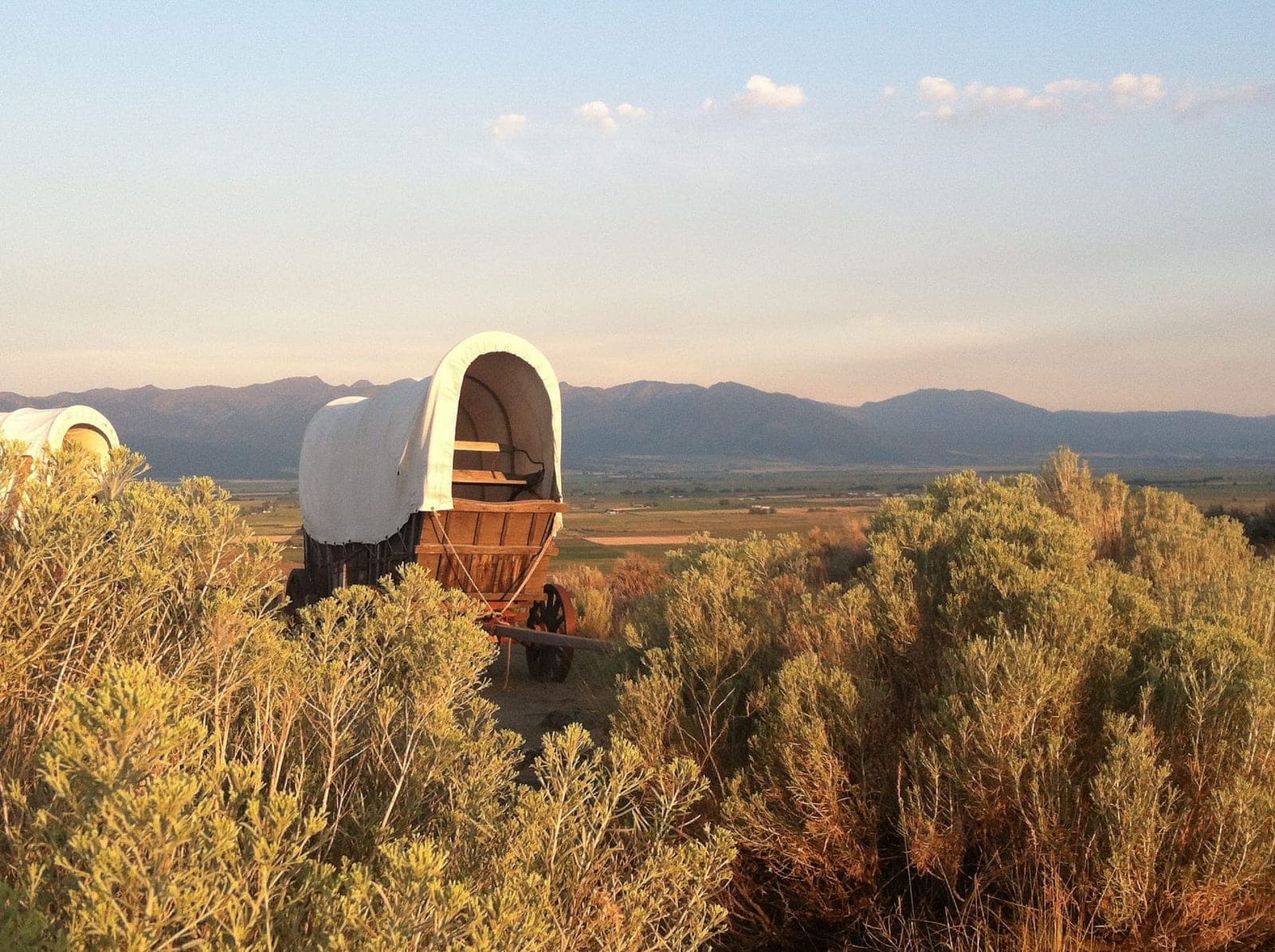
Bankrupting the BLM
On April 3, the Trump administration released its proposed federal budget for fiscal year 2027, calling for sweeping cuts across domestic agencies. At the Department of the Interior, the proposal targets a reduction of $2.3 billion—nearly 13 percent—with some of the deepest cuts falling on the agencies that manage public lands. The story that broke through most loudly was the National Park Service. The proposal calls for cutting park operations by more than $736 million and slashing the construction budget by 72%—this at a moment when the NPS has already lost an estimated 20 to 25 percent of its workforce. But the Bureau of Land Management—which oversees 245 million acres, a full tenth of the nation’s land base and more acreage than any other federal agency—has received comparatively little attention despite facing cuts that are, in some ways, more severe. The administration is proposing a 27 percent reduction in BLM staff, a 76 percent cut to the National Conservation Lands program, which administers 38 million acres designated by Congress or U.S. presidents for conservation, from National Monuments to Wild and Scenic Rivers. The budget also calls for the complete elimination of funding for cultural resources management, wilderness management, and the National Scenic and Historic Trails program. Appropriators are widely expected to reject the proposal, as they largely did last year. But the BLM's specific vulnerabilities are getting lost in the louder conversation about national parks. Secretary Burgum is scheduled to testify before the House Appropriations Committee this afternoon at 3:00 p.m. EDT to defend the proposed budget. David Feinman, Vice President of Government Affairs of the Conservation Lands Foundation, spoke with RE:PUBLIC about what's at stake and what to expect at the hearing. —Elizabeth Hightower Allen —----- RE:PUBLIC: The BLM has nearly 250 million acres, more than the US Forest Service or the National Park Service, and yet it gets dramatically less funding than those agencies. Why is that? DAVID FEINMAN: For the last few decades, Congress has focused its funding on giving this agency less money, because you don't need to invest as much when you're just taking things out of the ground. There are still funding needs to ensure the land is safe for outdoor recreation, that trails are maintained, that the multiple use of those lands is managed properly and equitably. But that ambiguity about how this agency is supposed to manage land has generally led to the belief that the agency just doesn't need as much to do its job. Overlaying all of that is the reputation the BLM has, particularly in certain western states, dating back to the Sagebrush Rebellion in the late '70s. It is there to regulate how ranchers are using their leases or whether extractive uses can be done in certain places. With the creation of national monuments and national conservation areas, you've had increasing acreage—up to 38 million now—set aside for conservation. That runs in conflict for some people who want to use that land for other reasons. So there's a certain political tension that's existed with the BLM that just doesn't exist with the other land management agencies. The other thing that struck us is that 85% of BLM land is unprotected. That other 15% are the National Conservation Lands your foundation focuses on. The National Conservation Lands, whether set aside through Antiquities Act proclamations or acts of Congress, have a conservation-first management mandate. The other 85% is completely available for the BLM to theoretically lease out for extractive uses or grazing allotments. When this administration would argue that there isn't enough land available for oil and gas and mining leasing, that's just not true. With such a small percentage of the BLM's estate focused on conservation, we are determined to ensure that the system remains well-funded, properly managed, and protected, because it's such a small slice of the land that really deserves to be protected. SUPPORT THE WORK OF RE:PUBLIC When you first saw the administration’s proposed fiscal year 2027 budget, what leapt out at you? I immediately felt it was not serious. The fiscal year ‘26 budget proposal was very similar, and it frankly was not very hard to talk to members and staff on either side of the aisle about how unserious that was—and they agreed. Last year, for the National Conservation Lands, they proposed a 75% cut. It ended up getting flat funding. With all of the DOGE firings and layoffs last year that further decimated BLM's ranks, I think there's an even more clear awareness that the last thing Congress should be doing is supporting a proposal to cut another thousand people from the BLM. I've sat through dozens of congressional hearings, and I've heard members on both sides talk about all the problems with BLM, all the things they don't get done on time. The agency can't keep up, and members of Congress love to complain about that—but they don’t connect the dot between that and the number one thing they could do to fix it: give the agency money to hire people to do the jobs. Let's talk about the staffing. The budget is proposing a 27% decrease in BLM staff. What would that look like? My best guess is that there are somewhere around 5,000 to 7,000 total BLM employees across all offices. Friends’ groups—local nonprofits that work in rural communities—have been telling me for years that some BLM field offices have 40 to 50% vacancy rates. If it's an office that already has that level of vacancy and you're gonna get rid of a few more people, some of these field offices will be functionally unable to work. Could you walk us through some of the major cuts? The budget calls for a 34% cut to Lands and Resources, which is about 90 to 95% of their work—staffing, functional work. From there, it drills down: 76% cuts for the National Conservation Lands, 61% cuts for Recreation Management—and 100% cuts to Cultural Resources Management and Wilderness Management. The 76% cut would make it functionally impossible for the agency to manage that system of 38 million acres the way they are mandated by law. It would effectively make many of these units completely open for improper, irresponsible, and unsafe recreation. The Cultural Resources Management cut is particularly troubling, because so many of these units have very important, sensitive resources that matter to federally registered tribes, Indigenous communities, and groups with historic connections to the lands predating colonial America. If they cut 100% of that funding, I don't see how the agency can continue to do that work. The Wilderness zeroing out would mean that wildlife corridors and areas critical to endangered species would be at significant risk of abuse. It would lead to unsafe conditions for people in these places, with nobody immediately responsive. And for the National Scenic and Historic Trails—to me, it sounds very alike to the Cultural Resources and Wilderness zeroing out. They're just presenting the case that they don't see BLM as having a responsibility to manage public lands for anything that isn't extractive. What would be the motivation for such a drastic budget, especially seeing it has such a small chance of passing? This administration has been pretty clear that it has no interest in managing our public lands. By systematically cutting budgets and firing career staffers, to me, it's the administration paving the way for wholesale sell-off of these lands. We saw what happened last year during the budget reconciliation process, where Utah Senator Mike Lee and others wanted to advance the sale of public lands. There's a through line between that effort and recently uncovered information showing collaboration between the Department of the Interior and Mike Lee's office—a coordinated effort to undermine the ability of the agency to manage these lands because, in their mind, it's the apparently trillions of dollars underneath the ground that can be extracted to balance America's balance sheet. As for Congress rejecting it—I don't know that this administration feels like they need to do what Congress tells them to do anyway. We've already had instances where the administration has determined it's not going to spend money that Congress appropriates. So I'm not sure the administration really cares about the appropriations process. I think it's just a statement of their priorities, and they might just do what their priorities say without Congress having a final say. What are you expecting from the budget hearings, and what should citizens be doing? I expect Secretary Burgum will continue to justify the need for these cuts and the use of these lands for extractive purposes. I hope and expect that members on both sides of the aisle will ask him tough questions about how the agency expects to function at all with the kind of budget proposed. In terms of what people can do: write your member of Congress, call them. When your members are back home and having town halls, ask them: "What are you doing to protect our public lands?" A lot of members will say, "Yes, I love public lands," and I believe them—but then they don't connect the dots. Our website, conservationlands.org, will have an action tool where people can put in their name and zip code and send emails to their senators and representatives. And if you live out west, where BLM lands are prevalent, and you have a relationship with BLM staff, just tell them you appreciate them. For the people who are still there doing the work, having the community's support is probably gonna go a long way. That's the least we could do. SUPPORT THE WORK OF RE:PUBLIC
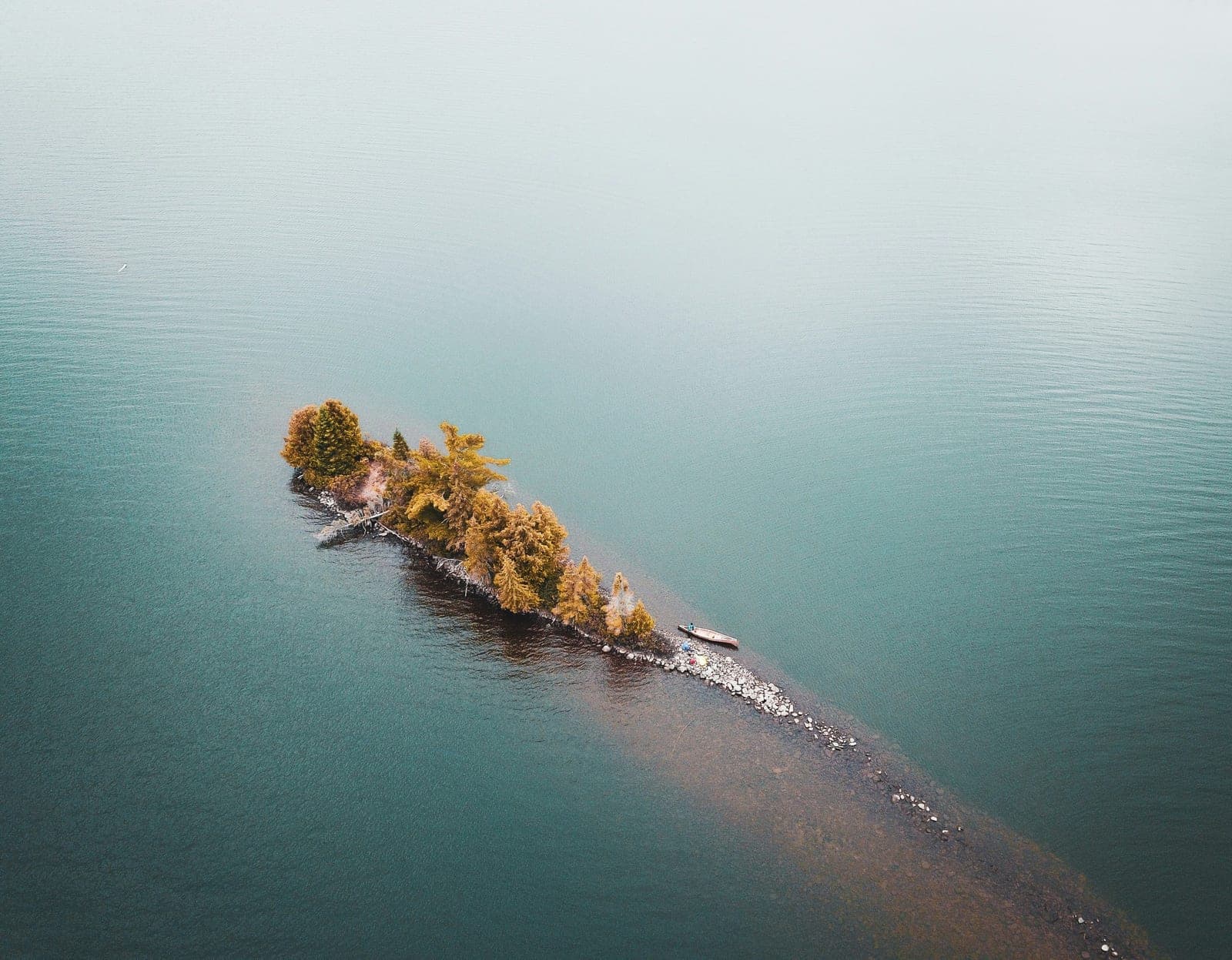
America Last
As I sit down to write this, just moments ago the U.S. Senate officially voted to strip twenty years of mining protections from the headwaters of the Boundary Waters Canoe Area Wilderness—the most visited wilderness in the United States. The final vote tally was 50-49, with Susan Collins of Maine and Tom Tillis of North Carolina the only Republican senators to vote no. The approach to bringing back mining to the upper watershed was made through a Congressional Review Act resolution, a once-obscure parliamentary tool that is now being deployed to strip protections from public lands across the U.S.—including, potentially next, the management plan for Grand Staircase-Escalante National Monument. In this specific case, the effect is not just the erasure of a Biden-era mining moratorium, but, because of the CRA’s “substantially similar” provision, the permanent foreclosure of any future administration's ability to reinstate similar protections without an entirely new act of Congress. And the victor is not an American company. It is Antofagasta PLC—a Chilean conglomerate controlled by billionaire Jean-Paul Luksic Fontbona—whose subsidiary Twin Metals Minnesota has spent years and hundreds of thousands of dollars in lobbying fees trying to get its hands on this watershed. What’s more, the copper it extracts, assuming this project ever survives its legal gauntlet, will almost certainly be processed in China. That’s perhaps the most galling aspect of this whole galling affair: The United States Senate just permanently weakened its own ability to protect the most popular wilderness in the country, on behalf of a Chilean billionaire's mining company, so that minerals from American public land can be shipped to Chinese smelters. One glance at my inbox Thursday, shortly after the Boundary Waters vote, tells the story. Representative Pete Stauber (R-Minnesota), who introduced the House version of this resolution, recently wrote an op-ed in The Hill to make the national security case for mining. In it, he invoked F-35s flying combat sorties over Iran during Operation Epic Fury. Every precision-guided munition, he wrote, "every B-2 Spirit that penetrated Iranian air defenses" relied on critical minerals—copper, nickel, cobalt, platinum, palladium. "These are not abstractions," Stauber wrote. "They are the physical building blocks behind American air dominance." It was stirring material, but it was also a lie by omission. Stauber's resolution contains no provision requiring any mineral extracted from the Boundary Waters watershed to remain in the United States. There’s no guarantee that a single ounce of copper from this mine ever ends up in an American aircraft, munition, or military system. Antofagasta, the company that would do the mining, sends its minerals to China for processing, because that is where the smelters are. That is also where the market is. We know this because it is in the Congressional record. When Representative Teresa Leger Fernandez (D-New Mexico) pressed Stauber directly on this fact during a January 20 House Rules Committee hearing—Is this an American company?—he answered honestly: "It's not an American company." And the copper? It would end up, he acknowledged, "overseas." So the argument for national security is, by the admission of the bill's own sponsor, an argument for a foreign corporation's access to American public land, with minerals destined for the global market. If that has anything to do with American national security, someone has badly mistranslated the term. This mining fight is not over—I’ll get into that in a moment. But first, let’s unpack the strategy that was used to push this forward, because we’re seeing it used repeatedly. SUPPORT THE WORK OF RE:PUBLIC In my time as executive director of RE:PUBLIC, I’ve been invited to speak on several panels to discuss the state of play for America's public lands. Before we talk about a specific battle being waged, I’m often asked what broad themes we’re seeing that give context to the current administration’s approach to public lands management. The one I always start with is Energy Dominance. On his first day in office, President Trump signed Executive Order 14154, "Unleashing American Energy," which instructed agencies to reassess every public lands withdrawal in the country and remove what it called 'undue burdens' on domestic mining and oil and gas drilling. That order is the through-line for nearly every policy change coming from the Interior Department and the U.S. Forest Service. But another consistent theme is the playbook being used to push this agenda. The Boundary Waters is the most visible application of a strategy that the Trump administration has been running across the American West and into Alaska: invoke national interest, bypass oversight, and deliver the goods to private—frequently foreign—corporate interests. Consider the Ambler Road Project. In October 2025, the Trump administration approved a 211-mile industrial road through the Brooks Range in northwest Alaska, cutting through some of the most intact wilderness remaining in North America. The justification was, again, critical minerals and national security—reducing dependence on foreign adversaries, securing the supply chains of the future. The president announced the approval in the Oval Office and called the region "an economic gold mine." Alaska's Brooks Range (Photo by Stephen Crane / Unsplash) The company that stands to profit is Trilogy Metals—a Canadian and Australian firm. And what happens to the minerals they extract? Trilogy Metals' own 2023 feasibility study answered that question before it was asked. The document stated that "it was assumed that delivery of all concentrates would be to a smelter in the Asia Pacific region," and noted that "the significance of the Chinese market for concentrate cannot be understated." The administration knew this, and it approved the road anyway. Eighty-five tribal governments along the road corridor had formally opposed the project. The Bureau of Land Management had formally denied the right-of-way on environmental grounds. The Trump administration overruled both, invoking an obscure provision of the Alaska National Interest Lands Conservation Act that legal experts say has never been used this way by a president before. Or take the Velvet-Wood uranium mine in Utah, approved in May 2025 under a special 14-day environmental review—a process that normally takes a full year—after the administration declared a national energy emergency. Secretary Burgum announced the approval by invoking the need to reduce "dependence on foreign adversaries." The company running the mine? Canada-based Anfield Energy. Neighboring communities had virtually no time to participate in a review process that was over almost before it began. The emergency framing was designed to make normal democratic accountability impossible. There are many other examples—mining in the Pecos River watershed, rescinding the Roadless Rule, exempting drilling in the Gulf of Mexico from the Endangered Species Act—where this playbook is also in use. Across each of these cases, the strategy is nearly identical. National security or critical minerals is the rhetorical justification. Emergency declarations or obscure procedural mechanisms—the CRA, an ANILCA appeal provision, a 14-day review—bypass input from the public, scientists, and affected communities that would otherwise have standing. And the beneficiary, when you follow the money, is a foreign corporation with no legal obligation to keep anything it extracts in the United States. There is a reason these fights keep getting won through procedural maneuvers rather than honest arguments: their backers know that the honest argument is a losing one. As we’ve cited in many of our stories, polling consistently shows broad, bipartisan support for protecting public lands and keeping them in public hands. The most recent Colorado College State of the Rockies project—which surveys voters across the Western states most directly affected by these decisions—found that 70 percent of Westerners oppose fast-tracking mining on national public lands by limiting environmental reviews. Sixty-five percent oppose building industrial roads in undeveloped areas of public land for new mines. Mining proponents in Congress can’t simply dismiss these as the views of radical, leftist environmental groups. They are, by and large, the views of their constituents. And yet those desires are consistently being ignored, and the economics reinforce the point. The Boundary Waters region supports roughly 17,000 jobs that bolster rural economies—fishing guides, outfitters, lodges, gear shops, the whole infrastructure of a place that people travel from across the country and the world to experience. Those are American jobs, local jobs, jobs that will exist as long as the water stays clean. The type of sulfide-ore copper mining that Twin Metals plans to employ has a 100 percent track record of water contamination in comparable environments. One hundred percent. For that, Minnesota would get an estimated 600 to 700 jobs. The economic trade the Senate just voted to make is this: eliminate the possibility of permanent protection for a wilderness that generates billions in sustainable economic activity, so that a Chilean company can extract copper and send it to China. This is what Pete Stauber sold us as national security. Now, it’s important to highlight the fact that today’s vote is not the end of this. Minnesota Senator Tina Smith made that case at the conclusion of her passionate floor speech Wednesday evening. It would have been nice for the Senate to vote in accordance with most Americans, and it’s reasonable to lament the fact that they didn’t. But there is still quite a gauntlet that makes an actual mine years—and perhaps decades—away. Federal courts. This is the first and most immediate line of defense. Environmental groups have signaled legal challenges to the CRA resolution itself, questioning whether it was properly invoked and whether the process that eliminated the 20-year moratorium was legally sound. Leases. Twin Metals still needs federal mineral leases it doesn't yet have. These are leases that require consent from both the BLM and the Forest Service—consent that has previously been granted, withdrawn, litigated, and re-litigated across three administrations without resolution. A shift in political winds could stop this once again. State regulations. Twin Metals will need permits from the Minnesota Department of Natural Resources before a shovel touches the ground, and the DNR previously halted its environmental review of the project after the Biden administration canceled the leases in 2022. Minnesota's governor and legislature are not obligated to cooperate with a federal decision to strip protections, and state-level resistance—rejecting permits, enacting its own protective legislation, joining federal lawsuits—represents a meaningful and independent line of defense. The tribes. The Minnesota Ojibwe nations hold treaty rights in the Boundary Waters watershed that predate the United States' management of these lands and that no Congressional Review Act resolution can extinguish. Those rights—to fish, hunt, and gather in the watershed, rights affirmed by federal courts and the federal trust responsibility the government owes to tribal nations—provide legal standing that runs independent of the administrative fight over the mining moratorium. Treaty rights have blocked and delayed extractive projects across the country. So it’s not over, but it’s still infuriating that we got to this stage. When politicians can only win these fights through emergency declarations, obscure procedural maneuvers, and arguments that collapse the moment someone asks a direct question—as Leger Fernandez asked Stauber, and as Stauber answered—that is a signal about the underlying merits. If the case for opening the Boundary Waters to a Chilean mining company were actually good—if it would actually produce minerals that stay in America, if it would actually create lasting local jobs without destroying an existing recreation economy, if it would actually strengthen national security rather than enriching a Chilean billionaire and Chinese processing infrastructure—you wouldn't need to invoke B-2 bombers or to deploy the Congressional Review Act or to permanently foreclose future protection as part of the deal. But that’s the playbook, and we’re starting to catch on. “Congress has ignored the will of the people once again,” said Lukas Leaf, executive director of Sportsmen for the Boundary Waters in a press release that landed in my inbox shortly after the vote. “Paving the way for the Twin Metals mine does little, if anything, to satisfy the America First agenda, and is a direct assault on our outdoor heritage and public lands nationwide.” Americans overwhelmingly want their public lands kept in public hands, managed for the long-term benefit of the people who own them—which is all of us. The politicians voting to give those lands away to foreign corporations know this, which is why they dress the giveaway in the American flag and hope no one looks too closely at who's actually collecting the check. We're going to keep looking closely. SUPPORT THE WORK OF RE:PUBLIC The Good, the Bad, and the Ugly Every Friday, our team shares critical stories about public lands from around the internet. This list could be exhaustive and exhausting, but our intent is to inform, not overwhelm. Instead, we choose three to five important stories you should be aware of—including at least one piece of good news. The Good: NM State Land Office announces 60,000 acres of state trust land protected from development (Source NM) “The state Land Office and New Mexico Land Conservancy announced Monday they’d entered into an agreement to protect more than 60,000 acres in southern New Mexico from future large developments for the next 75 years. ... The combined 120,000-acre parcel is the second biggest property protected by a conservation easement in New Mexico, according to the State Land Office. The largest is the Armendaris Ranch, owned by billionaire philanthropist Ted Turner, also in southern New Mexico." The Bad: While the Government Downplays Big Bend Border Wall Construction, Residents Say It Is Actively Continuing (Reporting Texas) “West Texas residents say damage is already visible to one of the most prestigious remaining American frontier landscapes after a months-long process that has involved no public consultation. They say that both public and private lands are being divided with great swaths about to become inaccessible even to owners. Residents say they find it difficult to accept statements from government officials when they contradict what they are seeing on the ground. 'They’re still preparing to build physical walls and barriers in those areas,' said Michael Ryan, a retired Big Bend National Park ranger with over 20 years of service and a longtime resident of the region. 'We don’t trust them.'" The Ugly: Trump’s Interior Dept. Crafted Talking Points For Mike Lee’s Public Land Sell-Off Scheme (Public Domain) “Internal emails show that President Donald Trump’s Interior Department shared research with the Senate Energy and Natural Resources Committee, which Lee chairs, and helped craft talking points that Lee used to pitch his controversial proposal. Lee introduced his measure in June as an amendment to Trump’s so-called 'big, beautiful' budget bill and pitched it as a common-sense solution to America’s housing crunch. Many treated Lee as a lone actor pushing an extremist public lands privatization agenda, though the Trump administration launched a task force months earlier to study selling off as much as 400,000 acres of federal land for housing development."
America Last
As I sit down to write this, just moments ago the U.S. Senate officially voted to strip twenty years of mining protections from the headwaters of the Boundary Waters Canoe Area Wilderness—the most visited wilderness in the United States. The final vote tally was 50-49, with Susan Collins of Maine and Tom Tillis of North Carolina the only Republican senators to vote no. The approach to bringing back mining to the upper watershed was made through a Congressional Review Act resolution, a once-obscure parliamentary tool that is now being deployed to strip protections from public lands across the U.S.—including, potentially next, the management plan for Grand Staircase-Escalante National Monument. In this specific case, the effect is not just the erasure of a Biden-era mining moratorium, but, because of the CRA’s “substantially similar” provision, the permanent foreclosure of any future administration's ability to reinstate similar protections without an entirely new act of Congress. And the victor is not an American company. It is Antofagasta PLC—a Chilean conglomerate controlled by billionaire Jean-Paul Luksic Fontbona—whose subsidiary Twin Metals Minnesota has spent years and hundreds of thousands of dollars in lobbying fees trying to get its hands on this watershed. What’s more, the copper it extracts, assuming this project ever survives its legal gauntlet, will almost certainly be processed in China. That’s perhaps the most galling aspect of this whole galling affair: The United States Senate just permanently weakened its own ability to protect the most popular wilderness in the country, on behalf of a Chilean billionaire's mining company, so that minerals from American public land can be shipped to Chinese smelters. One glance at my inbox Thursday, shortly after the Boundary Waters vote, tells the story. Representative Pete Stauber (R-Minnesota), who introduced the House version of this resolution, recently wrote an op-ed in The Hill to make the national security case for mining. In it, he invoked F-35s flying combat sorties over Iran during Operation Epic Fury. Every precision-guided munition, he wrote, "every B-2 Spirit that penetrated Iranian air defenses" relied on critical minerals—copper, nickel, cobalt, platinum, palladium. "These are not abstractions," Stauber wrote. "They are the physical building blocks behind American air dominance." It was stirring material, but it was also a lie by omission. Stauber's resolution contains no provision requiring any mineral extracted from the Boundary Waters watershed to remain in the United States. There’s no guarantee that a single ounce of copper from this mine ever ends up in an American aircraft, munition, or military system. Antofagasta, the company that would do the mining, sends its minerals to China for processing, because that is where the smelters are. That is also where the market is. We know this because it is in the Congressional record. When Representative Teresa Leger Fernandez (D-New Mexico) pressed Stauber directly on this fact during a January 20 House Rules Committee hearing—Is this an American company?—he answered honestly: "It's not an American company." And the copper? It would end up, he acknowledged, "overseas." So the argument for national security is, by the admission of the bill's own sponsor, an argument for a foreign corporation's access to American public land, with minerals destined for the global market. If that has anything to do with American national security, someone has badly mistranslated the term. This mining fight is not over—I’ll get into that in a moment. But first, let’s unpack the strategy that was used to push this forward, because we’re seeing it used repeatedly. SUPPORT THE WORK OF RE:PUBLIC In my time as executive director of RE:PUBLIC, I’ve been invited to speak on several panels to discuss the state of play for America's public lands. Before we talk about a specific battle being waged, I’m often asked what broad themes we’re seeing that give context to the current administration’s approach to public lands management. The one I always start with is Energy Dominance. On his first day in office, President Trump signed Executive Order 14154, "Unleashing American Energy," which instructed agencies to reassess every public lands withdrawal in the country and remove what it called 'undue burdens' on domestic mining and oil and gas drilling. That order is the through-line for nearly every policy change coming from the Interior Department and the U.S. Forest Service. But another consistent theme is the playbook being used to push this agenda. The Boundary Waters is the most visible application of a strategy that the Trump administration has been running across the American West and into Alaska: invoke national interest, bypass oversight, and deliver the goods to private—frequently foreign—corporate interests. Consider the Ambler Road Project. In October 2025, the Trump administration approved a 211-mile industrial road through the Brooks Range in northwest Alaska, cutting through some of the most intact wilderness remaining in North America. The justification was, again, critical minerals and national security—reducing dependence on foreign adversaries, securing the supply chains of the future. The president announced the approval in the Oval Office and called the region "an economic gold mine." Alaska's Brooks Range (Photo by Stephen Crane / Unsplash) The company that stands to profit is Trilogy Metals—a Canadian and Australian firm. And what happens to the minerals they extract? Trilogy Metals' own 2023 feasibility study answered that question before it was asked. The document stated that "it was assumed that delivery of all concentrates would be to a smelter in the Asia Pacific region," and noted that "the significance of the Chinese market for concentrate cannot be understated." The administration knew this, and it approved the road anyway. Eighty-five tribal governments along the road corridor had formally opposed the project. The Bureau of Land Management had formally denied the right-of-way on environmental grounds. The Trump administration overruled both, invoking an obscure provision of the Alaska National Interest Lands Conservation Act that legal experts say has never been used this way by a president before. Or take the Velvet-Wood uranium mine in Utah, approved in May 2025 under a special 14-day environmental review—a process that normally takes a full year—after the administration declared a national energy emergency. Secretary Burgum announced the approval by invoking the need to reduce "dependence on foreign adversaries." The company running the mine? Canada-based Anfield Energy. Neighboring communities had virtually no time to participate in a review process that was over almost before it began. The emergency framing was designed to make normal democratic accountability impossible. There are many other examples—mining in the Pecos River watershed, rescinding the Roadless Rule, exempting drilling in the Gulf of Mexico from the Endangered Species Act—where this playbook is also in use. Across each of these cases, the strategy is nearly identical. National security or critical minerals is the rhetorical justification. Emergency declarations or obscure procedural mechanisms—the CRA, an ANILCA appeal provision, a 14-day review—bypass input from the public, scientists, and affected communities that would otherwise have standing. And the beneficiary, when you follow the money, is a foreign corporation with no legal obligation to keep anything it extracts in the United States. There is a reason these fights keep getting won through procedural maneuvers rather than honest arguments: their backers know that the honest argument is a losing one. As we’ve cited in many of our stories, polling consistently shows broad, bipartisan support for protecting public lands and keeping them in public hands. The most recent Colorado College State of the Rockies project—which surveys voters across the Western states most directly affected by these decisions—found that 70 percent of Westerners oppose fast-tracking mining on national public lands by limiting environmental reviews. Sixty-five percent oppose building industrial roads in undeveloped areas of public land for new mines. Mining proponents in Congress can’t simply dismiss these as the views of radical, leftist environmental groups. They are, by and large, the views of their constituents. And yet those desires are consistently being ignored, and the economics reinforce the point. The Boundary Waters region supports roughly 17,000 jobs that bolster rural economies—fishing guides, outfitters, lodges, gear shops, the whole infrastructure of a place that people travel from across the country and the world to experience. Those are American jobs, local jobs, jobs that will exist as long as the water stays clean. The type of sulfide-ore copper mining that Twin Metals plans to employ has a 100 percent track record of water contamination in comparable environments. One hundred percent. For that, Minnesota would get an estimated 600 to 700 jobs. The economic trade the Senate just voted to make is this: eliminate the possibility of permanent protection for a wilderness that generates billions in sustainable economic activity, so that a Chilean company can extract copper and send it to China. This is what Pete Stauber sold us as national security. Now, it’s important to highlight the fact that today’s vote is not the end of this. Minnesota Senator Tina Smith made that case at the conclusion of her passionate floor speech Wednesday evening. It would have been nice for the Senate to vote in accordance with most Americans, and it’s reasonable to lament the fact that they didn’t. But there is still quite a gauntlet that makes an actual mine years—and perhaps decades—away. Federal courts. This is the first and most immediate line of defense. Environmental groups have signaled legal challenges to the CRA resolution itself, questioning whether it was properly invoked and whether the process that eliminated the 20-year moratorium was legally sound. Leases. Twin Metals still needs federal mineral leases it doesn't yet have. These are leases that require consent from both the BLM and the Forest Service—consent that has previously been granted, withdrawn, litigated, and re-litigated across three administrations without resolution. A shift in political winds could stop this once again. State regulations. Twin Metals will need permits from the Minnesota Department of Natural Resources before a shovel touches the ground, and the DNR previously halted its environmental review of the project after the Biden administration canceled the leases in 2022. Minnesota's governor and legislature are not obligated to cooperate with a federal decision to strip protections, and state-level resistance—rejecting permits, enacting its own protective legislation, joining federal lawsuits—represents a meaningful and independent line of defense. The tribes. The Minnesota Ojibwe nations hold treaty rights in the Boundary Waters watershed that predate the United States' management of these lands and that no Congressional Review Act resolution can extinguish. Those rights—to fish, hunt, and gather in the watershed, rights affirmed by federal courts and the federal trust responsibility the government owes to tribal nations—provide legal standing that runs independent of the administrative fight over the mining moratorium. Treaty rights have blocked and delayed extractive projects across the country. So it’s not over, but it’s still infuriating that we got to this stage. When politicians can only win these fights through emergency declarations, obscure procedural maneuvers, and arguments that collapse the moment someone asks a direct question—as Leger Fernandez asked Stauber, and as Stauber answered—that is a signal about the underlying merits. If the case for opening the Boundary Waters to a Chilean mining company were actually good—if it would actually produce minerals that stay in America, if it would actually create lasting local jobs without destroying an existing recreation economy, if it would actually strengthen national security rather than enriching a Chilean billionaire and Chinese processing infrastructure—you wouldn't need to invoke B-2 bombers or to deploy the Congressional Review Act or to permanently foreclose future protection as part of the deal. But that’s the playbook, and we’re starting to catch on. “Congress has ignored the will of the people once again,” said Lukas Leaf, executive director of Sportsmen for the Boundary Waters in a press release that landed in my inbox shortly after the vote. “Paving the way for the Twin Metals mine does little, if anything, to satisfy the America First agenda, and is a direct assault on our outdoor heritage and public lands nationwide.” Americans overwhelmingly want their public lands kept in public hands, managed for the long-term benefit of the people who own them—which is all of us. The politicians voting to give those lands away to foreign corporations know this, which is why they dress the giveaway in the American flag and hope no one looks too closely at who's actually collecting the check. We're going to keep looking closely. SUPPORT THE WORK OF RE:PUBLIC The Good, the Bad, and the Ugly Every Friday, our team shares critical stories about public lands from around the internet. This list could be exhaustive and exhausting, but our intent is to inform, not overwhelm. Instead, we choose three to five important stories you should be aware of—including at least one piece of good news. The Good: NM State Land Office announces 60,000 acres of state trust land protected from development (Source NM) “The state Land Office and New Mexico Land Conservancy announced Monday they’d entered into an agreement to protect more than 60,000 acres in southern New Mexico from future large developments for the next 75 years. ... The combined 120,000-acre parcel is the second biggest property protected by a conservation easement in New Mexico, according to the State Land Office. The largest is the Armendaris Ranch, owned by billionaire philanthropist Ted Turner, also in southern New Mexico." The Bad: While the Government Downplays Big Bend Border Wall Construction, Residents Say It Is Actively Continuing (Reporting Texas) “West Texas residents say damage is already visible to one of the most prestigious remaining American frontier landscapes after a months-long process that has involved no public consultation. They say that both public and private lands are being divided with great swaths about to become inaccessible even to owners. Residents say they find it difficult to accept statements from government officials when they contradict what they are seeing on the ground. 'They’re still preparing to build physical walls and barriers in those areas,' said Michael Ryan, a retired Big Bend National Park ranger with over 20 years of service and a longtime resident of the region. 'We don’t trust them.'" The Ugly: Trump’s Interior Dept. Crafted Talking Points For Mike Lee’s Public Land Sell-Off Scheme (Public Domain) “Internal emails show that President Donald Trump’s Interior Department shared research with the Senate Energy and Natural Resources Committee, which Lee chairs, and helped craft talking points that Lee used to pitch his controversial proposal. Lee introduced his measure in June as an amendment to Trump’s so-called 'big, beautiful' budget bill and pitched it as a common-sense solution to America’s housing crunch. Many treated Lee as a lone actor pushing an extremist public lands privatization agenda, though the Trump administration launched a task force months earlier to study selling off as much as 400,000 acres of federal land for housing development."
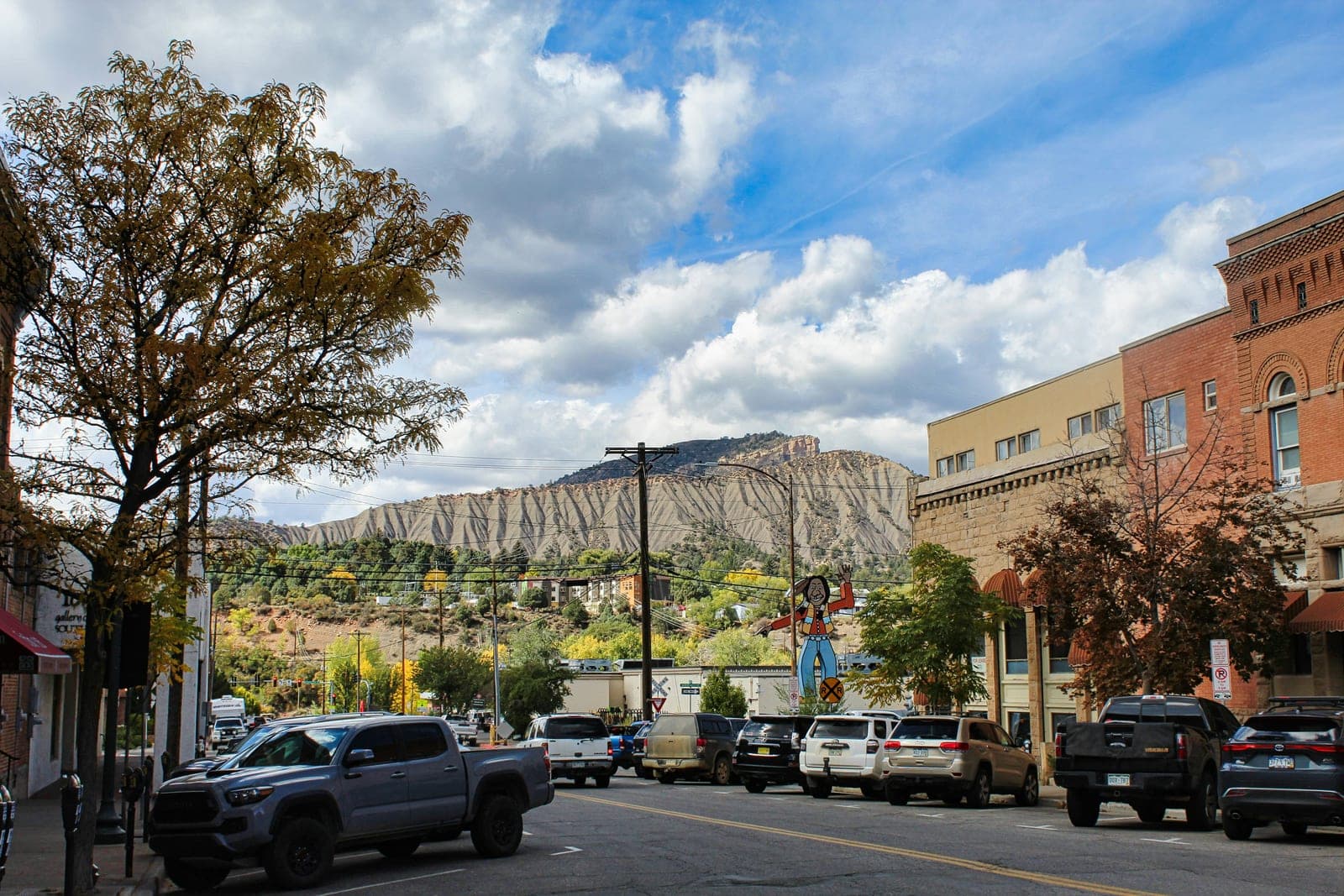
Homes on the Range
For staffers at conservation groups like The Wilderness Society and Defenders of Wildlife, the daily routine often involves tracking congressional legislation and executive branch actions that, in some cases, look like trouble. In the early months of the second Trump administration, for example, radical changes started happening fast—among them, the DOGE-powered Valentine’s Day staffing cuts at the National Park Service and the U.S. Forest Service. During this period, a different proposal emerged that didn’t get nearly as much attention from the media and public, but it sounded like a cause for concern. It centered on a Trump administration push to add a new category of “multiple use” to the traditional menu of mining, grazing, and timber harvesting: the construction of affordable housing. On March 16, 2025, the secretaries of the Department of the Interior and the Department of Housing and Urban Development announced the creation of a “Joint Task Force on Federal Land for Housing.” In a Wall Street Journal op-ed co-written by secretaries Doug Burgum (DOI) and Scott Turner (HUD), the concept was described as a common-sense way to free up “underutilized” federal acreage—by “transfers or leases”—for the construction of new, affordable housing. It was headlined “Federal Land Can Be Home Sweet Home.” “Under this agreement,” they wrote, “HUD will pinpoint where housing needs are most pressing and guide the process by working with state and local leaders who know their communities best. Interior will identify locations that can support homes while carefully considering environmental impact and land-use restrictions.” “This isn’t a free-for-all to build on federal lands,” they said, “although we recognize that bad-faith critics will likely call it that.” Critics have indeed called it that, partly because Senator Mike Lee—a Utah Republican who’s one of the most vocal public-lands foes in Congress—has spent years pushing the same idea. Lee, notably, has shown little interest in affordable housing when it’s not connected to the sale, lease, or giveaway of public lands. The op-ed by Burgum and Turner didn’t go into detail about where new housing might be placed. Nor did the official Memorandum of Understanding (MOU) between the two agencies, which required that the task force “meet quarterly to review progress [and] identify land transfer opportunities.” But Jon Raby, the acting director of the Bureau of Land Management (BLM), offered a few more specifics in an interview published on March 24, 2025, by the online site Bloomberg Law. (Raby is still acting director of the BLM, pending Senate confirmation of nominee Steve Pearce.) Raby said the task force had identified sellable lands that, as Bloomberg phrased it, are “within a radius of up to 10 miles of all cities and towns with a population greater than 5,000 people.” The story explained that the amount of BLM land potentially in play is significant—625 square miles, an area larger than the city of Los Angeles. Staffers at The Wilderness Society saw this and decided to map what a ten-mile radius would look like—an effort that was in progress last May when a more immediate problem emerged. As part of a budget reconciliation bill under consideration in the U.S. Senate, Lee and his allies were backing a proposal to sell off as much as 3.3 million acres of BLM and Forest Service land for development, which included using BLM lands near urban areas to build housing. The Wilderness Society shifted its attention to this, creating an interactive map that went viral, helping to touch off a firestorm. In late June, Burgum traveled to Santa Fe to deliver a speech at the annual meeting of the Western Governors Association. In his remarks, according to one report, he “referred to federal offshore and land holdings as ‘the largest balance sheet in the world.’” Outside the conference venue, 2,000 people showed up to protest; similar demonstrations occurred elsewhere in the U.S. In addition to expected pushback from environmental groups, the reconciliation language drew flak from hook-and-bullet nonprofits like the American Hunters and Anglers Action Network and even from a few conservative Republican legislators, including Ryan Zinke, a Montana congressman who served as Interior Secretary during Trump’s first term. The Wilderness Society’s map helped fuel all this: 1.87 million people clicked on it, and its reach was expanded by social media shares and coverage in more than 900 news articles. Ultimately, Senate Republicans blinked, and the sell-off language was stripped from draft legislation that was later passed as the One Big Beautiful Bill Act. An interactive map by The Wilderness Society showed public lands eligible for sale under a proposal by Utah Senator Mike Lee. Screenshot/The Wilderness Society. After the hubbub, what became of the housing task force? There haven’t been any recent public pronouncements on that front, but the concept certainly doesn’t appear to be dead. On April 7 of this year, Burgum and Raby were in Las Vegas for a series of events that included Nevada’s governor, Joe Lombardo, a longtime advocate for the construction of new affordable housing in the city—and for the idea of building it on repurposed federal land. “Lombardo has repeatedly urged the federal government to release Bureau of Land Management land in the Las Vegas Valley to local governments, for use in affordable housing,” a local news report said. “In order to get land, it must be ‘nominated’ by a local government, assessed and then approved before it can be transferred and construction can begin.” During this swing, Burgum said “multi-use” of federal lands should include “mining and grazing and timber and housing. It was meant for those things. It’s America’s balance sheet and we’ve got to get the appropriate return on it.” Meanwhile, whoever is in charge may have just missed an April 15 deadline for releasing an annual report that’s required by the original MOU between Interior and HUD. RE:PUBLIC requested updated information about the task force from DOI, HUD, and the BLM. None of these agencies responded. At our request, The Wilderness Society’s science team recently updated its ten-mile-radius map, which includes BLM land but excludes protected areas like national parks. In the task force’s MOU, the blanket term “federal lands” is used, making it reasonable to assume that Forest Service property would also be part of the mix. That’s on the map as well. The MOU does not mention the ten-mile radius—thus far, Raby’s comments are the only source for that. This interactive map, created for RE:PUBLIC by The Wilderness Society, shows public lands within a ten-mile radius of towns with a population greater than 5,000. Open the map, and you’ll see why Nevada’s governor is salivating about the possibilities in Las Vegas—in every direction, large BLM parcels lie close to the city limits. As a case study, we also chose to zoom in on Durango, Colorado, population 21,000, a typical small, outdoorsy city and the hometown of Michael Carroll, BLM campaign director for The Wilderness Society. Take a look, and you’ll see a few pieces of BLM land in the immediate vicinity, along with a huge semicircle of Forest Service land north of town. On a map like this, these areas look like colorful abstractions, but to a local like Carroll they take in cherished stomping grounds that are a big part of what make the city special. “When you draw that radius around this community,” he says, “it contains some of our most coveted trail systems and recreation spots—places where people take their family to go on a picnic or hike, or to take the dog out after work.” In Durango, he says, that ten-mile ring includes trail systems like Animas Mountain, Sailing Hawks, Horse Gulch, and Twin Buttes. “And that’s just within the city limits.” Zooming in on Durango, using the interactive map to show public lands within a ten-mile radius of the city. Transfers of federal land in the West aren’t unheard of, but when they do happen—whether they’re for something like a water project, a new road, or some kind of housing—The Wilderness Society isn’t automatically opposed if they fill a clear public need. Such proposals are tracked and scrutinized internally by the group, which recently endorsed a bill called the Crystal Reservoir Conveyance Act. This legislation was co-sponsored by Representative Jeff Hurd, a Colorado Republican, and Senator Michael Bennet, a Democrat. The goal is to transfer, at no cost, 45 acres of Forest Service land that’s home to a reservoir near the alpine town of Ouray. The plan is for the city to take over, refurbishing the reservoir to boost the local water supply. Carroll, ticking off things The Wilderness Society thinks this legislation does right, says the bill requires local officials to maintain the land as public open space, prohibits new development or commercial use, and includes a “reversionary clause” that could give ownership back to the federal government if the city “fails to comply with these conditions.” The common denominator here, he says, is following the law, working with local communities and making any land transfer proposals transparent and clear while building in safeguards that have a clear public benefit. As a bottom line, Carroll points to a shared principles document endorsed by 75 national, state, and local public lands organizations during the federal budget reconciliation fight last year. The document argues that “public land conveyances must be rare, transparent, accountable, and rooted in place-based needs that serve a compelling public interest.” Unfortunately, as Carroll knows, not all legislators or federal managers share these ideals. One example is playing out right now in Oregon, where Republican Congressman Cliff Bentz introduced a bill that would transfer 500 acres of Mount Hood National Forest to The Dalles, a city of 16,000 on the Columbia River. The stated purpose is to allow the city to expand a reservoir that’s crucial to providing enough water for future urban growth. In January, Oregon Public Radio took a deeper look and made a convincing case that the real motive is to provide water for Google data centers. “The notion that this water is somehow for drinking water for residents, it’s just a fallacy,” John DeVoe, senior advisor at WaterWatch of Oregon, told OPR. “Obviously, the great driver of demand for water in The Dalles is Google.” The bill is currently under review by the Senate Committee on Energy and Natural Resources. In Texas, the U.S. Fish and Wildlife Service has proposed doing a land swap with SpaceX—the commercial space transport company founded in 2002 by Elon Musk—that would have adverse impact on the Lower Rio Grande Valley National Wildlife Refuge, a series of habitat tracts along the final 150 miles of the Rio Grande River. According to Defenders of Wildlife, which opposes the swap, the refuge is home “to at least 18 threatened and endangered species,” including “all five species of sea turtle found in the Gulf of Mexico.” The proposed exchange involves giving 712 acres of refuge land to SpaceX in exchange for a smaller amount of land: 692 acres, some of which would be given to a different national refuge nearby, Laguna Atascosa. According to the government’s Draft Environmental Assessment, the land taken from the Lower Rio Grande Valley refuge would be used for “residential, commercial, industrial, and infrastructure purposes.” That is: construction. Nathan Marcy, senior federal lands policy analyst for Defenders of Wildlife, points out that land exchanges are allowed under the law that created the national refuge system: the National Wildlife Refuge System Administration Act, which uses the phrase “suitable for disposition” but doesn’t define it. In Defenders’ view, it’s not at all suitable to trade away land vital to the health of this refuge, and they contend that this swap ignores that responsibility. “The refuge is strung out along the river—it’s a long corridor,” Marcy says. “The primary management goal of the refuge is to protect and restore habitat. This 712 acres would cut a big chunk out of that corridor, severing it permanently.” A public comment period on this exchange just ended. If it’s approved by Fish and Wildlife, Defenders has the option of pursuing litigation. Finally, in Jackson, Wyoming, a local group called the Jackson Hole Community Trust is hoping to build 36 rental units on a 7.5-acre parcel that’s currently part of the Bridger-Teton National Forest. This project—which has no connection to the HUD-DOI task force—is aimed at providing affordable rentals to a mix of U.S. Forest Service staff and private-sector employees who live in Teton County. According to a report in Mountain Journal, a public interest nonprofit, the proposal has drawn both local support and opposition. One argument against it is that a project like this should be designed only to include federal employees as renters. SUPPORT THE WORK OF RE:PUBLIC In the summer of 2025, The Wilderness Society submitted Freedom of Information Act requests to learn more about the Joint Task Force on Federal Land for Housing. To obtain even a partial release of records, its lawyers had to file litigation against the DOI, HUD, and the BLM earlier this year. The documents released so far, Carroll says, show little sign of engagement with “local leaders or community groups” as required by the MOU. The documents do show, as Public Domain reports, "that President Donald Trump’s Interior Department shared research with the Senate Energy and Natural Resources Committee, which Lee chairs, and helped craft talking points that Lee used to pitch his controversial proposal." They also reflect interest in building homes in Las Vegas. During a meeting held there last May, a Florida-based manufactured-home builder called PLAD—which stands for Personalized Luxury Adaptable Dwellings—was on hand as a possible vendor. While advocates wait to see if the task force comes back to life, Carroll and others are watching and waiting—among other things, for the release of more than 1,200 pages of records still in the hands of the DOI. “Any administrative or legislative proposal for the use or disposal of public lands for affordable housing needs to have requirements that the land never fuels speculative development,” he says. “Unfortunately, the administration seems to want to draw circles around cities and towns and put a for sale sign on all the federal lands inside it. Blunt approaches like this could cost communities their favorite trails and open spaces—and more than likely won’t address the communities’ affordable housing needs.” The Wilderness Society contributed interactive mapping to this story.
Homes on the Range
For staffers at conservation groups like The Wilderness Society and Defenders of Wildlife, the daily routine often involves tracking congressional legislation and executive branch actions that, in some cases, look like trouble. In the early months of the second Trump administration, for example, radical changes started happening fast—among them, the DOGE-powered Valentine’s Day staffing cuts at the National Park Service and the U.S. Forest Service. During this period, a different proposal emerged that didn’t get nearly as much attention from the media and public, but it sounded like a cause for concern. It centered on a Trump administration push to add a new category of “multiple use” to the traditional menu of mining, grazing, and timber harvesting: the construction of affordable housing. On March 16, 2025, the secretaries of the Department of the Interior and the Department of Housing and Urban Development announced the creation of a “Joint Task Force on Federal Land for Housing.” In a Wall Street Journal op-ed co-written by secretaries Doug Burgum (DOI) and Scott Turner (HUD), the concept was described as a common-sense way to free up “underutilized” federal acreage—by “transfers or leases”—for the construction of new, affordable housing. It was headlined “Federal Land Can Be Home Sweet Home.” “Under this agreement,” they wrote, “HUD will pinpoint where housing needs are most pressing and guide the process by working with state and local leaders who know their communities best. Interior will identify locations that can support homes while carefully considering environmental impact and land-use restrictions.” “This isn’t a free-for-all to build on federal lands,” they said, “although we recognize that bad-faith critics will likely call it that.” Critics have indeed called it that, partly because Senator Mike Lee—a Utah Republican who’s one of the most vocal public-lands foes in Congress—has spent years pushing the same idea. Lee, notably, has shown little interest in affordable housing when it’s not connected to the sale, lease, or giveaway of public lands. The op-ed by Burgum and Turner didn’t go into detail about where new housing might be placed. Nor did the official Memorandum of Understanding (MOU) between the two agencies, which required that the task force “meet quarterly to review progress [and] identify land transfer opportunities.” But Jon Raby, the acting director of the Bureau of Land Management (BLM), offered a few more specifics in an interview published on March 24, 2025, by the online site Bloomberg Law. (Raby is still acting director of the BLM, pending Senate confirmation of nominee Steve Pearce.) Raby said the task force had identified sellable lands that, as Bloomberg phrased it, are “within a radius of up to 10 miles of all cities and towns with a population greater than 5,000 people.” The story explained that the amount of BLM land potentially in play is significant—625 square miles, an area larger than the city of Los Angeles. Staffers at The Wilderness Society saw this and decided to map what a ten-mile radius would look like—an effort that was in progress last May when a more immediate problem emerged. As part of a budget reconciliation bill under consideration in the U.S. Senate, Lee and his allies were backing a proposal to sell off as much as 3.3 million acres of BLM and Forest Service land for development, which included using BLM lands near urban areas to build housing. The Wilderness Society shifted its attention to this, creating an interactive map that went viral, helping to touch off a firestorm. In late June, Burgum traveled to Santa Fe to deliver a speech at the annual meeting of the Western Governors Association. In his remarks, according to one report, he “referred to federal offshore and land holdings as ‘the largest balance sheet in the world.’” Outside the conference venue, 2,000 people showed up to protest; similar demonstrations occurred elsewhere in the U.S. In addition to expected pushback from environmental groups, the reconciliation language drew flak from hook-and-bullet nonprofits like the American Hunters and Anglers Action Network and even from a few conservative Republican legislators, including Ryan Zinke, a Montana congressman who served as Interior Secretary during Trump’s first term. The Wilderness Society’s map helped fuel all this: 1.87 million people clicked on it, and its reach was expanded by social media shares and coverage in more than 900 news articles. Ultimately, Senate Republicans blinked, and the sell-off language was stripped from draft legislation that was later passed as the One Big Beautiful Bill Act. An interactive map by The Wilderness Society showed public lands eligible for sale under a proposal by Utah Senator Mike Lee. Screenshot/The Wilderness Society. After the hubbub, what became of the housing task force? There haven’t been any recent public pronouncements on that front, but the concept certainly doesn’t appear to be dead. On April 7 of this year, Burgum and Raby were in Las Vegas for a series of events that included Nevada’s governor, Joe Lombardo, a longtime advocate for the construction of new affordable housing in the city—and for the idea of building it on repurposed federal land. “Lombardo has repeatedly urged the federal government to release Bureau of Land Management land in the Las Vegas Valley to local governments, for use in affordable housing,” a local news report said. “In order to get land, it must be ‘nominated’ by a local government, assessed and then approved before it can be transferred and construction can begin.” During this swing, Burgum said “multi-use” of federal lands should include “mining and grazing and timber and housing. It was meant for those things. It’s America’s balance sheet and we’ve got to get the appropriate return on it.” Meanwhile, whoever is in charge may have just missed an April 15 deadline for releasing an annual report that’s required by the original MOU between Interior and HUD. RE:PUBLIC requested updated information about the task force from DOI, HUD, and the BLM. None of these agencies responded. At our request, The Wilderness Society’s science team recently updated its ten-mile-radius map, which includes BLM land but excludes protected areas like national parks. In the task force’s MOU, the blanket term “federal lands” is used, making it reasonable to assume that Forest Service property would also be part of the mix. That’s on the map as well. The MOU does not mention the ten-mile radius—thus far, Raby’s comments are the only source for that. This interactive map, created for RE:PUBLIC by The Wilderness Society, shows public lands within a ten-mile radius of towns with a population greater than 5,000. Open the map, and you’ll see why Nevada’s governor is salivating about the possibilities in Las Vegas—in every direction, large BLM parcels lie close to the city limits. As a case study, we also chose to zoom in on Durango, Colorado, population 21,000, a typical small, outdoorsy city and the hometown of Michael Carroll, BLM campaign director for The Wilderness Society. Take a look, and you’ll see a few pieces of BLM land in the immediate vicinity, along with a huge semicircle of Forest Service land north of town. On a map like this, these areas look like colorful abstractions, but to a local like Carroll they take in cherished stomping grounds that are a big part of what make the city special. “When you draw that radius around this community,” he says, “it contains some of our most coveted trail systems and recreation spots—places where people take their family to go on a picnic or hike, or to take the dog out after work.” In Durango, he says, that ten-mile ring includes trail systems like Animas Mountain, Sailing Hawks, Horse Gulch, and Twin Buttes. “And that’s just within the city limits.” Zooming in on Durango, using the interactive map to show public lands within a ten-mile radius of the city. Transfers of federal land in the West aren’t unheard of, but when they do happen—whether they’re for something like a water project, a new road, or some kind of housing—The Wilderness Society isn’t automatically opposed if they fill a clear public need. Such proposals are tracked and scrutinized internally by the group, which recently endorsed a bill called the Crystal Reservoir Conveyance Act. This legislation was co-sponsored by Representative Jeff Hurd, a Colorado Republican, and Senator Michael Bennet, a Democrat. The goal is to transfer, at no cost, 45 acres of Forest Service land that’s home to a reservoir near the alpine town of Ouray. The plan is for the city to take over, refurbishing the reservoir to boost the local water supply. Carroll, ticking off things The Wilderness Society thinks this legislation does right, says the bill requires local officials to maintain the land as public open space, prohibits new development or commercial use, and includes a “reversionary clause” that could give ownership back to the federal government if the city “fails to comply with these conditions.” The common denominator here, he says, is following the law, working with local communities and making any land transfer proposals transparent and clear while building in safeguards that have a clear public benefit. As a bottom line, Carroll points to a shared principles document endorsed by 75 national, state, and local public lands organizations during the federal budget reconciliation fight last year. The document argues that “public land conveyances must be rare, transparent, accountable, and rooted in place-based needs that serve a compelling public interest.” Unfortunately, as Carroll knows, not all legislators or federal managers share these ideals. One example is playing out right now in Oregon, where Republican Congressman Cliff Bentz introduced a bill that would transfer 500 acres of Mount Hood National Forest to The Dalles, a city of 16,000 on the Columbia River. The stated purpose is to allow the city to expand a reservoir that’s crucial to providing enough water for future urban growth. In January, Oregon Public Radio took a deeper look and made a convincing case that the real motive is to provide water for Google data centers. “The notion that this water is somehow for drinking water for residents, it’s just a fallacy,” John DeVoe, senior advisor at WaterWatch of Oregon, told OPR. “Obviously, the great driver of demand for water in The Dalles is Google.” The bill is currently under review by the Senate Committee on Energy and Natural Resources. In Texas, the U.S. Fish and Wildlife Service has proposed doing a land swap with SpaceX—the commercial space transport company founded in 2002 by Elon Musk—that would have adverse impact on the Lower Rio Grande Valley National Wildlife Refuge, a series of habitat tracts along the final 150 miles of the Rio Grande River. According to Defenders of Wildlife, which opposes the swap, the refuge is home “to at least 18 threatened and endangered species,” including “all five species of sea turtle found in the Gulf of Mexico.” The proposed exchange involves giving 712 acres of refuge land to SpaceX in exchange for a smaller amount of land: 692 acres, some of which would be given to a different national refuge nearby, Laguna Atascosa. According to the government’s Draft Environmental Assessment, the land taken from the Lower Rio Grande Valley refuge would be used for “residential, commercial, industrial, and infrastructure purposes.” That is: construction. Nathan Marcy, senior federal lands policy analyst for Defenders of Wildlife, points out that land exchanges are allowed under the law that created the national refuge system: the National Wildlife Refuge System Administration Act, which uses the phrase “suitable for disposition” but doesn’t define it. In Defenders’ view, it’s not at all suitable to trade away land vital to the health of this refuge, and they contend that this swap ignores that responsibility. “The refuge is strung out along the river—it’s a long corridor,” Marcy says. “The primary management goal of the refuge is to protect and restore habitat. This 712 acres would cut a big chunk out of that corridor, severing it permanently.” A public comment period on this exchange just ended. If it’s approved by Fish and Wildlife, Defenders has the option of pursuing litigation. Finally, in Jackson, Wyoming, a local group called the Jackson Hole Community Trust is hoping to build 36 rental units on a 7.5-acre parcel that’s currently part of the Bridger-Teton National Forest. This project—which has no connection to the HUD-DOI task force—is aimed at providing affordable rentals to a mix of U.S. Forest Service staff and private-sector employees who live in Teton County. According to a report in Mountain Journal, a public interest nonprofit, the proposal has drawn both local support and opposition. One argument against it is that a project like this should be designed only to include federal employees as renters. SUPPORT THE WORK OF RE:PUBLIC In the summer of 2025, The Wilderness Society submitted Freedom of Information Act requests to learn more about the Joint Task Force on Federal Land for Housing. To obtain even a partial release of records, its lawyers had to file litigation against the DOI, HUD, and the BLM earlier this year. The documents released so far, Carroll says, show little sign of engagement with “local leaders or community groups” as required by the MOU. The documents do show, as Public Domain reports, "that President Donald Trump’s Interior Department shared research with the Senate Energy and Natural Resources Committee, which Lee chairs, and helped craft talking points that Lee used to pitch his controversial proposal." They also reflect interest in building homes in Las Vegas. During a meeting held there last May, a Florida-based manufactured-home builder called PLAD—which stands for Personalized Luxury Adaptable Dwellings—was on hand as a possible vendor. While advocates wait to see if the task force comes back to life, Carroll and others are watching and waiting—among other things, for the release of more than 1,200 pages of records still in the hands of the DOI. “Any administrative or legislative proposal for the use or disposal of public lands for affordable housing needs to have requirements that the land never fuels speculative development,” he says. “Unfortunately, the administration seems to want to draw circles around cities and towns and put a for sale sign on all the federal lands inside it. Blunt approaches like this could cost communities their favorite trails and open spaces—and more than likely won’t address the communities’ affordable housing needs.” The Wilderness Society contributed interactive mapping to this story.
Homes on the Range
For staffers at conservation groups like The Wilderness Society and Defenders of Wildlife, the daily routine often involves tracking congressional legislation and executive branch actions that, in some cases, look like trouble. In the early months of the second Trump administration, for example, radical changes started happening fast—among them, the DOGE-powered Valentine’s Day staffing cuts at the National Park Service and the U.S. Forest Service. During this period, a different proposal emerged that didn’t get nearly as much attention from the media and public, but it sounded like a cause for concern. It centered on a Trump administration push to add a new category of “multiple use” to the traditional menu of mining, grazing, and timber harvesting: the construction of affordable housing. On March 16, 2025, the secretaries of the Department of the Interior and the Department of Housing and Urban Development announced the creation of a “Joint Task Force on Federal Land for Housing.” In a Wall Street Journal op-ed co-written by secretaries Doug Burgum (DOI) and Scott Turner (HUD), the concept was described as a common-sense way to free up “underutilized” federal acreage—by “transfers or leases”—for the construction of new, affordable housing. It was headlined “Federal Land Can Be Home Sweet Home.” “Under this agreement,” they wrote, “HUD will pinpoint where housing needs are most pressing and guide the process by working with state and local leaders who know their communities best. Interior will identify locations that can support homes while carefully considering environmental impact and land-use restrictions.” “This isn’t a free-for-all to build on federal lands,” they said, “although we recognize that bad-faith critics will likely call it that.” Critics have indeed called it that, partly because Senator Mike Lee—a Utah Republican who’s one of the most vocal public-lands foes in Congress—has spent years pushing the same idea. Lee, notably, has shown little interest in affordable housing when it’s not connected to the sale, lease, or giveaway of public lands. The op-ed by Burgum and Turner didn’t go into detail about where new housing might be placed. Nor did the official Memorandum of Understanding (MOU) between the two agencies, which required that the task force “meet quarterly to review progress [and] identify land transfer opportunities.” But Jon Raby, the acting director of the Bureau of Land Management (BLM), offered a few more specifics in an interview published on March 24, 2025, by the online site Bloomberg Law. (Raby is still acting director of the BLM, pending Senate confirmation of nominee Steve Pearce.) Raby said the task force had identified sellable lands that, as Bloomberg phrased it, are “within a radius of up to 10 miles of all cities and towns with a population greater than 5,000 people.” The story explained that the amount of BLM land potentially in play is significant—625 square miles, an area larger than the city of Los Angeles. Staffers at The Wilderness Society saw this and decided to map what a ten-mile radius would look like—an effort that was in progress last May when a more immediate problem emerged. As part of a budget reconciliation bill under consideration in the U.S. Senate, Lee and his allies were backing a proposal to sell off as much as 3.3 million acres of BLM and Forest Service land for development, which included using BLM lands near urban areas to build housing. The Wilderness Society shifted its attention to this, creating an interactive map that went viral, helping to touch off a firestorm. In late June, Burgum traveled to Santa Fe to deliver a speech at the annual meeting of the Western Governors Association. In his remarks, according to one report, he “referred to federal offshore and land holdings as ‘the largest balance sheet in the world.’” Outside the conference venue, 2,000 people showed up to protest; similar demonstrations occurred elsewhere in the U.S. In addition to expected pushback from environmental groups, the reconciliation language drew flak from hook-and-bullet nonprofits like the American Hunters and Anglers Action Network and even from a few conservative Republican legislators, including Ryan Zinke, a Montana congressman who served as Interior Secretary during Trump’s first term. The Wilderness Society’s map helped fuel all this: 1.87 million people clicked on it, and its reach was expanded by social media shares and coverage in more than 900 news articles. Ultimately, Senate Republicans blinked, and the sell-off language was stripped from draft legislation that was later passed as the One Big Beautiful Bill Act. An interactive map by The Wilderness Society showed public lands eligible for sale under a proposal by Utah Senator Mike Lee. Screenshot/The Wilderness Society. After the hubbub, what became of the housing task force? There haven’t been any recent public pronouncements on that front, but the concept certainly doesn’t appear to be dead. On April 7 of this year, Burgum and Raby were in Las Vegas for a series of events that included Nevada’s governor, Joe Lombardo, a longtime advocate for the construction of new affordable housing in the city—and for the idea of building it on repurposed federal land. “Lombardo has repeatedly urged the federal government to release Bureau of Land Management land in the Las Vegas Valley to local governments, for use in affordable housing,” a local news report said. “In order to get land, it must be ‘nominated’ by a local government, assessed and then approved before it can be transferred and construction can begin.” During this swing, Burgum said “multi-use” of federal lands should include “mining and grazing and timber and housing. It was meant for those things. It’s America’s balance sheet and we’ve got to get the appropriate return on it.” Meanwhile, whoever is in charge may have just missed an April 15 deadline for releasing an annual report that’s required by the original MOU between Interior and HUD. RE:PUBLIC requested updated information about the task force from DOI, HUD, and the BLM. None of these agencies responded. At our request, The Wilderness Society’s science team recently updated its ten-mile-radius map, which includes BLM land but excludes protected areas like national parks. In the task force’s MOU, the blanket term “federal lands” is used, making it reasonable to assume that Forest Service property would also be part of the mix. That’s on the map as well. The MOU does not mention the ten-mile radius—thus far, Raby’s comments are the only source for that. This interactive map, created for RE:PUBLIC by The Wilderness Society, shows public lands within a ten-mile radius of towns with a population greater than 5,000. Open the map, and you’ll see why Nevada’s governor is salivating about the possibilities in Las Vegas—in every direction, large BLM parcels lie close to the city limits. As a case study, we also chose to zoom in on Durango, Colorado, population 21,000, a typical small, outdoorsy city and the hometown of Michael Carroll, BLM campaign director for The Wilderness Society. Take a look, and you’ll see a few pieces of BLM land in the immediate vicinity, along with a huge semicircle of Forest Service land north of town. On a map like this, these areas look like colorful abstractions, but to a local like Carroll they take in cherished stomping grounds that are a big part of what make the city special. “When you draw that radius around this community,” he says, “it contains some of our most coveted trail systems and recreation spots—places where people take their family to go on a picnic or hike, or to take the dog out after work.” In Durango, he says, that ten-mile ring includes trail systems like Animas Mountain, Sailing Hawks, Horse Gulch, and Twin Buttes. “And that’s just within the city limits.” Zooming in on Durango, using the interactive map to show public lands within a ten-mile radius of the city. Transfers of federal land in the West aren’t unheard of, but when they do happen—whether they’re for something like a water project, a new road, or some kind of housing—The Wilderness Society isn’t automatically opposed if they fill a clear public need. Such proposals are tracked and scrutinized internally by the group, which recently endorsed a bill called the Crystal Reservoir Conveyance Act. This legislation was co-sponsored by Representative Jeff Hurd, a Colorado Republican, and Senator Michael Bennet, a Democrat. The goal is to transfer, at no cost, 45 acres of Forest Service land that’s home to a reservoir near the alpine town of Ouray. The plan is for the city to take over, refurbishing the reservoir to boost the local water supply. Carroll, ticking off things The Wilderness Society thinks this legislation does right, says the bill requires local officials to maintain the land as public open space, prohibits new development or commercial use, and includes a “reversionary clause” that could give ownership back to the federal government if the city “fails to comply with these conditions.” The common denominator here, he says, is following the law, working with local communities and making any land transfer proposals transparent and clear while building in safeguards that have a clear public benefit. As a bottom line, Carroll points to a shared principles document endorsed by 75 national, state, and local public lands organizations during the federal budget reconciliation fight last year. The document argues that “public land conveyances must be rare, transparent, accountable, and rooted in place-based needs that serve a compelling public interest.” Unfortunately, as Carroll knows, not all legislators or federal managers share these ideals. One example is playing out right now in Oregon, where Republican Congressman Cliff Bentz introduced a bill that would transfer 500 acres of Mount Hood National Forest to The Dalles, a city of 16,000 on the Columbia River. The stated purpose is to allow the city to expand a reservoir that’s crucial to providing enough water for future urban growth. In January, Oregon Public Radio took a deeper look and made a convincing case that the real motive is to provide water for Google data centers. “The notion that this water is somehow for drinking water for residents, it’s just a fallacy,” John DeVoe, senior advisor at WaterWatch of Oregon, told OPR. “Obviously, the great driver of demand for water in The Dalles is Google.” The bill is currently under review by the Senate Committee on Energy and Natural Resources. In Texas, the U.S. Fish and Wildlife Service has proposed doing a land swap with SpaceX—the commercial space transport company founded in 2002 by Elon Musk—that would have adverse impact on the Lower Rio Grande Valley National Wildlife Refuge, a series of habitat tracts along the final 150 miles of the Rio Grande River. According to Defenders of Wildlife, which opposes the swap, the refuge is home “to at least 18 threatened and endangered species,” including “all five species of sea turtle found in the Gulf of Mexico.” The proposed exchange involves giving 712 acres of refuge land to SpaceX in exchange for a smaller amount of land: 692 acres, some of which would be given to a different national refuge nearby, Laguna Atascosa. According to the government’s Draft Environmental Assessment, the land taken from the Lower Rio Grande Valley refuge would be used for “residential, commercial, industrial, and infrastructure purposes.” That is: construction. Nathan Marcy, senior federal lands policy analyst for Defenders of Wildlife, points out that land exchanges are allowed under the law that created the national refuge system: the National Wildlife Refuge System Administration Act, which uses the phrase “suitable for disposition” but doesn’t define it. In Defenders’ view, it’s not at all suitable to trade away land vital to the health of this refuge, and they contend that this swap ignores that responsibility. “The refuge is strung out along the river—it’s a long corridor,” Marcy says. “The primary management goal of the refuge is to protect and restore habitat. This 712 acres would cut a big chunk out of that corridor, severing it permanently.” A public comment period on this exchange just ended. If it’s approved by Fish and Wildlife, Defenders has the option of pursuing litigation. Finally, in Jackson, Wyoming, a local group called the Jackson Hole Community Trust is hoping to build 36 rental units on a 7.5-acre parcel that’s currently part of the Bridger-Teton National Forest. This project—which has no connection to the HUD-DOI task force—is aimed at providing affordable rentals to a mix of U.S. Forest Service staff and private-sector employees who live in Teton County. According to a report in Mountain Journal, a public interest nonprofit, the proposal has drawn both local support and opposition. One argument against it is that a project like this should be designed only to include federal employees as renters. SUPPORT THE WORK OF RE:PUBLIC In the summer of 2025, The Wilderness Society submitted Freedom of Information Act requests to learn more about the Joint Task Force on Federal Land for Housing. To obtain even a partial release of records, its lawyers had to file litigation against the DOI, HUD, and the BLM earlier this year. The documents released so far, Carroll says, show little sign of engagement with “local leaders or community groups” as required by the MOU. The documents do show, as Public Domain reports, "that President Donald Trump’s Interior Department shared research with the Senate Energy and Natural Resources Committee, which Lee chairs, and helped craft talking points that Lee used to pitch his controversial proposal." They also reflect interest in building homes in Las Vegas. During a meeting held there last May, a Florida-based manufactured-home builder called PLAD—which stands for Personalized Luxury Adaptable Dwellings—was on hand as a possible vendor. While advocates wait to see if the task force comes back to life, Carroll and others are watching and waiting—among other things, for the release of more than 1,200 pages of records still in the hands of the DOI. “Any administrative or legislative proposal for the use or disposal of public lands for affordable housing needs to have requirements that the land never fuels speculative development,” he says. “Unfortunately, the administration seems to want to draw circles around cities and towns and put a for sale sign on all the federal lands inside it. Blunt approaches like this could cost communities their favorite trails and open spaces—and more than likely won’t address the communities’ affordable housing needs.” The Wilderness Society contributed interactive mapping to this story.
Homes on the Range
For staffers at conservation groups like The Wilderness Society and Defenders of Wildlife, the daily routine often involves tracking congressional legislation and executive branch actions that, in some cases, look like trouble. In the early months of the second Trump administration, for example, radical changes started happening fast—among them, the DOGE-powered Valentine’s Day staffing cuts at the National Park Service and the U.S. Forest Service. During this period, a different proposal emerged that didn’t get nearly as much attention from the media and public, but it sounded like a cause for concern. It centered on a Trump administration push to add a new category of “multiple use” to the traditional menu of mining, grazing, and timber harvesting: the construction of affordable housing. On March 16, 2025, the secretaries of the Department of the Interior and the Department of Housing and Urban Development announced the creation of a “Joint Task Force on Federal Land for Housing.” In a Wall Street Journal op-ed co-written by secretaries Doug Burgum (DOI) and Scott Turner (HUD), the concept was described as a common-sense way to free up “underutilized” federal acreage—by “transfers or leases”—for the construction of new, affordable housing. It was headlined “Federal Land Can Be Home Sweet Home.” “Under this agreement,” they wrote, “HUD will pinpoint where housing needs are most pressing and guide the process by working with state and local leaders who know their communities best. Interior will identify locations that can support homes while carefully considering environmental impact and land-use restrictions.” “This isn’t a free-for-all to build on federal lands,” they said, “although we recognize that bad-faith critics will likely call it that.” Critics have indeed called it that, partly because Senator Mike Lee—a Utah Republican who’s one of the most vocal public-lands foes in Congress—has spent years pushing the same idea. Lee, notably, has shown little interest in affordable housing when it’s not connected to the sale, lease, or giveaway of public lands. The op-ed by Burgum and Turner didn’t go into detail about where new housing might be placed. Nor did the official Memorandum of Understanding (MOU) between the two agencies, which required that the task force “meet quarterly to review progress [and] identify land transfer opportunities.” But Jon Raby, the acting director of the Bureau of Land Management (BLM), offered a few more specifics in an interview published on March 24, 2025, by the online site Bloomberg Law. (Raby is still acting director of the BLM, pending Senate confirmation of nominee Steve Pearce.) Raby said the task force had identified sellable lands that, as Bloomberg phrased it, are “within a radius of up to 10 miles of all cities and towns with a population greater than 5,000 people.” The story explained that the amount of BLM land potentially in play is significant—625 square miles, an area larger than the city of Los Angeles. Staffers at The Wilderness Society saw this and decided to map what a ten-mile radius would look like—an effort that was in progress last May when a more immediate problem emerged. As part of a budget reconciliation bill under consideration in the U.S. Senate, Lee and his allies were backing a proposal to sell off as much as 3.3 million acres of BLM and Forest Service land for development, which included using BLM lands near urban areas to build housing. The Wilderness Society shifted its attention to this, creating an interactive map that went viral, helping to touch off a firestorm. In late June, Burgum traveled to Santa Fe to deliver a speech at the annual meeting of the Western Governors Association. In his remarks, according to one report, he “referred to federal offshore and land holdings as ‘the largest balance sheet in the world.’” Outside the conference venue, 2,000 people showed up to protest; similar demonstrations occurred elsewhere in the U.S. In addition to expected pushback from environmental groups, the reconciliation language drew flak from hook-and-bullet nonprofits like the American Hunters and Anglers Action Network and even from a few conservative Republican legislators, including Ryan Zinke, a Montana congressman who served as Interior Secretary during Trump’s first term. The Wilderness Society’s map helped fuel all this: 1.87 million people clicked on it, and its reach was expanded by social media shares and coverage in more than 900 news articles. Ultimately, Senate Republicans blinked, and the sell-off language was stripped from draft legislation that was later passed as the One Big Beautiful Bill Act. An interactive map by The Wilderness Society showed public lands eligible for sale under a proposal by Utah Senator Mike Lee. Screenshot/The Wilderness Society. After the hubbub, what became of the housing task force? There haven’t been any recent public pronouncements on that front, but the concept certainly doesn’t appear to be dead. On April 7 of this year, Burgum and Raby were in Las Vegas for a series of events that included Nevada’s governor, Joe Lombardo, a longtime advocate for the construction of new affordable housing in the city—and for the idea of building it on repurposed federal land. “Lombardo has repeatedly urged the federal government to release Bureau of Land Management land in the Las Vegas Valley to local governments, for use in affordable housing,” a local news report said. “In order to get land, it must be ‘nominated’ by a local government, assessed and then approved before it can be transferred and construction can begin.” During this swing, Burgum said “multi-use” of federal lands should include “mining and grazing and timber and housing. It was meant for those things. It’s America’s balance sheet and we’ve got to get the appropriate return on it.” Meanwhile, whoever is in charge may have just missed an April 15 deadline for releasing an annual report that’s required by the original MOU between Interior and HUD. RE:PUBLIC requested updated information about the task force from DOI, HUD, and the BLM. None of these agencies responded. At our request, The Wilderness Society’s science team recently updated its ten-mile-radius map, which includes BLM land but excludes protected areas like national parks. In the task force’s MOU, the blanket term “federal lands” is used, making it reasonable to assume that Forest Service property would also be part of the mix. That’s on the map as well. The MOU does not mention the ten-mile radius—thus far, Raby’s comments are the only source for that. This interactive map, created for RE:PUBLIC by The Wilderness Society, shows public lands within a ten-mile radius of towns with a population greater than 5,000. Open the map, and you’ll see why Nevada’s governor is salivating about the possibilities in Las Vegas—in every direction, large BLM parcels lie close to the city limits. As a case study, we also chose to zoom in on Durango, Colorado, population 21,000, a typical small, outdoorsy city and the hometown of Michael Carroll, BLM campaign director for The Wilderness Society. Take a look, and you’ll see a few pieces of BLM land in the immediate vicinity, along with a huge semicircle of Forest Service land north of town. On a map like this, these areas look like colorful abstractions, but to a local like Carroll they take in cherished stomping grounds that are a big part of what make the city special. “When you draw that radius around this community,” he says, “it contains some of our most coveted trail systems and recreation spots—places where people take their family to go on a picnic or hike, or to take the dog out after work.” In Durango, he says, that ten-mile ring includes trail systems like Animas Mountain, Sailing Hawks, Horse Gulch, and Twin Buttes. “And that’s just within the city limits.” Zooming in on Durango, using the interactive map to show public lands within a ten-mile radius of the city. Transfers of federal land in the West aren’t unheard of, but when they do happen—whether they’re for something like a water project, a new road, or some kind of housing—The Wilderness Society isn’t automatically opposed if they fill a clear public need. Such proposals are tracked and scrutinized internally by the group, which recently endorsed a bill called the Crystal Reservoir Conveyance Act. This legislation was co-sponsored by Representative Jeff Hurd, a Colorado Republican, and Senator Michael Bennet, a Democrat. The goal is to transfer, at no cost, 45 acres of Forest Service land that’s home to a reservoir near the alpine town of Ouray. The plan is for the city to take over, refurbishing the reservoir to boost the local water supply. Carroll, ticking off things The Wilderness Society thinks this legislation does right, says the bill requires local officials to maintain the land as public open space, prohibits new development or commercial use, and includes a “reversionary clause” that could give ownership back to the federal government if the city “fails to comply with these conditions.” The common denominator here, he says, is following the law, working with local communities and making any land transfer proposals transparent and clear while building in safeguards that have a clear public benefit. As a bottom line, Carroll points to a shared principles document endorsed by 75 national, state, and local public lands organizations during the federal budget reconciliation fight last year. The document argues that “public land conveyances must be rare, transparent, accountable, and rooted in place-based needs that serve a compelling public interest.” Unfortunately, as Carroll knows, not all legislators or federal managers share these ideals. One example is playing out right now in Oregon, where Republican Congressman Cliff Bentz introduced a bill that would transfer 500 acres of Mount Hood National Forest to The Dalles, a city of 16,000 on the Columbia River. The stated purpose is to allow the city to expand a reservoir that’s crucial to providing enough water for future urban growth. In January, Oregon Public Radio took a deeper look and made a convincing case that the real motive is to provide water for Google data centers. “The notion that this water is somehow for drinking water for residents, it’s just a fallacy,” John DeVoe, senior advisor at WaterWatch of Oregon, told OPR. “Obviously, the great driver of demand for water in The Dalles is Google.” The bill is currently under review by the Senate Committee on Energy and Natural Resources. In Texas, the U.S. Fish and Wildlife Service has proposed doing a land swap with SpaceX—the commercial space transport company founded in 2002 by Elon Musk—that would have adverse impact on the Lower Rio Grande Valley National Wildlife Refuge, a series of habitat tracts along the final 150 miles of the Rio Grande River. According to Defenders of Wildlife, which opposes the swap, the refuge is home “to at least 18 threatened and endangered species,” including “all five species of sea turtle found in the Gulf of Mexico.” The proposed exchange involves giving 712 acres of refuge land to SpaceX in exchange for a smaller amount of land: 692 acres, some of which would be given to a different national refuge nearby, Laguna Atascosa. According to the government’s Draft Environmental Assessment, the land taken from the Lower Rio Grande Valley refuge would be used for “residential, commercial, industrial, and infrastructure purposes.” That is: construction. Nathan Marcy, senior federal lands policy analyst for Defenders of Wildlife, points out that land exchanges are allowed under the law that created the national refuge system: the National Wildlife Refuge System Administration Act, which uses the phrase “suitable for disposition” but doesn’t define it. In Defenders’ view, it’s not at all suitable to trade away land vital to the health of this refuge, and they contend that this swap ignores that responsibility. “The refuge is strung out along the river—it’s a long corridor,” Marcy says. “The primary management goal of the refuge is to protect and restore habitat. This 712 acres would cut a big chunk out of that corridor, severing it permanently.” A public comment period on this exchange just ended. If it’s approved by Fish and Wildlife, Defenders has the option of pursuing litigation. Finally, in Jackson, Wyoming, a local group called the Jackson Hole Community Trust is hoping to build 36 rental units on a 7.5-acre parcel that’s currently part of the Bridger-Teton National Forest. This project—which has no connection to the HUD-DOI task force—is aimed at providing affordable rentals to a mix of U.S. Forest Service staff and private-sector employees who live in Teton County. According to a report in Mountain Journal, a public interest nonprofit, the proposal has drawn both local support and opposition. One argument against it is that a project like this should be designed only to include federal employees as renters. SUPPORT THE WORK OF RE:PUBLIC In the summer of 2025, The Wilderness Society submitted Freedom of Information Act requests to learn more about the Joint Task Force on Federal Land for Housing. To obtain even a partial release of records, its lawyers had to file litigation against the DOI, HUD, and the BLM earlier this year. The documents released so far, Carroll says, show little sign of engagement with “local leaders or community groups” as required by the MOU. The documents do show, as Public Domain reports, "that President Donald Trump’s Interior Department shared research with the Senate Energy and Natural Resources Committee, which Lee chairs, and helped craft talking points that Lee used to pitch his controversial proposal." They also reflect interest in building homes in Las Vegas. During a meeting held there last May, a Florida-based manufactured-home builder called PLAD—which stands for Personalized Luxury Adaptable Dwellings—was on hand as a possible vendor. While advocates wait to see if the task force comes back to life, Carroll and others are watching and waiting—among other things, for the release of more than 1,200 pages of records still in the hands of the DOI. “Any administrative or legislative proposal for the use or disposal of public lands for affordable housing needs to have requirements that the land never fuels speculative development,” he says. “Unfortunately, the administration seems to want to draw circles around cities and towns and put a for sale sign on all the federal lands inside it. Blunt approaches like this could cost communities their favorite trails and open spaces—and more than likely won’t address the communities’ affordable housing needs.” The Wilderness Society contributed interactive mapping to this story.