11 stories credited to The American Prospect (10 on prospect.org, 1 reproduced by other sites)
Latest story Sep 21, 2026 · on ChamberLight since Apr 2026
A story can appear as several articles (copies of the same piece), so counts of stories and of articles differ.
Scores for The American Prospect
Originality
10 stories · updated Sep 25, 2026
Writing quality not enough rated stories yet: 7 of 10. How it is measured
Scores last checked Sep 25, 2026.
Stories ChamberLight collected, by month
Stories credited to The American Prospect, by publication date. ChamberLight collects articles that mention the officials it tracks, so this shows its own coverage of this source, not how much the source publishes.
- Stories from The American Prospect
- Shaded: ChamberLight collected no stories, or almost none, from any outlet (a gap in its collection, not in the outlet’s publishing)
Show as a table
| Month | Stories | All outlets |
|---|---|---|
| March 2026 | 3 | 786 |
| April 2026 | 4 | 4,538 |
| May 2026 | 0 | none collected |
| June 2026 | 0 | none collected |
| July 2026 | 0 | none collected |
| August 2026 | 0 | 1 (collection gap) |
| September 2026 | 4 | 1,320 |
Top topics
Share of this source’s stories tagged with each topic. A story can carry several topics, so the shares do not add up to 100%.
- Ethics/Corruption6
55% of 11 stories · 58% across all outlets
- Budget/Spending4
36% of 11 stories · 31% across all outlets
- Economy3
27% of 11 stories · 26% across all outlets
- Foreign Policy3
27% of 11 stories · 29% across all outlets
- Healthcare3
27% of 11 stories · 8% across all outlets
- Technology/Privacy3
27% of 11 stories · 10% across all outlets
- Criminal Justice2
18% of 11 stories · 19% across all outlets
- Defense/Military2
18% of 11 stories · 25% across all outlets
The thin mark on each bar is the topic’s share across all outlets.
Who they cover
Party of the officials these stories are mainly about, across all 14 officials named. A story counts once for each official it is mainly about, so the split is over 17 story–official pairs, from 11 stories.
- Republican47% · 8 pairs
- Party not recorded35% · 6 pairs
- Democrat18% · 3 pairs
Most covered
Stories mainly about each official, and their share of the source’s 11 stories.
- 1Donald TrumpR4 stories · 36%
- 2Christopher MurphyD1 story · 9%
- 3Eric Flores–1 story · 9%
- 4James A Himes–1 story · 9%
- 5Marco RubioR1 story · 9%
- 6Matt Dunlap–1 story · 9%
- 7Mike JohnsonR1 story · 9%
- 8Pramila JayapalD1 story · 9%
- 9Randy Villegas–1 story · 9%
- 10Rick ScottR1 story · 9%
+ 4 other officials (4 story–official pairs)
Article tone
ChamberLight’s article analysis assigns each story a tone toward the official it covers. It describes the coverage of that official, not The American Prospect’s stance, and reader votes do not change it. 11 stories.
- Good Look
- 2 (18%)
- Mixed
- 2 (18%)
- Informational
- 0 (0%)
- Bad Look
- 7 (64%)
Related sources
Lean 95% range 18–21 · updated Sep 25, 2026
Similar lean · 3 shared topics
Lean 95% range 16–22 · updated Sep 25, 2026
Similar lean · 3 shared topics
Lean 95% range 14–22 · updated Sep 25, 2026
Similar lean · 3 shared topics
Lean 95% range 17–27 · updated Sep 25, 2026
Similar lean · 2 shared topics
Lean 95% range 16–18 · updated Sep 25, 2026
Similar lean · 3 shared topics
Lean 95% range 17–29 · updated Sep 25, 2026
Similar lean · 1 shared topic
Challenges to these scores
No one has challenged a score on this page yet. Anyone can; editors publish every outcome here.
Articles served from prospect.org
15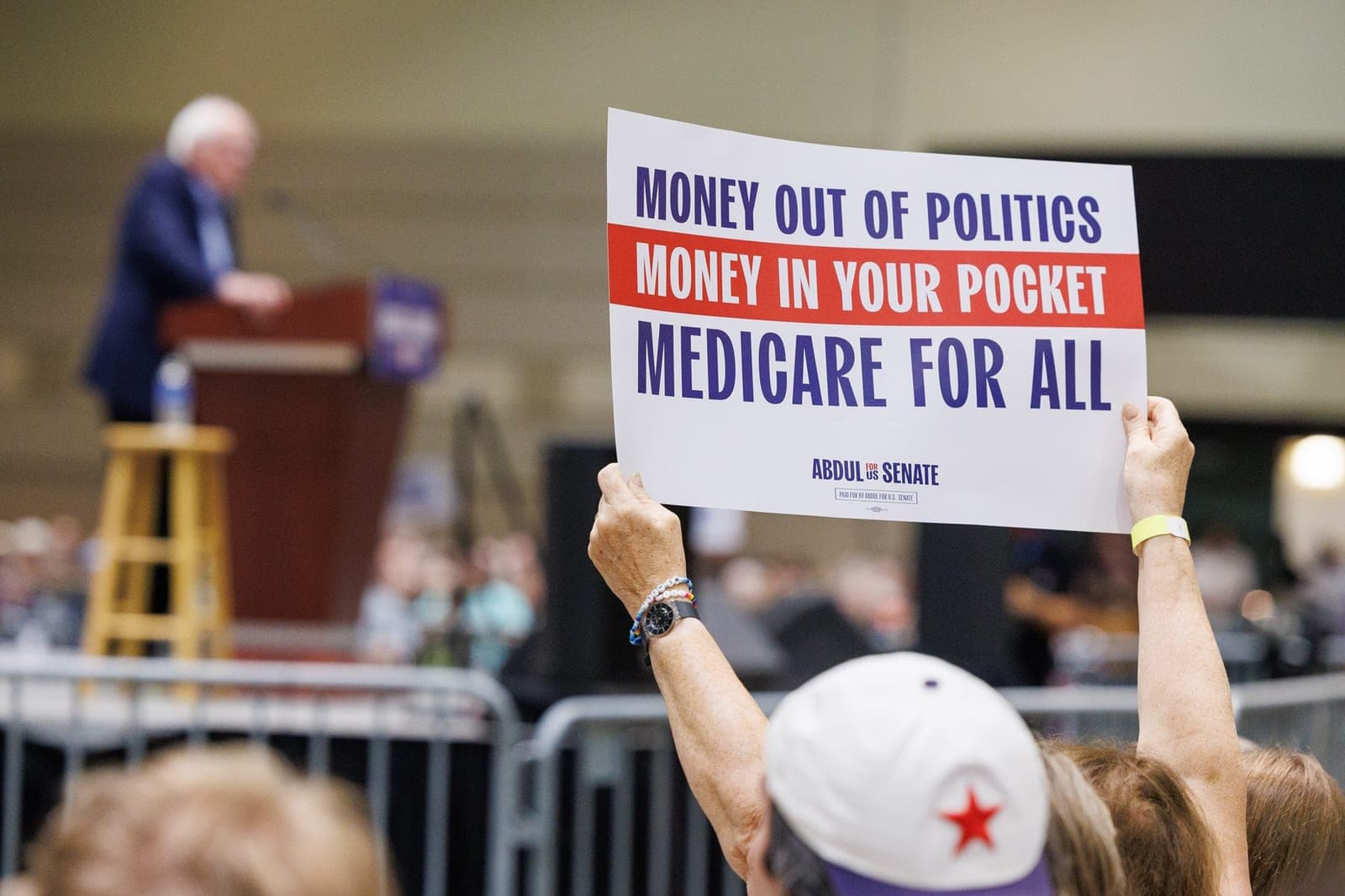
'Stunning' Level of Support for Universal Health Care: Jayapal
Even more people want Medicare for All than did last December, a new poll shows. Medicare for All is a winning policy supported by the vast majority of Democratic voters that can give the party a boost, including in battleground states, according to a new survey from Rep. Pramila Jayapal (D-WA) and

DOGE Bills Could Come Back to Haunt Republicans
One bill in particular would threaten $500 billion in federal spending every year. Several House Republicans in tough races supported it. The news moves so fast that people may not fully remember that just a year ago, fanboys of Elon Musk barely out of adolescence were running amok inside the feder
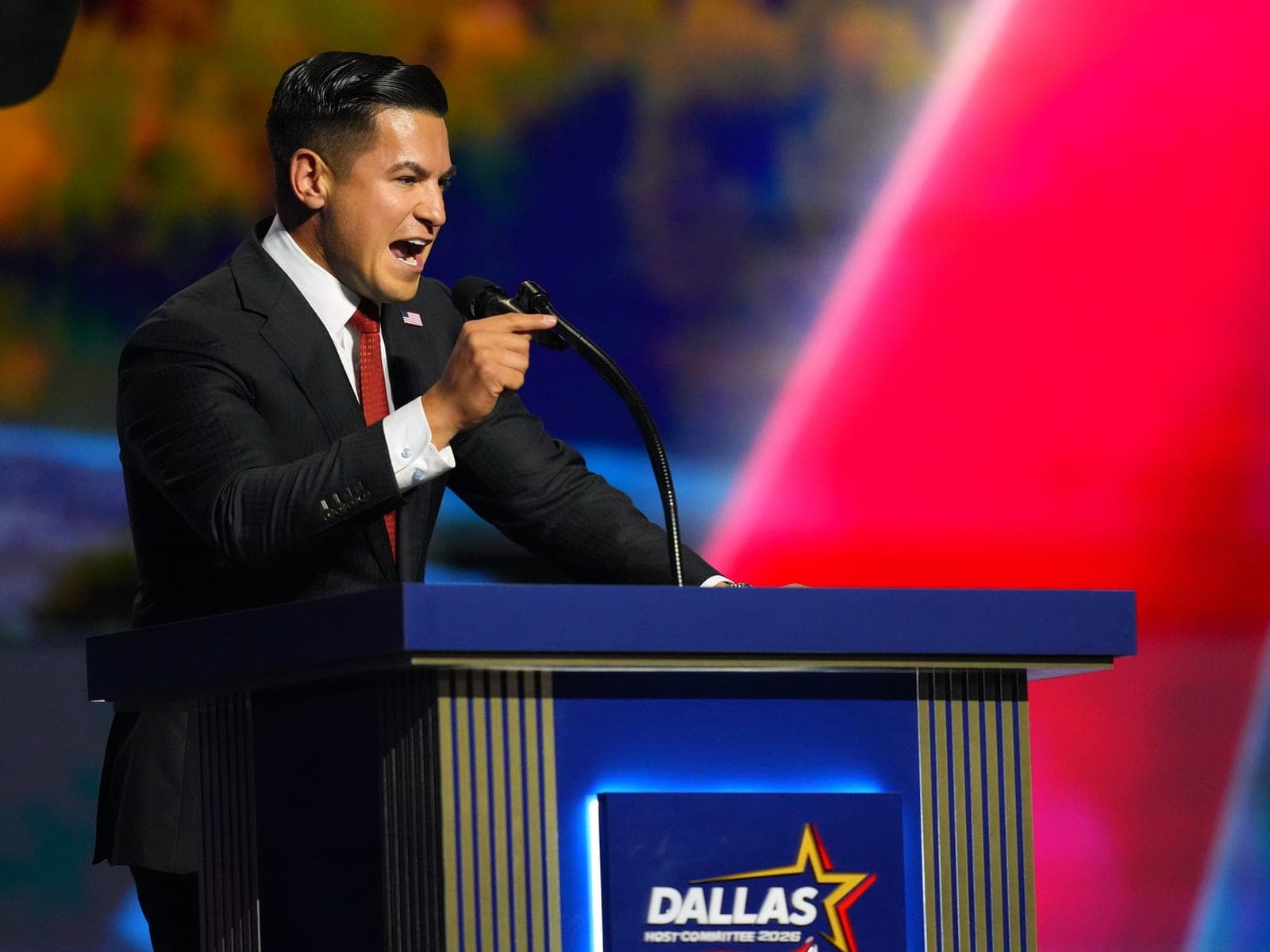
Republican Nominee in Texas Using Trump's $5,000 Promise to Deceive Voters
Eric Flores is an Army veteran and lawyer running to unseat Democratic Rep. Vicente Gonzalez in Texas District 34. The text from Eric Flores, the Republican nominee for Texas's 34th Congressional District, is brief. It says, "Attachment: $5,000 Check ... Pres. Trump just authorized it," a reference
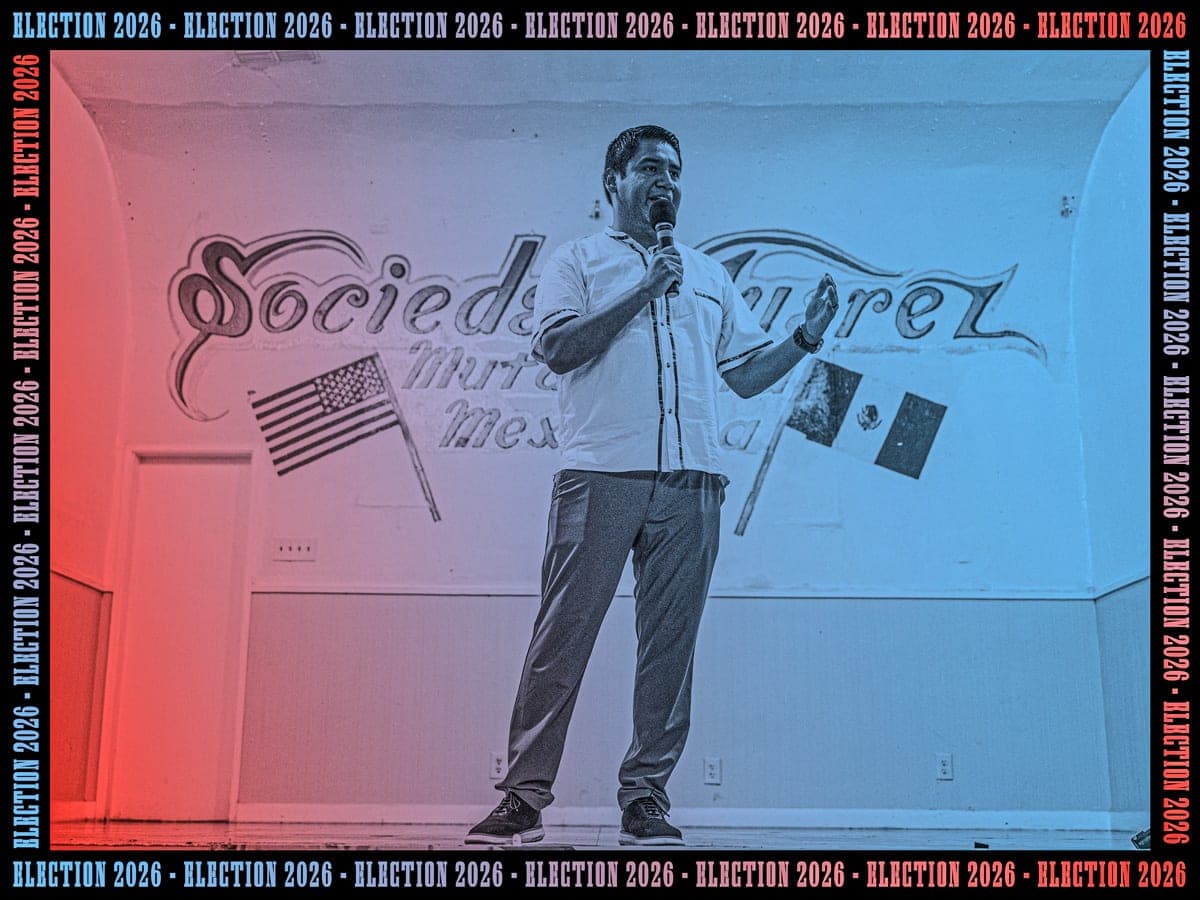
The New Majority Makers
A group of unapologetic economic populists are defying the conventional wisdom that only moderates can succeed in swing seats. This article appears in the October 2026 issue of The American Prospect magazine. If you'd like to receive our next issue in your mailbox, please subscribe here. BAKERSFIE
The New Majority Makers
A group of unapologetic economic populists are defying the conventional wisdom that only moderates can succeed in swing seats. This article appears in the October 2026 issue of The American Prospect magazine. If you'd like to receive our next issue in your mailbox, please subscribe here. BAKERSFIE
The New Majority Makers
A group of unapologetic economic populists are defying the conventional wisdom that only moderates can succeed in swing seats. This article appears in the October 2026 issue of The American Prospect magazine. If you'd like to receive our next issue in your mailbox, please subscribe here. BAKERSFIE
The New Majority Makers
A group of unapologetic economic populists are defying the conventional wisdom that only moderates can succeed in swing seats. This article appears in the October 2026 issue of The American Prospect magazine. If you'd like to receive our next issue in your mailbox, please subscribe here. BAKERSFIE
Trump Showers Health Care Crooks With Love
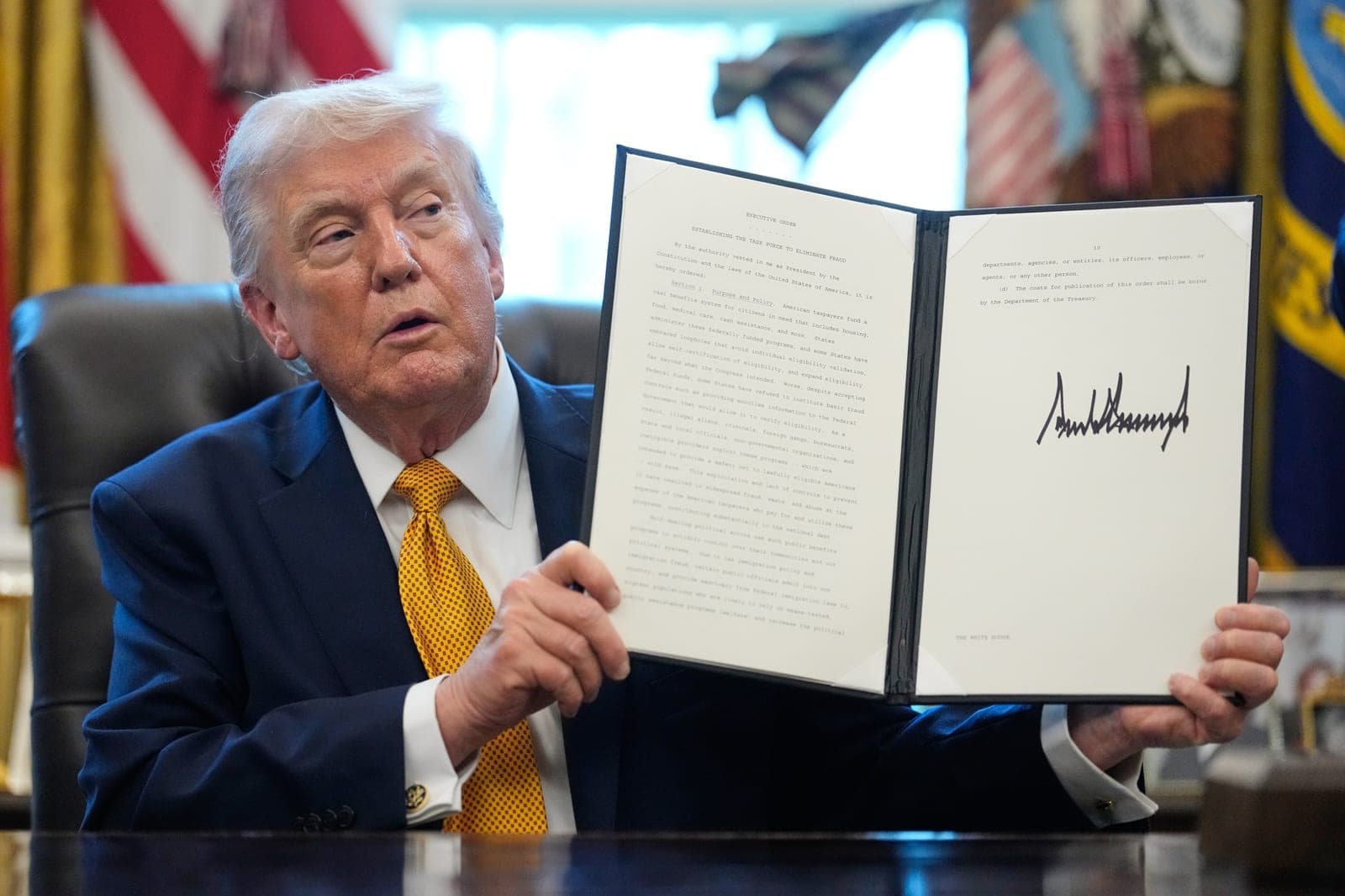
As he flails about for a midterm message, President Trump has hit on a new role as a crusader against fraud. He laid out his position last month in an executive order establishing a task force to eliminate fraud, attacking Minnesota for the Feeding Our Future nonprofit that stole nearly $250 million in COVID relief funds (which was prosecuted during the Biden administration) and claiming without proof that “there is also strong reason to believe that similar problems exist in other States, including California, Illinois, New York, Maine, and Colorado.” Among other priorities, the task force will “coordinate and accelerate a comprehensive national strategy to stop fraud, waste, and abuse within Federal benefits programs,” and “disrupt and dismantle fraud networks and facilitators.” More from Whitney Curry Wimbish There’s just one problem with this narrative. A new report published ahead of today’s House Ways and Means hearing on Medicare fraud shows that Trump appears to support medical fraud, as long as corporate executives and other elites are the ones committing it. The analysis by Protect Our Care outlines how Trump has issued 15 pardons in his second term to business owners, pharmacists, doctors, and health care executives, who together defrauded more than $3 billion from the U.S. government and taxpayers, roughly 14 times the number at issue in the Minnesota Feeding Our Future case. The actions include the April 2025 pardon of Paul Walczak, a Florida man who controlled a network of interconnected health care companies and was sentenced last year to 18 months in prison for employment tax crimes, including failing to pay $10 million in taxes. The following month, Trump pardoned Lawrence Duran, the owner of mental health care company American Therapeutic Corporation, who in 2011 was sentenced to 50 years in prison for a $205 million Medicare fraud scheme, at the time the largest therapy-related Medicare scam of its kind. Trump pardoned two convicted medical fraud criminals last November. Robert Harshbarger, a pharmacist married to U.S. Rep. Diana Harshbarger (R-TN), pleaded guilty in 2013 to committing $848,000 in health care fraud and to distributing misbranded kidney medications that had not been approved by the Food and Drug Administration. And failed nursing home chain owner Joseph Schwartz stole $38 million in taxes and was sentenced to three years in prison. The 15 total health care fraudsters whom Trump pardoned are just a fraction of the more than 70 political allies, executives, celebrities, and donors he has pardoned of criminal charges over his two terms. “His war on fraud is a joke. He’s the most corrupt president in modern history,” Protect Our Care director of policy programs Vaishu Jawahar said in an interview. “He’s the ultimate narcissist. He’s handing people who remind him of himself a get-out-of-jail-free card.” Protect Our Care’s analysis comes as the Ways and Means Committee listens this morning to a panel of three medical company executives, a consultant, and a doctor who is a Medicare fraud victim, as Republicans continue to stump for Trump’s pet project to punish blue states under the guise of protecting taxpayers from medical fraud. Those talking points are a smokescreen for Trump’s real aim: justifying his destruction of the American health care system, Jawahar said. Trump cut $1 trillion from Medicare and Medicaid through his One Big Beautiful Bill Act (OBBBA), which has already forced more than 800 hospitals, nursing homes, and other medical facilities to close entirely, cut services, or consider doing so, as the Prospect has reported. The Medicaid cuts in OBBBA were premised on rooting out fraud, by forcing enrollees into onerous application and eligibility checks multiple times a year to keep their coverage. Though many of the cuts were designed to not take effect until after the midterm elections, some states, like Nebraska, have accelerated the timeline, with new “fraud prevention” procedures beginning May 1. The GOP also ended the enhanced Affordable Care Act subsidies that significantly increased insurance enrollment. The cuts mean that about 15 million Americans will lose health care coverage or become uninsured in the next eight years, according to the Center on Budget and Policy Priorities. Already, ACA enrollment is down by 5 percent this year, a loss of well over one million patients. GOP War on Health Care Destroying Hospitals at Home and Abroad Trump is seeking even more cuts in his 2027 budget proposal, including reducing the Department of Health and Human Services budget by $15.8 billion. Protect Our Care notes that one of the biggest supporters for crushing the Affordable Care Act is himself a fraudster. Sen. Rick Scott (R-FL) was the CEO of Columbia/HCA until 1997 and resigned shortly after federal agents raided his company, which was later found to have defrauded Medicare, Medicaid, and other health care programs through a variety of schemes, including cost report fraud and paying bribes to physicians. The company paid $1.7 billion, “by far the largest recovery ever reached by the government in a health care fraud investigation,” the Department of Justice said at the time. Protect Our Care’s report points out that Scott “invoked the Fifth Amendment 75 times and walked away from the company with a severance package of over $300 million,” and that virtually all Medicaid fraud is committed by health care providers like Scott’s old company, rather than individual enrollees. If Republican lawmakers were serious about fraud, the organization continues, they wouldn’t fire independent inspectors general as they’ve done. “While one in three Americans skip meals or other needs to afford health care and millions of working Americans lose sleep over their health care bills thanks to Trump’s cuts,” Protect Our Care wrote, “some of the biggest health care fraudsters in the nation are sleeping consequence-free in their multimillion-dollar mansions thanks to Trump’s pardons.” The post Trump Showers Health Care Crooks With Love appeared first on The American Prospect.
Trump Showers Health Care Crooks With Love
As he flails about for a midterm message, President Trump has hit on a new role as a crusader against fraud. He laid out his position last month in an executive order establishing a task force to eliminate fraud, attacking Minnesota for the Feeding Our Future nonprofit that stole nearly $250 million in COVID relief funds (which was prosecuted during the Biden administration) and claiming without proof that “there is also strong reason to believe that similar problems exist in other States, including California, Illinois, New York, Maine, and Colorado.” Among other priorities, the task force will “coordinate and accelerate a comprehensive national strategy to stop fraud, waste, and abuse within Federal benefits programs,” and “disrupt and dismantle fraud networks and facilitators.” More from Whitney Curry Wimbish There’s just one problem with this narrative. A new report published ahead of today’s House Ways and Means hearing on Medicare fraud shows that Trump appears to support medical fraud, as long as corporate executives and other elites are the ones committing it. The analysis by Protect Our Care outlines how Trump has issued 15 pardons in his second term to business owners, pharmacists, doctors, and health care executives, who together defrauded more than $3 billion from the U.S. government and taxpayers, roughly 14 times the number at issue in the Minnesota Feeding Our Future case. The actions include the April 2025 pardon of Paul Walczak, a Florida man who controlled a network of interconnected health care companies and was sentenced last year to 18 months in prison for employment tax crimes, including failing to pay $10 million in taxes. The following month, Trump pardoned Lawrence Duran, the owner of mental health care company American Therapeutic Corporation, who in 2011 was sentenced to 50 years in prison for a $205 million Medicare fraud scheme, at the time the largest therapy-related Medicare scam of its kind. Trump pardoned two convicted medical fraud criminals last November. Robert Harshbarger, a pharmacist married to U.S. Rep. Diana Harshbarger (R-TN), pleaded guilty in 2013 to committing $848,000 in health care fraud and to distributing misbranded kidney medications that had not been approved by the Food and Drug Administration. And failed nursing home chain owner Joseph Schwartz stole $38 million in taxes and was sentenced to three years in prison. The 15 total health care fraudsters whom Trump pardoned are just a fraction of the more than 70 political allies, executives, celebrities, and donors he has pardoned of criminal charges over his two terms. “His war on fraud is a joke. He’s the most corrupt president in modern history,” Protect Our Care director of policy programs Vaishu Jawahar said in an interview. “He’s the ultimate narcissist. He’s handing people who remind him of himself a get-out-of-jail-free card.” Protect Our Care’s analysis comes as the Ways and Means Committee listens this morning to a panel of three medical company executives, a consultant, and a doctor who is a Medicare fraud victim, as Republicans continue to stump for Trump’s pet project to punish blue states under the guise of protecting taxpayers from medical fraud. Those talking points are a smokescreen for Trump’s real aim: justifying his destruction of the American health care system, Jawahar said. Trump cut $1 trillion from Medicare and Medicaid through his One Big Beautiful Bill Act (OBBBA), which has already forced more than 800 hospitals, nursing homes, and other medical facilities to close entirely, cut services, or consider doing so, as the Prospect has reported. The Medicaid cuts in OBBBA were premised on rooting out fraud, by forcing enrollees into onerous application and eligibility checks multiple times a year to keep their coverage. Though many of the cuts were designed to not take effect until after the midterm elections, some states, like Nebraska, have accelerated the timeline, with new “fraud prevention” procedures beginning May 1. The GOP also ended the enhanced Affordable Care Act subsidies that significantly increased insurance enrollment. The cuts mean that about 15 million Americans will lose health care coverage or become uninsured in the next eight years, according to the Center on Budget and Policy Priorities. Already, ACA enrollment is down by 5 percent this year, a loss of well over one million patients. GOP War on Health Care Destroying Hospitals at Home and Abroad Trump is seeking even more cuts in his 2027 budget proposal, including reducing the Department of Health and Human Services budget by $15.8 billion. Protect Our Care notes that one of the biggest supporters for crushing the Affordable Care Act is himself a fraudster. Sen. Rick Scott (R-FL) was the CEO of Columbia/HCA until 1997 and resigned shortly after federal agents raided his company, which was later found to have defrauded Medicare, Medicaid, and other health care programs through a variety of schemes, including cost report fraud and paying bribes to physicians. The company paid $1.7 billion, “by far the largest recovery ever reached by the government in a health care fraud investigation,” the Department of Justice said at the time. Protect Our Care’s report points out that Scott “invoked the Fifth Amendment 75 times and walked away from the company with a severance package of over $300 million,” and that virtually all Medicaid fraud is committed by health care providers like Scott’s old company, rather than individual enrollees. If Republican lawmakers were serious about fraud, the organization continues, they wouldn’t fire independent inspectors general as they’ve done. “While one in three Americans skip meals or other needs to afford health care and millions of working Americans lose sleep over their health care bills thanks to Trump’s cuts,” Protect Our Care wrote, “some of the biggest health care fraudsters in the nation are sleeping consequence-free in their multimillion-dollar mansions thanks to Trump’s pardons.” The post Trump Showers Health Care Crooks With Love appeared first on The American Prospect.
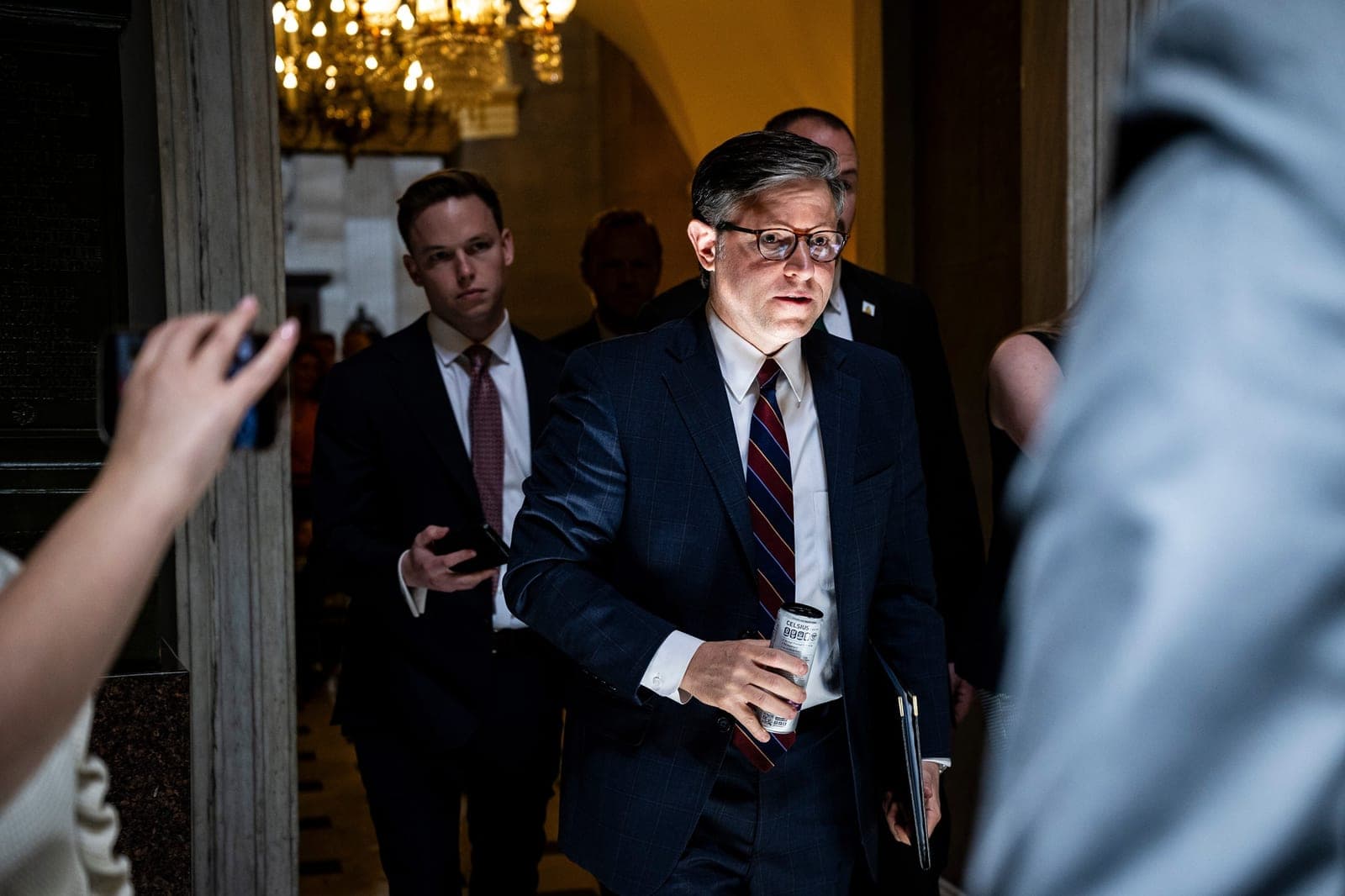
Mike Johnson Has a FISA Fiasco on His Hands
Negotiations between the Republican leadership and members of the House Freedom Caucus over the nation’s warrantless spying program dragged on into the eleventh hour late Thursday. But the compromises crafted in those closed-door discussions, which were led by House Speaker Mike Johnson (R-LA), completely collapsed on the House floor. Johnson’s dazzling play to reauthorize Section 702 of the Foreign Intelligence Surveillance Act (FISA) by five years ended in an excruciating defeat, as the bill failed after 20 Republicans joined Democrats in striking it down. One major reason it lost was that the warrant language baked into that measure not only would have codified existing law, but also would have made it easier for Section 702–acquired data to be used against Americans in criminal proceedings. The 200-220 vote was called at 1:22 early Friday morning. More from James Baratta Two hours earlier, Rep. Jim McGovern (D-MA) had lambasted Johnson and intelligence hawks on the other side of the aisle over their “backroom deal,” proclaiming on the House floor that “Republicans threw it together on the back of a napkin in a back room in the middle of the night.” McGovern wasn’t the only Democrat to denounce the lack of transparency from GOP leadership. “This is an appalling Kafkaesque process leading to an absurd Orwellian result,” said Rep. Jamie Raskin (D-MD). “They say you shouldn’t look to see how the sausage gets made. This isn’t even sausage. This is a scrapple. It’s scrapple with dog food mixed inside of it.” The other shoe dropped during the vote on a rule to consider a clean 18-month extension of Section 702. That rule also failed at 2:07 a.m. in a 197-228 vote. Reps. Jared Golden (D-ME), Josh Gottheimer (D-NJ), Tom Suozzi (D-NY), and Marie Gluesenkamp Perez (D-WA) broke with their party to support it. Suozzi was the only Democrat in the bunch who, earlier, did not vote in favor of the five-year extension that included the Speaker’s amendment, which in addition to the warrant language, included more punitive criminal penalties for FISA abuse, and expanded congressional access to the Foreign Intelligence Surveillance Court (FISC). “Outrageously, a handful of Democrats went along with Johnson’s scheme,” Hajar Hammado, senior policy adviser at Demand Progress, told the Prospect. “It’s simply unacceptable for them to be a part of Speaker Johnson’s ploy to hand over dangerous spying authority to Donald Trump and Stephen Miller.” When all was said and done, the House unanimously agreed to a temporary, ten-day extension of Section 702. That measure has passed the Senate and now awaits President Trump’s signature. “A significant bicameral, bipartisan coalition sent a resounding message that government surveillance must be reformed to protect Americans’ rights,” Sen. Ron Wyden (D-OR) said in a statement. “I have long said that protecting security and liberty aren’t mutually exclusive, and now the House and Senate have an opportunity to make much-needed reforms to Section 702 to protect both.” Congressional Black Caucus to Support Spying Powers Used on BLM Activists As privacy advocates in Congress rally in the aftermath of Johnson’s FISA fiasco, the purported urgency of preventing the program’s expiration seems like an increasingly tough sell. Section 702 will remain intact for at least another year, even if it lapses, as the FISC approved its annual recertification in March. At the time, it also ordered U.S. intelligence agencies to stop using tools that facilitate the collection of Americans’ commercial data. The Justice Department is appealing that ruling, according to The New York Times. While it remains unclear whether Johnson will get his house in order, it appears that any amendments brought forth without meaningful reforms may face a similar fate as the other measures GOP leadership tried, and failed, to pass. “In the dead of night, Speaker Johnson tried to pull one over on Congress and the American people with a fake compromise that actually would make it easier for the government to weaponize FISA data against Americans, but our coalition rallied and helped defeat it,” Hammado said. “He gambled that he could overcome the strength of our bipartisan majority demanding real privacy protections and in the end, he lost on everything.” The post Mike Johnson Has a FISA Fiasco on His Hands appeared first on The American Prospect.
Tax Day Could Be a Breeze
Today is tax day, and like many readers, I have spent much of my free time over the last several weeks figuring out my various returns. Because both my wife and I have more than one source of income, our federal and state returns are quite complicated, and because we live in Pennsylvania—which apparently never learned the lesson of Antoine Lavoisier and therefore relies on private tax farmers to collect local taxes—I had to file an entirely additional return at the city level. I find the whole experience almost indescribably unpleasant. It’s tedious, hyper-complicated, easy to make a costly error, and tends to reinforce the false Reaganite notion that “wealth is privately produced and then appropriated by a quasi-illegitimate state, through taxation,” to quote the economist Yanis Varoufakis. More from Ryan Cooper But it doesn’t have to be this way. Paying taxes can and should be easy, not least because Americans are going to have to do a lot more of it in the near future. Some years ago, I traveled to the Faroe Islands, an autonomous territory of Denmark, to report on their tax authority, which is arguably the best in the world. There, all normal wages are routed through a central government database, which automatically keeps track of how much you are making, and what benefit programs you are eligible for. While this computerized system is quite sophisticated and required a lot of initial investment, it is incredibly easy to operate. For an ordinary worker, what you owe automatically comes out of the paycheck, and any benefit payments automatically go right into your bank account. Ordinary employees don’t have to file their taxes or any enrollment paperwork (if they have a child and become eligible for the Faroese child allowance, for instance, the money just starts showing up), while employers don’t have to hire a payroll processor to handle their tax payments. In America, by contrast, we have to file our taxes ourselves (or hire an accountant), and it’s a huge pain in the neck for individuals, businesses, and the IRS itself. And while taxes are much lower than in Nordic countries, that is more than counterbalanced by all the necessary expenses we have to fund out of pocket. I pay taxes for Medicare, Medicaid, CHIP, and so on, and then many thousands of dollars on top of that for my own insurance, thousands more for day care, and so on. Today On TAP This story first appeared in our free Today On TAP newsletter, a weekday email featuring commentary on the daily news from Robert Kuttner and Harold Meyerson. Sign up All this is why I find it maddening that so many Democrats, like Sens. Cory Booker of New Jersey and Chris Van Hollen of Maryland, California gubernatorial candidate Katie Porter, and Georgia gubernatorial candidate Keisha Lance Bottoms, have openly embraced the Reaganite frame by proposing various large tax cuts. We as a people can’t have nice things in large part because of this notion that taxes are a burden, and cutting them a “relief” check, rather than embracing one of the most important ways by which societies achieve collective goals. I, for one, would much rather pay for my son’s day care over my whole working life, rather than all at once when he is enrolled. Moreover, thanks to repeated rounds of Republican tax cuts, the national debt is skyrocketing. Just President Trump’s Big Beautiful Bill alone will add about $3.4 trillion to the pile. And while heavy borrowing is all fine and good during a recession, the economy—at least for the moment—is near full employment. Worse still, the debt created by cutting taxes on the rich is largely bought up by the same rich people as an asset, who are then paid a large ongoing coupon for doing so. Inequality increases both coming and going. So yes, filing your taxes in this country is an appalling waste of time. But it doesn’t have to be, and we don’t have to reach a Faroes standard of performance to see a huge improvement. The IRS had a free “Direct File” system going under President Biden that was popular; naturally, Trump—under pressure from the corrupt parasites at Intuit, who lobby to keep taxes complicated so people are forced to pay them to do it—abolished it. New York City has had free tax prep assistance for years for families making less than $97,000, and individuals making less than $68,000. Direct File should be brought back. New York’s program could be copied and expanded all across the country. For a reach goal, the tax code could be radically simplified, with all the various tax subsidies administered more efficiently as welfare programs. But as a general matter, Americans should demand much more from their taxes and their tax system. In government as in capitalism, you tend to get what you pay for. The post Tax Day Could Be a Breeze appeared first on The American Prospect.
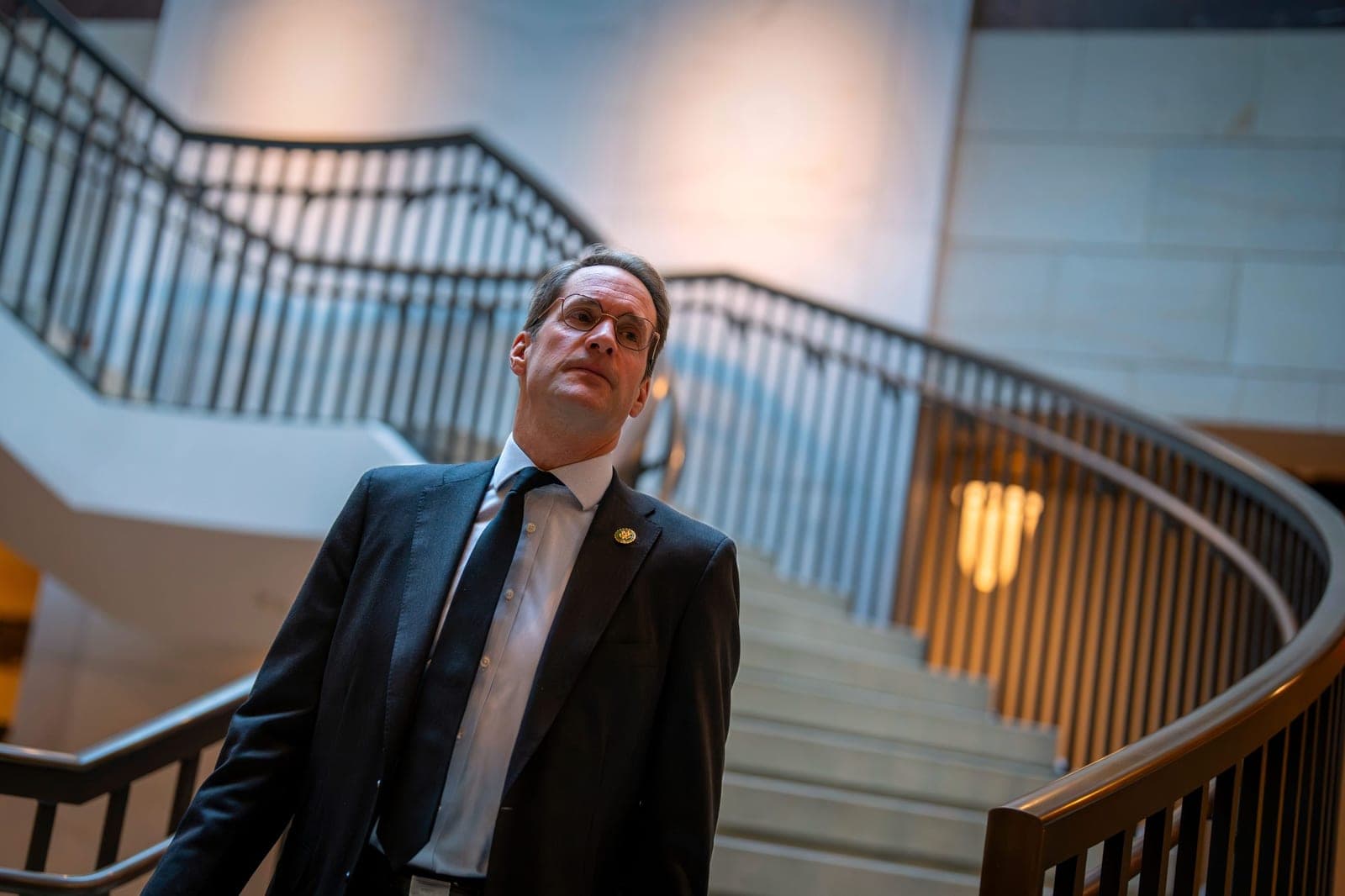
Himes Fact-Checked on ‘Misleading’ Claims About Warrantless Spying
After being ambushed by privacy activists outside a town hall in southern Connecticut last week, Rep. Jim Himes (D-CT), the ranking Democrat on the House Permanent Select Committee on Intelligence, spoke at length about the urgency of extending Section 702 of the Foreign Intelligence Surveillance Act (FISA), the warrantless spying program he has been actively lobbying Democratic colleagues to support without reforms. The 702 program is set to expire on April 20. Himes assured protestors that “anything I said today, you can sort of check if you want.” In a press release Friday, organizers with QuitGPT and a number of Connecticut-based advocacy groups held him to it: “Unfortunately, Himes repeated several false and misleading statements about FISA, the data broker loophole, and AI surveillance.” Their comments came just hours after a separate virtual town hall last Friday where Himes “repeated many of the same statements” about Section 702. In both instances, Himes suggested that U.S. intelligence agencies like the National Security Agency (NSA) do not purchase Americans’ commercial data through the program. “There’s no data acquired under FISA 702 authorities that is commercial data,” he told protestors last week. “We don’t buy it through that authority.” The NSA does indeed buy Americans’ commercial data from private companies, and it doesn’t need a warrant to do so. The agency only disclosed the nature of its commercial data purchases after Sen. Ron Wyden (D-OR), a member of the Senate Intelligence Committee who has been trying to close this loophole for years, applied political pressure. In November 2023, Wyden placed President Joe Biden’s pick to run the NSA on hold, making the nominee’s Senate confirmation contingent on the agency coming clean about its practices. The NSA resisted full transparency at first, but after stewing for about three months, it conceded. “There is a lot of baloney out there when it comes to government surveillance,” a spokesperson for Wyden told the Prospect in an email. “Here are the facts: multiple intelligence and law enforcement agencies, including the FBI, Defense Intelligence Agency, NSA, ICE, CBP, DEA, IRS, and Secret Service have all purchased or are still purchasing Americans’ data without a warrant or any court oversight whatsoever.” The spokesperson continued: “People who claim this isn’t happening are misinformed.” At his virtual town hall on Friday, Himes drew sharp criticism over his comments, but appeared to double down on them when he was pressed by an attendee. “Your colleague, Ron Wyden, he confirmed outright the NSA is buying data on Americans,” the attendee said, “so are you covering for them, or do you just not know?” Himes replied: “My job is to do oversight of the intelligence community. That is to crawl all over them and to tell them when I think what they are doing is either illegal or immoral. That’s my job. I don’t cover for anybody, full stop.” “That’s my job, as it’s Ron Wyden’s job,” he continued. “I am not aware of any NSA purchases of U.S. person data, and because their targets, by law, are exclusively foreign, they … have no reason and no business buying American data.” Himes also recalled privacy activists confronting him outside last week’s in-person town hall, saying “the first thing they did was hand me a flyer that said ‘Stop AI Surveillance.’” Once again, he doubled down. “[AI] has absolutely nothing to do with 702. Nothing. Full stop,” Himes said. The Department of Justice’s National Security Division (NSD) budget justification tells a different story. NSD has “worked closely” with the intelligence community “to discuss new AI tools that are involved in processing or analyzing FISA-acquired information,” according to the spending request. Himes is perhaps the most prominent member of the so-called “Gang of Eight,” which receives regular briefings from the executive branch on classified intelligence matters. (The Gang of Eight includes the majority and minority leaders in each chamber, along with the chair and ranking member of the House and Senate Intelligence Committees.) He recently told The Hill that if Trump ever abused the 702 program, “I would know it pretty much in real time if he did.” At the in-person town hall last week, Himes said he also sees the “long list of queries that are made of U.S. person information, and I look at that very closely.” Despite Himes presenting himself as the congressional arbiter of the intelligence community, Congress does not have direct access to the FBI’s queries for Americans’ communications data. The Justice Department is required by law to audit these queries within 180 days, meaning that any improper searches may not be logged until months after the fact. Moreover, the last Section 702 compliance review, which saw the Justice Department and office of the Director of National Intelligence jointly examine queries made over the course of 2022, only came out last year. When Himes spoke with the Prospect, he seemed to signal openness toward reforming the 702 program, but emphasized that its extension cannot be allowed to lapse. Conversely, privacy activists argue the window for reform is closing, and that now is the time to act. “If Himes procrastinates until after FISA reauthorization, we don’t have a chance,” they said on Friday. “FISA reauthorization is almost certainly our only chance to close the [data broker] loophole this year.” The intelligence community and its cronies in Congress regard FISA reauthorization as a “must-pass,” and extending it requires bipartisan support. That gives members of Congress seeking to reform the program leverage. Whether that leverage will be enough to pass the updated Government Surveillance Reform Act (GSRA), which, among other proposed reforms, seeks to close both the data broker loophole and backdoor search loophole, has yet to be seen. Wyden introduced that bill alongside Sen. Mike Lee (R-UT) last month. The legislation has been co-sponsored by Sens. Cynthia Lummis (R-WY) and Elizabeth Warren (D-MA), and Reps. Warren Davidson (R-OH) and Zoe Lofgren (D-CA) have introduced the House version of the bill. “The bipartisan, bicameral GSRA would end warrantless surveillance and close the data broker loophole, while preserving the surveillance authorities needed to keep our country safe,” Wyden’s spokesperson said. “Our approach shows the government doesn’t need to violate the rights of Americans to target foreign threats.” The post Himes Fact-Checked on ‘Misleading’ Claims About Warrantless Spying appeared first on The American Prospect.
Himes Fact-Checked on ‘Misleading’ Claims About Warrantless Spying
After being ambushed by privacy activists outside a town hall in southern Connecticut last week, Rep. Jim Himes (D-CT), the ranking Democrat on the House Permanent Select Committee on Intelligence, spoke at length about the urgency of extending Section 702 of the Foreign Intelligence Surveillance Act (FISA), the warrantless spying program he has been actively lobbying Democratic colleagues to support without reforms. The 702 program is set to expire on April 20. Himes assured protestors that “anything I said today, you can sort of check if you want.” In a press release Friday, organizers with QuitGPT and a number of Connecticut-based advocacy groups held him to it: “Unfortunately, Himes repeated several false and misleading statements about FISA, the data broker loophole, and AI surveillance.” Their comments came just hours after a separate virtual town hall last Friday where Himes “repeated many of the same statements” about Section 702. In both instances, Himes suggested that U.S. intelligence agencies like the National Security Agency (NSA) do not purchase Americans’ commercial data through the program. “There’s no data acquired under FISA 702 authorities that is commercial data,” he told protestors last week. “We don’t buy it through that authority.” The NSA does indeed buy Americans’ commercial data from private companies, and it doesn’t need a warrant to do so. The agency only disclosed the nature of its commercial data purchases after Sen. Ron Wyden (D-OR), a member of the Senate Intelligence Committee who has been trying to close this loophole for years, applied political pressure. In November 2023, Wyden placed President Joe Biden’s pick to run the NSA on hold, making the nominee’s Senate confirmation contingent on the agency coming clean about its practices. The NSA resisted full transparency at first, but after stewing for about three months, it conceded. “There is a lot of baloney out there when it comes to government surveillance,” a spokesperson for Wyden told the Prospect in an email. “Here are the facts: multiple intelligence and law enforcement agencies, including the FBI, Defense Intelligence Agency, NSA, ICE, CBP, DEA, IRS, and Secret Service have all purchased or are still purchasing Americans’ data without a warrant or any court oversight whatsoever.” The spokesperson continued: “People who claim this isn’t happening are misinformed.” At his virtual town hall on Friday, Himes drew sharp criticism over his comments, but appeared to double down on them when he was pressed by an attendee. “Your colleague, Ron Wyden, he confirmed outright the NSA is buying data on Americans,” the attendee said, “so are you covering for them, or do you just not know?” Himes replied: “My job is to do oversight of the intelligence community. That is to crawl all over them and to tell them when I think what they are doing is either illegal or immoral. That’s my job. I don’t cover for anybody, full stop.” “That’s my job, as it’s Ron Wyden’s job,” he continued. “I am not aware of any NSA purchases of U.S. person data, and because their targets, by law, are exclusively foreign, they … have no reason and no business buying American data.” Himes also recalled privacy activists confronting him outside last week’s in-person town hall, saying “the first thing they did was hand me a flyer that said ‘Stop AI Surveillance.’” Once again, he doubled down. “[AI] has absolutely nothing to do with 702. Nothing. Full stop,” Himes said. The Department of Justice’s National Security Division (NSD) budget justification tells a different story. NSD has “worked closely” with the intelligence community “to discuss new AI tools that are involved in processing or analyzing FISA-acquired information,” according to the spending request. Himes is perhaps the most prominent member of the so-called “Gang of Eight,” which receives regular briefings from the executive branch on classified intelligence matters. (The Gang of Eight includes the majority and minority leaders in each chamber, along with the chair and ranking member of the House and Senate Intelligence Committees.) He recently told The Hill that if Trump ever abused the 702 program, “I would know it pretty much in real time if he did.” At the in-person town hall last week, Himes said he also sees the “long list of queries that are made of U.S. person information, and I look at that very closely.” Despite Himes presenting himself as the congressional arbiter of the intelligence community, Congress does not have direct access to the FBI’s queries for Americans’ communications data. The Justice Department is required by law to audit these queries within 180 days, meaning that any improper searches may not be logged until months after the fact. Moreover, the last Section 702 compliance review, which saw the Justice Department and office of the Director of National Intelligence jointly examine queries made over the course of 2022, only came out last year. When Himes spoke with the Prospect, he seemed to signal openness toward reforming the 702 program, but emphasized that its extension cannot be allowed to lapse. Conversely, privacy activists argue the window for reform is closing, and that now is the time to act. “If Himes procrastinates until after FISA reauthorization, we don’t have a chance,” they said on Friday. “FISA reauthorization is almost certainly our only chance to close the [data broker] loophole this year.” The intelligence community and its cronies in Congress regard FISA reauthorization as a “must-pass,” and extending it requires bipartisan support. That gives members of Congress seeking to reform the program leverage. Whether that leverage will be enough to pass the updated Government Surveillance Reform Act (GSRA), which, among other proposed reforms, seeks to close both the data broker loophole and backdoor search loophole, has yet to be seen. Wyden introduced that bill alongside Sen. Mike Lee (R-UT) last month. The legislation has been co-sponsored by Sens. Cynthia Lummis (R-WY) and Elizabeth Warren (D-MA), and Reps. Warren Davidson (R-OH) and Zoe Lofgren (D-CA) have introduced the House version of the bill. “The bipartisan, bicameral GSRA would end warrantless surveillance and close the data broker loophole, while preserving the surveillance authorities needed to keep our country safe,” Wyden’s spokesperson said. “Our approach shows the government doesn’t need to violate the rights of Americans to target foreign threats.” The post Himes Fact-Checked on ‘Misleading’ Claims About Warrantless Spying appeared first on The American Prospect.

Organized Money: The Business of Betting on Murder with Sen. Chris Murphy
As bombs started to fall on Iran, some Americans cashed in by placing bets on prediction markets like Polymarket and Kalshi. These bets paid out hundreds of thousands of dollars to users who almost certainly had inside information about the exact timing of the attacks. Similar bets were made on the assassination of Iran’s ayatollah, turning an act of murder into a commodity. As these markets have come to embrace acts of violence, often rife with insider trading, Sen. Chris Murphy of Connecticut has introduced legislation to curb betting on government actions and similar events. His bill, Banning Event Trading on Sensitive Operations and Federal Functions, or the BETS OFF Act, was introduced this past Tuesday. Today on the show, Matt Stoller and David Dayen talk to Sen. Murphy about the problem of prediction markets, both political and moral. They also get into the war in Iran, its rudderless trajectory, and the Pentagon’s $200 billion request to continue fighting, perhaps indefinitely. Finally, they discuss how to get out of the morass we have found ourselves in as a country that seems to keep making big, bad decisions, and ask whether Trump and the war are just symptoms of a larger problem plaguing America. Listen via Apple, Spotify, or wherever you get your podcasts. The post Organized Money: The Business of Betting on Murder with Sen. Chris Murphy appeared first on The American Prospect.

The National Security Case for Renewable Energy
If there may be one silver lining in Donald Trump’s war on Iran—for my money, the most purely deranged action by an American president in history, and that is saying something—it’s that it will likely speed up the renewable-energy transition. With oil prices spiking, nations around the world are being clubbed over the head, again, with the great vulnerability oil dependence imposes on them. There is a workable alternative being deployed across the globe: solar and wind power. Progress has not been nearly fast enough to fully offset oil dependence—in fact, oil consumption is at record highs—but renewables can theoretically replace the vast majority of oil needs right now. More from Ryan Cooper And in the process, nations can protect themselves from relying on a rickety energy supply system anchored in an exceptionally unstable part of the world, not least because the global hegemon has a nasty habit of starting wars of aggression for no reason. The security argument for renewables is obvious. While oil comes from a handful of countries, many of which are mercurial dictatorships, and must be continually transported great distances by ship, pipeline, and truck, the sun shines and the wind blows everywhere, for free. Not all countries are equally well-suited to renewables, of course, but sun and wind do tend to compensate for each other, as the wind tends to blow harder the further north or south you go, as well as during the winter. The crushing oil shocks of the 1970s proved beyond any question the security risk of oil. As President Carter said in a speech celebrating his installation of a solar water heater at the White House in 1979: “Solar energy will not pollute our air or water. We will not run short of it. No one can ever embargo the sun or interrupt its delivery to us.” The crushing oil shocks of the 1970s proved beyond any question the security risk of oil. The problem back in the ’70s was that solar panels were hideously expensive—a whopping $42 per watt (in 2024 dollars) when Carter gave his speech. That is why his plan was focused on funding research, development, business strategy, and so on to get prices down, with the goal of hitting a 20 percent renewable share of all energy use by the end of the century. Alas, that effort was largely repealed by President Reagan, who also ripped the solar water heaters off the White House roof. One wonders where the solar market would be today if the American conservative movement were not so saturated with willfully stupid buffoons in the pocket of Big Oil. Fast-forward to 2024 and solar panel prices have fallen by more than 99 percent, to just 26 cents per watt, and technological progress continues to charge ahead. Factory processes are still being streamlined and automated. New perovskite panel designs with large upgrades in efficiency are hitting the market. Battery prices are if anything falling even faster than solar prices, down about 93 percent just since 2010. Wind prices have also come down, though not as fast. The solar-battery combination has unlocked a true technological revolution. It does much to solve the intermittency problem: Despite the reality that the sun goes down at night, storing up power in the battery allows users to run off a solar grid at any time. In most of the world, solar plus batteries is likely the cheapest form of consistent, 24/7 power on the market, and prices are predicted to fall even more over time. What’s more, they carry the tremendous benefit of price security. Because the fuel is free, virtually the entire cost is up front. Once your panels, turbines, and/or batteries are installed, that’s it for roughly 15–25 years. That guarantee is very valuable. All this has touched off a global rush to install wind, solar, and batteries, as well as replace gas-powered cars with electric vehicles. Progress has been fastest in Asia, above all China, which has consistently installed more renewable energy than the entire rest of the world put together, and more than half of new cars are now EVs. Europe and even Africa are coming along as well. Alas, even in China the energy transition is not nearly far enough along to avoid a brutally painful economic hit from the Trump energy shock. Chinese oil demand is not projected to fall seriously until the 2030s, and some of its most promising markets for solar and battery exports are in the Middle East, ironically enough. As The Economist details, Asia writ large is seeing a full-blown energy panic as severe shortages and price spikes take hold. But wherever renewables have been installed, they are turning out to be security gold. Experts tell E&E News that the Trump shock is certain to entrench China’s renewable focus, and it’s not hard to see why. When the dust clears, all nations with the slightest scrap of sense will be spending every available penny on energy security, meaning renewables. You’d have to be a complete clod, a world-historical imbecile, a man evincing such staggering stupidity that it calls his very sentience into question, to not get it. How Trump Doomed the American Auto Industry Unfortunately, Donald Trump is that dumb. Last year, he signed a repeal of most of President Biden’s climate policy, which cut solar investment by 14 percent last year, and wind by perhaps 15 percent. New offshore wind investments, against which Trump has a bizarrely personal grievance, have been almost totally halted. Something like $35 billion in renewable projects were canceled in 2025, or more than ten times as much as the previous two years put together. Yanking EV production and purchase subsidies eight years before they were scheduled to expire crashed sales and dealt a heavy, potentially fatal blow to American automakers. Trump thinks he understands the centrality of industrial production to national security: He’s bought stakes in critical minerals and semiconductor facilities, and used national security considerations to impose or threaten to impose tariffs on aluminum, steel, computer chips, pharmaceuticals, copper, lumber, and in his first term, washing machines. But there’s been no crusade by Trump to invoke national security to promote the production and installation of domestic renewable energy, the most critical vulnerability we now face. In fact, it’s been just the opposite. Trump forgot to refill the Strategic Petroleum Reserve despite loudly promising to do so. Then he started a war on Iran without any clear idea why, and according to Sen. Chris Murphy’s (D-CT) account of a classified Senate briefing, without any plan for how to respond if Iran carried out the most obvious retaliation in the history of warfare, namely blocking the Strait of Hormuz, which carries one-fifth of global oil production. It may end up being worse than the 1970s oil shocks, except instead of oil-producing states punishing the West for supporting Israel, America is punishing itself and the world for electing the biggest moron in the entire country. Those whom the gods would destroy, they first make stupid. The post The National Security Case for Renewable Energy appeared first on The American Prospect.