POLITICO Europe
politico.eu
2 stories credited to POLITICO Europe
Latest story Apr 20, 2026 · on ChamberLight since Apr 2026
A story can appear as several articles (copies of the same piece), so counts of stories and of articles differ.
Scores for POLITICO Europe
Writing quality not enough rated stories yet: 1 of 10. How it is measured
Scores last checked Sep 25, 2026.
Stories ChamberLight collected, by month
Stories credited to POLITICO Europe, by publication date. ChamberLight collects articles that mention the officials it tracks, so this shows its own coverage of this source, not how much the source publishes.
- Stories from POLITICO Europe
- Shaded: ChamberLight collected no stories, or almost none, from any outlet (a gap in its collection, not in the outlet’s publishing)
Show as a table
| Month | Stories | All outlets |
|---|---|---|
| January 2026 | 1 | 66 |
| February 2026 | 0 | 180 |
| March 2026 | 0 | 1,094 |
| April 2026 | 1 | 4,538 |
| May 2026 | 0 | none collected |
| June 2026 | 0 | none collected |
| July 2026 | 0 | none collected |
| August 2026 | 0 | 1 (collection gap) |
| September 2026 | 0 | 1,320 |
Top topics
Share of this source’s stories tagged with each topic. A story can carry several topics, so the shares do not add up to 100%.
- Foreign Policy2
100% of 2 stories · 29% across all outlets
- Budget/Spending1
50% of 2 stories · 31% across all outlets
- Defense/Military1
50% of 2 stories · 25% across all outlets
- Economy1
50% of 2 stories · 26% across all outlets
- Environment/Climate1
50% of 2 stories · 5% across all outlets
The thin mark on each bar is the topic’s share across all outlets.
Who they cover
Party of the officials these stories are mainly about, across all 3 officials named. A story counts once for each official it is mainly about, so the split is over 4 story–official pairs, from 2 stories.
- Republican75% · 3 pairs
- Party not recorded25% · 1 pair
Most covered
Stories mainly about each official, and their share of the source’s 2 stories.
Article tone
ChamberLight’s article analysis assigns each story a tone toward the official it covers. It describes the coverage of that official, not POLITICO Europe’s stance, and reader votes do not change it. 2 stories.
- Good Look
- 0 (0%)
- Mixed
- 2 (100%)
- Informational
- 0 (0%)
- Bad Look
- 0 (0%)
Challenges to these scores
No one has challenged a score on this page yet. Anyone can; editors publish every outcome here.
Articles served from politico.eu
4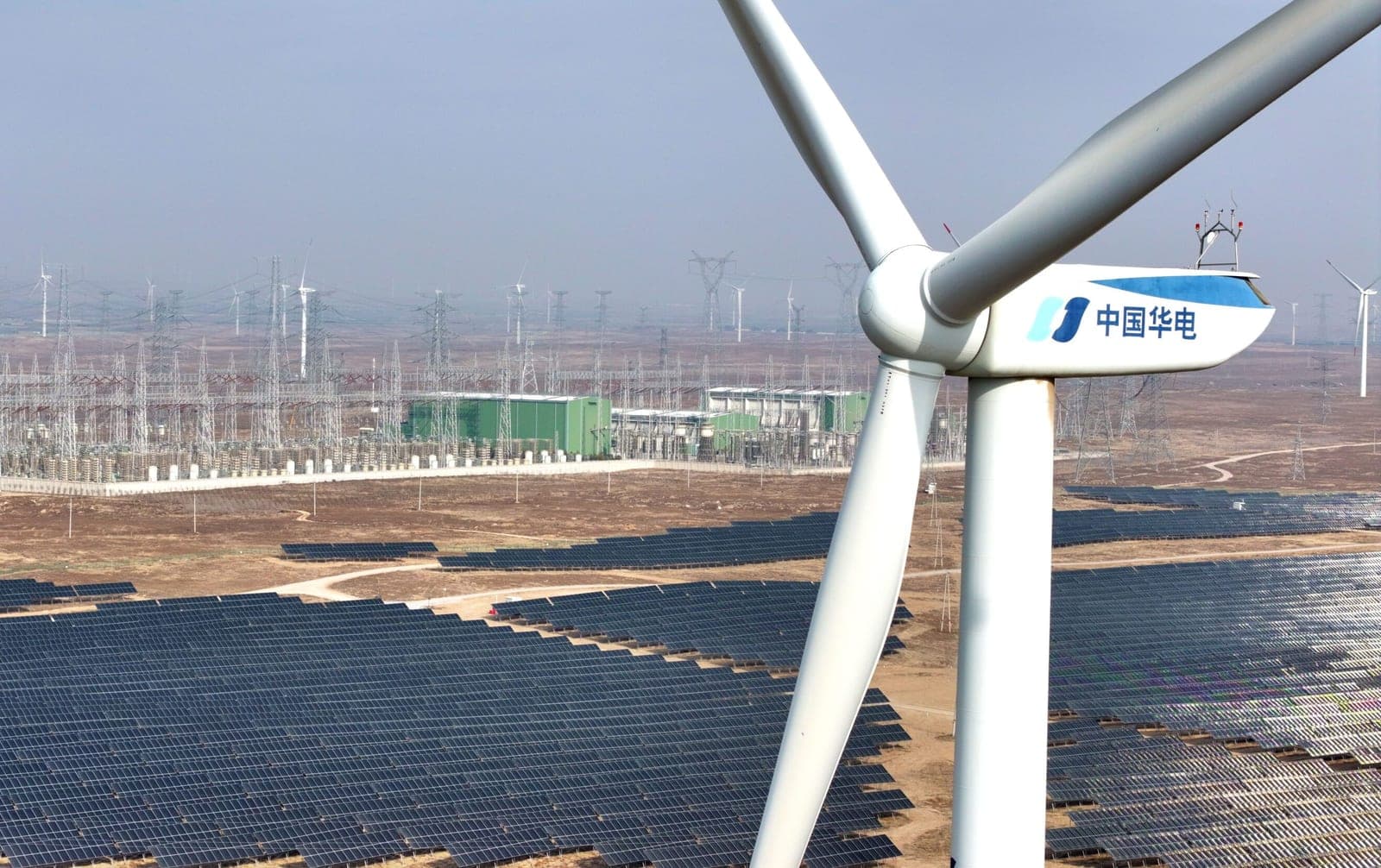
How the Iran war set Beijing up for global clean energy dominance
BRUSSELS — America’s allies, stung by soaring energy costs due to Washington’s attacks on Iran, are confronting an uncomfortable truth: The escape route from fossil fuel shocks leads straight into China’s arms. From the European Union and the United Kingdom to South Korea and the Philippines, numerous countries have responded to the war-driven spike in oil and gas prices with calls to accelerate electrification and the rollout of clean energy infrastructure. While that doesn’t offer an immediate fix to higher costs, governments see clean, domestic energy sources, such as renewables and nuclear power, as the obvious long-term solution to protect their economies from the ups and downs of global fossil fuel markets. But there’s also an obvious catch: The faster they move to decarbonize, the more they will have to rely on China to supply the necessary materials. After all, Beijing controls the overwhelming majority of the world’s clean technology and critical mineral supply. Governments, uneasy about the idea of swapping one dependence for another, are keenly aware of that fact. The question now is whether they’ll put those reservations aside in favor of bolstering their energy security or continue taking measures to protect their economies from China’s dominance. “How can we explain to our fellow citizens that decarbonization is an opportunity if our batteries are made in China?” the EU’s industry chief, Stéphane Séjourné, asked last month when proposing new legislation that would require the bloc’s 27 governments to spend more taxpayer money on domestically produced green technologies and limit foreign investment by dominant players — a move widely interpreted as targeting Beijing. The EU has long been cautious about hobbling its domestic industries by allowing in too many Chinese goods: The bloc’s carbon tax is aimed at protecting its industries from cheap emissions-intensive imports like those made in China. Meanwhile, the British government last month blocked a Chinese company from building a $2 billion wind turbine factory in Scotland over unspecified national security concerns. At the same time, countries seeking to accelerate their green transition — U.S. allies included — have been looking to shore up relations with China. Germany’s economy minister will head to Beijing next month, shortly after the country’s chancellor and environment minister visited in an effort to woo Chinese investors and learn from the country’s clean tech boom. Spain’s Prime Minister Pedro Sánchez went this week for the fourth time in as many years, with an eye on securing access to critical raw materials. The leaders of the U.K., Canada, Finland and Ireland also made the trip in recent months. It’s not just Western countries: An Indian business delegation recently visited China to explore green energy partnerships; Emirati Crown Prince Khaled bin Mohamed bin Zayed Al Nahyan discussed closer energy ties with Beijing this week; and Cuba has leaned on Chinese solar panels amid an effective oil blockade by Washington. André Corrêa do Lago, a senior Brazilian diplomat and president of last year’s United Nations climate talks, said he thinks concerns about dependence on China shouldn’t prevent the widest use of renewables. “At this stage, and if you believe in the urgency, we have to work as much as possible with renewables, incorporating the realities of who produces and who has the technology, and at the same time continue to try to develop other things,” he said. News footage on a giant screen outside a shopping mall shows China’s President Xi Jinping, right, meeting with Abu Dhabi’s Crown Prince Sheikh Khaled bin Mohamed bin Zayed Al Nahyan in Beijing on April 14, 2026. | Pedro Pardo/AFP via Getty Images Great trade or trade-off? For many countries, the war in Iran has served as a painful reminder that as long as their economies run on fossil fuels they will be exposed to uncertainties beyond their control. Fuel shortages across much of Asia have led to conservation measures, such as four-day work weeks in the Philippines and Bangladesh, or limits on driving. India has capped natural gas use for industry and Cambodia is cutting import taxes for green goods. Households and industry in many countries face skyrocketing bills, while governments that subsidise fuel are facing a squeeze on their budgets. “Since the beginning of the conflict 44 days ago, our bill for fossil fuel imports has increased by over €22 billion,” European Commission President Ursula von der Leyen said on Monday after hosting an emergency discussion on the war in Iran. (Her Commission had originally been scheduled to debate relations with China that day.) The long-term solution is to speed up the phaseout of fossil fuels, she insisted, reiterating a point made by numerous European officials and leaders in recent weeks. “Electrifying Europe means making Europe more independent,” she said. But there are fears that renewables come with their own dependencies since China is the leading supplier of clean tech and the minerals that go into them. The country produces nearly 80 percent of the world’s solar panels, and an even greater share of their core electronic components such as cells and wafers, according to the International Energy Agency. Exports of electric and hybrid vehicles from China hit a record 349,000 in March, more than doubling from a year earlier. China also has a stranglehold on the critical minerals market, refining about 90 percent of rare earths used in the production of wind turbines and EVs, as well as the majority of lithium, cobalt and other metals used in batteries. That dominance has turned China into the engine of global decarbonization efforts. It has also heightened concerns in some countries that domestic industries could be undercut or that China could use its grip on those materials to its advantage. Last year, China imposed sweeping export restrictions on several rare earths in response to U.S. tariffs, threatening supply chains. The growing use of Chinese components has also prompted cybersecurity concerns; the U.S. last year found unexplained communication devices in Chinese solar tech, according to reports. Several countries and the European Union have put tariffs on Chinese electric vehicles and steel to prevent them from flooding the market. The U.S. has a 100 percent tariff on Chinese EVs, and some countries in Asia have introduced tariffs on EVs and their components or local content requirements. The EU already requires that a certain share of demand for green goods and minerals be met through domestic production by 2030, and the new industrial law spearheaded by Séjourné would introduce a cap on foreign investment from countries that control more than 40 percent of global manufacturing in clean technologies. Vehicles are pictured awaiting export at Nanjing Port in China in July 2025. | Costfoto/NurPhoto via Getty Images These efforts, however, come with trade-offs: Made-in-Europe goods tend to be more expensive than Chinese products, which risks slowing down the energy transition. “If you tilt too much towards [domestic production], that might come at the expense of the speed of decarbonization. Because using cheap technologies is just what we need to roll out these alternatives,” said Simone Tagliapietra, a senior fellow at Brussels-based think tank Bruegel. And countries have found that a speedy green transition is near-impossible without some degree of reliance on China. Pakistan has been a major recipient of cheap solar panels from China, which have helped cushion it from the energy supply crunch stemming from the war in Iran. Spain, whose renewables boom similarly insulated it from soaring fossil fuel prices, has secured large Chinese investments in its energy sector. And Canada recently reduced its 100 percent tariff on Chinese EVs and agreed to allow a limited number of the cars into its market in return for the removal of tariffs on billions of dollars in agricultural products. “We thought that was a great trade for Canada,” Tim Hodgson, Canada’s energy minister told POLITICO on the sidelines of a major energy conference last month. “It created an opportunity for us to bring in electric vehicles that are at a price point that no one was serving today. That helps with affordability.” Analysts argue that buying a solar panel made in China that will last multiple years is different from continuously paying a country for its oil. “The dependency on oil and gas flows, which can be interrupted with immediate repercussions on the economy, is very different from dependency on predominant suppliers of some key technologies,” said Tagliapietra. The EU’s efforts to build out domestic production, Tagliapietra noted, resemble measures put in place by former U.S. President Joe Biden, who similarly sought to loosen China’s grip on batteries, solar panels and EVs during his time in the White House. Then Trump swept into office and abolished those measures — and any effort to compete with China for a slice of the clean economy. China’s clean technology exports are now overtaking sales of U.S. fossil fuels, a trend that’s showing no sign of slowing down. A U.S. flag flutters in the wind as the CHIOS crude oil tanker sits anchored off the coast of Chevron’s refinery in El Segundo, California on March 4, 2026. | Patrick T. Fallon/AFP via Getty Images In contrast, White House spokesperson Taylor Rogers said the conflict in Iran had actually underscored the importance of having access to energy produced domestically or supplied by an ally such as the United States. “The Trump Administration is working with several countries on new oil and gas deals that emulate the President’s energy dominance agenda and enhance their energy security,” she said. “The reality is that countries that tried to transition to renewable energy have failed to break their reliance on the oil and gas that flows through a chokehold like the Strait of Hormuz.” America fights, China wins But Europeans, by and large, don’t see it that way. Increasingly, they are coming to view the U.S. under Trump as a greater threat to their continent than Beijing, and are rallying around a faster transition to clean energy to insulate them from fossil fuel shocks. The predominant view in Brussels now is that the EU must reduce its dependence while remaining an attractive trading partner for China. The Trump administration’s pursuit of fossil fuel dominance and its decision to relinquish renewables to China could have lasting consequences, particularly as the war in Iran pushes countries to rethink their energy strategies. “I think this whole crisis is driving other countries into China’s hands,” said Sen. Brian Schatz, a Democrat from Hawaii. “On the question of energy, they’re leading [in] electric cars, they’re leading in renewable energy deployment, and I think America is fighting Iran and China is winning.” Séjourné, the bloc’s industry chief, told a POLITICO event this month that the EU would not follow Washington’s isolationist approach when it comes to ties with Beijing and that the bloc “needs” Chinese investment. At the same event, his colleague Teresa Ribera, the Commission’s executive vice president in charge of the green transition, rejected the idea that phasing out fossil fuels would increase the EU’s dependence on China. “We can produce clean tech, we can find solutions and we can rebalance the relations with many other players around the world,” she said. Not all EU governments feel the same, Belgian Prime Minister Bart de Wever warned his colleagues recently that China is “devastating” European economies by threatening the bloc’s industries “through state-driven overcapacity,” particularly in “sectors like steel, chemicals, EVs, and clean-tech,” as well as their “strategic control of critical resources.” Critical minerals dependence is an area where countries appear less comfortable with China’s dominance, particularly given their multifaceted uses in defense and technology. Some U.S. officials say they need to invest in their own resources to end that dependence and work with allies willing to invest. Belgium’s Prime Minister Bart De Wever arrives for an EU summit in Brussels on March 19, 2026. | John Thys/AFP via Getty Images “We’ve talked a lot about energy independence,” said John Curtis, a Republican senator from Utah. “We need to talk more about critical minerals independence.” Other countries have been more willing to embrace cheap, clean energy supplies from China for now, as they work to build out energy systems less prone to global volatility. “For us, we don’t care how much we would import goods from China, or any other countries, as long as it’s more efficient for [our] energy transition,” Thailand’s Finance Minister Ekniti Nitithanprapas said at the International Monetary Fund’s Washington headquarters Wednesday. Thailand imports solar panels from China but also Sweden and elsewhere, he said. Ultimately, Nitithanprapas said Thailand wants to create domestic production using foreign direct investment so it doesn’t have to rely on any particular country. That’s a common view in much of Southeast Asia, where the creation of local solar manufacturing and EV plants won’t happen overnight. “In the short term, most countries don’t have a viable alternative to Chinese clean-tech supply chains,” said Vicky Janita, an analyst at Rystad Energy. Even if they were to buy more supplies from countries like India, which has grown its solar panel manufacturing capacity, those producers still rely heavily on China for wafers and other parts of the supply chain, she said. That doesn’t mean they aren’t also trying different strategies to reduce that dependence and build their economies. Many countries in Southeast Asia have welcomed Chinese investment in domestic production, through both carrots, such as tax breaks, or sticks, such as Indonesia’s export ban on raw nickel. Similarly, Brazil is imposing tariffs on EVs, forcing Chinese companies to set up local factories. “The logic is to accept Chinese capital and technology, but capture jobs, tax revenue, and the knowledge of the processes,” said Janita. “These countries see clean-tech manufacturing as an economic development opportunity, and growing the economy is a major key priority for them,” she added. “The reality is that China showed up with capital, speed, and a willingness to build in markets that Western firms often considered too risky or too small.”

US senator threatens to use congressional ‘tools’ to block Trump’s Greenland grab
U.S. Republican Sen. Lisa Murkowski threatened Friday to invoke congressional powers to stop U.S. President Donald Trump from following through on his threats to seize Greenland. Speaking to reporters in Copenhagen after taking part in a bipartisan delegation of U.S. lawmakers meeting with Danish and Greenlandic officials, Murkowski — an Alaskan who is a regular critic of the president — said it was “an important message for the people of the Kingdom of Denmark to understand” that the U.S. has three branches of government. “In Congress, we have tools at our disposal under our constitutional authority that speaks specifically to the power of the purse through appropriations,” she said, referring to congressional control of federal spending. She added that Greenland, a self-ruling Danish territory, should be seen as an “ally” rather than an “asset.” Democratic Sen. Chris Coons of Delaware, who also took part in the visit by House and Senate lawmakers, said he would push ahead with legislation to curb Trump’s power to act unilaterally. A bipartisan group of American lawmakers introduced a bill this week to prevent Washington from invading a fellow NATO member. (Greenland, as a Danish territory, is part of the Atlantic alliance.) Congress can force votes on constraining presidential war powers, but recent efforts to rein in Trump have not succeeded. Even if it did pass, the White House has asserted any such measure would be unconstitutional. Coons also undercut Trump’s arguments about Greenland from a national security perspective. “Are there real, pressing threats to the security of Greenland from China and Russia?” Coons said. “No, not today.” Trump has invoked the specter of Russian and Chinese warships in the Arctic as an argument for seizing control of Greenland. Conns said such claims were “rhetoric” rather than “reality.” The president’s threats have sparked a full-blown diplomatic transatlantic crisis. Danish Foreign Minister Lars Løkke Rasmussen and his Greenlandic counterpart Vivian Motzfeldt met with U.S. Vice President JD Vance and Secretary of State Marco Rubio earlier this week at the White House to discuss the matter as European nations rushed to deploy troops to the Arctic territory. White House press secretary Karoline Leavitt said after the Vance-Rubio summit that the president was still focused on acquiring Greenland. Trump warned in remarks Friday he “may put a tariff on countries if they don’t go along with Greenland.” The Kremlin’s chief spokesperson Dmitry Peskov said Friday the situation in Greenland was highly unusual “from the point of view of international law,” adding Moscow would “watch together with the whole world” as events unfold.
US senator threatens to use congressional ‘tools’ to block Trump’s Greenland grab
U.S. Republican Sen. Lisa Murkowski threatened Friday to invoke congressional powers to stop U.S. President Donald Trump from following through on his threats to seize Greenland. Speaking to reporters in Copenhagen after taking part in a bipartisan delegation of U.S. lawmakers meeting with Danish and Greenlandic officials, Murkowski — an Alaskan who is a regular critic of the president — said it was “an important message for the people of the Kingdom of Denmark to understand” that the U.S. has three branches of government. “In Congress, we have tools at our disposal under our constitutional authority that speaks specifically to the power of the purse through appropriations,” she said, referring to congressional control of federal spending. She added that Greenland, a self-ruling Danish territory, should be seen as an “ally” rather than an “asset.” Democratic Sen. Chris Coons of Delaware, who also took part in the visit by House and Senate lawmakers, said he would push ahead with legislation to curb Trump’s power to act unilaterally. A bipartisan group of American lawmakers introduced a bill this week to prevent Washington from invading a fellow NATO member. (Greenland, as a Danish territory, is part of the Atlantic alliance.) Congress can force votes on constraining presidential war powers, but recent efforts to rein in Trump have not succeeded. Even if it did pass, the White House has asserted any such measure would be unconstitutional. Coons also undercut Trump’s arguments about Greenland from a national security perspective. “Are there real, pressing threats to the security of Greenland from China and Russia?” Coons said. “No, not today.” Trump has invoked the specter of Russian and Chinese warships in the Arctic as an argument for seizing control of Greenland. Conns said such claims were “rhetoric” rather than “reality.” The president’s threats have sparked a full-blown diplomatic transatlantic crisis. Danish Foreign Minister Lars Løkke Rasmussen and his Greenlandic counterpart Vivian Motzfeldt met with U.S. Vice President JD Vance and Secretary of State Marco Rubio earlier this week at the White House to discuss the matter as European nations rushed to deploy troops to the Arctic territory. White House press secretary Karoline Leavitt said after the Vance-Rubio summit that the president was still focused on acquiring Greenland. Trump warned in remarks Friday he “may put a tariff on countries if they don’t go along with Greenland.” The Kremlin’s chief spokesperson Dmitry Peskov said Friday the situation in Greenland was highly unusual “from the point of view of international law,” adding Moscow would “watch together with the whole world” as events unfold.
US senator threatens to use congressional ‘tools’ to block Trump’s Greenland grab
U.S. Republican Sen. Lisa Murkowski threatened Friday to invoke congressional powers to stop U.S. President Donald Trump from following through on his threats to seize Greenland. Speaking to reporters in Copenhagen after taking part in a bipartisan delegation of U.S. lawmakers meeting with Danish and Greenlandic officials, Murkowski — an Alaskan who is a regular critic of the president — said it was “an important message for the people of the Kingdom of Denmark to understand” that the U.S. has three branches of government. “In Congress, we have tools at our disposal under our constitutional authority that speaks specifically to the power of the purse through appropriations,” she said, referring to congressional control of federal spending. She added that Greenland, a self-ruling Danish territory, should be seen as an “ally” rather than an “asset.” Democratic Sen. Chris Coons of Delaware, who also took part in the visit by House and Senate lawmakers, said he would push ahead with legislation to curb Trump’s power to act unilaterally. A bipartisan group of American lawmakers introduced a bill this week to prevent Washington from invading a fellow NATO member. (Greenland, as a Danish territory, is part of the Atlantic alliance.) Congress can force votes on constraining presidential war powers, but recent efforts to rein in Trump have not succeeded. Even if it did pass, the White House has asserted any such measure would be unconstitutional. Coons also undercut Trump’s arguments about Greenland from a national security perspective. “Are there real, pressing threats to the security of Greenland from China and Russia?” Coons said. “No, not today.” Trump has invoked the specter of Russian and Chinese warships in the Arctic as an argument for seizing control of Greenland. Conns said such claims were “rhetoric” rather than “reality.” The president’s threats have sparked a full-blown diplomatic transatlantic crisis. Danish Foreign Minister Lars Løkke Rasmussen and his Greenlandic counterpart Vivian Motzfeldt met with U.S. Vice President JD Vance and Secretary of State Marco Rubio earlier this week at the White House to discuss the matter as European nations rushed to deploy troops to the Arctic territory. White House press secretary Karoline Leavitt said after the Vance-Rubio summit that the president was still focused on acquiring Greenland. Trump warned in remarks Friday he “may put a tariff on countries if they don’t go along with Greenland.” The Kremlin’s chief spokesperson Dmitry Peskov said Friday the situation in Greenland was highly unusual “from the point of view of international law,” adding Moscow would “watch together with the whole world” as events unfold.