9 stories credited to Oil City News
Latest story Apr 11, 2026 · on ChamberLight since Apr 2026
A story can appear as several articles (copies of the same piece), so counts of stories and of articles differ.
Scores for Oil City News
Scores last checked Sep 25, 2026.
Stories ChamberLight collected, by month
Stories credited to Oil City News, by publication date. ChamberLight collects articles that mention the officials it tracks, so this shows its own coverage of this source, not how much the source publishes.
- Stories from Oil City News
- Shaded: ChamberLight collected no stories, or almost none, from any outlet (a gap in its collection, not in the outlet’s publishing)
Show as a table
| Month | Stories | All outlets |
|---|---|---|
| March 2026 | 4 | 905 |
| April 2026 | 5 | 4,538 |
| May 2026 | 0 | none collected |
| June 2026 | 0 | none collected |
| July 2026 | 0 | none collected |
| August 2026 | 0 | 1 (collection gap) |
| September 2026 | 0 | 1,320 |
Top topics
Share of this source’s stories tagged with each topic. A story can carry several topics, so the shares do not add up to 100%.
- Economy6
67% of 9 stories · 26% across all outlets
- Environment/Climate3
33% of 9 stories · 5% across all outlets
- Ethics/Corruption3
33% of 9 stories · 58% across all outlets
- Agriculture2
22% of 9 stories · 2% across all outlets
- Budget/Spending2
22% of 9 stories · 31% across all outlets
- Immigration2
22% of 9 stories · 13% across all outlets
- Abortion/Reproductive Rights1
11% of 9 stories · 1% across all outlets
- Criminal Justice1
11% of 9 stories · 19% across all outlets
The thin mark on each bar is the topic’s share across all outlets.
Who they cover
Party of the officials these stories are mainly about, across all 11 officials named. A story counts once for each official it is mainly about, so the split is over 14 story–official pairs, from 9 stories.
- Party not recorded86% · 12 pairs
- Republican14% · 2 pairs
Most covered
Stories mainly about each official, and their share of the source’s 9 stories.
- 1Chuck Gray–2 stories · 22%
- 2Dennis Biteman–2 stories · 22%
- 3Reid Rasner–2 stories · 22%
- 4Cynthia LummisR1 story · 11%
- 5Donald TrumpR1 story · 11%
- 6Frank Chapman–1 story · 11%
- 7Harriet Hageman–1 story · 11%
- 8James Kinney–1 story · 11%
- 9Jillian Balow–1 story · 11%
- 10Joe Manchin–1 story · 11%
+ 1 other official (1 story–official pair)
Article tone
ChamberLight’s article analysis assigns each story a tone toward the official it covers. It describes the coverage of that official, not Oil City News’s stance, and reader votes do not change it. 9 stories.
- Good Look
- 1 (11%)
- Mixed
- 7 (78%)
- Informational
- 0 (0%)
- Bad Look
- 1 (11%)
Challenges to these scores
No one has challenged a score on this page yet. Anyone can; editors publish every outcome here.
Articles served from oilcity.news
14
Wyoming’s crowded U.S. House primary race could produce a winner without a majority
by Maggie Mullen, WyoFile When Wyoming Republicans show up to vote in August’s primary election, they may face a long list of choices in the race for the state’s lone U.S. House seat. The official candidate filing period is still a month away, but 10 Republicans have announced they plan to run for Congress. U.S. Rep Harriet Hageman, who now holds the seat, announced last year she will run for U.S. Senate — a decision partly responsible for the crowded field of candidates who see an opportunity in pursuing a rarely open seat. The candidates so far include current office holders, such as Wyoming Senate President Bo Biteman and Secretary of State Chuck Gray, as well as former officials, like Jillian Balow, who previously served as superintendent of public instruction, and one-time Cheyenne lawmaker John B. Romero-Martinez. Former U.S. Senate candidate Reid Rasner is also running alongside five other Republicans who would be new to public office: Frank Chapman of Moran, Kevin Christensen of Casper, Steve Friess of Jackson, David Giralt of Casper and Matt McGinnis of Pinedale. “You’ve got an open seat, and they don’t come along very often,” Jim King, University of Wyoming emeritus professor of political science, told WyoFile. Still, King said he’d be surprised to see as many as 10 candidates actually run. The candidate filing period opens May 14 and closes May 29, leaving plenty of time for candidates to drop out. “I wouldn’t bet on this being the final number,” King said, adding that he expects candidates with name recognition to stay in the race, but only time will tell. Federal campaign records could serve as an indicator of who will ultimately run, King said. Eight candidates have filed their statements of candidacy, Federal Election Commission records show. However, only three — Chapman, Gray and Rasner — have reported campaign receipts, almost all of which are in the form of personal loans to their campaigns. Chapman has lent his campaign $560,000, while Gray has lent $500,000 and Rasner $208,500. However, King said he still expects to see a large field where no single candidate receives more than 50% of the vote. Crowded Republican primaries for higher office aren’t completely unusual for Wyoming. Eight Republicans ran for U.S. House in 2016, for example, while 10 sought a seat in the U.S. Senate in 2020. When six Republicans vied for governor in 2018, Mark Gordon ultimately won the primary with 33.4% of the vote. “Which you can’t really say that’s the preferred candidate of most people in the state, because it’s not,” Matthew Harris, a political science professor at Park University in Missouri, told WyoFile. (Conversely, when Gordon ran for reelection against three other Republicans in the 2022 primary, he secured 61.5% of the vote before winning the general election with 74% of the vote.) Harris has written about crowded primaries across the country, and the way they lower the number of votes needed to secure a candidate’s nomination. “We do continue to see this, especially in places where there’s not really multi-party competition,” Harris said. “And the concern there is that, you know, when you lower the bar as in terms of, ‘OK, what’s the percent of the vote I’m going to need to win?’ then that means that somebody who’s maybe fringe or extreme or not very qualified can, if they can hold that 25%, that can be enough [to win.]” On one hand, Harris said, having a lot of candidates “can be a sign of a robust democracy, and people want to get involved and they want to throw their hat into the ring.” But that doesn’t necessarily sync up, Harris said, when a candidate can win a nomination with less than a majority of the vote. “There’s always this question in democracy of: ‘How do you translate the will of the people into the representative that they get?’” he said. A crowded primary can also create a confusing choice for voters, Harris said, especially when there may be little daylight between candidates. “In a lot of these GOP races, it’s sort of who can demonstrate that loyalty to President Trump,” Harris said. For voters, he said, the decision may come down to “‘How do I decide between these five or six people who all are like, Make America Great Again?’ And that’s where, you know, it probably comes down to name recognition and money and endorsements, things like that.” Trump has not weighed in on Wyoming’s U.S. House race as he did in 2022, when he backed Hageman to oust one of his biggest political rivals at the time, then-Rep. Liz Cheney. Trump’s endorsement caused several candidates to drop out of the race that year. It remains unclear if the president will back someone this time around, but several candidates have said they are seeking his endorsement. Runoff elections and ranked-choice voting can help in requiring candidates to meet a certain threshold of support, Harris said, but neither have been widely adopted across the country. In 2025, Speaker of the House Chip Neiman, R-Hulett, brought legislation to create a runoff election for Wyoming’s top five elected offices. At the time, he cited the 2026 governor’s race as his inspiration. “I’ve already heard where there could be potentially eight candidates in this upcoming governor’s race, and that field consistently seems to grow,” Neiman told lawmakers. The bill died in the Senate when it failed to meet a deadline. Meanwhile, lawmakers voted that same year to prohibit ranked-choice voting in any election in Wyoming. Wyoming’s crowded primaries did produce one major voting change. When Gordon won the 2018 Republican nomination with less than 50% of the vote, his opponents alleged he only won due to the support of Democrats changing their party affiliation to Republican. Those claims were shown to be statistically unfounded, but endured nonetheless. In 2023, the Legislature voted to prohibit voters from changing their political party affiliation once the candidate-filing period opens, or during the 96 days leading up to the primary election. As such, Wyoming voters have until May 13 to make any changes to their party affiliation. This article was originally published by WyoFile and is republished here with permission. WyoFile is an independent nonprofit news organization focused on Wyoming people, places and policy.
Wyoming’s crowded U.S. House primary race could produce a winner without a majority
by Maggie Mullen, WyoFile When Wyoming Republicans show up to vote in August’s primary election, they may face a long list of choices in the race for the state’s lone U.S. House seat. The official candidate filing period is still a month away, but 10 Republicans have announced they plan to run for Congress. U.S. Rep Harriet Hageman, who now holds the seat, announced last year she will run for U.S. Senate — a decision partly responsible for the crowded field of candidates who see an opportunity in pursuing a rarely open seat. The candidates so far include current office holders, such as Wyoming Senate President Bo Biteman and Secretary of State Chuck Gray, as well as former officials, like Jillian Balow, who previously served as superintendent of public instruction, and one-time Cheyenne lawmaker John B. Romero-Martinez. Former U.S. Senate candidate Reid Rasner is also running alongside five other Republicans who would be new to public office: Frank Chapman of Moran, Kevin Christensen of Casper, Steve Friess of Jackson, David Giralt of Casper and Matt McGinnis of Pinedale. “You’ve got an open seat, and they don’t come along very often,” Jim King, University of Wyoming emeritus professor of political science, told WyoFile. Still, King said he’d be surprised to see as many as 10 candidates actually run. The candidate filing period opens May 14 and closes May 29, leaving plenty of time for candidates to drop out. “I wouldn’t bet on this being the final number,” King said, adding that he expects candidates with name recognition to stay in the race, but only time will tell. Federal campaign records could serve as an indicator of who will ultimately run, King said. Eight candidates have filed their statements of candidacy, Federal Election Commission records show. However, only three — Chapman, Gray and Rasner — have reported campaign receipts, almost all of which are in the form of personal loans to their campaigns. Chapman has lent his campaign $560,000, while Gray has lent $500,000 and Rasner $208,500. However, King said he still expects to see a large field where no single candidate receives more than 50% of the vote. Crowded Republican primaries for higher office aren’t completely unusual for Wyoming. Eight Republicans ran for U.S. House in 2016, for example, while 10 sought a seat in the U.S. Senate in 2020. When six Republicans vied for governor in 2018, Mark Gordon ultimately won the primary with 33.4% of the vote. “Which you can’t really say that’s the preferred candidate of most people in the state, because it’s not,” Matthew Harris, a political science professor at Park University in Missouri, told WyoFile. (Conversely, when Gordon ran for reelection against three other Republicans in the 2022 primary, he secured 61.5% of the vote before winning the general election with 74% of the vote.) Harris has written about crowded primaries across the country, and the way they lower the number of votes needed to secure a candidate’s nomination. “We do continue to see this, especially in places where there’s not really multi-party competition,” Harris said. “And the concern there is that, you know, when you lower the bar as in terms of, ‘OK, what’s the percent of the vote I’m going to need to win?’ then that means that somebody who’s maybe fringe or extreme or not very qualified can, if they can hold that 25%, that can be enough [to win.]” On one hand, Harris said, having a lot of candidates “can be a sign of a robust democracy, and people want to get involved and they want to throw their hat into the ring.” But that doesn’t necessarily sync up, Harris said, when a candidate can win a nomination with less than a majority of the vote. “There’s always this question in democracy of: ‘How do you translate the will of the people into the representative that they get?’” he said. A crowded primary can also create a confusing choice for voters, Harris said, especially when there may be little daylight between candidates. “In a lot of these GOP races, it’s sort of who can demonstrate that loyalty to President Trump,” Harris said. For voters, he said, the decision may come down to “‘How do I decide between these five or six people who all are like, Make America Great Again?’ And that’s where, you know, it probably comes down to name recognition and money and endorsements, things like that.” Trump has not weighed in on Wyoming’s U.S. House race as he did in 2022, when he backed Hageman to oust one of his biggest political rivals at the time, then-Rep. Liz Cheney. Trump’s endorsement caused several candidates to drop out of the race that year. It remains unclear if the president will back someone this time around, but several candidates have said they are seeking his endorsement. Runoff elections and ranked-choice voting can help in requiring candidates to meet a certain threshold of support, Harris said, but neither have been widely adopted across the country. In 2025, Speaker of the House Chip Neiman, R-Hulett, brought legislation to create a runoff election for Wyoming’s top five elected offices. At the time, he cited the 2026 governor’s race as his inspiration. “I’ve already heard where there could be potentially eight candidates in this upcoming governor’s race, and that field consistently seems to grow,” Neiman told lawmakers. The bill died in the Senate when it failed to meet a deadline. Meanwhile, lawmakers voted that same year to prohibit ranked-choice voting in any election in Wyoming. Wyoming’s crowded primaries did produce one major voting change. When Gordon won the 2018 Republican nomination with less than 50% of the vote, his opponents alleged he only won due to the support of Democrats changing their party affiliation to Republican. Those claims were shown to be statistically unfounded, but endured nonetheless. In 2023, the Legislature voted to prohibit voters from changing their political party affiliation once the candidate-filing period opens, or during the 96 days leading up to the primary election. As such, Wyoming voters have until May 13 to make any changes to their party affiliation. This article was originally published by WyoFile and is republished here with permission. WyoFile is an independent nonprofit news organization focused on Wyoming people, places and policy.
Wyoming’s crowded U.S. House primary race could produce a winner without a majority
by Maggie Mullen, WyoFile When Wyoming Republicans show up to vote in August’s primary election, they may face a long list of choices in the race for the state’s lone U.S. House seat. The official candidate filing period is still a month away, but 10 Republicans have announced they plan to run for Congress. U.S. Rep Harriet Hageman, who now holds the seat, announced last year she will run for U.S. Senate — a decision partly responsible for the crowded field of candidates who see an opportunity in pursuing a rarely open seat. The candidates so far include current office holders, such as Wyoming Senate President Bo Biteman and Secretary of State Chuck Gray, as well as former officials, like Jillian Balow, who previously served as superintendent of public instruction, and one-time Cheyenne lawmaker John B. Romero-Martinez. Former U.S. Senate candidate Reid Rasner is also running alongside five other Republicans who would be new to public office: Frank Chapman of Moran, Kevin Christensen of Casper, Steve Friess of Jackson, David Giralt of Casper and Matt McGinnis of Pinedale. “You’ve got an open seat, and they don’t come along very often,” Jim King, University of Wyoming emeritus professor of political science, told WyoFile. Still, King said he’d be surprised to see as many as 10 candidates actually run. The candidate filing period opens May 14 and closes May 29, leaving plenty of time for candidates to drop out. “I wouldn’t bet on this being the final number,” King said, adding that he expects candidates with name recognition to stay in the race, but only time will tell. Federal campaign records could serve as an indicator of who will ultimately run, King said. Eight candidates have filed their statements of candidacy, Federal Election Commission records show. However, only three — Chapman, Gray and Rasner — have reported campaign receipts, almost all of which are in the form of personal loans to their campaigns. Chapman has lent his campaign $560,000, while Gray has lent $500,000 and Rasner $208,500. However, King said he still expects to see a large field where no single candidate receives more than 50% of the vote. Crowded Republican primaries for higher office aren’t completely unusual for Wyoming. Eight Republicans ran for U.S. House in 2016, for example, while 10 sought a seat in the U.S. Senate in 2020. When six Republicans vied for governor in 2018, Mark Gordon ultimately won the primary with 33.4% of the vote. “Which you can’t really say that’s the preferred candidate of most people in the state, because it’s not,” Matthew Harris, a political science professor at Park University in Missouri, told WyoFile. (Conversely, when Gordon ran for reelection against three other Republicans in the 2022 primary, he secured 61.5% of the vote before winning the general election with 74% of the vote.) Harris has written about crowded primaries across the country, and the way they lower the number of votes needed to secure a candidate’s nomination. “We do continue to see this, especially in places where there’s not really multi-party competition,” Harris said. “And the concern there is that, you know, when you lower the bar as in terms of, ‘OK, what’s the percent of the vote I’m going to need to win?’ then that means that somebody who’s maybe fringe or extreme or not very qualified can, if they can hold that 25%, that can be enough [to win.]” On one hand, Harris said, having a lot of candidates “can be a sign of a robust democracy, and people want to get involved and they want to throw their hat into the ring.” But that doesn’t necessarily sync up, Harris said, when a candidate can win a nomination with less than a majority of the vote. “There’s always this question in democracy of: ‘How do you translate the will of the people into the representative that they get?’” he said. A crowded primary can also create a confusing choice for voters, Harris said, especially when there may be little daylight between candidates. “In a lot of these GOP races, it’s sort of who can demonstrate that loyalty to President Trump,” Harris said. For voters, he said, the decision may come down to “‘How do I decide between these five or six people who all are like, Make America Great Again?’ And that’s where, you know, it probably comes down to name recognition and money and endorsements, things like that.” Trump has not weighed in on Wyoming’s U.S. House race as he did in 2022, when he backed Hageman to oust one of his biggest political rivals at the time, then-Rep. Liz Cheney. Trump’s endorsement caused several candidates to drop out of the race that year. It remains unclear if the president will back someone this time around, but several candidates have said they are seeking his endorsement. Runoff elections and ranked-choice voting can help in requiring candidates to meet a certain threshold of support, Harris said, but neither have been widely adopted across the country. In 2025, Speaker of the House Chip Neiman, R-Hulett, brought legislation to create a runoff election for Wyoming’s top five elected offices. At the time, he cited the 2026 governor’s race as his inspiration. “I’ve already heard where there could be potentially eight candidates in this upcoming governor’s race, and that field consistently seems to grow,” Neiman told lawmakers. The bill died in the Senate when it failed to meet a deadline. Meanwhile, lawmakers voted that same year to prohibit ranked-choice voting in any election in Wyoming. Wyoming’s crowded primaries did produce one major voting change. When Gordon won the 2018 Republican nomination with less than 50% of the vote, his opponents alleged he only won due to the support of Democrats changing their party affiliation to Republican. Those claims were shown to be statistically unfounded, but endured nonetheless. In 2023, the Legislature voted to prohibit voters from changing their political party affiliation once the candidate-filing period opens, or during the 96 days leading up to the primary election. As such, Wyoming voters have until May 13 to make any changes to their party affiliation. This article was originally published by WyoFile and is republished here with permission. WyoFile is an independent nonprofit news organization focused on Wyoming people, places and policy.
Wyoming’s crowded U.S. House primary race could produce a winner without a majority
by Maggie Mullen, WyoFile When Wyoming Republicans show up to vote in August’s primary election, they may face a long list of choices in the race for the state’s lone U.S. House seat. The official candidate filing period is still a month away, but 10 Republicans have announced they plan to run for Congress. U.S. Rep Harriet Hageman, who now holds the seat, announced last year she will run for U.S. Senate — a decision partly responsible for the crowded field of candidates who see an opportunity in pursuing a rarely open seat. The candidates so far include current office holders, such as Wyoming Senate President Bo Biteman and Secretary of State Chuck Gray, as well as former officials, like Jillian Balow, who previously served as superintendent of public instruction, and one-time Cheyenne lawmaker John B. Romero-Martinez. Former U.S. Senate candidate Reid Rasner is also running alongside five other Republicans who would be new to public office: Frank Chapman of Moran, Kevin Christensen of Casper, Steve Friess of Jackson, David Giralt of Casper and Matt McGinnis of Pinedale. “You’ve got an open seat, and they don’t come along very often,” Jim King, University of Wyoming emeritus professor of political science, told WyoFile. Still, King said he’d be surprised to see as many as 10 candidates actually run. The candidate filing period opens May 14 and closes May 29, leaving plenty of time for candidates to drop out. “I wouldn’t bet on this being the final number,” King said, adding that he expects candidates with name recognition to stay in the race, but only time will tell. Federal campaign records could serve as an indicator of who will ultimately run, King said. Eight candidates have filed their statements of candidacy, Federal Election Commission records show. However, only three — Chapman, Gray and Rasner — have reported campaign receipts, almost all of which are in the form of personal loans to their campaigns. Chapman has lent his campaign $560,000, while Gray has lent $500,000 and Rasner $208,500. However, King said he still expects to see a large field where no single candidate receives more than 50% of the vote. Crowded Republican primaries for higher office aren’t completely unusual for Wyoming. Eight Republicans ran for U.S. House in 2016, for example, while 10 sought a seat in the U.S. Senate in 2020. When six Republicans vied for governor in 2018, Mark Gordon ultimately won the primary with 33.4% of the vote. “Which you can’t really say that’s the preferred candidate of most people in the state, because it’s not,” Matthew Harris, a political science professor at Park University in Missouri, told WyoFile. (Conversely, when Gordon ran for reelection against three other Republicans in the 2022 primary, he secured 61.5% of the vote before winning the general election with 74% of the vote.) Harris has written about crowded primaries across the country, and the way they lower the number of votes needed to secure a candidate’s nomination. “We do continue to see this, especially in places where there’s not really multi-party competition,” Harris said. “And the concern there is that, you know, when you lower the bar as in terms of, ‘OK, what’s the percent of the vote I’m going to need to win?’ then that means that somebody who’s maybe fringe or extreme or not very qualified can, if they can hold that 25%, that can be enough [to win.]” On one hand, Harris said, having a lot of candidates “can be a sign of a robust democracy, and people want to get involved and they want to throw their hat into the ring.” But that doesn’t necessarily sync up, Harris said, when a candidate can win a nomination with less than a majority of the vote. “There’s always this question in democracy of: ‘How do you translate the will of the people into the representative that they get?’” he said. A crowded primary can also create a confusing choice for voters, Harris said, especially when there may be little daylight between candidates. “In a lot of these GOP races, it’s sort of who can demonstrate that loyalty to President Trump,” Harris said. For voters, he said, the decision may come down to “‘How do I decide between these five or six people who all are like, Make America Great Again?’ And that’s where, you know, it probably comes down to name recognition and money and endorsements, things like that.” Trump has not weighed in on Wyoming’s U.S. House race as he did in 2022, when he backed Hageman to oust one of his biggest political rivals at the time, then-Rep. Liz Cheney. Trump’s endorsement caused several candidates to drop out of the race that year. It remains unclear if the president will back someone this time around, but several candidates have said they are seeking his endorsement. Runoff elections and ranked-choice voting can help in requiring candidates to meet a certain threshold of support, Harris said, but neither have been widely adopted across the country. In 2025, Speaker of the House Chip Neiman, R-Hulett, brought legislation to create a runoff election for Wyoming’s top five elected offices. At the time, he cited the 2026 governor’s race as his inspiration. “I’ve already heard where there could be potentially eight candidates in this upcoming governor’s race, and that field consistently seems to grow,” Neiman told lawmakers. The bill died in the Senate when it failed to meet a deadline. Meanwhile, lawmakers voted that same year to prohibit ranked-choice voting in any election in Wyoming. Wyoming’s crowded primaries did produce one major voting change. When Gordon won the 2018 Republican nomination with less than 50% of the vote, his opponents alleged he only won due to the support of Democrats changing their party affiliation to Republican. Those claims were shown to be statistically unfounded, but endured nonetheless. In 2023, the Legislature voted to prohibit voters from changing their political party affiliation once the candidate-filing period opens, or during the 96 days leading up to the primary election. As such, Wyoming voters have until May 13 to make any changes to their party affiliation. This article was originally published by WyoFile and is republished here with permission. WyoFile is an independent nonprofit news organization focused on Wyoming people, places and policy.
Wyoming’s crowded U.S. House primary race could produce a winner without a majority
by Maggie Mullen, WyoFile When Wyoming Republicans show up to vote in August’s primary election, they may face a long list of choices in the race for the state’s lone U.S. House seat. The official candidate filing period is still a month away, but 10 Republicans have announced they plan to run for Congress. U.S. Rep Harriet Hageman, who now holds the seat, announced last year she will run for U.S. Senate — a decision partly responsible for the crowded field of candidates who see an opportunity in pursuing a rarely open seat. The candidates so far include current office holders, such as Wyoming Senate President Bo Biteman and Secretary of State Chuck Gray, as well as former officials, like Jillian Balow, who previously served as superintendent of public instruction, and one-time Cheyenne lawmaker John B. Romero-Martinez. Former U.S. Senate candidate Reid Rasner is also running alongside five other Republicans who would be new to public office: Frank Chapman of Moran, Kevin Christensen of Casper, Steve Friess of Jackson, David Giralt of Casper and Matt McGinnis of Pinedale. “You’ve got an open seat, and they don’t come along very often,” Jim King, University of Wyoming emeritus professor of political science, told WyoFile. Still, King said he’d be surprised to see as many as 10 candidates actually run. The candidate filing period opens May 14 and closes May 29, leaving plenty of time for candidates to drop out. “I wouldn’t bet on this being the final number,” King said, adding that he expects candidates with name recognition to stay in the race, but only time will tell. Federal campaign records could serve as an indicator of who will ultimately run, King said. Eight candidates have filed their statements of candidacy, Federal Election Commission records show. However, only three — Chapman, Gray and Rasner — have reported campaign receipts, almost all of which are in the form of personal loans to their campaigns. Chapman has lent his campaign $560,000, while Gray has lent $500,000 and Rasner $208,500. However, King said he still expects to see a large field where no single candidate receives more than 50% of the vote. Crowded Republican primaries for higher office aren’t completely unusual for Wyoming. Eight Republicans ran for U.S. House in 2016, for example, while 10 sought a seat in the U.S. Senate in 2020. When six Republicans vied for governor in 2018, Mark Gordon ultimately won the primary with 33.4% of the vote. “Which you can’t really say that’s the preferred candidate of most people in the state, because it’s not,” Matthew Harris, a political science professor at Park University in Missouri, told WyoFile. (Conversely, when Gordon ran for reelection against three other Republicans in the 2022 primary, he secured 61.5% of the vote before winning the general election with 74% of the vote.) Harris has written about crowded primaries across the country, and the way they lower the number of votes needed to secure a candidate’s nomination. “We do continue to see this, especially in places where there’s not really multi-party competition,” Harris said. “And the concern there is that, you know, when you lower the bar as in terms of, ‘OK, what’s the percent of the vote I’m going to need to win?’ then that means that somebody who’s maybe fringe or extreme or not very qualified can, if they can hold that 25%, that can be enough [to win.]” On one hand, Harris said, having a lot of candidates “can be a sign of a robust democracy, and people want to get involved and they want to throw their hat into the ring.” But that doesn’t necessarily sync up, Harris said, when a candidate can win a nomination with less than a majority of the vote. “There’s always this question in democracy of: ‘How do you translate the will of the people into the representative that they get?’” he said. A crowded primary can also create a confusing choice for voters, Harris said, especially when there may be little daylight between candidates. “In a lot of these GOP races, it’s sort of who can demonstrate that loyalty to President Trump,” Harris said. For voters, he said, the decision may come down to “‘How do I decide between these five or six people who all are like, Make America Great Again?’ And that’s where, you know, it probably comes down to name recognition and money and endorsements, things like that.” Trump has not weighed in on Wyoming’s U.S. House race as he did in 2022, when he backed Hageman to oust one of his biggest political rivals at the time, then-Rep. Liz Cheney. Trump’s endorsement caused several candidates to drop out of the race that year. It remains unclear if the president will back someone this time around, but several candidates have said they are seeking his endorsement. Runoff elections and ranked-choice voting can help in requiring candidates to meet a certain threshold of support, Harris said, but neither have been widely adopted across the country. In 2025, Speaker of the House Chip Neiman, R-Hulett, brought legislation to create a runoff election for Wyoming’s top five elected offices. At the time, he cited the 2026 governor’s race as his inspiration. “I’ve already heard where there could be potentially eight candidates in this upcoming governor’s race, and that field consistently seems to grow,” Neiman told lawmakers. The bill died in the Senate when it failed to meet a deadline. Meanwhile, lawmakers voted that same year to prohibit ranked-choice voting in any election in Wyoming. Wyoming’s crowded primaries did produce one major voting change. When Gordon won the 2018 Republican nomination with less than 50% of the vote, his opponents alleged he only won due to the support of Democrats changing their party affiliation to Republican. Those claims were shown to be statistically unfounded, but endured nonetheless. In 2023, the Legislature voted to prohibit voters from changing their political party affiliation once the candidate-filing period opens, or during the 96 days leading up to the primary election. As such, Wyoming voters have until May 13 to make any changes to their party affiliation. This article was originally published by WyoFile and is republished here with permission. WyoFile is an independent nonprofit news organization focused on Wyoming people, places and policy.
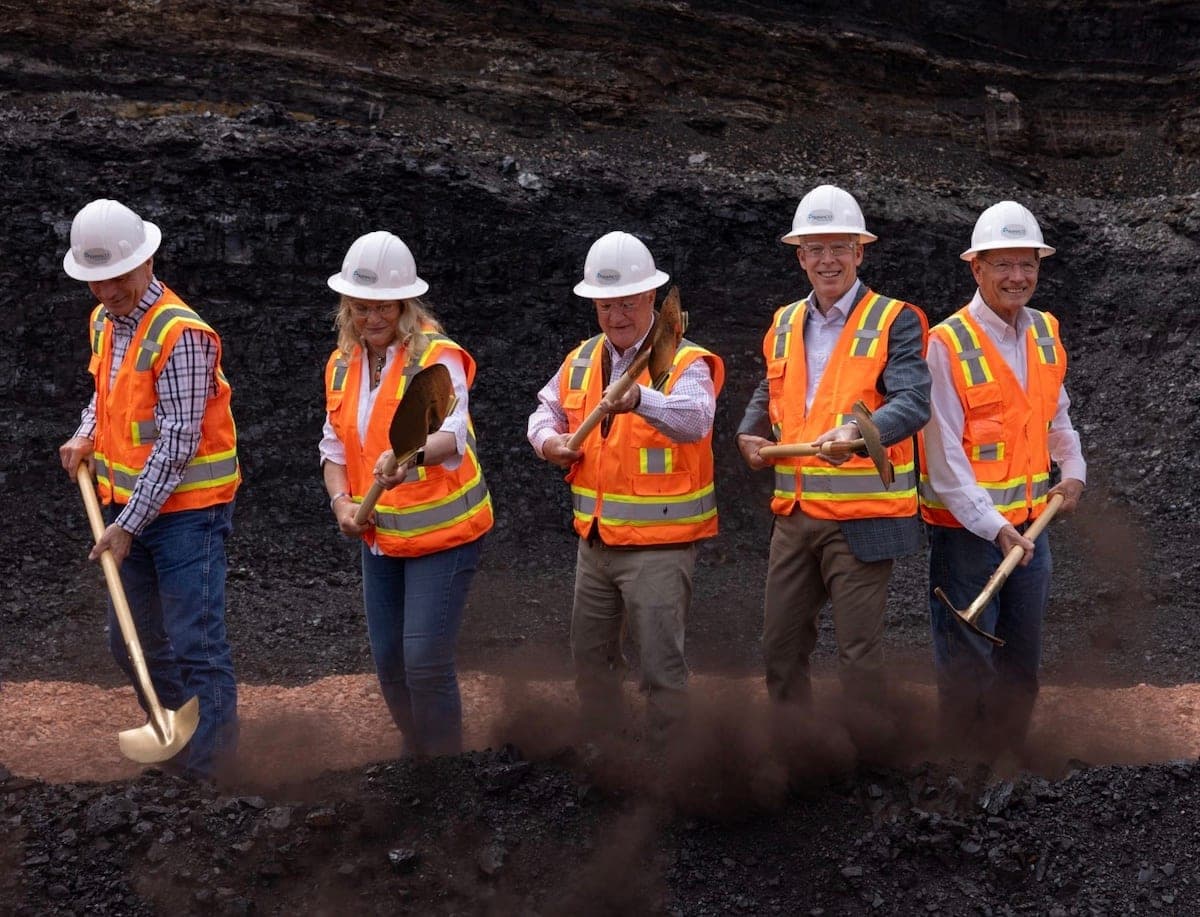
Coal company touting massive ‘rare earth’ mineral discovery in Wyoming faces shareholder lawsuit
by Dustin Bleizeffer, WyoFile The coal company touting its Brook Mine near Sheridan as “perhaps” containing the nation’s largest “unconventional deposit of rare earth elements” faces a class action lawsuit from investors. A complaint filed in January in the U.S. Southern District of New York by Lynn Henning alleges Ramaco Resources Inc., along with Chairman and CEO Randall W. Atkins and Chief Financial Officer Jeremy R. Sussman, misled investors regarding progress at the mine. The 28-page complaint refers to reports from market-investor advocate and short-seller Wolfpack Research claiming that drone footage showed no progress at the coal- and rare-earth element mine following a highly publicized July grand opening ceremony. U.S. Energy Secretary Chris Wright, along with Gov. Mark Gordon, Sens. Cynthia Lummis and John Barrasso and Rep. Harriet Hageman attended the event. Former U.S. Sen. Joe Manchin of West Virginia was also in attendance, in his new role as a Ramaco board member. In the months following, according to the complaint, “defendants made materially false and/or misleading statements, as well as failed to disclose material adverse facts about the company’s business, operations and prospects,” and “no active work was taking place at the Brook Mine.” As a result of the company’s actions and Wolfpack reports, the suit alleges, Ramaco’s market value dropped and investors “suffered significant losses and damages.” Henning, along with other investors joining the suit, seeks compensatory damages and a jury trial. Reached for comment, a Ramaco Resources spokesperson told WyoFile via email, “We believe we have meritorious defenses to all claims in this matter and provide no additional comment.” During Ramaco’s Feb. 26 earnings call regarding the company’s 2025 fourth-quarter performance, Executive Vice President of Mine Planning and Development Chris Blanchard said the Brook Mine pit was expanded “to excavate additional thermal coal for an upcoming trial with a regional customer,” according to a transcript of the call. “During this mining,” Blanchard continued, “we also segregated several hundred additional tons of rare-earth element and critical-mineral ore from two different enriched strata zones for continued optimization testing.” Rare-earth minerals — metallic elements occupying 17 spots on the periodic chart — are vital components for high-tech uses, such as military lasers, industrial magnets and batteries. They’re also used in televisions, cell phones and computer screens. Class action analysis Based on a quick analysis of the Ramaco shareholders’ complaint, the lawsuit appears to be a “fairly standard securities class action” challenge of allegedly misleading characterizations of a company’s performance and outlook, according to University of Wyoming Professor of Finance Ali Nejadmalayeri, a senior editor at Global Finance Journal. “From a finance perspective,” Nejadmalayeri told WyoFile via email, “it’s not uncommon to see litigation follow situations where there is a sharp price adjustment tied to new information — especially when that information challenges prior disclosures about project progress or operations.” Ultimately, such cases hinge on whether plaintiffs can convincingly establish clear links between company disclosures and a change in its market value. “Those are highly fact-specific determinations that courts evaluate over time,” Nejadmalayeri said. Ramaco in Wyoming Lexington, Kentucky-based Ramaco Resources was chasing lumps of coal when it bought the defunct Brook Mine for $2 million in 2011, according to CEO Atkins. The company eventually struck proverbial gold instead: An estimated $37 billion worth of magnetic rare-earth elements and other critical minerals, according to one account by the company. Click to enlarge: In this Jan. 15, 2015, file photo, Ramaco, LLC, CEO Randall Atkins poses with a core sample from the planned site of a new coal mine near Sheridan in northern Wyoming. (AP Photo/Mead Gruver, File) He credited the National Energy Technology Laboratory, which, during President Donald Trump’s first administration, asked to evaluate samples of Brook Mine coal and intermingled clays. Based on NETL’s discovery of rare-earth minerals, ongoing analysis suggests the mine holds “enough rare earths that we may be able to supply this country for well over the next 100 years,” Atkins said. Wyoming has seen increasing interest from mining companies hoping to build a rare earth extraction and refining industry in the state. Rare Element Resources has mined critical materials in northeast Wyoming and is advancing a processing plant near Upton. Speculators have also analyzed deposits in the Laramie Range foothills west of Wheatland and areas in the southern Bighorn Mountains for potential mines. Peabody Energy, the largest coal producer in the nation, was recently awarded a $6.25 million grant from the state to “establish a new, secure domestic source of rare earth elements from unconventional deposits located within Peabody’s Powder River Basin coal operations in Wyoming.” Wyoming also gave Ramaco Resources a $6 million Energy Matching Funds grant in May 2025 “to develop, mine, design, construct and equip a facility deploying innovative technologies to produce concentrated mixed rare-earth oxides and other critical minerals from Wyoming’s abundant coal resources,” according to a description of the project. The company remains in good standing regarding the grant project, a state spokesperson told WyoFile this week. This article was originally published by WyoFile and is republished here with permission. WyoFile is an independent nonprofit news organization focused on Wyoming people, places and policy.

Lisa Kinney announces candidacy for US House of Representatives
CASPER, Wyo. — On Saturday, the Natrona County Democrats stated that Lisa Kinney has announced her candidacy for Wyoming’s at-large seat in the U.S. House of Representatives. A Facebook post from Natrona County Democrats confirmed the news. Kinney was born in Laramie and was “raised by Wyoming values, and shaped by years of service in our State Senate,” the post states. According to Impspired, Kinney resides in Wyoming and was the director of the Albany County Public Library. Kinney was also the sixth woman to be elected to the Wyoming State Senate. She served in the Legislature from 1984 to 1994 and was the Democratic minority leader from 1992 to 1994. The website states that she is an attorney, a financial advisor, the owner of Summit Bar Review and a photographer. “Wyoming deserves representation that reflects us,” Kinney wrote in a statement shared by Natrona County Democrats, “independent thinkers who care about our neighbors, our land, and our future. It’s time to get R.E.A.L. and bring common sense back to Congress.” Kinney is competing against a growing field of Republican candidates vying for the seat that is currently occupied by Rep. Harriet Hageman, who has announced a bid for the U.S. Senate. Those Republicans include Wyoming Senate President Bo Biteman, Secretary of State Chuck Gray and former Superintendent of Public Instruction Jillian Balow. Also in the race are Casper-raised military veteran David Giralt, Casper native and military veteran Kevin Christensen, Casper businessman Reid Rasner and Moran rancher and attorney Frank Chapman. Former Casper vice mayor and City Councilor Shawn Johnson is seeking the Libertarian nomination for the seat. The primary election for the U.S. House seat is scheduled for Aug. 18, 2026.
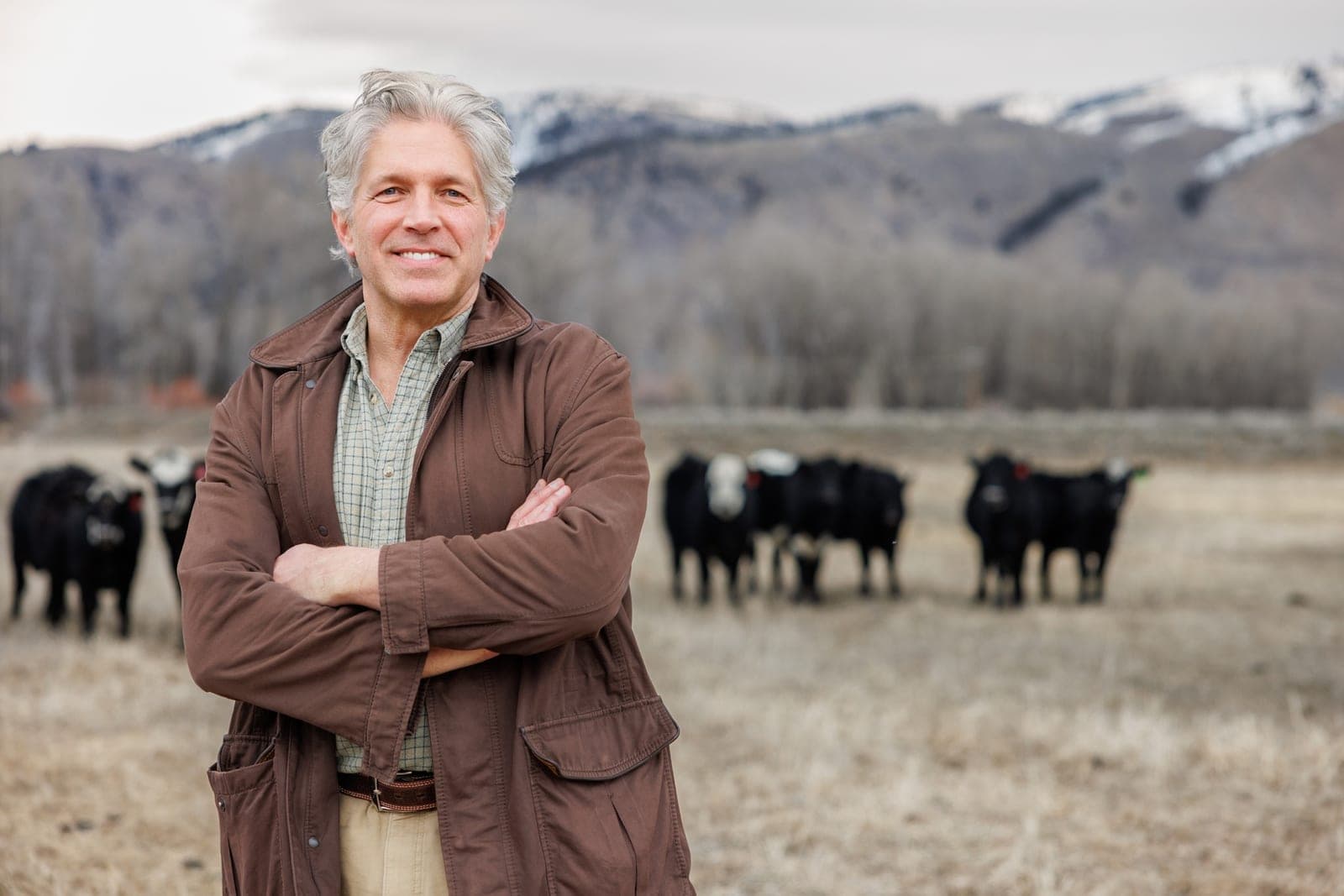
Conservative activist Steve Friess joins Wyoming race for US House
CASPER, Wyo. — Businessman and conservative activist Steve Friess announced his candidacy for Wyoming’s at-large U.S. House seat today. Friess, a Trump Republican and longtime Wyoming resident, enters a growing field of candidates seeking the seat currently held by U.S. Rep. Harriet Hageman. Hageman announced a bid for the U.S. Senate. A self-described political outsider, Friess said his campaign will focus on advancing an “America First” agenda and protecting Wyoming values. “Freedom and opportunity have always been the birthright of every American,” Friess said. “I’m running for Congress to keep it that way.” Friess pointed to his decades of support for conservative causes, including early funding for Turning Point USA and work with groups like Tea Party Patriots and True the Vote. He pledged to work with the president to secure the southern border, reduce federal regulations and support Wyoming’s energy and ranching industries. The candidate also expressed support for congressional term limits and a ban on members of Congress trading stocks. “Wyoming Republicans will face a clear choice in this primary. You can vote for another career politician who talks a big game, goes to Washington, and does nothing, or you can support a genuine conservative outsider who has spent decades fighting for our values,” Friess said. “I’ve dedicated my time and resources to conservative causes throughout my adult life. I’m not running to climb the political ladder or get rich. I’m running to help President Trump achieve his goals and to protect our Wyoming way of life during this critical time in our history. After that, I’m coming home.” Friess joins eight other Republicans in the primary race, including Secretary of State Chuck Gray, Wyoming Senate President Bo Biteman, and former Superintendent of Public Instruction Jillian Balow. Other Republican candidates include David Giralt, Kevin Christensen, Reid Rasner, John Romero-Martinez and Frank Chapman. Shawn Johnson, a former Casper vice mayor, is seeking the Libertarian nomination for the seat. The primary election is scheduled for Aug. 18, 2026.
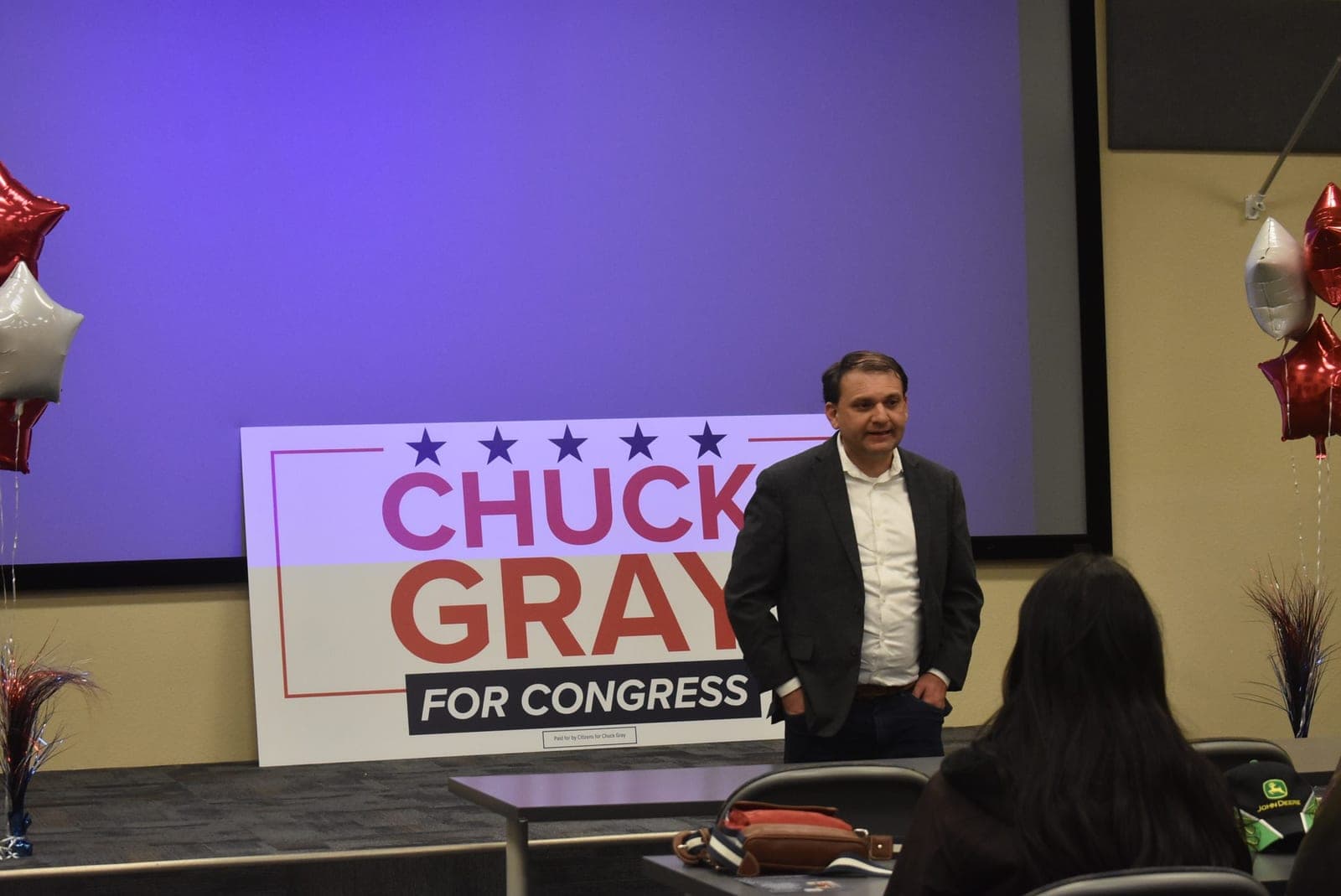
Chuck Gray pledges hardline spending cuts, fight against ‘woke wind’
GILLETTE, Wyo. — Republican congressional candidate Chuck Gray signaled a hardline approach to federal spending and wind energy development during a Tuesday meet-and-greet in Gillette. The sitting Secretary of State pledged to refuse any increase to the debt ceiling without spending cuts and criticized “woke wind” projects, arguing his record in the state Legislature proves he can transition Wyoming’s conservative shift to the halls of Congress. Gray, who was first elected to the Wyoming Legislature in 2016 at age 26, is running to replace U.S. Rep. Harriet Hageman. Gray reminded the Gillette audience that Hageman is seeking the Senate seat currently held by Sen. Cynthia Lummis, who plans to retire. Election policy, legislative record Among the many topics Gray spoke about was his role in expanding the conservative caucus in the Wyoming House from six members in 2016 to a majority by 2024. He also spoke about his persistent efforts to pass voter ID laws, which reached the finish line in 2021 after four attempts. “We stopped all mail-in voting in Wyoming in 2017 when that was trying to be pushed through,” Gray said. As Secretary of State, Gray said his office implemented rules requiring proof of citizenship for voter registration — a policy he said later became a central component of the federal SAVE America Act. If elected to Congress, Gray said he would push for such baseline integrity measures to be codified into federal law. Energy and the ‘War on Coal’ Gray has centered much of his platform on protecting Wyoming’s fossil fuel industries. He characterized decades of federal policy as an attack on coal, oil and gas, specifically citing the 2019 bankruptcies of several local mines as the culmination of regulatory pressures. To counter what he deemed federal overreach, Gray proposed using congressional authority to remove judicial jurisdiction over certain energy permitting decisions. The move, he argued, would prevent a single “liberal judge” from halting projects in the Powder River Basin. Gray also took aim at wind energy, referring to it as “woke wind.” He argued the industry relies too heavily on federal subsidies and doesn’t fit the state’s specific energy needs. “Northeast Wyoming is producing our big, beautiful coal product, oil and gas. The power is just waiting to be unleashed,” Gray added. “It really offends me the way we’ve not been able to reach our full potential, especially up here.” Economic policy, agriculture On the national economy, Gray attributed rising costs to “Biden inflation” and federal spending. He said he’d join a group of Republicans who refuse to raise the debt ceiling without major spending cuts, describing it as a necessary step for fiscal discipline. “All of our industries have been under attack, our core industries, and we need need a member of Congress who is going to defend those core industries and I plan to do that,” he said. Regarding agriculture, Gray voiced support for reinstating Mandatory Country of Origin Labeling for meat products. He also called for action against “packer monopolies” and vowed to work toward the repeal of mandatory electronic identification tags for livestock. Gray also pointed to infrastructure needs in rural Wyoming, particularly aging water and sewer systems. He said he supports a role for the U.S. Department of Agriculture in helping fund those projects over the next several years. Education, social issues Gray’s platform extends into cultural and educational reforms. He criticized the current education system for a lack of focus on civics and economics and advocated for limiting technology in classrooms. He said he favors removing cellphones from school settings and shifting away from digital screens in favor of traditional textbooks. On governance, he expressed support for a federal ban on sanctuary cities and a ban on Sharia law, which he argued is inconsistent with the U.S. Constitution. He also proposed a ban on stock trading by members of Congress, suggesting lawmakers be required to use blind trusts to avoid conflicts of interest. The secretary added he opposes the creation of a central bank digital currency. He said he believes such a system could lead to increased government surveillance. Gray said he believes the legal system has become too liberal, adding he supports increased legislative oversight of the courts and favors a merit-based system for selecting judges. Campaign momentum, conflict Gray didn’t shy away from internal party friction, describing ongoing disagreements with Gov. Mark Gordon, whom he labeled “very liberal.” He also dismissed one of his six primary opponents, Reid Rasner, saying Rasner lacks a record of legislative accomplishment. When asked by County 17 why he’s the best fit for the seat, Gray pointed to his consistency. “I have a track record of authentically defending and advancing the values of the people of Wyoming,” he said. “It’s a real track record of action and walking the walk.”
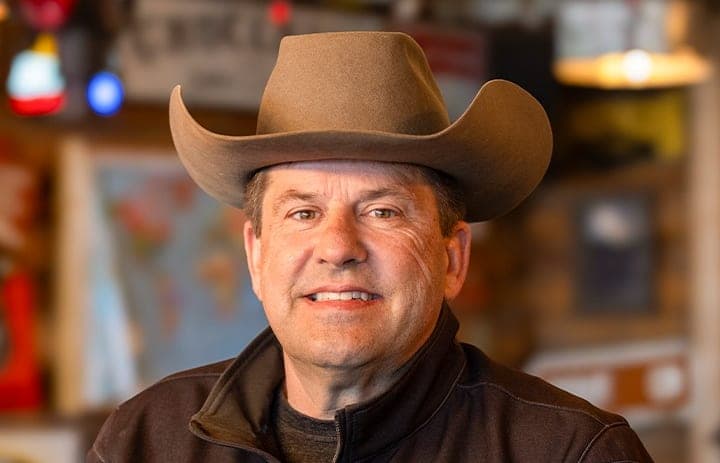
Moran rancher Frank Chapman joins race for Wyoming US House seat
CASPER, Wyo. — Frank Chapman, a Moran rancher and attorney, has announced his candidacy for Wyoming’s lone seat in the U.S. House of Representatives, joining a growing list of candidates seeking the Republican nomination. The seat is being vacated by Republican Rep. Harriet Hageman, who launched a campaign in December for the U.S. Senate seat currently held by retiring Sen. Cynthia Lummis. Chapman owns and operates Heart Six Ranch with his three sons. He has practiced law for nearly 30 years and said his experience defending individuals against federal agencies qualifies him to represent Wyoming in Washington, according to his campaign website. “Frank is the only candidate who has the knowledge and experience to fight the United States Government and stand up for our rights, our way of life,” Chapman’s website states. The candidate identified his primary goals as securing the U.S. border, growing the economy through tax cuts and achieving energy independence by reducing government obstacles to energy production. As a licensed outfitter, Chapman said he intends to protect Second Amendment rights and private property. His platform also includes a focus on reducing judicial overreach. He proposed legislation that would require federal lawsuits to be filed in the jurisdiction where the action occurred to prevent “judge shopping.” Chapman said the success of President Donald Trump’s administration encouraged his decision to run. He pledged to align with Trump’s agenda, including the passage of the SAVE Act to require personal identification at polling places. “For far too long, Washington has forgotten Wyoming,” the campaign stated. “It’s the small business owners, ranchers, and families working hard to make ends meet who make Wyoming great.” Chapman is a graduate of Ohio University and Case Western Reserve University School of Law. He moved to Wyoming more than a decade ago. The candidate enters one of the state’s most active races. Six other Republicans are vying for the nomination, including Wyoming Senate President Bo Biteman, Secretary of State Chuck Gray, and former Superintendent of Public Instruction Jillian Balow. Also in the race are Casper-raised military veteran David Giralt, Casper native and military veteran Kevin Christensen and Casper businessman Reid Rasner. Former Casper vice mayor and City Councilor Shawn Johnson is seeking the Libertarian nomination for the seat.
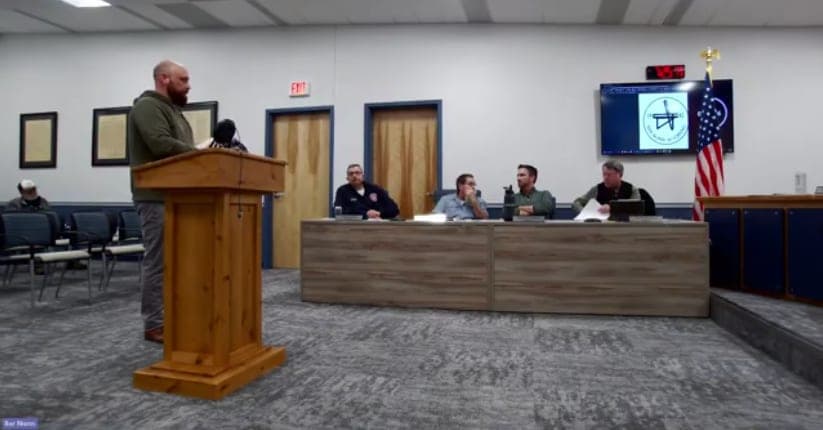
Bar Nunn councilor served summons from Rasner-linked lawsuit during meeting
BAR NUNN, Wyo. — A process server interrupted the Bar Nunn Town Council’s public comment period at Tuesday’s meeting to serve a civil summons to Councilmember Dan Sabrosky, a move that local officials admonished and called an unnecessarily public display of a personal matter. A process server who said he was working on behalf of Day and Night Process Serving approached the council during the public comment portion of the meeting and announced that he had been directed by legal counsel to deliver a summons and complaint to Sabrosky. Town Attorney Pat Holscher asked which attorneys told him to serve the papers during the public meeting, and he responded by naming John Matthews and Morgan Nance of White and Steele P.C. and William Fix of Fix Law. Sabrosky said the summons is related to legal action being pursued by political candidate and businessman Reid Rasner, who is running for Wyoming’s U.S. House of Representatives seat currently held by Rep. Harriet Hageman. Earlier this week, Cowboy State Daily reported that Rasner recently sued Sabrosky and his ex-wife for defamation, saying they led a social media and “whisper” campaign against him. Mayor Peter Boyer had harsh words to say regarding the summons, calling it “completely uncalled for.” “I can’t even imagine what he’s thinking. The optics on that are awful,” Boyer said. “It’s just untoward and foolish. … It’s interrupting a council meeting with something that is of a personal nature between him and Dan, and is breaking into town business to do something that he wants to make a public display of.” Sabrosky himself voiced similar sentiments, saying it was “low and dirty and underhanded.”

Wyoming nuclear power plant receives federal approval for reactor construction
by Dustin Bleizeffer, WyoFile The U.S. Nuclear Regulatory Commission announced Wednesday that it has awarded TerraPower a construction permit for its Natrium nuclear power plant outside Kemmerer, a key step in bringing the next-generation project to southwestern Wyoming. The Kemmerer Unit 1 plant is the first commercial nuclear reactor to win such approval in 10 years in the U.S., and it’s the first ever commercial-scale liquid sodium-cooled reactor to be permitted in the nation, according to TerraPower, which was cofounded by Microsoft founder and billionaire Bill Gates. “Our team has worked relentlessly for over four years with the NRC staff to get to this moment,” the company said in a prepared statement. “We had extensive pre-application engagement with the NRC, and we submitted a robust and thorough construction permit application almost two years ago.” TerraPower President and CEO Chris Levesque speaks to reporters June 10, 2024 at the location of the future Natrium nuclear power plant outside Kemmerer, Wyoming. (Dustin Bleizeffer/WyoFile) The NRC also noted the expediency of its 18-month review as meeting a new benchmark for the agency, which has revised its review and oversight processes in anticipation of a wave of new “advanced” reactor designs. “This is a historic step forward for advanced-nuclear energy in the United States and reflects our commitment to delivering timely, predictable decisions grounded in a rigorous and independent safety review,” NRC Chairman Ho Nieh said in a prepared statement. The Trump administration has ordered the agency to continue streamlining its permitting and certification timelines to meet a wave of demand for new nuclear energy technologies. As part of the effort, the agency notified TerraPower last year it was trimming seven months from the environmental review and safety evaluation for the project. The NRC reviewed Natrium via the Advanced Reactor Demonstration Program, which was instituted during President Donald Trump’s first term. “This is a massive move for American energy independence,” U.S. Sen. Cynthia Lummis said on a social media post Wednesday. “Wyoming has always powered this nation. Now we’re leading the next generation of nuclear energy technology.” Natrium project The Natrium nuclear power plant is designed to generate 345 megawatts of electricity and has an energy storage component to ramp up to 500 megawatts to meet demand peaks, according to the Bellevue, Washington-based company. One megawatt is enough electricity to power about 750 homes. The $4 billion project is backed by $2 billion from the Department of Energy — a commitment made under the first Trump administration. TerraPower in 2024 began construction on several non-nuclear facilities associated with the project. The Wyoming Industrial Siting Council granted a construction permit in January 2025, greenlighting all non-nuclear portions of the facility. This photo shows construction of the non-nuclear portion of the Natrium nuclear power plant outside Kemmerer in 2025. (TerraPower) Before settling on Kemmerer to build its first Natrium facility, the company reviewed several locations in Wyoming, preferring to “co-locate” the project next to a coal-fired power plant so it could tap into existing power infrastructure. TerraPower chose the Kemmerer location for its proximity to the Naughton power plant, which recently shut down its last two coal-burning units to convert them to natural gas. Next for the Natrium project, the NRC will formally issue the construction permit “in the next week or so.” “TerraPower anticipates beginning construction on the Natrium plant in the coming weeks,” spokesperson Sarah Young told WyoFile. The company will submit an application to the NRC for an operating license in 2027 or early 2028. “Today is a historic day for the United States’ nuclear industry,” TerraPower President and CEO Chris Levesque said in a prepared statement. “We are beyond proud to receive a positive vote from the Nuclear Regulatory Commissioners to grant us our construction permit for Kemmerer Unit One.” This article was originally published by WyoFile and is republished here with permission. WyoFile is an independent nonprofit news organization focused on Wyoming people, places and policy.
Wyoming nuclear power plant receives federal approval for reactor construction
by Dustin Bleizeffer, WyoFile The U.S. Nuclear Regulatory Commission announced Wednesday that it has awarded TerraPower a construction permit for its Natrium nuclear power plant outside Kemmerer, a key step in bringing the next-generation project to southwestern Wyoming. The Kemmerer Unit 1 plant is the first commercial nuclear reactor to win such approval in 10 years in the U.S., and it’s the first ever commercial-scale liquid sodium-cooled reactor to be permitted in the nation, according to TerraPower, which was cofounded by Microsoft founder and billionaire Bill Gates. “Our team has worked relentlessly for over four years with the NRC staff to get to this moment,” the company said in a prepared statement. “We had extensive pre-application engagement with the NRC, and we submitted a robust and thorough construction permit application almost two years ago.” TerraPower President and CEO Chris Levesque speaks to reporters June 10, 2024 at the location of the future Natrium nuclear power plant outside Kemmerer, Wyoming. (Dustin Bleizeffer/WyoFile) The NRC also noted the expediency of its 18-month review as meeting a new benchmark for the agency, which has revised its review and oversight processes in anticipation of a wave of new “advanced” reactor designs. “This is a historic step forward for advanced-nuclear energy in the United States and reflects our commitment to delivering timely, predictable decisions grounded in a rigorous and independent safety review,” NRC Chairman Ho Nieh said in a prepared statement. The Trump administration has ordered the agency to continue streamlining its permitting and certification timelines to meet a wave of demand for new nuclear energy technologies. As part of the effort, the agency notified TerraPower last year it was trimming seven months from the environmental review and safety evaluation for the project. The NRC reviewed Natrium via the Advanced Reactor Demonstration Program, which was instituted during President Donald Trump’s first term. “This is a massive move for American energy independence,” U.S. Sen. Cynthia Lummis said on a social media post Wednesday. “Wyoming has always powered this nation. Now we’re leading the next generation of nuclear energy technology.” Natrium project The Natrium nuclear power plant is designed to generate 345 megawatts of electricity and has an energy storage component to ramp up to 500 megawatts to meet demand peaks, according to the Bellevue, Washington-based company. One megawatt is enough electricity to power about 750 homes. The $4 billion project is backed by $2 billion from the Department of Energy — a commitment made under the first Trump administration. TerraPower in 2024 began construction on several non-nuclear facilities associated with the project. The Wyoming Industrial Siting Council granted a construction permit in January 2025, greenlighting all non-nuclear portions of the facility. This photo shows construction of the non-nuclear portion of the Natrium nuclear power plant outside Kemmerer in 2025. (TerraPower) Before settling on Kemmerer to build its first Natrium facility, the company reviewed several locations in Wyoming, preferring to “co-locate” the project next to a coal-fired power plant so it could tap into existing power infrastructure. TerraPower chose the Kemmerer location for its proximity to the Naughton power plant, which recently shut down its last two coal-burning units to convert them to natural gas. Next for the Natrium project, the NRC will formally issue the construction permit “in the next week or so.” “TerraPower anticipates beginning construction on the Natrium plant in the coming weeks,” spokesperson Sarah Young told WyoFile. The company will submit an application to the NRC for an operating license in 2027 or early 2028. “Today is a historic day for the United States’ nuclear industry,” TerraPower President and CEO Chris Levesque said in a prepared statement. “We are beyond proud to receive a positive vote from the Nuclear Regulatory Commissioners to grant us our construction permit for Kemmerer Unit One.” This article was originally published by WyoFile and is republished here with permission. WyoFile is an independent nonprofit news organization focused on Wyoming people, places and policy.