5 stories credited to Nextgov (4 on nextgov.com, 1 reproduced by other sites)
Latest story Sep 16, 2026 · on ChamberLight since Apr 2026
A story can appear as several articles (copies of the same piece), so counts of stories and of articles differ.
Scores for Nextgov
Writing quality not enough rated stories yet: 4 of 10. How it is measured
Scores last checked Sep 25, 2026.
Stories ChamberLight collected, by month
Stories credited to Nextgov, by publication date. ChamberLight collects articles that mention the officials it tracks, so this shows its own coverage of this source, not how much the source publishes.
- Stories from Nextgov
- Shaded: ChamberLight collected no stories, or almost none, from any outlet (a gap in its collection, not in the outlet’s publishing)
Show as a table
| Month | Stories | All outlets |
|---|---|---|
| April 2026 | 4 | 3,707 |
| May 2026 | 0 | none collected |
| June 2026 | 0 | none collected |
| July 2026 | 0 | none collected |
| August 2026 | 0 | 1 (collection gap) |
| September 2026 | 1 | 1,320 |
Top topics
Share of this source’s stories tagged with each topic. A story can carry several topics, so the shares do not add up to 100%.
- Technology/Privacy4
80% of 5 stories · 10% across all outlets
- Defense/Military3
60% of 5 stories · 25% across all outlets
- Economy2
40% of 5 stories · 26% across all outlets
- Criminal Justice1
20% of 5 stories · 19% across all outlets
- Ethics/Corruption1
20% of 5 stories · 58% across all outlets
- Foreign Policy1
20% of 5 stories · 29% across all outlets
- Labor/Unions1
20% of 5 stories · 4% across all outlets
The thin mark on each bar is the topic’s share across all outlets.
Who they cover
Party of the officials these stories are mainly about, across all 15 officials named. A story counts once for each official it is mainly about, so the split is over 15 story–official pairs, from 5 stories.
- Democrat60% · 9 pairs
- Republican40% · 6 pairs
Most covered
Stories mainly about each official, and their share of the source’s 5 stories.
- 1Donald BeyerD1 story · 20%
- 2Haley StevensD1 story · 20%
- 3Jamie RaskinD1 story · 20%
- 4Jay ObernolteR1 story · 20%
- 5Jim JordanR1 story · 20%
- 6Lori TrahanD1 story · 20%
- 7Maria CantwellD1 story · 20%
- 8Marsha BlackburnR1 story · 20%
- 9Mike JohnsonR1 story · 20%
- 10Paul TonkoD1 story · 20%
+ 5 other officials (5 story–official pairs)
Article tone
ChamberLight’s article analysis assigns each story a tone toward the official it covers. It describes the coverage of that official, not Nextgov’s stance, and reader votes do not change it. 5 stories.
- Good Look
- 3 (60%)
- Mixed
- 2 (40%)
- Informational
- 0 (0%)
- Bad Look
- 0 (0%)
Challenges to these scores
No one has challenged a score on this page yet. Anyone can; editors publish every outcome here.
Articles served from nextgov.com
13
House Democrats call to cancel upcoming recess for time to legislate on AI
Four lawmakers stressed the need for more working days and bipartisan teamwork to respond to the national calls for strong artificial intelligence protections. House Democrats urged Speaker Mike Johnson, R-La., to either shorten or outright cancel their upcoming recess, citing the need to quickly m
House Democrats call to cancel upcoming recess for time to legislate on AI
Four lawmakers stressed the need for more working days and bipartisan teamwork to respond to the national calls for strong artificial intelligence protections. House Democrats urged Speaker Mike Johnson, R-La., to either shorten or outright cancel their upcoming recess, citing the need to quickly m
House Democrats call to cancel upcoming recess for time to legislate on AI
Four lawmakers stressed the need for more working days and bipartisan teamwork to respond to the national calls for strong artificial intelligence protections. House Democrats urged Speaker Mike Johnson, R-La., to either shorten or outright cancel their upcoming recess, citing the need to quickly m
House Democrats call to cancel upcoming recess for time to legislate on AI
Four lawmakers stressed the need for more working days and bipartisan teamwork to respond to the national calls for strong artificial intelligence protections. House Democrats urged Speaker Mike Johnson, R-La., to either shorten or outright cancel their upcoming recess, citing the need to quickly m

US needs to flesh out strategy to counter China’s robotics advances, lawmakers say
Even as more advanced artificial intelligence capabilities drive greater progress in the field of robotics, lawmakers said on Tuesday that the U.S. still needs to develop a more effective strategy to counter China’s dominance in developing these technologies. Although robots have been around for decades — primarily in manufacturing and to assist with other human-led tasks, such as medical procedures — these more powerful AI-infused machines can operate with greater autonomy. But even as the U.S. maintains its lead over China when it comes to global AI dominance, Congress and industry experts are concerned that America is ceding the robotics lead to Beijing. During a House Science, Space and Technology Subcommittee on Research and Technology hearing, lawmakers and private sector representatives drew a contrast between fast-paced AI advances, and the development of actual, machine-based robots. Michael Robbins, CEO of the Association for Uncrewed Vehicle Systems International, said, “we are entering an era of embodied AI — or physical AI — where AI is the brain and robotics is the body,” warning the panel that “today, America may still be winning the race to build the brains, but we are losing the race to build and deploy the bodies.” Rep. Haley Stevens, D-Mich. — the subcommittee’s top Democrat — echoed his comments, also noting that “America is home to the best and brightest AI scientists who are developing the brains,” but that “when robots are made in the U.S., they're often assembled with Chinese parts.” China has increasingly touted its robotics progress, most recently by holding a race in which one of its humanoid machines beat the human half-marathon world record time. Beijing’s military-civil fusion strategy also means that its private sector advances directly benefit its military ambitions, posing a national security threat to the U.S. But China’s dominance in robotics also extends to the supply chains necessary for American companies to develop their own robots, Stevens noted. The country’s massive control of rare earth minerals and other components needed for developing robots and other advanced technologies, for instance, raises significant concerns about how best to decouple U.S. manufacturers from the Chinese market. Jeff Burnstein, president of the A3 Association for Advancing Automation, said he wasn’t sure if banning Chinese-made robots — one potential way to drive domestic progress in the development of robotics — was a good idea because “right now, we do need those rare earth magnets here in the U.S., and I worry about, if we start a war over robotics, that we could lose some of those components that are vital to our goals.” Rep. Jay Obernolte, R-Calif., who chairs the House panel, said the U.S. needs to adopt a national robotics strategy to counter China’s ambitions and also embolden domestic manufacturing and workforce adoption of robots. He noted that China and some U.S. allies, like South Korea and Japan, already have their own strategies, and added that, “there's such an obvious linkage between a robotics strategy and our national economy and national security.” Obernolte, alongside Reps. Jennifer McClellan, D-Va., and Bob Latta, R-Ohio, introduced a measure in February seeking to establish a commission to evaluate and drive U.S. leadership in robotics. Some agencies, such as the Department of Veterans Affairs, have already been experimenting with using robots, although the benefits actually provided by these machines have been mixed. Still, lawmakers and officials see a need to further expand uses of these technologies in both the public and private sectors, despite widespread adoption likely being a few years away. Politico reported in December that Trump administration officials, including Commerce Department Secretary Howard Lutnick, were holding meetings with leaders from the robotics industry to discuss ways of turbocharging development of the advanced machines. The White House’s AI Action Plan, released in July 2025, also included a section on supporting the development of next-generation manufacturing — a proposal that, Obernolte said, “notes the importance of this intersection between AI and robotics.” Rep. Zoe Lofgren, D-Calif., the ranking member of the full House Science, Space and Technology Committee, said, however, that the single robotics-based recommendation in the action plan is not enough. “While individual science agencies continue to make investments in robotics, there’s no coherent strategy for U.S. leadership,” Lofgren said, adding that “we can and still must lead in the field of robotics, but to achieve that goal, we need a concerted national effort to support innovation across the full robotics system.”
US needs to flesh out strategy to counter China’s robotics advances, lawmakers say
Even as more advanced artificial intelligence capabilities drive greater progress in the field of robotics, lawmakers said on Tuesday that the U.S. still needs to develop a more effective strategy to counter China’s dominance in developing these technologies. Although robots have been around for decades — primarily in manufacturing and to assist with other human-led tasks, such as medical procedures — these more powerful AI-infused machines can operate with greater autonomy. But even as the U.S. maintains its lead over China when it comes to global AI dominance, Congress and industry experts are concerned that America is ceding the robotics lead to Beijing. During a House Science, Space and Technology Subcommittee on Research and Technology hearing, lawmakers and private sector representatives drew a contrast between fast-paced AI advances, and the development of actual, machine-based robots. Michael Robbins, CEO of the Association for Uncrewed Vehicle Systems International, said, “we are entering an era of embodied AI — or physical AI — where AI is the brain and robotics is the body,” warning the panel that “today, America may still be winning the race to build the brains, but we are losing the race to build and deploy the bodies.” Rep. Haley Stevens, D-Mich. — the subcommittee’s top Democrat — echoed his comments, also noting that “America is home to the best and brightest AI scientists who are developing the brains,” but that “when robots are made in the U.S., they're often assembled with Chinese parts.” China has increasingly touted its robotics progress, most recently by holding a race in which one of its humanoid machines beat the human half-marathon world record time. Beijing’s military-civil fusion strategy also means that its private sector advances directly benefit its military ambitions, posing a national security threat to the U.S. But China’s dominance in robotics also extends to the supply chains necessary for American companies to develop their own robots, Stevens noted. The country’s massive control of rare earth minerals and other components needed for developing robots and other advanced technologies, for instance, raises significant concerns about how best to decouple U.S. manufacturers from the Chinese market. Jeff Burnstein, president of the A3 Association for Advancing Automation, said he wasn’t sure if banning Chinese-made robots — one potential way to drive domestic progress in the development of robotics — was a good idea because “right now, we do need those rare earth magnets here in the U.S., and I worry about, if we start a war over robotics, that we could lose some of those components that are vital to our goals.” Rep. Jay Obernolte, R-Calif., who chairs the House panel, said the U.S. needs to adopt a national robotics strategy to counter China’s ambitions and also embolden domestic manufacturing and workforce adoption of robots. He noted that China and some U.S. allies, like South Korea and Japan, already have their own strategies, and added that, “there's such an obvious linkage between a robotics strategy and our national economy and national security.” Obernolte, alongside Reps. Jennifer McClellan, D-Va., and Bob Latta, R-Ohio, introduced a measure in February seeking to establish a commission to evaluate and drive U.S. leadership in robotics. Some agencies, such as the Department of Veterans Affairs, have already been experimenting with using robots, although the benefits actually provided by these machines have been mixed. Still, lawmakers and officials see a need to further expand uses of these technologies in both the public and private sectors, despite widespread adoption likely being a few years away. Politico reported in December that Trump administration officials, including Commerce Department Secretary Howard Lutnick, were holding meetings with leaders from the robotics industry to discuss ways of turbocharging development of the advanced machines. The White House’s AI Action Plan, released in July 2025, also included a section on supporting the development of next-generation manufacturing — a proposal that, Obernolte said, “notes the importance of this intersection between AI and robotics.” Rep. Zoe Lofgren, D-Calif., the ranking member of the full House Science, Space and Technology Committee, said, however, that the single robotics-based recommendation in the action plan is not enough. “While individual science agencies continue to make investments in robotics, there’s no coherent strategy for U.S. leadership,” Lofgren said, adding that “we can and still must lead in the field of robotics, but to achieve that goal, we need a concerted national effort to support innovation across the full robotics system.”
US needs to flesh out strategy to counter China’s robotics advances, lawmakers say
Even as more advanced artificial intelligence capabilities drive greater progress in the field of robotics, lawmakers said on Tuesday that the U.S. still needs to develop a more effective strategy to counter China’s dominance in developing these technologies. Although robots have been around for decades — primarily in manufacturing and to assist with other human-led tasks, such as medical procedures — these more powerful AI-infused machines can operate with greater autonomy. But even as the U.S. maintains its lead over China when it comes to global AI dominance, Congress and industry experts are concerned that America is ceding the robotics lead to Beijing. During a House Science, Space and Technology Subcommittee on Research and Technology hearing, lawmakers and private sector representatives drew a contrast between fast-paced AI advances, and the development of actual, machine-based robots. Michael Robbins, CEO of the Association for Uncrewed Vehicle Systems International, said, “we are entering an era of embodied AI — or physical AI — where AI is the brain and robotics is the body,” warning the panel that “today, America may still be winning the race to build the brains, but we are losing the race to build and deploy the bodies.” Rep. Haley Stevens, D-Mich. — the subcommittee’s top Democrat — echoed his comments, also noting that “America is home to the best and brightest AI scientists who are developing the brains,” but that “when robots are made in the U.S., they're often assembled with Chinese parts.” China has increasingly touted its robotics progress, most recently by holding a race in which one of its humanoid machines beat the human half-marathon world record time. Beijing’s military-civil fusion strategy also means that its private sector advances directly benefit its military ambitions, posing a national security threat to the U.S. But China’s dominance in robotics also extends to the supply chains necessary for American companies to develop their own robots, Stevens noted. The country’s massive control of rare earth minerals and other components needed for developing robots and other advanced technologies, for instance, raises significant concerns about how best to decouple U.S. manufacturers from the Chinese market. Jeff Burnstein, president of the A3 Association for Advancing Automation, said he wasn’t sure if banning Chinese-made robots — one potential way to drive domestic progress in the development of robotics — was a good idea because “right now, we do need those rare earth magnets here in the U.S., and I worry about, if we start a war over robotics, that we could lose some of those components that are vital to our goals.” Rep. Jay Obernolte, R-Calif., who chairs the House panel, said the U.S. needs to adopt a national robotics strategy to counter China’s ambitions and also embolden domestic manufacturing and workforce adoption of robots. He noted that China and some U.S. allies, like South Korea and Japan, already have their own strategies, and added that, “there's such an obvious linkage between a robotics strategy and our national economy and national security.” Obernolte, alongside Reps. Jennifer McClellan, D-Va., and Bob Latta, R-Ohio, introduced a measure in February seeking to establish a commission to evaluate and drive U.S. leadership in robotics. Some agencies, such as the Department of Veterans Affairs, have already been experimenting with using robots, although the benefits actually provided by these machines have been mixed. Still, lawmakers and officials see a need to further expand uses of these technologies in both the public and private sectors, despite widespread adoption likely being a few years away. Politico reported in December that Trump administration officials, including Commerce Department Secretary Howard Lutnick, were holding meetings with leaders from the robotics industry to discuss ways of turbocharging development of the advanced machines. The White House’s AI Action Plan, released in July 2025, also included a section on supporting the development of next-generation manufacturing — a proposal that, Obernolte said, “notes the importance of this intersection between AI and robotics.” Rep. Zoe Lofgren, D-Calif., the ranking member of the full House Science, Space and Technology Committee, said, however, that the single robotics-based recommendation in the action plan is not enough. “While individual science agencies continue to make investments in robotics, there’s no coherent strategy for U.S. leadership,” Lofgren said, adding that “we can and still must lead in the field of robotics, but to achieve that goal, we need a concerted national effort to support innovation across the full robotics system.”

House readies vote to renew FISA 702 without a warrant amendment
The House is expected to take up reauthorization of Section 702 of the Foreign Intelligence Surveillance Act on Wednesday without a key vote on a warrant requirement after the House Rules Committee approved a closed rule preventing such an amendment Tuesday night, even as Republican leaders face the possibility the surveillance law’s renewal lacks the support to pass in its current form. The spying power, which expires April 20 unless extended, lets intelligence agencies compel internet service providers to furnish communications of foreigners located abroad without a warrant. But the process can also collect U.S. person communications if they are in contact with a foreign target, raising Fourth Amendment concerns when the contents of those U.S. person calls, text messages and emails are subsequently searched. Privacy advocates have long pushed for a warrant measure for collected U.S. person data queried under the program. Three GOP members of the Rules panel who have previously supported a warrant measure — Reps. Chip Roy of Texas, Ralph Norman of South Carolina and Morgan Griffith of Virginia — were not present to vote in favor of it, a notable absence as the committee moved forward with a closed process that blocked the warrant amendment. In the 2024 reauthorization cycle, efforts to require warrants for 702 searches involving American communications came close to success when a House amendment failed after a 212–212 tie vote. That amendment, as well as the one that failed Tuesday, was led by Republican Rep. Andy Biggs of Arizona. The Trump administration is seeking a clean extension of the law for an 18-month period, meaning that a warrant reform would not be included in its desired reauthorization. In a long discussion Tuesday evening over the substance of the bill that would extend the authority, Rep. Jim Jordan, R-Ohio, the chairman of the House Judiciary Committee, said the extensive set of 2024 reforms to Section 702 have worked, sharply reducing past FBI abuses, and that, given current national security threats and ongoing military operations, an 18‑month extension of the program is justified. Jordan has previously supported a warrant requirement but flipped his position in this cycle. His Democratic counterpart on Judiciary, Rep. Jamie Raskin of Maryland, argued that a so‑called clean reauthorization is a “dirty deal” because the Trump administration has dismantled watchdogs and civil‑liberties safeguards and cannot be trusted to police its own surveillance powers, and that Congress must add stronger guardrails before renewing Section 702. “The bill before us today leaves the Trump administration in charge of policing its own abuses of this sweeping authority that is going to be unacceptable to the American people who understand how our privacy rights and civil liberties are being trampled every day,” said Raskin. Lawmakers’ concerns about Trump-era immigration enforcement and concurrent Fourth Amendment compliance were expected to weigh on the reauthorization fight, Nextgov/FCW reported in early February. Joint Chiefs Chairman Dan Caine addressed lawmakers in an April 8 letter, saying 702 expiration would “significantly impair” national security capabilities if the statute isn’t extended, according to a copy obtained Tuesday by Nextgov/FCW. A classified enclosure described in the letter provided details on how the authority informs the Pentagon on foreign adversaries’ and U.S. combat operations planning, it added. The CIA has also been advocating on Capitol Hill for a clean extension, distributing a fact sheet to lawmakers’ offices that says Section 702 aided the spy agency in helping to stop a mass casualty event at a Taylor Swift concert in 2024. The sheet added that the statute aided in a number of drug-related operations, and also provided U.S. law enforcement “with information used to warn intended American victims of North Korean ransomware attacks.” About 50 House Democrats signed an April 14 letter addressed to House and Senate leadership, urging them to adopt changes as part of the reauthorization of the statute, according to a copy viewed by Nextgov/FCW. Those proposed changes included closing a “loophole” that allows the intelligence community to purchase data from data brokers without a warrant. President Donald Trump hosted GOP holdouts at the White House on Tuesday night in an attempt to convince them to vote in favor of a clean measure, Politico reported. It’s not clear if the meeting appeased enough lawmakers to switch their stance. “Reauthorizing FISA Section 702 without reforms to protect privacy would be a major disservice to the American people. Promises made must be kept!” Rep. Warren Davidson, R-Ohio, who is supporting major reforms to the spying authority, said in an X post Tuesday night. He added: “I was encouraged by discussions tonight, but after a weak path through Rules Committee we shall see…” Republican House Speaker Mike Johnson will have to decide whether to bring the clean extension to the floor as scheduled, or delay a procedural vote amid uncertainty about whether it can pass. In March, the Trump administration notified Congress that Foreign Intelligence Surveillance Court renewed certifications for the surveillance program, letting it operate for another year even amid its potential expiration. But the split between the court’s recertification process and Congress’s role in renewing Section 702 can create legal gray areas for firms required to submit to the program. The intelligence court approves the rules governing the program, but only lawmakers can extend the authority itself, raising questions about compliance if the statute lapses. In the 2024 reauthorization debate, two service providers privately warned they would stop complying if the law was not renewed, despite the program having been recertified that year. Section 702 was enacted in 2008, codifying parts of the once-secret Stellarwind surveillance program created under the Bush administration after the Sept. 11, 2001, attacks. In 2013, former NSA contractor Edward Snowden disclosed documents detailing how the authority was used, fueling a global debate over privacy and mass surveillance.
House readies vote to renew FISA 702 without a warrant amendment
The House is expected to take up reauthorization of Section 702 of the Foreign Intelligence Surveillance Act on Wednesday without a key vote on a warrant requirement after the House Rules Committee approved a closed rule preventing such an amendment Tuesday night, even as Republican leaders face the possibility the surveillance law’s renewal lacks the support to pass in its current form. The spying power, which expires April 20 unless extended, lets intelligence agencies compel internet service providers to furnish communications of foreigners located abroad without a warrant. But the process can also collect U.S. person communications if they are in contact with a foreign target, raising Fourth Amendment concerns when the contents of those U.S. person calls, text messages and emails are subsequently searched. Privacy advocates have long pushed for a warrant measure for collected U.S. person data queried under the program. Three GOP members of the Rules panel who have previously supported a warrant measure — Reps. Chip Roy of Texas, Ralph Norman of South Carolina and Morgan Griffith of Virginia — were not present to vote in favor of it, a notable absence as the committee moved forward with a closed process that blocked the warrant amendment. In the 2024 reauthorization cycle, efforts to require warrants for 702 searches involving American communications came close to success when a House amendment failed after a 212–212 tie vote. That amendment, as well as the one that failed Tuesday, was led by Republican Rep. Andy Biggs of Arizona. The Trump administration is seeking a clean extension of the law for an 18-month period, meaning that a warrant reform would not be included in its desired reauthorization. In a long discussion Tuesday evening over the substance of the bill that would extend the authority, Rep. Jim Jordan, R-Ohio, the chairman of the House Judiciary Committee, said the extensive set of 2024 reforms to Section 702 have worked, sharply reducing past FBI abuses, and that, given current national security threats and ongoing military operations, an 18‑month extension of the program is justified. Jordan has previously supported a warrant requirement but flipped his position in this cycle. His Democratic counterpart on Judiciary, Rep. Jamie Raskin of Maryland, argued that a so‑called clean reauthorization is a “dirty deal” because the Trump administration has dismantled watchdogs and civil‑liberties safeguards and cannot be trusted to police its own surveillance powers, and that Congress must add stronger guardrails before renewing Section 702. “The bill before us today leaves the Trump administration in charge of policing its own abuses of this sweeping authority that is going to be unacceptable to the American people who understand how our privacy rights and civil liberties are being trampled every day,” said Raskin. Lawmakers’ concerns about Trump-era immigration enforcement and concurrent Fourth Amendment compliance were expected to weigh on the reauthorization fight, Nextgov/FCW reported in early February. Joint Chiefs Chairman Dan Caine addressed lawmakers in an April 8 letter, saying 702 expiration would “significantly impair” national security capabilities if the statute isn’t extended, according to a copy obtained Tuesday by Nextgov/FCW. A classified enclosure described in the letter provided details on how the authority informs the Pentagon on foreign adversaries’ and U.S. combat operations planning, it added. The CIA has also been advocating on Capitol Hill for a clean extension, distributing a fact sheet to lawmakers’ offices that says Section 702 aided the spy agency in helping to stop a mass casualty event at a Taylor Swift concert in 2024. The sheet added that the statute aided in a number of drug-related operations, and also provided U.S. law enforcement “with information used to warn intended American victims of North Korean ransomware attacks.” About 50 House Democrats signed an April 14 letter addressed to House and Senate leadership, urging them to adopt changes as part of the reauthorization of the statute, according to a copy viewed by Nextgov/FCW. Those proposed changes included closing a “loophole” that allows the intelligence community to purchase data from data brokers without a warrant. President Donald Trump hosted GOP holdouts at the White House on Tuesday night in an attempt to convince them to vote in favor of a clean measure, Politico reported. It’s not clear if the meeting appeased enough lawmakers to switch their stance. “Reauthorizing FISA Section 702 without reforms to protect privacy would be a major disservice to the American people. Promises made must be kept!” Rep. Warren Davidson, R-Ohio, who is supporting major reforms to the spying authority, said in an X post Tuesday night. He added: “I was encouraged by discussions tonight, but after a weak path through Rules Committee we shall see…” Republican House Speaker Mike Johnson will have to decide whether to bring the clean extension to the floor as scheduled, or delay a procedural vote amid uncertainty about whether it can pass. In March, the Trump administration notified Congress that Foreign Intelligence Surveillance Court renewed certifications for the surveillance program, letting it operate for another year even amid its potential expiration. But the split between the court’s recertification process and Congress’s role in renewing Section 702 can create legal gray areas for firms required to submit to the program. The intelligence court approves the rules governing the program, but only lawmakers can extend the authority itself, raising questions about compliance if the statute lapses. In the 2024 reauthorization debate, two service providers privately warned they would stop complying if the law was not renewed, despite the program having been recertified that year. Section 702 was enacted in 2008, codifying parts of the once-secret Stellarwind surveillance program created under the Bush administration after the Sept. 11, 2001, attacks. In 2013, former NSA contractor Edward Snowden disclosed documents detailing how the authority was used, fueling a global debate over privacy and mass surveillance.
House readies vote to renew FISA 702 without a warrant amendment
The House is expected to take up reauthorization of Section 702 of the Foreign Intelligence Surveillance Act on Wednesday without a key vote on a warrant requirement after the House Rules Committee approved a closed rule preventing such an amendment Tuesday night, even as Republican leaders face the possibility the surveillance law’s renewal lacks the support to pass in its current form. The spying power, which expires April 20 unless extended, lets intelligence agencies compel internet service providers to furnish communications of foreigners located abroad without a warrant. But the process can also collect U.S. person communications if they are in contact with a foreign target, raising Fourth Amendment concerns when the contents of those U.S. person calls, text messages and emails are subsequently searched. Privacy advocates have long pushed for a warrant measure for collected U.S. person data queried under the program. Three GOP members of the Rules panel who have previously supported a warrant measure — Reps. Chip Roy of Texas, Ralph Norman of South Carolina and Morgan Griffith of Virginia — were not present to vote in favor of it, a notable absence as the committee moved forward with a closed process that blocked the warrant amendment. In the 2024 reauthorization cycle, efforts to require warrants for 702 searches involving American communications came close to success when a House amendment failed after a 212–212 tie vote. That amendment, as well as the one that failed Tuesday, was led by Republican Rep. Andy Biggs of Arizona. The Trump administration is seeking a clean extension of the law for an 18-month period, meaning that a warrant reform would not be included in its desired reauthorization. In a long discussion Tuesday evening over the substance of the bill that would extend the authority, Rep. Jim Jordan, R-Ohio, the chairman of the House Judiciary Committee, said the extensive set of 2024 reforms to Section 702 have worked, sharply reducing past FBI abuses, and that, given current national security threats and ongoing military operations, an 18‑month extension of the program is justified. Jordan has previously supported a warrant requirement but flipped his position in this cycle. His Democratic counterpart on Judiciary, Rep. Jamie Raskin of Maryland, argued that a so‑called clean reauthorization is a “dirty deal” because the Trump administration has dismantled watchdogs and civil‑liberties safeguards and cannot be trusted to police its own surveillance powers, and that Congress must add stronger guardrails before renewing Section 702. “The bill before us today leaves the Trump administration in charge of policing its own abuses of this sweeping authority that is going to be unacceptable to the American people who understand how our privacy rights and civil liberties are being trampled every day,” said Raskin. Lawmakers’ concerns about Trump-era immigration enforcement and concurrent Fourth Amendment compliance were expected to weigh on the reauthorization fight, Nextgov/FCW reported in early February. Joint Chiefs Chairman Dan Caine addressed lawmakers in an April 8 letter, saying 702 expiration would “significantly impair” national security capabilities if the statute isn’t extended, according to a copy obtained Tuesday by Nextgov/FCW. A classified enclosure described in the letter provided details on how the authority informs the Pentagon on foreign adversaries’ and U.S. combat operations planning, it added. The CIA has also been advocating on Capitol Hill for a clean extension, distributing a fact sheet to lawmakers’ offices that says Section 702 aided the spy agency in helping to stop a mass casualty event at a Taylor Swift concert in 2024. The sheet added that the statute aided in a number of drug-related operations, and also provided U.S. law enforcement “with information used to warn intended American victims of North Korean ransomware attacks.” About 50 House Democrats signed an April 14 letter addressed to House and Senate leadership, urging them to adopt changes as part of the reauthorization of the statute, according to a copy viewed by Nextgov/FCW. Those proposed changes included closing a “loophole” that allows the intelligence community to purchase data from data brokers without a warrant. President Donald Trump hosted GOP holdouts at the White House on Tuesday night in an attempt to convince them to vote in favor of a clean measure, Politico reported. It’s not clear if the meeting appeased enough lawmakers to switch their stance. “Reauthorizing FISA Section 702 without reforms to protect privacy would be a major disservice to the American people. Promises made must be kept!” Rep. Warren Davidson, R-Ohio, who is supporting major reforms to the spying authority, said in an X post Tuesday night. He added: “I was encouraged by discussions tonight, but after a weak path through Rules Committee we shall see…” Republican House Speaker Mike Johnson will have to decide whether to bring the clean extension to the floor as scheduled, or delay a procedural vote amid uncertainty about whether it can pass. In March, the Trump administration notified Congress that Foreign Intelligence Surveillance Court renewed certifications for the surveillance program, letting it operate for another year even amid its potential expiration. But the split between the court’s recertification process and Congress’s role in renewing Section 702 can create legal gray areas for firms required to submit to the program. The intelligence court approves the rules governing the program, but only lawmakers can extend the authority itself, raising questions about compliance if the statute lapses. In the 2024 reauthorization debate, two service providers privately warned they would stop complying if the law was not renewed, despite the program having been recertified that year. Section 702 was enacted in 2008, codifying parts of the once-secret Stellarwind surveillance program created under the Bush administration after the Sept. 11, 2001, attacks. In 2013, former NSA contractor Edward Snowden disclosed documents detailing how the authority was used, fueling a global debate over privacy and mass surveillance.
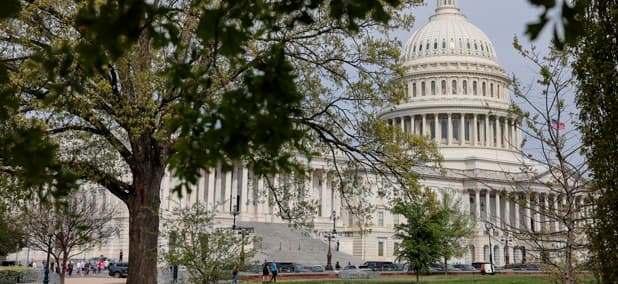
Senate committee approves quantum reauthorization bill with 7 amendments
The Senate Commerce Committee advanced the reauthorization of the National Quantum Initiative Act on Tuesday, including a slew of amendments to the bill addressing the acceleration of near-term technological applications, post-quantum cryptography guidance and more. Sen. Marsha Blackburn, R-Tenn., noted during the markup that her three bills — the Advancing Quantum Manufacturing Act, the Quantum Sandbox for Near-Term Application Act, and the National Quantum Cybersecurity Migration Strategy Act — all made it into the NQIA Reauthorization as amendments. The first aims to improve coordination between the Department of Energy and the National Science Foundation, as well as establish a Manufacturing USA institute for quantum manufacturing that can determine the capabilities necessary to support quantum development and offer financial assistance. The second measure looks to “establish a public-private partnership for near-term quantum application development and acceleration.” The final proposal seeks to help prepare the federal government for the cybersecurity threats posed by advancing quantum capabilities, requiring the White House Office of Science and Technology Policy to coordinate development of a national strategy. “The National Quantum Initiative has really been a cornerstone of the work that is being done at some of the national labs like Oak Ridge National Lab in Tennessee … as we look at how we revolutionize national security, how we look at innovations in medicine and of course every sector of our nation’s economy,” Blackburn said during Tuesday's markup. Four other amendments were also passed and included in the bill text. Sen. Tammy Duckworth, D-Ill., added two amendments: One looks to provide support for quantum testbeds that can hasten quantum information science and technology prototypes and scale-up for industry partners, and the other seeks to clarify the National Science Foundation’s program to improve and expand access to quantum research resources. Sen. John Hickenlooper, D-Colo., also introduced an amendment to the NQIA Reauthorization that looks to establish a channel of consultation between Multidisciplinary Centers for Quantum Research and Education –– entities created by the first iteration of the NQIA –– and regional technology and innovation hubs created by the Stevenson-Wydler Technology Innovation Act of 1980. Under Hickenlooper's proposal, the National Science Foundation and the Secretary of Commerce would be tasked with coordinating research and development activities between the centers and hubs, with a focus on quantum information sciences, engineering and technology. The final amendment from Sen. Andy Kim, D-N.J., also seeks to address the research domains of the Multidisciplinary Centers for Quantum Research and Education. The amendment would expand research initiatives not just in QIST disciplines, but also in adjacent fields like materials science, fabrication science and physics. Kim’s amendment would also direct the Multidisciplinary Centers to leverage existing infrastructure, namely data centers and communication networks, to support demonstrations and applications of quantum technologies and to work with industry partners. The National Quantum Initiative Act was first passed in 2018, and expired in the fall of 2023. Lawmakers reintroduced the reauthorization of the bill in January 2026. Industry leaders were quick to throw their support behind the NQIA Reauthorization following Tuesday’s markup. “We applaud the Senate Commerce Committee leadership for taking a step toward reauthorizing and expanding the National Quantum Initiative,” D-Wave SVP of Global Public Affairs and Government Relations Allison Schwartz said in a statement. “We are encouraged that the Committee included commercialization language and near-term quantum application development. These sandbox style programs are critical to demystifying the capabilities of quantum computing and determining how to address some of the nation’s most pressing optimization challenges.” Sen. Todd Young, R-Ind., who led the reintroduction of the bill along with Sen. Maria Cantwell, D-Wash., voiced support for the NQIA Reauthorization's progression. “Quantum technologies promise to dramatically transform every industry and sector of our economy and revolutionize our technological capabilities,” Young said in a statement. “The National Quantum Initiative strengthens the research and development investments and builds a strong workforce which plays a critical role in safeguarding America’s economic and national security. This legislation, which reauthorizes the NQI, is critical to ensuring American leadership in quantum technology.” Following the full committee vote, the bill will now advance to the Senate floor.
Senate committee approves quantum reauthorization bill with 7 amendments
The Senate Commerce Committee advanced the reauthorization of the National Quantum Initiative Act on Tuesday, including a slew of amendments to the bill addressing the acceleration of near-term technological applications, post-quantum cryptography guidance and more. Sen. Marsha Blackburn, R-Tenn., noted during the markup that her three bills — the Advancing Quantum Manufacturing Act, the Quantum Sandbox for Near-Term Application Act, and the National Quantum Cybersecurity Migration Strategy Act — all made it into the NQIA Reauthorization as amendments. The first aims to improve coordination between the Department of Energy and the National Science Foundation, as well as establish a Manufacturing USA institute for quantum manufacturing that can determine the capabilities necessary to support quantum development and offer financial assistance. The second measure looks to “establish a public-private partnership for near-term quantum application development and acceleration.” The final proposal seeks to help prepare the federal government for the cybersecurity threats posed by advancing quantum capabilities, requiring the White House Office of Science and Technology Policy to coordinate development of a national strategy. “The National Quantum Initiative has really been a cornerstone of the work that is being done at some of the national labs like Oak Ridge National Lab in Tennessee … as we look at how we revolutionize national security, how we look at innovations in medicine and of course every sector of our nation’s economy,” Blackburn said during Tuesday's markup. Four other amendments were also passed and included in the bill text. Sen. Tammy Duckworth, D-Ill., added two amendments: One looks to provide support for quantum testbeds that can hasten quantum information science and technology prototypes and scale-up for industry partners, and the other seeks to clarify the National Science Foundation’s program to improve and expand access to quantum research resources. Sen. John Hickenlooper, D-Colo., also introduced an amendment to the NQIA Reauthorization that looks to establish a channel of consultation between Multidisciplinary Centers for Quantum Research and Education –– entities created by the first iteration of the NQIA –– and regional technology and innovation hubs created by the Stevenson-Wydler Technology Innovation Act of 1980. Under Hickenlooper's proposal, the National Science Foundation and the Secretary of Commerce would be tasked with coordinating research and development activities between the centers and hubs, with a focus on quantum information sciences, engineering and technology. The final amendment from Sen. Andy Kim, D-N.J., also seeks to address the research domains of the Multidisciplinary Centers for Quantum Research and Education. The amendment would expand research initiatives not just in QIST disciplines, but also in adjacent fields like materials science, fabrication science and physics. Kim’s amendment would also direct the Multidisciplinary Centers to leverage existing infrastructure, namely data centers and communication networks, to support demonstrations and applications of quantum technologies and to work with industry partners. The National Quantum Initiative Act was first passed in 2018, and expired in the fall of 2023. Lawmakers reintroduced the reauthorization of the bill in January 2026. Industry leaders were quick to throw their support behind the NQIA Reauthorization following Tuesday’s markup. “We applaud the Senate Commerce Committee leadership for taking a step toward reauthorizing and expanding the National Quantum Initiative,” D-Wave SVP of Global Public Affairs and Government Relations Allison Schwartz said in a statement. “We are encouraged that the Committee included commercialization language and near-term quantum application development. These sandbox style programs are critical to demystifying the capabilities of quantum computing and determining how to address some of the nation’s most pressing optimization challenges.” Sen. Todd Young, R-Ind., who led the reintroduction of the bill along with Sen. Maria Cantwell, D-Wash., voiced support for the NQIA Reauthorization's progression. “Quantum technologies promise to dramatically transform every industry and sector of our economy and revolutionize our technological capabilities,” Young said in a statement. “The National Quantum Initiative strengthens the research and development investments and builds a strong workforce which plays a critical role in safeguarding America’s economic and national security. This legislation, which reauthorizes the NQI, is critical to ensuring American leadership in quantum technology.” Following the full committee vote, the bill will now advance to the Senate floor.
Senate committee approves quantum reauthorization bill with 7 amendments
The Senate Commerce Committee advanced the reauthorization of the National Quantum Initiative Act on Tuesday, including a slew of amendments to the bill addressing the acceleration of near-term technological applications, post-quantum cryptography guidance and more. Sen. Marsha Blackburn, R-Tenn., noted during the markup that her three bills — the Advancing Quantum Manufacturing Act, the Quantum Sandbox for Near-Term Application Act, and the National Quantum Cybersecurity Migration Strategy Act — all made it into the NQIA Reauthorization as amendments. The first aims to improve coordination between the Department of Energy and the National Science Foundation, as well as establish a Manufacturing USA institute for quantum manufacturing that can determine the capabilities necessary to support quantum development and offer financial assistance. The second measure looks to “establish a public-private partnership for near-term quantum application development and acceleration.” The final proposal seeks to help prepare the federal government for the cybersecurity threats posed by advancing quantum capabilities, requiring the White House Office of Science and Technology Policy to coordinate development of a national strategy. “The National Quantum Initiative has really been a cornerstone of the work that is being done at some of the national labs like Oak Ridge National Lab in Tennessee … as we look at how we revolutionize national security, how we look at innovations in medicine and of course every sector of our nation’s economy,” Blackburn said during Tuesday's markup. Four other amendments were also passed and included in the bill text. Sen. Tammy Duckworth, D-Ill., added two amendments: One looks to provide support for quantum testbeds that can hasten quantum information science and technology prototypes and scale-up for industry partners, and the other seeks to clarify the National Science Foundation’s program to improve and expand access to quantum research resources. Sen. John Hickenlooper, D-Colo., also introduced an amendment to the NQIA Reauthorization that looks to establish a channel of consultation between Multidisciplinary Centers for Quantum Research and Education –– entities created by the first iteration of the NQIA –– and regional technology and innovation hubs created by the Stevenson-Wydler Technology Innovation Act of 1980. Under Hickenlooper's proposal, the National Science Foundation and the Secretary of Commerce would be tasked with coordinating research and development activities between the centers and hubs, with a focus on quantum information sciences, engineering and technology. The final amendment from Sen. Andy Kim, D-N.J., also seeks to address the research domains of the Multidisciplinary Centers for Quantum Research and Education. The amendment would expand research initiatives not just in QIST disciplines, but also in adjacent fields like materials science, fabrication science and physics. Kim’s amendment would also direct the Multidisciplinary Centers to leverage existing infrastructure, namely data centers and communication networks, to support demonstrations and applications of quantum technologies and to work with industry partners. The National Quantum Initiative Act was first passed in 2018, and expired in the fall of 2023. Lawmakers reintroduced the reauthorization of the bill in January 2026. Industry leaders were quick to throw their support behind the NQIA Reauthorization following Tuesday’s markup. “We applaud the Senate Commerce Committee leadership for taking a step toward reauthorizing and expanding the National Quantum Initiative,” D-Wave SVP of Global Public Affairs and Government Relations Allison Schwartz said in a statement. “We are encouraged that the Committee included commercialization language and near-term quantum application development. These sandbox style programs are critical to demystifying the capabilities of quantum computing and determining how to address some of the nation’s most pressing optimization challenges.” Sen. Todd Young, R-Ind., who led the reintroduction of the bill along with Sen. Maria Cantwell, D-Wash., voiced support for the NQIA Reauthorization's progression. “Quantum technologies promise to dramatically transform every industry and sector of our economy and revolutionize our technological capabilities,” Young said in a statement. “The National Quantum Initiative strengthens the research and development investments and builds a strong workforce which plays a critical role in safeguarding America’s economic and national security. This legislation, which reauthorizes the NQI, is critical to ensuring American leadership in quantum technology.” Following the full committee vote, the bill will now advance to the Senate floor.