8 stories credited to NAM
Latest story Apr 22, 2026 · on ChamberLight since Apr 2026
A story can appear as several articles (copies of the same piece), so counts of stories and of articles differ.
Scores for NAM
Writing quality not enough rated stories yet: 7 of 10. How it is measured
Scores last checked Sep 25, 2026.
Stories ChamberLight collected, by month
Stories credited to NAM, by publication date. ChamberLight collects articles that mention the officials it tracks, so this shows its own coverage of this source, not how much the source publishes.
- Stories from NAM
- Shaded: ChamberLight collected no stories, or almost none, from any outlet (a gap in its collection, not in the outlet’s publishing)
Show as a table
| Month | Stories | All outlets |
|---|---|---|
| March 2026 | 1 | 365 |
| April 2026 | 7 | 4,538 |
| May 2026 | 0 | none collected |
| June 2026 | 0 | none collected |
| July 2026 | 0 | none collected |
| August 2026 | 0 | 1 (collection gap) |
| September 2026 | 0 | 1,320 |
Top topics
Share of this source’s stories tagged with each topic. A story can carry several topics, so the shares do not add up to 100%.
- Economy8
100% of 8 stories · 26% across all outlets
- Labor/Unions5
63% of 8 stories · 4% across all outlets
- Taxes5
63% of 8 stories · 5% across all outlets
- Infrastructure3
38% of 8 stories · 8% across all outlets
- Budget/Spending1
13% of 8 stories · 31% across all outlets
- Immigration1
13% of 8 stories · 13% across all outlets
- Technology/Privacy1
13% of 8 stories · 10% across all outlets
The thin mark on each bar is the topic’s share across all outlets.
Who they cover
Party of the officials these stories are mainly about, across all 10 officials named. A story counts once for each official it is mainly about, so the split is over 13 story–official pairs, from 8 stories.
- Republican92% · 12 pairs
- Party not recorded8% · 1 pair
Most covered
Stories mainly about each official, and their share of the source’s 8 stories.
Article tone
ChamberLight’s article analysis assigns each story a tone toward the official it covers. It describes the coverage of that official, not NAM’s stance, and reader votes do not change it. 8 stories.
- Good Look
- 5 (63%)
- Mixed
- 3 (38%)
- Informational
- 0 (0%)
- Bad Look
- 0 (0%)
Challenges to these scores
No one has challenged a score on this page yet. Anyone can; editors publish every outcome here.
Articles served from nam.org
13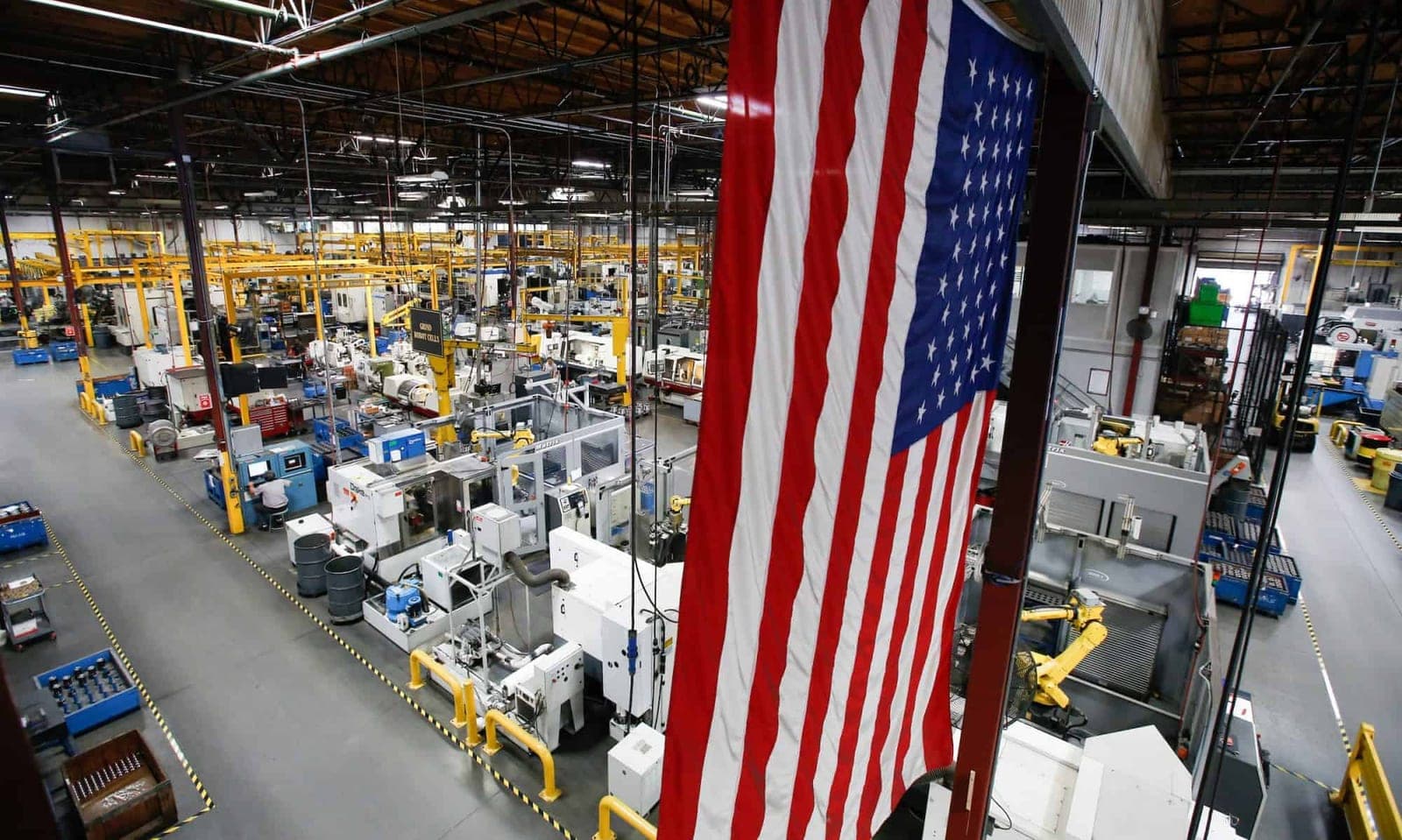
Manufacturers Back Long-Awaited Federal Action on Data Privacy
House Energy and Commerce Bill Would Protect Consumers and Clarify Rules so Manufacturers Can Continue to Innovate, Compete Washington, D.C. – Manufacturers today welcomed the introduction of the SECURE Data Act by House Energy and Commerce Committee Chairman Brett Guthrie (R-KY) and Vice Chair John Joyce (R-PA). National Association of Manufacturers Executive Vice President Erin Streeter issued the following statement endorsing the SECURE Data Act: “Processing personal data has become integral to modern manufacturing operations and modern manufactured products. Manufacturers are encouraged that this first-of-its-kind federal law would establish a uniform national framework that is both forward-looking and adaptable to new technology, while avoiding the regulatory morass of a 50-state patchwork. Manufacturers believe granting consumers much-needed privacy protections and creating clear guidelines will keep the industry innovating and competing in the age of AI. We thank Chairman Guthrie and Vice Chair Joyce for championing this legislation.” -NAM- The National Association of Manufacturers is the largest manufacturing association in the United States, representing small and large manufacturers in every industrial sector and in all 50 states. Manufacturing employs nearly 13 million men and women, contributes $2.95 trillion to the U.S. economy annually and accounts for nearly 52% of private-sector research and development. The NAM is the powerful voice of the manufacturing community and the leading advocate for a policy agenda that helps manufacturers compete in the global economy and create jobs across the United States. For more information about the NAM or to follow us on Twitter and Facebook, please visit www.nam.org. 733 10th St. NW, Suite 700 • Washington, DC 20001 • (202) 637-3000
Manufacturers Back Long-Awaited Federal Action on Data Privacy
House Energy and Commerce Bill Would Protect Consumers and Clarify Rules so Manufacturers Can Continue to Innovate, Compete Washington, D.C. – Manufacturers today welcomed the introduction of the SECURE Data Act by House Energy and Commerce Committee Chairman Brett Guthrie (R-KY) and Vice Chair John Joyce (R-PA). National Association of Manufacturers Executive Vice President Erin Streeter issued the following statement endorsing the SECURE Data Act: “Processing personal data has become integral to modern manufacturing operations and modern manufactured products. Manufacturers are encouraged that this first-of-its-kind federal law would establish a uniform national framework that is both forward-looking and adaptable to new technology, while avoiding the regulatory morass of a 50-state patchwork. Manufacturers believe granting consumers much-needed privacy protections and creating clear guidelines will keep the industry innovating and competing in the age of AI. We thank Chairman Guthrie and Vice Chair Joyce for championing this legislation.” -NAM- The National Association of Manufacturers is the largest manufacturing association in the United States, representing small and large manufacturers in every industrial sector and in all 50 states. Manufacturing employs nearly 13 million men and women, contributes $2.95 trillion to the U.S. economy annually and accounts for nearly 52% of private-sector research and development. The NAM is the powerful voice of the manufacturing community and the leading advocate for a policy agenda that helps manufacturers compete in the global economy and create jobs across the United States. For more information about the NAM or to follow us on Twitter and Facebook, please visit www.nam.org. 733 10th St. NW, Suite 700 • Washington, DC 20001 • (202) 637-3000

Ambassador Greer, Policymakers Visit First Solar
Search the National Association of Manufacturers Get Involved U.S. Trade Representative Jamieson Greer and several members of Congress visited the Ohio facilities of First Solar and Whirlpool last Friday during a tour of manufacturing plants. Manufacturers’ strength: Following the visit, Greer joined CNBC’s “Squawk Box,” from First Solar’s R&D and manufacturing campus, spotlighting the manufacturers he toured while emphasizing the importance of building up the sector in the U.S. “We need people making stuff,” he said. “We need making it here… [W]hen you lose manufacturing, you lose a lot of the economic security you have from having supply chains right here in America.” “So we do want these jobs, we want them in these communities. A factory like [First Solar’s] underpins not only the local economy but the families of the people who work here. So obviously we have to have these kinds of jobs. “[For] most OECD countries, manufacturing is about 16% of their GDP. In America, [it] is 10%, and that’s too low.” Rep. Latta says: Rep. Bob Latta (R-OH), who attended the tour, said, “When companies like First Solar and Whirlpool invest in expanding American manufacturing, they create good-paying jobs, strengthen our supply chain resilience and help keep our nation competitive in Ohio and across the country.” News coverage: POLITICO and its Morning Trade newsletter (both subscription) covered the visits. View More The National Association of Manufacturers (NAM) represents 14,000 member companies from across the country, in every industrial sector. We are the nation’s most effective resource and influential advocate for manufacturers. © 2026 National Association of Manufacturers
Ambassador Greer, Policymakers Visit First Solar
Search the National Association of Manufacturers Get Involved U.S. Trade Representative Jamieson Greer and several members of Congress visited the Ohio facilities of First Solar and Whirlpool last Friday during a tour of manufacturing plants. Manufacturers’ strength: Following the visit, Greer joined CNBC’s “Squawk Box,” from First Solar’s R&D and manufacturing campus, spotlighting the manufacturers he toured while emphasizing the importance of building up the sector in the U.S. “We need people making stuff,” he said. “We need making it here… [W]hen you lose manufacturing, you lose a lot of the economic security you have from having supply chains right here in America.” “So we do want these jobs, we want them in these communities. A factory like [First Solar’s] underpins not only the local economy but the families of the people who work here. So obviously we have to have these kinds of jobs. “[For] most OECD countries, manufacturing is about 16% of their GDP. In America, [it] is 10%, and that’s too low.” Rep. Latta says: Rep. Bob Latta (R-OH), who attended the tour, said, “When companies like First Solar and Whirlpool invest in expanding American manufacturing, they create good-paying jobs, strengthen our supply chain resilience and help keep our nation competitive in Ohio and across the country.” News coverage: POLITICO and its Morning Trade newsletter (both subscription) covered the visits. View More The National Association of Manufacturers (NAM) represents 14,000 member companies from across the country, in every industrial sector. We are the nation’s most effective resource and influential advocate for manufacturers. © 2026 National Association of Manufacturers

Sen. Lankford Champions Permanent Full Expensing
Skip to content Search the National Association of Manufacturers Get Involved The NAM has been talking to manufacturers’ tax champions in Congress, who understand the importance of a fair, dependable tax code that promotes American competitiveness. This week, the NAM interviewed Sen. James Lankford (R-OK), a member of the Senate Finance Committee, who championed the bill in Congress to restore 100% bonus depreciation, which was included in H.R. 1, the landmark tax reform that made many key measures permanent. Full expensing: When asked about the importance of permanent full expensing, Sen. Lankford replied, “Permanency is the difference between short-term tax relief and long-term economic certainty.” “Manufacturers are not making one-year decisions. They are making 10-, 20-, even 30-year capital allocation decisions on facilities, heavy equipment and production lines,” he added. “By making 100% expensing permanent, we are giving manufacturers confidence that the tax treatment will be consistent across the full lifecycle of an investment.” “That is why I have pushed for permanency through efforts like the ALIGN Act, which was included in the Working Families Tax Cuts Act, because pro-growth policy only works if businesses can rely on it over the long term,” he explained. Impact on manufacturers: “What we are hearing, both in Oklahoma and across the country, is that the return to full expensing is beginning to unlock projects that were sitting on the sidelines,” Sen. Lankford said. “During the phase-down [which was eliminated by H.R. 1], when expensing dropped from 100% to 40%, many of those investments simply didn’t pencil out.” Oklahoma “is heavily concentrated in capital-intensive sectors like oil and gas, manufacturing and aerospace … [which] are exactly the types of industries where cost recovery drives investment decisions.” Now that full expensing has been restored, these companies are “moving forward on pipeline investments, placing new equipment orders and advancing plant and infrastructure upgrades. The key shift is that companies are no longer trying to time the tax code. They are making decisions based on operational need and long-term growth.” Section 179: The NAM also asked Sen. Lankford about the increase of the Section 179 expensing cap from $1 million to $2.5 million and the expansion of bonus depreciation to manufacturing facilities. Sen. Lankford praised those provisions as well: “For smaller and mid-sized manufacturers, Section 179 is often the tool they use the most. … Increasing the cap means more of those everyday investments can be written off immediately, which helps with cash flow and makes it easier to keep reinvesting.” “The addition of expensing for manufacturing facilities is a big step forward. For a lot of companies, the building is one of the most expensive parts of the project, not just the equipment inside it,” he added. The last word: Sen. Lankford emphasized that NAM members should get the word out about the favorable changes to the tax code: “It’s a simple but important message: if you’ve been holding off on a new piece of equipment, talk to your accountant now, because you may be able to write off the full cost this year,” he said. “Pro-growth policy only delivers if manufacturers know about it and use it, and that’s where NAM can make a real difference.” Further reading: You can read the full Q&A here. View More The National Association of Manufacturers (NAM) represents 14,000 member companies from across the country, in every industrial sector. We are the nation’s most effective resource and influential advocate for manufacturers. © 2026 National Association of Manufacturers
Manufacturers Celebrate Pro-Growth Policies on Tax Day
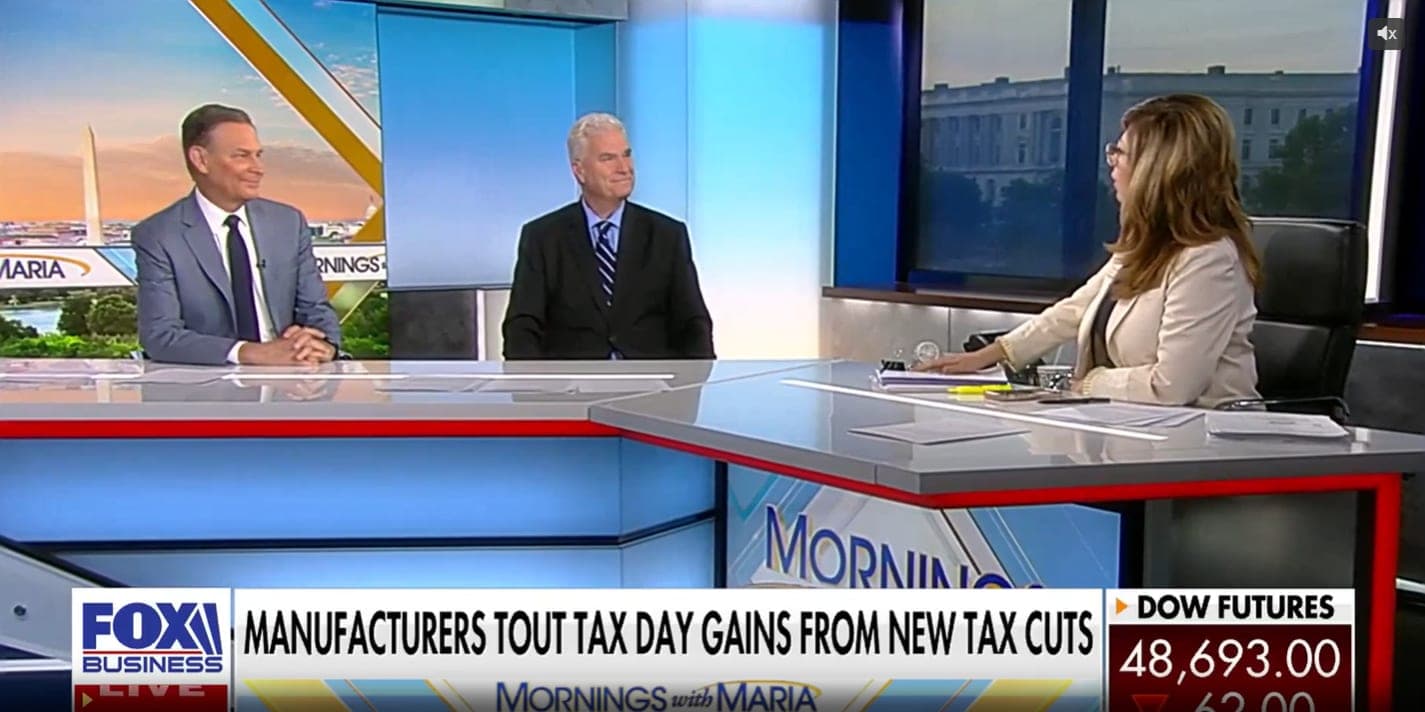
Skip to content Search the National Association of Manufacturers Get Involved On the first Tax Day since H.R. 1 passed, manufacturers are praising the pro-manufacturing policies that have supercharged their growth and provided them with the certainty they need to make big plans for the future. Timmons says: “This Tax Day, manufacturers now have a permanent, pro-growth tax code that allows our industry to compete and win,” said NAM President and CEO Jay Timmons. “Thanks to President Trump, leaders in his Cabinet and in Congress, the 2017 provisions of the Tax Cuts and Jobs Act were not just made permanent—they were made even stronger, which saved 6 million jobs.” “The tax and investment incentives in H.R. 1 amount to the most significant economic transformation in the history of our industry, serving as rocket fuel for manufacturers.” Optimistic outlook: “Manufacturers’ optimism is on the rise, and they are ready to keep building, investing and leading—but that requires certainty across the board to take full advantage of H.R. 1’s transformative provisions,” Timmons continued. “President Trump and Congress went above and beyond to deliver tax certainty for manufacturers, and we look forward to continuing to work with them to build on this progress—ensuring certainty and lowering the cost of doing business—so that manufacturers can deliver the greatest manufacturing era in American history.” Timmons and Emmer: Timmons and Rep. Tom Emmer (R-MN) teamed up for an op-ed in the Washington Examiner commemorating last year’s landmark tax law, noting, “Just one year ago, manufacturing leaders from across the country gathered on Capitol Hill alongside Treasury Secretary Scott Bessent and congressional leaders. Their message was clear: If the United States wants to lead, we must have a tax code that allows manufacturers to compete and win.” “When the right policies to reduce the cost of doing business in our country are in place, manufacturers can invest, hire and innovate at a scale that will define the next American century. The progress we are seeing today is proof of what works. This Tax Day, we should recommit to policies that unlock investment and keep America the best place in the world to build, create jobs and compete,” they concluded. On TV: Timmons and Rep. Emmer joined “Mornings with Maria” on Fox Business Network this morning to talk about H.R. 1’s impact on manufacturing and manufacturers’ outlook. Timmons also went on Yahoo Finance’s “Market Domination” yesterday to spotlight manufacturers’ policy priorities including the benefits of competitive tax policy. White House appreciation: A White House bulletin spotlighted three manufacturers’ stories about the benefits of tax reform, from Winthrop Tackle, Sukup Manufacturing Company and Allied PhotoChemical. White House Press Secretary Karoline Leavitt highlighted the Timmons and Rep. Emmer op-ed on social media. Success stories: Check out the NAM’s tax policy page, featuring dozens of stories from manufacturers about the benefits that pro-manufacturing policies have brought to their companies. The last word: “This Tax Day, the message is clear: when Washington gets the tax code right, manufacturers deliver,” Timmons said. View More The National Association of Manufacturers (NAM) represents 14,000 member companies from across the country, in every industrial sector. We are the nation’s most effective resource and influential advocate for manufacturers. © 2026 National Association of Manufacturers
Manufacturers Celebrate Pro-Growth Policies on Tax Day
Skip to content Search the National Association of Manufacturers Get Involved On the first Tax Day since H.R. 1 passed, manufacturers are praising the pro-manufacturing policies that have supercharged their growth and provided them with the certainty they need to make big plans for the future. Timmons says: “This Tax Day, manufacturers now have a permanent, pro-growth tax code that allows our industry to compete and win,” said NAM President and CEO Jay Timmons. “Thanks to President Trump, leaders in his Cabinet and in Congress, the 2017 provisions of the Tax Cuts and Jobs Act were not just made permanent—they were made even stronger, which saved 6 million jobs.” “The tax and investment incentives in H.R. 1 amount to the most significant economic transformation in the history of our industry, serving as rocket fuel for manufacturers.” Optimistic outlook: “Manufacturers’ optimism is on the rise, and they are ready to keep building, investing and leading—but that requires certainty across the board to take full advantage of H.R. 1’s transformative provisions,” Timmons continued. “President Trump and Congress went above and beyond to deliver tax certainty for manufacturers, and we look forward to continuing to work with them to build on this progress—ensuring certainty and lowering the cost of doing business—so that manufacturers can deliver the greatest manufacturing era in American history.” Timmons and Emmer: Timmons and Rep. Tom Emmer (R-MN) teamed up for an op-ed in the Washington Examiner commemorating last year’s landmark tax law, noting, “Just one year ago, manufacturing leaders from across the country gathered on Capitol Hill alongside Treasury Secretary Scott Bessent and congressional leaders. Their message was clear: If the United States wants to lead, we must have a tax code that allows manufacturers to compete and win.” “When the right policies to reduce the cost of doing business in our country are in place, manufacturers can invest, hire and innovate at a scale that will define the next American century. The progress we are seeing today is proof of what works. This Tax Day, we should recommit to policies that unlock investment and keep America the best place in the world to build, create jobs and compete,” they concluded. On TV: Timmons and Rep. Emmer joined “Mornings with Maria” on Fox Business Network this morning to talk about H.R. 1’s impact on manufacturing and manufacturers’ outlook. Timmons also went on Yahoo Finance’s “Market Domination” yesterday to spotlight manufacturers’ policy priorities including the benefits of competitive tax policy. White House appreciation: A White House bulletin spotlighted three manufacturers’ stories about the benefits of tax reform, from Winthrop Tackle, Sukup Manufacturing Company and Allied PhotoChemical. White House Press Secretary Karoline Leavitt highlighted the Timmons and Rep. Emmer op-ed on social media. Success stories: Check out the NAM’s tax policy page, featuring dozens of stories from manufacturers about the benefits that pro-manufacturing policies have brought to their companies. The last word: “This Tax Day, the message is clear: when Washington gets the tax code right, manufacturers deliver,” Timmons said. View More The National Association of Manufacturers (NAM) represents 14,000 member companies from across the country, in every industrial sector. We are the nation’s most effective resource and influential advocate for manufacturers. © 2026 National Association of Manufacturers
Manufacturers Celebrate Pro-Growth Policies on Tax Day
Skip to content Search the National Association of Manufacturers Get Involved On the first Tax Day since H.R. 1 passed, manufacturers are praising the pro-manufacturing policies that have supercharged their growth and provided them with the certainty they need to make big plans for the future. Timmons says: “This Tax Day, manufacturers now have a permanent, pro-growth tax code that allows our industry to compete and win,” said NAM President and CEO Jay Timmons. “Thanks to President Trump, leaders in his Cabinet and in Congress, the 2017 provisions of the Tax Cuts and Jobs Act were not just made permanent—they were made even stronger, which saved 6 million jobs.” “The tax and investment incentives in H.R. 1 amount to the most significant economic transformation in the history of our industry, serving as rocket fuel for manufacturers.” Optimistic outlook: “Manufacturers’ optimism is on the rise, and they are ready to keep building, investing and leading—but that requires certainty across the board to take full advantage of H.R. 1’s transformative provisions,” Timmons continued. “President Trump and Congress went above and beyond to deliver tax certainty for manufacturers, and we look forward to continuing to work with them to build on this progress—ensuring certainty and lowering the cost of doing business—so that manufacturers can deliver the greatest manufacturing era in American history.” Timmons and Emmer: Timmons and Rep. Tom Emmer (R-MN) teamed up for an op-ed in the Washington Examiner commemorating last year’s landmark tax law, noting, “Just one year ago, manufacturing leaders from across the country gathered on Capitol Hill alongside Treasury Secretary Scott Bessent and congressional leaders. Their message was clear: If the United States wants to lead, we must have a tax code that allows manufacturers to compete and win.” “When the right policies to reduce the cost of doing business in our country are in place, manufacturers can invest, hire and innovate at a scale that will define the next American century. The progress we are seeing today is proof of what works. This Tax Day, we should recommit to policies that unlock investment and keep America the best place in the world to build, create jobs and compete,” they concluded. On TV: Timmons and Rep. Emmer joined “Mornings with Maria” on Fox Business Network this morning to talk about H.R. 1’s impact on manufacturing and manufacturers’ outlook. Timmons also went on Yahoo Finance’s “Market Domination” yesterday to spotlight manufacturers’ policy priorities including the benefits of competitive tax policy. White House appreciation: A White House bulletin spotlighted three manufacturers’ stories about the benefits of tax reform, from Winthrop Tackle, Sukup Manufacturing Company and Allied PhotoChemical. White House Press Secretary Karoline Leavitt highlighted the Timmons and Rep. Emmer op-ed on social media. Success stories: Check out the NAM’s tax policy page, featuring dozens of stories from manufacturers about the benefits that pro-manufacturing policies have brought to their companies. The last word: “This Tax Day, the message is clear: when Washington gets the tax code right, manufacturers deliver,” Timmons said. View More The National Association of Manufacturers (NAM) represents 14,000 member companies from across the country, in every industrial sector. We are the nation’s most effective resource and influential advocate for manufacturers. © 2026 National Association of Manufacturers

Q&A with Sen. Lankford on Tax Policy
NAM: Sen. Lankford, H.R. 1 permanently restored 100% bonus depreciation for qualifying property acquired after Jan. 19, 2025, reversing a phasedown that had reduced the deduction to 40% in 2025 and would have eliminated it by 2027. As a member of the Senate Finance Committee, what does permanent full expensing mean for manufacturers making long-lived capital investment decisions, and how does permanency change their planning horizon relative to a temporary extension? Sen. Lankford: Permanency is the difference between short-term tax relief and long-term economic certainty. Manufacturers are not making one-year decisions. They are making 10-, 20-, even 30-year capital allocation decisions on facilities, heavy equipment and production lines. When full expensing is temporary or phasing down, it distorts those decisions and often forces companies to either accelerate investments inefficiently or delay them altogether. By making 100% expensing permanent, we are giving manufacturers confidence that the tax treatment will be consistent across the full lifecycle of an investment. That stability lowers the cost of capital, improves after-tax returns and allows companies to plan rationally instead of reacting to arbitrary deadlines. That is why I have pushed for permanency through efforts like the ALIGN Act, which was included in the Working Families Tax Cuts Act, because pro-growth policy only works if businesses can rely on it over the long term. NAM: During the phasedown years, when bonus depreciation fell from 100% to 80% to 60% to 40%, manufacturers reported delaying or canceling major capital purchases because the economics no longer worked as favorably. Now that 100% expensing is restored permanently, what evidence are you seeing—in Oklahoma or nationally—that manufacturers are moving forward on investments that were on hold? Sen. Lankford: What we are hearing, both in Oklahoma and across the country, is that the return to full expensing is beginning to unlock projects that were sitting on the sidelines. During the phasedown, when expensing dropped from 100% to 40%, many of those investments simply didn’t pencil out. That lines up with what we know about Oklahoma’s economy. The state is heavily concentrated in capital-intensive sectors like oil and gas, manufacturing and aerospace. Oil and gas alone accounts for a significant share of state GDP, and when you include the broader supply chain, it touches more than a quarter of the economy. These are exactly the types of industries where cost recovery drives investment decisions. In practical terms, that showed up in delayed energy projects, deferred equipment purchases and slower expansion of processing and manufacturing facilities. In manufacturing and aerospace, companies stretched the life of existing equipment and postponed automation upgrades. Now, with full expensing permanently restored, those same businesses are revisiting projects. That includes moving forward on pipeline investments, placing new equipment orders and advancing plant and infrastructure upgrades. The key shift is that companies are no longer trying to time the tax code. They are making decisions based on operational need and long-term growth. NAM: H.R. 1 also raised the Section 179 expensing cap from $1 million to $2.5 million, providing a complementary benefit particularly for smaller manufacturers. The legislation also expanded bonus depreciation to manufacturing facilities. How do bonus depreciation, the enhanced Section 179 and the new deduction for factories work together to drive capital investment across manufacturers of all sizes, and what are you hearing from businesses about how these provisions are impacting them? Sen. Lankford: For smaller and mid-sized manufacturers, Section 179 is often the tool they use the most. These are businesses that are upgrading equipment, adding a new machine or expanding part of their shop floor. They are not doing massive projects all at once. They need something simple, predictable and easy to use. Increasing the cap means more of those everyday investments can be written off immediately, which helps with cash flow and makes it easier to keep reinvesting. For larger manufacturers, the scale is different. They are looking at bigger equipment purchases, full production lines and major upgrades across facilities. Bonus depreciation matters here because it allows them to expense those larger investments upfront. When you are talking about large equipment investments, that timing difference can influence whether a project moves forward now or gets pushed out. The addition of expensing for manufacturing facilities is a big step forward. For a lot of companies, the building is one of the most expensive parts of the project, not just the equipment inside it. Whether it is a new plant or expanding an existing one, being able to expense both the facility and the equipment reflects the full cost of what it takes to grow. When you put all of that together, it creates a system that works for manufacturers at different sizes and at different stages. It supports the smaller, steady investments and the larger, long-term projects. It does not solve every challenge, but it removes a major barrier and lets companies make decisions based on what they actually need to grow. NAM: Thank you, senator. What can NAM members do to help manufacturers understand and act on the restored bonus depreciation and enhanced Section 179 provisions? Sen. Lankford: The most important thing NAM members can do is make sure permanent expensing actually reaches the shop floor. A lot of small manufacturers may not have heard about what changed, and even if they have, they may not immediately connect a tax provision to a real equipment decision. It’s a simple but important message: if you’ve been holding off on a new piece of equipment, talk to your accountant now, because you may be able to write off the full cost this year. Pro-growth policy only delivers if manufacturers know about it and use it, and that’s where NAM can make a real difference. That’s what will drive long-term investment, create jobs and grow local economies.
On Tax Day, the Receipts Are Filled with Manufacturing Wins
Washington, D.C. – On the first Tax Day since passage of H.R. 1, National Association of Manufacturers President and CEO Jay Timmons released the following statement: “This Tax Day, manufacturers now have a permanent, pro-growth tax code that allows our industry to compete and win. Thanks to President Trump, leaders in his Cabinet and in Congress, the 2017 provisions of the Tax Cuts and Jobs Act were not just made permanent—they were made even stronger, which saved 6 million jobs. The tax and investment incentives in H.R. 1 amount to the most significant economic transformation in the history of our industry, serving as rocket fuel for manufacturers. “Manufacturers’ optimism is on the rise, and they are ready to keep building, investing and leading—but that requires certainty across the board to take full advantage of H.R. 1’s transformative provisions. President Trump and Congress went above and beyond to deliver tax certainty for manufacturers, and we look forward to continuing to work with them to build on this progress—ensuring certainty and lowering the cost of doing business—so that manufacturers can deliver the greatest manufacturing era in American history. “This Tax Day, the message is clear: when Washington gets the tax code right, manufacturers deliver.” This week, Timmons published a joint op-ed in the Washington Examiner with House Majority Whip Tom Emmer (R-MN) on the pro-growth tax reforms of H.R. 1. Read it here. Manufacturing Wins Learn more about how tax reform is bolstering manufacturing in America: Background Prior to final passage of H.R. 1 in 2025, the NAM activated manufacturers in America—engaging shop floor workers, plant managers, executives and state and local partners nationwide—as part of the “Manufacturing Wins” campaign. With a coordinated public advocacy campaign, which included outreach to congressional offices both in district and in Washington, targeted social media drives, video testimonials and local media op-eds, the NAM made the case for this bill directly to members of Congress and the American people. These collective voices underscored how preserving and expanding key tax provisions translates into growing businesses, creating jobs and powering stronger communities. In January 2025, the NAM released a landmark EY study on the economic consequences of failing to renew the pro-manufacturing provisions of the Tax Cuts and Jobs Act. The NAM was joined by Senate Finance Committee Chairman Mike Crapo (R-ID), House Ways and Means Committee Chairman Jason Smith (R-MO) and House Majority Leader Steve Scalise (R-LA) for a Capitol Hill press conference highlighting the study. KEY FACTS: If Congress had failed to preserve tax reform in 2025, the U.S. would have risked: 5.9 million lost jobs; A $540 billion reduction in employee compensation; and A $1.1 trillion shortfall in U.S. GDP. -NAM- The National Association of Manufacturers is the largest manufacturing association in the United States, representing small and large manufacturers in every industrial sector and in all 50 states. Manufacturing employs nearly 13 million men and women, contributes $2.95 trillion to the U.S. economy annually and accounts for 53% of private-sector research and development. The NAM is the powerful voice of the manufacturing community and the leading advocate for a policy agenda that helps manufacturers compete in the global economy and create jobs across the United States. For more information about the NAM or to follow us on Twitter and Facebook, please visit www.nam.org.
On Tax Day, the Receipts Are Filled with Manufacturing Wins
Washington, D.C. – On the first Tax Day since passage of H.R. 1, National Association of Manufacturers President and CEO Jay Timmons released the following statement: “This Tax Day, manufacturers now have a permanent, pro-growth tax code that allows our industry to compete and win. Thanks to President Trump, leaders in his Cabinet and in Congress, the 2017 provisions of the Tax Cuts and Jobs Act were not just made permanent—they were made even stronger, which saved 6 million jobs. The tax and investment incentives in H.R. 1 amount to the most significant economic transformation in the history of our industry, serving as rocket fuel for manufacturers. “Manufacturers’ optimism is on the rise, and they are ready to keep building, investing and leading—but that requires certainty across the board to take full advantage of H.R. 1’s transformative provisions. President Trump and Congress went above and beyond to deliver tax certainty for manufacturers, and we look forward to continuing to work with them to build on this progress—ensuring certainty and lowering the cost of doing business—so that manufacturers can deliver the greatest manufacturing era in American history. “This Tax Day, the message is clear: when Washington gets the tax code right, manufacturers deliver.” This week, Timmons published a joint op-ed in the Washington Examiner with House Majority Whip Tom Emmer (R-MN) on the pro-growth tax reforms of H.R. 1. Read it here. Manufacturing Wins Learn more about how tax reform is bolstering manufacturing in America: Background Prior to final passage of H.R. 1 in 2025, the NAM activated manufacturers in America—engaging shop floor workers, plant managers, executives and state and local partners nationwide—as part of the “Manufacturing Wins” campaign. With a coordinated public advocacy campaign, which included outreach to congressional offices both in district and in Washington, targeted social media drives, video testimonials and local media op-eds, the NAM made the case for this bill directly to members of Congress and the American people. These collective voices underscored how preserving and expanding key tax provisions translates into growing businesses, creating jobs and powering stronger communities. In January 2025, the NAM released a landmark EY study on the economic consequences of failing to renew the pro-manufacturing provisions of the Tax Cuts and Jobs Act. The NAM was joined by Senate Finance Committee Chairman Mike Crapo (R-ID), House Ways and Means Committee Chairman Jason Smith (R-MO) and House Majority Leader Steve Scalise (R-LA) for a Capitol Hill press conference highlighting the study. KEY FACTS: If Congress had failed to preserve tax reform in 2025, the U.S. would have risked: 5.9 million lost jobs; A $540 billion reduction in employee compensation; and A $1.1 trillion shortfall in U.S. GDP. -NAM- The National Association of Manufacturers is the largest manufacturing association in the United States, representing small and large manufacturers in every industrial sector and in all 50 states. Manufacturing employs nearly 13 million men and women, contributes $2.95 trillion to the U.S. economy annually and accounts for 53% of private-sector research and development. The NAM is the powerful voice of the manufacturing community and the leading advocate for a policy agenda that helps manufacturers compete in the global economy and create jobs across the United States. For more information about the NAM or to follow us on Twitter and Facebook, please visit www.nam.org.
NAM Endorses Rep. Smucker’s Commonsense Immigration Reform
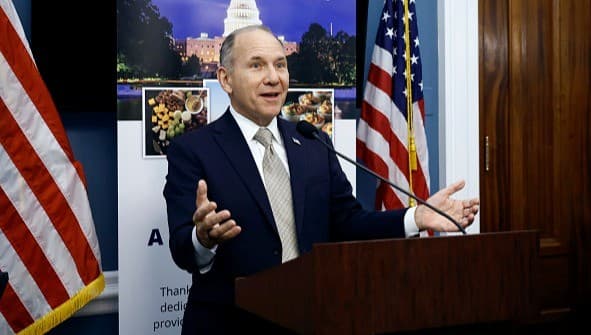
Search the National Association of Manufacturers Get Involved The Essential Workers for Economic Advancement Act, introduced by Rep. Lloyd Smucker (R-PA), “gets it right” regarding immigration reform and workforce development, the NAM said this week as it endorsed the legislation. What’s going on: “Our industry is evolving by the minute, and with over 400,000 open jobs on our shop floors, we need more people, not fewer—with more skills, not less—from across our great country and from beyond our borders,” NAM President and CEO Jay Timmons said. “That’s why we are proud to support Rep. Smucker’s legislation. By making sure our nation’s immigration system matches the needs and ambitions of America’s manufacturers, the Essential Workers for Economic Advancement Act … will drive even more skilled workers to our shop floors.” About the bill: The measure, which Rep. Smucker first introduced in March 2022 and reintroduced last year, would plug a hole in the immigration system: there are visas for high-skilled workers (e.g., the H-1B used by many engineers and scientists), and there are visas for seasonal labor (H-2A for agricultural workers and H-2B for nonagricultural). However, there are no visas for the bulk of the year-round manufacturing workers whose jobs do not require a bachelor’s degree but who are “essential” to production operations. “The act would address critical workforce shortages while safeguarding employment opportunities for American workers,” a statement from Rep. Smucker’s office reads. The response: “I thank the National Association of Manufacturers for supporting my commonsense, bipartisan and market-driven solution that addresses workforce shortages in key industries while ensuring American workers are prioritized,” Rep. Smucker said. Up next on immigration reform: Later this week, Reps. Maria Salazar (R-FL) and Veronica Escobar (D-TX) will host the NAM and manufacturing leaders from across the country for a roundtable on immigration reform. View More The National Association of Manufacturers (NAM) represents 14,000 member companies from across the country, in every industrial sector. We are the nation’s most effective resource and influential advocate for manufacturers. © 2026 National Association of Manufacturers
Novonesis to Host Sen. Pete Ricketts for Manufacturing Tour to Highlight Success of Pro-Growth Tax Policy
Washington, D.C. – Novonesis, in partnership with the National Association of Manufacturers, will host Sen. Pete Ricketts (R-NE) for a facility visit in Blair, Nebraska, on March 31 to highlight the impact of the pro-growth tax provisions of the Working Families Tax Cuts on America’s manufacturing economy. The 2025 law made key tax policies permanent, including 100% bonus depreciation and full expensing for qualifying capital investment—policies that Novonesis can leverage as it continues to expand its plant in Blair. Novonesis has a significant footprint in Nebraska, having completed several large-scale expansions over the past 15 years, and the company continues to look to Blair for additional growth opportunities in the future. These investments underscore the site’s evolution as a leading U.S. biomanufacturing hub. In addition, no tax on overtime directly benefits the facility’s manufacturing workforce and supports recruitment and retention of skilled workers. Registered members of the press are invited to join the facility tour. WHO: Sen. Pete Ricketts Kyle Nixon, Novonesis Senior Director of Supply Chain for the Americas WHEN: March 31 at 9:45 a.m. CDT WHERE: 600 S. 1st St., Blair, NE 68008 WHY: The Working Families Tax Cuts’ pro-growth tax provisions saved 37,000 jobs and $3.3 billion in wages in Nebraska alone. Novonesis’ facility in Blair is a cornerstone of the company’s U.S. manufacturing footprint, producing enzymes and advanced food ingredients for industries worldwide. The biosolutions firm is one of the many businesses in Nebraska that will benefit from continued pro-growth tax policy championed by Sen. Ricketts. Please email [email protected] to register. -NAM- The National Association of Manufacturers is the largest manufacturing association in the United States, representing small and large manufacturers in every industrial sector and in all 50 states. Manufacturing employs nearly 13 million men and women, contributes $2.95 trillion to the U.S. economy annually and accounts for 53% of private-sector research and development. The NAM is the powerful voice of the manufacturing community and the leading advocate for a policy agenda that helps manufacturers compete in the global economy and create jobs across the United States. For more information about the NAM or to follow us on Twitter and Facebook, please visit www.nam.org.