6 stories credited to Mother Jones
Latest story Sep 23, 2026 · on ChamberLight since Apr 2026
A story can appear as several articles (copies of the same piece), so counts of stories and of articles differ.
Scores for Mother Jones
Writing quality not enough rated stories yet: 5 of 10. How it is measured
Scores last checked Sep 25, 2026.
Stories ChamberLight collected, by month
Stories credited to Mother Jones, by publication date. ChamberLight collects articles that mention the officials it tracks, so this shows its own coverage of this source, not how much the source publishes.
- Stories from Mother Jones
- Shaded: ChamberLight collected no stories, or almost none, from any outlet (a gap in its collection, not in the outlet’s publishing)
Show as a table
| Month | Stories | All outlets |
|---|---|---|
| April 2026 | 4 | 4,161 |
| May 2026 | 0 | none collected |
| June 2026 | 0 | none collected |
| July 2026 | 0 | none collected |
| August 2026 | 0 | 1 (collection gap) |
| September 2026 | 2 | 1,320 |
Top topics
Share of this source’s stories tagged with each topic. A story can carry several topics, so the shares do not add up to 100%.
- Foreign Policy3
50% of 6 stories · 29% across all outlets
- Defense/Military2
33% of 6 stories · 25% across all outlets
- Economy2
33% of 6 stories · 26% across all outlets
- Environment/Climate2
33% of 6 stories · 5% across all outlets
- Criminal Justice1
17% of 6 stories · 19% across all outlets
- Ethics/Corruption1
17% of 6 stories · 58% across all outlets
- Infrastructure1
17% of 6 stories · 8% across all outlets
- Labor/Unions1
17% of 6 stories · 4% across all outlets
The thin mark on each bar is the topic’s share across all outlets.
Who they cover
Party of the officials these stories are mainly about, across all 11 officials named. A story counts once for each official it is mainly about, so the split is over 12 story–official pairs, from 6 stories.
- Democrat58% · 7 pairs
- Republican25% · 3 pairs
- Party not recorded17% · 2 pairs
Most covered
Stories mainly about each official, and their share of the source’s 6 stories.
- 1Donald TrumpR2 stories · 33%
- 2Cleo FieldsD1 story · 17%
- 3Delia C. Ramirez–1 story · 17%
- 4Gregory MeeksD1 story · 17%
- 5Harriet Hageman–1 story · 17%
- 6Jeanne ShaheenD1 story · 17%
- 7Martin HeinrichD1 story · 17%
- 8Mike LeeR1 story · 17%
- 9Pramila JayapalD1 story · 17%
- 10Tammy DuckworthD1 story · 17%
+ 1 other official (1 story–official pair)
Article tone
ChamberLight’s article analysis assigns each story a tone toward the official it covers. It describes the coverage of that official, not Mother Jones’s stance, and reader votes do not change it. 6 stories.
- Good Look
- 1 (17%)
- Mixed
- 4 (67%)
- Informational
- 0 (0%)
- Bad Look
- 1 (17%)
Challenges to these scores
No one has challenged a score on this page yet. Anyone can; editors publish every outcome here.
Articles served from motherjones.com
12
Whites Only
On May 8, hundreds of civil rights protesters, carrying signs that said, “No Jim Crow Maps” and “Hands Off Our Vote,” descended on Baton Rouge to oppose a plan by Louisiana’s Republican-controlled legislature to dismantle one or both of the state’s majority-Black congressional districts. They packed a Senate hearing, occupied three overflow rooms, and spilled […]

In Rare Move, Democrats Try to Block a Sale of Bombs to Israel
The top Democrats on the House and Senate foreign affairs committees this week announced their intent to block a $2.8 billion sale of 60,000 one-ton bombs to Israel. It’s an unusual move—and one with limited power beyond the procedural sphere. But it shows that even pro-Israel Democrats are concerned that US-funded weapons are being used […]
In Rare Move, Democrats Try to Block a Sale of Bombs to Israel
The top Democrats on the House and Senate foreign affairs committees this week announced their intent to block a $2.8 billion sale of 60,000 one-ton bombs to Israel. It’s an unusual move—and one with limited power beyond the procedural sphere. But it shows that even pro-Israel Democrats are concerned that US-funded weapons are being used […]
The Working Families Party Is Riding The Anti-AI Wave
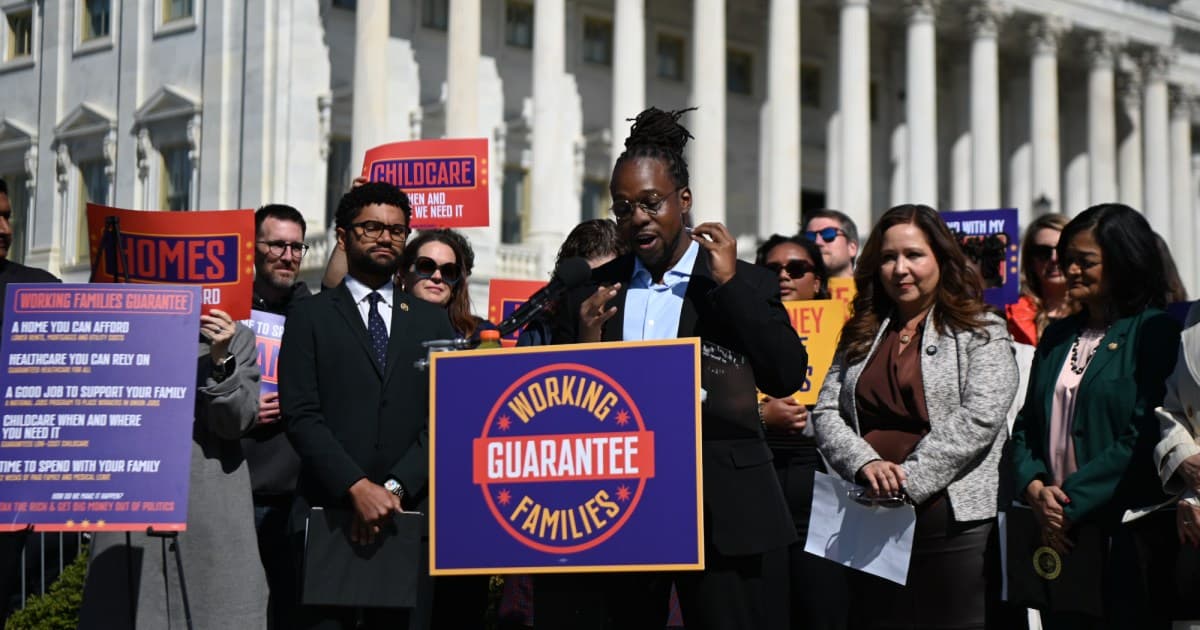
Voters are anxious about losing their jobs to artificial intelligence, and key players across the political spectrum have started to notice. Now, the Working Families Party has rolled out a slate of policy proposals for the midterms, backed by more than two dozen Democratic candidates and representatives, that aims to address that anxiety. Their plan to counter AI-related job losses? Not a direct cash dividend, but a program seeking to place Americans in union jobs. A recent Quinnipiac poll showed that over half of Americans believe AI does more harm than good in their day-to-day lives, and 70 percent think that broad AI adoption will decrease the overall number of available jobs. With the midterms coming up, corporations and politicians are looking to address these fears. This month, OpenAI proposed creating a “public wealth fund” that would “provide every citizen with a stake in AI-driven economic growth.” Yesterday, New York Assemblyman Alex Bores proposed a taxation framework designed to redistribute wealth from major AI corporations to people whose jobs might be displaced by their products, calling it an “AI dividend.” The Working Families Party, meanwhile, is proposing what looks like another Green New Deal-style jobs program to solve the same problem. Julie Gonzales, who is running for U.S. Senate in Colorado, said the WFP’s union jobs would be in green infrastructure and healthcare, though the platform itself doesn’t specify how this jobs program would work. “Corporations and the do-nothing Dems they support have shipped jobs overseas, cut wages, and busted unions to boost their own profits,” Gonzales said. A jobs guarantee hasn’t seen much success since the Works Progress Administration of the 1940s—despite broad popular support for such a policy. The new WFP platform, called the “Working Families Guarantee,” also includes guaranteed low-cost health and childcare. They plan to fund this program by (you guessed it) increasing taxes on the rich. “The working families guarantee is what working people deserve, and we are coming to collect,” said Maurice Mitchell, the group’s national political director. The politicians endorsing the Working Families Guarantee include Representative Pramila Jayapal (D-WA) and Rep. Delia C. Ramirez (D-IL). Several prominent candidates—among them Brad Lander in New York, Charles Booker in Kentucky, and Graham Platner in Maine—have also signed on. The Working Families Guarantee platform is part of an ongoing struggle over the future of AI policy within the Democratic Party. The Searchlight Institute, a moderate think tank which pitches itself as the leader of a “realignment” within the party, has vocally opposed efforts to limit datacenter buildout. (Searchlight, however, is backed by Nvidia-linked donors.) Third Way, another centrist Democratic think tank, has taken similar positions. The WFP, a relatively small left-wing party with big influence, wants to push moderate candidates further to the left. They’ve found a foothold among younger voters, who increasingly distrust both major parties. Ravi Mangla, National Press Secretary for the Working Families Party, told Mother Jones “people want leaders with backbone, yet groups like Third Way and the Searchlight Institute are telling Democrats to avoid taking positions on things like guaranteed health care and AI regulations.” “That,” Mangla said, “is a losing position.”
The Working Families Party Is Riding The Anti-AI Wave
Voters are anxious about losing their jobs to artificial intelligence, and key players across the political spectrum have started to notice. Now, the Working Families Party has rolled out a slate of policy proposals for the midterms, backed by more than two dozen Democratic candidates and representatives, that aims to address that anxiety. Their plan to counter AI-related job losses? Not a direct cash dividend, but a program seeking to place Americans in union jobs. A recent Quinnipiac poll showed that over half of Americans believe AI does more harm than good in their day-to-day lives, and 70 percent think that broad AI adoption will decrease the overall number of available jobs. With the midterms coming up, corporations and politicians are looking to address these fears. This month, OpenAI proposed creating a “public wealth fund” that would “provide every citizen with a stake in AI-driven economic growth.” Yesterday, New York Assemblyman Alex Bores proposed a taxation framework designed to redistribute wealth from major AI corporations to people whose jobs might be displaced by their products, calling it an “AI dividend.” The Working Families Party, meanwhile, is proposing what looks like another Green New Deal-style jobs program to solve the same problem. Julie Gonzales, who is running for U.S. Senate in Colorado, said the WFP’s union jobs would be in green infrastructure and healthcare, though the platform itself doesn’t specify how this jobs program would work. “Corporations and the do-nothing Dems they support have shipped jobs overseas, cut wages, and busted unions to boost their own profits,” Gonzales said. A jobs guarantee hasn’t seen much success since the Works Progress Administration of the 1940s—despite broad popular support for such a policy. The new WFP platform, called the “Working Families Guarantee,” also includes guaranteed low-cost health and childcare. They plan to fund this program by (you guessed it) increasing taxes on the rich. “The working families guarantee is what working people deserve, and we are coming to collect,” said Maurice Mitchell, the group’s national political director. The politicians endorsing the Working Families Guarantee include Representative Pramila Jayapal (D-WA) and Rep. Delia C. Ramirez (D-IL). Several prominent candidates—among them Brad Lander in New York, Charles Booker in Kentucky, and Graham Platner in Maine—have also signed on. The Working Families Guarantee platform is part of an ongoing struggle over the future of AI policy within the Democratic Party. The Searchlight Institute, a moderate think tank which pitches itself as the leader of a “realignment” within the party, has vocally opposed efforts to limit datacenter buildout. (Searchlight, however, is backed by Nvidia-linked donors.) Third Way, another centrist Democratic think tank, has taken similar positions. The WFP, a relatively small left-wing party with big influence, wants to push moderate candidates further to the left. They’ve found a foothold among younger voters, who increasingly distrust both major parties. Ravi Mangla, National Press Secretary for the Working Families Party, told Mother Jones “people want leaders with backbone, yet groups like Third Way and the Searchlight Institute are telling Democrats to avoid taking positions on things like guaranteed health care and AI regulations.” “That,” Mangla said, “is a losing position.”

Republicans Exploit an Obscure Law to Open This Pristine Minnesota Wilderness to Mining
This story was originally published by the Grist and is reproduced here as part of the Climate Desk collaboration. Minnesota’s Boundary Waters comprise a vast stretch of wilderness bordering Canada, with over a million acres of untouched forest and thousands of lakes and streams. Accessible largely by canoe, it is an ecological gem and one of the most popular spots in the country for outdoor recreation. On Thursday, Senate Republicans voted 50-49 to open the area up to mining—passing a resolution that repeals a 20-year moratorium using a little-known law called the Congressional Review Act (CRA). The act was designed in the 1990s by then-House Speaker Newt Gingrich, who sought to cut back on government bureaucracy by eliminating regulations. It was engineered to allow Congress to quickly overturn regulatory rules with a simple majority, rather than the usual two-thirds vote. Critics say it’s dangerous because it enables public rules and regulations based on years of research to be quickly overturned with little debate. With this move, Senate Republicans “disrespect tribal treaty rights and directly risk those tribes’ guaranteed access to their traditional way of life.” “It allows Congress to basically do a thumbs up or a thumbs down, where otherwise a filibuster would apply,” explained Erik Schlenker-Goodrich, executive director of the Western Environmental Law Center, a nonprofit, public interest law firm. During the CRA’s first 20 years of existence, it was used only once by the second Bush administration. But President Trump and Republicans have worked to dramatically expand and weaponize the CRA, with the Boundary Waters case being the latest example, Schlenker-Goodrich said. In 2017, the Trump administration invalidated 17 rules from the Obama era. In 2025 alone, Trump signed 22 CRA repeals. The CRA technically gives Congress 60 days to overturn a rule after it’s passed. The Boundary Waters protections were passed over three years ago during the Biden administration, and not as a rule, but rather as a Public Land Order. This puts the Senate and administration in territory that is “extraordinarily legally questionable,” said Blaine Miller-McFeeley, a senior legislative representative at Earthjustice. “We are not done fighting, and there are a lot of open questions because this is such uncharted territory.” The decision could set a dangerous precedent. Should the resolution be allowed to stand, it could open up all land management decisions to political attacks. Republican Senator Mike Lee of Utah, for example, has proposed a CRA resolution to eliminate the resource management plan for the Grand Staircase Escalante National Monument. “All of these place-based attacks are occurring concurrently with talk on permitting reform,” Schlenker-Goodrich pointed out. Signed by President Richard Nixon in 1970, the National Environmental Policy Act, or NEPA, requires federal agencies to assess how large-scale development would affect the environment before approving them. The policy has been an important tool for environmentalists, helping to halt or delay major industrial complexes or infrastructure. But in recent years, it has also curbed the deployment of solar and wind energy, as well as updates to the country’s grid required to accommodate new clean energy. Reforming NEPA has gained broad, bipartisan support in Congress, but when matched with this new use of the CRA, it could put protected areas in grave danger, Schlenker-Goodrich warned. “The main winner out of the Boundary Waters debacle is Twin Metals, a subsidiary of Chilean mining outfit Antofagasta.” The Trump administration’s use of the CRA also effectively cuts tribal nations out of Boundary Water negotiations. “Three tribes—the Bois Forte Band, the Fond du Lac Band, and the Grand Portage Band of Chippewa—have extensive treaty rights in Northeastern Minnesota,” New Mexico Sen. Martin Heinrich said in remarks on the Senate floor. “These rights are guaranteed to them by the 1854 Treaty of La Pointe and have been reaffirmed by federal courts over and over again. By overturning the Public Land Order with a CRA resolution, Senate Republicans will not only cut tribes out of the conversation. They disrespect tribal treaty rights and directly risk those tribes’ guaranteed access to their traditional way of life and subsistence use of this place.” The mining ban repeal comes despite widespread opposition from environmentalists, outdoor recreation companies, and neighboring communities. Minnesota Senator Tina Smith spoke on the Senate floor for five hours on Wednesday night in an attempt to block the vote. “The Senate and House should follow the law,” Smith said, according to CBS News. “They should follow the laws they wrote about how public land orders are treated in this country. I do not believe that happened here.” The main winner out of the Boundary Waters debacle is Twin Metals, a subsidiary of Chilean mining outfit Antofagasta. The company fought under the first Trump administration to build a copper and nickel mine on the Duluth Complex, one of the world’s largest undeveloped deposits of critical minerals located just 5 miles south of the Boundary Waters. At the time, the company was run by billionaire Andrónico Luksic, who was criticized for his connections to the Trump family—specifically for renting a house in Washington, DC, to Trump’s daughter, Ivanka. Although Luksic has since stepped down from Antofagasta’s board, his family controls a majority stake in the company. An aerial view of a tailings pond used to store byproducts of a copper mine in Rancagua, Chile in 2019.Martin Bernetti/AFP/Getty/Grist “The corruption of rich individuals around the world is a big part of this,” said Miller-McFeeley. So are data centers. Since retaking office, the administration has raced to ramp up domestic production of critical minerals—the materials that are required for computing, batteries, renewable energy, and military technology. “The US Forest Service is 100 percent opposed to mining in this watershed.” Copper is critical to the artificial intelligence boom. The analytics giant S&P Global published a report earlier this year warning that copper demand was projected to expand 50 percent by 2040. Another recent report from the Carnegie Endowment for Peace predicted a significant nickel deficit by 2035, due in large part to demand from the defense industry and the United States’ “limited ability to increase domestic production.” Crucially, the report recommended shoring up international partnerships, rather than opening up protected land to mining, and it will take much more than mining to make the US self-reliant when it comes to critical minerals. The country currently has only three copper smelters and no nickel smelters, making production the real bottleneck. Antofagasta would likely “ship its product abroad to be processed and sold offshore, and then maybe resold back to the US,” said Miller-McFeeley. Even if this is merely a test case for the administration to see how far they’re able to push legal limits, it has once again set the federal government in opposition of its own researchers. “The US Forest Service is 100 percent opposed to mining in this watershed,” said Marc Fink, director of the Public Lands Law Center and a senior attorney for the Center for Biological Diversity. In 2016, the Forest Service determined that a sulfide-ore copper mine, such as the one Twin Metals is proposing, could cause “extreme” and “serious and irreplaceable harm” to the area. “This clearly goes against the science and the administration’s own agencies,” Fink said. “It’s a really unfortunate situation, but we’ll definitely keep fighting.” The Boundary Waters bill will now head to President Trump’s desk. He is expected to sign it.
Republicans Exploit an Obscure Law to Open This Pristine Minnesota Wilderness to Mining
This story was originally published by the Grist and is reproduced here as part of the Climate Desk collaboration. Minnesota’s Boundary Waters comprise a vast stretch of wilderness bordering Canada, with over a million acres of untouched forest and thousands of lakes and streams. Accessible largely by canoe, it is an ecological gem and one of the most popular spots in the country for outdoor recreation. On Thursday, Senate Republicans voted 50-49 to open the area up to mining—passing a resolution that repeals a 20-year moratorium using a little-known law called the Congressional Review Act (CRA). The act was designed in the 1990s by then-House Speaker Newt Gingrich, who sought to cut back on government bureaucracy by eliminating regulations. It was engineered to allow Congress to quickly overturn regulatory rules with a simple majority, rather than the usual two-thirds vote. Critics say it’s dangerous because it enables public rules and regulations based on years of research to be quickly overturned with little debate. With this move, Senate Republicans “disrespect tribal treaty rights and directly risk those tribes’ guaranteed access to their traditional way of life.” “It allows Congress to basically do a thumbs up or a thumbs down, where otherwise a filibuster would apply,” explained Erik Schlenker-Goodrich, executive director of the Western Environmental Law Center, a nonprofit, public interest law firm. During the CRA’s first 20 years of existence, it was used only once by the second Bush administration. But President Trump and Republicans have worked to dramatically expand and weaponize the CRA, with the Boundary Waters case being the latest example, Schlenker-Goodrich said. In 2017, the Trump administration invalidated 17 rules from the Obama era. In 2025 alone, Trump signed 22 CRA repeals. The CRA technically gives Congress 60 days to overturn a rule after it’s passed. The Boundary Waters protections were passed over three years ago during the Biden administration, and not as a rule, but rather as a Public Land Order. This puts the Senate and administration in territory that is “extraordinarily legally questionable,” said Blaine Miller-McFeeley, a senior legislative representative at Earthjustice. “We are not done fighting, and there are a lot of open questions because this is such uncharted territory.” The decision could set a dangerous precedent. Should the resolution be allowed to stand, it could open up all land management decisions to political attacks. Republican Senator Mike Lee of Utah, for example, has proposed a CRA resolution to eliminate the resource management plan for the Grand Staircase Escalante National Monument. “All of these place-based attacks are occurring concurrently with talk on permitting reform,” Schlenker-Goodrich pointed out. Signed by President Richard Nixon in 1970, the National Environmental Policy Act, or NEPA, requires federal agencies to assess how large-scale development would affect the environment before approving them. The policy has been an important tool for environmentalists, helping to halt or delay major industrial complexes or infrastructure. But in recent years, it has also curbed the deployment of solar and wind energy, as well as updates to the country’s grid required to accommodate new clean energy. Reforming NEPA has gained broad, bipartisan support in Congress, but when matched with this new use of the CRA, it could put protected areas in grave danger, Schlenker-Goodrich warned. “The main winner out of the Boundary Waters debacle is Twin Metals, a subsidiary of Chilean mining outfit Antofagasta.” The Trump administration’s use of the CRA also effectively cuts tribal nations out of Boundary Water negotiations. “Three tribes—the Bois Forte Band, the Fond du Lac Band, and the Grand Portage Band of Chippewa—have extensive treaty rights in Northeastern Minnesota,” New Mexico Sen. Martin Heinrich said in remarks on the Senate floor. “These rights are guaranteed to them by the 1854 Treaty of La Pointe and have been reaffirmed by federal courts over and over again. By overturning the Public Land Order with a CRA resolution, Senate Republicans will not only cut tribes out of the conversation. They disrespect tribal treaty rights and directly risk those tribes’ guaranteed access to their traditional way of life and subsistence use of this place.” The mining ban repeal comes despite widespread opposition from environmentalists, outdoor recreation companies, and neighboring communities. Minnesota Senator Tina Smith spoke on the Senate floor for five hours on Wednesday night in an attempt to block the vote. “The Senate and House should follow the law,” Smith said, according to CBS News. “They should follow the laws they wrote about how public land orders are treated in this country. I do not believe that happened here.” The main winner out of the Boundary Waters debacle is Twin Metals, a subsidiary of Chilean mining outfit Antofagasta. The company fought under the first Trump administration to build a copper and nickel mine on the Duluth Complex, one of the world’s largest undeveloped deposits of critical minerals located just 5 miles south of the Boundary Waters. At the time, the company was run by billionaire Andrónico Luksic, who was criticized for his connections to the Trump family—specifically for renting a house in Washington, DC, to Trump’s daughter, Ivanka. Although Luksic has since stepped down from Antofagasta’s board, his family controls a majority stake in the company. An aerial view of a tailings pond used to store byproducts of a copper mine in Rancagua, Chile in 2019.Martin Bernetti/AFP/Getty/Grist “The corruption of rich individuals around the world is a big part of this,” said Miller-McFeeley. So are data centers. Since retaking office, the administration has raced to ramp up domestic production of critical minerals—the materials that are required for computing, batteries, renewable energy, and military technology. “The US Forest Service is 100 percent opposed to mining in this watershed.” Copper is critical to the artificial intelligence boom. The analytics giant S&P Global published a report earlier this year warning that copper demand was projected to expand 50 percent by 2040. Another recent report from the Carnegie Endowment for Peace predicted a significant nickel deficit by 2035, due in large part to demand from the defense industry and the United States’ “limited ability to increase domestic production.” Crucially, the report recommended shoring up international partnerships, rather than opening up protected land to mining, and it will take much more than mining to make the US self-reliant when it comes to critical minerals. The country currently has only three copper smelters and no nickel smelters, making production the real bottleneck. Antofagasta would likely “ship its product abroad to be processed and sold offshore, and then maybe resold back to the US,” said Miller-McFeeley. Even if this is merely a test case for the administration to see how far they’re able to push legal limits, it has once again set the federal government in opposition of its own researchers. “The US Forest Service is 100 percent opposed to mining in this watershed,” said Marc Fink, director of the Public Lands Law Center and a senior attorney for the Center for Biological Diversity. In 2016, the Forest Service determined that a sulfide-ore copper mine, such as the one Twin Metals is proposing, could cause “extreme” and “serious and irreplaceable harm” to the area. “This clearly goes against the science and the administration’s own agencies,” Fink said. “It’s a really unfortunate situation, but we’ll definitely keep fighting.” The Boundary Waters bill will now head to President Trump’s desk. He is expected to sign it.
Republicans Exploit an Obscure Law to Open This Pristine Minnesota Wilderness to Mining
This story was originally published by the Grist and is reproduced here as part of the Climate Desk collaboration. Minnesota’s Boundary Waters comprise a vast stretch of wilderness bordering Canada, with over a million acres of untouched forest and thousands of lakes and streams. Accessible largely by canoe, it is an ecological gem and one of the most popular spots in the country for outdoor recreation. On Thursday, Senate Republicans voted 50-49 to open the area up to mining—passing a resolution that repeals a 20-year moratorium using a little-known law called the Congressional Review Act (CRA). The act was designed in the 1990s by then-House Speaker Newt Gingrich, who sought to cut back on government bureaucracy by eliminating regulations. It was engineered to allow Congress to quickly overturn regulatory rules with a simple majority, rather than the usual two-thirds vote. Critics say it’s dangerous because it enables public rules and regulations based on years of research to be quickly overturned with little debate. With this move, Senate Republicans “disrespect tribal treaty rights and directly risk those tribes’ guaranteed access to their traditional way of life.” “It allows Congress to basically do a thumbs up or a thumbs down, where otherwise a filibuster would apply,” explained Erik Schlenker-Goodrich, executive director of the Western Environmental Law Center, a nonprofit, public interest law firm. During the CRA’s first 20 years of existence, it was used only once by the second Bush administration. But President Trump and Republicans have worked to dramatically expand and weaponize the CRA, with the Boundary Waters case being the latest example, Schlenker-Goodrich said. In 2017, the Trump administration invalidated 17 rules from the Obama era. In 2025 alone, Trump signed 22 CRA repeals. The CRA technically gives Congress 60 days to overturn a rule after it’s passed. The Boundary Waters protections were passed over three years ago during the Biden administration, and not as a rule, but rather as a Public Land Order. This puts the Senate and administration in territory that is “extraordinarily legally questionable,” said Blaine Miller-McFeeley, a senior legislative representative at Earthjustice. “We are not done fighting, and there are a lot of open questions because this is such uncharted territory.” The decision could set a dangerous precedent. Should the resolution be allowed to stand, it could open up all land management decisions to political attacks. Republican Senator Mike Lee of Utah, for example, has proposed a CRA resolution to eliminate the resource management plan for the Grand Staircase Escalante National Monument. “All of these place-based attacks are occurring concurrently with talk on permitting reform,” Schlenker-Goodrich pointed out. Signed by President Richard Nixon in 1970, the National Environmental Policy Act, or NEPA, requires federal agencies to assess how large-scale development would affect the environment before approving them. The policy has been an important tool for environmentalists, helping to halt or delay major industrial complexes or infrastructure. But in recent years, it has also curbed the deployment of solar and wind energy, as well as updates to the country’s grid required to accommodate new clean energy. Reforming NEPA has gained broad, bipartisan support in Congress, but when matched with this new use of the CRA, it could put protected areas in grave danger, Schlenker-Goodrich warned. “The main winner out of the Boundary Waters debacle is Twin Metals, a subsidiary of Chilean mining outfit Antofagasta.” The Trump administration’s use of the CRA also effectively cuts tribal nations out of Boundary Water negotiations. “Three tribes—the Bois Forte Band, the Fond du Lac Band, and the Grand Portage Band of Chippewa—have extensive treaty rights in Northeastern Minnesota,” New Mexico Sen. Martin Heinrich said in remarks on the Senate floor. “These rights are guaranteed to them by the 1854 Treaty of La Pointe and have been reaffirmed by federal courts over and over again. By overturning the Public Land Order with a CRA resolution, Senate Republicans will not only cut tribes out of the conversation. They disrespect tribal treaty rights and directly risk those tribes’ guaranteed access to their traditional way of life and subsistence use of this place.” The mining ban repeal comes despite widespread opposition from environmentalists, outdoor recreation companies, and neighboring communities. Minnesota Senator Tina Smith spoke on the Senate floor for five hours on Wednesday night in an attempt to block the vote. “The Senate and House should follow the law,” Smith said, according to CBS News. “They should follow the laws they wrote about how public land orders are treated in this country. I do not believe that happened here.” The main winner out of the Boundary Waters debacle is Twin Metals, a subsidiary of Chilean mining outfit Antofagasta. The company fought under the first Trump administration to build a copper and nickel mine on the Duluth Complex, one of the world’s largest undeveloped deposits of critical minerals located just 5 miles south of the Boundary Waters. At the time, the company was run by billionaire Andrónico Luksic, who was criticized for his connections to the Trump family—specifically for renting a house in Washington, DC, to Trump’s daughter, Ivanka. Although Luksic has since stepped down from Antofagasta’s board, his family controls a majority stake in the company. An aerial view of a tailings pond used to store byproducts of a copper mine in Rancagua, Chile in 2019.Martin Bernetti/AFP/Getty/Grist “The corruption of rich individuals around the world is a big part of this,” said Miller-McFeeley. So are data centers. Since retaking office, the administration has raced to ramp up domestic production of critical minerals—the materials that are required for computing, batteries, renewable energy, and military technology. “The US Forest Service is 100 percent opposed to mining in this watershed.” Copper is critical to the artificial intelligence boom. The analytics giant S&P Global published a report earlier this year warning that copper demand was projected to expand 50 percent by 2040. Another recent report from the Carnegie Endowment for Peace predicted a significant nickel deficit by 2035, due in large part to demand from the defense industry and the United States’ “limited ability to increase domestic production.” Crucially, the report recommended shoring up international partnerships, rather than opening up protected land to mining, and it will take much more than mining to make the US self-reliant when it comes to critical minerals. The country currently has only three copper smelters and no nickel smelters, making production the real bottleneck. Antofagasta would likely “ship its product abroad to be processed and sold offshore, and then maybe resold back to the US,” said Miller-McFeeley. Even if this is merely a test case for the administration to see how far they’re able to push legal limits, it has once again set the federal government in opposition of its own researchers. “The US Forest Service is 100 percent opposed to mining in this watershed,” said Marc Fink, director of the Public Lands Law Center and a senior attorney for the Center for Biological Diversity. In 2016, the Forest Service determined that a sulfide-ore copper mine, such as the one Twin Metals is proposing, could cause “extreme” and “serious and irreplaceable harm” to the area. “This clearly goes against the science and the administration’s own agencies,” Fink said. “It’s a really unfortunate situation, but we’ll definitely keep fighting.” The Boundary Waters bill will now head to President Trump’s desk. He is expected to sign it.
Republicans Exploit an Obscure Law to Open This Pristine Minnesota Wilderness to Mining
This story was originally published by the Grist and is reproduced here as part of the Climate Desk collaboration. Minnesota’s Boundary Waters comprise a vast stretch of wilderness bordering Canada, with over a million acres of untouched forest and thousands of lakes and streams. Accessible largely by canoe, it is an ecological gem and one of the most popular spots in the country for outdoor recreation. On Thursday, Senate Republicans voted 50-49 to open the area up to mining—passing a resolution that repeals a 20-year moratorium using a little-known law called the Congressional Review Act (CRA). The act was designed in the 1990s by then-House Speaker Newt Gingrich, who sought to cut back on government bureaucracy by eliminating regulations. It was engineered to allow Congress to quickly overturn regulatory rules with a simple majority, rather than the usual two-thirds vote. Critics say it’s dangerous because it enables public rules and regulations based on years of research to be quickly overturned with little debate. With this move, Senate Republicans “disrespect tribal treaty rights and directly risk those tribes’ guaranteed access to their traditional way of life.” “It allows Congress to basically do a thumbs up or a thumbs down, where otherwise a filibuster would apply,” explained Erik Schlenker-Goodrich, executive director of the Western Environmental Law Center, a nonprofit, public interest law firm. During the CRA’s first 20 years of existence, it was used only once by the second Bush administration. But President Trump and Republicans have worked to dramatically expand and weaponize the CRA, with the Boundary Waters case being the latest example, Schlenker-Goodrich said. In 2017, the Trump administration invalidated 17 rules from the Obama era. In 2025 alone, Trump signed 22 CRA repeals. The CRA technically gives Congress 60 days to overturn a rule after it’s passed. The Boundary Waters protections were passed over three years ago during the Biden administration, and not as a rule, but rather as a Public Land Order. This puts the Senate and administration in territory that is “extraordinarily legally questionable,” said Blaine Miller-McFeeley, a senior legislative representative at Earthjustice. “We are not done fighting, and there are a lot of open questions because this is such uncharted territory.” The decision could set a dangerous precedent. Should the resolution be allowed to stand, it could open up all land management decisions to political attacks. Republican Senator Mike Lee of Utah, for example, has proposed a CRA resolution to eliminate the resource management plan for the Grand Staircase Escalante National Monument. “All of these place-based attacks are occurring concurrently with talk on permitting reform,” Schlenker-Goodrich pointed out. Signed by President Richard Nixon in 1970, the National Environmental Policy Act, or NEPA, requires federal agencies to assess how large-scale development would affect the environment before approving them. The policy has been an important tool for environmentalists, helping to halt or delay major industrial complexes or infrastructure. But in recent years, it has also curbed the deployment of solar and wind energy, as well as updates to the country’s grid required to accommodate new clean energy. Reforming NEPA has gained broad, bipartisan support in Congress, but when matched with this new use of the CRA, it could put protected areas in grave danger, Schlenker-Goodrich warned. “The main winner out of the Boundary Waters debacle is Twin Metals, a subsidiary of Chilean mining outfit Antofagasta.” The Trump administration’s use of the CRA also effectively cuts tribal nations out of Boundary Water negotiations. “Three tribes—the Bois Forte Band, the Fond du Lac Band, and the Grand Portage Band of Chippewa—have extensive treaty rights in Northeastern Minnesota,” New Mexico Sen. Martin Heinrich said in remarks on the Senate floor. “These rights are guaranteed to them by the 1854 Treaty of La Pointe and have been reaffirmed by federal courts over and over again. By overturning the Public Land Order with a CRA resolution, Senate Republicans will not only cut tribes out of the conversation. They disrespect tribal treaty rights and directly risk those tribes’ guaranteed access to their traditional way of life and subsistence use of this place.” The mining ban repeal comes despite widespread opposition from environmentalists, outdoor recreation companies, and neighboring communities. Minnesota Senator Tina Smith spoke on the Senate floor for five hours on Wednesday night in an attempt to block the vote. “The Senate and House should follow the law,” Smith said, according to CBS News. “They should follow the laws they wrote about how public land orders are treated in this country. I do not believe that happened here.” The main winner out of the Boundary Waters debacle is Twin Metals, a subsidiary of Chilean mining outfit Antofagasta. The company fought under the first Trump administration to build a copper and nickel mine on the Duluth Complex, one of the world’s largest undeveloped deposits of critical minerals located just 5 miles south of the Boundary Waters. At the time, the company was run by billionaire Andrónico Luksic, who was criticized for his connections to the Trump family—specifically for renting a house in Washington, DC, to Trump’s daughter, Ivanka. Although Luksic has since stepped down from Antofagasta’s board, his family controls a majority stake in the company. An aerial view of a tailings pond used to store byproducts of a copper mine in Rancagua, Chile in 2019.Martin Bernetti/AFP/Getty/Grist “The corruption of rich individuals around the world is a big part of this,” said Miller-McFeeley. So are data centers. Since retaking office, the administration has raced to ramp up domestic production of critical minerals—the materials that are required for computing, batteries, renewable energy, and military technology. “The US Forest Service is 100 percent opposed to mining in this watershed.” Copper is critical to the artificial intelligence boom. The analytics giant S&P Global published a report earlier this year warning that copper demand was projected to expand 50 percent by 2040. Another recent report from the Carnegie Endowment for Peace predicted a significant nickel deficit by 2035, due in large part to demand from the defense industry and the United States’ “limited ability to increase domestic production.” Crucially, the report recommended shoring up international partnerships, rather than opening up protected land to mining, and it will take much more than mining to make the US self-reliant when it comes to critical minerals. The country currently has only three copper smelters and no nickel smelters, making production the real bottleneck. Antofagasta would likely “ship its product abroad to be processed and sold offshore, and then maybe resold back to the US,” said Miller-McFeeley. Even if this is merely a test case for the administration to see how far they’re able to push legal limits, it has once again set the federal government in opposition of its own researchers. “The US Forest Service is 100 percent opposed to mining in this watershed,” said Marc Fink, director of the Public Lands Law Center and a senior attorney for the Center for Biological Diversity. In 2016, the Forest Service determined that a sulfide-ore copper mine, such as the one Twin Metals is proposing, could cause “extreme” and “serious and irreplaceable harm” to the area. “This clearly goes against the science and the administration’s own agencies,” Fink said. “It’s a really unfortunate situation, but we’ll definitely keep fighting.” The Boundary Waters bill will now head to President Trump’s desk. He is expected to sign it.
Congress Will Not Stop the War With Iran
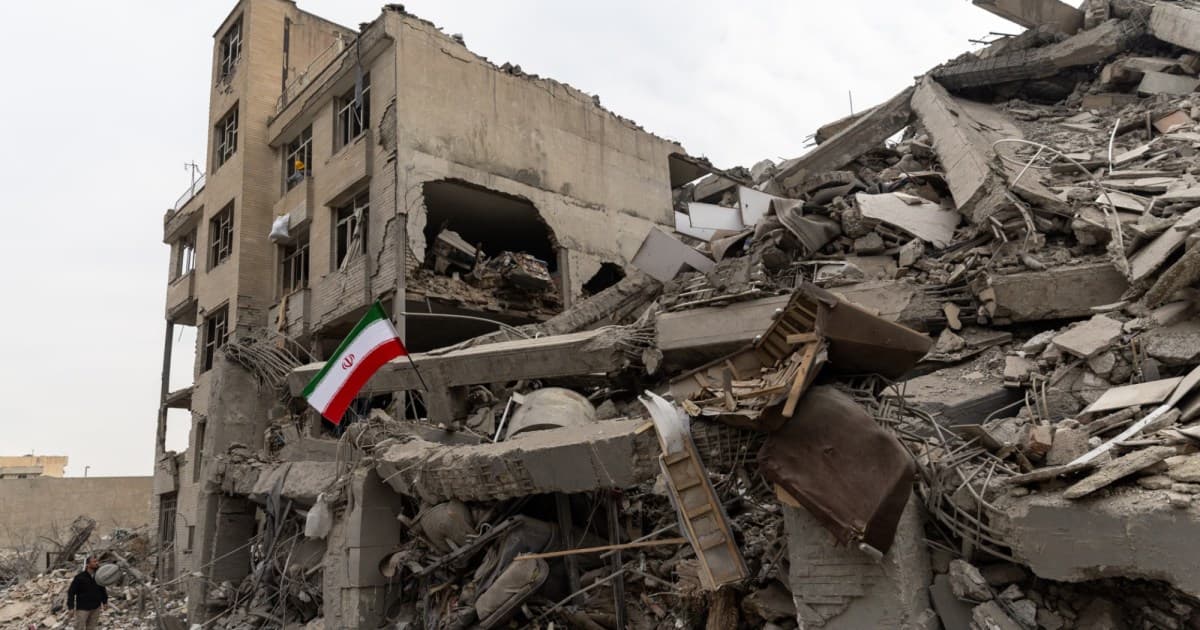
US senators voted 52-47, largely along party lines, against a war powers resolution on Wednesday afternoon that would have stopped the Trump administration from continuing its illegal military campaign against Iran without congressional approval. Every Republican except Kentucky Sen. Rand Paul opposed the resolution; all Democrats apart from Sen. John Fetterman of Pennsylvania supported it. Sen. Jim Justice (R-W.Va.) did not vote. The resolution “directs the President to remove the United States Armed Forces from hostilities within or against Iran, unless explicitly authorized by a declaration of war or a specific authorization for use of military force.” Article 1 of the Constitution grants Congress—not the president—the power to declare war, and the War Powers Act grants Congress the power to halt unauthorized military action by requiring troop withdrawal within 60 to 90 days. “I’m here to call bullshit on the President of the United States.” Sen. Tammy Duckworth (D-Ill.), who sponsored the measure, said on the Senate floor just before the vote. “Every moment that Donald Trump leaves our heroes mired in the muck of this illegal war of choice in Iran, he is showing that he cares more about saving his own face than leading our troops.” Duckworth is a veteran who lost both legs serving in the US Army during the Iraq War. In her remarks on the Senate floor, she said the Trump administration has not offered sufficient justification for launching—and now escalating—the war. “War is always tragic, but when it’s preventable, when it’s unjustified, it’s not just tragic—it’s a travesty,” Duckworth said. The Democratic-led measure was widely anticipated to fail. As I wrote shortly before the Senate’s previous war powers vote in March, which ended in a 47-53 vote against—with Sens. Paul and Fetterman being the same lawmakers to cross party lines—even if the resolution passed, it would ultimately require a two-thirds congressional majority to overturn Trump’s inevitable presidential veto. Many lawmakers thus approached the resolution as a way to drive home their stance on the war. In that light, what we saw Wednesday was not reassuring: four such resolutions have now failed since the start of the current war in February, while more than 2,000 people have been killed in Iran, according to the country’s health ministry—possibly many more, with figures not updated since April 3—and the US military has confirmed 13 combat-related deaths across the region.
Congress Will Not Stop the War With Iran
US senators voted 52-47, largely along party lines, against a war powers resolution on Wednesday afternoon that would have stopped the Trump administration from continuing its illegal military campaign against Iran without congressional approval. Every Republican except Kentucky Sen. Rand Paul opposed the resolution; all Democrats apart from Sen. John Fetterman of Pennsylvania supported it. Sen. Jim Justice (R-W.Va.) did not vote. The resolution “directs the President to remove the United States Armed Forces from hostilities within or against Iran, unless explicitly authorized by a declaration of war or a specific authorization for use of military force.” Article 1 of the Constitution grants Congress—not the president—the power to declare war, and the War Powers Act grants Congress the power to halt unauthorized military action by requiring troop withdrawal within 60 to 90 days. “I’m here to call bullshit on the President of the United States.” Sen. Tammy Duckworth (D-Ill.), who sponsored the measure, said on the Senate floor just before the vote. “Every moment that Donald Trump leaves our heroes mired in the muck of this illegal war of choice in Iran, he is showing that he cares more about saving his own face than leading our troops.” Duckworth is a veteran who lost both legs serving in the US Army during the Iraq War. In her remarks on the Senate floor, she said the Trump administration has not offered sufficient justification for launching—and now escalating—the war. “War is always tragic, but when it’s preventable, when it’s unjustified, it’s not just tragic—it’s a travesty,” Duckworth said. The Democratic-led measure was widely anticipated to fail. As I wrote shortly before the Senate’s previous war powers vote in March, which ended in a 47-53 vote against—with Sens. Paul and Fetterman being the same lawmakers to cross party lines—even if the resolution passed, it would ultimately require a two-thirds congressional majority to overturn Trump’s inevitable presidential veto. Many lawmakers thus approached the resolution as a way to drive home their stance on the war. In that light, what we saw Wednesday was not reassuring: four such resolutions have now failed since the start of the current war in February, while more than 2,000 people have been killed in Iran, according to the country’s health ministry—possibly many more, with figures not updated since April 3—and the US military has confirmed 13 combat-related deaths across the region.
New Utah Law Shields Fossil Fuel Firms From Liability for Climate Chaos
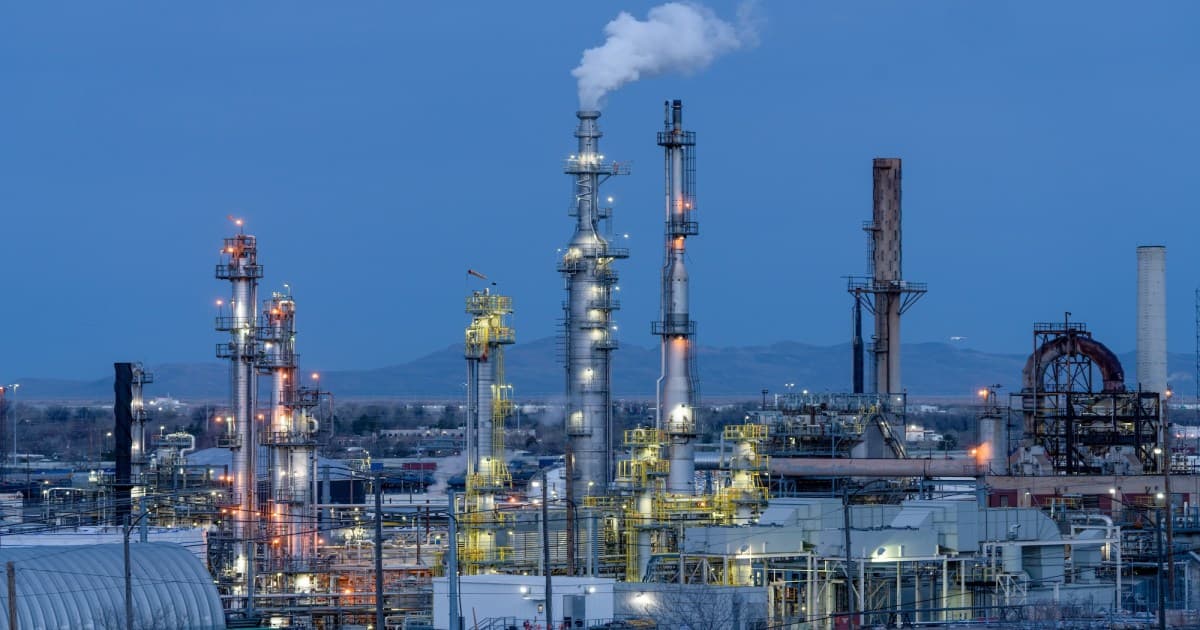
This story was originally published by the Guardian and is reproduced here as part of the Climate Desk collaboration. Utah has made it nearly impossible for residents to hold fossil fuel companies legally accountable for climate damages in a move one advocacy group described as putting “profits for the biggest polluters over communities,” with other states expected to follow suit. The new state legislation comes as part of a push from Big Oil and its political allies—including groups tied to right-wing impresario Leonard Leo—for legal immunity in red statehouses and Congress, with a goal of winning state and federal legal immunity similar to the liability waiver granted to the firearms industry in 2005. Such policies would shield major fossil fuel companies from a wave of litigation they are facing from states, subnational governments, and individuals who claim the firms knew their products would cause climate damages, but sold them to the public anyway. Four other red states are considering laws similar to Utah’s—with two close to passage—and federal legislation is seemingly in the works. Signed into law by the state’s Republican governor, Spencer Cox, late last month, Utah’s new legislation shields any person or entity from civil or criminal liabilities related to planet-warming emissions, unless a court finds that the defendant violated the specific “enforceable limitation” on a greenhouse gas or the “express terms of a valid permit.” The new law “prioritizes profits for the biggest polluters over communities already suffering from climate impacts.” Challengers would also have to provide “clear and convincing evidence that unavoidable and identifiable damage or injury has resulted or will result as a direct cause of the” violation. The language will make it virtually impossible to successfully sue polluters for climate damages, critics say. “This is a surrender to wealthy special interests and an affront to the public good,” said Delta Merner, lead scientist at the science hub for climate litigation at the science advocacy group Union of Concerned Scientists. “Utah’s new law prioritizes profits for the biggest polluters over communities already suffering from climate impacts and constituents should be outraged.” Set to be enacted next month, Utah’s HB 222 was sponsored by the Republican representative Carl Albrecht, who has received some funding from oil and gas interests. He was also formerly the CEO of a rural electric cooperative. “That cooperative is substantially powered by fossil fuels,” said the Democratic Utah state senator Nate Blouin, who opposed the bill, which he said passed quickly and without much discussion. “He’s got a history in the industry, and continues to draw from that experience to push bills like this forward.” Albrecht did not respond to a request for comment, but told Bloomberg Law that the policy aims to halt “frivolous” legal challenges from environmental groups and to protect the state’s coal-fired power plants. He also said industry trade groups gave him the idea for the proposal. “To understand this bill you need to follow the coordination,” said Merner, noting that the Utah legislation closely mirrors a model policy called the Energy Freedom Act, circulated by the conservative group Consumers Defense. Consumers Defense has financial ties to a group linked to Leo, the architect of the far-right takeover of the Supreme Court who helped select Trump’s Supreme Court nominees. In recent years, groups tied to Leo have launched an unprecedented campaign to thwart climate accountability litigation. Asked about Leo’s involvement in the model legislation, Will Hild, president of Consumers Defense, said it was not attributable to “any individual figure.” In recent years, 70 cities, states, and individuals have sued energy majors for allegedly deceiving the public about the climate crisis. “The Energy Freedom Act is intended to clarify that carbon emissions should not automatically carry legal damages and to push back on efforts…to shape national climate policy through litigation rather than through elected lawmakers,” he said. “This ensures decisions remain with accountable representatives, prevents a small number of states from imposing their policies nationwide through judicial fiat, and protects consumers from economically disruptive policies.” In an emailed statement, Leo said: “Preserving individual dignity and worth includes good stewardship of the environment as well as maintaining conditions for the financial wellbeing of hardworking consumers.” “Getting this balance right can be very tricky, which is why we support enterprises that seek to ensure that decisions are made based on sound science and through an accountable and constitutional political process, rather than lawfare supported by unaccountable judges, trial lawyers, and dark money special interest groups on the left,” he said. He did not answer a question about his role in the liability waiver proposals. Lawmakers in Louisiana and Oklahoma are considering similar legislation, and the state legislatures of Iowa and Tennessee have voted to pass climate liability-limiting legislation, though neither has yet been signed into law. “In Tennessee they literally called the bill the Tennessee Energy Freedom Act,” said Iyla Shornstein, political director at the Center for Climate Integrity, which tracks and supports climate accountability litigation. “It’s a direct borrowing from the Consumers Defense language.” The Utah bill’s passage comes as climate lawsuits against big oil companies inch closer to trial, and as states adopt climate accountability legislation. In recent years, 70 cities, states and individuals have sued energy majors for allegedly deceiving the public about the climate crisis. New York and Vermont have also passed climate “superfund” laws requiring major polluters to pay for damages caused by their past planet-heating pollution, with other states considering similar policies. “The oil companies clearly see these as an existential threat to their business model,” said Shornstein. “Their lobbying makes that clear.” Earlier this year, the top US oil lobby group the American Petroleum Institute (API) said one of its top priorities for 2026 would be blocking “abusive” climate lawsuits targeting Big Oil. Months earlier, 16 Republican state attorneys general also called on the justice department to provide a “liability shield” for oil companies. Lawmakers have also pursued narrower efforts, including a failed attempt to block Washington DC from the deployment of some legal theories against oil companies, and a 2025 Maryland bill that would have barred state and local climate lawsuits but never reached a vote. And last year, both API and energy giant ConocoPhillips also pressed Congress on draft legislation to limit climate liability. If Big Oil “can secure blanket immunity now, they can avoid the fate of tobacco, but if they fail, they face tobacco-level accountability.” Such a federal policy appears to be in the works: during a House committee hearing last month, the Wyoming representative Harriet Hageman, a Republican, said “Congress has a role to play” in defeating climate accountability lawsuits. “To that end, I’m working with my colleagues in both the House and Senate to craft legislation tackling both these state laws and the lawsuits that could destroy energy affordability for consumers,” she said. Hageman did not provide specific details about the legislation. She did not respond to a request for comment. The API declined to comment on the state of a federal liability waiver proposal. Other industries have lobbied for liability waivers before. Since the firearms sector successfully pushed for the Protection of Lawful Commerce in Arms Act in 2005, “not a single negligence case against a gun manufacturer has gone to trial,” noted Merner. The pesticide sector is also currently pursuing state-level immunity bills, while its allies have unsuccessfully pursued a federal waiver. The tobacco industry, facing widespread litigation, also pushed for such immunity in the 1990s but failed, ending up paying $260 billion in settlements. “It seems that the fossil fuel industry has learned from these precedents. If they can secure blanket immunity now, they can avoid the fate of tobacco, but if they fail, they face tobacco-level accountability,” said Merner. Lawmakers, advocates and journalists have amassed mountains of evidence in recent years that oil companies intentionally covered up the climate harms of their products. Climate science, meanwhile, continues to warn that fossil fuels are the primary cause of dangerous global warming. “I don’t see why industry would be pushing for immunity if they thought they could win on the merits of their case,” said Merner. “The evidence shows they knew about climate risks for decades and lied about it, so they’re trying to change the rules of the game entirely.”