2 stories credited to The Minnesota Daily
Latest story Apr 17, 2026 · on ChamberLight since Apr 2026
A story can appear as several articles (copies of the same piece), so counts of stories and of articles differ.
Scores for The Minnesota Daily
Writing quality not enough rated stories yet: 2 of 10. How it is measured
Scores last checked Sep 25, 2026.
Stories ChamberLight collected, by month
Stories credited to The Minnesota Daily, by publication date. ChamberLight collects articles that mention the officials it tracks, so this shows its own coverage of this source, not how much the source publishes.
- Stories from The Minnesota Daily
- Shaded: ChamberLight collected no stories, or almost none, from any outlet (a gap in its collection, not in the outlet’s publishing)
Show as a table
| Month | Stories | All outlets |
|---|---|---|
| April 2026 | 2 | 3,467 |
| May 2026 | 0 | none collected |
| June 2026 | 0 | none collected |
| July 2026 | 0 | none collected |
| August 2026 | 0 | 1 (collection gap) |
| September 2026 | 0 | 1,320 |
Top topics
Share of this source’s stories tagged with each topic. A story can carry several topics, so the shares do not add up to 100%.
- Economy1
50% of 2 stories · 26% across all outlets
- Environment/Climate1
50% of 2 stories · 5% across all outlets
- Ethics/Corruption1
50% of 2 stories · 58% across all outlets
- Healthcare1
50% of 2 stories · 8% across all outlets
- Immigration1
50% of 2 stories · 13% across all outlets
- Infrastructure1
50% of 2 stories · 8% across all outlets
The thin mark on each bar is the topic’s share across all outlets.
Who they cover
Party of the officials these stories are mainly about, across all 3 officials named. A story counts once for each official it is mainly about, so the split is over 3 story–official pairs, from 2 stories.
- Democrat33% · 1 pair
- Republican33% · 1 pair
- Party not recorded33% · 1 pair
Most covered
Stories mainly about each official, and their share of the source’s 2 stories.
Article tone
ChamberLight’s article analysis assigns each story a tone toward the official it covers. It describes the coverage of that official, not The Minnesota Daily’s stance, and reader votes do not change it. 2 stories.
- Good Look
- 0 (0%)
- Mixed
- 2 (100%)
- Informational
- 0 (0%)
- Bad Look
- 0 (0%)
Challenges to these scores
No one has challenged a score on this page yet. Anyone can; editors publish every outcome here.
Articles served from mndaily.com
3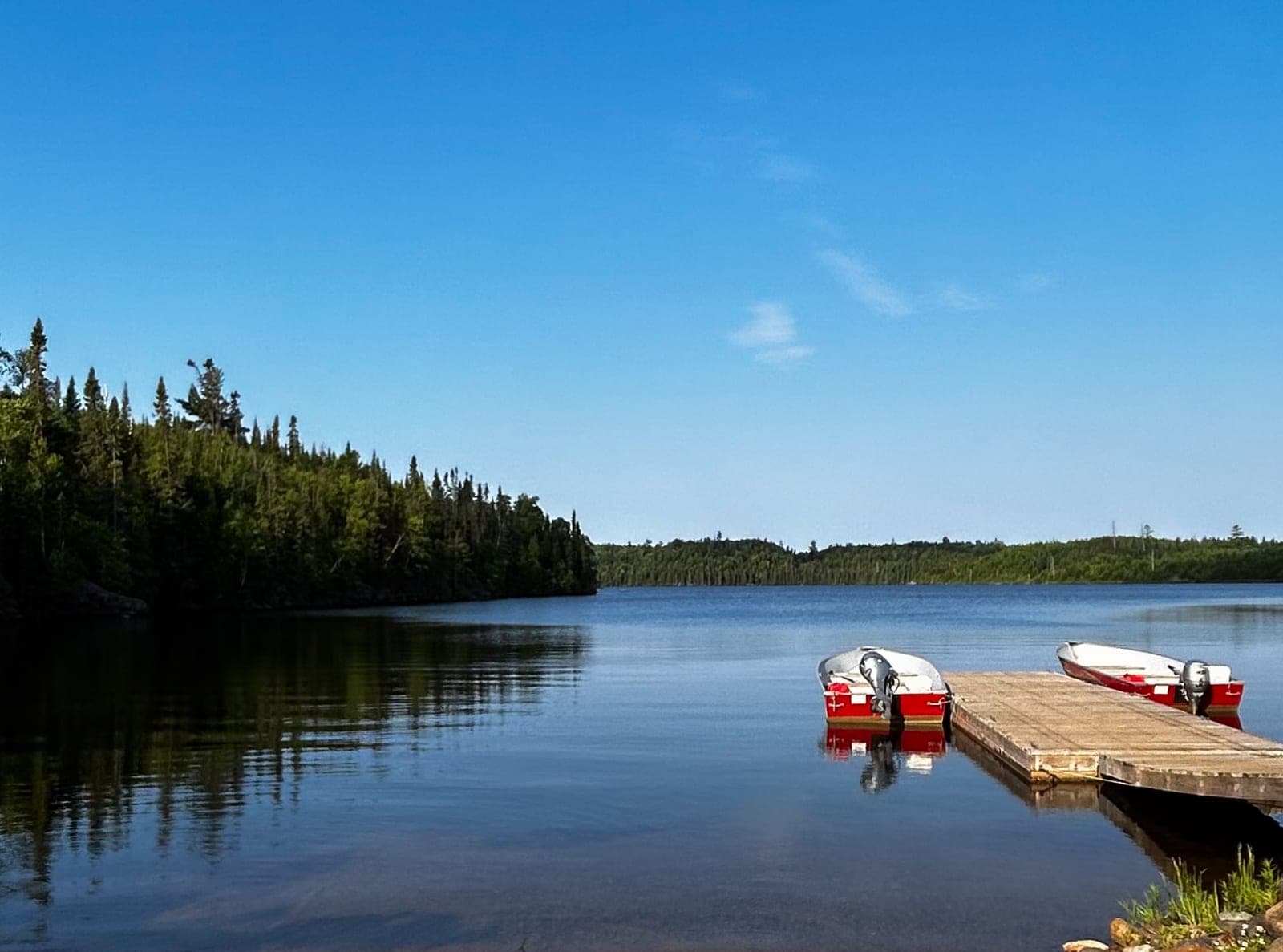
US Senate votes to lift mining ban near Boundary Waters, rolling back wilderness protections
Republican senators voted Thursday to allow new mining projects near the Minnesota Boundary Water Canoe Area Wilderness, one of the most visited and expansive stretches of wilderness in the United States. The resolution, which passed in a narrow 50 to 49 vote, would repeal a Biden-era 20-year moratorium on mining across the roughly 350 square miles that make up the Superior National Forest, which includes the Boundary Waters. This vote is victory for Twin Metals Minnesota, a subsidiary of the Chilean mining conglomerate Antofagasta, which has proposed plans to build a copper and nickel mine five miles from the wilderness area and within the watershed of the Boundary Waters. Twin Metals has worked for more than a decade to establish a mine along Birch Lake, as environmental groups have fought back to block their proposal over the years because of the risk of heavy metal contamination it poses to Northern Minnesota’s Great Lakes. Minnesota Sen. Tina Smith led the Democratic opposition against the measure, which was introduced and passed in the U.S. earlier this year by Duluth native Rep. Pete Stauber (R-Minn.). Stauber called the Senate vote on Thursday “a major victory for America and Minnesota’s 8th Congressional District” on social media. Smith spoke for nearly five hours Wednesday evening in an attempt to block the vote. “You may be wondering why I am standing here at nearly midnight keeping everyone up. Here’s why: Because I know people in Minnesota are wondering whether anybody in this building cares about what they think,” Smith said. Smith, joined by other Senate Democrats, spoke again on Thursday morning, calling on their Republican colleagues to oppose the repeal prior to it passing. Smith said in a press conference following the vote that she is deeply disappointed, but the fight continues. She added that opponents to mining near the Boundary Waters are currently weighing their legal options. “I would anticipate that there will be outside groups who have standing in this issue, who may well decide that this is something that they need to file a lawsuit on, because the Senate and the House should follow the law,” Smith said. The measure is headed to President Donald Trump, who is expected to sign the resolution into law.
US Senate votes to lift mining ban near Boundary Waters, rolling back wilderness protections
Republican senators voted Thursday to allow new mining projects near the Minnesota Boundary Water Canoe Area Wilderness, one of the most visited and expansive stretches of wilderness in the United States. The resolution, which passed in a narrow 50 to 49 vote, would repeal a Biden-era 20-year moratorium on mining across the roughly 350 square miles that make up the Superior National Forest, which includes the Boundary Waters. This vote is victory for Twin Metals Minnesota, a subsidiary of the Chilean mining conglomerate Antofagasta, which has proposed plans to build a copper and nickel mine five miles from the wilderness area and within the watershed of the Boundary Waters. Twin Metals has worked for more than a decade to establish a mine along Birch Lake, as environmental groups have fought back to block their proposal over the years because of the risk of heavy metal contamination it poses to Northern Minnesota’s Great Lakes. Minnesota Sen. Tina Smith led the Democratic opposition against the measure, which was introduced and passed in the U.S. earlier this year by Duluth native Rep. Pete Stauber (R-Minn.). Stauber called the Senate vote on Thursday “a major victory for America and Minnesota’s 8th Congressional District” on social media. Smith spoke for nearly five hours Wednesday evening in an attempt to block the vote. “You may be wondering why I am standing here at nearly midnight keeping everyone up. Here’s why: Because I know people in Minnesota are wondering whether anybody in this building cares about what they think,” Smith said. Smith, joined by other Senate Democrats, spoke again on Thursday morning, calling on their Republican colleagues to oppose the repeal prior to it passing. Smith said in a press conference following the vote that she is deeply disappointed, but the fight continues. She added that opponents to mining near the Boundary Waters are currently weighing their legal options. “I would anticipate that there will be outside groups who have standing in this issue, who may well decide that this is something that they need to file a lawsuit on, because the Senate and the House should follow the law,” Smith said. The measure is headed to President Donald Trump, who is expected to sign the resolution into law.
Q&A with Lt. Gov. Peggy Flannagan
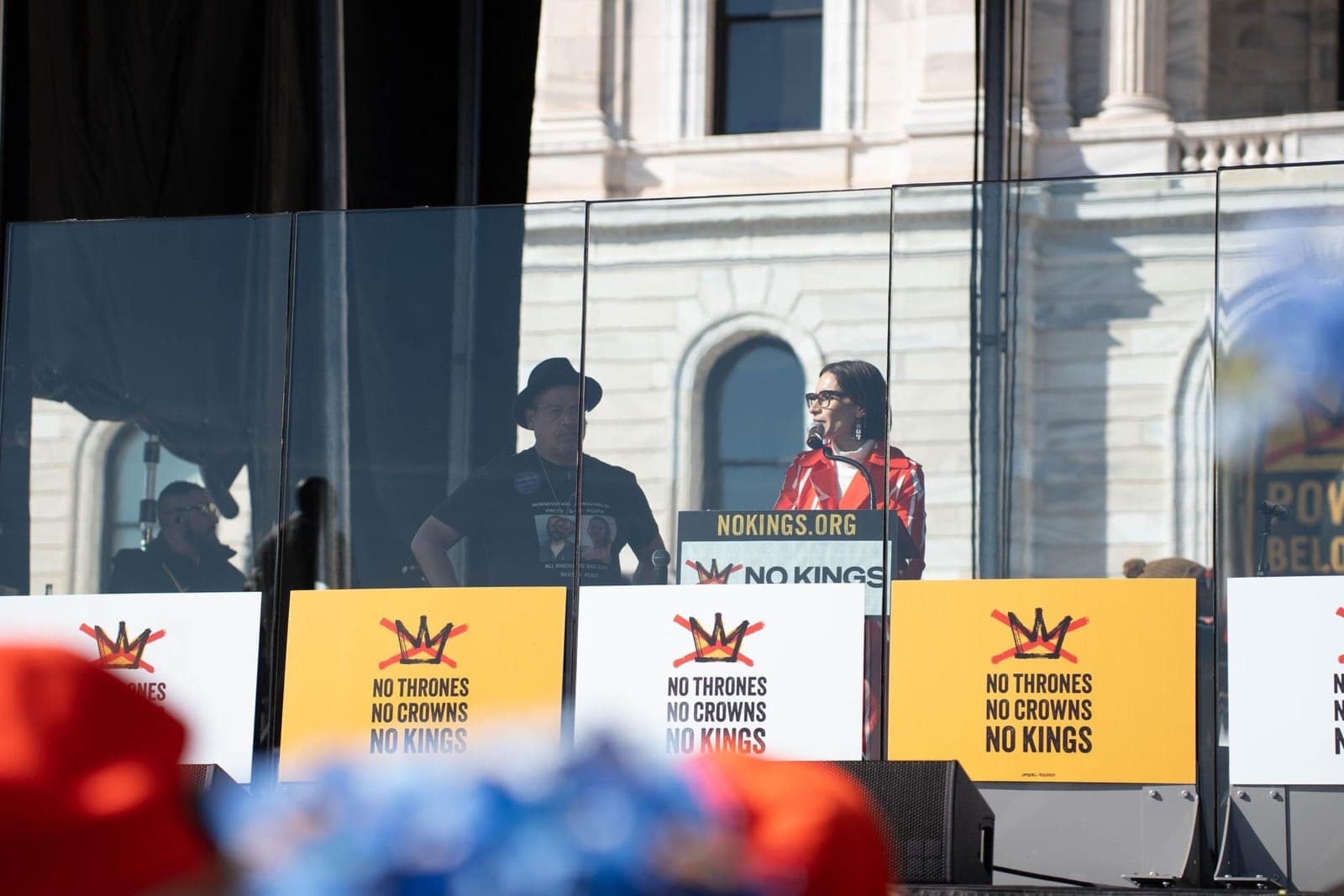
At a meeting with the University of Minnesota College Democrats, Lt. Gov. Peggy Flanagan answered questions on affordable housing to immigration reform. During the meeting, she said University of Minnesota students would not be left out if she won the Senate race. Flanagan announced her U.S. Senate campaign in March 2025 after current Sen. Tina Smith said she would not be running for reelection, reported CBS News. According to her website, Flanagan wants to focus on issues such as affordability, housing, immigration reform and healthcare. Flanagan served on the Minneapolis Board of Education from 2005 to 2009. She was elected to the Minnesota House from 2015 to 2019. In 2018, Gov. Tim Walz chose her as the Lieutenant Governor, making her the first Native American woman elected to a statewide office in Minnesota. Minnesota Daily: Gov. Tim Walz stated that holding ICE accountable for Operation Metro Surge is a major priority. How is the administration working to hold ICE accountable? Flanagan: “Part of it is suing the federal government in partnership with the Attorney General to make sure the evidence that’s been collected with regards to the shooting of Renee Good and Alex Pretti has been available to us. I think it’s also the Governor who introduced the Truth Council just this past week, which will be collecting testimony and documenting just the chaos and violence and terror that ICE perpetrated on the people of Minnesota and documenting that.” Daily: Operation Metro Surge has caused $203 million dollars in damage to Minneapolis. How is the administration working toward relief efforts in housing and small businesses? Flanagan: “I think in the role of a candidate for the U.S. Senate and as someone who would like to serve in the Senate, we have to claw back that $75 billion that ICE was given. We have to prevent these detention camps that are being built all across the country for mass deportations and detention. There needs to be financial relief through, again, small businesses, rental assistance, but also, I think, for mental health support for our young people, many of whom now have an Adverse Childhood Experience score or an ACE score simply because federal agents are in their communities. Minnesota is owed reconciliation, and that will need to come in the form of financial investments here to repair and restore what they’ve broken.” Daily: Why was it important that you made the stance that you would not be accepting PAC money? Flanagan: “I’m not taking corporate PAC money because I think it is the root of all of our problems that we are experiencing in this country. I wish I could tell you that it was only one side of the aisle where corporate PAC money influences our politics, but that’s simply not true. I see that there are people in leadership who are unwilling to take courageous stances because of the campaign checks that they received from these corporations, instead of working on behalf of the people. I think it’s the root of corruption in our politics. Ultimately, I think we should have campaign finance reform that leads to publicly financed campaigns. But until we get there, I’m going to run a campaign that is based on people power, regular folks making contributions.” Daily: According to your Senate page, you would like to focus on healthcare, which has been a difficult issue to address in the past. How would you help? Flanagan: “I think Medicare for all is overwhelmingly popular in Minnesota and also all across the country. We have watched because of the high price of health care in this country, and as I’ve traveled across the state and I’m hearing from people that their deductibles are $15,000, $16,000 or families who are simply going without health insurance and just praying that they don’t get sick. I think the time for Medicare for all, it’s time has come. So part of it is making sure that we elect more leaders who care about passing that policy and then working in partnership with folks in the Fight Club and this group of progressive senators in Washington, D.C. and in Congress, leaders like Pramila Jayapal to put together a campaign that increases support for us across the country. I think momentum is building for Medicare for all.” Daily: Fraud has been a major issue for people in Minnesota. What ways is the administration working to prevent fraud in the future? Do you think there was something you could have done better? Flanagan: “If the federal administration actually cared about tackling fraud, they would have sent 3,000 forensic accountants instead of 3,000 ICE agents to Minnesota.” “Fraud is serious and I think it’s incredibly important that we acknowledge just how upset people are in Minnesota about fraud. I’m angry about it too. And the governor and the legislature have taken action this last legislative session to pass additional policies to prevent fraud, to stop fraud, that allowed to stop payments from going out. The governor has brought on board a fraud czar whose entire job it is to determine additional ways to prevent fraud from happening in state agencies.” “I have hope that this legislative session, Republicans and Democrats can come together to pass additional measures to stop and prevent fraud in Minnesota. I think they’re not that far apart from one another. We’ve got six weeks until the end of the legislative session. But I have hope that that’s possible.” Daily: If you won the Senate race, how would you help students in the University of Minnesota? Flanagan: “I think it’s Medicare for all. It is raising the minimum wage. It is pushing to make sure that you can’t buy an entire neighborhood and price people out of homeownership or the rent being too high. Congress has completely thrown up their hands and said, ‘We’re going to let the guy in the White House do whatever he wants with regards to tariffs.” “Those costs are being passed on to everybody and, in particular, around the high cost of food. I know that university students don’t come in pieces. Our approach to making people’s lives more affordable can’t happen that way either. I would love to see the North Star promise that has been enacted in Minnesota pass at the federal level. Then, more people have access to affordability and don’t graduate with a tremendous amount of debt, which prevents them from being able to afford their lives once they graduate.”