1 story credited to Live and Let's Fly
Latest story Apr 21, 2026 · on ChamberLight since Apr 2026
A story can appear as several articles (copies of the same piece), so counts of stories and of articles differ.
Scores for Live and Let's Fly
Writing quality not enough rated stories yet: 1 of 10. How it is measured
Scores last checked Sep 25, 2026.
Stories ChamberLight collected, by month
Stories credited to Live and Let's Fly, by publication date. ChamberLight collects articles that mention the officials it tracks, so this shows its own coverage of this source, not how much the source publishes.
- Stories from Live and Let's Fly
- Shaded: ChamberLight collected no stories, or almost none, from any outlet (a gap in its collection, not in the outlet’s publishing)
Show as a table
| Month | Stories | All outlets |
|---|---|---|
| April 2026 | 1 | 478 |
| May 2026 | 0 | none collected |
| June 2026 | 0 | none collected |
| July 2026 | 0 | none collected |
| August 2026 | 0 | 1 (collection gap) |
| September 2026 | 0 | 1,320 |
Top topics
Share of this source’s stories tagged with each topic. A story can carry several topics, so the shares do not add up to 100%.
- Economy1
100% of 1 stories · 26% across all outlets
- Infrastructure1
100% of 1 stories · 8% across all outlets
- Labor/Unions1
100% of 1 stories · 4% across all outlets
The thin mark on each bar is the topic’s share across all outlets.
Who they cover
Party of the officials these stories are mainly about, across all 2 officials named. A story counts once for each official it is mainly about, so the split is over 2 story–official pairs, from 1 story.
- Democrat50% · 1 pair
- Republican50% · 1 pair
Most covered
Stories mainly about each official, and their share of the source’s 1 story.
Article tone
ChamberLight’s article analysis assigns each story a tone toward the official it covers. It describes the coverage of that official, not Live and Let's Fly’s stance, and reader votes do not change it. 1 story.
- Good Look
- 0 (0%)
- Mixed
- 1 (100%)
- Informational
- 0 (0%)
- Bad Look
- 0 (0%)
Challenges to these scores
No one has challenged a score on this page yet. Anyone can; editors publish every outcome here.
Articles served from liveandletsfly.com
2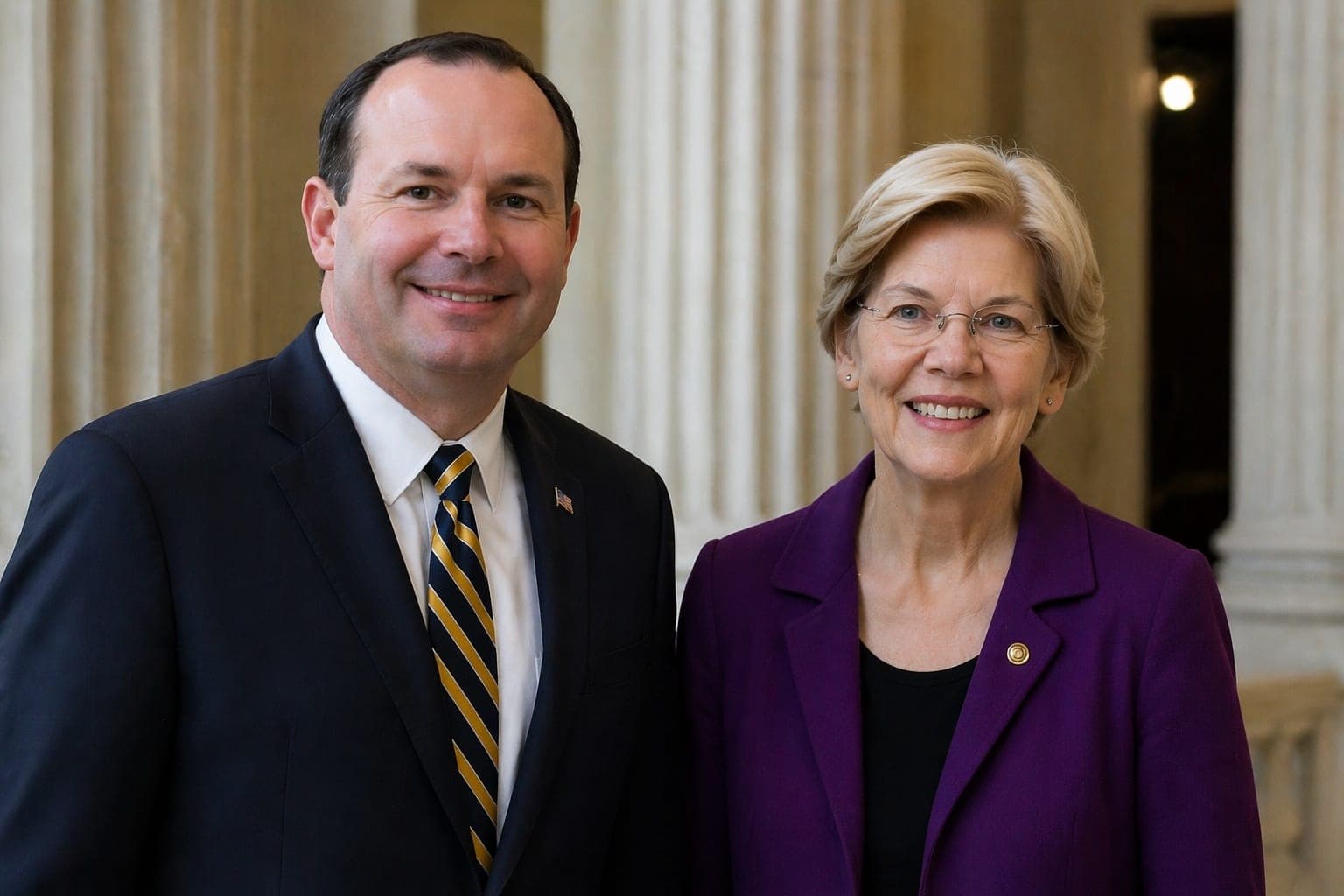
Senators Warn United-American Merger Would Create “Industry Behemoth”
A bipartisan pair of senators is raising alarm bells over even the idea of a United Airlines and American Airlines merger. Senators Warn United And American Against Merger, Cite Higher Prices And Fewer Choices A new bipartisan letter from U.S. Sen. Elizabeth Warren (D – MA) and Sen. Mike Lee (R – UT) sent to United Airlines CEO Scott Kirby and American Airlines CEO Robert Isom makes clear that even floating the idea of a merger has caught the attention of lawmakers in Washington. The concern is straightforward: combining United and American would create what the senators call an “industry behemoth” in a market that is already too consolidated. “A merger between United Airlines and American Airlines would create the largest airline in the world…in an industry already plagued by a lack of competition.” That framing sets the tone for the entire letter. Nearly Half The U.S. Market The senators argue that a combined airline would dominate the industry in a way that goes far beyond prior consolidation. “A merger between United and American would combine two of the ‘Big Four’ U.S. airlines into an ‘industry behemoth,’ controlling nearly half of the U.S. market share… and creating the largest airline on the planet by revenue.” They go further, noting the sheer scale of what such a merger would look like: “The combined entity would own more than 2,800 aircraft – more than double the fleet size of the next-largest air carrier – and be able to service 405 million passengers – far more than any other air carrier in the world.” There is no arguing that an AA-UA merger would fundamentally reshape the U.S. airline industry. Higher Fares, More Fees The letter repeatedly returns to a familiar argument: less competition leads to higher prices. “Decreased competition between airlines leads to higher ticket prices and ancillary fees… airlines across the industry could raise ticket prices and fees even higher.” Senators point to the current environment, where fares are already rising and airlines are increasing fees for everything from checked bags to seat selection. They also cite Kirby’s own past comments about consolidation allowing airlines to push through fare increases and expand ancillary revenue streams (he made those comments back in 2013). Fewer Routes, Less Competition Beyond pricing, the letter warns that a merger could reduce service, especially in overlapping hubs like Chicago O’Hare and Dallas-Fort Worth. “A combined United-American airline would potentially no longer find it profitable to service all of United’s and American’s routes…reducing options for consumers.” There is also concern about gate access and competitive pressure on smaller airlines. “A combined United-American airline…could exploit its outsized market power to shut out smaller competitors.” The ongoing turf battle at Chicago O’Hare is already squeezing low-cost carriers, and lawmakers suggest a merger would make that dynamic worse. Labor Concerns And Market Power The letter also warns that a merger could lead to job loss and superess wages: “A potential merger would also raise concerns regarding monopsony power and job loss at the combined airline. Significant consolidation suppresses wages and compensation across the industry by reducing the number of competing employers bidding for workers.” Fewer major employers competing for pilots, flight attendants, and other workers could mean downward pressure on compensation. Direct Questions To United And American The senators are demanding detailed answers: “Have you or other company officials discussed a merger between your airlines?… Do you currently have any plans to seek board or shareholder approval for a merger?” They also ask directly whether such a merger would lead to: Higher fares Higher ancillary fees Job losses Route cuts And they want data to back up whatever answers the airlines provide. I suspect AA will send a simple letter back saying it is not interested in pursuing a merger, but the response from United might be much more interesting. CONCLUSION At this point, there is no actual merger proposal on the table, only reports that the idea was floated. American has even said it is not interested in any deal with United. But this letter makes clear that even discussing a United-American combination is enough to trigger immediate political resistance…a warning that even if the Trump administration miraculously lets it go through, the next administration could undo it. Lawmakers from both sides are already framing the deal as anti-competitive, harmful to consumers, and potentially damaging to workers. That is not a great starting point if either airline ever wanted to seriously pursue it… Part of this is just the political posturing we have come to expect from our elected leaders, but it does show that even the slightest hint of combining United and American is going to face intense scrutiny long before it gets anywhere close to becoming reality. > Read More: American Airlines Rejects United Merger, Praises Trump, Signals Bigger Shakeup
Senators Warn United-American Merger Would Create “Industry Behemoth”
A bipartisan pair of senators is raising alarm bells over even the idea of a United Airlines and American Airlines merger. Senators Warn United And American Against Merger, Cite Higher Prices And Fewer Choices A new bipartisan letter from U.S. Sen. Elizabeth Warren (D – MA) and Sen. Mike Lee (R – UT) sent to United Airlines CEO Scott Kirby and American Airlines CEO Robert Isom makes clear that even floating the idea of a merger has caught the attention of lawmakers in Washington. The concern is straightforward: combining United and American would create what the senators call an “industry behemoth” in a market that is already too consolidated. “A merger between United Airlines and American Airlines would create the largest airline in the world…in an industry already plagued by a lack of competition.” That framing sets the tone for the entire letter. Nearly Half The U.S. Market The senators argue that a combined airline would dominate the industry in a way that goes far beyond prior consolidation. “A merger between United and American would combine two of the ‘Big Four’ U.S. airlines into an ‘industry behemoth,’ controlling nearly half of the U.S. market share… and creating the largest airline on the planet by revenue.” They go further, noting the sheer scale of what such a merger would look like: “The combined entity would own more than 2,800 aircraft – more than double the fleet size of the next-largest air carrier – and be able to service 405 million passengers – far more than any other air carrier in the world.” There is no arguing that an AA-UA merger would fundamentally reshape the U.S. airline industry. Higher Fares, More Fees The letter repeatedly returns to a familiar argument: less competition leads to higher prices. “Decreased competition between airlines leads to higher ticket prices and ancillary fees… airlines across the industry could raise ticket prices and fees even higher.” Senators point to the current environment, where fares are already rising and airlines are increasing fees for everything from checked bags to seat selection. They also cite Kirby’s own past comments about consolidation allowing airlines to push through fare increases and expand ancillary revenue streams (he made those comments back in 2013). Fewer Routes, Less Competition Beyond pricing, the letter warns that a merger could reduce service, especially in overlapping hubs like Chicago O’Hare and Dallas-Fort Worth. “A combined United-American airline would potentially no longer find it profitable to service all of United’s and American’s routes…reducing options for consumers.” There is also concern about gate access and competitive pressure on smaller airlines. “A combined United-American airline…could exploit its outsized market power to shut out smaller competitors.” The ongoing turf battle at Chicago O’Hare is already squeezing low-cost carriers, and lawmakers suggest a merger would make that dynamic worse. Labor Concerns And Market Power The letter also warns that a merger could lead to job loss and superess wages: “A potential merger would also raise concerns regarding monopsony power and job loss at the combined airline. Significant consolidation suppresses wages and compensation across the industry by reducing the number of competing employers bidding for workers.” Fewer major employers competing for pilots, flight attendants, and other workers could mean downward pressure on compensation. Direct Questions To United And American The senators are demanding detailed answers: “Have you or other company officials discussed a merger between your airlines?… Do you currently have any plans to seek board or shareholder approval for a merger?” They also ask directly whether such a merger would lead to: Higher fares Higher ancillary fees Job losses Route cuts And they want data to back up whatever answers the airlines provide. I suspect AA will send a simple letter back saying it is not interested in pursuing a merger, but the response from United might be much more interesting. CONCLUSION At this point, there is no actual merger proposal on the table, only reports that the idea was floated. American has even said it is not interested in any deal with United. But this letter makes clear that even discussing a United-American combination is enough to trigger immediate political resistance…a warning that even if the Trump administration miraculously lets it go through, the next administration could undo it. Lawmakers from both sides are already framing the deal as anti-competitive, harmful to consumers, and potentially damaging to workers. That is not a great starting point if either airline ever wanted to seriously pursue it… Part of this is just the political posturing we have come to expect from our elected leaders, but it does show that even the slightest hint of combining United and American is going to face intense scrutiny long before it gets anywhere close to becoming reality. > Read More: American Airlines Rejects United Merger, Praises Trump, Signals Bigger Shakeup