3 stories credited to KPBS Public Media
6 stories on kpbs.org credited to other publishers
Latest story Sep 21, 2026 · on ChamberLight since Apr 2026
A story can appear as several articles (copies of the same piece), so counts of stories and of articles differ.
Scores for KPBS Public Media
Writing quality not enough rated stories yet: 2 of 10. How it is measured
Scores last checked Sep 25, 2026.
Articles this site reproduces
How provenance is decidedOriginal publishers of articles on kpbs.org
Counted from articles on kpbs.org whose original publisher is verified from the page itself or confirmed by an independent signal.
Stories ChamberLight collected, by month
Stories credited to KPBS Public Media, by publication date. ChamberLight collects articles that mention the officials it tracks, so this shows its own coverage of this source, not how much the source publishes.
- Stories from KPBS Public Media
- Shaded: ChamberLight collected no stories, or almost none, from any outlet (a gap in its collection, not in the outlet’s publishing)
Show as a table
| Month | Stories | All outlets |
|---|---|---|
| April 2026 | 1 | 3,220 |
| May 2026 | 0 | none collected |
| June 2026 | 0 | none collected |
| July 2026 | 0 | none collected |
| August 2026 | 0 | 1 (collection gap) |
| September 2026 | 2 | 1,320 |
Top topics
Share of this source’s stories tagged with each topic. A story can carry several topics, so the shares do not add up to 100%.
- Ethics/Corruption3
100% of 3 stories · 58% across all outlets
- Criminal Justice1
33% of 3 stories · 19% across all outlets
- Defense/Military1
33% of 3 stories · 25% across all outlets
- Technology/Privacy1
33% of 3 stories · 10% across all outlets
- Voting Rights1
33% of 3 stories · 19% across all outlets
The thin mark on each bar is the topic’s share across all outlets.
Who they cover
Party of the officials these stories are mainly about, across all 4 officials named. A story counts once for each official it is mainly about, so the split is over 4 story–official pairs, from 3 stories.
- Democrat50% · 2 pairs
- Republican25% · 1 pair
- Party not recorded25% · 1 pair
Most covered
Stories mainly about each official, and their share of the source’s 3 stories.
Article tone
ChamberLight’s article analysis assigns each story a tone toward the official it covers. It describes the coverage of that official, not KPBS Public Media’s stance, and reader votes do not change it. 3 stories.
- Good Look
- 1 (33%)
- Mixed
- 0 (0%)
- Informational
- 0 (0%)
- Bad Look
- 2 (67%)
Challenges to these scores
No one has challenged a score on this page yet. Anyone can; editors publish every outcome here.
Articles served from kpbs.org
13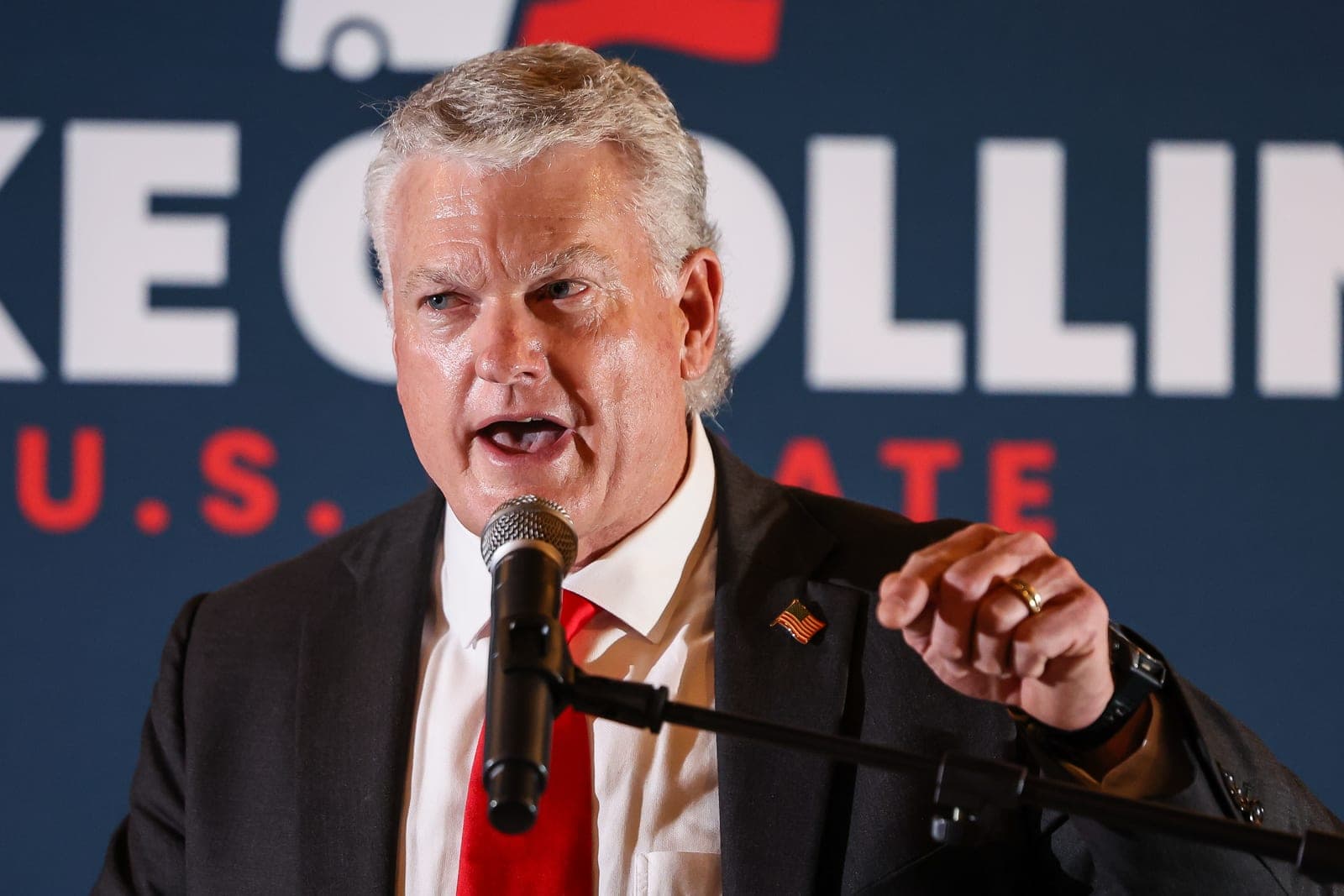
Many GOP candidates still echo Trump's 2020 claims. Lots of voters want to move on
While many Republican candidates, even in some critical tossup races, still back President Trump's baseless claims about election integrity, some GOP voters say they are ready to move on.
Many GOP candidates still echo Trump's 2020 claims. Lots of voters want to move on
While many Republican candidates, even in some critical tossup races, still back President Trump's baseless claims about election integrity, some GOP voters say they are ready to move on.

AI industry leaders' calling for more regulations sparks national debate
It once felt like science fiction. But artificial intelligence, or AI, is now integrated into our daily lives. It's in search engines and accessible with a click of a mouse. The technology holds promise for opening new doors to scientific discoveries. But industry leaders warn that its rapid develo
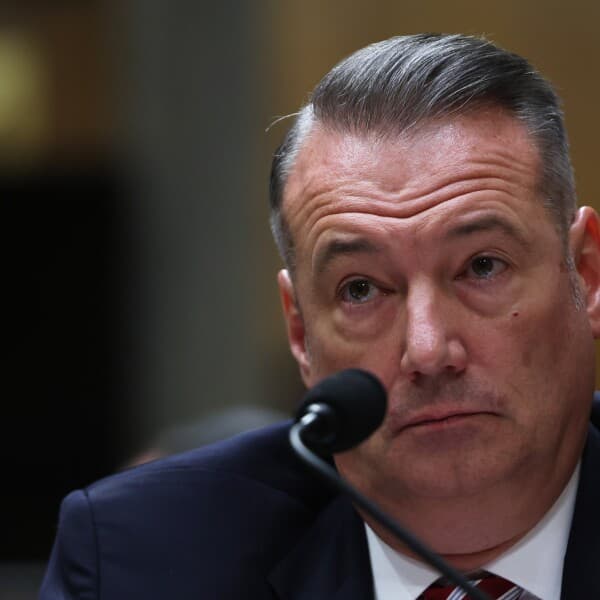
Acting ICE director says he's resigning amid record-breaking shutdown
FILE - Todd Lyons, senior official performing the duties of the director at U.S. Immigration and Customs Enforcement, listens during a Senate Homeland Committee hearing on Capitol Hill in Washington, Feb. 12, 2026.(Tom Brenner) Updated April 17, 2026 at 8:11 AM PDT President Trump's top Immigration and Customs Enforcement official, Todd Lyons, said he would resign on Thursday as acting director, adding to the list of leadership shakeups at the Department of Homeland Security. His exit, which will be effective May 31, comes amid continued scrutiny of his agency's aggressive immigration tactics and a record-long funding lapse from Congress that resulted in a lack of pay for ICE attorneys, investigators and administrative staff. It was not immediately clear why he was leaving. Under his tenure, the agency took the lead in Trump's mass deportation agenda, rapidly scaling up sweeping arrests across the country. Lyons faced intense pressure to carry out the administration's deportation goals, which included 3,000 arrests a day. ICE has not met that number. He also oversaw a hiring surge that brought on 12,000 new employees, a record-high number of people in immigration detention and over 570,000 deportations. "Todd is a phenomenal patriot and dedicated leader who has been at the center of President Trump's historic efforts to secure our homeland and reverse the Democrats' sinister border invasion," White House Deputy Chief of Staff Stephen Miller said in a statement. "His courageous work at ICE has saved countless thousands of American lives and helped deliver safety and tranquility to millions of Americans." His resignation comes after several other staffing changes at the broader department after more than a year of Trump's second term. Homeland Security Secretary Markwayne Mullin, a former Oklahoma senator, took over from Kristi Noem to run the agency as of last month. Madison Sheahan, former deputy director at Immigration and Customs Enforcement, left her post at the start of the year to run for Congress. And top department spokesperson Tricia McLaughlin left her role in February. Lyons resigned after testifying on Capitol Hill earlier on Thursday. He and other senior leaders at DHS testified on their agencies' fiscal year 2027 budget requests — even as the agencies are still not funded for fiscal year 2026. "I am deeply proud to stand alongside the dedicated men and women of ICE who work tirelessly every day to enforce our nation's immigration laws," Lyons said in opening remarks. "One of my top priorities is to ensure that ICE operates efficiently." In recent months, Lyons also faced criticism and questions from lawmakers regarding various instances of use of force by his officers, including after an ICE officer shot and killed a U.S. citizen in Minnesota in January. Lyons told Congress the agency conducted 37 investigations into officers' use of force last year — though he didn't say whether anyone was fired. (Customs and Border Protection officers in January also shot and killed a U.S. citizen.) Lyons also faced questions about the training new ICE recruits have received and the conditions under which deportees are detained. This year is also on track to break records for the number of people to have died in ICE custody. Lyons joined the agency in 2007 after being with the U.S. Air Force. His next steps are unknown but a statement from Mullin said he would be pursuing an opportunity in the private sector. "He jumpstarted an agency that had not been allowed to do its job for four years. Thanks to his leadership, American communities are safer," Mullin said. "We wish him luck on his next opportunity in the private sector." The ICE director must be confirmed by the Senate; Lyons had only been serving in an acting capacity. There has not been a Senate-confirmed ICE director since the Obama administration. Copyright 2026 NPR
Acting ICE director says he's resigning amid record-breaking shutdown
FILE - Todd Lyons, senior official performing the duties of the director at U.S. Immigration and Customs Enforcement, listens during a Senate Homeland Committee hearing on Capitol Hill in Washington, Feb. 12, 2026.(Tom Brenner) Updated April 17, 2026 at 8:11 AM PDT President Trump's top Immigration and Customs Enforcement official, Todd Lyons, said he would resign on Thursday as acting director, adding to the list of leadership shakeups at the Department of Homeland Security. His exit, which will be effective May 31, comes amid continued scrutiny of his agency's aggressive immigration tactics and a record-long funding lapse from Congress that resulted in a lack of pay for ICE attorneys, investigators and administrative staff. It was not immediately clear why he was leaving. Under his tenure, the agency took the lead in Trump's mass deportation agenda, rapidly scaling up sweeping arrests across the country. Lyons faced intense pressure to carry out the administration's deportation goals, which included 3,000 arrests a day. ICE has not met that number. He also oversaw a hiring surge that brought on 12,000 new employees, a record-high number of people in immigration detention and over 570,000 deportations. "Todd is a phenomenal patriot and dedicated leader who has been at the center of President Trump's historic efforts to secure our homeland and reverse the Democrats' sinister border invasion," White House Deputy Chief of Staff Stephen Miller said in a statement. "His courageous work at ICE has saved countless thousands of American lives and helped deliver safety and tranquility to millions of Americans." His resignation comes after several other staffing changes at the broader department after more than a year of Trump's second term. Homeland Security Secretary Markwayne Mullin, a former Oklahoma senator, took over from Kristi Noem to run the agency as of last month. Madison Sheahan, former deputy director at Immigration and Customs Enforcement, left her post at the start of the year to run for Congress. And top department spokesperson Tricia McLaughlin left her role in February. Lyons resigned after testifying on Capitol Hill earlier on Thursday. He and other senior leaders at DHS testified on their agencies' fiscal year 2027 budget requests — even as the agencies are still not funded for fiscal year 2026. "I am deeply proud to stand alongside the dedicated men and women of ICE who work tirelessly every day to enforce our nation's immigration laws," Lyons said in opening remarks. "One of my top priorities is to ensure that ICE operates efficiently." In recent months, Lyons also faced criticism and questions from lawmakers regarding various instances of use of force by his officers, including after an ICE officer shot and killed a U.S. citizen in Minnesota in January. Lyons told Congress the agency conducted 37 investigations into officers' use of force last year — though he didn't say whether anyone was fired. (Customs and Border Protection officers in January also shot and killed a U.S. citizen.) Lyons also faced questions about the training new ICE recruits have received and the conditions under which deportees are detained. This year is also on track to break records for the number of people to have died in ICE custody. Lyons joined the agency in 2007 after being with the U.S. Air Force. His next steps are unknown but a statement from Mullin said he would be pursuing an opportunity in the private sector. "He jumpstarted an agency that had not been allowed to do its job for four years. Thanks to his leadership, American communities are safer," Mullin said. "We wish him luck on his next opportunity in the private sector." The ICE director must be confirmed by the Senate; Lyons had only been serving in an acting capacity. There has not been a Senate-confirmed ICE director since the Obama administration. Copyright 2026 NPR

House passes bill extending protections for Haitian migrants in the U.S.
People chant during a rally in Fort Lauderdale, Fla., in support of the extension of Temporary Protected Status (TPS) for Haitian immigrants.(Lynne Sladky) The U.S. House voted on Thursday to extend temporary protected status for Haitian migrants through 2029, with several Republicans supporting the Democratic-endorsed measure to curb President Trump's immigration crackdown. The vote was split 224-204, with 10 Republicans joining the Democrats in approving the resolution. Rep. Ayanna Pressley (D-Mass.), who led the effort, used a congressional procedure called a discharge petition to force a vote to the floor. "This is a monumental victory in a long-fought battle to protect the safety, dignity, and humanity of our Haitian neighbors," Pressley said in a statement after the bill's passage. "Democrats and Republicans alike have come together to support our Haitian neighbors not just because this is good, commonsense policy, but because it is the right, humane thing to do." Many of the Republicans who voted for the measure are from districts considered competitive in the upcoming midterm election, including in New York. The Republicans who voted in favor of the measure include Florida Reps. María Elvira Salazar, Carlos Gimenez and Mario Diaz-Balart, and Ohio Reps. Mike Carey and Mike Turner. The bill now heads to the Senate, where it faces an uphill battle against a Republican majority. If it does pass the Senate, the White House has said that Trump would veto the bill. "The Administration understands members have to vote their districts at times," the White House said in a statement to NPR. "This terrible bill is going nowhere and there has been a veto threat issued. The administration is focused on enforcing federal immigration law and putting American citizens first." Haiti is one of more than a dozen countries Trump has targeted to strip temporary protected status (TPS) for its citizens. TPS is intended to provide a safe haven for foreign nationals whose home countries are experiencing armed conflict, fallout from natural disasters, and other temporarily unsafe conditions. Haitians were granted protections in 2010 under then-President Obama following the devastating earthquake that rocked the already beleaguered nation and left an estimated 220,000 dead and 1.5 million people displaced. The Biden and first Trump administrations both extended TPS for Haitian refugees. Proponents of the extensions say the country remains wracked by gang violence and crumbling medical infrastructure. Despite what the U.N. describes as a humanitarian crisis in the country, the Department of Homeland Security said that there are no longer "extraordinary and temporary conditions" to prevent refugees from returning to the Caribbean nation and that it was "contrary to the national interest of the United States" to allow them to remain. Trump has described Haitian migrants as a threat to the American way of life, including spreading a racist and unfounded lie that Haitians were eating household pets in Springfield, Ohio. Trump previously announced that the protected status for the more than 330,000 Haitians as well as some 6,000 Syrians who live in the U.S. would end in February, but a federal judge blocked the administration from issuing those deportation orders. Their status remains protected pending a decision from the Supreme Court. The high court is set to hear arguments on that case this month with a decision likely by June. Copyright 2026 NPR
House passes bill extending protections for Haitian migrants in the U.S.
People chant during a rally in Fort Lauderdale, Fla., in support of the extension of Temporary Protected Status (TPS) for Haitian immigrants.(Lynne Sladky) The U.S. House voted on Thursday to extend temporary protected status for Haitian migrants through 2029, with several Republicans supporting the Democratic-endorsed measure to curb President Trump's immigration crackdown. The vote was split 224-204, with 10 Republicans joining the Democrats in approving the resolution. Rep. Ayanna Pressley (D-Mass.), who led the effort, used a congressional procedure called a discharge petition to force a vote to the floor. "This is a monumental victory in a long-fought battle to protect the safety, dignity, and humanity of our Haitian neighbors," Pressley said in a statement after the bill's passage. "Democrats and Republicans alike have come together to support our Haitian neighbors not just because this is good, commonsense policy, but because it is the right, humane thing to do." Many of the Republicans who voted for the measure are from districts considered competitive in the upcoming midterm election, including in New York. The Republicans who voted in favor of the measure include Florida Reps. María Elvira Salazar, Carlos Gimenez and Mario Diaz-Balart, and Ohio Reps. Mike Carey and Mike Turner. The bill now heads to the Senate, where it faces an uphill battle against a Republican majority. If it does pass the Senate, the White House has said that Trump would veto the bill. "The Administration understands members have to vote their districts at times," the White House said in a statement to NPR. "This terrible bill is going nowhere and there has been a veto threat issued. The administration is focused on enforcing federal immigration law and putting American citizens first." Haiti is one of more than a dozen countries Trump has targeted to strip temporary protected status (TPS) for its citizens. TPS is intended to provide a safe haven for foreign nationals whose home countries are experiencing armed conflict, fallout from natural disasters, and other temporarily unsafe conditions. Haitians were granted protections in 2010 under then-President Obama following the devastating earthquake that rocked the already beleaguered nation and left an estimated 220,000 dead and 1.5 million people displaced. The Biden and first Trump administrations both extended TPS for Haitian refugees. Proponents of the extensions say the country remains wracked by gang violence and crumbling medical infrastructure. Despite what the U.N. describes as a humanitarian crisis in the country, the Department of Homeland Security said that there are no longer "extraordinary and temporary conditions" to prevent refugees from returning to the Caribbean nation and that it was "contrary to the national interest of the United States" to allow them to remain. Trump has described Haitian migrants as a threat to the American way of life, including spreading a racist and unfounded lie that Haitians were eating household pets in Springfield, Ohio. Trump previously announced that the protected status for the more than 330,000 Haitians as well as some 6,000 Syrians who live in the U.S. would end in February, but a federal judge blocked the administration from issuing those deportation orders. Their status remains protected pending a decision from the Supreme Court. The high court is set to hear arguments on that case this month with a decision likely by June. Copyright 2026 NPR

Once again, Trump threatens to fire Fed Chair Jerome Powell
President Trump accompanied Federal Reserve chairman Jerome Powell on a tour of the Fed's headquarters renovation last summer. The Justice Department is investigating cost overruns on the project.(Chip Somodevilla) President Trump has once again threatened to fire Federal Reserve Chairman Jerome Powell, whose term is set to expire in a month. Trump also vowed to continue a criminal investigation of the central bank, which could complicate the path of installing Trump's nominee to replace Powell. The president's threat came in an interview with Fox Business that aired on Wednesday. "He's doing a bad job," Trump said of Powell. "He should be lowering interest rates." Trump has repeatedly threatened to remove the Fed chairman, although it's not clear he has the authority to do so, absent a showing of serious wrongdoing. The Supreme Court is currently weighing a related case after Trump tried to fire a member of the Fed's governing board, Lisa Cook. The high court has allowed Cook to remain on the job while that case is pending. Powell's term as Fed chairman is set to expire in mid-May, but he's promised to stay on the job until a successor is confirmed. "That is what the law calls for," Powell told reporters last month. "And that's what we're going to do in this situation." Powell could opt to stay on the Fed's board Powell also has the option to remain on the Fed's governing board until 2028, and he's said he will not step down until the Justice Department resolves its probe of cost overruns at the Fed's headquarters renovation project. Last month, a federal judge ruled that those cost overruns are a mere pretext and concluded that the real purpose of the Justice Department's probe is to intimidate the central bank. "The Government has offered no evidence whatsoever that Powell committed any crime other than displeasing the President," Judge James Boasberg wrote in a decision quashing subpoenas. "There is abundant evidence that the subpoenas' dominant (if not sole) purpose is to harass and pressure Powell either to yield to the President or to resign and make way for a Fed Chair who will." So far, prosecutors have not backed down. The Wall Street Journal and The New York Times reported that two prosecutors made a surprise visit to the Fed's headquarters construction site on Tuesday. NPR has not independently confirmed the visit. That could backfire on the president, delaying the confirmation of Kevin Warsh to serve as the next Fed chair and leaving Powell in the position longer. A key member of the Senate Banking Committee, Republican Thom Tillis of North Carolina, has said he will not vote to confirm Trump's nominee until the Justice Department's probe is resolved. The committee is scheduled to hold a hearing on Warsh's nomination next week. Trump told Fox Business he would not instruct prosecutors to drop their probe of the Federal Reserve. "Don't you think we have to find out what happened there?" the president said. Copyright 2026 NPR

Eric Swalwell will resign from Congress as he faces backlash over assault allegations
Rep. Eric Swalwell, D-Calif., speaks at a news conference at the U.S. Capitol on September 08, 2025.(Anna Moneymaker) Updated April 14, 2026 at 1:56 AM PDT Rep. Eric Swalwell, D-Calif., is resigning from his seat in Congress as he faces growing backlash to allegations of sexual assault and misconduct. In a statement posted to social media Monday, Swalwell acknowledged growing calls among lawmakers to expel him from the House of Representatives. "Expelling anyone in Congress without due process, within days of an allegation being made, is wrong. But it's also wrong for my constituents to have me distracted from my duties. Therefore, I plan to resign my seat in Congress," Swalwell said. Swalwell's decision comes just one day after he announced he was suspending his campaign for governor of California. It marks a fall from political grace for the seven-term Democrat, who had widely been seen as a frontrunner in the gubernatorial race. Swalwell, 45, has been embattled in controversy since last week, when rumors began to circulate online about the congressman and an alleged history of abusive behavior toward women. By Friday, the controversy gained new momentum after at least four women spoke with the San Francisco Chronicle and CNN, detailing their experiences, which range from unwanted sexual advances by Swalwell to allegations of rape. NPR has not independently verified the allegations against Swalwell, but he has adamantly denied them and vowed to fight back. "To my family, staff, friends, and supporters, I am deeply sorry for mistakes in judgment I've made in my past," he had said in a post Sunday announcing he would suspend his bid for governor. "I will fight the serious, false allegations that have been made — but that's my fight, not a campaign's." Swalwell did not say when his resignation would take effect, but once it does, California Gov. Gavin Newsom would have 14 days to call a special election to fill the vacancy. The Bay Area seat is in a safely Blue district that Kamala Harris carried over President Trump in 2024 by 35 points. Democratic leaders moved to quickly condemn Swalwell after the allegations began to surface, with top campaign supporters renouncing their support — including Minority Leader Hakeem Jeffries, D-N.Y., and former House Speaker Nancy Pelosi, D-Calif. More than 50 former Swalwell staffers called for him to resign, as top Democrats in the House issued a statement calling for a "swift investigation." On Monday, the House Ethics Committee announced it was launching an investigation into whether Swalwell "may have engaged in sexual misconduct, including towards an employee working under his supervision." His resignation effectively ends that investigation. The scandal has fueled an ongoing debate within the halls of Congress over how to handle allegations of wrongdoing by lawmakers. Even before the Swalwell allegations came to light, a handful of Republican and Democratic House members were demanding that Rep. Tony Gonzales, R-Texas, step down over allegations of a past affair with a staff member who later died by suicide. Gonzales admitted to the affair in March and later dropped his bid for reelection — though he did not immediately resign his seat. Shortly after Swalwell announced his resignation, Gonzales posted on social media that he planned to file his retirement from Congress on Tuesday. Rep. Anna Paulina Luna, R-Fla. has led a push to expel both members. She has also sought the ouster of Rep. Sheila Cherfilus-McCormick, who was indicted last year on charges of stealing $5 million in federal disaster funds. The Florida Democrat has denied the allegations. "I don't care what the party affiliation is, if they are corrupt and engaging in illegal activity in Congress I'm going to vote to expel them." Luna wrote. "It is time Congress has a good house cleaning." Copyright 2026 NPR

Swalwell suspends campaign for California governor after being accused of sexual assault
California gubernatorial candidate, Rep. Eric Swalwell, D-CA appears at a town hall meeting in Sacramento, Calif., Tuesday, April 7, 2026. (AP Photo/Rich Pedroncelli)(Rich Pedroncelli) Democratic Rep. Eric Swalwell suspended his campaign for California governor on Sunday following sexual assault allegations that he continues to deny. “I will fight the serious, false allegations that have been made — but that’s my fight, not a campaign’s,” Swalwell said in a social media post. The House Ethics Committee has begun an investigation into whether Rep. Eric Swalwell, D-Calif., engaged in sexual misconduct toward an employee working under his supervision, the panel announced Monday. The announcement comes one day after Swalwell suspended his campaign for California governor after the emergence of allegations that he continues to deny. Democrats quickly abandoned him after allegations that he sexually assaulted a woman twice, including when she worked for him, were published Friday in the San Francisco Chronicle and later by CNN. The reports came as Swalwell began to emerge as a leader contender in the crowded race. His exit from the race comes less than a month before ballots go out in advance of the June 2 primary and as Democrats have been engaged in a messy primary campaign. Swalwell's Democratic rivals were among those who swiftly urged him to exit the race, but his support also cratered among allies in Congress and labor unions who had endorsed him. Some Democrats also urged Swalwell to resign his seat in Congress, but he made no mention of that Sunday. The 48-hour period marked a rapid reversal for a candidate who appeared to be gaining momentum in the packed field to replace Democratic Gov. Gavin Newsom, who can’t seek a third term. Though Swalwell has denied the allegations, he has seemingly referenced infidelity in multiple statements. “To my family, staff, friends, and supporters, I am deeply sorry for mistakes in judgment I’ve made in my past,” he wrote. That followed a video post on Friday where he apologized to his wife. Swalwell's exit shakes up campaign The accusations reordered a wide-open gubernatorial race that had Democrats fretting the party’s large number of candidates could lead to them getting shut out of the general election in November. That’s because California has a top-two primary system in which two candidates advance regardless of party. Swalwell had become a clear target for his Democratic rivals as he began to lock up institutional support. Some had seized on rumors of sexual misconduct that circulated on social media for weeks before the Chronicle's report. His departure from the race will leave his rivals scrambling to win over his supporters and donors. Other prominent Democrats in the race include billionaire climate activist Tom Steyer and former U.S. Rep. Katie Porter. The major Republican contenders are former Fox News host Steve Hilton, who has Trump’s backing, and Riverside County Sheriff Chad Bianco. The San Francisco Chronicle spoke to a woman who alleged Swalwell sexually assaulted her in 2019, when she worked for him, and again in 2024. The woman said she did not go to police at the time of the assaults because she was afraid she would not be believed. In both cases the woman said she was too intoxicated to consent to sex. CNN reported on allegations that appeared to come from the same woman, and spoke to several other women who accused Swalwell of other sexual misconduct. Neither outlet named the woman, and The Associated Press has not been able to independently verify her account and identity. Her lawyer declined to comment. The alleged 2024 incident occurred in New York, and the Manhattan District Attorney’s Office said it's investigating. That office urged anyone with knowledge to contact its special victims division. House colleagues call for Swalwell to resign As Swalwell's campaign flailed over the weekend, fellow California Reps. Jared Huffman, Ro Khanna and Sam Liccardo said Swalwell should resign, as did Reps. Teresa Leger Fernández of New Mexico and Pramila Jayapal of Washington state. “This is not a partisan issue,” Jayapal said Sunday. “This cuts across party lines. And it is depravity of the way that women have been treated.” Some representative said they would support the rare step of expelling him should he refuse to step aside. It all added to the mounting political pressure on Swalwell, which began with allies like Sen. Adam Schiff and Rep. Jimmy Gomez cutting their support. Gomez had helped run Swalwell’s campaign and said he was immediately ending his role. With the House returning to session Tuesday, the question of whether to expel Swalwell could come to a head quickly. Rep. Anna Paulina Luna, R-Fla., said Saturday that she would be filing a motion to start the process. Expulsion votes in the House are rare and require a two-thirds majority, but there is recent precedent for taking the step. Republican George Santos of New York in 2023 became just the sixth member in House history to be ousted by colleagues for his conduct. Huffman, Jayapal and Leger Fernández said they would vote to expel Swalwell from the House, though they said they also support expelling Rep. Tony Gonzales, R-Texas, who admitted to an affair with a former staff member who later died by suicide. Swalwell, who is originally from Iowa, was elected in 2012 and represents a House district east of San Francisco. He launched a presidential run in April 2019 but shuttered it a few months later after failing to catch on with voters. He is perhaps best known nationally as a House manager in President Donald Trump’s second impeachment trial during his first term in early 2021.

California billionaire tax is a no-brainer for progressive Democrats, right? Wrong.
People supporting Billionaire Tax Now hold up signs at the 2026 California Democratic Party State Convention in San Francisco, Saturday, Feb. 21, 2026.(Jeff Chiu) This story was originally published by CalMatters. Sign up for their newsletters. A union-backed proposal to tax California’s billionaires to fund health care has put some progressive lawmakers — and their labor allies — in a quandary. Taxing the rich to backfill Trump-induced federal funding cuts might sound like a no-brainer policy for the party’s left flank, which counts wealth inequality among its top issues. But despite a strong show of support from prominent national figures, including Sen. Bernie Sanders of Vermont and liberal economist Robert Reich, the “2026 California Billionaire Tax Act” has become a hot potato for labor leaders. The proposed initiative would levy a one-time tax of 5% on any resident of California whose net worth exceeds $1 billion, which applies to around 200 people, according to Forbes. That money would plug an estimated $100 billion hole left by federal cuts to Medi-Cal and other social service programs. Publicly, prominent labor and progressive players have largely kept quiet, unlike Gov. Gavin Newsom who has aired his disdain loud and clear. Yet in private, some union leaders and their allies in the Legislature rail against the measure. Of the critics who spoke with CalMatters for this story — three union leaders and five members of the Legislative Progressive Caucus — only one lawmaker would criticize the measure openly. Critics question its feasibility and whether the state even knows how to accurately appraise a billionaire’s total wealth, a crucial step to evaluating how much tax they would owe. They fear long-term revenue loss by driving wealthy people out of California. And some resent that the union sponsoring the initiative, SEIU-United Healthcare Workers West, designed the measure to predominantly benefit its members rather than boost the state’s general fund, where it could go to all budget needs. “It's not that taxing billionaires in itself is wrong,” said Keely Martin Bosler, formerly the top state budget officer to Newsom and former Gov. Jerry Brown. She is now a Democratic consultant who has advised several of California’s most powerful labor groups, including the Service Employees International Union of California, the parent union of SEIU-UHW. “The way in which this tax specifically is constructed is problematic.” Many progressive state lawmakers and Capitol heavyweights, such as Sen. Scott Wiener of San Francisco and the powerful California Labor Federation, have sidestepped the question of whether they’d support it, declining for now to take a position on an initiative that has yet to officially qualify for the ballot. “The Labor Federation won’t take it up for an endorsement until July,” said Lorena Gonzalez, the organization’s president, in a text message. Yet if the tax lands on the November ballot, as it appears on track to do, progressive critics will be saddled with the tricky optics of opposing — or at least not supporting — a measure that embodies one of their base’s core tenets: taxing the rich. Even the mere threat the measure could qualify for the ballot has already spurred a torrent of opposition spending — more than $50 million in total so far — from billionaires such as Google co-founder Sergey Brin and cryptocurrency mogul Chris Larsen. Brin’s group, known as “Building a Better California,” has also spawned three new competing ballot measures designed to undermine the billionaires’ tax. Critics fear that if billionaires like Brin become even bigger perennial spenders in California politics, they could neuter the progressive agenda by bankrolling more business-friendly candidates and ousting left-leaning, labor-aligned legislators. But the measure’s proponents say they are undeterred by the secretive detractors and challenge their critics to put their names behind their words. “What we have is a group of so-called leaders who are not reflecting the attitudes of their own constituents,” said Dave Regan, president of SEIU-UHW and the de facto leader of the billionaire tax measure. “That’s why they want to be anonymous.” Regan said he’s confident the initiative will amass enough signatures to qualify for the ballot before the end of April. Then, he said, “We believe a lot of those people are going to come around and change because this makes sense, because the public is supportive, because their own members are supportive.” The case for, and against, the billionaires’ tax So far, polling has shown the billionaire tax is relatively popular with voters. Recent surveys show just over half of Californians surveyed said they’re inclined to vote for it. Critics point out that California’s existing state tax structure is entirely based on income, rather than net worth. The state would have to appraise each person’s assets, including real estate, art, automobiles and private and public businesses. The billionaires could pay in installments, handing over 1% of their wealth annually for five years. Bosler said that with income tax filings, the Franchise Tax Board can use data from federal tax returns to verify its own analysis. Since there’s no federal wealth tax, California would be forging uncharted territory with no tax compliance support from any other source or agency — a risky move that could invite legal challenges. “The state is not a miracle worker, like, they're not going to suddenly be able to do all of this like perfectly,” said Bosler. “I mean they will do their best, but I just think this is expertise that they have built up over 50-plus years. Like, none of this is in their wheelhouse at this point.” But champions of the tax argue it is the only real solution on the table so far to save hospitals, health care jobs and, ultimately, patient lives they say are at risk due to federal funding cuts to Medi-Cal and food assistance programs. Supporters note that the tax is not intended to solve California’s structural budget problems. “It’s one-time funding to fill what we hope is a one-time hole,” said Brian Galle, a tax law professor at UC Berkeley who helped craft the measure. Galle said only around 200 people would be subjected to the tax, so the extra burden on the Franchise Tax Board wouldn’t be too great. “It's not like FTB is going to get a blizzard of tens of thousands of new returns that they're going to have to figure out a whole new data system for cracking,” said Galle. Why some progressives aren’t on board Those who have qualms with the initiative have largely kept their criticisms private. One liberal state legislator, who spoke on the condition of anonymity, said the infighting among the unions puts progressive lawmakers in a difficult position. While he empathizes with the urgency that health care workers feel, he and other Democrats are not convinced the policy could withstand legal challenges and worry about the wealthy employing savvy accounting maneuvers to skirt the tax altogether. Some organizations that are synonymous with progressive politics in California, such as the Working Families Party, also haven’t taken a position, even as other unions such as the Teamsters and AFSCME California support it. Even the powerhouse labor union SEIU California is choosing not to take a position on the measure, which is spearheaded by one of its local affiliates, SEIU-United Healthcare Workers West. Assembly Speaker Robert Rivas, right, speaks with Assemblymember Chris Ward at the state Capitol in Sacramento on Sept. 12, 2025.(Fred Greaves for CalMatters) Assemblymember Chris Ward, a member of the progressive caucus, called the measure a “well-meaning effort by UHW,” but criticized the proposal for being just a one-time tax primarily benefiting the health care sector rather than boosting the state’s overall revenues. Regan said SEIU-UHW made the tax one-time to nullify the argument that it would push billionaires out of the state. Ward noted that he and his colleagues are considering “superior” bills, such as one that would close a corporate tax loop to generate $3 billion per year, and another that would create a new tax on corporations that pay workers so little that they qualify for Medi-Cal and nutrition assistance. Regan argued these measures would only make California more unaffordable, since businesses would pass their increased costs along to consumers. Ward, the sole state lawmaker who would candidly share his concerns about the initiative with CalMatters, said he and his colleagues have heard pushback from “a number of other labor organizations that don't support that initiative,” primarily because its members would not directly benefit from any of the revenue. Uniting labor, he said, is the key to any successful revenue solution. “There's a need to look at a wealth tax for a more broad range, including health care workers but other purposes that are state priorities,” Ward said, “and that will be left off of the table if this is the only question we're seeing.” For the record: An earlier version of this story misstated Dave Regan's leadership role with SEIU-UHW. He is president, an elected position, not executive director. CalMatters' Nadia Lathan contributed to this story. This article was originally published on CalMatters and was republished under the Creative Commons Attribution-NonCommercial-NoDerivatives license.

Trump shares a look at his future presidential library. Here's what to know about it
A still image from architectural renderings of President Trump's future presidential library, designed by Bermello Ajamil. President Trump has plans to splash his name across a sky-high presidential library in Florida. And he shared the first look at that vision on social media Monday. A two-minute video of architectural renderings shows a skyscraper towering over the rest of the Miami skyline, emblazoned with Trump's last name and an American flag beneath a red, white and blue spire. Inside — through a gold doorway bearing the presidential seal — military aircraft sit next to a golden escalator reminiscent of the one Trump rode down when he announced his first candidacy in 2015. The vehicles parked inside include a plane that looks like Air Force One — presumably the Boeing 787-4 luxury jetliner that the Trump administration accepted from Qatar last year, a controversial gift that it said will live in his future library after he leaves office. The video, set to swelling instrumentals, shows people in formalwear milling about several different spaces, some of which look familiar: a palm-tree-lined courtyard, replicas of the Oval Office and Rose Garden and a gilded ballroom. Some also sit in an auditorium that features a gold statue of Trump raising his fist in the air as he did after surviving an assassination attempt at a 2024 campaign rally. The renderings are credited to Bermello Ajamil, a global architecture and engineering firm with offices in both New York and Florida. But details about the project — including whether the renderings represent the finalized design — are scarce. Willy Bermello, a principal at the architecture firm, told NPR over email that the building will "certainly be the most iconic and tallest US Presidential Library in the history of our country," but did not share specifics. Presidential libraries tend to be known more for their sprawl than their height, though former President Barack Obama's presidential center in Chicago, which is slated to open in June, will feature a buzzy 225-foot obelisk (or "Obamalisk"). "The Trump Presidential Library will be one of the most magnificent buildings in the world and a living testament to the indelible impact President Trump has made on America and its people," White House spokesperson Davis Ingle told NPR over email. It's not clear how long construction will take or how much the project will cost. The architecture firm declined to answer those questions, and the White House referred NPR to the Trump library foundation, which did not respond in time for publication. Eric Trump, a son of the president who manages the Trump Organization's real estate portfolio, wrote on X that he, alongside his team, had "poured my heart and soul into this project" over the past six months. "This landmark on the water in Miami, Florida will stand as a lasting testament to an amazing man, an amazing developer, and the greatest President our Nation has ever known," Eric Trump wrote. The president, meanwhile, simply captioned his Truth Social post with a link to the Trump library website — which displays the same video, a donation form and the words "coming soon." Presidential libraries are technically established to house the archival records of a presidency, but have become synonymous with larger museums and broader campuses. They are typically funded by private donations to a former president's foundation, then transferred to the federal government to be operated and maintained by the National Archives and Records Administration, or NARA. NARA currently administers 16 such libraries from presidents Herbert Hoover through Joe Biden, who is raising money for a library campus in Delaware. Where will Trump's library be? The planned site of Trump's presidential library in Miami, a 2.6-acre parcel previously used as a parking lot, was donated by Miami Dade College last year.(Joe Raedle) Trump is all but synonymous with New York, the city he called home for much of his life. But in 2019, saying he had been "treated very badly by the political leaders of both the city and state," he became a resident of Florida — a red state with no income tax. Trump declared Mar-a-Lago, his resort in Palm Beach, his permanent home. The site set aside for the library is about an hour's drive away, in Miami. Bermello, the architect, told NPR that the site of the library is just south of the Freedom Tower — Miami's first skyscraper, now owned by Miami Dade College and "a landmark for all freedom loving Cuban Americans." It's also across from two museums, the Kaseya Center (where the Miami Heat play), Bayside Marketplace and PortMiami, he added. "This strategic downtown location basically guarantees that more visitors will visit this destination than any other in history – and it's design will serve as beacon [sic] to all cruise ships entering the MIAMI Harbor - 'Cruise Capital of the World,'" he wrote. Miami Dade College transferred the 2.6-acre plot of undeveloped land to the state last year explicitly for this purpose, though it had to overcome legal hurdles and local opposition first. The college's board of trustees voted to give the property — which was being used as an employee parking lot — in late September 2025, and Florida Gov. Ron DeSantis officially transferred it to Trump's presidential library foundation shortly after. "Having the Trump Presidential Library in Miami will be good for Florida, for the city, and for Miami Dade College," DeSantis said at the time. But local activists disagreed, protesting the school's decision to hand the valuable lot — worth $67 million — over for political purposes, particularly without adequate public notice. Activist and historian Marvin Dunn quickly filed and financed a lawsuit accusing Miami Dade College of violating Florida's Sunshine Laws by not properly notifying residents about the nature of that September vote. A Miami-Dade judge sided with Dunn in October, temporarily blocking the transfer of land and scheduling a trial for August 2026. A state appeals court declined to block the lawsuit. So the college trustees held another, more publicized vote in December. Member station WLRN reported that more than 100 members of the public showed up to weigh in on the transfer, most in opposition. The trustees nevertheless voted unanimously to give the land away, and the judge dismissed Dunn's lawsuit shortly after, citing the facts of the case. "This court is not deciding whether this is wise, whether the transaction is appropriate for one president or another, or for a library, or for a petting zoo. That is not what the court is here to decide," Circuit Judge Mavel Ruiz wrote, according to The Associated Press. The transfer was allowed to proceed. Local media reviewed court records in February that showed the state had officially transferred the property to the Donald J. Trump Presidential Library Foundation Inc. for $10. The only restriction on the deed, the Miami Herald reported, is that "construction starts on a 'Presidential library, museum, and/or center within five years.'" Marvin Dunn, center, and other Miami residents protested the Miami Dade College's donation in November. His lawsuit against it was dropped after trustees held a second vote in December.(Lynne Sladky) Who is paying for it? More questions remain, including about the project's financing. A nonprofit called the Donald J. Trump Presidential Library Fund, Inc. was set up in December 2024, after ABC News agreed to donate $15 million toward a future presidential library as part of its defamation lawsuit settlement with then-candidate Trump. Over the next year, that fund got an influx of cash from various legal settlements with Meta, X and Paramount. The fund was dissolved by the state in September 2025 — just days before the trustees' vote — after it failed to file a mandatory annual report. It is not clear how much money was in the fund, but a trio of federal Democratic lawmakers pursuing the issue says it could have held up to $63 million in settlement money. Democratic Sens. Elizabeth Warren of Massachusetts and Richard Blumenthal of Connecticut, along with Rep. Melanie Stansbury of New Mexico, wrote to ABC, Meta, X and Paramount earlier this month to ask for more detailed explanations on the original terms, conditions and amounts of their settlement deals. "The Fund is now gone, and the public has no clarity about the current location or purpose of the funds provided by ABC or any other source," the lawmakers wrote. NPR has reached out to the White House for comment about the status of the settlement money. The Trump family opened a similarly-named library foundation in May 2025, which is the entity that now owns the Miami property. Where else is Trump's name popping up? A sign designating the Donald J. Trump Boulevard is seen outside of the Mar-a-Lago resort in Palm Beach, Florida in February.(Mandel Ngan) Trump shared the library renderings on the same day that DeSantis signed a bill allowing Palm Beach International Airport — close to Mar-a-Lago — to be renamed after the president, a change that is expected to take place in July. And in January, a 4-mile stretch of Southern Boulevard in Palm Beach County near the airport was renamed "Donald J. Trump Boulevard." The Trump administration also added his name to the U.S. Institute of Peace building in Washington, D.C. in December, even as the two were locked in a court battle over its control. That same month, the Trump-appointed board of the Kennedy Center in D.C. voted to change its name to the "Trump-Kennedy Center," a decision that requires congressional approval and has sparked legal challenges of its own. Trump's name has been added to many other government items and buildings, from national park passes to battleships to commemorative coins. Copyright 2026 NPR
Trump shares a look at his future presidential library. Here's what to know about it
A still image from architectural renderings of President Trump's future presidential library, designed by Bermello Ajamil. President Trump has plans to splash his name across a sky-high presidential library in Florida. And he shared the first look at that vision on social media Monday. A two-minute video of architectural renderings shows a skyscraper towering over the rest of the Miami skyline, emblazoned with Trump's last name and an American flag beneath a red, white and blue spire. Inside — through a gold doorway bearing the presidential seal — military aircraft sit next to a golden escalator reminiscent of the one Trump rode down when he announced his first candidacy in 2015. The vehicles parked inside include a plane that looks like Air Force One — presumably the Boeing 787-4 luxury jetliner that the Trump administration accepted from Qatar last year, a controversial gift that it said will live in his future library after he leaves office. The video, set to swelling instrumentals, shows people in formalwear milling about several different spaces, some of which look familiar: a palm-tree-lined courtyard, replicas of the Oval Office and Rose Garden and a gilded ballroom. Some also sit in an auditorium that features a gold statue of Trump raising his fist in the air as he did after surviving an assassination attempt at a 2024 campaign rally. The renderings are credited to Bermello Ajamil, a global architecture and engineering firm with offices in both New York and Florida. But details about the project — including whether the renderings represent the finalized design — are scarce. Willy Bermello, a principal at the architecture firm, told NPR over email that the building will "certainly be the most iconic and tallest US Presidential Library in the history of our country," but did not share specifics. Presidential libraries tend to be known more for their sprawl than their height, though former President Barack Obama's presidential center in Chicago, which is slated to open in June, will feature a buzzy 225-foot obelisk (or "Obamalisk"). "The Trump Presidential Library will be one of the most magnificent buildings in the world and a living testament to the indelible impact President Trump has made on America and its people," White House spokesperson Davis Ingle told NPR over email. It's not clear how long construction will take or how much the project will cost. The architecture firm declined to answer those questions, and the White House referred NPR to the Trump library foundation, which did not respond in time for publication. Eric Trump, a son of the president who manages the Trump Organization's real estate portfolio, wrote on X that he, alongside his team, had "poured my heart and soul into this project" over the past six months. "This landmark on the water in Miami, Florida will stand as a lasting testament to an amazing man, an amazing developer, and the greatest President our Nation has ever known," Eric Trump wrote. The president, meanwhile, simply captioned his Truth Social post with a link to the Trump library website — which displays the same video, a donation form and the words "coming soon." Presidential libraries are technically established to house the archival records of a presidency, but have become synonymous with larger museums and broader campuses. They are typically funded by private donations to a former president's foundation, then transferred to the federal government to be operated and maintained by the National Archives and Records Administration, or NARA. NARA currently administers 16 such libraries from presidents Herbert Hoover through Joe Biden, who is raising money for a library campus in Delaware. Where will Trump's library be? The planned site of Trump's presidential library in Miami, a 2.6-acre parcel previously used as a parking lot, was donated by Miami Dade College last year.(Joe Raedle) Trump is all but synonymous with New York, the city he called home for much of his life. But in 2019, saying he had been "treated very badly by the political leaders of both the city and state," he became a resident of Florida — a red state with no income tax. Trump declared Mar-a-Lago, his resort in Palm Beach, his permanent home. The site set aside for the library is about an hour's drive away, in Miami. Bermello, the architect, told NPR that the site of the library is just south of the Freedom Tower — Miami's first skyscraper, now owned by Miami Dade College and "a landmark for all freedom loving Cuban Americans." It's also across from two museums, the Kaseya Center (where the Miami Heat play), Bayside Marketplace and PortMiami, he added. "This strategic downtown location basically guarantees that more visitors will visit this destination than any other in history – and it's design will serve as beacon [sic] to all cruise ships entering the MIAMI Harbor - 'Cruise Capital of the World,'" he wrote. Miami Dade College transferred the 2.6-acre plot of undeveloped land to the state last year explicitly for this purpose, though it had to overcome legal hurdles and local opposition first. The college's board of trustees voted to give the property — which was being used as an employee parking lot — in late September 2025, and Florida Gov. Ron DeSantis officially transferred it to Trump's presidential library foundation shortly after. "Having the Trump Presidential Library in Miami will be good for Florida, for the city, and for Miami Dade College," DeSantis said at the time. But local activists disagreed, protesting the school's decision to hand the valuable lot — worth $67 million — over for political purposes, particularly without adequate public notice. Activist and historian Marvin Dunn quickly filed and financed a lawsuit accusing Miami Dade College of violating Florida's Sunshine Laws by not properly notifying residents about the nature of that September vote. A Miami-Dade judge sided with Dunn in October, temporarily blocking the transfer of land and scheduling a trial for August 2026. A state appeals court declined to block the lawsuit. So the college trustees held another, more publicized vote in December. Member station WLRN reported that more than 100 members of the public showed up to weigh in on the transfer, most in opposition. The trustees nevertheless voted unanimously to give the land away, and the judge dismissed Dunn's lawsuit shortly after, citing the facts of the case. "This court is not deciding whether this is wise, whether the transaction is appropriate for one president or another, or for a library, or for a petting zoo. That is not what the court is here to decide," Circuit Judge Mavel Ruiz wrote, according to The Associated Press. The transfer was allowed to proceed. Local media reviewed court records in February that showed the state had officially transferred the property to the Donald J. Trump Presidential Library Foundation Inc. for $10. The only restriction on the deed, the Miami Herald reported, is that "construction starts on a 'Presidential library, museum, and/or center within five years.'" Marvin Dunn, center, and other Miami residents protested the Miami Dade College's donation in November. His lawsuit against it was dropped after trustees held a second vote in December.(Lynne Sladky) Who is paying for it? More questions remain, including about the project's financing. A nonprofit called the Donald J. Trump Presidential Library Fund, Inc. was set up in December 2024, after ABC News agreed to donate $15 million toward a future presidential library as part of its defamation lawsuit settlement with then-candidate Trump. Over the next year, that fund got an influx of cash from various legal settlements with Meta, X and Paramount. The fund was dissolved by the state in September 2025 — just days before the trustees' vote — after it failed to file a mandatory annual report. It is not clear how much money was in the fund, but a trio of federal Democratic lawmakers pursuing the issue says it could have held up to $63 million in settlement money. Democratic Sens. Elizabeth Warren of Massachusetts and Richard Blumenthal of Connecticut, along with Rep. Melanie Stansbury of New Mexico, wrote to ABC, Meta, X and Paramount earlier this month to ask for more detailed explanations on the original terms, conditions and amounts of their settlement deals. "The Fund is now gone, and the public has no clarity about the current location or purpose of the funds provided by ABC or any other source," the lawmakers wrote. NPR has reached out to the White House for comment about the status of the settlement money. The Trump family opened a similarly-named library foundation in May 2025, which is the entity that now owns the Miami property. Where else is Trump's name popping up? A sign designating the Donald J. Trump Boulevard is seen outside of the Mar-a-Lago resort in Palm Beach, Florida in February.(Mandel Ngan) Trump shared the library renderings on the same day that DeSantis signed a bill allowing Palm Beach International Airport — close to Mar-a-Lago — to be renamed after the president, a change that is expected to take place in July. And in January, a 4-mile stretch of Southern Boulevard in Palm Beach County near the airport was renamed "Donald J. Trump Boulevard." The Trump administration also added his name to the U.S. Institute of Peace building in Washington, D.C. in December, even as the two were locked in a court battle over its control. That same month, the Trump-appointed board of the Kennedy Center in D.C. voted to change its name to the "Trump-Kennedy Center," a decision that requires congressional approval and has sparked legal challenges of its own. Trump's name has been added to many other government items and buildings, from national park passes to battleships to commemorative coins. Copyright 2026 NPR