6 stories credited to Joins
Latest story Apr 22, 2026 · on ChamberLight since Apr 2026
A story can appear as several articles (copies of the same piece), so counts of stories and of articles differ.
Scores for Joins
Writing quality not enough rated stories yet: 2 of 10. How it is measured
Scores last checked Sep 25, 2026.
Stories ChamberLight collected, by month
Stories credited to Joins, by publication date. ChamberLight collects articles that mention the officials it tracks, so this shows its own coverage of this source, not how much the source publishes.
- Stories from Joins
- Shaded: ChamberLight collected no stories, or almost none, from any outlet (a gap in its collection, not in the outlet’s publishing)
Show as a table
| Month | Stories | All outlets |
|---|---|---|
| September 2025 | 1 | 42 |
| October 2025 | 1 | 50 |
| November 2025 | 0 | 79 |
| December 2025 | 1 | 27 |
| January 2026 | 1 | 87 |
| February 2026 | 0 | 180 |
| March 2026 | 1 | 1,094 |
| April 2026 | 1 | 4,538 |
| May 2026 | 0 | none collected |
| June 2026 | 0 | none collected |
| July 2026 | 0 | none collected |
| August 2026 | 0 | 1 (collection gap) |
| September 2026 | 0 | 1,320 |
Top topics
Share of this source’s stories tagged with each topic. A story can carry several topics, so the shares do not add up to 100%.
- Economy6
100% of 6 stories · 26% across all outlets
- Foreign Policy6
100% of 6 stories · 29% across all outlets
- Technology/Privacy3
50% of 6 stories · 10% across all outlets
- Defense/Military2
33% of 6 stories · 25% across all outlets
- Immigration1
17% of 6 stories · 13% across all outlets
The thin mark on each bar is the topic’s share across all outlets.
Who they cover
Party of the officials these stories are mainly about, across all 12 officials named. A story counts once for each official it is mainly about, so the split is over 14 story–official pairs, from 6 stories.
- Republican71% · 10 pairs
- Democrat14% · 2 pairs
- Party not recorded14% · 2 pairs
Most covered
Stories mainly about each official, and their share of the source’s 6 stories.
- 1Christopher A. Coons–2 stories · 33%
- 2Donald TrumpR2 stories · 33%
- 3Ami BeraD1 story · 17%
- 4August PflugerR1 story · 17%
- 5Bill HagertyR1 story · 17%
- 6John KennedyR1 story · 17%
- 7Mark PocanD1 story · 17%
- 8Michael BaumgartnerR1 story · 17%
- 9Pete RickettsR1 story · 17%
- 10Ryan ZinkeR1 story · 17%
+ 2 other officials (2 story–official pairs)
Article tone
ChamberLight’s article analysis assigns each story a tone toward the official it covers. It describes the coverage of that official, not Joins’s stance, and reader votes do not change it. 6 stories.
- Good Look
- 1 (17%)
- Mixed
- 5 (83%)
- Informational
- 0 (0%)
- Bad Look
- 0 (0%)
Challenges to these scores
No one has challenged a score on this page yet. Anyone can; editors publish every outcome here.
Articles served from koreajoongangdaily.joins.com
14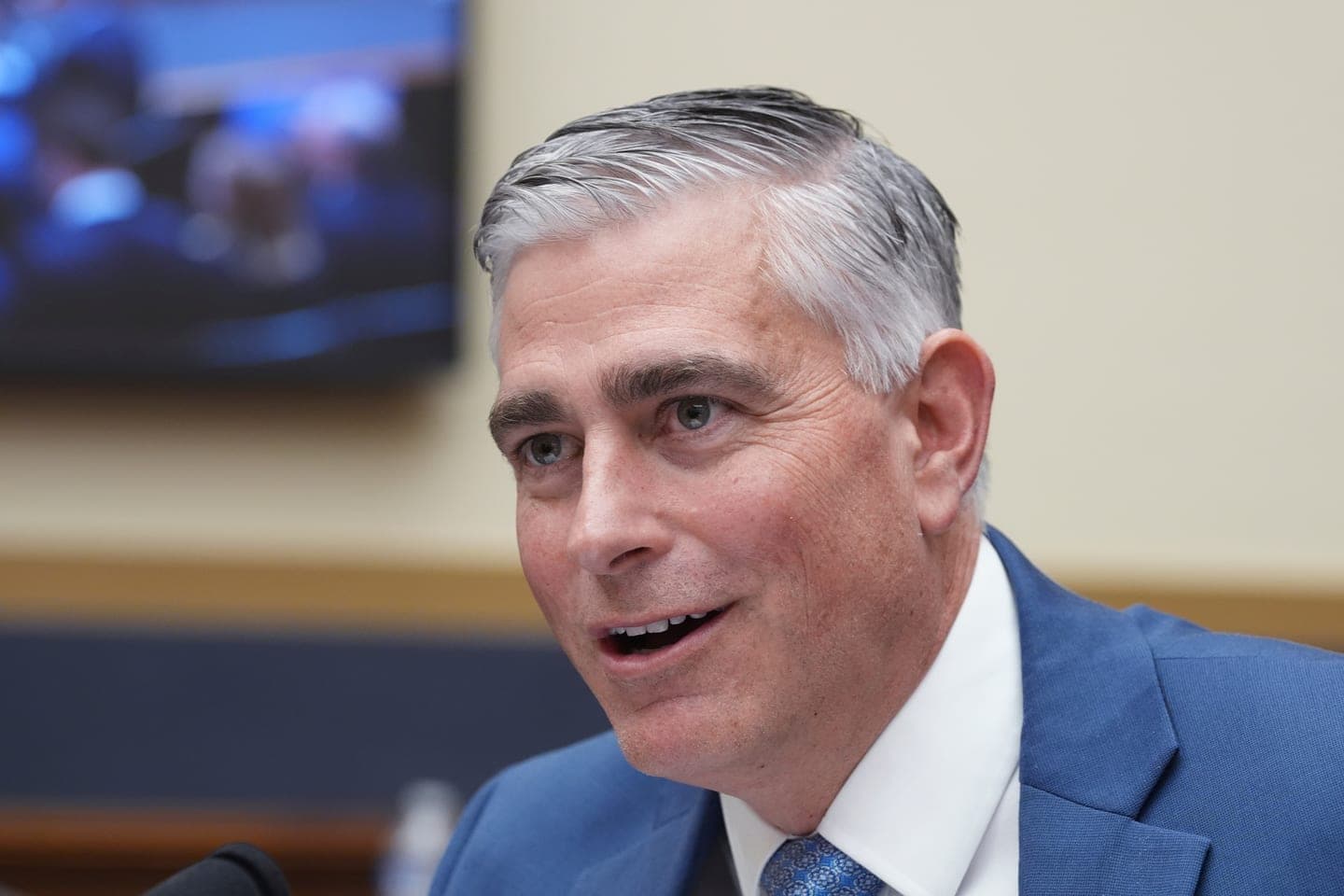
Republican lawmakers call out Seoul for 'discrimination' against Coupang, other U.S. firms
Rep. Michael Baumgartner, Republican of Washington, questions former U.S. Justice Department special counsel, Jack Smith, before the House Judiciary Committee at the Capitol in Washington on Jan. 22. [AP/YONHAP] Republican lawmakers in the U.S. House of Representatives publicly called out the Korean government for "discriminatory" actions targeting U.S. companies operating in Korea in an official letter to the Korean embassy. The demand came in a letter to the Korean ambassador to the United States, Kang Kyung-wha, signed by 54 House Republicans affiliated with the Republican Study Committee, one of the largest informal policy groups within the party, and led by Rep. Michael Baumgartner of Washington. The letter marked the latest escalation in a series of Republican complaints over Korean regulatory actions affecting U.S. technology and e-commerce companies, particularly Coupang, which is headquartered in the United States while predominantly operating in Korea. Related Article Coupang CEO Rogers thanks delivery workers after overnight shift experience Coupang weighs speed versus efficiency, applies for 'bundled delivery' patent Trump nominates former Rep. Michelle Park Steel as U.S. ambassador to Korea “We are deeply concerned by the ROK government’s targeted and discriminatory actions against U.S. companies,” the lawmakers wrote, referring to Korea by the initialism for its official name, Republic of Korea. “Many American tech companies have faced a range of regulatory actions that seek to punish them while shielding Korean domestic competition.” They went on to argue that U.S. technology companies were being penalized while Korean companies were being protected, warning that the trend raised rule-of-law concerns and risked becoming disguised protectionism. The lawmakers also claimed that the regulatory actions "will cost $1 trillion in combined economic damage to the U.S. and Korean economies over the next 10 years, with the U.S. economy losing $525 billion and American households losing nearly $4,000 each." Complaints had been lodged beforehand regarding Coupang. At a Jan. 13 hearing of the House Ways and Means Trade Subcommittee, Rep. Adrian Smith, Republican of Nebraska and chairman of the subcommittee, said Korea was advancing legislation that clearly targeted U.S. companies. Coupang CEO Harold Rogers takes part in the ecommerce company's dawn delivery from the evening of March 19 to the next morning, as part of his promise to take a closer look at the working conditions of the company's delivery workers. [COUPANG] Republicans on the House Judiciary Committee on Jan. 27 criticized what they described as the unfair targeting of U.S. companies such as Coupang. The committee continued by launching an inquiry in February, requesting materials from Coupang to examine whether Korean regulations were being enforced in a discriminatory way against U.S. technology firms. The Republican campaign has since intensified through hearings and investigations. In the latest letter, the lawmakers said U.S. companies including Apple, Google, Meta and Coupang were being "systematically targeted." They placed particular emphasis on Coupang, calling it the "largest source of U.S. foreign direct investment into Korea over the past decade" and saying it now "sells many billions of dollars in U.S. goods and agricultural products to Korean customers each year." "Unfortunately, [Korea] recently leveraged a low-sensitivity data leak in November 2025 as a pretext to launch a whole-of-government assault on Coupang," the letter said, referring to the data leak that put personal information of 33.8 million users — almost the entirety of Coupang's user base — in danger. They also warned that if U.S. companies were pushed out of Korea’s online retail market, Chinese platforms such as "Temu, Alibaba and Shein" would quickly fill the gap. "These Chinese companies are beholden to the Chinese Communist Party, and their dominance in the region would have unacceptable security consequences." “[Korea] is a critical ally, and we expect them to hold up their end of the partnership,” Rep. August Pfluger, Republican of Texas and chairman of the Republican Study Committee, said. “Discriminatory actions against American companies undermine our economic relationship and risk ceding ground to China. [Korea] made commitments. It’s time to honor them.” The lawmakers also stressed that the United States does not subject Korean companies to the "kind of politically motivated attacks they said American firms have faced” from the Korean government. "We ask your government to end its targeted assault of American companies immediately," the letter said. This article was originally written in Korean and translated by a bilingual reporter with the help of generative AI tools. It was then edited by a native English-speaking editor. All AI-assisted translations are reviewed and refined by our newsroom. BY HAN JEE-HYE [cho.yongjun1@joongang.co.kr]
Republican lawmakers call out Seoul for 'discrimination' against Coupang, other U.S. firms
Rep. Michael Baumgartner, Republican of Washington, questions former U.S. Justice Department special counsel, Jack Smith, before the House Judiciary Committee at the Capitol in Washington on Jan. 22. [AP/YONHAP] Republican lawmakers in the U.S. House of Representatives publicly called out the Korean government for "discriminatory" actions targeting U.S. companies operating in Korea in an official letter to the Korean embassy. The demand came in a letter to the Korean ambassador to the United States, Kang Kyung-wha, signed by 54 House Republicans affiliated with the Republican Study Committee, one of the largest informal policy groups within the party, and led by Rep. Michael Baumgartner of Washington. The letter marked the latest escalation in a series of Republican complaints over Korean regulatory actions affecting U.S. technology and e-commerce companies, particularly Coupang, which is headquartered in the United States while predominantly operating in Korea. Related Article Coupang CEO Rogers thanks delivery workers after overnight shift experience Coupang weighs speed versus efficiency, applies for 'bundled delivery' patent Trump nominates former Rep. Michelle Park Steel as U.S. ambassador to Korea “We are deeply concerned by the ROK government’s targeted and discriminatory actions against U.S. companies,” the lawmakers wrote, referring to Korea by the initialism for its official name, Republic of Korea. “Many American tech companies have faced a range of regulatory actions that seek to punish them while shielding Korean domestic competition.” They went on to argue that U.S. technology companies were being penalized while Korean companies were being protected, warning that the trend raised rule-of-law concerns and risked becoming disguised protectionism. The lawmakers also claimed that the regulatory actions "will cost $1 trillion in combined economic damage to the U.S. and Korean economies over the next 10 years, with the U.S. economy losing $525 billion and American households losing nearly $4,000 each." Complaints had been lodged beforehand regarding Coupang. At a Jan. 13 hearing of the House Ways and Means Trade Subcommittee, Rep. Adrian Smith, Republican of Nebraska and chairman of the subcommittee, said Korea was advancing legislation that clearly targeted U.S. companies. Coupang CEO Harold Rogers takes part in the ecommerce company's dawn delivery from the evening of March 19 to the next morning, as part of his promise to take a closer look at the working conditions of the company's delivery workers. [COUPANG] Republicans on the House Judiciary Committee on Jan. 27 criticized what they described as the unfair targeting of U.S. companies such as Coupang. The committee continued by launching an inquiry in February, requesting materials from Coupang to examine whether Korean regulations were being enforced in a discriminatory way against U.S. technology firms. The Republican campaign has since intensified through hearings and investigations. In the latest letter, the lawmakers said U.S. companies including Apple, Google, Meta and Coupang were being "systematically targeted." They placed particular emphasis on Coupang, calling it the "largest source of U.S. foreign direct investment into Korea over the past decade" and saying it now "sells many billions of dollars in U.S. goods and agricultural products to Korean customers each year." "Unfortunately, [Korea] recently leveraged a low-sensitivity data leak in November 2025 as a pretext to launch a whole-of-government assault on Coupang," the letter said, referring to the data leak that put personal information of 33.8 million users — almost the entirety of Coupang's user base — in danger. They also warned that if U.S. companies were pushed out of Korea’s online retail market, Chinese platforms such as "Temu, Alibaba and Shein" would quickly fill the gap. "These Chinese companies are beholden to the Chinese Communist Party, and their dominance in the region would have unacceptable security consequences." “[Korea] is a critical ally, and we expect them to hold up their end of the partnership,” Rep. August Pfluger, Republican of Texas and chairman of the Republican Study Committee, said. “Discriminatory actions against American companies undermine our economic relationship and risk ceding ground to China. [Korea] made commitments. It’s time to honor them.” The lawmakers also stressed that the United States does not subject Korean companies to the "kind of politically motivated attacks they said American firms have faced” from the Korean government. "We ask your government to end its targeted assault of American companies immediately," the letter said. This article was originally written in Korean and translated by a bilingual reporter with the help of generative AI tools. It was then edited by a native English-speaking editor. All AI-assisted translations are reviewed and refined by our newsroom. BY HAN JEE-HYE [cho.yongjun1@joongang.co.kr]
Lee and U.S. lawmakers discuss Middle East conflict, Korean investments
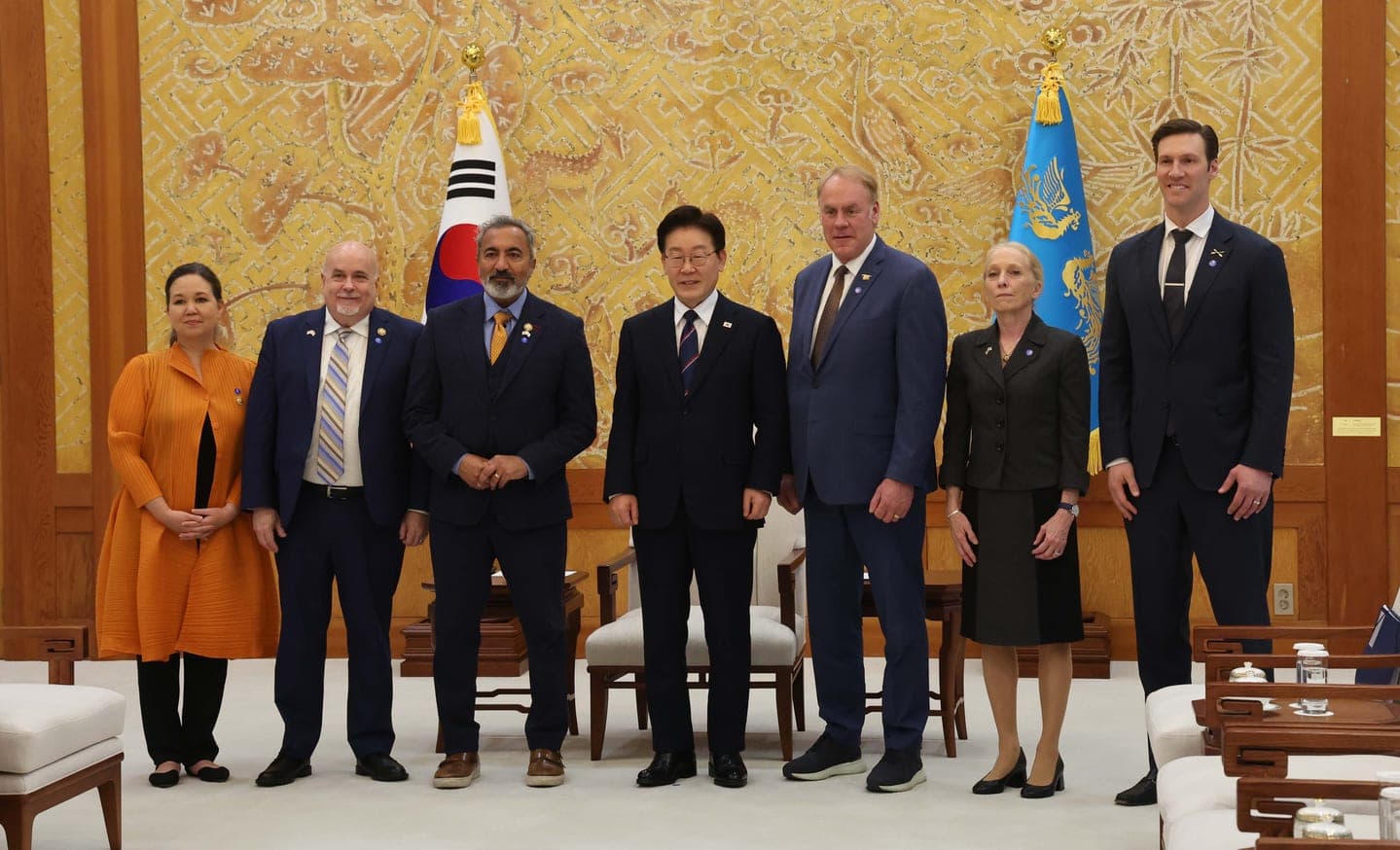
President Lee Jae Myung, center, poses for a photo with a bipartisan delegation of U.S. House lawmakers at the Blue House in central Seoul on March 31. The U.S. delegation was comprised of Reps. Ami Bera, Democrat of California, Ryan Zinke, Republican of Montana, Mark Pocan, Democrat of Wisconsin, Mary Gay Scanlon, Democrat of Pennsylvania, Jill Tokuda, Democrat of Hawaii, and Patrick Harrigan, Republican of North Carolina. [JOINT PRESS CORPS] President Lee Jae Myung and a bipartisan delegation of U.S. lawmakers visiting Seoul Tuesday discussed the repercussions of the Middle East conflict and agreed that the global economy, including energy supply chains, must be stabilized as soon as possible. Lee and the U.S. lawmakers exchanged views on the Middle East situation and the Korean Peninsula issues and "agreed that regional peace and stability must be firmly maintained based on the South Korea-U.S. alliance," presidential spokesperson Kang Yu-jung said in a statement. "The whole world is facing a very complex and difficult situation, so I am grateful for your interest in Korea," Lee told the six-member delegation from the U.S. House of Representatives at the Blue House in central Seoul. "Like countries around the world, we are also facing many difficulties due to the recent war in the Middle East." He then asked for their "opinions on the progress of the situation" or any advice they had for Korea as the war enters its second month following U.S.-Israeli military strikes on Iran and Tehran's retaliatory measures, leading to global concerns over stable energy supplies. Related Article Korea will stage yearlong series of cultural events in France to celebrate 140th anniversary of diplomatic ties Korea's first domestic fighter jet KF-21 to be exported to Indonesia Lee considers emergency powers usage amid Iran war concerns Lee stresses importance of 'self-reliant' defense to military leaders amid 'grave' international tensions The U.S. delegation was comprised of House Reps. Ami Bera, a Democrat of California, Ryan Zinke, Republican of Montana, Mark Pocan, Democrat of Wisconsin, Mary Gay Scanlon, Democrat of Pennsylvania, Jill Tokuda, Democrat of Hawaii, and Patrick Harrigan, Republican of North Carolina. The lawmakers are members of the U.S. Congressional Study Group on Korea, co-chaired by Bera, a ranking member of the House Subcommittee on East Asia and Pacific. Lee explained that the Korean government is preemptively activating a governmental emergency economic response system to minimize the impact of the Middle East war on the economy and the lives of the people, and to address potential greater crises in the future, Kang said. President Lee Jae Myung, left, shakes hands with U.S. Rep. Ami Bera, a Democrat of California, as a U.S. delegation visits the Blue House in central Seoul on March 31. [JOINT PRESS CORPS] The visit comes as Korea has doubled down on its $350 billion investment plan in the United States as a part of a broader bilateral trade deal agreed upon between Lee and U.S. President Donald Trump during their second summit last year. "We are keenly interested in the stable development of Korea-U.S. relations," Lee said. "We expect the U.S. government, including President Trump, to play a major role in the issue of peace and stability in Northeast Asia in the future." Lee expressed his hope that concrete cooperation would advance this year in key areas such as the peaceful use of nuclear energy, nuclear-powered submarines and shipbuilding. Related Article Korea will stage yearlong series of cultural events in France to celebrate 140th anniversary of diplomatic ties Korea's first domestic fighter jet KF-21 to be exported to Indonesia Lee considers emergency powers usage amid Iran war concerns Lee stresses importance of 'self-reliant' defense to military leaders amid 'grave' international tensions The president also explained recent efforts, such as the National Assembly's passage of the special bill on U.S. investment on March 12, Kang said. He requested U.S. legislative efforts toward institutional improvements to protect Korean workers residing in the United States, noting this is crucial for the implementation of strategic investments, which in turn can contribute to job creation. He also requested cooperation regarding the issue of visa quotas for Korean professionals. The delegation agreed and stated that they would continue to provide necessary support for such cooperation within the Congress, Kang said. Since taking office in June last year, Lee has met with groups of U.S. lawmakers three times. Lee has a whirlwind week of diplomacy, including summits with the leaders of Indonesia and France later this week expected to focus on trade, investment and other areas of cooperation. On Wednesday, Lee will hold a bilateral summit with Indonesian President Prabowo Subianto, who began a three-day state visit to Seoul Monday. The two leaders will hold a signing ceremony for memorandums of understanding and a state luncheon. French President Emmanuel Macron will make a two-day state visit to Korea from Thursday as the two countries mark the 140th anniversary of bilateral relations. The two leaders will hold a bilateral summit on Friday, marking the first visit to Seoul by a French leader in 11 years. Ahead of his summit with Subianto, Lee in an interview with Indonesian newspaper Kompas published Tuesday said that he expected to deepen close cooperation in defense industry and emerging sectors such as AI, digital technology, energy transition, content and culture. He called Korea and Indonesia's joint development of the next-generation KF-21 fighter jet a "model example and potential global benchmark of international defense industry cooperation." Lee expressed hopes to expand defense cooperation "in a wider range of areas, including naval vessels and air defense systems," which he said "will further benefit our two nations' security and economies." BY SARAH KIM [kim.sarah@joongang.co.kr]
Lee and U.S. lawmakers discuss Middle East conflict, Korean investments
President Lee Jae Myung, center, poses for a photo with a bipartisan delegation of U.S. House lawmakers at the Blue House in central Seoul on March 31. The U.S. delegation was comprised of Reps. Ami Bera, Democrat of California, Ryan Zinke, Republican of Montana, Mark Pocan, Democrat of Wisconsin, Mary Gay Scanlon, Democrat of Pennsylvania, Jill Tokuda, Democrat of Hawaii, and Patrick Harrigan, Republican of North Carolina. [JOINT PRESS CORPS] President Lee Jae Myung and a bipartisan delegation of U.S. lawmakers visiting Seoul Tuesday discussed the repercussions of the Middle East conflict and agreed that the global economy, including energy supply chains, must be stabilized as soon as possible. Lee and the U.S. lawmakers exchanged views on the Middle East situation and the Korean Peninsula issues and "agreed that regional peace and stability must be firmly maintained based on the South Korea-U.S. alliance," presidential spokesperson Kang Yu-jung said in a statement. "The whole world is facing a very complex and difficult situation, so I am grateful for your interest in Korea," Lee told the six-member delegation from the U.S. House of Representatives at the Blue House in central Seoul. "Like countries around the world, we are also facing many difficulties due to the recent war in the Middle East." He then asked for their "opinions on the progress of the situation" or any advice they had for Korea as the war enters its second month following U.S.-Israeli military strikes on Iran and Tehran's retaliatory measures, leading to global concerns over stable energy supplies. Related Article Korea will stage yearlong series of cultural events in France to celebrate 140th anniversary of diplomatic ties Korea's first domestic fighter jet KF-21 to be exported to Indonesia Lee considers emergency powers usage amid Iran war concerns Lee stresses importance of 'self-reliant' defense to military leaders amid 'grave' international tensions The U.S. delegation was comprised of House Reps. Ami Bera, a Democrat of California, Ryan Zinke, Republican of Montana, Mark Pocan, Democrat of Wisconsin, Mary Gay Scanlon, Democrat of Pennsylvania, Jill Tokuda, Democrat of Hawaii, and Patrick Harrigan, Republican of North Carolina. The lawmakers are members of the U.S. Congressional Study Group on Korea, co-chaired by Bera, a ranking member of the House Subcommittee on East Asia and Pacific. Lee explained that the Korean government is preemptively activating a governmental emergency economic response system to minimize the impact of the Middle East war on the economy and the lives of the people, and to address potential greater crises in the future, Kang said. President Lee Jae Myung, left, shakes hands with U.S. Rep. Ami Bera, a Democrat of California, as a U.S. delegation visits the Blue House in central Seoul on March 31. [JOINT PRESS CORPS] The visit comes as Korea has doubled down on its $350 billion investment plan in the United States as a part of a broader bilateral trade deal agreed upon between Lee and U.S. President Donald Trump during their second summit last year. "We are keenly interested in the stable development of Korea-U.S. relations," Lee said. "We expect the U.S. government, including President Trump, to play a major role in the issue of peace and stability in Northeast Asia in the future." Lee expressed his hope that concrete cooperation would advance this year in key areas such as the peaceful use of nuclear energy, nuclear-powered submarines and shipbuilding. Related Article Korea will stage yearlong series of cultural events in France to celebrate 140th anniversary of diplomatic ties Korea's first domestic fighter jet KF-21 to be exported to Indonesia Lee considers emergency powers usage amid Iran war concerns Lee stresses importance of 'self-reliant' defense to military leaders amid 'grave' international tensions The president also explained recent efforts, such as the National Assembly's passage of the special bill on U.S. investment on March 12, Kang said. He requested U.S. legislative efforts toward institutional improvements to protect Korean workers residing in the United States, noting this is crucial for the implementation of strategic investments, which in turn can contribute to job creation. He also requested cooperation regarding the issue of visa quotas for Korean professionals. The delegation agreed and stated that they would continue to provide necessary support for such cooperation within the Congress, Kang said. Since taking office in June last year, Lee has met with groups of U.S. lawmakers three times. Lee has a whirlwind week of diplomacy, including summits with the leaders of Indonesia and France later this week expected to focus on trade, investment and other areas of cooperation. On Wednesday, Lee will hold a bilateral summit with Indonesian President Prabowo Subianto, who began a three-day state visit to Seoul Monday. The two leaders will hold a signing ceremony for memorandums of understanding and a state luncheon. French President Emmanuel Macron will make a two-day state visit to Korea from Thursday as the two countries mark the 140th anniversary of bilateral relations. The two leaders will hold a bilateral summit on Friday, marking the first visit to Seoul by a French leader in 11 years. Ahead of his summit with Subianto, Lee in an interview with Indonesian newspaper Kompas published Tuesday said that he expected to deepen close cooperation in defense industry and emerging sectors such as AI, digital technology, energy transition, content and culture. He called Korea and Indonesia's joint development of the next-generation KF-21 fighter jet a "model example and potential global benchmark of international defense industry cooperation." Lee expressed hopes to expand defense cooperation "in a wider range of areas, including naval vessels and air defense systems," which he said "will further benefit our two nations' security and economies." BY SARAH KIM [kim.sarah@joongang.co.kr]
Lee and U.S. lawmakers discuss Middle East conflict, Korean investments
President Lee Jae Myung, center, poses for a photo with a bipartisan delegation of U.S. House lawmakers at the Blue House in central Seoul on March 31. The U.S. delegation was comprised of Reps. Ami Bera, Democrat of California, Ryan Zinke, Republican of Montana, Mark Pocan, Democrat of Wisconsin, Mary Gay Scanlon, Democrat of Pennsylvania, Jill Tokuda, Democrat of Hawaii, and Patrick Harrigan, Republican of North Carolina. [JOINT PRESS CORPS] President Lee Jae Myung and a bipartisan delegation of U.S. lawmakers visiting Seoul Tuesday discussed the repercussions of the Middle East conflict and agreed that the global economy, including energy supply chains, must be stabilized as soon as possible. Lee and the U.S. lawmakers exchanged views on the Middle East situation and the Korean Peninsula issues and "agreed that regional peace and stability must be firmly maintained based on the South Korea-U.S. alliance," presidential spokesperson Kang Yu-jung said in a statement. "The whole world is facing a very complex and difficult situation, so I am grateful for your interest in Korea," Lee told the six-member delegation from the U.S. House of Representatives at the Blue House in central Seoul. "Like countries around the world, we are also facing many difficulties due to the recent war in the Middle East." He then asked for their "opinions on the progress of the situation" or any advice they had for Korea as the war enters its second month following U.S.-Israeli military strikes on Iran and Tehran's retaliatory measures, leading to global concerns over stable energy supplies. Related Article Korea will stage yearlong series of cultural events in France to celebrate 140th anniversary of diplomatic ties Korea's first domestic fighter jet KF-21 to be exported to Indonesia Lee considers emergency powers usage amid Iran war concerns Lee stresses importance of 'self-reliant' defense to military leaders amid 'grave' international tensions The U.S. delegation was comprised of House Reps. Ami Bera, a Democrat of California, Ryan Zinke, Republican of Montana, Mark Pocan, Democrat of Wisconsin, Mary Gay Scanlon, Democrat of Pennsylvania, Jill Tokuda, Democrat of Hawaii, and Patrick Harrigan, Republican of North Carolina. The lawmakers are members of the U.S. Congressional Study Group on Korea, co-chaired by Bera, a ranking member of the House Subcommittee on East Asia and Pacific. Lee explained that the Korean government is preemptively activating a governmental emergency economic response system to minimize the impact of the Middle East war on the economy and the lives of the people, and to address potential greater crises in the future, Kang said. President Lee Jae Myung, left, shakes hands with U.S. Rep. Ami Bera, a Democrat of California, as a U.S. delegation visits the Blue House in central Seoul on March 31. [JOINT PRESS CORPS] The visit comes as Korea has doubled down on its $350 billion investment plan in the United States as a part of a broader bilateral trade deal agreed upon between Lee and U.S. President Donald Trump during their second summit last year. "We are keenly interested in the stable development of Korea-U.S. relations," Lee said. "We expect the U.S. government, including President Trump, to play a major role in the issue of peace and stability in Northeast Asia in the future." Lee expressed his hope that concrete cooperation would advance this year in key areas such as the peaceful use of nuclear energy, nuclear-powered submarines and shipbuilding. Related Article Korea will stage yearlong series of cultural events in France to celebrate 140th anniversary of diplomatic ties Korea's first domestic fighter jet KF-21 to be exported to Indonesia Lee considers emergency powers usage amid Iran war concerns Lee stresses importance of 'self-reliant' defense to military leaders amid 'grave' international tensions The president also explained recent efforts, such as the National Assembly's passage of the special bill on U.S. investment on March 12, Kang said. He requested U.S. legislative efforts toward institutional improvements to protect Korean workers residing in the United States, noting this is crucial for the implementation of strategic investments, which in turn can contribute to job creation. He also requested cooperation regarding the issue of visa quotas for Korean professionals. The delegation agreed and stated that they would continue to provide necessary support for such cooperation within the Congress, Kang said. Since taking office in June last year, Lee has met with groups of U.S. lawmakers three times. Lee has a whirlwind week of diplomacy, including summits with the leaders of Indonesia and France later this week expected to focus on trade, investment and other areas of cooperation. On Wednesday, Lee will hold a bilateral summit with Indonesian President Prabowo Subianto, who began a three-day state visit to Seoul Monday. The two leaders will hold a signing ceremony for memorandums of understanding and a state luncheon. French President Emmanuel Macron will make a two-day state visit to Korea from Thursday as the two countries mark the 140th anniversary of bilateral relations. The two leaders will hold a bilateral summit on Friday, marking the first visit to Seoul by a French leader in 11 years. Ahead of his summit with Subianto, Lee in an interview with Indonesian newspaper Kompas published Tuesday said that he expected to deepen close cooperation in defense industry and emerging sectors such as AI, digital technology, energy transition, content and culture. He called Korea and Indonesia's joint development of the next-generation KF-21 fighter jet a "model example and potential global benchmark of international defense industry cooperation." Lee expressed hopes to expand defense cooperation "in a wider range of areas, including naval vessels and air defense systems," which he said "will further benefit our two nations' security and economies." BY SARAH KIM [kim.sarah@joongang.co.kr]
Trump threatens tariffs on countries that oppose U.S. acquisition of Greenland
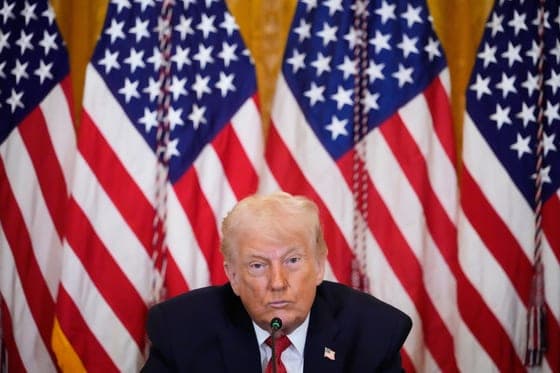
U.S. President Donald Trump speaks at an event to promote investment in rural health care in the East Room of the White House in Washington on Jan. 16. [AP/YONHAP] U.S. President Donald Trump on Friday threatened to levy tariffs on countries if they do not support his push to acquire Greenland, the Danish territory, which he says is crucial to the United States’ national security. Trump made the remarks during a health care-related event at the White House amid European leaders' opposition to the idea of the United States taking over Greenland, the Arctic island that is part of Denmark, a member of NATO. “I may put a tariff on countries if they don't go along with Greenland because we need national security,” he said. “So I may do that.” His remarks came as a bipartisan congressional delegation reportedly met with Danish and Greenlandic officials in Copenhagen on Friday to show support for them. Led by Democratic Sen. Chris Coons of Delaware, the delegation included Republican Sen. Thom Tillis of North Carolina and other senators. In a social media post earlier this week, Trump reiterated that the United States needs Greenland for national security, adding that if it does not acquire the Danish territory, “Russia or China will.” “NATO becomes far more formidable and effective with Greenland in the hands of the UNITED STATES,” he wrote on Truth Social. “Anything less than that is unacceptable.” Last week, the leaders of France, Britain, Germany, Italy, Poland, Spain and Denmark issued a joint statement on Greenland, stressing that the island belongs to its people, and that decisions concerning it are for Denmark and Greenland to decide. Yonhap
Trump threatens tariffs on countries that oppose U.S. acquisition of Greenland
U.S. President Donald Trump speaks at an event to promote investment in rural health care in the East Room of the White House in Washington on Jan. 16. [AP/YONHAP] U.S. President Donald Trump on Friday threatened to levy tariffs on countries if they do not support his push to acquire Greenland, the Danish territory, which he says is crucial to the United States’ national security. Trump made the remarks during a health care-related event at the White House amid European leaders' opposition to the idea of the United States taking over Greenland, the Arctic island that is part of Denmark, a member of NATO. “I may put a tariff on countries if they don't go along with Greenland because we need national security,” he said. “So I may do that.” His remarks came as a bipartisan congressional delegation reportedly met with Danish and Greenlandic officials in Copenhagen on Friday to show support for them. Led by Democratic Sen. Chris Coons of Delaware, the delegation included Republican Sen. Thom Tillis of North Carolina and other senators. In a social media post earlier this week, Trump reiterated that the United States needs Greenland for national security, adding that if it does not acquire the Danish territory, “Russia or China will.” “NATO becomes far more formidable and effective with Greenland in the hands of the UNITED STATES,” he wrote on Truth Social. “Anything less than that is unacceptable.” Last week, the leaders of France, Britain, Germany, Italy, Poland, Spain and Denmark issued a joint statement on Greenland, stressing that the island belongs to its people, and that decisions concerning it are for Denmark and Greenland to decide. Yonhap
Trump threatens tariffs on countries that oppose U.S. acquisition of Greenland
U.S. President Donald Trump speaks at an event to promote investment in rural health care in the East Room of the White House in Washington on Jan. 16. [AP/YONHAP] U.S. President Donald Trump on Friday threatened to levy tariffs on countries if they do not support his push to acquire Greenland, the Danish territory, which he says is crucial to the United States’ national security. Trump made the remarks during a health care-related event at the White House amid European leaders' opposition to the idea of the United States taking over Greenland, the Arctic island that is part of Denmark, a member of NATO. “I may put a tariff on countries if they don't go along with Greenland because we need national security,” he said. “So I may do that.” His remarks came as a bipartisan congressional delegation reportedly met with Danish and Greenlandic officials in Copenhagen on Friday to show support for them. Led by Democratic Sen. Chris Coons of Delaware, the delegation included Republican Sen. Thom Tillis of North Carolina and other senators. In a social media post earlier this week, Trump reiterated that the United States needs Greenland for national security, adding that if it does not acquire the Danish territory, “Russia or China will.” “NATO becomes far more formidable and effective with Greenland in the hands of the UNITED STATES,” he wrote on Truth Social. “Anything less than that is unacceptable.” Last week, the leaders of France, Britain, Germany, Italy, Poland, Spain and Denmark issued a joint statement on Greenland, stressing that the island belongs to its people, and that decisions concerning it are for Denmark and Greenland to decide. Yonhap
Congress moves to limit advanced chip exports to China despite objections from Nvidia's Huang
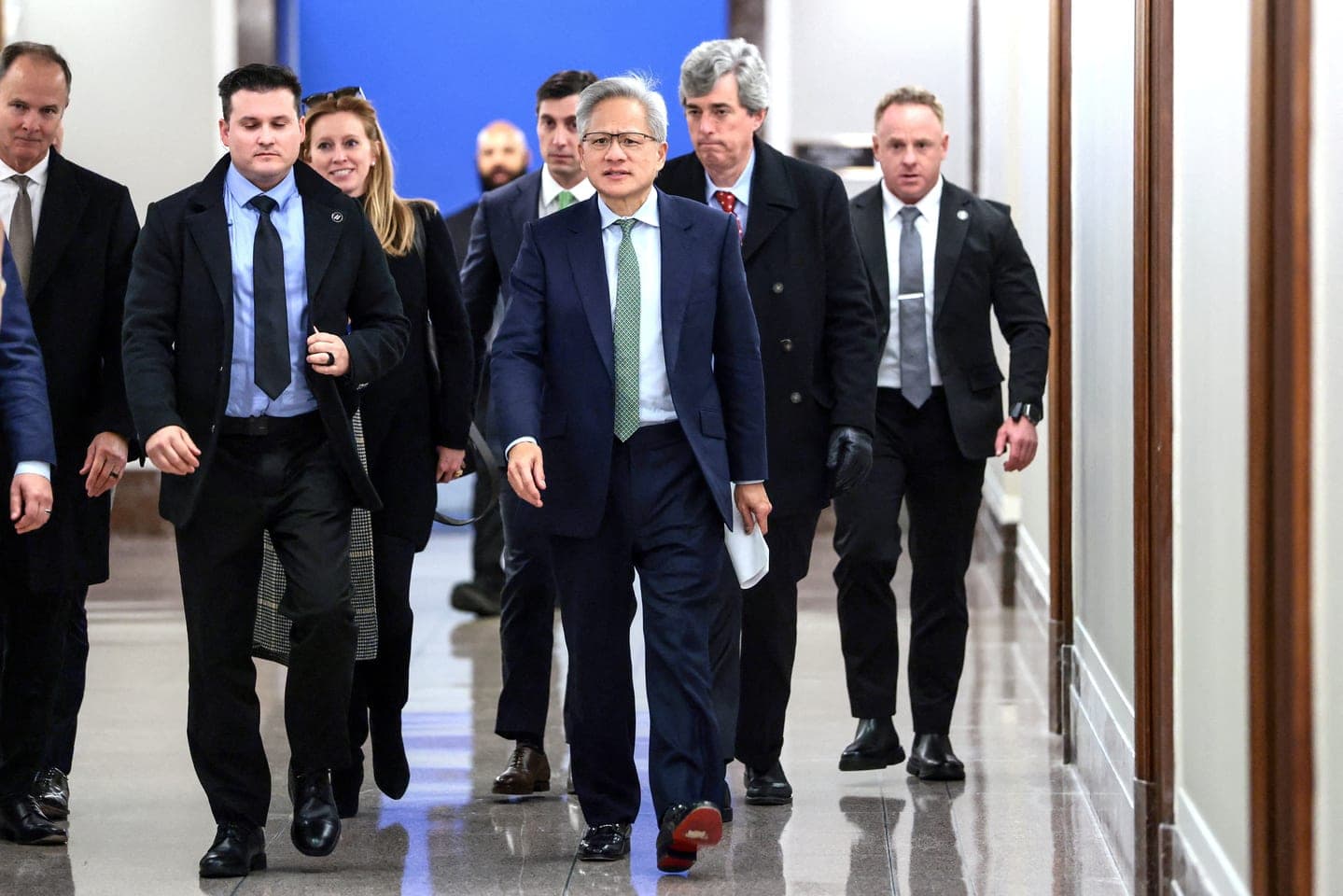
Nvidia founder and CEO Jensen Huang arrives for a meeting with the Senate Banking Committee on Capitol Hill in Washington on Dec. 3. [REUTERS/YONHAP] U.S. lawmakers moved to block the export of advanced chips to China just a day after Nvidia CEO Jensen Huang urged the White House to allow them, sharpening a clash between Washington and Silicon Valley over AI technology. Six Republican and Democratic senators on Thursday introduced the Secure and Feasible Exports (SAFE) Chips Act, which orders U.S. authorities to reject license applications for any chips more powerful than those already permitted for at least 30 months. The bill also requires a 30-day notice to Congress before the government changes export rules. Related Article Economy on course to grow in 1 percent range from gov't consumer coupons, semiconductor rebound With youth employment dropping, students look to semiconductor specialty schools for guaranteed work First batch of Nvidia GPUs arrive in Korea as part of government's 1.46 trillion won AI chip drive Chip giants’ spending spree lifts hopes across Korea’s semiconductor supply chain It designates China, including Hong Kong and Macau, as well as North Korea, Russia and Iran hostile states. "The United States leads the AI race with communist China due in large part to our dominance of global compute power,” said Republican Sen. Pete Ricketts of Nebraska, who co-sponsored the bill. “The best AI chips are made by American companies. Denying Beijing access to these AI chips is essential to our national security." "This bipartisan bill will protect America’s advantage in computing power so that the world’s most next-generation AI models are built at home by American companies, and the world’s infrastructure is built on the American tech stack," Sen. Chris Coons, Democrat of Delaware, added. Huang met U.S. President Donald Trump and several Republican senators on Wednesday in Washington, arguing that restricting Nvidia’s sales to China would only benefit Chinese firms such as Huawei. Bloomberg reported the same day that Congress planned to remove language curbing Nvidia and AMD's overseas AI chip sales from the annual National Defense Authorization Act, calling it a win for Nvidia's lobbying efforts. The prospect that the Trump administration might also approve certain exports prompted opponents in Washington to push their own bill. Some U.S. politicians voiced distrust of Huang. “I don’t consider him to be an objective, credible source about whether we should be selling chips to China,” Louisiana Republican Sen. John Kennedy told reporters on Wednesday. “He’s got more money than the Father, the Son and the Holy Ghost, and he wants even more." Former Trump adviser Steve Bannon called Huang an "arms merchant.” Nvidia and AMD say tighter controls risk accelerating China’s efforts to build a fully domestic chip industry. AMD CEO Lisa Su said on Thursday that the company already secured licenses to export AI accelerators to China and is prepared to pay a 15 percent tax to the U.S. government. Trump said in August that Nvidia and AMD agreed to pay the United States 15 percent of their revenue from sales of high-end chips to China in exchange for export approvals. An AI accelerator produced by Chinese AI chip company Moore Threads [MOORE THREADS] In the meantime, China’s AI chipmakers continue to attract capital. Moore Threads, a firm specializing in graphics processing unit design, surged 500 percent in its initial public offering in Shanghai on Friday, raising 8 billion yuan ($1.13 billion). The company was founded by a former Nvidia China executive. Cambricon Technologies, listed since 2020 and positioning itself as an alternative to Nvidia, has seen its shares rise 144 percent over the past year. Chinese engineers who previously worked on Google’s tensor processing unit (TPU) development also released what they describe as a domestic version of the AI accelerator as Google’s own TPU improvements draw attention. Nvidia and AMD continue to seek export and import licenses from both Washington and Beijing while trying to maintain ties with customers in China. Nvidia said in an X post on Wednesday that its "Kimi K2 Thinking MoE model sees a 10x performance leap" on the company's Blackwell servers. Kimi is a high-performance open-source model released by Chinese startup Moonshot AI in January. It uses a Mixture of Experts architecture that was adopted by the Chinese AI tool maker DeepSeek to boost performance. Nvidia likely highlighted the model to show that Chinese AI developers’ most innovative systems still run best on Nvidia hardware. This article was originally written in Korean and translated by a bilingual reporter with the help of generative AI tools. It was then edited by a native English-speaking editor. All AI-assisted translations are reviewed and refined by our newsroom. BY SHIM SEO-HYUN [kim.juyeon2@joongang.co.kr]
Congress moves to limit advanced chip exports to China despite objections from Nvidia's Huang
Nvidia founder and CEO Jensen Huang arrives for a meeting with the Senate Banking Committee on Capitol Hill in Washington on Dec. 3. [REUTERS/YONHAP] U.S. lawmakers moved to block the export of advanced chips to China just a day after Nvidia CEO Jensen Huang urged the White House to allow them, sharpening a clash between Washington and Silicon Valley over AI technology. Six Republican and Democratic senators on Thursday introduced the Secure and Feasible Exports (SAFE) Chips Act, which orders U.S. authorities to reject license applications for any chips more powerful than those already permitted for at least 30 months. The bill also requires a 30-day notice to Congress before the government changes export rules. Related Article Economy on course to grow in 1 percent range from gov't consumer coupons, semiconductor rebound With youth employment dropping, students look to semiconductor specialty schools for guaranteed work First batch of Nvidia GPUs arrive in Korea as part of government's 1.46 trillion won AI chip drive Chip giants’ spending spree lifts hopes across Korea’s semiconductor supply chain It designates China, including Hong Kong and Macau, as well as North Korea, Russia and Iran hostile states. "The United States leads the AI race with communist China due in large part to our dominance of global compute power,” said Republican Sen. Pete Ricketts of Nebraska, who co-sponsored the bill. “The best AI chips are made by American companies. Denying Beijing access to these AI chips is essential to our national security." "This bipartisan bill will protect America’s advantage in computing power so that the world’s most next-generation AI models are built at home by American companies, and the world’s infrastructure is built on the American tech stack," Sen. Chris Coons, Democrat of Delaware, added. Huang met U.S. President Donald Trump and several Republican senators on Wednesday in Washington, arguing that restricting Nvidia’s sales to China would only benefit Chinese firms such as Huawei. Bloomberg reported the same day that Congress planned to remove language curbing Nvidia and AMD's overseas AI chip sales from the annual National Defense Authorization Act, calling it a win for Nvidia's lobbying efforts. The prospect that the Trump administration might also approve certain exports prompted opponents in Washington to push their own bill. Some U.S. politicians voiced distrust of Huang. “I don’t consider him to be an objective, credible source about whether we should be selling chips to China,” Louisiana Republican Sen. John Kennedy told reporters on Wednesday. “He’s got more money than the Father, the Son and the Holy Ghost, and he wants even more." Former Trump adviser Steve Bannon called Huang an "arms merchant.” Nvidia and AMD say tighter controls risk accelerating China’s efforts to build a fully domestic chip industry. AMD CEO Lisa Su said on Thursday that the company already secured licenses to export AI accelerators to China and is prepared to pay a 15 percent tax to the U.S. government. Trump said in August that Nvidia and AMD agreed to pay the United States 15 percent of their revenue from sales of high-end chips to China in exchange for export approvals. An AI accelerator produced by Chinese AI chip company Moore Threads [MOORE THREADS] In the meantime, China’s AI chipmakers continue to attract capital. Moore Threads, a firm specializing in graphics processing unit design, surged 500 percent in its initial public offering in Shanghai on Friday, raising 8 billion yuan ($1.13 billion). The company was founded by a former Nvidia China executive. Cambricon Technologies, listed since 2020 and positioning itself as an alternative to Nvidia, has seen its shares rise 144 percent over the past year. Chinese engineers who previously worked on Google’s tensor processing unit (TPU) development also released what they describe as a domestic version of the AI accelerator as Google’s own TPU improvements draw attention. Nvidia and AMD continue to seek export and import licenses from both Washington and Beijing while trying to maintain ties with customers in China. Nvidia said in an X post on Wednesday that its "Kimi K2 Thinking MoE model sees a 10x performance leap" on the company's Blackwell servers. Kimi is a high-performance open-source model released by Chinese startup Moonshot AI in January. It uses a Mixture of Experts architecture that was adopted by the Chinese AI tool maker DeepSeek to boost performance. Nvidia likely highlighted the model to show that Chinese AI developers’ most innovative systems still run best on Nvidia hardware. This article was originally written in Korean and translated by a bilingual reporter with the help of generative AI tools. It was then edited by a native English-speaking editor. All AI-assisted translations are reviewed and refined by our newsroom. BY SHIM SEO-HYUN [kim.juyeon2@joongang.co.kr]
Congress moves to limit advanced chip exports to China despite objections from Nvidia's Huang
Nvidia founder and CEO Jensen Huang arrives for a meeting with the Senate Banking Committee on Capitol Hill in Washington on Dec. 3. [REUTERS/YONHAP] U.S. lawmakers moved to block the export of advanced chips to China just a day after Nvidia CEO Jensen Huang urged the White House to allow them, sharpening a clash between Washington and Silicon Valley over AI technology. Six Republican and Democratic senators on Thursday introduced the Secure and Feasible Exports (SAFE) Chips Act, which orders U.S. authorities to reject license applications for any chips more powerful than those already permitted for at least 30 months. The bill also requires a 30-day notice to Congress before the government changes export rules. Related Article Economy on course to grow in 1 percent range from gov't consumer coupons, semiconductor rebound With youth employment dropping, students look to semiconductor specialty schools for guaranteed work First batch of Nvidia GPUs arrive in Korea as part of government's 1.46 trillion won AI chip drive Chip giants’ spending spree lifts hopes across Korea’s semiconductor supply chain It designates China, including Hong Kong and Macau, as well as North Korea, Russia and Iran hostile states. "The United States leads the AI race with communist China due in large part to our dominance of global compute power,” said Republican Sen. Pete Ricketts of Nebraska, who co-sponsored the bill. “The best AI chips are made by American companies. Denying Beijing access to these AI chips is essential to our national security." "This bipartisan bill will protect America’s advantage in computing power so that the world’s most next-generation AI models are built at home by American companies, and the world’s infrastructure is built on the American tech stack," Sen. Chris Coons, Democrat of Delaware, added. Huang met U.S. President Donald Trump and several Republican senators on Wednesday in Washington, arguing that restricting Nvidia’s sales to China would only benefit Chinese firms such as Huawei. Bloomberg reported the same day that Congress planned to remove language curbing Nvidia and AMD's overseas AI chip sales from the annual National Defense Authorization Act, calling it a win for Nvidia's lobbying efforts. The prospect that the Trump administration might also approve certain exports prompted opponents in Washington to push their own bill. Some U.S. politicians voiced distrust of Huang. “I don’t consider him to be an objective, credible source about whether we should be selling chips to China,” Louisiana Republican Sen. John Kennedy told reporters on Wednesday. “He’s got more money than the Father, the Son and the Holy Ghost, and he wants even more." Former Trump adviser Steve Bannon called Huang an "arms merchant.” Nvidia and AMD say tighter controls risk accelerating China’s efforts to build a fully domestic chip industry. AMD CEO Lisa Su said on Thursday that the company already secured licenses to export AI accelerators to China and is prepared to pay a 15 percent tax to the U.S. government. Trump said in August that Nvidia and AMD agreed to pay the United States 15 percent of their revenue from sales of high-end chips to China in exchange for export approvals. An AI accelerator produced by Chinese AI chip company Moore Threads [MOORE THREADS] In the meantime, China’s AI chipmakers continue to attract capital. Moore Threads, a firm specializing in graphics processing unit design, surged 500 percent in its initial public offering in Shanghai on Friday, raising 8 billion yuan ($1.13 billion). The company was founded by a former Nvidia China executive. Cambricon Technologies, listed since 2020 and positioning itself as an alternative to Nvidia, has seen its shares rise 144 percent over the past year. Chinese engineers who previously worked on Google’s tensor processing unit (TPU) development also released what they describe as a domestic version of the AI accelerator as Google’s own TPU improvements draw attention. Nvidia and AMD continue to seek export and import licenses from both Washington and Beijing while trying to maintain ties with customers in China. Nvidia said in an X post on Wednesday that its "Kimi K2 Thinking MoE model sees a 10x performance leap" on the company's Blackwell servers. Kimi is a high-performance open-source model released by Chinese startup Moonshot AI in January. It uses a Mixture of Experts architecture that was adopted by the Chinese AI tool maker DeepSeek to boost performance. Nvidia likely highlighted the model to show that Chinese AI developers’ most innovative systems still run best on Nvidia hardware. This article was originally written in Korean and translated by a bilingual reporter with the help of generative AI tools. It was then edited by a native English-speaking editor. All AI-assisted translations are reviewed and refined by our newsroom. BY SHIM SEO-HYUN [kim.juyeon2@joongang.co.kr]
Congress moves to limit advanced chip exports to China despite objections from Nvidia's Huang
Nvidia founder and CEO Jensen Huang arrives for a meeting with the Senate Banking Committee on Capitol Hill in Washington on Dec. 3. [REUTERS/YONHAP] U.S. lawmakers moved to block the export of advanced chips to China just a day after Nvidia CEO Jensen Huang urged the White House to allow them, sharpening a clash between Washington and Silicon Valley over AI technology. Six Republican and Democratic senators on Thursday introduced the Secure and Feasible Exports (SAFE) Chips Act, which orders U.S. authorities to reject license applications for any chips more powerful than those already permitted for at least 30 months. The bill also requires a 30-day notice to Congress before the government changes export rules. Related Article Economy on course to grow in 1 percent range from gov't consumer coupons, semiconductor rebound With youth employment dropping, students look to semiconductor specialty schools for guaranteed work First batch of Nvidia GPUs arrive in Korea as part of government's 1.46 trillion won AI chip drive Chip giants’ spending spree lifts hopes across Korea’s semiconductor supply chain It designates China, including Hong Kong and Macau, as well as North Korea, Russia and Iran hostile states. "The United States leads the AI race with communist China due in large part to our dominance of global compute power,” said Republican Sen. Pete Ricketts of Nebraska, who co-sponsored the bill. “The best AI chips are made by American companies. Denying Beijing access to these AI chips is essential to our national security." "This bipartisan bill will protect America’s advantage in computing power so that the world’s most next-generation AI models are built at home by American companies, and the world’s infrastructure is built on the American tech stack," Sen. Chris Coons, Democrat of Delaware, added. Huang met U.S. President Donald Trump and several Republican senators on Wednesday in Washington, arguing that restricting Nvidia’s sales to China would only benefit Chinese firms such as Huawei. Bloomberg reported the same day that Congress planned to remove language curbing Nvidia and AMD's overseas AI chip sales from the annual National Defense Authorization Act, calling it a win for Nvidia's lobbying efforts. The prospect that the Trump administration might also approve certain exports prompted opponents in Washington to push their own bill. Some U.S. politicians voiced distrust of Huang. “I don’t consider him to be an objective, credible source about whether we should be selling chips to China,” Louisiana Republican Sen. John Kennedy told reporters on Wednesday. “He’s got more money than the Father, the Son and the Holy Ghost, and he wants even more." Former Trump adviser Steve Bannon called Huang an "arms merchant.” Nvidia and AMD say tighter controls risk accelerating China’s efforts to build a fully domestic chip industry. AMD CEO Lisa Su said on Thursday that the company already secured licenses to export AI accelerators to China and is prepared to pay a 15 percent tax to the U.S. government. Trump said in August that Nvidia and AMD agreed to pay the United States 15 percent of their revenue from sales of high-end chips to China in exchange for export approvals. An AI accelerator produced by Chinese AI chip company Moore Threads [MOORE THREADS] In the meantime, China’s AI chipmakers continue to attract capital. Moore Threads, a firm specializing in graphics processing unit design, surged 500 percent in its initial public offering in Shanghai on Friday, raising 8 billion yuan ($1.13 billion). The company was founded by a former Nvidia China executive. Cambricon Technologies, listed since 2020 and positioning itself as an alternative to Nvidia, has seen its shares rise 144 percent over the past year. Chinese engineers who previously worked on Google’s tensor processing unit (TPU) development also released what they describe as a domestic version of the AI accelerator as Google’s own TPU improvements draw attention. Nvidia and AMD continue to seek export and import licenses from both Washington and Beijing while trying to maintain ties with customers in China. Nvidia said in an X post on Wednesday that its "Kimi K2 Thinking MoE model sees a 10x performance leap" on the company's Blackwell servers. Kimi is a high-performance open-source model released by Chinese startup Moonshot AI in January. It uses a Mixture of Experts architecture that was adopted by the Chinese AI tool maker DeepSeek to boost performance. Nvidia likely highlighted the model to show that Chinese AI developers’ most innovative systems still run best on Nvidia hardware. This article was originally written in Korean and translated by a bilingual reporter with the help of generative AI tools. It was then edited by a native English-speaking editor. All AI-assisted translations are reviewed and refined by our newsroom. BY SHIM SEO-HYUN [kim.juyeon2@joongang.co.kr]
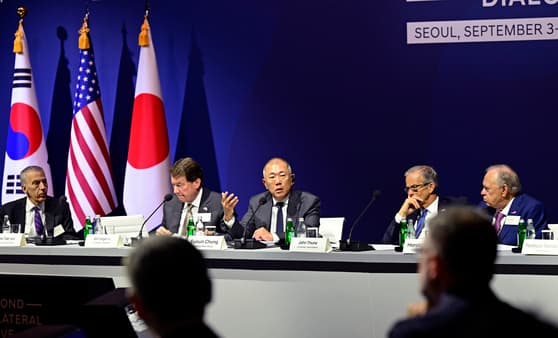
Top executives gather in Tokyo for third Korea-U.S.-Japan Economic Dialogue this week
Hyundai Motor Group Executive Chair Euisun Chung, center, delivers opening remarks at the second Trilateral Executive Dialogue among Korea, the United States and Japan at the Grand Hyatt Seoul on Sept. 4, 2024. [HYUNDAI MOTOR GROUP] Top executives from Korea’s major conglomerates will attend the third Korea-U.S.-Japan Economic Dialogue in Tokyo this week, seeking ways to strengthen cooperation and navigate shared economic and geopolitical challenges. According to industry sources on Monday, Hyundai Motor Group Executive Chair Euisun Chung and Hyosung Group Chairman Cho Hyun-joon will participate in the two-day forum, which runs from Oct. 14 to 15 at the Keidanren Kaikan in Tokyo. Samsung Electronics Executive Chairman Lee Jae-yong is also reportedly likely to attend. Related Article Euisun Chung marks fifth year as Hyundai's chief with plenty of achievements, but serious challenges ahead Hyundai Motor chief Euisun Chung to fly to U.S. to support tariff talks as deadline looms Rubio says trilateral ties with Korea, Japan 'critical' for peace, stability in Indo-Pacific The trilateral dialogue, first held in San Francisco in 2023 and in Seoul last year, brings together political and business leaders from the three democracies to discuss collaboration on economic growth, supply chain resilience and national security. Hyundai Motor served as a key sponsor of last year’s event. Chung, attending for the second consecutive year, is expected to meet with U.S. lawmakers, including Republican Sen. Bill Hagerty of Tennessee and Democratic Sen. Chris Coons of Delaware, both of whom attended previous sessions. Hyosung’s Cho is expected to discuss cooperation on expanding power transmission networks between Korea and the United States in response to surging electricity demand from AI data center growth. Samsung’s Lee, who did not attend last year’s dialogue, is expected to join this year’s meeting. Lee has maintained close ties with Japanese companies, hosting the “LJF” or "Leading Japanese Firms" networking event at Samsung’s Seungjiwon guesthouse in 2023. Other Korean participants include Jung In-sub, head of Hanwha Ocean, and Shin Hak-cheol, vice chairman and CEO of LG Chem. From the Korea Enterprises Federation, Kim Chang-beom, vice chairman, will represent Korea’s business community. Around 100 leaders from government, business and academia are expected to join this year’s dialogue. The U.S. delegation will include Sen. Hagerty, U.S. Ambassador to Japan Joseph M. Young, Under Secretary of State Allison Hooker and executives from Qualcomm and FedEx. Japan’s lineup includes representatives from SoftBank Group, Toyota, Sony Group, NEC and NTT. An insider told the JoongAng Ilbo that "the U.S. administration’s tariff strategy is an important variable that affects all three economies." This article was originally written in Korean and translated by a bilingual reporter with the help of generative AI tools. It was then edited by a native English-speaking editor. All AI-assisted translations are reviewed and refined by our newsroom. BY KIM SU-MIN [yim.seunghye@joongang.co.kr]
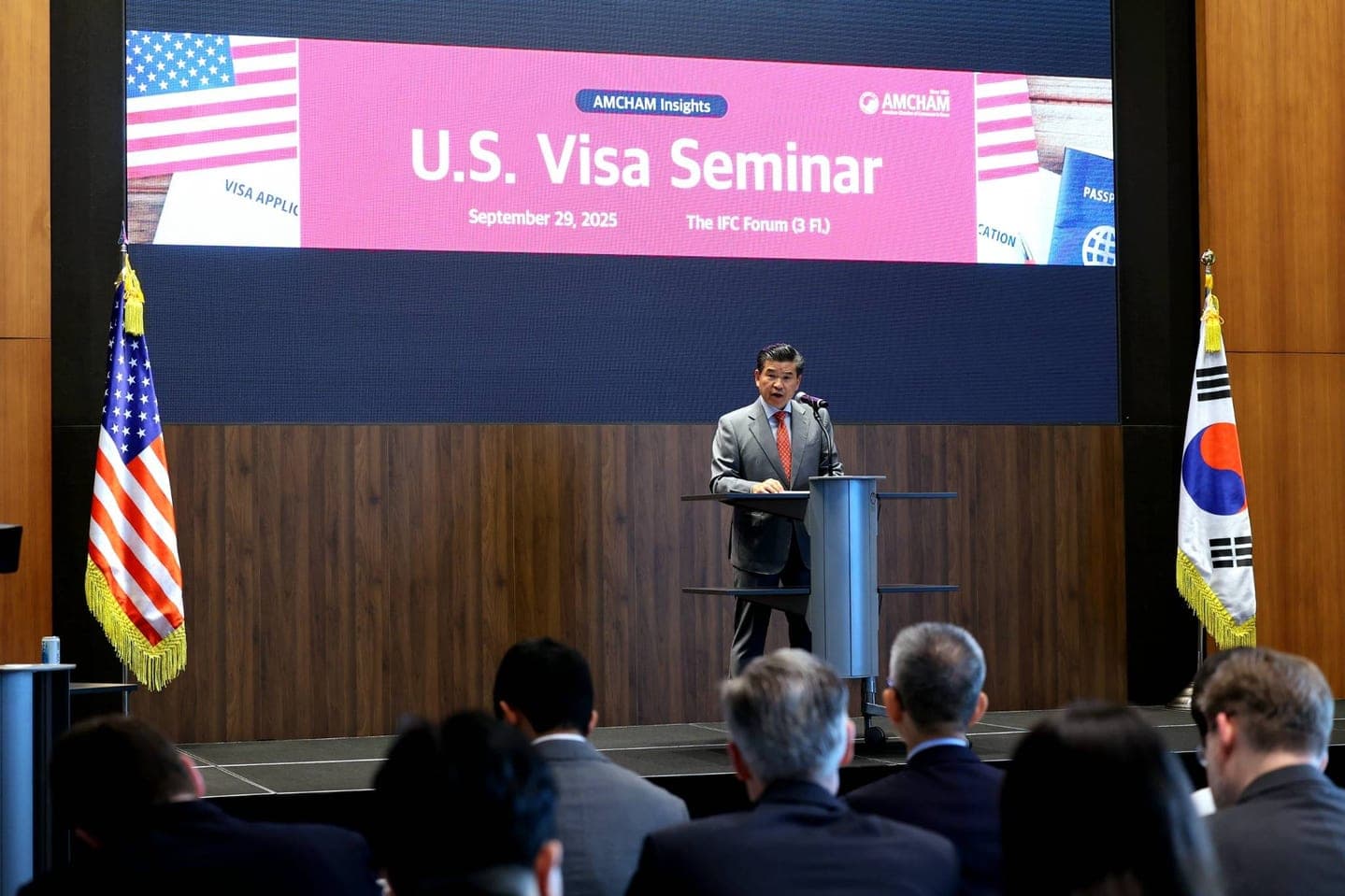
Korea pushes for bigger U.S. visa quotas as $350 billion investment looms
James Kim, CEO and chairman of the American Chamber of Commerce in Korea, speaks during a seminar hosted by the organization about the U.S. visa program in western Seoul on Sept. 29. [AMERICAN CHAMBER OF COMMERCE IN KOREA] Korea may seek higher quotas for H-2B foreign worker visas to the United States as it moves forward with its $350 billion investment pledge, with experts projecting that the scale of these projects will bring greater influx of Korean workers to the U.S. in the coming years. The current annual cap stands at 85,000 for H-1B specialist visas and 66,000 for H-2B nonagricultural worker visas. But the urgency of limited U.S. visa issuance was put into sharper focus by the recent Georgia immigration raid, where 310 Korean workers were detained — an incident that sparked outrage in Korea. Although broader trade negotiations remain stalled for now, what is certain is that Korea’s massive investment commitments will require a steady pipeline of Korean labor entering the U.S. Related Article Korea, U.S. to launch working group to address visa system this week Negotiations continue as visa concerns jeopardize Korean investments in U.S. “The U.S. Department of Justice has issued tens of thousands of additional H-2B visas in recent years,” said Jung Man-suk, a U.S.-licensed attorney at Daeyang Immigration Law Group, during a seminar hosted by the American Chamber of Commerce in Korea (Amcham) in Western Seoul on Monday. “This shows that if the U.S. government is willing, there is room to expand the H-2B quota.” Shorter-term measures could involve Korean firms requesting more flexible administrative guidance for temporary visa approvals, especially for workers providing technical support to large-scale projects like semiconductor or battery plants. Companies, experts advise, should also diversify their visa strategies by tailoring programs to specific roles: H-2B visas for short-term labor, L visas for managers and key personnel, E-2 visas for investment-based core staff and J visas for training or education purposes. “I’ve seen cases where companies send all their employees under a single visa program,” Jung noted. “That’s not a good idea. Taking a tailored, spread-out approach makes visa processing far smoother.” Korean firms must also account for structural differences in U.S. employment rules. In Korea, major construction and manufacturing projects typically operate under a contractor — subcontractor model. But U.S. immigration law ties visas directly to an employer — employee relationship, creating barriers for subcontracted workers seeking visas. “One way around this is for Korean firms to register subcontractor employees directly under their U.S. entities,” Jung said, “so they qualify as employers under visa requirements.” Related Article U.S. visa restrictions present opportunity for Korea to secure talent (KOR) Korean firms call for U.S. tariff relief, visa reforms amid trade uncertainty To further address labor needs, Korean companies have proposed the creation of a Korea-specific E-4 visa that would allow an additional 15,000 workers annually. The idea has been included in the Partner with Korea Act, introduced in July by Rep. Young Kim, Republican of California. However, progress has been slow, and many predict it could take years for the measure to advance, as it remains low on the Trump administration’s list of priorities. BY LEE JAE-LIM [lee.jaelim@joongang.co.kr]