4 stories credited to Jacobin
Latest story Apr 15, 2026 · on ChamberLight since Apr 2026
A story can appear as several articles (copies of the same piece), so counts of stories and of articles differ.
Scores for Jacobin
Writing quality not enough rated stories yet: 3 of 10. How it is measured
Scores last checked Sep 25, 2026.
Stories ChamberLight collected, by month
Stories credited to Jacobin, by publication date. ChamberLight collects articles that mention the officials it tracks, so this shows its own coverage of this source, not how much the source publishes.
- Stories from Jacobin
- Shaded: ChamberLight collected no stories, or almost none, from any outlet (a gap in its collection, not in the outlet’s publishing)
Show as a table
| Month | Stories | All outlets |
|---|---|---|
| April 2026 | 4 | 4,011 |
| May 2026 | 0 | none collected |
| June 2026 | 0 | none collected |
| July 2026 | 0 | none collected |
| August 2026 | 0 | 1 (collection gap) |
| September 2026 | 0 | 1,320 |
Top topics
Share of this source’s stories tagged with each topic. A story can carry several topics, so the shares do not add up to 100%.
- Defense/Military3
75% of 4 stories · 25% across all outlets
- Ethics/Corruption3
75% of 4 stories · 58% across all outlets
- Economy2
50% of 4 stories · 26% across all outlets
- Foreign Policy2
50% of 4 stories · 29% across all outlets
- Criminal Justice1
25% of 4 stories · 19% across all outlets
- Technology/Privacy1
25% of 4 stories · 10% across all outlets
The thin mark on each bar is the topic’s share across all outlets.
Who they cover
Party of the officials these stories are mainly about, across all 7 officials named. A story counts once for each official it is mainly about, so the split is over 8 story–official pairs, from 4 stories.
- Democrat63% · 5 pairs
- Republican25% · 2 pairs
- Independent13% · 1 pair
Most covered
Stories mainly about each official, and their share of the source’s 4 stories.
Article tone
ChamberLight’s article analysis assigns each story a tone toward the official it covers. It describes the coverage of that official, not Jacobin’s stance, and reader votes do not change it. 4 stories.
- Good Look
- 1 (25%)
- Mixed
- 1 (25%)
- Informational
- 0 (0%)
- Bad Look
- 2 (50%)
Challenges to these scores
No one has challenged a score on this page yet. Anyone can; editors publish every outcome here.
Articles served from jacobin.com
8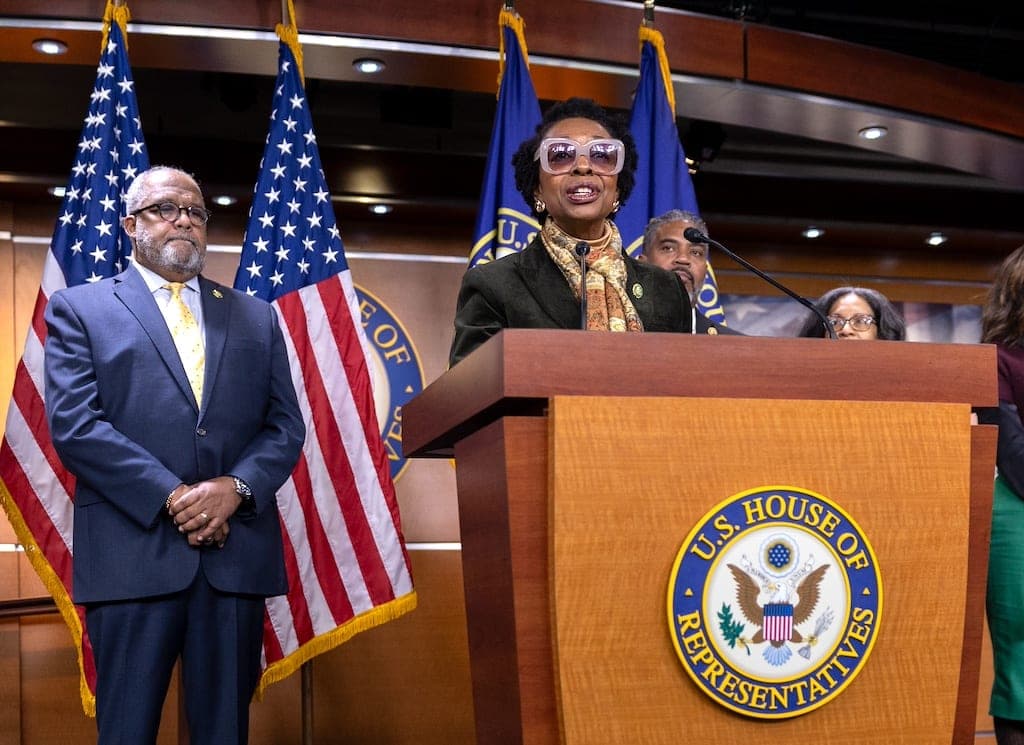
The CBC May Side With Trump on the Surveillance Bill
Members of the Congressional Black Caucus are staying tight-lipped about whether they will supply the decisive votes needed to pass a Trump-backed bill reauthorizing a warrantless surveillance law exploited by federal police. Members of the Congressional Black Caucus are largely staying silent about how they will vote on the reauthorization of a warrantless surveillance law. (Nathan Posner / Anadolu via Getty Images) Members of the Congressional Black Caucus (CBC) are remaining tight-lipped about whether they will provide the decisive votes to pass a Trump-backed bill reauthorizing a warrantless surveillance law exploited by federal police to spy on Black Lives Matter and other activists. The silence comes even as Democratic leadership and other congressional minority groups have pledged to oppose reauthorization without reform. A House vote on the Foreign Intelligence Surveillance Act (FISA) could come as soon as this week, before the existing law is set to expire on April 20. This Monday, the American Prospect reported that Rep. Gregory Meeks (D-NY), a leading legislator on foreign affairs, successfully lobbied the CBC leadership not to support FISA reform efforts. The Lever has since spoken to an anonymous congressional source backing the Prospect’s account. But in a statement to the Lever last night, Meeks denied the reporting as “inaccurate.” “I support FISA reauthorization, but the only vote I’ve been whipping is my War Powers Resolution to end the war in Iran,” Meeks said. “Whip operations are traditionally conducted by the Ranking Member of the committee that has jurisdiction over the legislation being considered. Any claim that I’m whipping the CBC on FISA is false.” The battle on Capitol Hill revolves around post-9/11 changes to the 1978 Foreign Intelligence Surveillance Act, which have empowered the FBI to conduct extensive warrantless surveillance since 2008. The provision responsible, Section 702, has been vastly overused: according to the Foreign Intelligence Surveillance Court created under FISA, federal law enforcement misapplied Section 702 nearly 300,000 times between 2016 and 2020 — including for searches of American citizens. Section 702 has given federal law enforcement warrantless access to the communications of protesters, journalists, and a judge, among others. That includes 133 individuals arrested in connection with civil unrest and protests taking place during the summer of 2020. Investigators were in search of “any counterterrorism derogatory information on the arrestees,” despite there being no “specific potential connections to terrorist related activity.” House Minority Leader Hakeem Jeffries (D-NY) said this week that Democrats won’t do Republicans’ bidding on FISA. Speaker Mike Johnson (R-LA) — at the behest of the White House — has insisted on a “clean” bill, without reforming Section 702. That means the GOP has already shed the support of some hard-line conservatives who are against surveillance overreach and is in need of votes. The Lever reached out to the offices of all fifty-nine voting members of the CBC to take a FISA temperature check — and received just one response, from Meeks. The CBC communications office also declined to comment on the FISA vote. The Congressional Hispanic Caucus and the Congressional Asian Pacific American Caucus, meanwhile, have announced their opposition to reauthorizing the law without reform. So has the Congressional Progressive Caucus, which for the first time formally agreed to vote no on FISA reauthorization. A notable CBC member who did not provide a comment to the Lever is Chairwoman Yvette Clarke (D-NY), who has been a steadfast critic of FISA overreach. She voted against the 2008 FISA changes, including the addition of Section 702, arguing they “[tear] apart civil liberties that Americans have relied on.” “Congress is creating a precedent under which we will see the creation of a system that uses the private sector as a de facto spying agency for the government,” Clarke quite presciently said. She then voted against reauthorizing the bill in 2012, 2018, and 2024. “So influential are the intelligence agencies that rely on Section 702 that they have managed to cow a long-standing reformist,” the American Prospect reported of Clarke’s silence. They cite the intelligence community’s vast influence in Congress, including an “eleventh-hour” fear campaign waged by the CIA, which last week revealed that Section 702 powers aided in its 2024 takedown of a would-be terrorist attack at a Taylor Swift concert. This article was first published by the Lever, an award-winning independent investigative newsroom.
The CBC May Side With Trump on the Surveillance Bill
Members of the Congressional Black Caucus are staying tight-lipped about whether they will supply the decisive votes needed to pass a Trump-backed bill reauthorizing a warrantless surveillance law exploited by federal police. Members of the Congressional Black Caucus are largely staying silent about how they will vote on the reauthorization of a warrantless surveillance law. (Nathan Posner / Anadolu via Getty Images) Members of the Congressional Black Caucus (CBC) are remaining tight-lipped about whether they will provide the decisive votes to pass a Trump-backed bill reauthorizing a warrantless surveillance law exploited by federal police to spy on Black Lives Matter and other activists. The silence comes even as Democratic leadership and other congressional minority groups have pledged to oppose reauthorization without reform. A House vote on the Foreign Intelligence Surveillance Act (FISA) could come as soon as this week, before the existing law is set to expire on April 20. This Monday, the American Prospect reported that Rep. Gregory Meeks (D-NY), a leading legislator on foreign affairs, successfully lobbied the CBC leadership not to support FISA reform efforts. The Lever has since spoken to an anonymous congressional source backing the Prospect’s account. But in a statement to the Lever last night, Meeks denied the reporting as “inaccurate.” “I support FISA reauthorization, but the only vote I’ve been whipping is my War Powers Resolution to end the war in Iran,” Meeks said. “Whip operations are traditionally conducted by the Ranking Member of the committee that has jurisdiction over the legislation being considered. Any claim that I’m whipping the CBC on FISA is false.” The battle on Capitol Hill revolves around post-9/11 changes to the 1978 Foreign Intelligence Surveillance Act, which have empowered the FBI to conduct extensive warrantless surveillance since 2008. The provision responsible, Section 702, has been vastly overused: according to the Foreign Intelligence Surveillance Court created under FISA, federal law enforcement misapplied Section 702 nearly 300,000 times between 2016 and 2020 — including for searches of American citizens. Section 702 has given federal law enforcement warrantless access to the communications of protesters, journalists, and a judge, among others. That includes 133 individuals arrested in connection with civil unrest and protests taking place during the summer of 2020. Investigators were in search of “any counterterrorism derogatory information on the arrestees,” despite there being no “specific potential connections to terrorist related activity.” House Minority Leader Hakeem Jeffries (D-NY) said this week that Democrats won’t do Republicans’ bidding on FISA. Speaker Mike Johnson (R-LA) — at the behest of the White House — has insisted on a “clean” bill, without reforming Section 702. That means the GOP has already shed the support of some hard-line conservatives who are against surveillance overreach and is in need of votes. The Lever reached out to the offices of all fifty-nine voting members of the CBC to take a FISA temperature check — and received just one response, from Meeks. The CBC communications office also declined to comment on the FISA vote. The Congressional Hispanic Caucus and the Congressional Asian Pacific American Caucus, meanwhile, have announced their opposition to reauthorizing the law without reform. So has the Congressional Progressive Caucus, which for the first time formally agreed to vote no on FISA reauthorization. A notable CBC member who did not provide a comment to the Lever is Chairwoman Yvette Clarke (D-NY), who has been a steadfast critic of FISA overreach. She voted against the 2008 FISA changes, including the addition of Section 702, arguing they “[tear] apart civil liberties that Americans have relied on.” “Congress is creating a precedent under which we will see the creation of a system that uses the private sector as a de facto spying agency for the government,” Clarke quite presciently said. She then voted against reauthorizing the bill in 2012, 2018, and 2024. “So influential are the intelligence agencies that rely on Section 702 that they have managed to cow a long-standing reformist,” the American Prospect reported of Clarke’s silence. They cite the intelligence community’s vast influence in Congress, including an “eleventh-hour” fear campaign waged by the CIA, which last week revealed that Section 702 powers aided in its 2024 takedown of a would-be terrorist attack at a Taylor Swift concert. This article was first published by the Lever, an award-winning independent investigative newsroom.
The Imperial Presidency Must End
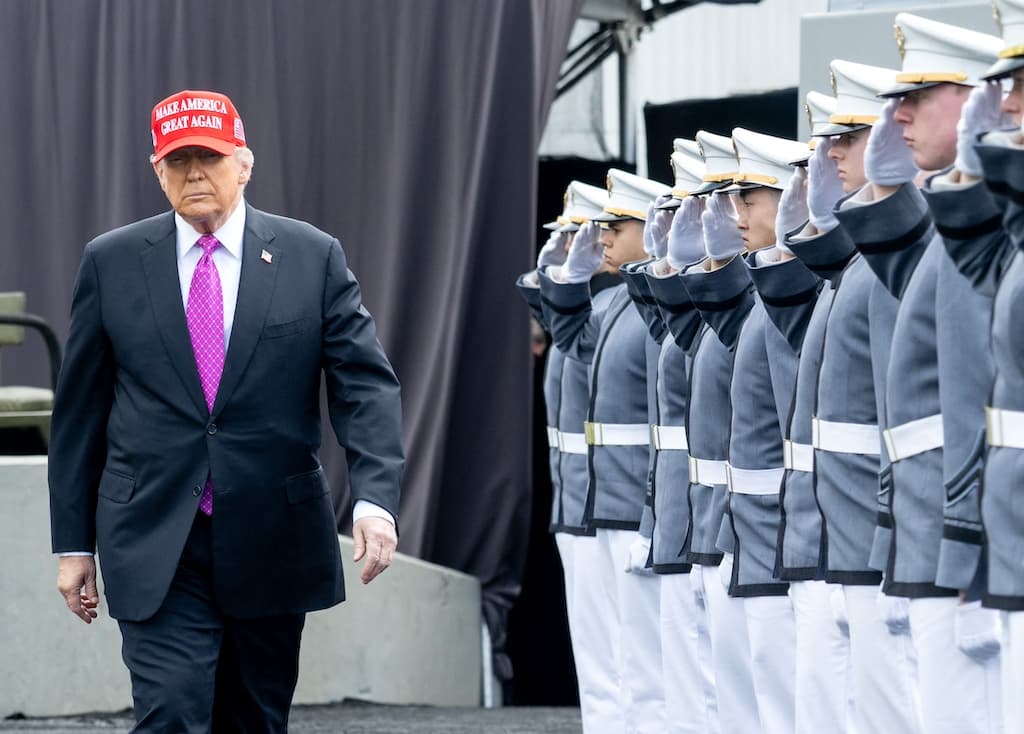
The chaos and destruction Donald Trump has wrought has been facilitated by the decades-long expansion of the president’s executive power. Far from checking that power when they hold office, Democrats have expanded it. That has to change. The chaos and rapidly growing danger of Donald Trump’s presidency demand fundamental changes to US foreign policy and the powers of the executive branch. (Saul Loeb / AFP via Getty Images) When Donald Trump seemingly threatened to wipe Iran from existence last week, it was an all-hands-on-deck moment. Some Democrats in Congress called once more for passing a war powers resolution (WPR) through Congress, ideally through a veto-proof, bipartisan majority, to force an end to Trump’s war whether he likes it or not. Others, like Sen. Ed Markey (D-MA), insisted a WPR “will not be enough” and that the president needed to be removed from power entirely through the Twenty-Fifth Amendment or impeachment. Still others are saying that’s not enough and that the only true solution is ensuring that a Republican Party propping Trump up in lockstep loyalty is “annihilated in the next election, and the election after that.” In reality, none of these options is enough of a response. The chaos and rapidly growing danger of Trump’s presidency demand more fundamental changes to US foreign policy and the powers of the executive branch that go far beyond just restraining the figure of Trump or beating Republicans in elections. We are living through the future that a chorus of civil-libertarian Cassandras warned about for years, this magazine included: that left in place, the radical expansion of presidential war powers and national security authority justified by the “war on terror” would one day fall in the hands of someone irresponsible and dangerous who would put this inordinate power toward terrible ends. The only surprising thing about Trump’s use and abuse of this executive authority is how quickly we’ve reached this nightmare scenario. You don’t get Trump’s banishment of hundreds of men to a Salvadoran torture dungeon without George W. Bush’s use of “extraordinary rendition.” You don’t get his immigration crackdown without Bush’s rounding up of hundreds of random brown migrants to fight “terror.” And you don’t get his current efforts to crush domestic dissent without Bush’s abuse of the word “terrorism” and surveillance of Muslims and dissidents. You don’t get Trump blowing up random boats in international waters without Barack Obama’s drone assassination program. You don’t get the abduction of former Venezuelan president Nicolás Maduro without the ex–constitutional law professor’s expansion of special forces raids and operations like the Osama bin Laden assassination. And you don’t get Trump’s multiple, undeclared wars against Iran without Obama simply ignoring the War Powers Act and waging undeclared regime-change war against Libya, along with decades’ worth of previous presidents playing linguistic games to redefine war in ways that didn’t require congressional authorization. Simply removing Trump from power won’t erase these or any of the many other radical powers of the imperial presidency. All it will mean is waiting until the next dead-eyed sociopath, like Tom Cotton, gets his turn to wield them. It wasn’t that long ago that rolling back Bush’s post-9/11 excesses was a fixture in Democratic rhetoric. Throughout the presidential primary in 2007, the leading candidates fell over themselves promising to end executive branch overreach and restore constitutional limits. Obama was one of them, fretting about how the weakening of US civil liberties had harmed “our reputation around the world” and vowing to have his attorney general “review every single executive order” issued by Bush that “undermined our Constitution or subverted our civil liberties.” But that talk vanished as the primary contest entered 2008. That year’s Democratic platform barely even mentioned civil liberties. Once Obama won, rather than use that transcendent moment to sweep away Bush’s imperial presidency, Democrats instead accepted it as their own — in fact, they added to it in new and even more lawless ways. Sadly, this wasn’t just thanks to the elite: surveys showed that liberal voters overwhelmingly backed Obama’s often horrific use of drones, only to go back to melting down about this issue once a Republican was in the White House again. This cycle can’t keep repeating. We cannot live through the past year or so of panic over Trump’s abuse of the imperial presidency, lamenting — just as liberal America did under Bush — that someone so reckless could have these powers at his disposal with virtually nothing to stop him, to the point that he could have decided to offhandedly nuke a country last week and kill millions, only to turn around and leave it all in place. There’s no person on Earth who can be trusted with this kind of power, least of all when there is no possible guarantee that a similarly irresponsible human being will never be elected to the US presidency again. A future Democratic-controlled Congress should take up the job that Obama and the party’s old guard abandoned: put strict limits on the use of drones that won’t simply be alternately loosened and tightened by whichever president comes to power, explicitly outlawing “targeted killing” and any other attempt at finding a loophole for the already existing ban on assassinations; finally repeal the 2001 Authorization of the Use of Military Force that has been serially abused by presidents to fight often secret wars all over the world; end mass surveillance, whether in the form of the National Security Agency’s warrantless backdoor searches that Democrats actually expanded under Joe Biden, or in the warrantless spying that the Department of Homeland Security and other agencies now do through private data brokers; close the Guantanamo Bay prison camp that Trump is now trying to send migrants to; and embark on a twenty-first-century version of the Church Committee to investigate and lay bare national security abuses. All of this would be a decent start to returning the president’s “national security” powers to a level approaching reason and sanity, and would help ensure the next Trump doesn’t have free rein to bomb, start wars, and go after his political enemies at will. Unfortunately, the Democratic establishment right now seems committed to simply rehashing this cycle in a few years’ time: key members of the Democratic caucus in Congress are right now en route to reauthorizing one of the most shockingly abused parts of the post–September 11 domestic spying apparatus, despite warning nonstop for a decade about Trump’s dictatorial ambitions. If the fight for American democracy — or the fight for “No Kings,” as liberal activists have framed it — is going to have any meaning, it can’t just be narrowly focused on election rigging. It has to roll back the system that has given the US president the kind of despotic global power no monarch in human history has ever enjoyed. Otherwise, we can look forward to going through all of this again soon.

The “Moderate” Think Tank Pushing Dems to Loosen AI Rules
Ascendant DC think tank Searchlight Institute, pushing Democrats to the center, has ties to megadonor Simone Coxe, whose Nvidia-linked money could boost AI-backed efforts to defend data center build-outs and limit AI regulation. The Searchlight Institute has pushed Democrats toward lighter regulation of artificial intelligence. (Joan Cros / NurPhoto via Getty Images) The previously undisclosed board of an ascendant DC think tank pushing Democrats to the center includes a Democratic Party megadonor with a stake in artificial intelligence chip designer Nvidia, which could benefit from the organization’s efforts to defend data center build-outs and limit AI regulation. The Lever exclusively reports that philanthropist Simone Coxe — whose multibillion-dollar fortune largely comes from her venture capitalist husband’s investments in Nvidia — sits on the board of the Searchlight Institute, a new center-left DC think tank. Nvidia is heavily invested in data center expansion. Coxe, also the cofounder of and director at California news organization CalMatters and a prolific Democratic donor, is listed as a director of the Searchlight Institute in the organization’s DC incorporation documents. The think tank has not disclosed its association with Coxe or her husband, Tench Coxe. Searchlight’s board of directors has not been previously reported. It includes other rich and powerful investors with a stake in the AI build-out, such as billionaire hedge fund manager Stephen Mandel. Mandel’s investment firm Lone Pine Capital is heavily invested in the Taiwanese Semiconductor Manufacturing Company, the largest manufacturer of chips designed by Nvidia. Moderation and Megadonors The Searchlight Institute, a project of several longtime Democratic political operatives, launched last fall. The group pitched itself as the leader of a new realignment in the Democratic Party, emphasizing “moderation” over progressivism, which Searchlight claims lost the party in the 2016 and 2024 presidential elections. In January, as Immigration and Customs Enforcement (ICE) escalated its assault in Minneapolis and across the United States, Searchlight disseminated a memo urging Democrats not to say “abolish ICE.” The group has also voiced opposition to expansive housing reform legislation that passed the Senate last month with Democratic support, parroting real estate industry talking points about the impact of a provision aimed at limiting Wall Street ownership of homes. That legislation is now in limbo amid growing hesitation among some House Democrats. Recently, Searchlight has been putting out white papers on data center policy, part of the group’s research focus on artificial intelligence. The think tank has vocally opposed Sen. Bernie Sanders (I-VT) and Rep. Alexandria Ocasio-Cortez’s (D-NY) proposed data center moratorium legislation — which would pause data center construction until national AI safety standards are in place — in favor of lighter-touch regulation. Yet as the think tank increasingly seeks to influence the Democratic Party’s agenda on AI and data centers, it has kept its benefactors’ interest in the industry quiet. Whether Simone and Tench Coxe have provided any financial support to the think tank is not clear, but Mandel, another of the institute’s directors, is known to be a major donor. The Coxes — who are known as a “new megadonor couple” — have also donated nearly $300,000 to PACs associated with Majority Democrats, a political effort that shares several operatives with Searchlight, including Democratic adviser and venture capitalist Seth London. Remaining board members include Adam Jentleson, the think tank’s founder and former chief of staff to progressive-turned-centrist Sen. John Fetterman (D-PA); Sonal Shah, CEO of the Texas Tribune; and Peter Knight, who appears to be a former Washington lobbyist and political operative turned venture capitalist. Knight was caught up in a campaign finance scandal on the Clinton-Gore presidential campaign. The Searchlight Institute, Simone Coxe, and Peter Knight did not respond to the Lever’s requests for comment. This article was first published by the Lever, an award-winning independent investigative newsroom.
The “Moderate” Think Tank Pushing Dems to Loosen AI Rules
Ascendant DC think tank Searchlight Institute, pushing Democrats to the center, has ties to megadonor Simone Coxe, whose Nvidia-linked money could boost AI-backed efforts to defend data center build-outs and limit AI regulation. The Searchlight Institute has pushed Democrats toward lighter regulation of artificial intelligence. (Joan Cros / NurPhoto via Getty Images) The previously undisclosed board of an ascendant DC think tank pushing Democrats to the center includes a Democratic Party megadonor with a stake in artificial intelligence chip designer Nvidia, which could benefit from the organization’s efforts to defend data center build-outs and limit AI regulation. The Lever exclusively reports that philanthropist Simone Coxe — whose multibillion-dollar fortune largely comes from her venture capitalist husband’s investments in Nvidia — sits on the board of the Searchlight Institute, a new center-left DC think tank. Nvidia is heavily invested in data center expansion. Coxe, also the cofounder of and director at California news organization CalMatters and a prolific Democratic donor, is listed as a director of the Searchlight Institute in the organization’s DC incorporation documents. The think tank has not disclosed its association with Coxe or her husband, Tench Coxe. Searchlight’s board of directors has not been previously reported. It includes other rich and powerful investors with a stake in the AI build-out, such as billionaire hedge fund manager Stephen Mandel. Mandel’s investment firm Lone Pine Capital is heavily invested in the Taiwanese Semiconductor Manufacturing Company, the largest manufacturer of chips designed by Nvidia. Moderation and Megadonors The Searchlight Institute, a project of several longtime Democratic political operatives, launched last fall. The group pitched itself as the leader of a new realignment in the Democratic Party, emphasizing “moderation” over progressivism, which Searchlight claims lost the party in the 2016 and 2024 presidential elections. In January, as Immigration and Customs Enforcement (ICE) escalated its assault in Minneapolis and across the United States, Searchlight disseminated a memo urging Democrats not to say “abolish ICE.” The group has also voiced opposition to expansive housing reform legislation that passed the Senate last month with Democratic support, parroting real estate industry talking points about the impact of a provision aimed at limiting Wall Street ownership of homes. That legislation is now in limbo amid growing hesitation among some House Democrats. Recently, Searchlight has been putting out white papers on data center policy, part of the group’s research focus on artificial intelligence. The think tank has vocally opposed Sen. Bernie Sanders (I-VT) and Rep. Alexandria Ocasio-Cortez’s (D-NY) proposed data center moratorium legislation — which would pause data center construction until national AI safety standards are in place — in favor of lighter-touch regulation. Yet as the think tank increasingly seeks to influence the Democratic Party’s agenda on AI and data centers, it has kept its benefactors’ interest in the industry quiet. Whether Simone and Tench Coxe have provided any financial support to the think tank is not clear, but Mandel, another of the institute’s directors, is known to be a major donor. The Coxes — who are known as a “new megadonor couple” — have also donated nearly $300,000 to PACs associated with Majority Democrats, a political effort that shares several operatives with Searchlight, including Democratic adviser and venture capitalist Seth London. Remaining board members include Adam Jentleson, the think tank’s founder and former chief of staff to progressive-turned-centrist Sen. John Fetterman (D-PA); Sonal Shah, CEO of the Texas Tribune; and Peter Knight, who appears to be a former Washington lobbyist and political operative turned venture capitalist. Knight was caught up in a campaign finance scandal on the Clinton-Gore presidential campaign. The Searchlight Institute, Simone Coxe, and Peter Knight did not respond to the Lever’s requests for comment. This article was first published by the Lever, an award-winning independent investigative newsroom.
The “Moderate” Think Tank Pushing Dems to Loosen AI Rules
Ascendant DC think tank Searchlight Institute, pushing Democrats to the center, has ties to megadonor Simone Coxe, whose Nvidia-linked money could boost AI-backed efforts to defend data center build-outs and limit AI regulation. The Searchlight Institute has pushed Democrats toward lighter regulation of artificial intelligence. (Joan Cros / NurPhoto via Getty Images) The previously undisclosed board of an ascendant DC think tank pushing Democrats to the center includes a Democratic Party megadonor with a stake in artificial intelligence chip designer Nvidia, which could benefit from the organization’s efforts to defend data center build-outs and limit AI regulation. The Lever exclusively reports that philanthropist Simone Coxe — whose multibillion-dollar fortune largely comes from her venture capitalist husband’s investments in Nvidia — sits on the board of the Searchlight Institute, a new center-left DC think tank. Nvidia is heavily invested in data center expansion. Coxe, also the cofounder of and director at California news organization CalMatters and a prolific Democratic donor, is listed as a director of the Searchlight Institute in the organization’s DC incorporation documents. The think tank has not disclosed its association with Coxe or her husband, Tench Coxe. Searchlight’s board of directors has not been previously reported. It includes other rich and powerful investors with a stake in the AI build-out, such as billionaire hedge fund manager Stephen Mandel. Mandel’s investment firm Lone Pine Capital is heavily invested in the Taiwanese Semiconductor Manufacturing Company, the largest manufacturer of chips designed by Nvidia. Moderation and Megadonors The Searchlight Institute, a project of several longtime Democratic political operatives, launched last fall. The group pitched itself as the leader of a new realignment in the Democratic Party, emphasizing “moderation” over progressivism, which Searchlight claims lost the party in the 2016 and 2024 presidential elections. In January, as Immigration and Customs Enforcement (ICE) escalated its assault in Minneapolis and across the United States, Searchlight disseminated a memo urging Democrats not to say “abolish ICE.” The group has also voiced opposition to expansive housing reform legislation that passed the Senate last month with Democratic support, parroting real estate industry talking points about the impact of a provision aimed at limiting Wall Street ownership of homes. That legislation is now in limbo amid growing hesitation among some House Democrats. Recently, Searchlight has been putting out white papers on data center policy, part of the group’s research focus on artificial intelligence. The think tank has vocally opposed Sen. Bernie Sanders (I-VT) and Rep. Alexandria Ocasio-Cortez’s (D-NY) proposed data center moratorium legislation — which would pause data center construction until national AI safety standards are in place — in favor of lighter-touch regulation. Yet as the think tank increasingly seeks to influence the Democratic Party’s agenda on AI and data centers, it has kept its benefactors’ interest in the industry quiet. Whether Simone and Tench Coxe have provided any financial support to the think tank is not clear, but Mandel, another of the institute’s directors, is known to be a major donor. The Coxes — who are known as a “new megadonor couple” — have also donated nearly $300,000 to PACs associated with Majority Democrats, a political effort that shares several operatives with Searchlight, including Democratic adviser and venture capitalist Seth London. Remaining board members include Adam Jentleson, the think tank’s founder and former chief of staff to progressive-turned-centrist Sen. John Fetterman (D-PA); Sonal Shah, CEO of the Texas Tribune; and Peter Knight, who appears to be a former Washington lobbyist and political operative turned venture capitalist. Knight was caught up in a campaign finance scandal on the Clinton-Gore presidential campaign. The Searchlight Institute, Simone Coxe, and Peter Knight did not respond to the Lever’s requests for comment. This article was first published by the Lever, an award-winning independent investigative newsroom.
The Iran Ceasefire Is a Stunning Defeat for Militarism
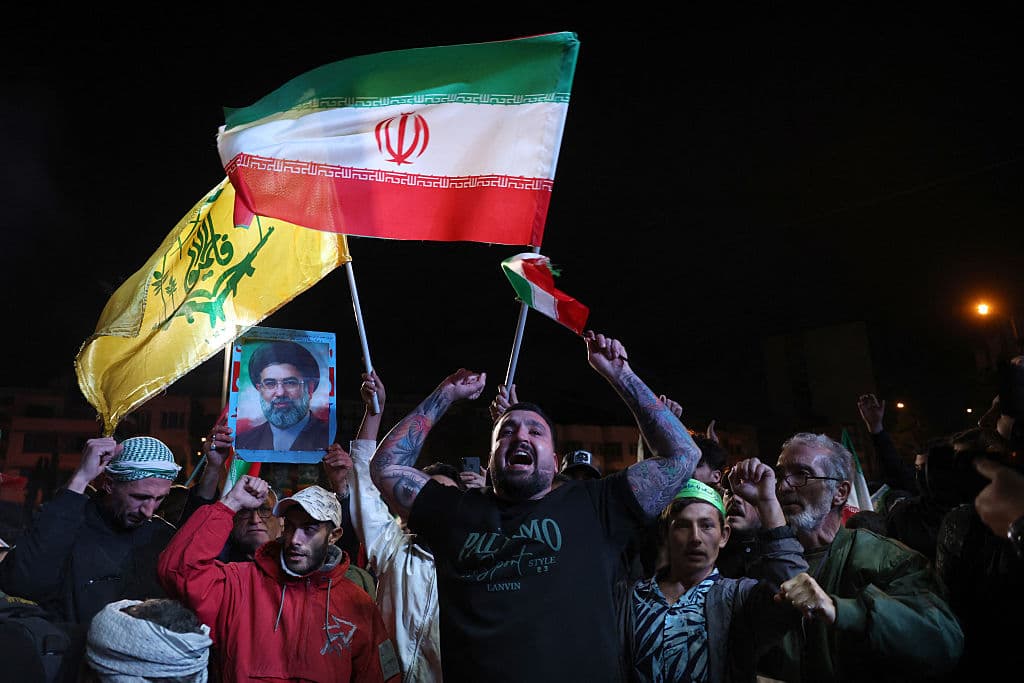
The Iran war was such a fiasco that Donald Trump had no choice but to find a way out. Whether it sticks will partly depend on Democrats resisting the urge to irresponsibly goad him back into it. Iranians react to the ceasefire announcement at Enqhelab Square in Tehran, April 8, 2026. (AFP via Getty Images) Despite having lasted only six weeks, Donald Trump’s war with Iran was somehow shaping up to be the worst foreign policy decision of a short twenty-first century full of them, a ballooning disaster on almost every level, for almost everyone involved, that we should all be thankful now has a chance to end. Whether it actually does, unfortunately, is up to a lot more than the fickle and easily distracted president. Trump’s announcement of a two-week ceasefire with Iran yesterday and coming negotiations for a permanent settlement of hostilities was a rare acknowledgment of reality by the president: that the unappealing option of cutting and running while failing to achieve any of the goals he originally set — in fact, making several of the problems the war was meant to solve much worse — is still by far the best option on a menu of garbage. This utterly pointless war has been so strategically and politically disastrous for both Trump’s presidency and the country that it effectively leaves him with no other reasonable choice. The fact that the president seemingly agreed to use Iran’s ten-point proposal and not his own fifteen-point set of maximalist demands as the basis for talks is a quiet acknowledgment of the war’s failure as a policy choice. As hard as this course of action might be for Trump to swallow, the alternatives are much worse. Extracting Iran’s uranium is a dangerous fantasy. If you need proof, look at what a debacle rescuing just one man from deep in the country became for US forces. As his hurricane of contradictory public statements about the Strait of Hormuz’s closure suggests, Trump can’t militarily reopen the strait, where ships can easily be threatened and harassed by the thousands of cheap drones Iran can make each month. Holding this card, Iran’s leaders refuse to capitulate in spite of the immense punishment Trump is inflicting on the country, and his options for escalating that punishment are all unpalatable. While Iran holds the world economy hostage, Trump can only threaten to kill and destroy more. That tactic has reached the limit of its usefulness. Ground troops would be politically toxic and lead to skyrocketing US casualties at the best of times, let alone just as temperatures in the Persian Gulf are set to climb deeper into a hundred-plus degree territory. Ratcheting up the scale and violence of bombing, as Trump threatened to do yesterday, not only risks regional disaster that would likely leave Israel devastated (whose security Trump has repeatedly pointed to as justification for the war), but was widely and harshly condemned even by a chorus of right-wing voices who are usually his allies. While Iran holds the world economy hostage, Trump can only threaten to kill and destroy more. That tactic has reached the limit of its usefulness. All the while, the longer the war goes without Iranian surrender, the worse it gets for Trump and the United States. The US economy is already headed for major pain going into this year’s midterms, and weeks and months more of supply chain disruptions would send it entirely off a cliff, if it isn’t headed that way already. US munition stockpiles continue to be depleted at unsustainable rates, meaning the US military is reaching the limit of its ability to actually wage war, threatening a worse future embarrassment than voluntarily backing out. Public humiliations rack up by the day as extravagantly expensive military equipment and vehicles are very publicly destroyed or malfunction. Trump has, as a matter of practical necessity, been forced to choose the best of a set of bad options for himself, the painful choice that so many before him have preferred to set their presidencies on fire rather than take. That doesn’t mean peace is inevitable. There is the gaping distance between the positions of Iran’s leaders and the White House, a distance that will be difficult to bridge. But the biggest problem, as always, will be Israel. Israeli officials are apoplectic at the prospect of this deal and are already trying to sabotage it, refusing to end their genocidal war in Lebanon as required by Iran’s ten-point plan and actually carrying out their largest wave of bombings of the country this morning. Israel has the incentive and, unfortunately, the ability to torpedo any future peace, albeit an ability that rests entirely on the US president’s willingness to indulge them. The one saving grace is that there’s a chance this war may end up transforming Trump’s relationship to Israel and its prime minister, Benjamin Netanyahu. According to numerous reports, including a detailed New York Times piece that dropped just hours before yesterday’s ceasefire announcement, Netanyahu and other top Israeli officials played a central role in convincing Trump this fiasco was a good idea, including by feeding him a host of fantastical assurances that soon proved embarrassingly wrong. Soon after, we watched Trump embarrass himself by regurgitating many of those Israeli claims in public, including the idea that it would be over quickly, that decapitating Iran’s leadership would lead to regime change, and that there would be a mass uprising from the Iranian people, none of which proved true. The ceasefire is not really a victory for the forces of peace. Rather, it is a stunning defeat for militarism. The president should be furious that he was clearly misled, used, and humiliated by the Israelis. In a world that made sense, this would make it easy for him to bring the hammer down on Netanyahu and put an end to Israel’s constant warmongering on the US dime. But that would require a modicum of a backbone, which neither Trump nor his predecessor have shown much sign of in their dealings with Israel. In fact, at least according to an anonymous US official, last night when Trump had the opportunity to tell Netanyahu to back off Lebanon in a phone call, he declined to do so — a worrying omen, if it points to this same old cycle repeating again. The other wild card is Trump’s Democratic opposition, prominent members of which are being distinctly unhelpful as the world prays for this thing to really be over. First among them is Connecticut senator Chris Murphy, a prominent Democratic foreign policy voice who, virtually the moment a ceasefire was announced last night, flipped from screaming about how the war was spinning out of control and that Trump must urgently be removed from power to save lives, to ceaselessly assailing a peace deal with Iran and effectively baiting Trump into restarting hostilities — even apparently taking on Trump’s absurd, maximalist demand that Iran get rid of its conventional, nonnuclear missiles. This is the same poisonous role that prominent establishment Democrats like Murphy played in the lead-up to this mess, relentlessly goading Trump and charging he would be a coward unless he got more aggressive with Iran. Thankfully, this is not the case with all Democrats, some of whom, like Representative Yassamin Ansari, favor sense and reason. But the likes of Senator Murphy, working in tandem with the right-wing warmongers in Trump’s ear like Lindsey Graham and Mark Levin, have ample time and opportunity in the coming weeks to scuttle peace and plunge us all back into intolerable chaos, whether for the sake of run-of-the-mill political point-scoring or something more nefarious. As tempting as it is to say otherwise, the current ceasefire is not really a victory for the forces of peace. Rather, it is a stunning defeat for militarism and, more specifically, for a president drunk on military power and a misplaced faith that the United States can magically bomb his desires into existence. The paradox is that, to make any peace stick, we will all have to help him maintain the fiction that he won, bigly.
The Iran Ceasefire Is a Stunning Defeat for Militarism
The Iran war was such a fiasco that Donald Trump had no choice but to find a way out. Whether it sticks will partly depend on Democrats resisting the urge to irresponsibly goad him back into it. Iranians react to the ceasefire announcement at Enqhelab Square in Tehran, April 8, 2026. (AFP via Getty Images) Despite having lasted only six weeks, Donald Trump’s war with Iran was somehow shaping up to be the worst foreign policy decision of a short twenty-first century full of them, a ballooning disaster on almost every level, for almost everyone involved, that we should all be thankful now has a chance to end. Whether it actually does, unfortunately, is up to a lot more than the fickle and easily distracted president. Trump’s announcement of a two-week ceasefire with Iran yesterday and coming negotiations for a permanent settlement of hostilities was a rare acknowledgment of reality by the president: that the unappealing option of cutting and running while failing to achieve any of the goals he originally set — in fact, making several of the problems the war was meant to solve much worse — is still by far the best option on a menu of garbage. This utterly pointless war has been so strategically and politically disastrous for both Trump’s presidency and the country that it effectively leaves him with no other reasonable choice. The fact that the president seemingly agreed to use Iran’s ten-point proposal and not his own fifteen-point set of maximalist demands as the basis for talks is a quiet acknowledgment of the war’s failure as a policy choice. As hard as this course of action might be for Trump to swallow, the alternatives are much worse. Extracting Iran’s uranium is a dangerous fantasy. If you need proof, look at what a debacle rescuing just one man from deep in the country became for US forces. As his hurricane of contradictory public statements about the Strait of Hormuz’s closure suggests, Trump can’t militarily reopen the strait, where ships can easily be threatened and harassed by the thousands of cheap drones Iran can make each month. Holding this card, Iran’s leaders refuse to capitulate in spite of the immense punishment Trump is inflicting on the country, and his options for escalating that punishment are all unpalatable. While Iran holds the world economy hostage, Trump can only threaten to kill and destroy more. That tactic has reached the limit of its usefulness. Ground troops would be politically toxic and lead to skyrocketing US casualties at the best of times, let alone just as temperatures in the Persian Gulf are set to climb deeper into a hundred-plus degree territory. Ratcheting up the scale and violence of bombing, as Trump threatened to do yesterday, not only risks regional disaster that would likely leave Israel devastated (whose security Trump has repeatedly pointed to as justification for the war), but was widely and harshly condemned even by a chorus of right-wing voices who are usually his allies. While Iran holds the world economy hostage, Trump can only threaten to kill and destroy more. That tactic has reached the limit of its usefulness. All the while, the longer the war goes without Iranian surrender, the worse it gets for Trump and the United States. The US economy is already headed for major pain going into this year’s midterms, and weeks and months more of supply chain disruptions would send it entirely off a cliff, if it isn’t headed that way already. US munition stockpiles continue to be depleted at unsustainable rates, meaning the US military is reaching the limit of its ability to actually wage war, threatening a worse future embarrassment than voluntarily backing out. Public humiliations rack up by the day as extravagantly expensive military equipment and vehicles are very publicly destroyed or malfunction. Trump has, as a matter of practical necessity, been forced to choose the best of a set of bad options for himself, the painful choice that so many before him have preferred to set their presidencies on fire rather than take. That doesn’t mean peace is inevitable. There is the gaping distance between the positions of Iran’s leaders and the White House, a distance that will be difficult to bridge. But the biggest problem, as always, will be Israel. Israeli officials are apoplectic at the prospect of this deal and are already trying to sabotage it, refusing to end their genocidal war in Lebanon as required by Iran’s ten-point plan and actually carrying out their largest wave of bombings of the country this morning. Israel has the incentive and, unfortunately, the ability to torpedo any future peace, albeit an ability that rests entirely on the US president’s willingness to indulge them. The one saving grace is that there’s a chance this war may end up transforming Trump’s relationship to Israel and its prime minister, Benjamin Netanyahu. According to numerous reports, including a detailed New York Times piece that dropped just hours before yesterday’s ceasefire announcement, Netanyahu and other top Israeli officials played a central role in convincing Trump this fiasco was a good idea, including by feeding him a host of fantastical assurances that soon proved embarrassingly wrong. Soon after, we watched Trump embarrass himself by regurgitating many of those Israeli claims in public, including the idea that it would be over quickly, that decapitating Iran’s leadership would lead to regime change, and that there would be a mass uprising from the Iranian people, none of which proved true. The ceasefire is not really a victory for the forces of peace. Rather, it is a stunning defeat for militarism. The president should be furious that he was clearly misled, used, and humiliated by the Israelis. In a world that made sense, this would make it easy for him to bring the hammer down on Netanyahu and put an end to Israel’s constant warmongering on the US dime. But that would require a modicum of a backbone, which neither Trump nor his predecessor have shown much sign of in their dealings with Israel. In fact, at least according to an anonymous US official, last night when Trump had the opportunity to tell Netanyahu to back off Lebanon in a phone call, he declined to do so — a worrying omen, if it points to this same old cycle repeating again. The other wild card is Trump’s Democratic opposition, prominent members of which are being distinctly unhelpful as the world prays for this thing to really be over. First among them is Connecticut senator Chris Murphy, a prominent Democratic foreign policy voice who, virtually the moment a ceasefire was announced last night, flipped from screaming about how the war was spinning out of control and that Trump must urgently be removed from power to save lives, to ceaselessly assailing a peace deal with Iran and effectively baiting Trump into restarting hostilities — even apparently taking on Trump’s absurd, maximalist demand that Iran get rid of its conventional, nonnuclear missiles. This is the same poisonous role that prominent establishment Democrats like Murphy played in the lead-up to this mess, relentlessly goading Trump and charging he would be a coward unless he got more aggressive with Iran. Thankfully, this is not the case with all Democrats, some of whom, like Representative Yassamin Ansari, favor sense and reason. But the likes of Senator Murphy, working in tandem with the right-wing warmongers in Trump’s ear like Lindsey Graham and Mark Levin, have ample time and opportunity in the coming weeks to scuttle peace and plunge us all back into intolerable chaos, whether for the sake of run-of-the-mill political point-scoring or something more nefarious. As tempting as it is to say otherwise, the current ceasefire is not really a victory for the forces of peace. Rather, it is a stunning defeat for militarism and, more specifically, for a president drunk on military power and a misplaced faith that the United States can magically bomb his desires into existence. The paradox is that, to make any peace stick, we will all have to help him maintain the fiction that he won, bigly.