2 stories credited to American College of Gastroenterology
Latest story Apr 21, 2026 · on ChamberLight since Apr 2026
A story can appear as several articles (copies of the same piece), so counts of stories and of articles differ.
Scores for American College of Gastroenterology
Writing quality not enough rated stories yet: 2 of 10. How it is measured
Scores last checked Sep 25, 2026.
Stories ChamberLight collected, by month
Stories credited to American College of Gastroenterology, by publication date. ChamberLight collects articles that mention the officials it tracks, so this shows its own coverage of this source, not how much the source publishes.
- Stories from American College of Gastroenterology
- Shaded: ChamberLight collected no stories, or almost none, from any outlet (a gap in its collection, not in the outlet’s publishing)
Show as a table
| Month | Stories | All outlets |
|---|---|---|
| April 2026 | 2 | 3,707 |
| May 2026 | 0 | none collected |
| June 2026 | 0 | none collected |
| July 2026 | 0 | none collected |
| August 2026 | 0 | 1 (collection gap) |
| September 2026 | 0 | 1,320 |
Top topics
Share of this source’s stories tagged with each topic. A story can carry several topics, so the shares do not add up to 100%.
- Budget/Spending2
100% of 2 stories · 31% across all outlets
- Healthcare2
100% of 2 stories · 8% across all outlets
- Education1
50% of 2 stories · 3% across all outlets
- Labor/Unions1
50% of 2 stories · 4% across all outlets
The thin mark on each bar is the topic’s share across all outlets.
Who they cover
Party of the officials these stories are mainly about, across all 7 officials named. A story counts once for each official it is mainly about, so the split is over 7 story–official pairs, from 2 stories.
- Democrat57% · 4 pairs
- Republican43% · 3 pairs
Most covered
Stories mainly about each official, and their share of the source’s 2 stories.
Article tone
ChamberLight’s article analysis assigns each story a tone toward the official it covers. It describes the coverage of that official, not American College of Gastroenterology’s stance, and reader votes do not change it. 2 stories.
- Good Look
- 2 (100%)
- Mixed
- 0 (0%)
- Informational
- 0 (0%)
- Bad Look
- 0 (0%)
Challenges to these scores
No one has challenged a score on this page yet. Anyone can; editors publish every outcome here.
Articles served from gi.org
7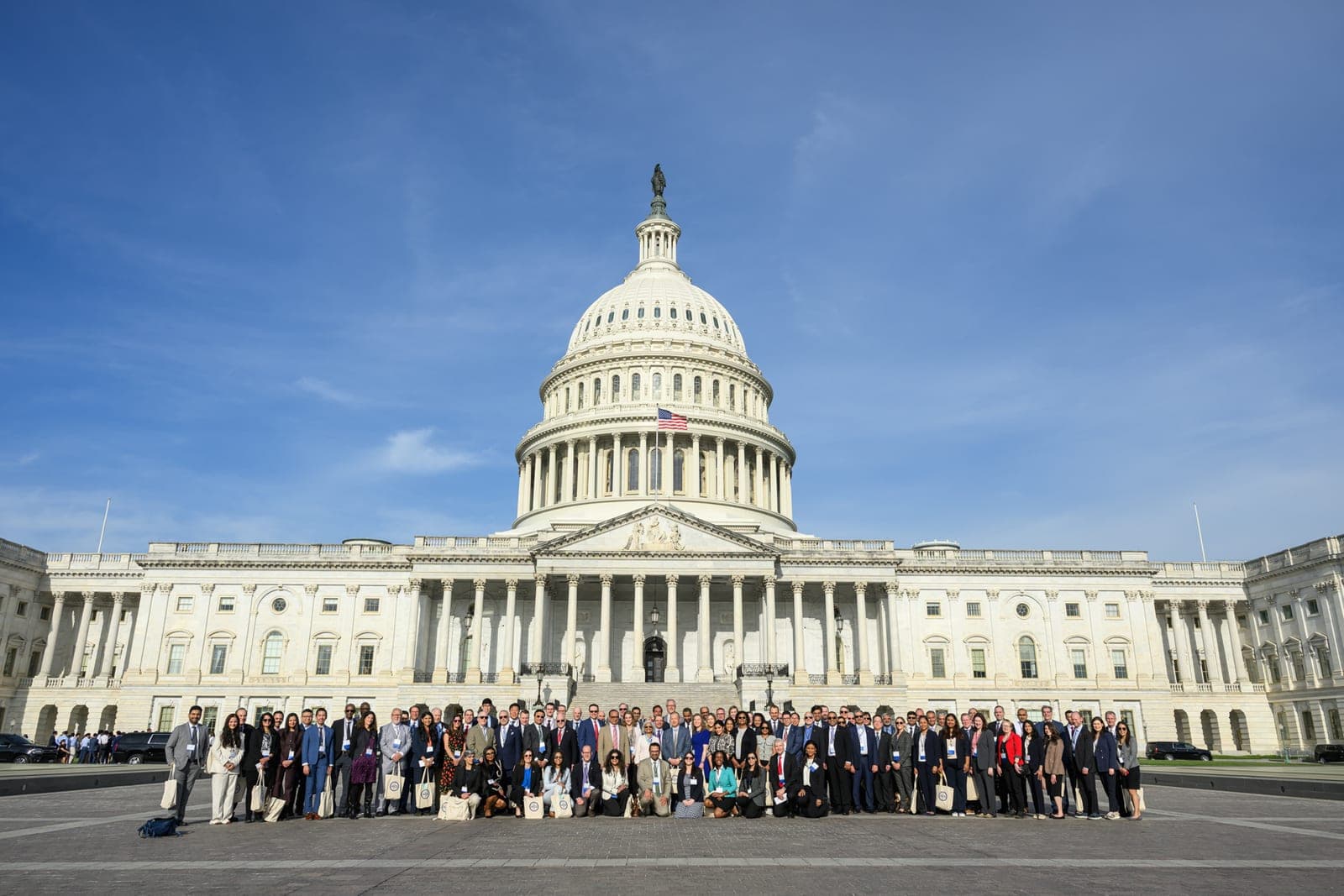
ACG Advocacy Day 2026: Advocacy Takes Guts – Advancing Digestive Health
2026 American College of Gastroenterology Fly-In Dear ACG Colleagues and Friends, On Thursday, more than 100 ACG leaders representing 46 states and 124 congressional districts came to Washington to make their voices heard. Across more than 200 meetings with House Representatives and Senators, our physician advocates delivered a clear message: gastroenterologists and their patients need Congress to act. The highlight of the day was our annual luncheon, where five Members of Congress and two senior congressional staff offered candid perspectives on the current health policy landscape and how to best engage with Congress. We are grateful to all our speakers: Rep. Troy Carter (D-LA) Rep. Herb Conaway, MD (D-NJ) Rep. Maxine Dexter, MD (D-OR) Rep. Lloyd Doggett (D-TX) Rep. Mariannette Miller-Meeks, MD (R-IA) Amy Zhou (Rep. Kim Schrier, MD) and Catherine Hayes (Rep. Greg Murphy, MD), Staff Directors for the Democratic Doctors and GOP Doctors Caucuses respectively. What struck us most about the luncheon was not just the breadth of perspectives in the room, but the consistency of one message across all of them: physician voices matter on Capitol Hill, and they are not heard nearly enough. The legislators spoke directly to how much they rely on clinicians to help them understand how policies play out in the real world — in our endoscopy suites, in patient exam rooms, on the phone with insurers, and in rural communities where access to a gastroenterologist can be limited. Elected officials can read a policy brief. What they will never get from that brief is a physician sitting across from them or their staff and saying, ‘this is how my patients in your district are affected.’ On Thursday, our advocates experienced no partisanship on the Hill. There was only a shared, earnest conviction that if meaningful healthcare reform is ever going to move through Congress, physicians are the ones who will make it happen. This Year’s Key Messages and Legislative Requests: Prior Authorization and Step Therapy Reform. As ACG continues to say, insurers should not be practicing medicine. Step therapy requirements force patients to fail on alternative treatments before receiving the care their physician prescribed — delays that can worsen conditions and lead to preventable hospitalizations. We urged Members to cosponsor the bipartisan Safe Step Act (H.R. 5509 / S. 2903), which would create commonsense exemptions for patients who are stable on existing medications or where delay would cause harm. The GI Physician Workforce Crisis. The United States is facing a physician shortage that will exceed 140,000 by 2038, with patients in rural communities bearing the greatest burden. This year, ACG added the SPARC Act (H.R. 4681 / S. 1380) — the Specialty Physicians Advancing Rural Care Act — to our legislative agenda. This bipartisan bill would expand loan repayment programs to specialty physicians serving rural areas, a resource that already exists for primary care. Medicare Reimbursement. Annual cuts driven by an outdated budget neutrality requirement continue to threaten patient access and practice viability. New CMS efficiency adjustments implemented this year have compounded the problem. We asked House Members to cosponsor three bills — including the Provider Reimbursement Stability Act (H.R. 8163), the Strengthening Medicare for Patients and Providers Act (H.R. 6160), and the Efficiency Adjustment Delay Act (H.R. 7520) — and urged Senate offices to pursue similar legislation. Surveillance Colonoscopy as Preventive Care. Colorectal cancer is now the leading cause of cancer death in adults aged 20 to 49 — a sobering, tragic statistic that is also a preventable one. Patients with a personal history of polyps require more frequent colonoscopies, and those follow-up procedures should be covered as preventive care. A bipartisan group of 23 House Members signed an appropriations letter on this issue, and we are asking Congress to include the relevant language in this year’s Labor-HHS funding bill. As we reflected at the close of the day, progress in Washington is rarely as fast as we’d like — but it is possible, and it is built one meeting and one conversation at a time. The groundwork laid by our advocates over years of consistent engagement is what opens doors, earns recognition from staff, and moves legislation forward. Your willingness to show up — to put a face and a story to the statistics, whether here in D.C. or by picking up the phone and calling your members of Congress — is what sets physician advocacy apart. Thank you to ACG President William Chey, MD, MACG, to Legislative and Public Policy Council Chair Steve Amann, MD, FACG, to ECLP Co-Directors Andy Tau, MD, FACG and Judy Trieu, MD, as well as everyone who dedicated their time to the success of ACG’s 2026 Advocacy Day. With gratitude, Sita Chokhavatia, MD, MACG and Harish Gagneja, MD, MACG Highlights from Lunch: Advocacy Takes Guts – Advancing Digestive Health Clockwise, from top left: Rep. Lloyd Doggett (D-TX); Rep. Troy Carter (D-LA); Rep. Maxine Dexter, MD (D-OR); Rep. Herb Conaway, MD (D-NJ); Dr. Ken Adams, ACG Governor for Iowa, Rep. Marianette Miller-Meeks, MD (R-IA) and LPPC Chair Dr. Steve Amann; Dr. Amann, Rep. Carter, ACG Trustee Dr. James Hobley “I don’t want to hear from an algorithm — I want to hear from my doctor.” – Rep. Troy Carter (D-LA) “It was intimidating for me to come to Congress as a doctor. But your presence cannot be understated, because your advocacy here helps your patients get the highest quality care.” – Rep. Marianette Miller-Meeks, MD (R-IA) “The challenges facing GI right now are extreme, and I know that firsthand. Your representatives will remember that story about early colorectal cancer detection, but you couldn’t get the biopsy completed in time because of needless administrative hoops.” – Rep. Maxine Dexter, MD (D-OR) “You have more credibility here, sharing your experiences, than any member of Congress does. It’s powerful for us, powerful for the public, and powerful for your patients.” – Rep. Lloyd Doggett (D-TX) Social Media Highlights – #ACGAdvocacyDay2025 ACG President William D. Chey, MD, MACG (@umfoodoc) kicks off #ACGAdvocacyDay from the footsteps of the Capitol. pic.twitter.com/cJq3rNtuCA — ACG (@AmCollegeGastro) April 16, 2026 ACG Governor for Northern Florida Dr. Samuel Giday and @jensemineriomd share their early impressions on #ACGAdvocacyDay outside of the office of @RepMaxwellFrost. pic.twitter.com/0bKtx8qtI0 — ACG (@AmCollegeGastro) April 16, 2026 The West Virginia delegation of @mdmarathon and Dr. Muhammad Bashir discuss physician workforce challenges in a rural state like theirs and how the SPARC Act could help #ACGAdvocacyDay pic.twitter.com/cK6DxRWgHK — ACG (@AmCollegeGastro) April 16, 2026 This morning I spoke with @AmCollegeGastro during their 2026 Advocacy Day. As co-chair of the #MensHealthCaucus and a staunch advocate for access to health care, I’m committed to working with and advocating for our medical professionals. #ACGAdvocacyDay2026 pic.twitter.com/B7H0BhMF6o — Congressman Troy A. Carter (@RepTroyCarter) April 16, 2026 Honored to partner with my colleague @uw_GIHep and rising star in IBD @MLutzMD @AmCollegeGastro Advocacy day on asking support for important bipartisan health care issues. Thank you to offices @tammybaldwin @RonJohnsonWI @RepMarkPocan & Gwen Moore for listening. pic.twitter.com/3eRRddr6Vj — Deepak Gopal (@DeepakGIQuality) April 17, 2026 Like the Capitol itself, advocacy often has many steps.@AmCollegeGastro continues our journey forward, advocating for reform in: Medicare Step Therapy/Prior authorization And for the SPARC act which provides loan repayment for rural specialists Ever forward! pic.twitter.com/8FIt8zSHdt — Patrick Young (@peyoungmd) April 16, 2026 Spending the day at Capitol Hill advocating for our patients and practices! @AmCollegeGastro #ACGAdvocacyDay #GITwitter pic.twitter.com/Id2jzknTOy — Pujitha Kudaravalli (@PujithaKudarav1) April 16, 2026 Great day advocating for CRC screening, STEP therapy reform and workforce issues at @AmCollegeGastro fly-in. OHIO well represented with @CostasHKefalas @Eric_Swei @aditistanton, Bruce Cameron and Governors Sapna Thomas and Andrew Chun. #ACGadvocacyday2026 pic.twitter.com/MAdkfbO61c — Jean-Paul Achkar (@JPAchkarMD) April 16, 2026 So glad to be part of ACG Advocacy Day. A meaningful day advocating for our patients, our profession, and the future of GI while connecting with WV representatives. Grateful for the opportunity and energized to stay involved. @AmCollegeGastro pic.twitter.com/iqB1RiRJ6z — Muhammad Bashir MD (@hassaan103) April 16, 2026 For all the kids out there… dare to dream! About to visit Senator Schiff’s office on behalf of @AmCollegeGastro advocating for our patients. pic.twitter.com/ZiLOaBAOlq — Brennan Spiegel, MD, MSHS (@BrennanSpiegel) April 16, 2026 Great day on Capital Hill advocating for our patients with @AmCollegeGastro! Thank you to the offices of @SenSchumer @GregMeeksNYC @SenGillibrand @nicklalota @JerryNadler and @AOC for making time to listen! pic.twitter.com/5kHIAAG782 — Joe Rinaldi, MD, DMA (@josephwrinaldi) April 16, 2026 The post ACG Advocacy Day 2026: Advocacy Takes Guts – Advancing Digestive Health appeared first on American College of Gastroenterology.
ACG Advocacy Day 2026: Advocacy Takes Guts – Advancing Digestive Health
2026 American College of Gastroenterology Fly-In Dear ACG Colleagues and Friends, On Thursday, more than 100 ACG leaders representing 46 states and 124 congressional districts came to Washington to make their voices heard. Across more than 200 meetings with House Representatives and Senators, our physician advocates delivered a clear message: gastroenterologists and their patients need Congress to act. The highlight of the day was our annual luncheon, where five Members of Congress and two senior congressional staff offered candid perspectives on the current health policy landscape and how to best engage with Congress. We are grateful to all our speakers: Rep. Troy Carter (D-LA) Rep. Herb Conaway, MD (D-NJ) Rep. Maxine Dexter, MD (D-OR) Rep. Lloyd Doggett (D-TX) Rep. Mariannette Miller-Meeks, MD (R-IA) Amy Zhou (Rep. Kim Schrier, MD) and Catherine Hayes (Rep. Greg Murphy, MD), Staff Directors for the Democratic Doctors and GOP Doctors Caucuses respectively. What struck us most about the luncheon was not just the breadth of perspectives in the room, but the consistency of one message across all of them: physician voices matter on Capitol Hill, and they are not heard nearly enough. The legislators spoke directly to how much they rely on clinicians to help them understand how policies play out in the real world — in our endoscopy suites, in patient exam rooms, on the phone with insurers, and in rural communities where access to a gastroenterologist can be limited. Elected officials can read a policy brief. What they will never get from that brief is a physician sitting across from them or their staff and saying, ‘this is how my patients in your district are affected.’ On Thursday, our advocates experienced no partisanship on the Hill. There was only a shared, earnest conviction that if meaningful healthcare reform is ever going to move through Congress, physicians are the ones who will make it happen. This Year’s Key Messages and Legislative Requests: Prior Authorization and Step Therapy Reform. As ACG continues to say, insurers should not be practicing medicine. Step therapy requirements force patients to fail on alternative treatments before receiving the care their physician prescribed — delays that can worsen conditions and lead to preventable hospitalizations. We urged Members to cosponsor the bipartisan Safe Step Act (H.R. 5509 / S. 2903), which would create commonsense exemptions for patients who are stable on existing medications or where delay would cause harm. The GI Physician Workforce Crisis. The United States is facing a physician shortage that will exceed 140,000 by 2038, with patients in rural communities bearing the greatest burden. This year, ACG added the SPARC Act (H.R. 4681 / S. 1380) — the Specialty Physicians Advancing Rural Care Act — to our legislative agenda. This bipartisan bill would expand loan repayment programs to specialty physicians serving rural areas, a resource that already exists for primary care. Medicare Reimbursement. Annual cuts driven by an outdated budget neutrality requirement continue to threaten patient access and practice viability. New CMS efficiency adjustments implemented this year have compounded the problem. We asked House Members to cosponsor three bills — including the Provider Reimbursement Stability Act (H.R. 8163), the Strengthening Medicare for Patients and Providers Act (H.R. 6160), and the Efficiency Adjustment Delay Act (H.R. 7520) — and urged Senate offices to pursue similar legislation. Surveillance Colonoscopy as Preventive Care. Colorectal cancer is now the leading cause of cancer death in adults aged 20 to 49 — a sobering, tragic statistic that is also a preventable one. Patients with a personal history of polyps require more frequent colonoscopies, and those follow-up procedures should be covered as preventive care. A bipartisan group of 23 House Members signed an appropriations letter on this issue, and we are asking Congress to include the relevant language in this year’s Labor-HHS funding bill. As we reflected at the close of the day, progress in Washington is rarely as fast as we’d like — but it is possible, and it is built one meeting and one conversation at a time. The groundwork laid by our advocates over years of consistent engagement is what opens doors, earns recognition from staff, and moves legislation forward. Your willingness to show up — to put a face and a story to the statistics, whether here in D.C. or by picking up the phone and calling your members of Congress — is what sets physician advocacy apart. Thank you to ACG President William Chey, MD, MACG, to Legislative and Public Policy Council Chair Steve Amann, MD, FACG, to ECLP Co-Directors Andy Tau, MD, FACG and Judy Trieu, MD, as well as everyone who dedicated their time to the success of ACG’s 2026 Advocacy Day. With gratitude, Sita Chokhavatia, MD, MACG and Harish Gagneja, MD, MACG Highlights from Lunch: Advocacy Takes Guts – Advancing Digestive Health Clockwise, from top left: Rep. Lloyd Doggett (D-TX); Rep. Troy Carter (D-LA); Rep. Maxine Dexter, MD (D-OR); Rep. Herb Conaway, MD (D-NJ); Dr. Ken Adams, ACG Governor for Iowa, Rep. Marianette Miller-Meeks, MD (R-IA) and LPPC Chair Dr. Steve Amann; Dr. Amann, Rep. Carter, ACG Trustee Dr. James Hobley “I don’t want to hear from an algorithm — I want to hear from my doctor.” – Rep. Troy Carter (D-LA) “It was intimidating for me to come to Congress as a doctor. But your presence cannot be understated, because your advocacy here helps your patients get the highest quality care.” – Rep. Marianette Miller-Meeks, MD (R-IA) “The challenges facing GI right now are extreme, and I know that firsthand. Your representatives will remember that story about early colorectal cancer detection, but you couldn’t get the biopsy completed in time because of needless administrative hoops.” – Rep. Maxine Dexter, MD (D-OR) “You have more credibility here, sharing your experiences, than any member of Congress does. It’s powerful for us, powerful for the public, and powerful for your patients.” – Rep. Lloyd Doggett (D-TX) Social Media Highlights – #ACGAdvocacyDay2025 ACG President William D. Chey, MD, MACG (@umfoodoc) kicks off #ACGAdvocacyDay from the footsteps of the Capitol. pic.twitter.com/cJq3rNtuCA — ACG (@AmCollegeGastro) April 16, 2026 ACG Governor for Northern Florida Dr. Samuel Giday and @jensemineriomd share their early impressions on #ACGAdvocacyDay outside of the office of @RepMaxwellFrost. pic.twitter.com/0bKtx8qtI0 — ACG (@AmCollegeGastro) April 16, 2026 The West Virginia delegation of @mdmarathon and Dr. Muhammad Bashir discuss physician workforce challenges in a rural state like theirs and how the SPARC Act could help #ACGAdvocacyDay pic.twitter.com/cK6DxRWgHK — ACG (@AmCollegeGastro) April 16, 2026 This morning I spoke with @AmCollegeGastro during their 2026 Advocacy Day. As co-chair of the #MensHealthCaucus and a staunch advocate for access to health care, I’m committed to working with and advocating for our medical professionals. #ACGAdvocacyDay2026 pic.twitter.com/B7H0BhMF6o — Congressman Troy A. Carter (@RepTroyCarter) April 16, 2026 Honored to partner with my colleague @uw_GIHep and rising star in IBD @MLutzMD @AmCollegeGastro Advocacy day on asking support for important bipartisan health care issues. Thank you to offices @tammybaldwin @RonJohnsonWI @RepMarkPocan & Gwen Moore for listening. pic.twitter.com/3eRRddr6Vj — Deepak Gopal (@DeepakGIQuality) April 17, 2026 Like the Capitol itself, advocacy often has many steps.@AmCollegeGastro continues our journey forward, advocating for reform in: Medicare Step Therapy/Prior authorization And for the SPARC act which provides loan repayment for rural specialists Ever forward! pic.twitter.com/8FIt8zSHdt — Patrick Young (@peyoungmd) April 16, 2026 Spending the day at Capitol Hill advocating for our patients and practices! @AmCollegeGastro #ACGAdvocacyDay #GITwitter pic.twitter.com/Id2jzknTOy — Pujitha Kudaravalli (@PujithaKudarav1) April 16, 2026 Great day advocating for CRC screening, STEP therapy reform and workforce issues at @AmCollegeGastro fly-in. OHIO well represented with @CostasHKefalas @Eric_Swei @aditistanton, Bruce Cameron and Governors Sapna Thomas and Andrew Chun. #ACGadvocacyday2026 pic.twitter.com/MAdkfbO61c — Jean-Paul Achkar (@JPAchkarMD) April 16, 2026 So glad to be part of ACG Advocacy Day. A meaningful day advocating for our patients, our profession, and the future of GI while connecting with WV representatives. Grateful for the opportunity and energized to stay involved. @AmCollegeGastro pic.twitter.com/iqB1RiRJ6z — Muhammad Bashir MD (@hassaan103) April 16, 2026 For all the kids out there… dare to dream! About to visit Senator Schiff’s office on behalf of @AmCollegeGastro advocating for our patients. pic.twitter.com/ZiLOaBAOlq — Brennan Spiegel, MD, MSHS (@BrennanSpiegel) April 16, 2026 Great day on Capital Hill advocating for our patients with @AmCollegeGastro! Thank you to the offices of @SenSchumer @GregMeeksNYC @SenGillibrand @nicklalota @JerryNadler and @AOC for making time to listen! pic.twitter.com/5kHIAAG782 — Joe Rinaldi, MD, DMA (@josephwrinaldi) April 16, 2026 The post ACG Advocacy Day 2026: Advocacy Takes Guts – Advancing Digestive Health appeared first on American College of Gastroenterology.
ACG Advocacy Day 2026: Advocacy Takes Guts – Advancing Digestive Health
2026 American College of Gastroenterology Fly-In Dear ACG Colleagues and Friends, On Thursday, more than 100 ACG leaders representing 46 states and 124 congressional districts came to Washington to make their voices heard. Across more than 200 meetings with House Representatives and Senators, our physician advocates delivered a clear message: gastroenterologists and their patients need Congress to act. The highlight of the day was our annual luncheon, where five Members of Congress and two senior congressional staff offered candid perspectives on the current health policy landscape and how to best engage with Congress. We are grateful to all our speakers: Rep. Troy Carter (D-LA) Rep. Herb Conaway, MD (D-NJ) Rep. Maxine Dexter, MD (D-OR) Rep. Lloyd Doggett (D-TX) Rep. Mariannette Miller-Meeks, MD (R-IA) Amy Zhou (Rep. Kim Schrier, MD) and Catherine Hayes (Rep. Greg Murphy, MD), Staff Directors for the Democratic Doctors and GOP Doctors Caucuses respectively. What struck us most about the luncheon was not just the breadth of perspectives in the room, but the consistency of one message across all of them: physician voices matter on Capitol Hill, and they are not heard nearly enough. The legislators spoke directly to how much they rely on clinicians to help them understand how policies play out in the real world — in our endoscopy suites, in patient exam rooms, on the phone with insurers, and in rural communities where access to a gastroenterologist can be limited. Elected officials can read a policy brief. What they will never get from that brief is a physician sitting across from them or their staff and saying, ‘this is how my patients in your district are affected.’ On Thursday, our advocates experienced no partisanship on the Hill. There was only a shared, earnest conviction that if meaningful healthcare reform is ever going to move through Congress, physicians are the ones who will make it happen. This Year’s Key Messages and Legislative Requests: Prior Authorization and Step Therapy Reform. As ACG continues to say, insurers should not be practicing medicine. Step therapy requirements force patients to fail on alternative treatments before receiving the care their physician prescribed — delays that can worsen conditions and lead to preventable hospitalizations. We urged Members to cosponsor the bipartisan Safe Step Act (H.R. 5509 / S. 2903), which would create commonsense exemptions for patients who are stable on existing medications or where delay would cause harm. The GI Physician Workforce Crisis. The United States is facing a physician shortage that will exceed 140,000 by 2038, with patients in rural communities bearing the greatest burden. This year, ACG added the SPARC Act (H.R. 4681 / S. 1380) — the Specialty Physicians Advancing Rural Care Act — to our legislative agenda. This bipartisan bill would expand loan repayment programs to specialty physicians serving rural areas, a resource that already exists for primary care. Medicare Reimbursement. Annual cuts driven by an outdated budget neutrality requirement continue to threaten patient access and practice viability. New CMS efficiency adjustments implemented this year have compounded the problem. We asked House Members to cosponsor three bills — including the Provider Reimbursement Stability Act (H.R. 8163), the Strengthening Medicare for Patients and Providers Act (H.R. 6160), and the Efficiency Adjustment Delay Act (H.R. 7520) — and urged Senate offices to pursue similar legislation. Surveillance Colonoscopy as Preventive Care. Colorectal cancer is now the leading cause of cancer death in adults aged 20 to 49 — a sobering, tragic statistic that is also a preventable one. Patients with a personal history of polyps require more frequent colonoscopies, and those follow-up procedures should be covered as preventive care. A bipartisan group of 23 House Members signed an appropriations letter on this issue, and we are asking Congress to include the relevant language in this year’s Labor-HHS funding bill. As we reflected at the close of the day, progress in Washington is rarely as fast as we’d like — but it is possible, and it is built one meeting and one conversation at a time. The groundwork laid by our advocates over years of consistent engagement is what opens doors, earns recognition from staff, and moves legislation forward. Your willingness to show up — to put a face and a story to the statistics, whether here in D.C. or by picking up the phone and calling your members of Congress — is what sets physician advocacy apart. Thank you to ACG President William Chey, MD, MACG, to Legislative and Public Policy Council Chair Steve Amann, MD, FACG, to ECLP Co-Directors Andy Tau, MD, FACG and Judy Trieu, MD, as well as everyone who dedicated their time to the success of ACG’s 2026 Advocacy Day. With gratitude, Sita Chokhavatia, MD, MACG and Harish Gagneja, MD, MACG Highlights from Lunch: Advocacy Takes Guts – Advancing Digestive Health Clockwise, from top left: Rep. Lloyd Doggett (D-TX); Rep. Troy Carter (D-LA); Rep. Maxine Dexter, MD (D-OR); Rep. Herb Conaway, MD (D-NJ); Dr. Ken Adams, ACG Governor for Iowa, Rep. Marianette Miller-Meeks, MD (R-IA) and LPPC Chair Dr. Steve Amann; Dr. Amann, Rep. Carter, ACG Trustee Dr. James Hobley “I don’t want to hear from an algorithm — I want to hear from my doctor.” – Rep. Troy Carter (D-LA) “It was intimidating for me to come to Congress as a doctor. But your presence cannot be understated, because your advocacy here helps your patients get the highest quality care.” – Rep. Marianette Miller-Meeks, MD (R-IA) “The challenges facing GI right now are extreme, and I know that firsthand. Your representatives will remember that story about early colorectal cancer detection, but you couldn’t get the biopsy completed in time because of needless administrative hoops.” – Rep. Maxine Dexter, MD (D-OR) “You have more credibility here, sharing your experiences, than any member of Congress does. It’s powerful for us, powerful for the public, and powerful for your patients.” – Rep. Lloyd Doggett (D-TX) Social Media Highlights – #ACGAdvocacyDay2025 ACG President William D. Chey, MD, MACG (@umfoodoc) kicks off #ACGAdvocacyDay from the footsteps of the Capitol. pic.twitter.com/cJq3rNtuCA — ACG (@AmCollegeGastro) April 16, 2026 ACG Governor for Northern Florida Dr. Samuel Giday and @jensemineriomd share their early impressions on #ACGAdvocacyDay outside of the office of @RepMaxwellFrost. pic.twitter.com/0bKtx8qtI0 — ACG (@AmCollegeGastro) April 16, 2026 The West Virginia delegation of @mdmarathon and Dr. Muhammad Bashir discuss physician workforce challenges in a rural state like theirs and how the SPARC Act could help #ACGAdvocacyDay pic.twitter.com/cK6DxRWgHK — ACG (@AmCollegeGastro) April 16, 2026 This morning I spoke with @AmCollegeGastro during their 2026 Advocacy Day. As co-chair of the #MensHealthCaucus and a staunch advocate for access to health care, I’m committed to working with and advocating for our medical professionals. #ACGAdvocacyDay2026 pic.twitter.com/B7H0BhMF6o — Congressman Troy A. Carter (@RepTroyCarter) April 16, 2026 Honored to partner with my colleague @uw_GIHep and rising star in IBD @MLutzMD @AmCollegeGastro Advocacy day on asking support for important bipartisan health care issues. Thank you to offices @tammybaldwin @RonJohnsonWI @RepMarkPocan & Gwen Moore for listening. pic.twitter.com/3eRRddr6Vj — Deepak Gopal (@DeepakGIQuality) April 17, 2026 Like the Capitol itself, advocacy often has many steps.@AmCollegeGastro continues our journey forward, advocating for reform in: Medicare Step Therapy/Prior authorization And for the SPARC act which provides loan repayment for rural specialists Ever forward! pic.twitter.com/8FIt8zSHdt — Patrick Young (@peyoungmd) April 16, 2026 Spending the day at Capitol Hill advocating for our patients and practices! @AmCollegeGastro #ACGAdvocacyDay #GITwitter pic.twitter.com/Id2jzknTOy — Pujitha Kudaravalli (@PujithaKudarav1) April 16, 2026 Great day advocating for CRC screening, STEP therapy reform and workforce issues at @AmCollegeGastro fly-in. OHIO well represented with @CostasHKefalas @Eric_Swei @aditistanton, Bruce Cameron and Governors Sapna Thomas and Andrew Chun. #ACGadvocacyday2026 pic.twitter.com/MAdkfbO61c — Jean-Paul Achkar (@JPAchkarMD) April 16, 2026 So glad to be part of ACG Advocacy Day. A meaningful day advocating for our patients, our profession, and the future of GI while connecting with WV representatives. Grateful for the opportunity and energized to stay involved. @AmCollegeGastro pic.twitter.com/iqB1RiRJ6z — Muhammad Bashir MD (@hassaan103) April 16, 2026 For all the kids out there… dare to dream! About to visit Senator Schiff’s office on behalf of @AmCollegeGastro advocating for our patients. pic.twitter.com/ZiLOaBAOlq — Brennan Spiegel, MD, MSHS (@BrennanSpiegel) April 16, 2026 Great day on Capital Hill advocating for our patients with @AmCollegeGastro! Thank you to the offices of @SenSchumer @GregMeeksNYC @SenGillibrand @nicklalota @JerryNadler and @AOC for making time to listen! pic.twitter.com/5kHIAAG782 — Joe Rinaldi, MD, DMA (@josephwrinaldi) April 16, 2026 The post ACG Advocacy Day 2026: Advocacy Takes Guts – Advancing Digestive Health appeared first on American College of Gastroenterology.

Advocacy Takes Guts, Part 3: Addressing the Physician & GI Workforce Crisis
On April 16th, ACG’s Board of Governors, Early Career Leadership Program participants, and other senior ACG leaders will head to Capitol Hill for our 2026 Advocacy Day. Previously, we discussed our push to pass the Safe Step Act and crucial Medicare physician reimbursement reforms. This week, we’re covering the physician and GI workforce shortage. More than 45 million Americans, or roughly 14% of the U.S. population, live more than 25 miles from the nearest gastroenterologist. The counties with the fewest GI specialists are disproportionately rural and socioeconomically disadvantaged, compounding existing disparities in access to care. And the pipeline isn’t filling fast enough to keep up: HRSA projects a shortage of more than 141,000 full-time equivalent physicians across all specialties by 2038, with non-metro areas bearing the brunt of that gap. For GI specifically, demand is growing, even as the workforce available to meet that demand is contracting – especially in rural areas. A New England Journal of Medicine study estimated that by 2030, the supply of rural physicians will drop by 23% as older physicians retire without being replaced. ACG’s Workforce of the Future Task Force, established last year under the leadership of Immediate Past President Amy Oxentenko, MD, MACP, MACG, identified federal legislation as one pillar of a multi-faceted solution. That’s why on Advocacy Day, our delegation will urge Congress to cosponsor the Specialty Physicians Advancing Rural Care (SPARC) Act (H.R. 4681 and S. 1380), led by Sens. Jackie Rosen (D-NV) and Roger Wicker (R-MS) in the Senate, and Reps. John Joyce, MD (R-PA) and Deborah Ross (D-NC) in the House. The SPARC Act would establish a federal loan repayment program specifically designed to increase the number of specialist physicians, including gastroenterologists, practicing in rural, underserved communities. In exchange for a six-year service commitment, participants would be eligible for up to $250,000 in loan repayment. We recognize the SPARC Act won’t solve the workforce shortage overnight — no single bill can — but it addresses some barriers to rural specialty care: debt burden and geographic incentive. In 2024, 67% of medical students graduated with debt, at a median of $200,000. The SPARC Act would encourage young specialists to practice and remain in rural communities long-term. You don’t need to be in Washington to make a difference. Reach out to your Representative and Senators today, urge them to co-sponsor the SPARC Act, and share your own story of how the physician shortage is affecting your practice and patients. Take Action Now The post Advocacy Takes Guts, Part 3: Addressing the Physician & GI Workforce Crisis appeared first on American College of Gastroenterology.
Advocacy Takes Guts, Part 3: Addressing the Physician & GI Workforce Crisis
On April 16th, ACG’s Board of Governors, Early Career Leadership Program participants, and other senior ACG leaders will head to Capitol Hill for our 2026 Advocacy Day. Previously, we discussed our push to pass the Safe Step Act and crucial Medicare physician reimbursement reforms. This week, we’re covering the physician and GI workforce shortage. More than 45 million Americans, or roughly 14% of the U.S. population, live more than 25 miles from the nearest gastroenterologist. The counties with the fewest GI specialists are disproportionately rural and socioeconomically disadvantaged, compounding existing disparities in access to care. And the pipeline isn’t filling fast enough to keep up: HRSA projects a shortage of more than 141,000 full-time equivalent physicians across all specialties by 2038, with non-metro areas bearing the brunt of that gap. For GI specifically, demand is growing, even as the workforce available to meet that demand is contracting – especially in rural areas. A New England Journal of Medicine study estimated that by 2030, the supply of rural physicians will drop by 23% as older physicians retire without being replaced. ACG’s Workforce of the Future Task Force, established last year under the leadership of Immediate Past President Amy Oxentenko, MD, MACP, MACG, identified federal legislation as one pillar of a multi-faceted solution. That’s why on Advocacy Day, our delegation will urge Congress to cosponsor the Specialty Physicians Advancing Rural Care (SPARC) Act (H.R. 4681 and S. 1380), led by Sens. Jackie Rosen (D-NV) and Roger Wicker (R-MS) in the Senate, and Reps. John Joyce, MD (R-PA) and Deborah Ross (D-NC) in the House. The SPARC Act would establish a federal loan repayment program specifically designed to increase the number of specialist physicians, including gastroenterologists, practicing in rural, underserved communities. In exchange for a six-year service commitment, participants would be eligible for up to $250,000 in loan repayment. We recognize the SPARC Act won’t solve the workforce shortage overnight — no single bill can — but it addresses some barriers to rural specialty care: debt burden and geographic incentive. In 2024, 67% of medical students graduated with debt, at a median of $200,000. The SPARC Act would encourage young specialists to practice and remain in rural communities long-term. You don’t need to be in Washington to make a difference. Reach out to your Representative and Senators today, urge them to co-sponsor the SPARC Act, and share your own story of how the physician shortage is affecting your practice and patients. Take Action Now The post Advocacy Takes Guts, Part 3: Addressing the Physician & GI Workforce Crisis appeared first on American College of Gastroenterology.
Advocacy Takes Guts, Part 3: Addressing the Physician & GI Workforce Crisis
On April 16th, ACG’s Board of Governors, Early Career Leadership Program participants, and other senior ACG leaders will head to Capitol Hill for our 2026 Advocacy Day. Previously, we discussed our push to pass the Safe Step Act and crucial Medicare physician reimbursement reforms. This week, we’re covering the physician and GI workforce shortage. More than 45 million Americans, or roughly 14% of the U.S. population, live more than 25 miles from the nearest gastroenterologist. The counties with the fewest GI specialists are disproportionately rural and socioeconomically disadvantaged, compounding existing disparities in access to care. And the pipeline isn’t filling fast enough to keep up: HRSA projects a shortage of more than 141,000 full-time equivalent physicians across all specialties by 2038, with non-metro areas bearing the brunt of that gap. For GI specifically, demand is growing, even as the workforce available to meet that demand is contracting – especially in rural areas. A New England Journal of Medicine study estimated that by 2030, the supply of rural physicians will drop by 23% as older physicians retire without being replaced. ACG’s Workforce of the Future Task Force, established last year under the leadership of Immediate Past President Amy Oxentenko, MD, MACP, MACG, identified federal legislation as one pillar of a multi-faceted solution. That’s why on Advocacy Day, our delegation will urge Congress to cosponsor the Specialty Physicians Advancing Rural Care (SPARC) Act (H.R. 4681 and S. 1380), led by Sens. Jackie Rosen (D-NV) and Roger Wicker (R-MS) in the Senate, and Reps. John Joyce, MD (R-PA) and Deborah Ross (D-NC) in the House. The SPARC Act would establish a federal loan repayment program specifically designed to increase the number of specialist physicians, including gastroenterologists, practicing in rural, underserved communities. In exchange for a six-year service commitment, participants would be eligible for up to $250,000 in loan repayment. We recognize the SPARC Act won’t solve the workforce shortage overnight — no single bill can — but it addresses some barriers to rural specialty care: debt burden and geographic incentive. In 2024, 67% of medical students graduated with debt, at a median of $200,000. The SPARC Act would encourage young specialists to practice and remain in rural communities long-term. You don’t need to be in Washington to make a difference. Reach out to your Representative and Senators today, urge them to co-sponsor the SPARC Act, and share your own story of how the physician shortage is affecting your practice and patients. Take Action Now The post Advocacy Takes Guts, Part 3: Addressing the Physician & GI Workforce Crisis appeared first on American College of Gastroenterology.
Advocacy Takes Guts, Part 3: Addressing the Physician & GI Workforce Crisis
On April 16th, ACG’s Board of Governors, Early Career Leadership Program participants, and other senior ACG leaders will head to Capitol Hill for our 2026 Advocacy Day. Previously, we discussed our push to pass the Safe Step Act and crucial Medicare physician reimbursement reforms. This week, we’re covering the physician and GI workforce shortage. More than 45 million Americans, or roughly 14% of the U.S. population, live more than 25 miles from the nearest gastroenterologist. The counties with the fewest GI specialists are disproportionately rural and socioeconomically disadvantaged, compounding existing disparities in access to care. And the pipeline isn’t filling fast enough to keep up: HRSA projects a shortage of more than 141,000 full-time equivalent physicians across all specialties by 2038, with non-metro areas bearing the brunt of that gap. For GI specifically, demand is growing, even as the workforce available to meet that demand is contracting – especially in rural areas. A New England Journal of Medicine study estimated that by 2030, the supply of rural physicians will drop by 23% as older physicians retire without being replaced. ACG’s Workforce of the Future Task Force, established last year under the leadership of Immediate Past President Amy Oxentenko, MD, MACP, MACG, identified federal legislation as one pillar of a multi-faceted solution. That’s why on Advocacy Day, our delegation will urge Congress to cosponsor the Specialty Physicians Advancing Rural Care (SPARC) Act (H.R. 4681 and S. 1380), led by Sens. Jackie Rosen (D-NV) and Roger Wicker (R-MS) in the Senate, and Reps. John Joyce, MD (R-PA) and Deborah Ross (D-NC) in the House. The SPARC Act would establish a federal loan repayment program specifically designed to increase the number of specialist physicians, including gastroenterologists, practicing in rural, underserved communities. In exchange for a six-year service commitment, participants would be eligible for up to $250,000 in loan repayment. We recognize the SPARC Act won’t solve the workforce shortage overnight — no single bill can — but it addresses some barriers to rural specialty care: debt burden and geographic incentive. In 2024, 67% of medical students graduated with debt, at a median of $200,000. The SPARC Act would encourage young specialists to practice and remain in rural communities long-term. You don’t need to be in Washington to make a difference. Reach out to your Representative and Senators today, urge them to co-sponsor the SPARC Act, and share your own story of how the physician shortage is affecting your practice and patients. Take Action Now The post Advocacy Takes Guts, Part 3: Addressing the Physician & GI Workforce Crisis appeared first on American College of Gastroenterology.