1 story credited to Genetic Engineering & Biotechnology News
Latest story Nov 20, 2025 · on ChamberLight since Apr 2026
A story can appear as several articles (copies of the same piece), so counts of stories and of articles differ.
Scores for Genetic Engineering & Biotechnology News
Scores last checked Sep 25, 2026.
Stories ChamberLight collected, by month
Stories credited to Genetic Engineering & Biotechnology News, by publication date. ChamberLight collects articles that mention the officials it tracks, so this shows its own coverage of this source, not how much the source publishes.
- Stories from Genetic Engineering & Biotechnology News
- Shaded: ChamberLight collected no stories, or almost none, from any outlet (a gap in its collection, not in the outlet’s publishing)
Show as a table
| Month | Stories | All outlets |
|---|---|---|
| November 2025 | 1 | 41 |
| December 2025 | 0 | 27 |
| January 2026 | 0 | 87 |
| February 2026 | 0 | 180 |
| March 2026 | 0 | 1,094 |
| April 2026 | 0 | 4,538 |
| May 2026 | 0 | none collected |
| June 2026 | 0 | none collected |
| July 2026 | 0 | none collected |
| August 2026 | 0 | 1 (collection gap) |
| September 2026 | 0 | 1,320 |
Top topics
Share of this source’s stories tagged with each topic. A story can carry several topics, so the shares do not add up to 100%.
- Economy1
100% of 1 stories · 26% across all outlets
- Foreign Policy1
100% of 1 stories · 29% across all outlets
- Technology/Privacy1
100% of 1 stories · 10% across all outlets
The thin mark on each bar is the topic’s share across all outlets.
Who they cover
Party of the officials these stories are mainly about, across all 4 officials named. A story counts once for each official it is mainly about, so the split is over 4 story–official pairs, from 1 story.
- Party not recorded50% · 2 pairs
- Democrat25% · 1 pair
- Republican25% · 1 pair
Most covered
Stories mainly about each official, and their share of the source’s 1 story.
Article tone
ChamberLight’s article analysis assigns each story a tone toward the official it covers. It describes the coverage of that official, not Genetic Engineering & Biotechnology News’s stance, and reader votes do not change it. 1 story.
- Good Look
- 0 (0%)
- Mixed
- 1 (100%)
- Informational
- 0 (0%)
- Bad Look
- 0 (0%)
Challenges to these scores
No one has challenged a score on this page yet. Anyone can; editors publish every outcome here.
Articles served from genengnews.com
4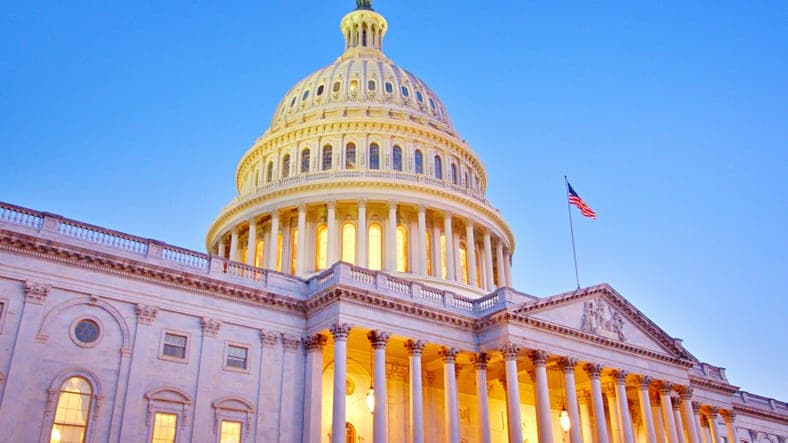
Senate and House Introduce Bill to Boost U.S. Biotech Manufacturing Infrastructure, Innovation
A bipartisan group of senators and representatives introduced legislation to establish a National Biopharmaceutical Manufacturing Center of Excellence (COE), inspired by recommendations from the National Security Commission on Emerging Biotechnology (NSCEB) April 2025 Action Plan for Congress. In the Senate, the legislation was introduced by Sen. Coons (D-DE) and Sen. Budd (R-NC), and in the House, the bill was introduced by Rep. Houlahan (D-PA, 06), Rep. Baird (R-IN, 04), Rep. Rouzer (R-NC, 07), and Rep. Ross (D-NC, 02). The bill would create a public-private partnership focused on advancing innovation in biopharmaceutical manufacturing methods, especially for products important to U.S. national security, health security, and economic security. It would also improve regulatory understanding of innovative manufacturing methods and provide workforce training opportunities in this fast-growing field. Not only is biomanufacturing a key pillar of America’s innovation economy, it has the potential to transform major aspects of everyday life. [Reptile8488/Getty Images] Biotechnology will shape how the U.S. defends itself, secures its food supply, and cures life-threatening diseases. The NSCEB has warned that without rapid and significant investment, the U.S. will fall behind its global competitors, specifically China. China’s share of global pharmaceutical output has surged from about five percent in 2002 to nearly 25% in 2019. This legislation reinvests in domestic biopharmaceutical manufacturing, reducing dependence on unreliable foreign supply chains, expanding access to innovative medicines, and supporting high-quality American jobs. Specifically, the National Biopharmaceutical Manufacturing Center of Excellence would: Unite industry professionals with academic researchers to conduct collaborative research on new technology for scaling biopharmaceutical manufacturing Host a facility that replicates industrial manufacturing conditions and complies with FDA Current Good Manufacturing Practice (CGMP) regulations, where innovators would develop and test new manufacturing processes Identify challenges and opportunities for scaling biopharmaceutical manufacturing, especially for products important to U.S. national security, public health, and economic security Train tomorrow’s biopharmaceutical manufacturing workforce by partnering with educational, industry, and community leaders to bolster biotechnology talent Details on the legislation Establishment: Directs the National Institute for Standards and Technology (NIST) to establish the COE as a public-private partnership through an open competition. Activities: Creates a center for innovation focused on advancing biopharmaceutical manufacturing; conducts research and development on and houses multi-platform and multi-product manufacturing systems; and prioritizes products and processes that are important to U.S. national security, health security, and economic security. Cutting-Edge Manufacturing: Allows innovators to test innovative manufacturing methods and engage with regulators to demonstrate the cutting-edge of biopharmaceutical manufacturing in an environment that supports Current Good Manufacturing Practice (CGMP), Quality by Design (QbD), Chemistry, Manufacturing, and Controls (CMC), and other relevant guidance. Workforce and Education: Provides hands-on training and educational opportunities to academic and community partners to bolster biopharmaceutical talent. Congressional reaction “I am grateful to our congressional partners for their strong commitment to the future of U.S. biotechnology leadership and their introduction of this important legislation,” said NSCEB vice chair Michelle Rozo. “In our report, we found that advancing innovation in the biopharmaceutical sector is essential to catalyzing full-scale production for new medicines in the United States, and this center would bring together industry, academia, and government to do just that. Biotechnology will shape how the U.S. defends itself, secures its food supply, and cures life-threatening diseases. The National Security Commission on Emerging Biotechnology has warned that without rapid and significant investment, the U.S. will fall behind its global competitors, specifically China. [STAP/Getty Images] “Through our Biotech Across America roadshow, I’ve had the opportunity to personally visit biotech hubs around the country to see the impact this type of cutting-edge biomanufacturing innovation can have on U.S. national, health, and economic security.” “China is surging ahead in biotechnology, putting our national security, economy, and health at risk,” noted Sen. Coons. “This bipartisan bill will ensure the United States continues to lead the world in biotech manufacturing, protecting Americans’ security and our health.” “Not only is biomanufacturing a key pillar of America’s and North Carolina’s innovation economy, it has the potential to transform major aspects of everyday life. We must foster this critical technology and continue to lead the world in enabling life-saving medical breakthroughs, fortifying our critical supply chains, and creating good-paying, high-skilled jobs. I am proud to partner with Senator Coons to help build on the public-private partnerships that have unlocked significant economic potential and unleashed next-generation technology,” said Sen. Budd. “A strong domestic biopharmaceutical manufacturing industry is vital to developing innovative treatments to cure and manage diseases, improving public health, and securing our supply chains,” added Rep. Baird. “I’m proud to join Congresswoman Houlahan on this bipartisan legislation to reduce our reliance on an adversary [China] for life-saving treatments, encourage innovation in biopharmaceutical manufacturing, and ensure our country continues to lead the world in finding groundbreaking cures.” “Our bipartisan Biomanufacturing Excellence Act tackles this head-on by creating a national Center of Excellence to drive innovation in biopharmaceutical manufacturing. The bill would cut costs, speed production, and grow our biotech workforce,” explained Rep. Houlahan. The full text of the bill is available here. A one-pager on the bill is available here. The post Senate and House Introduce Bill to Boost U.S. Biotech Manufacturing Infrastructure, Innovation appeared first on GEN - Genetic Engineering and Biotechnology News.
Senate and House Introduce Bill to Boost U.S. Biotech Manufacturing Infrastructure, Innovation
A bipartisan group of senators and representatives introduced legislation to establish a National Biopharmaceutical Manufacturing Center of Excellence (COE), inspired by recommendations from the National Security Commission on Emerging Biotechnology (NSCEB) April 2025 Action Plan for Congress. In the Senate, the legislation was introduced by Sen. Coons (D-DE) and Sen. Budd (R-NC), and in the House, the bill was introduced by Rep. Houlahan (D-PA, 06), Rep. Baird (R-IN, 04), Rep. Rouzer (R-NC, 07), and Rep. Ross (D-NC, 02). The bill would create a public-private partnership focused on advancing innovation in biopharmaceutical manufacturing methods, especially for products important to U.S. national security, health security, and economic security. It would also improve regulatory understanding of innovative manufacturing methods and provide workforce training opportunities in this fast-growing field. Not only is biomanufacturing a key pillar of America’s innovation economy, it has the potential to transform major aspects of everyday life. [Reptile8488/Getty Images] Biotechnology will shape how the U.S. defends itself, secures its food supply, and cures life-threatening diseases. The NSCEB has warned that without rapid and significant investment, the U.S. will fall behind its global competitors, specifically China. China’s share of global pharmaceutical output has surged from about five percent in 2002 to nearly 25% in 2019. This legislation reinvests in domestic biopharmaceutical manufacturing, reducing dependence on unreliable foreign supply chains, expanding access to innovative medicines, and supporting high-quality American jobs. Specifically, the National Biopharmaceutical Manufacturing Center of Excellence would: Unite industry professionals with academic researchers to conduct collaborative research on new technology for scaling biopharmaceutical manufacturing Host a facility that replicates industrial manufacturing conditions and complies with FDA Current Good Manufacturing Practice (CGMP) regulations, where innovators would develop and test new manufacturing processes Identify challenges and opportunities for scaling biopharmaceutical manufacturing, especially for products important to U.S. national security, public health, and economic security Train tomorrow’s biopharmaceutical manufacturing workforce by partnering with educational, industry, and community leaders to bolster biotechnology talent Details on the legislation Establishment: Directs the National Institute for Standards and Technology (NIST) to establish the COE as a public-private partnership through an open competition. Activities: Creates a center for innovation focused on advancing biopharmaceutical manufacturing; conducts research and development on and houses multi-platform and multi-product manufacturing systems; and prioritizes products and processes that are important to U.S. national security, health security, and economic security. Cutting-Edge Manufacturing: Allows innovators to test innovative manufacturing methods and engage with regulators to demonstrate the cutting-edge of biopharmaceutical manufacturing in an environment that supports Current Good Manufacturing Practice (CGMP), Quality by Design (QbD), Chemistry, Manufacturing, and Controls (CMC), and other relevant guidance. Workforce and Education: Provides hands-on training and educational opportunities to academic and community partners to bolster biopharmaceutical talent. Congressional reaction “I am grateful to our congressional partners for their strong commitment to the future of U.S. biotechnology leadership and their introduction of this important legislation,” said NSCEB vice chair Michelle Rozo. “In our report, we found that advancing innovation in the biopharmaceutical sector is essential to catalyzing full-scale production for new medicines in the United States, and this center would bring together industry, academia, and government to do just that. Biotechnology will shape how the U.S. defends itself, secures its food supply, and cures life-threatening diseases. The National Security Commission on Emerging Biotechnology has warned that without rapid and significant investment, the U.S. will fall behind its global competitors, specifically China. [STAP/Getty Images] “Through our Biotech Across America roadshow, I’ve had the opportunity to personally visit biotech hubs around the country to see the impact this type of cutting-edge biomanufacturing innovation can have on U.S. national, health, and economic security.” “China is surging ahead in biotechnology, putting our national security, economy, and health at risk,” noted Sen. Coons. “This bipartisan bill will ensure the United States continues to lead the world in biotech manufacturing, protecting Americans’ security and our health.” “Not only is biomanufacturing a key pillar of America’s and North Carolina’s innovation economy, it has the potential to transform major aspects of everyday life. We must foster this critical technology and continue to lead the world in enabling life-saving medical breakthroughs, fortifying our critical supply chains, and creating good-paying, high-skilled jobs. I am proud to partner with Senator Coons to help build on the public-private partnerships that have unlocked significant economic potential and unleashed next-generation technology,” said Sen. Budd. “A strong domestic biopharmaceutical manufacturing industry is vital to developing innovative treatments to cure and manage diseases, improving public health, and securing our supply chains,” added Rep. Baird. “I’m proud to join Congresswoman Houlahan on this bipartisan legislation to reduce our reliance on an adversary [China] for life-saving treatments, encourage innovation in biopharmaceutical manufacturing, and ensure our country continues to lead the world in finding groundbreaking cures.” “Our bipartisan Biomanufacturing Excellence Act tackles this head-on by creating a national Center of Excellence to drive innovation in biopharmaceutical manufacturing. The bill would cut costs, speed production, and grow our biotech workforce,” explained Rep. Houlahan. The full text of the bill is available here. A one-pager on the bill is available here. The post Senate and House Introduce Bill to Boost U.S. Biotech Manufacturing Infrastructure, Innovation appeared first on GEN - Genetic Engineering and Biotechnology News.
Senate and House Introduce Bill to Boost U.S. Biotech Manufacturing Infrastructure, Innovation
A bipartisan group of senators and representatives introduced legislation to establish a National Biopharmaceutical Manufacturing Center of Excellence (COE), inspired by recommendations from the National Security Commission on Emerging Biotechnology (NSCEB) April 2025 Action Plan for Congress. In the Senate, the legislation was introduced by Sen. Coons (D-DE) and Sen. Budd (R-NC), and in the House, the bill was introduced by Rep. Houlahan (D-PA, 06), Rep. Baird (R-IN, 04), Rep. Rouzer (R-NC, 07), and Rep. Ross (D-NC, 02). The bill would create a public-private partnership focused on advancing innovation in biopharmaceutical manufacturing methods, especially for products important to U.S. national security, health security, and economic security. It would also improve regulatory understanding of innovative manufacturing methods and provide workforce training opportunities in this fast-growing field. Not only is biomanufacturing a key pillar of America’s innovation economy, it has the potential to transform major aspects of everyday life. [Reptile8488/Getty Images] Biotechnology will shape how the U.S. defends itself, secures its food supply, and cures life-threatening diseases. The NSCEB has warned that without rapid and significant investment, the U.S. will fall behind its global competitors, specifically China. China’s share of global pharmaceutical output has surged from about five percent in 2002 to nearly 25% in 2019. This legislation reinvests in domestic biopharmaceutical manufacturing, reducing dependence on unreliable foreign supply chains, expanding access to innovative medicines, and supporting high-quality American jobs. Specifically, the National Biopharmaceutical Manufacturing Center of Excellence would: Unite industry professionals with academic researchers to conduct collaborative research on new technology for scaling biopharmaceutical manufacturing Host a facility that replicates industrial manufacturing conditions and complies with FDA Current Good Manufacturing Practice (CGMP) regulations, where innovators would develop and test new manufacturing processes Identify challenges and opportunities for scaling biopharmaceutical manufacturing, especially for products important to U.S. national security, public health, and economic security Train tomorrow’s biopharmaceutical manufacturing workforce by partnering with educational, industry, and community leaders to bolster biotechnology talent Details on the legislation Establishment: Directs the National Institute for Standards and Technology (NIST) to establish the COE as a public-private partnership through an open competition. Activities: Creates a center for innovation focused on advancing biopharmaceutical manufacturing; conducts research and development on and houses multi-platform and multi-product manufacturing systems; and prioritizes products and processes that are important to U.S. national security, health security, and economic security. Cutting-Edge Manufacturing: Allows innovators to test innovative manufacturing methods and engage with regulators to demonstrate the cutting-edge of biopharmaceutical manufacturing in an environment that supports Current Good Manufacturing Practice (CGMP), Quality by Design (QbD), Chemistry, Manufacturing, and Controls (CMC), and other relevant guidance. Workforce and Education: Provides hands-on training and educational opportunities to academic and community partners to bolster biopharmaceutical talent. Congressional reaction “I am grateful to our congressional partners for their strong commitment to the future of U.S. biotechnology leadership and their introduction of this important legislation,” said NSCEB vice chair Michelle Rozo. “In our report, we found that advancing innovation in the biopharmaceutical sector is essential to catalyzing full-scale production for new medicines in the United States, and this center would bring together industry, academia, and government to do just that. Biotechnology will shape how the U.S. defends itself, secures its food supply, and cures life-threatening diseases. The National Security Commission on Emerging Biotechnology has warned that without rapid and significant investment, the U.S. will fall behind its global competitors, specifically China. [STAP/Getty Images] “Through our Biotech Across America roadshow, I’ve had the opportunity to personally visit biotech hubs around the country to see the impact this type of cutting-edge biomanufacturing innovation can have on U.S. national, health, and economic security.” “China is surging ahead in biotechnology, putting our national security, economy, and health at risk,” noted Sen. Coons. “This bipartisan bill will ensure the United States continues to lead the world in biotech manufacturing, protecting Americans’ security and our health.” “Not only is biomanufacturing a key pillar of America’s and North Carolina’s innovation economy, it has the potential to transform major aspects of everyday life. We must foster this critical technology and continue to lead the world in enabling life-saving medical breakthroughs, fortifying our critical supply chains, and creating good-paying, high-skilled jobs. I am proud to partner with Senator Coons to help build on the public-private partnerships that have unlocked significant economic potential and unleashed next-generation technology,” said Sen. Budd. “A strong domestic biopharmaceutical manufacturing industry is vital to developing innovative treatments to cure and manage diseases, improving public health, and securing our supply chains,” added Rep. Baird. “I’m proud to join Congresswoman Houlahan on this bipartisan legislation to reduce our reliance on an adversary [China] for life-saving treatments, encourage innovation in biopharmaceutical manufacturing, and ensure our country continues to lead the world in finding groundbreaking cures.” “Our bipartisan Biomanufacturing Excellence Act tackles this head-on by creating a national Center of Excellence to drive innovation in biopharmaceutical manufacturing. The bill would cut costs, speed production, and grow our biotech workforce,” explained Rep. Houlahan. The full text of the bill is available here. A one-pager on the bill is available here. The post Senate and House Introduce Bill to Boost U.S. Biotech Manufacturing Infrastructure, Innovation appeared first on GEN - Genetic Engineering and Biotechnology News.
Senate and House Introduce Bill to Boost U.S. Biotech Manufacturing Infrastructure, Innovation
A bipartisan group of senators and representatives introduced legislation to establish a National Biopharmaceutical Manufacturing Center of Excellence (COE), inspired by recommendations from the National Security Commission on Emerging Biotechnology (NSCEB) April 2025 Action Plan for Congress. In the Senate, the legislation was introduced by Sen. Coons (D-DE) and Sen. Budd (R-NC), and in the House, the bill was introduced by Rep. Houlahan (D-PA, 06), Rep. Baird (R-IN, 04), Rep. Rouzer (R-NC, 07), and Rep. Ross (D-NC, 02). The bill would create a public-private partnership focused on advancing innovation in biopharmaceutical manufacturing methods, especially for products important to U.S. national security, health security, and economic security. It would also improve regulatory understanding of innovative manufacturing methods and provide workforce training opportunities in this fast-growing field. Not only is biomanufacturing a key pillar of America’s innovation economy, it has the potential to transform major aspects of everyday life. [Reptile8488/Getty Images] Biotechnology will shape how the U.S. defends itself, secures its food supply, and cures life-threatening diseases. The NSCEB has warned that without rapid and significant investment, the U.S. will fall behind its global competitors, specifically China. China’s share of global pharmaceutical output has surged from about five percent in 2002 to nearly 25% in 2019. This legislation reinvests in domestic biopharmaceutical manufacturing, reducing dependence on unreliable foreign supply chains, expanding access to innovative medicines, and supporting high-quality American jobs. Specifically, the National Biopharmaceutical Manufacturing Center of Excellence would: Unite industry professionals with academic researchers to conduct collaborative research on new technology for scaling biopharmaceutical manufacturing Host a facility that replicates industrial manufacturing conditions and complies with FDA Current Good Manufacturing Practice (CGMP) regulations, where innovators would develop and test new manufacturing processes Identify challenges and opportunities for scaling biopharmaceutical manufacturing, especially for products important to U.S. national security, public health, and economic security Train tomorrow’s biopharmaceutical manufacturing workforce by partnering with educational, industry, and community leaders to bolster biotechnology talent Details on the legislation Establishment: Directs the National Institute for Standards and Technology (NIST) to establish the COE as a public-private partnership through an open competition. Activities: Creates a center for innovation focused on advancing biopharmaceutical manufacturing; conducts research and development on and houses multi-platform and multi-product manufacturing systems; and prioritizes products and processes that are important to U.S. national security, health security, and economic security. Cutting-Edge Manufacturing: Allows innovators to test innovative manufacturing methods and engage with regulators to demonstrate the cutting-edge of biopharmaceutical manufacturing in an environment that supports Current Good Manufacturing Practice (CGMP), Quality by Design (QbD), Chemistry, Manufacturing, and Controls (CMC), and other relevant guidance. Workforce and Education: Provides hands-on training and educational opportunities to academic and community partners to bolster biopharmaceutical talent. Congressional reaction “I am grateful to our congressional partners for their strong commitment to the future of U.S. biotechnology leadership and their introduction of this important legislation,” said NSCEB vice chair Michelle Rozo. “In our report, we found that advancing innovation in the biopharmaceutical sector is essential to catalyzing full-scale production for new medicines in the United States, and this center would bring together industry, academia, and government to do just that. Biotechnology will shape how the U.S. defends itself, secures its food supply, and cures life-threatening diseases. The National Security Commission on Emerging Biotechnology has warned that without rapid and significant investment, the U.S. will fall behind its global competitors, specifically China. [STAP/Getty Images] “Through our Biotech Across America roadshow, I’ve had the opportunity to personally visit biotech hubs around the country to see the impact this type of cutting-edge biomanufacturing innovation can have on U.S. national, health, and economic security.” “China is surging ahead in biotechnology, putting our national security, economy, and health at risk,” noted Sen. Coons. “This bipartisan bill will ensure the United States continues to lead the world in biotech manufacturing, protecting Americans’ security and our health.” “Not only is biomanufacturing a key pillar of America’s and North Carolina’s innovation economy, it has the potential to transform major aspects of everyday life. We must foster this critical technology and continue to lead the world in enabling life-saving medical breakthroughs, fortifying our critical supply chains, and creating good-paying, high-skilled jobs. I am proud to partner with Senator Coons to help build on the public-private partnerships that have unlocked significant economic potential and unleashed next-generation technology,” said Sen. Budd. “A strong domestic biopharmaceutical manufacturing industry is vital to developing innovative treatments to cure and manage diseases, improving public health, and securing our supply chains,” added Rep. Baird. “I’m proud to join Congresswoman Houlahan on this bipartisan legislation to reduce our reliance on an adversary [China] for life-saving treatments, encourage innovation in biopharmaceutical manufacturing, and ensure our country continues to lead the world in finding groundbreaking cures.” “Our bipartisan Biomanufacturing Excellence Act tackles this head-on by creating a national Center of Excellence to drive innovation in biopharmaceutical manufacturing. The bill would cut costs, speed production, and grow our biotech workforce,” explained Rep. Houlahan. The full text of the bill is available here. A one-pager on the bill is available here. The post Senate and House Introduce Bill to Boost U.S. Biotech Manufacturing Infrastructure, Innovation appeared first on GEN - Genetic Engineering and Biotechnology News.