3 stories credited to Food Safety News
Latest story Mar 23, 2026 · on ChamberLight since Apr 2026
A story can appear as several articles (copies of the same piece), so counts of stories and of articles differ.
Scores for Food Safety News
Scores last checked Sep 25, 2026.
Stories ChamberLight collected, by month
Stories credited to Food Safety News, by publication date. ChamberLight collects articles that mention the officials it tracks, so this shows its own coverage of this source, not how much the source publishes.
- Stories from Food Safety News
- Shaded: ChamberLight collected no stories, or almost none, from any outlet (a gap in its collection, not in the outlet’s publishing)
Show as a table
| Month | Stories | All outlets |
|---|---|---|
| March 2026 | 3 | 565 |
| April 2026 | 0 | 4,538 |
| May 2026 | 0 | none collected |
| June 2026 | 0 | none collected |
| July 2026 | 0 | none collected |
| August 2026 | 0 | 1 (collection gap) |
| September 2026 | 0 | 1,320 |
Top topics
Share of this source’s stories tagged with each topic. A story can carry several topics, so the shares do not add up to 100%.
- Healthcare3
100% of 3 stories · 8% across all outlets
- Agriculture2
67% of 3 stories · 2% across all outlets
- Ethics/Corruption2
67% of 3 stories · 58% across all outlets
- Criminal Justice1
33% of 3 stories · 19% across all outlets
- Economy1
33% of 3 stories · 26% across all outlets
The thin mark on each bar is the topic’s share across all outlets.
Who they cover
Party of the officials these stories are mainly about, across all 4 officials named. A story counts once for each official it is mainly about, so the split is over 6 story–official pairs, from 3 stories.
- Democrat50% · 3 pairs
- Republican50% · 3 pairs
Most covered
Stories mainly about each official, and their share of the source’s 3 stories.
Article tone
ChamberLight’s article analysis assigns each story a tone toward the official it covers. It describes the coverage of that official, not Food Safety News’s stance, and reader votes do not change it. 3 stories.
- Good Look
- 0 (0%)
- Mixed
- 2 (67%)
- Informational
- 0 (0%)
- Bad Look
- 1 (33%)
Challenges to these scores
No one has challenged a score on this page yet. Anyone can; editors publish every outcome here.
Articles served from foodsafetynews.com
6
Bill to lift ban on transporting raw milk is back
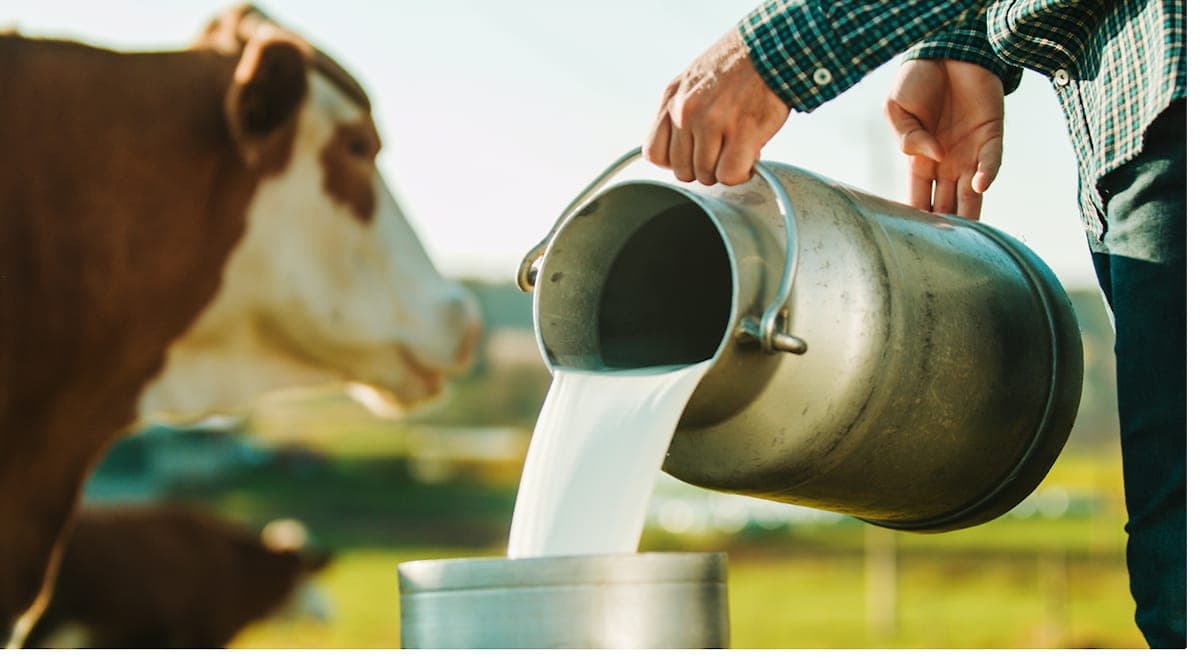
Representatives Thomas Massie, R-KY, and Chellie Pingree, D-ME, have again introduced a bill prohibiting federal interference with the interstate traffic of unpasteurized milk and raw milk products that are packaged for direct human consumption. H.R. 7880, the Interstate Milk Freedom Act, would end the federal Food and Drug Administration’s ban on the interstate sale of raw milk in some instances. "The Interstate Milk Freedom Act would make it easier for families to buy the milk of their choice by reversing the criminalization of specific dairy farmers,” Rep. Masse said. "So many people across the country want to make sure their food is fresh and local — including fruits, vegetables, and even their milk," said Rep. Pingree. "Raw milk is currently the only food banned for interstate commerce— an onerous regulation that hurts small farmers for selling milk straight from their cows to the consumer." If two states have legalized the sale of unpasteurized milk, the Interstate Milk Freedom Act would prevent federal departments, agencies, or courts from taking any action to prohibit or restrict the traffic of milk between those two states. Congress has never specifically passed a ban on raw milk, but under authority granted to the FDA by Congress, a regulation banning the interstate sale of raw milk was enacted in 1986. The further raw milk is transported from the farm, the greater the risk of harmful bacteria and the potential for severe foodborne illness. Without pasteurization, raw milk products can harbor dangerous germs such as Salmonella, E. coli, Listeria, and Campylobacter. The language of the Interstate Milk Freedom Act isn’t new. It was introduced as an amendment to the 2018 Farm Bill and as a standalone bill in 2014, 2015, 2019, 2021, and 2024. Cosponsors of H.R. 7880 include Rep. Chellie Pingree, D-ME, Rep. Lauren Boebert, R-CO, Rep. Warren Davidson, R-OH, Rep. Glenn Grothman, R-WI, Rep. Clay Higgins, R-LA, Rep. Nancy Mace, R-SC, Rep. Scott Perry, R-PA, Rep. Chip Roy, R-TX, and Rep. Lloyd Smucker, R-PA. The text of the Interstate Milk Freedom Act is available at this link. ###
Oh, come on — Not Raw Farm again
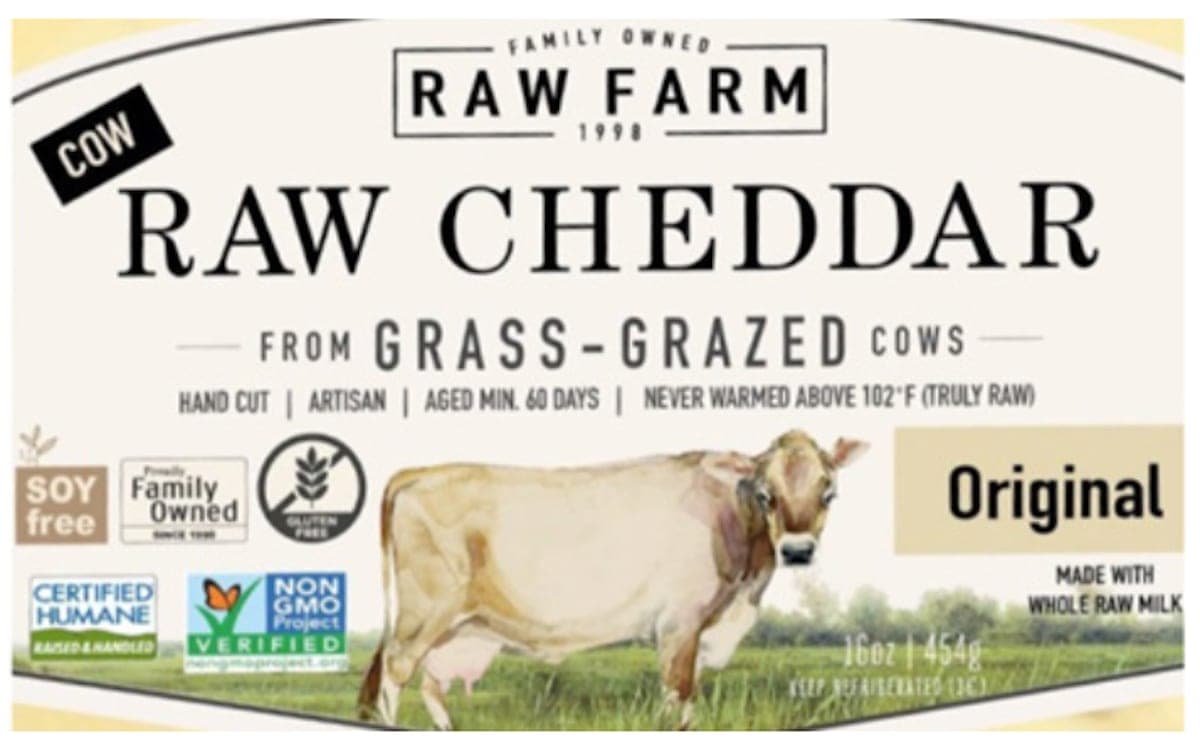
Raw Farm LLC, owned by Mark McAfee, has become all too familiar to food safety officials. The company has been repeatedly linked to foodborne illness outbreaks, and since its 2020 rebrand from Organic Pastures to Raw Farm, the pattern appears to be getting worse, not better. Still, even with that history, this latest development is striking. On March 15, 2026 — just two days before I was scheduled to speak with TV5 Monde about Raw Farm’s troubling track record — the Food and Drug Administration announced yet another outbreak. What makes this one particularly alarming is how familiar it feels. Once again, Raw Farm’s raw milk cheddar cheese has been identified as the likely source. Once again, the pathogen is E. coli O157:H7. Seven confirmed illnesses, and more than half are in children under the age of three. This isn’t just another outbreak; it’s a repeat. A Pattern That’s Hard to Ignore A quick look at Raw Farm’s outbreak history over just the past three years paints a grim picture—one where serious illnesses are not isolated incidents, but recurring events: May 2023: Campylobacter outbreak linked to raw milk August 2023: Salmonella outbreak linked to unpasteurized cheese October 2023: Major Salmonella outbreak tied to raw milk, largely affecting children February 2024: First E. coli O157:H7 outbreak linked to raw cheddar cheese November 2024: Bird flu detected in raw milk (initial recall) December 2024: Expanded bird flu recall; animal deaths linked to consumption March 2026: Second E. coli O157:H7 outbreak, again, linked to raw cheddar cheese The 2024 Cheddar Cheese Outbreak The parallels to the 2024 outbreak are hard to ignore. In February 2024, the FDA and Centers for Disease Control and Prevention (CDC) investigated a multistate outbreak of E. coli O157:H7 linked to Raw Farm’s raw cheddar cheese, including both block and shredded varieties. Eleven people across five states fell ill. Five were hospitalized. Two developed hemolytic uremic syndrome (HUS), a severe and potentially life-threatening complication that can lead to kidney failure. Raw Farm initiated a recall on February 16, 2024—but then abruptly withdrew it just ten days later, despite federal agencies identifying its cheese as the confirmed source of the outbreak. The 2026 Cheddar Cheese Outbreak: Déjà Vu Now, in 2026, history is repeating itself. Federal and state health officials are investigating a new multistate outbreak, again tied to Raw Farm’s raw cheddar cheese. At least seven people across California, Florida, and Texas have been infected with E. coli O157:H7. More than half are children under the age of three. The FDA has once again identified the cheese as the “likely source” and recommended a voluntary recall. Raw Farm has refused. Growing Alarm and Calls for Actions This refusal has not gone unnoticed. Members of the Congressional Food Safety Caucus — Rosa DeLauro, CT, Sanford D. Bishop Jr., GA, Jan Schakowsky, IL, Chellie Pingree, ME, André Carson, IN, Alma Adams, NC, Mike Quigley, IL, Seth Moulton, MA, Grace Meng, NY, and Mark Takano, CA — are now urging the FDA to take the rare step of issuing a mandatory recall. Their message is clear: remove the product from store shelves — NOW. In a joint statement, they emphasized that multiple people have already been hospitalized, with young children disproportionately affected: “Two people have been hospitalized because of this outbreak, with several more falling ill. More than half of the illnesses were in children aged 3 or younger. This cannot stand. If Raw Farm refuses to take unsafe products off the market, FDA must use its mandatory recall authority and take them to court. A company should not be able to flatly refuse a recall recommendation. That puts consumers health at risk to protect the profits of a corporation. FDA must act so consumers are not subject to the whims of corporations that would put their profits over public health. And if mandatory authority needs to be strengthened, the Food Safety Caucus stands ready to tackle this issue at FDA’s request. Secretary Kennedy’s connection to Raw Farm and FDA’s lack of action here raise serious questions. At bare minimum, this is a potentially concerning conflict of interest. At worst, Secretary Kennedy is once again playing dangerous games with American’s health.” Raw Farm is the largest producer of raw, unpasteurized dairy products in the United States, with a loyal consumer base that includes high-profile figures such as U.S. Health and Human Services Secretary Robert F. Kennedy Jr. This latest outbreak raises uncomfortable questions about enforcement, accountability, and whether existing food safety authorities are being fully utilized. At some point, recurring outbreaks stop looking like bad luck and start looking like a systemic failure. The same product. The same pathogen. The same consequences, especially for children. How many outbreaks will it take before decisive regulatory action is taken?
Bill to lift ban on transporting raw milk is back
Representatives Thomas Massie, R-KY, and Chellie Pingree, D-ME, have again introduced a bill prohibiting federal interference with the interstate traffic of unpasteurized milk and raw milk products that are packaged for direct human consumption. H.R. 7880, the Interstate Milk Freedom Act, would end the federal Food and Drug Administration’s ban on the interstate sale of raw milk in some instances. "The Interstate Milk Freedom Act would make it easier for families to buy the milk of their choice by reversing the criminalization of specific dairy farmers,” Rep. Masse said. "So many people across the country want to make sure their food is fresh and local — including fruits, vegetables, and even their milk," said Rep. Pingree. "Raw milk is currently the only food banned for interstate commerce— an onerous regulation that hurts small farmers for selling milk straight from their cows to the consumer." If two states have legalized the sale of unpasteurized milk, the Interstate Milk Freedom Act would prevent federal departments, agencies, or courts from taking any action to prohibit or restrict the traffic of milk between those two states. Congress has never specifically passed a ban on raw milk, but under authority granted to the FDA by Congress, a regulation banning the interstate sale of raw milk was enacted in 1986. The further raw milk is transported from the farm, the greater the risk of harmful bacteria and the potential for severe foodborne illness. Without pasteurization, raw milk products can harbor dangerous germs such as Salmonella, E. coli, Listeria, and Campylobacter. The language of the Interstate Milk Freedom Act isn’t new. It was introduced as an amendment to the 2018 Farm Bill and as a standalone bill in 2014, 2015, 2019, 2021, and 2024. Cosponsors of H.R. 7880 include Rep. Chellie Pingree, D-ME, Rep. Lauren Boebert, R-CO, Rep. Warren Davidson, R-OH, Rep. Glenn Grothman, R-WI, Rep. Clay Higgins, R-LA, Rep. Nancy Mace, R-SC, Rep. Scott Perry, R-PA, Rep. Chip Roy, R-TX, and Rep. Lloyd Smucker, R-PA. The text of the Interstate Milk Freedom Act is available at this link. ###
Oh, come on — Not Raw Farm again
Raw Farm LLC, owned by Mark McAfee, has become all too familiar to food safety officials. The company has been repeatedly linked to foodborne illness outbreaks, and since its 2020 rebrand from Organic Pastures to Raw Farm, the pattern appears to be getting worse, not better. Still, even with that history, this latest development is striking. On March 15, 2026 — just two days before I was scheduled to speak with TV5 Monde about Raw Farm’s troubling track record — the Food and Drug Administration announced yet another outbreak. What makes this one particularly alarming is how familiar it feels. Once again, Raw Farm’s raw milk cheddar cheese has been identified as the likely source. Once again, the pathogen is E. coli O157:H7. Seven confirmed illnesses, and more than half are in children under the age of three. This isn’t just another outbreak; it’s a repeat. A Pattern That’s Hard to Ignore A quick look at Raw Farm’s outbreak history over just the past three years paints a grim picture—one where serious illnesses are not isolated incidents, but recurring events: May 2023: Campylobacter outbreak linked to raw milk August 2023: Salmonella outbreak linked to unpasteurized cheese October 2023: Major Salmonella outbreak tied to raw milk, largely affecting children February 2024: First E. coli O157:H7 outbreak linked to raw cheddar cheese November 2024: Bird flu detected in raw milk (initial recall) December 2024: Expanded bird flu recall; animal deaths linked to consumption March 2026: Second E. coli O157:H7 outbreak, again, linked to raw cheddar cheese The 2024 Cheddar Cheese Outbreak The parallels to the 2024 outbreak are hard to ignore. In February 2024, the FDA and Centers for Disease Control and Prevention (CDC) investigated a multistate outbreak of E. coli O157:H7 linked to Raw Farm’s raw cheddar cheese, including both block and shredded varieties. Eleven people across five states fell ill. Five were hospitalized. Two developed hemolytic uremic syndrome (HUS), a severe and potentially life-threatening complication that can lead to kidney failure. Raw Farm initiated a recall on February 16, 2024—but then abruptly withdrew it just ten days later, despite federal agencies identifying its cheese as the confirmed source of the outbreak. The 2026 Cheddar Cheese Outbreak: Déjà Vu Now, in 2026, history is repeating itself. Federal and state health officials are investigating a new multistate outbreak, again tied to Raw Farm’s raw cheddar cheese. At least seven people across California, Florida, and Texas have been infected with E. coli O157:H7. More than half are children under the age of three. The FDA has once again identified the cheese as the “likely source” and recommended a voluntary recall. Raw Farm has refused. Growing Alarm and Calls for Actions This refusal has not gone unnoticed. Members of the Congressional Food Safety Caucus — Rosa DeLauro, CT, Sanford D. Bishop Jr., GA, Jan Schakowsky, IL, Chellie Pingree, ME, André Carson, IN, Alma Adams, NC, Mike Quigley, IL, Seth Moulton, MA, Grace Meng, NY, and Mark Takano, CA — are now urging the FDA to take the rare step of issuing a mandatory recall. Their message is clear: remove the product from store shelves — NOW. In a joint statement, they emphasized that multiple people have already been hospitalized, with young children disproportionately affected: “Two people have been hospitalized because of this outbreak, with several more falling ill. More than half of the illnesses were in children aged 3 or younger. This cannot stand. If Raw Farm refuses to take unsafe products off the market, FDA must use its mandatory recall authority and take them to court. A company should not be able to flatly refuse a recall recommendation. That puts consumers health at risk to protect the profits of a corporation. FDA must act so consumers are not subject to the whims of corporations that would put their profits over public health. And if mandatory authority needs to be strengthened, the Food Safety Caucus stands ready to tackle this issue at FDA’s request. Secretary Kennedy’s connection to Raw Farm and FDA’s lack of action here raise serious questions. At bare minimum, this is a potentially concerning conflict of interest. At worst, Secretary Kennedy is once again playing dangerous games with American’s health.” Raw Farm is the largest producer of raw, unpasteurized dairy products in the United States, with a loyal consumer base that includes high-profile figures such as U.S. Health and Human Services Secretary Robert F. Kennedy Jr. This latest outbreak raises uncomfortable questions about enforcement, accountability, and whether existing food safety authorities are being fully utilized. At some point, recurring outbreaks stop looking like bad luck and start looking like a systemic failure. The same product. The same pathogen. The same consequences, especially for children. How many outbreaks will it take before decisive regulatory action is taken?
Congress members want FDA to force Raw Farm to recall raw cheese because of E. coli outbreak
The congressional Food Safety Caucus is asking the FDA to exercise its authority and force Raw Farm LLC to recall its raw milk cheddar cheese because it has been linked to an outbreak of E. coli O157:H7 infections. Among those members of Congress making the request are Representatives Rosa DeLauro, CT, Sanford D. Bishop Jr., GA, Jan Schakowsky, IL, Chellie Pingree, ME,André Carson, IN, Alma Adams, NC, Mike Quigley, IL, Seth Moulton, MA, Grace Meng, NY, and Mark Takano, CA. They released a joint statement following reports of E. coli contamination linked to cheddar cheese made from raw milk by Raw Farm. Raw Farm is the largest producer of raw, unpasteurized dairy products in the United States. Secretary of Health and Human Services Robert F. Kennedy Jr. is a longtime customer of Raw Farm products. At least seven people in three states, including three young children, have been sickened by E. coli contamination linked to Raw Farm’s cheese. The Food and Drug Administration has determined the cheese to be the “likely source” of the outbreak. Raw Farm products have been linked to several foodborne illness outbreaks in recent years. The FDA can force a recall if a company refuses to voluntarily recall unsafe food. Raw Farms has, to date, refused FDA’s voluntary recall recommendation. “The FDA recommended that Raw Farm voluntarily remove its raw cheese products from sale after they determined it was the likely source of an ongoing E. coli outbreak,” the representatives said. “Raw Farm refused. We have one message for Raw Farm and FDA: get it off the shelves – now. “Two people have been hospitalized because of this outbreak, with several more falling ill. More than half of the illnesses were in children aged 3 or younger. This cannot stand. If Raw Farm refuses to take unsafe products off the market, FDA must use its mandatory recall authority and take them to court. A company should not be able to flatly refuse a recall recommendation. That puts consumers health at risk to protect the profits of a corporation. “FDA must act so consumers are not subject to the whims of corporations that would put their profits over public health. And if mandatory authority needs to be strengthened, the Food Safety Caucus stands ready to tackle this issue at FDA’s request. “Secretary Kennedy’s connection to Raw Farm and FDA’s lack of action here raise serious questions. At bare minimum, this is a potentially concerning conflict of interest. At worst, Secretary Kennedy is once again playing dangerous games with American’s health. ” The U.S. Centers for Disease Control and Prevention urged consumers to consider not eating Raw Farm cheese products. About E. coli infections Food contaminated with E. coli may not look or smell bad. Anyone who has eaten any of the implicated Raw Farm products and developed symptoms of E. coli infection should seek medical attention and tell their doctor about their possible exposure to the bacteria. Specific tests are required to diagnose the infections, which can mimic other illnesses. The symptoms of E. coli infections vary for each person but often include severe stomach cramps and diarrhea, which is often bloody. Some patients may also have a fever. Most patients recover within five to seven days. Others can develop severe or life-threatening symptoms and complications, according to the Centers for Disease Control and Prevention (CDC). About 5 to 10 percent of those diagnosed with E. coli infections develop a potentially life-threatening kidney failure complication, known as a hemolytic uremic syndrome (HUS). Symptoms of HUS include fever, abdominal pain, feeling very tired, decreased frequency of urination, small unexplained bruises or bleeding, and pallor. Many people with HUS recover within a few weeks, but some suffer permanent injuries or death. This condition can occur among people of any age but is most common in children younger than five years old because of their immature immune systems, older adults because of deteriorating immune systems, and people with compromised immune systems such as cancer patients. People who experience HUS symptoms should immediately seek emergency medical care. People with HUS will likely be hospitalized because the condition can cause other serious and ongoing problems such as hypertension, chronic kidney disease, brain damage, and neurologic problems.
Congress members want FDA to force Raw Farm to recall raw cheese because of E. coli outbreak
The congressional Food Safety Caucus is asking the FDA to exercise its authority and force Raw Farm LLC to recall its raw milk cheddar cheese because it has been linked to an outbreak of E. coli O157:H7 infections. Among those members of Congress making the request are Representatives Rosa DeLauro, CT, Sanford D. Bishop Jr., GA, Jan Schakowsky, IL, Chellie Pingree, ME,André Carson, IN, Alma Adams, NC, Mike Quigley, IL, Seth Moulton, MA, Grace Meng, NY, and Mark Takano, CA. They released a joint statement following reports of E. coli contamination linked to cheddar cheese made from raw milk by Raw Farm. Raw Farm is the largest producer of raw, unpasteurized dairy products in the United States. Secretary of Health and Human Services Robert F. Kennedy Jr. is a longtime customer of Raw Farm products. At least seven people in three states, including three young children, have been sickened by E. coli contamination linked to Raw Farm’s cheese. The Food and Drug Administration has determined the cheese to be the “likely source” of the outbreak. Raw Farm products have been linked to several foodborne illness outbreaks in recent years. The FDA can force a recall if a company refuses to voluntarily recall unsafe food. Raw Farms has, to date, refused FDA’s voluntary recall recommendation. “The FDA recommended that Raw Farm voluntarily remove its raw cheese products from sale after they determined it was the likely source of an ongoing E. coli outbreak,” the representatives said. “Raw Farm refused. We have one message for Raw Farm and FDA: get it off the shelves – now. “Two people have been hospitalized because of this outbreak, with several more falling ill. More than half of the illnesses were in children aged 3 or younger. This cannot stand. If Raw Farm refuses to take unsafe products off the market, FDA must use its mandatory recall authority and take them to court. A company should not be able to flatly refuse a recall recommendation. That puts consumers health at risk to protect the profits of a corporation. “FDA must act so consumers are not subject to the whims of corporations that would put their profits over public health. And if mandatory authority needs to be strengthened, the Food Safety Caucus stands ready to tackle this issue at FDA’s request. “Secretary Kennedy’s connection to Raw Farm and FDA’s lack of action here raise serious questions. At bare minimum, this is a potentially concerning conflict of interest. At worst, Secretary Kennedy is once again playing dangerous games with American’s health. ” The U.S. Centers for Disease Control and Prevention urged consumers to consider not eating Raw Farm cheese products. About E. coli infections Food contaminated with E. coli may not look or smell bad. Anyone who has eaten any of the implicated Raw Farm products and developed symptoms of E. coli infection should seek medical attention and tell their doctor about their possible exposure to the bacteria. Specific tests are required to diagnose the infections, which can mimic other illnesses. The symptoms of E. coli infections vary for each person but often include severe stomach cramps and diarrhea, which is often bloody. Some patients may also have a fever. Most patients recover within five to seven days. Others can develop severe or life-threatening symptoms and complications, according to the Centers for Disease Control and Prevention (CDC). About 5 to 10 percent of those diagnosed with E. coli infections develop a potentially life-threatening kidney failure complication, known as a hemolytic uremic syndrome (HUS). Symptoms of HUS include fever, abdominal pain, feeling very tired, decreased frequency of urination, small unexplained bruises or bleeding, and pallor. Many people with HUS recover within a few weeks, but some suffer permanent injuries or death. This condition can occur among people of any age but is most common in children younger than five years old because of their immature immune systems, older adults because of deteriorating immune systems, and people with compromised immune systems such as cancer patients. People who experience HUS symptoms should immediately seek emergency medical care. People with HUS will likely be hospitalized because the condition can cause other serious and ongoing problems such as hypertension, chronic kidney disease, brain damage, and neurologic problems.