
Search

Search people, articles, bills, and more

Flatwater Free Press logo

Flatwater Free Press

flatwaterfreepress.org

Provenance not yet reviewed

1 story credited to Flatwater Free Press

Latest story Apr 8, 2026 · on ChamberLight since Apr 2026

Scores for Flatwater Free Press

Credibility

Not enough stories yet: 1 of 10.

How this is measured

Political lean

Not enough stories yet: 1 of 10.

How this is measured

Originality

Not enough stories yet: 1 of 10.

How this is measured

Writing quality not enough rated stories yet: 1 of 10. How it is measured

Scores last checked Sep 25, 2026.

Stories ChamberLight collected, by month

Stories credited to Flatwater Free Press, by publication date. ChamberLight collects articles that mention the officials it tracks, so this shows its own coverage of this source, not how much the source publishes.

  • Stories from Flatwater Free Press
  • Shaded: ChamberLight collected no stories, or almost none, from any outlet (a gap in its collection, not in the outlet’s publishing)
Show as a table
MonthStoriesAll outlets
April 202614,011
May 20260none collected
June 20260none collected
July 20260none collected
August 202601 (collection gap)
September 202601,320

Top topics

Share of this source’s stories tagged with each topic. A story can carry several topics, so the shares do not add up to 100%.

  • Budget/Spending1

    100% of 1 stories · 31% across all outlets

  • Economy1

    100% of 1 stories · 26% across all outlets

  • Healthcare1

    100% of 1 stories · 8% across all outlets

The thin mark on each bar is the topic’s share across all outlets.

Who they cover

Party of the officials these stories are mainly about, across all 1 officials named. A story counts once for each official it is mainly about, so the split is over 1 story–official pair, from 1 story.

  • Republican100% · 1 pair

Most covered

Stories mainly about each official, and their share of the source’s 1 story.

  1. 1Robert F. Kennedy Jr.R1 story · 100%

Article tone

ChamberLight’s article analysis assigns each story a tone toward the official it covers. It describes the coverage of that official, not Flatwater Free Press’s stance, and reader votes do not change it. 1 story.

Good Look
0 (0%)
Mixed
1 (100%)
Informational
0 (0%)
Bad Look
0 (0%)

Challenges to these scores

No one has challenged a score on this page yet. Anyone can; editors publish every outcome here.
Articles served from flatwaterfreepress.org

1

Concerns over a Nebraska hospital show how a $50B rural health fund is coming up short

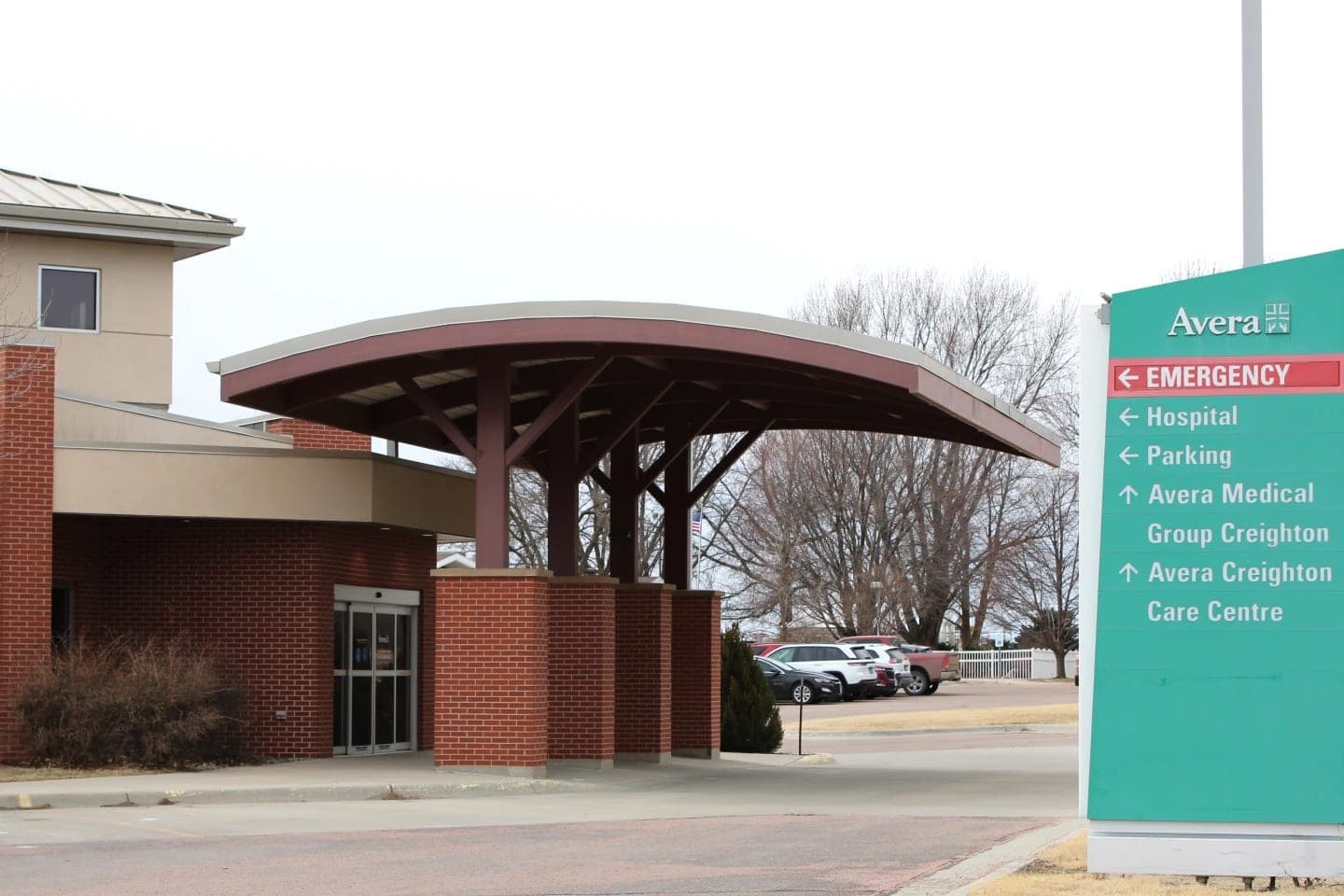
CREIGHTON (AP) — Rick and Jane Saint John chose to live in Creighton for one main reason: Its hospital. The couple has a child with nonverbal autism and epilepsy who requires up to three hospital visits a week. And Creighton’s critical access hospital has been a lifeline for Jane: Not only is she employed there, but three years ago, doctors saved her life when she contracted bacterial pneumonia. If she had waited another day for care, doctors said, her organs would have begun to shut down. “And if we had had to drive the hour to the Yankton (South Dakota) hospital,” Rick Saint John said, his voice breaking with emotion, “it could have cost her her life.” So the Saint Johns were shocked to hear that Avera Creighton Hospital faces financial peril. A $50 billion government fund meant to transform rural health care will do little to help. It’s a problem that millions of Americans in rural areas are awakening to as they realize there’s no windfall coming for the vulnerable hospitals near their homes. Hundreds of rural hospitals across the country are facing closures after years of funding problems. The issue was compounded last summer by the Trump administration’s massive cuts to Medicaid, the government’s safety net for low-income Americans, whose reimbursements have long helped hospitals meet their bottom lines. Outcry over the funding cuts prompted Republican lawmakers to create $50 billion in new rural health grants, but critics say that funding is intended for innovative health care delivery solutions — not propping up hospitals buckling under current pressures. “It won’t pay to keep the lights on. And it won’t turn the lights back on once they’ve been turned off,” said Dr. Ben Young, an infectious disease specialist and policy expert with public health advocacy group Wellness Equity Alliance. Rural Americans’ health care worries reflect broader national concerns about access and rising prices of care as the cost of living spikes — anxieties that could prove pivotal in this year’s midterm elections. Rural health fund billed as a cure falls short The $50 billion Rural Health Transformation Program included in President Donald Trump’s tax-and-spending law last year was billed by Republicans as a way to help hospitals in rural areas. Last summer, Health Secretary Robert F. Kennedy Jr. touted it as the “biggest infusion in history” for rural hospitals and pledged it will “restore and revitalize these communities.” Hospitals and health industry experts have warned that while the fund — $10 billion per year allocated across all states for five years — offers some support to struggling rural hospitals, it won’t save them. One reason is that the sum doesn’t come close to offsetting the $137 billion that rural hospitals expect to lose over the next decade, according to health research nonprofit KFF. Millions of people are expected to lose Medicaid benefits as a result of new Medicaid work requirements going into effect in 2027 — changes the Trump administration has maintained will crack down on fraudsters rather than cut off eligible enrollees. Administrators say the new $50 billion fund is not meant to shore up ailing rural hospitals or maintain the status quo, but to transform rural health care through tech, workforce and other innovations. Centers for Medicare and Medicaid Services Administrator Dr. Mehmet Oz in a December video said it “gives states the tools to design solutions that last, not Band-Aids that fail.” The White House echoed that last week, saying the fund is intended to fund “big ideas” to improve rural health care access long term. “Decades of mismanagement by career politicians in Washington have left rural communities with limited care options,” White House spokesman Kush Desai said. State applications show a wide range of proposals. Some pitches sought to improve emergency medical services and modernize rural facilities, while others looked to make school lunches healthier, expand physical fitness programs, beef up telehealth and expand AI-driven technologies to help monitor patients. Nebraska will spend much of its grant on innovation Avera Creighton Hospital CEO Theresa Guenther argues her hospital is not in danger of closing, but conceded that Medicaid cuts will be painful — a sentiment she said is shared by most rural hospitals. “Medicaid cuts will have an impact to us, and we — as well as many others — will have to figure out what that looks like moving forward,” she said. Her hospital hopes to get a piece of the $50 billion fund to help manage patients’ chronic diseases — like diabetes — and to help cover workforce costs. State Sen. Barry DeKay of Niobrara. Associated Press photo/Margery A. Beck Nebraska, which received $218 million for the rural health grants’ first installment, plans to spend some $90 million on healthier food options at schools, recruiting more health care workers and mobile sensors to remotely monitor chronically ill patients in rural areas, among other things. But for rural critical access hospitals at risk of closing, it offers $10 million to “right size” them by getting rid of inpatient care, where bed occupancy is typically low. Republican State Sen. Barry DeKay of Niobrara said hospitals like Creighton’s are vital, despite its low occupancy rate. The hospital is in his district; even his mother received life-extending care there following a hip replacement. He’s worried that the Medicaid cuts could hurt all the state’s rural hospitals. “I’ll try to be working as hard as I can to get as much money to rural hospitals — whether it’s in my district or any other rural district in the state,” he said. Jane and Rick Saint John talk about how important their local hospital, Avera Creighton Hospital, is to their rural community. Associated Press photo/Margery A. Beck Rick Saint John acknowledged he knows little about how Nebraska will use the federal funds, but he thinks it should go to helping hospitals like Creighton’s remain intact. “The hospital is very important to this community, and for more than just medical care,” he said, citing job losses if the hospital loses services or closes. Hospital groups push back on fund The fund has seen pushback from hospital groups over an issue that’s shaping up as important for 2026 voters. The Colorado Hospital Association sent a letter in December to state lawmakers accusing them of ignoring input from rural hospitals during the application process. The Nebraska Hospital Association, which endorsed Republican U.S. Sen. Deb Fischer’s 2024 reelection bid based on her advocacy for rural health care, has criticized both the cuts and the $50 billion fund. Fischer voted last summer for the Medicaid cuts. That and other efforts by the state to limit Medicaid spending sends a message “that access to health care is not a priority,” the group said. Some Republican state lawmakers across the country have expressed unease with parts of the fund and have sought ways to use it to help struggling rural hospitals. States hard-pressed to help Under pressure, some rural states are making their own moves to help. Wyoming enacted a law allowing rural hospitals to file Chapter 9 bankruptcy, normally reserved for financially stressed cities to reorganize debts and repay creditors while protecting them from legal action. Avera Creighton Hospital CEO Theresa Guenther said her hospital hopes to get a piece of the $50 billion government fund to help manage patients’ chronic diseases and to help cover workforce costs. Associated Press photo/Margery A. Beck In North Dakota, during a special session to allocate the state’s federal rural health funds, the Republican-led Legislature passed an unrelated bill that aims to rescue a rural hospital with a low-interest loan of up to $5 million administered through the state-owned bank. It’s hoped the plan will keep the hospital open in a vast rural area where it employs 5% of the surrounding county’s residents, hospital board member Matt Hager said. Young, the expert with Wellness Equity Alliance, sees dark days ahead for rural hospitals. “I am not optimistic in the short term,” he said. “Because these hospitals are facing immediate financial shortfalls, are barely financially operating currently, and they need operating support now.” Swenson reported from New York. Associated Press writer Jack Dura contributed to this report from Bismarck, North Dakota. Share this story Close FacebookXLinkedInEmailCopy Link

Apr 8, 202616 votes