5 stories credited to Federal News Network
Latest story Sep 23, 2026 · on ChamberLight since Apr 2026
A story can appear as several articles (copies of the same piece), so counts of stories and of articles differ.
Scores for Federal News Network
Writing quality not enough rated stories yet: 3 of 10. How it is measured
Scores last checked Sep 25, 2026.
Stories ChamberLight collected, by month
Stories credited to Federal News Network, by publication date. ChamberLight collects articles that mention the officials it tracks, so this shows its own coverage of this source, not how much the source publishes.
- Stories from Federal News Network
- Shaded: ChamberLight collected no stories, or almost none, from any outlet (a gap in its collection, not in the outlet’s publishing)
Show as a table
| Month | Stories | All outlets |
|---|---|---|
| September 2025 | 2 | 42 |
| October 2025 | 0 | 50 |
| November 2025 | 0 | 79 |
| December 2025 | 0 | 27 |
| January 2026 | 0 | 87 |
| February 2026 | 0 | 180 |
| March 2026 | 0 | 1,094 |
| April 2026 | 0 | 4,538 |
| May 2026 | 0 | none collected |
| June 2026 | 0 | none collected |
| July 2026 | 0 | none collected |
| August 2026 | 0 | 1 (collection gap) |
| September 2026 | 3 | 1,320 |
Top topics
Share of this source’s stories tagged with each topic. A story can carry several topics, so the shares do not add up to 100%.
- Budget/Spending3
60% of 5 stories · 31% across all outlets
- Labor/Unions3
60% of 5 stories · 4% across all outlets
- Defense/Military2
40% of 5 stories · 25% across all outlets
- Healthcare2
40% of 5 stories · 8% across all outlets
- Ethics/Corruption1
20% of 5 stories · 58% across all outlets
- Housing1
20% of 5 stories · 1% across all outlets
The thin mark on each bar is the topic’s share across all outlets.
Who they cover
Party of the officials these stories are mainly about, across all 10 officials named. A story counts once for each official it is mainly about, so the split is over 10 story–official pairs, from 5 stories.
- Democrat70% · 7 pairs
- Republican30% · 3 pairs
Most covered
Stories mainly about each official, and their share of the source’s 5 stories.
Article tone
ChamberLight’s article analysis assigns each story a tone toward the official it covers. It describes the coverage of that official, not Federal News Network’s stance, and reader votes do not change it. 5 stories.
- Good Look
- 3 (60%)
- Mixed
- 1 (20%)
- Informational
- 0 (0%)
- Bad Look
- 1 (20%)
Challenges to these scores
No one has challenged a score on this page yet. Anyone can; editors publish every outcome here.
Articles served from federalnewsnetwork.com
10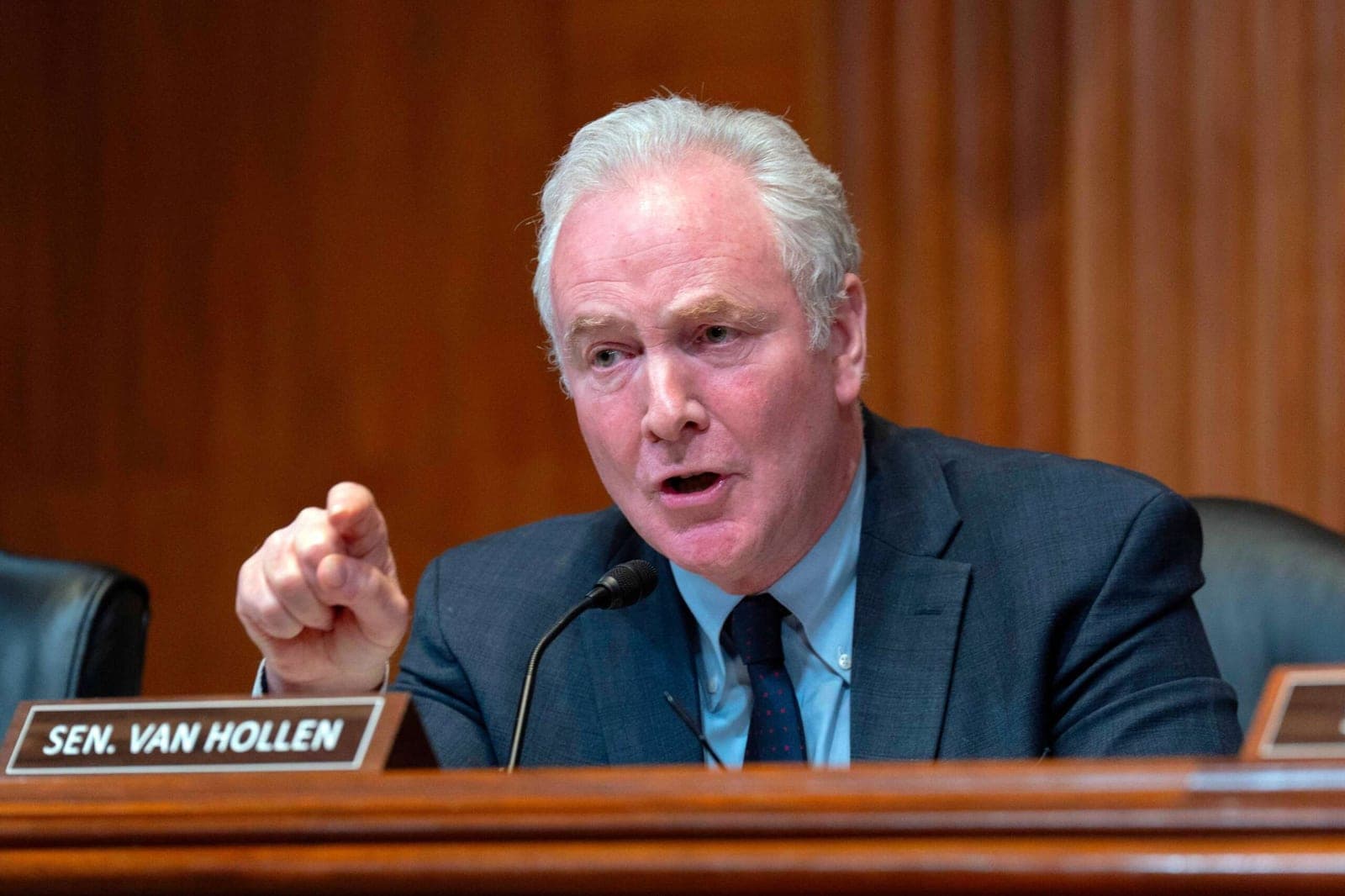
Democrats planning last-ditch attempt at a federal pay raise in 2027
House and Senate Democrats outlined options for attempting to override the Trump administration's planned pay freeze for most civilian employees in 2027. With limited time to act and no guarantee of success, Democrats are eyeing government spending negotiations as their best shot at still getting a
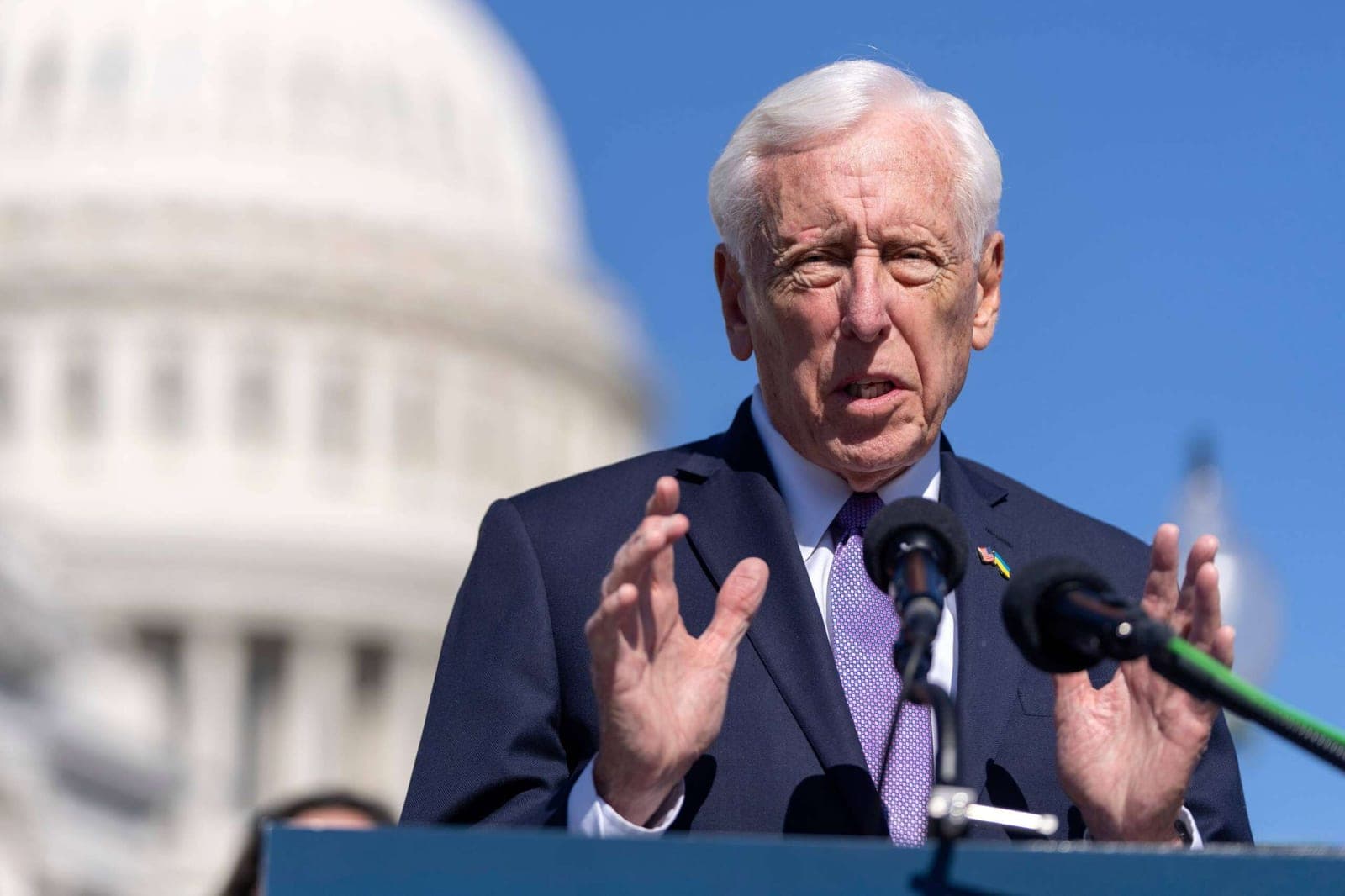
House lawmakers eye a makeover for the AbilityOne program
The bill would be the first major update to AbilityOne in nearly 50 years. * Two House lawmakers want to give the AbilityOne program a makeover. Reps. Steny Hoyer (D-Md.) and Pete Sessions's (R-Texas) American Procurement Improvement Act would modernize the statutory framework governing AbilityOne.
House lawmakers eye a makeover for the AbilityOne program
The bill would be the first major update to AbilityOne in nearly 50 years. * Two House lawmakers want to give the AbilityOne program a makeover. Reps. Steny Hoyer (D-Md.) and Pete Sessions's (R-Texas) American Procurement Improvement Act would modernize the statutory framework governing AbilityOne.

Lawmakers surface Coast Guard housing, quality-of-life issues
The Coast Guard's master chief says it's working with the other services and the Military Spouse Commission to address issues like the Basic Housing Allowance. The Coast Guard is hitting its recruiting targets and making historic investments in ships, aircraft and shore-based infrastructure thanks
Lawmakers surface Coast Guard housing, quality-of-life issues
The Coast Guard's master chief says it's working with the other services and the Military Spouse Commission to address issues like the Basic Housing Allowance. The Coast Guard is hitting its recruiting targets and making historic investments in ships, aircraft and shore-based infrastructure thanks
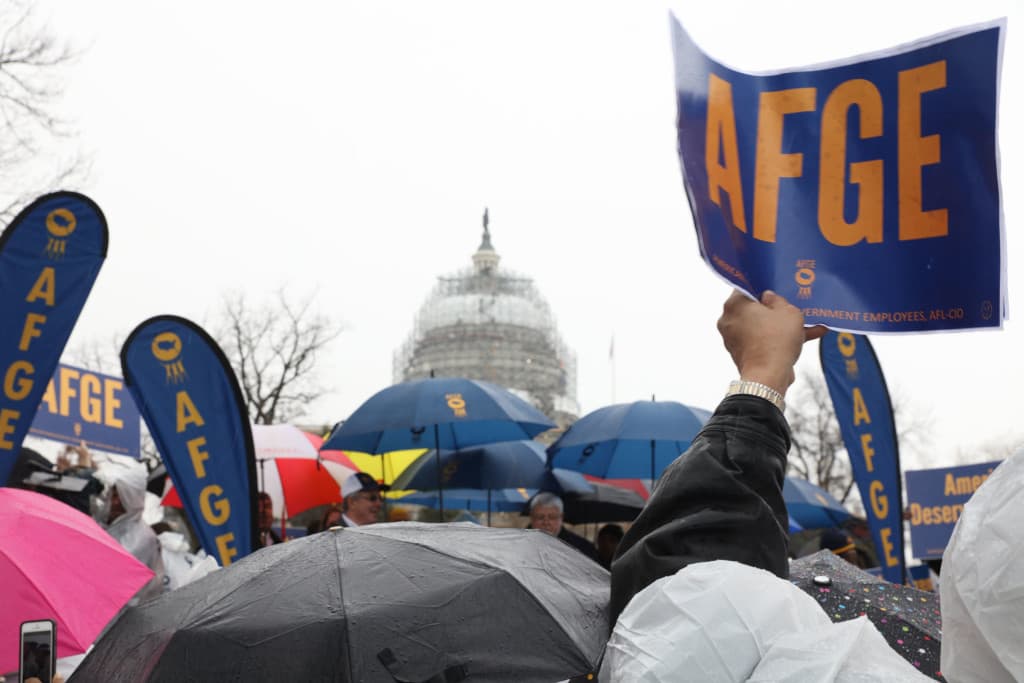
Senate companion bill seeks to overturn Trump’s anti-union orders
There is a growing push from lawmakers attempting to reverse President Donald Trump’s broad orders to terminate collective bargaining agreements with federal unions. Senate Democrats introduced a companion bill for the Protect America’s Workforce Act on Wednesday, at the same time that the House’s version of the bill is nearing the possibility of a floor vote. If enacted, the Protect America’s Workforce Act would nullify Trump’s executive orders to cancel collective bargaining for the vast majority of federal agencies. The now bicameral bill would reverse both of Trump’s orders that told most agencies to terminate their contracts and de-recognize their federal unions, citing national security concerns. The entire Senate Democratic Caucus, as well as Sen. Lisa Murkowski (R-Alaska), have signed onto the new bill. Senators who co-sponsored the legislation said they believe Trump’s orders earlier this year were an overreach of a narrow, rarely used provision of the 1978 Civil Service Reform Act, which allows a president to cancel collective bargaining for national security purposes. “Donald Trump’s executive orders ripping away collective bargaining rights from over a million federal workers constitute one of the biggest union busts in American history,” Sen. Alex Padilla (D-Calif.) said Wednesday. “Eliminating these basic labor protections is a thinly veiled retribution campaign under the guise of national security.” The House bill that is also seeking to reverse Trump’s anti-union actions was first introduced in April, just days after the president signed his initial executive order. The legislation currently has 222 cosponsors, including seven Republicans. In June, co-sponsors of the House bill created a discharge petition for the Protect America’s Workforce Act, in an attempt to push the legislation to a floor vote. The petition has steadily gained momentum, with another seven lawmakers signing onto the petition just this month. Currently, the petition has 216 signatures, including three Republicans. It’s two signatures away from the 218 required to force a House floor vote on the bill. Discharge petitions seldom gain enough support to reach a floor vote. But last year, lawmakers managed to get the required signatures on a discharge petition to push forward the Social Security Fairness Act in the House. It ultimately led to the passage of the bipartisan legislation and the subsequent repeal of both the Windfall Elimination Provision and the Government Pension Offset in early January. On the Senate side, however, the option for a discharge petition doesn’t exist, creating a potentially higher hurdle to clear for the companion bill of the Protect America’s Workforce Act. But federal union leaders said they are hopeful the Senate’s version of the bill will gain more bipartisan support. Trump signed his initial anti-union executive order in March, and a second executive order in late August expanding the number of impacted agencies that were told to end their agreements with federal unions. Federal unions quickly sued the administration over the president’s actions earlier this year. While about half a dozen lawsuits remain ongoing, several agencies have already moved forward with terminating their union contracts after an appeals court decision green-lit agencies to begin implementing Trump’s orders. Combined, Trump’s two executive orders would impact nearly 1 million federal employees once fully enacted, according to the AFL-CIO. Based on the agencies that have so far completed implementation of Trump’s orders, about 450,000 federal employees have already seen their union contracts canceled this year. “These moves are an assault on our fundamental freedoms and undercut critical services people across the country rely on,” said AFL-CIO President Liz Shuler. At the same time, civilian federal employees working at the Department of Defense may be a step closer to seeing their collective bargaining rights restored through different means. The House-passed version of the fiscal 2026 National Defense Authorization Act included a provision stating that none of the NDAA’s funds can be used to implement Trump’s orders to exclude agencies from collective bargaining. In practice, the provision would exempt all DoD civilian employees from Trump’s executive orders. The House’s proposed exemption for DoD civilian employees, however, is not currently contained in the Senate’s version of the 2026 NDAA. “Collective bargaining rights help improve federal operations, enhance government efficiency, and improve agencies’ recruitment and retention efforts,” American Federation of Government Employees National President Everett Kelley said. “Restoring these rights for Department of Defense civilian employees will help strengthen and advance our mission.” The post Senate companion bill seeks to overturn Trump’s anti-union orders first appeared on Federal News Network.
There’s no clear path to avoid a government shutdown
Interview transcript: Terry Gerton Well, there was a lot of action in Congress on Friday regarding dueling continuing resolutions. Catch us up. What was in the House proposal? Let’s start there. Mitchell Miller Alright, so this was a flurry of activity that we often see like a day or two right before the deadline for a shutdown. This time it all happened last week, right on Friday, lawmakers trying to get all of this done and then get out of town, but of course that didn’t actually happen. So in the House, it was a clean continuing resolution. From the Republican standpoint, they said, this is what we do all the time. It includes all kinds of basic-level funding for everything, but it also was to include additional security funding for lawmakers because, of course, of what happened with Charlie Kirk, there’s been a lot of concern here on the Hill about threats against lawmakers, which have just skyrocketed. And so they tucked in $30 million extra here and there, and then they pulled some from other funds. So there was a lot of additional funding for lawmakers to use within their own offices, as well as the legislative branch more broadly, and the White House actually. And then separately from that, just for the people here in D.C, it was also going to include a fix to that infamous budget glitch for D.C. of a billion dollars that there was a hearing about last week with D.C. crime and the Mayor, Muriel Bowser, said, boy we could really use that money if that’s included in there. So there were some, a few extra things, but essentially it was the classic, clean CR, and that’s why Republicans have been pointing the finger at Democrats and vice versa, which we’ll get into more in a moment. Terry Gerton So the House bill passed on straight party lines, right? Mitchell Miller Right. There was just one Democrat that voted for it. And so it passed pretty much as expected that it was going to be largely along party lines. And then the real question, of course, was what was going to happen in the Senate? Terry Gerton And what did happen in the Senate? Mitchell Miller Well, in the Senate, Senate Democrats tried to pass their own piece of legislation that would have extended government spending through the end of October. It was really a largely symbolic measure. They tried to restore a lot of the cuts that are in the Big, Beautiful Bill. They wanted to bring back a lot things related to healthcare. They have been really beating the drum in connection with extending the tax credits on the Affordable Care Act, as you know. They’ve had lots of complaints about the cuts to Medicaid, so that was clearly probably going to be dead on arrival and it certainly was. What was also interesting, though, as they moved to the House-passed bill, it really didn’t even come close to getting the 60 votes that were needed, for a variety of reasons, but it only went down on a 44 to 48 vote. You had one Democrat, Pennsylvania Senator John Fetterman, voting for it. You had two Republicans voting against it, Lisa Murkowski of Alaska and Rand Paul of Kentucky. Sometimes that happens with these bills, but the bill just kind of went down very quickly. Terry Gerton They would have needed the 60-vote threshold to pass it, right? Mitchell Miller Absolutely, yep. And they were not even close. Terry Gerton I’m speaking with Mitchell Miller. He’s the Capitol Hill correspondent for WTOP. All right, so Mitchell, what happens now? Both chambers are on recess this week. Is there any viable path to avoiding a shutdown before October 1st? Mitchell Miller I think that the viable path to avoiding a shutdown, unlike in past showdowns where we’ve had this before, it’s really almost closed. There’s a very slight glimmer maybe that something could happen at the last minute. You never know with Congress, but I think we really are trucking right down the road toward a shutdown because there doesn’t seem to be any even alternate ramp that we usually see in these kind of showdowns. For example, the House, before they left on Friday, they said, oh, by the way, the House leadership said we are not coming back on the 29th or the 30th. Obviously, the 30th is the key deadline date. So essentially, what they are going to do is politically jam Democrats and dare them not to do something on the Senate side with Senate Republicans. And unlike what happened in March — when Senate Minority Leader Chuck Schumer got a lot of grief for, a lot of people said he caved to what Republicans want — this time, Democrats are really basically all on board with the position that they’re taking, which is they have decided to put all their chips in on saying that it’s the Republicans’ fault because they are not negotiating on these key issues related to these Affordable Care Act tax credits, along with other various issues. We’ve talked about the security issue, and they’re essentially just saying that Republicans are trying to go it out alone, and this is not the way it’s been done in the past. Now, Republicans, on the other hand, as I noted earlier, they’ve said, look, this is a clean CR. This is essentially what we always talk about, wanting to buy more time so that we can get through to November 21st, in this case, because that’s where this legislation would extend funding to, and then we can do the appropriation work that we always do in Congress. But as we’ve talked about before, the appropriations process is now really poisoned for a lot of reasons and I just don’t think that there is any reason that we are not going to have a shutdown. Terry Gerton Has the White House weighed in at all? There’s always talk about who’s going to get blamed if there’s a shutdown, and sometimes it reverts back to the President and his team. Mitchell Miller Right. And in this case, I think the White House feels confident that the Democrats are going to get the blame. The Democrats, of course, say, well, the Republicans are, they control all the levers of power. They control the White House. They control all of Congress. They have extra votes on the Supreme Court. But the White House basically told Republicans, stick with this clean CR and then we’re going to push the blame on the Democrats. The Democrats, it’s a big gamble for them because when you’re the party that is trying to do something in addition, as we’ve seen in these past shutdown confrontations, I think it’s easier for the White House to say, well, the Democrats always talk about how they want government agencies to be open, they’ve complained about us making cuts, and now they want to shut the government down. I can almost hear the President making these arguments as we get closer to the deadline. The Democrats, for their part, they are going to really be pushing this message on these healthcare issues. Terry Gerton With both of the chambers in recess this week, can we hope that the staffs are scurrying around in the back rooms trying to find some compromise? Is there anything that might break loose on the 29th or 30th that would give us hope? Mitchell Miller I think actually the only real glimmer of hope would be the staffers. I mean, they’re the ones that do the hard work, as you well know, and if they could try to find some middle ground on a few of these issues to help move things forward, that might crack something. It usually takes a couple of big breaks before — small breaks rather — for something to actually happen at the last minute. But right now, I just think that both sides are so dug in, so hard and so confident in their own positions that that’s why I don’t think there is going to be a breakthrough. Terry Gerton Well, Mitchell, the next time we talk, we’ll know for sure. Mitchell Miller Yes, we will. The post There’s no clear path to avoid a government shutdown first appeared on Federal News Network.
There’s no clear path to avoid a government shutdown
Interview transcript: Terry Gerton Well, there was a lot of action in Congress on Friday regarding dueling continuing resolutions. Catch us up. What was in the House proposal? Let’s start there. Mitchell Miller Alright, so this was a flurry of activity that we often see like a day or two right before the deadline for a shutdown. This time it all happened last week, right on Friday, lawmakers trying to get all of this done and then get out of town, but of course that didn’t actually happen. So in the House, it was a clean continuing resolution. From the Republican standpoint, they said, this is what we do all the time. It includes all kinds of basic-level funding for everything, but it also was to include additional security funding for lawmakers because, of course, of what happened with Charlie Kirk, there’s been a lot of concern here on the Hill about threats against lawmakers, which have just skyrocketed. And so they tucked in $30 million extra here and there, and then they pulled some from other funds. So there was a lot of additional funding for lawmakers to use within their own offices, as well as the legislative branch more broadly, and the White House actually. And then separately from that, just for the people here in D.C, it was also going to include a fix to that infamous budget glitch for D.C. of a billion dollars that there was a hearing about last week with D.C. crime and the Mayor, Muriel Bowser, said, boy we could really use that money if that’s included in there. So there were some, a few extra things, but essentially it was the classic, clean CR, and that’s why Republicans have been pointing the finger at Democrats and vice versa, which we’ll get into more in a moment. Terry Gerton So the House bill passed on straight party lines, right? Mitchell Miller Right. There was just one Democrat that voted for it. And so it passed pretty much as expected that it was going to be largely along party lines. And then the real question, of course, was what was going to happen in the Senate? Terry Gerton And what did happen in the Senate? Mitchell Miller Well, in the Senate, Senate Democrats tried to pass their own piece of legislation that would have extended government spending through the end of October. It was really a largely symbolic measure. They tried to restore a lot of the cuts that are in the Big, Beautiful Bill. They wanted to bring back a lot things related to healthcare. They have been really beating the drum in connection with extending the tax credits on the Affordable Care Act, as you know. They’ve had lots of complaints about the cuts to Medicaid, so that was clearly probably going to be dead on arrival and it certainly was. What was also interesting, though, as they moved to the House-passed bill, it really didn’t even come close to getting the 60 votes that were needed, for a variety of reasons, but it only went down on a 44 to 48 vote. You had one Democrat, Pennsylvania Senator John Fetterman, voting for it. You had two Republicans voting against it, Lisa Murkowski of Alaska and Rand Paul of Kentucky. Sometimes that happens with these bills, but the bill just kind of went down very quickly. Terry Gerton They would have needed the 60-vote threshold to pass it, right? Mitchell Miller Absolutely, yep. And they were not even close. Terry Gerton I’m speaking with Mitchell Miller. He’s the Capitol Hill correspondent for WTOP. All right, so Mitchell, what happens now? Both chambers are on recess this week. Is there any viable path to avoiding a shutdown before October 1st? Mitchell Miller I think that the viable path to avoiding a shutdown, unlike in past showdowns where we’ve had this before, it’s really almost closed. There’s a very slight glimmer maybe that something could happen at the last minute. You never know with Congress, but I think we really are trucking right down the road toward a shutdown because there doesn’t seem to be any even alternate ramp that we usually see in these kind of showdowns. For example, the House, before they left on Friday, they said, oh, by the way, the House leadership said we are not coming back on the 29th or the 30th. Obviously, the 30th is the key deadline date. So essentially, what they are going to do is politically jam Democrats and dare them not to do something on the Senate side with Senate Republicans. And unlike what happened in March — when Senate Minority Leader Chuck Schumer got a lot of grief for, a lot of people said he caved to what Republicans want — this time, Democrats are really basically all on board with the position that they’re taking, which is they have decided to put all their chips in on saying that it’s the Republicans’ fault because they are not negotiating on these key issues related to these Affordable Care Act tax credits, along with other various issues. We’ve talked about the security issue, and they’re essentially just saying that Republicans are trying to go it out alone, and this is not the way it’s been done in the past. Now, Republicans, on the other hand, as I noted earlier, they’ve said, look, this is a clean CR. This is essentially what we always talk about, wanting to buy more time so that we can get through to November 21st, in this case, because that’s where this legislation would extend funding to, and then we can do the appropriation work that we always do in Congress. But as we’ve talked about before, the appropriations process is now really poisoned for a lot of reasons and I just don’t think that there is any reason that we are not going to have a shutdown. Terry Gerton Has the White House weighed in at all? There’s always talk about who’s going to get blamed if there’s a shutdown, and sometimes it reverts back to the President and his team. Mitchell Miller Right. And in this case, I think the White House feels confident that the Democrats are going to get the blame. The Democrats, of course, say, well, the Republicans are, they control all the levers of power. They control the White House. They control all of Congress. They have extra votes on the Supreme Court. But the White House basically told Republicans, stick with this clean CR and then we’re going to push the blame on the Democrats. The Democrats, it’s a big gamble for them because when you’re the party that is trying to do something in addition, as we’ve seen in these past shutdown confrontations, I think it’s easier for the White House to say, well, the Democrats always talk about how they want government agencies to be open, they’ve complained about us making cuts, and now they want to shut the government down. I can almost hear the President making these arguments as we get closer to the deadline. The Democrats, for their part, they are going to really be pushing this message on these healthcare issues. Terry Gerton With both of the chambers in recess this week, can we hope that the staffs are scurrying around in the back rooms trying to find some compromise? Is there anything that might break loose on the 29th or 30th that would give us hope? Mitchell Miller I think actually the only real glimmer of hope would be the staffers. I mean, they’re the ones that do the hard work, as you well know, and if they could try to find some middle ground on a few of these issues to help move things forward, that might crack something. It usually takes a couple of big breaks before — small breaks rather — for something to actually happen at the last minute. But right now, I just think that both sides are so dug in, so hard and so confident in their own positions that that’s why I don’t think there is going to be a breakthrough. Terry Gerton Well, Mitchell, the next time we talk, we’ll know for sure. Mitchell Miller Yes, we will. The post There’s no clear path to avoid a government shutdown first appeared on Federal News Network.
Senate companion bill seeks to overturn Trump’s anti-union orders
There is a growing push from lawmakers attempting to reverse President Donald Trump’s broad orders to terminate collective bargaining agreements with federal unions. Senate Democrats introduced a companion bill for the Protect America’s Workforce Act on Wednesday, at the same time that the House’s version of the bill is nearing the possibility of a floor vote. If enacted, the Protect America’s Workforce Act would nullify Trump’s executive orders to cancel collective bargaining for the vast majority of federal agencies. The now bicameral bill would reverse both of Trump’s orders that told most agencies to terminate their contracts and de-recognize their federal unions, citing national security concerns. The entire Senate Democratic Caucus, as well as Sen. Lisa Murkowski (R-Alaska), have signed onto the new bill. Senators who co-sponsored the legislation said they believe Trump’s orders earlier this year were an overreach of a narrow, rarely used provision of the 1978 Civil Service Reform Act, which allows a president to cancel collective bargaining for national security purposes. “Donald Trump’s executive orders ripping away collective bargaining rights from over a million federal workers constitute one of the biggest union busts in American history,” Sen. Alex Padilla (D-Calif.) said Wednesday. “Eliminating these basic labor protections is a thinly veiled retribution campaign under the guise of national security.” The House bill that is also seeking to reverse Trump’s anti-union actions was first introduced in April, just days after the president signed his initial executive order. The legislation currently has 222 cosponsors, including seven Republicans. In June, co-sponsors of the House bill created a discharge petition for the Protect America’s Workforce Act, in an attempt to push the legislation to a floor vote. The petition has steadily gained momentum, with another seven lawmakers signing onto the petition just this month. Currently, the petition has 216 signatures, including three Republicans. It’s two signatures away from the 218 required to force a House floor vote on the bill. Discharge petitions seldom gain enough support to reach a floor vote. But last year, lawmakers managed to get the required signatures on a discharge petition to push forward the Social Security Fairness Act in the House. It ultimately led to the passage of the bipartisan legislation and the subsequent repeal of both the Windfall Elimination Provision and the Government Pension Offset in early January. On the Senate side, however, the option for a discharge petition doesn’t exist, creating a potentially higher hurdle to clear for the companion bill of the Protect America’s Workforce Act. But federal union leaders said they are hopeful the Senate’s version of the bill will gain more bipartisan support. Trump signed his initial anti-union executive order in March, and a second executive order in late August expanding the number of impacted agencies that were told to end their agreements with federal unions. Federal unions quickly sued the administration over the president’s actions earlier this year. While about half a dozen lawsuits remain ongoing, several agencies have already moved forward with terminating their union contracts after an appeals court decision green-lit agencies to begin implementing Trump’s orders. Combined, Trump’s two executive orders would impact nearly 1 million federal employees once fully enacted, according to the AFL-CIO. Based on the agencies that have so far completed implementation of Trump’s orders, about 450,000 federal employees have already seen their union contracts canceled this year. “These moves are an assault on our fundamental freedoms and undercut critical services people across the country rely on,” said AFL-CIO President Liz Shuler. At the same time, civilian federal employees working at the Department of Defense may be a step closer to seeing their collective bargaining rights restored through different means. The House-passed version of the fiscal 2026 National Defense Authorization Act included a provision stating that none of the NDAA’s funds can be used to implement Trump’s orders to exclude agencies from collective bargaining. In practice, the provision would exempt all DoD civilian employees from Trump’s executive orders. The House’s proposed exemption for DoD civilian employees, however, is not currently contained in the Senate’s version of the 2026 NDAA. “Collective bargaining rights help improve federal operations, enhance government efficiency, and improve agencies’ recruitment and retention efforts,” American Federation of Government Employees National President Everett Kelley said. “Restoring these rights for Department of Defense civilian employees will help strengthen and advance our mission.” The post Senate companion bill seeks to overturn Trump’s anti-union orders first appeared on Federal News Network.
Senate companion bill seeks to overturn Trump’s anti-union orders
There is a growing push from lawmakers attempting to reverse President Donald Trump’s broad orders to terminate collective bargaining agreements with federal unions. Senate Democrats introduced a companion bill for the Protect America’s Workforce Act on Wednesday, at the same time that the House’s version of the bill is nearing the possibility of a floor vote. If enacted, the Protect America’s Workforce Act would nullify Trump’s executive orders to cancel collective bargaining for the vast majority of federal agencies. The now bicameral bill would reverse both of Trump’s orders that told most agencies to terminate their contracts and de-recognize their federal unions, citing national security concerns. The entire Senate Democratic Caucus, as well as Sen. Lisa Murkowski (R-Alaska), have signed onto the new bill. Senators who co-sponsored the legislation said they believe Trump’s orders earlier this year were an overreach of a narrow, rarely used provision of the 1978 Civil Service Reform Act, which allows a president to cancel collective bargaining for national security purposes. “Donald Trump’s executive orders ripping away collective bargaining rights from over a million federal workers constitute one of the biggest union busts in American history,” Sen. Alex Padilla (D-Calif.) said Wednesday. “Eliminating these basic labor protections is a thinly veiled retribution campaign under the guise of national security.” The House bill that is also seeking to reverse Trump’s anti-union actions was first introduced in April, just days after the president signed his initial executive order. The legislation currently has 222 cosponsors, including seven Republicans. In June, co-sponsors of the House bill created a discharge petition for the Protect America’s Workforce Act, in an attempt to push the legislation to a floor vote. The petition has steadily gained momentum, with another seven lawmakers signing onto the petition just this month. Currently, the petition has 216 signatures, including three Republicans. It’s two signatures away from the 218 required to force a House floor vote on the bill. Discharge petitions seldom gain enough support to reach a floor vote. But last year, lawmakers managed to get the required signatures on a discharge petition to push forward the Social Security Fairness Act in the House. It ultimately led to the passage of the bipartisan legislation and the subsequent repeal of both the Windfall Elimination Provision and the Government Pension Offset in early January. On the Senate side, however, the option for a discharge petition doesn’t exist, creating a potentially higher hurdle to clear for the companion bill of the Protect America’s Workforce Act. But federal union leaders said they are hopeful the Senate’s version of the bill will gain more bipartisan support. Trump signed his initial anti-union executive order in March, and a second executive order in late August expanding the number of impacted agencies that were told to end their agreements with federal unions. Federal unions quickly sued the administration over the president’s actions earlier this year. While about half a dozen lawsuits remain ongoing, several agencies have already moved forward with terminating their union contracts after an appeals court decision green-lit agencies to begin implementing Trump’s orders. Combined, Trump’s two executive orders would impact nearly 1 million federal employees once fully enacted, according to the AFL-CIO. Based on the agencies that have so far completed implementation of Trump’s orders, about 450,000 federal employees have already seen their union contracts canceled this year. “These moves are an assault on our fundamental freedoms and undercut critical services people across the country rely on,” said AFL-CIO President Liz Shuler. At the same time, civilian federal employees working at the Department of Defense may be a step closer to seeing their collective bargaining rights restored through different means. The House-passed version of the fiscal 2026 National Defense Authorization Act included a provision stating that none of the NDAA’s funds can be used to implement Trump’s orders to exclude agencies from collective bargaining. In practice, the provision would exempt all DoD civilian employees from Trump’s executive orders. The House’s proposed exemption for DoD civilian employees, however, is not currently contained in the Senate’s version of the 2026 NDAA. “Collective bargaining rights help improve federal operations, enhance government efficiency, and improve agencies’ recruitment and retention efforts,” American Federation of Government Employees National President Everett Kelley said. “Restoring these rights for Department of Defense civilian employees will help strengthen and advance our mission.” The post Senate companion bill seeks to overturn Trump’s anti-union orders first appeared on Federal News Network.