3 stories credited to FactCheck.org
Latest story Apr 16, 2026 · on ChamberLight since Apr 2026
A story can appear as several articles (copies of the same piece), so counts of stories and of articles differ.
Scores for FactCheck.org
Writing quality not enough rated stories yet: 2 of 10. How it is measured
Scores last checked Sep 25, 2026.
Stories ChamberLight collected, by month
Stories credited to FactCheck.org, by publication date. ChamberLight collects articles that mention the officials it tracks, so this shows its own coverage of this source, not how much the source publishes.
- Stories from FactCheck.org
- Shaded: ChamberLight collected no stories, or almost none, from any outlet (a gap in its collection, not in the outlet’s publishing)
Show as a table
| Month | Stories | All outlets |
|---|---|---|
| March 2026 | 1 | 1,063 |
| April 2026 | 2 | 4,538 |
| May 2026 | 0 | none collected |
| June 2026 | 0 | none collected |
| July 2026 | 0 | none collected |
| August 2026 | 0 | 1 (collection gap) |
| September 2026 | 0 | 1,320 |
Top topics
Share of this source’s stories tagged with each topic. A story can carry several topics, so the shares do not add up to 100%.
- Healthcare2
67% of 3 stories · 8% across all outlets
- Immigration2
67% of 3 stories · 13% across all outlets
- Criminal Justice1
33% of 3 stories · 19% across all outlets
- Education1
33% of 3 stories · 3% across all outlets
- Ethics/Corruption1
33% of 3 stories · 58% across all outlets
- Foreign Policy1
33% of 3 stories · 29% across all outlets
- Taxes1
33% of 3 stories · 5% across all outlets
The thin mark on each bar is the topic’s share across all outlets.
Who they cover
Party of the officials these stories are mainly about, across all 4 officials named. A story counts once for each official it is mainly about, so the split is over 4 story–official pairs, from 3 stories.
- Republican50% · 2 pairs
- Democrat25% · 1 pair
- Party not recorded25% · 1 pair
Most covered
Stories mainly about each official, and their share of the source’s 3 stories.
Article tone
ChamberLight’s article analysis assigns each story a tone toward the official it covers. It describes the coverage of that official, not FactCheck.org’s stance, and reader votes do not change it. 3 stories.
- Good Look
- 0 (0%)
- Mixed
- 2 (67%)
- Informational
- 1 (33%)
- Bad Look
- 0 (0%)
Challenges to these scores
No one has challenged a score on this page yet. Anyone can; editors publish every outcome here.
Articles served from factcheck.org
4
What Do We Know About ‘Birth Tourism’?
Q: How real is birth tourism? A: The government doesn’t provide estimates of the extent of so-called birth tourism — pregnant women coming to the U.S. on tourism visas in order to obtain birthright U.S. citizenship for their newborn child. One outside group has estimated it may be more than 20,000 births per year. Some argue it’s not common enough to justify upending longstanding birthright citizenship policies. FULL ANSWER As the reader who asked us about this noted, birth tourism was cited by the solicitor general in Supreme Court arguments on April 1 as a reason why birthright citizenship ought to be ended. According to longstanding interpretation, the U.S. Constitution grants citizenship to children born in the U.S. even if their parents are in the country illegally. The Trump administration is challenging that. Solicitor General D. John Sauer argued before the Supreme Court that birthright citizenship “has spawned a sprawling industry of birth tourism as uncounted thousands of foreigners from potentially hostile nations have flocked to give birth in the United States in recent decades, creating a whole generation of American citizens abroad with no meaningful ties to the United States.” When asked by Chief Justice John Roberts if he had any information about how common or significant a problem birth tourism is, Sauer responded, “No one knows for sure.” The high court is expected to rule this summer on the case challenging President Donald Trump’s executive order to end birthright citizenship, which he issued on the first day of his second term. The State Department does not keep data on birth tourism. But that hasn’t stopped the Trump administration from sharing high-end estimates. Trump has long criticized birth tourism, saying it is a magnet for illegal immigration. In 2023, he proposed an executive order that he said would “end their unfair practice known as birth tourism where hundreds of thousands of people from all over the planet squat in hotels for their last few weeks of pregnancy to illegitimately and illegally obtain U.S. citizenship for the child, often to later exploit chain migration to jump the line and get green cards for themselves and their family members.” (What he signed in 2025, however, went beyond targeting birth tourism and called for an end to birthright citizenship for any child born in the U.S. to parents who aren’t citizens or legal permanent residents.) On Fox News on April 4, Border Czar Tom Homan said, “Birth tourism has been a problem for the three decades that I’ve been enforcing immigration law, especially from Russia and China, where hundreds of thousands of their nationals come to this country just to give birth. So we’ve got hundreds of thousands of Chinese nationals and Russian nationals who have U.S. citizen children. And if that continues, that is a significant national security threat.” In 2020, the Center for Immigration Studies, an organization that advocates low immigration, estimated the possible number of birth tourism cases at 20,000 to 26,000 per year. For context, there were 3.61 million births in the U.S. that year. Steven Camarota, director of research for CIS, said he arrived at the estimate by comparing census data with birth records. Due to some changes in the census data, he said, the 2020 estimate is the most recent he can provide. But over a decade, he said, that would be an estimate of more than 200,000 birth tourism cases. Birth Tourism Operations In his Supreme Court arguments, Sauer cited a 2022 congressional report from Republicans on the Senate’s Committee on Homeland Security and Governmental Affairs that detailed two birth tourism operations: one that solicited clients in China and operated out of California and another that catered to “Russian elites coming to Miami through these birth tourism companies.” Sauer also noted that in 2015, a Chinese newspaper reported that at least 500 companies offered “birth tourism” services in China at that time. In 2019, federal authorities announced the first federal case involving birth tourism, with the arrest of three people for running an operation in Southern California catering to Chinese clients. The indictments, which came following an undercover operation in 2015, also included an additional 16 fugitive defendants. “The indictments describe birth tourism schemes in which foreign nationals, mostly from China, applied for visitor visas to come to the United States and lied about the length of their trips, where they would stay, and the purposes of their trips – which were to come to the U.S. for three months to give birth so their children would receive U.S. birthright citizenship,” according to a U.S. Attorney’s Office press release at the time. Photo by Nomad_Soul / stock.adobe.com. The press release said the operators coached pregnant Chinese customers about “how to pass the U.S. Consulate interview in China by falsely stating that they were going to stay in the U.S. for only two weeks. Their clients were also coached to trick U.S. Customs at ports of entry by wearing loose clothing that would conceal their pregnancies. … The indictments allege that many of the Chinese birth tourism customers failed to pay all of the medical costs associated with their hospital births, and the debts were referred to collection.” “Receiving a tourist visa from the United States Government is a privilege, not a right,” IRS Criminal Investigation Acting Special Agent in Charge Bryant Jackson stated at the time. One of the operations in the indictment purported to have a “100-person team” in China and to have served more than 500 Chinese birth tourism customers. The operation used an array of apartments in California and charged customers between $40,000 to $80,000. Another, which was believed to be the largest birth tourism operation, claimed it “provided services to 8,000 pregnant women (4,000 from China) since we established.” In an interview on Fox News in January, Peter Schweizer, author of the book “The Invisible Coup: How American Elites and Foreign Powers Use Immigration as a Weapon,” said China had “created an industrial model to exploit birthright citizenship.” “Our federal government has no idea how many Chinese nationals have done this,” Schweizer said, because the U.S. does not compile birth certificate data on the nationality of parents. “So our federal government has no clue.” Schweizer claimed Chinese officials estimated as many as 100,000 Chinese babies have been born each year in the U.S. over the last 13 years. Republican legislators have also raised concerns about the Commonwealth of the Northern Mariana Islands, a 14-island U.S. territory in the Western Pacific, being used as a birth tourism hub. Since it’s a U.S. territory, those born in the Northern Mariana Islands are granted citizenship. In a Jan. 15 letter to the departments of Homeland Security and the Interior, Sens. Rick Scott, Jim Banks and Markwayne Mullin argued that President Barack Obama had paved the way for birth tourism with a parole program in 2009 that enabled Chinese nationals to visit the Northern Mariana Islands without a tourist visa. “Birth tourism has long been an underground industry in the CNMI, with pregnant Chinese women flocking to Saipan to give birth that automatically provides U.S. citizenship to their new-born child,” the Pacific Island Times reported on Dec. 5, 2017. “Most of these women leave the CNMI after childbirth and receipt of their baby’s U.S. passport.” Births registered to foreign tourists in the Northern Mariana Islands reached a peak of 581 in 2018, the New York Times reported. That year, the U.S. Attorney’s Office for the District of Guam and the Northern Mariana Islands reported the conviction of a man for operating an illegal birth tourism business on Saipan, the capital of the Northern Mariana Islands. A press release said the man — who was sentenced to a year in jail — said he had employed “dozens of caretakers, or ‘nannies’, all Chinese nationals who were in the CNMI without work authorization.” Kimberlyn King-Hinds, a Republican who serves as a non-voting delegate for CNMI in the U.S. House of Representatives, told NPR that local and federal officials have since cracked down on the practice and tightened border security. By 2025, she said, births to foreign tourists had dropped to 47. (That figure was also confirmed by the New York Times.) Federal Policies In 2020, the Trump administration issued a new rule giving the State Department discretion to deny tourism visas to an applicant it has “reason to believe intends to travel for this primary purpose [birth tourism].” According to the 2022 minority report from the Senate’s Committee on Homeland Security and Governmental Affairs, the “rule change made it more difficult for birth tourism companies to continue operations.” Camarota said the rule change may have encouraged federal authorities to be more diligent in scrutinizing people seeking tourism visas. But he believes there is more the government could do — such as barring travel visas to people who appear to be obviously pregnant. “Birth tourism is an issue, there is no doubt,” Michelle Mittelstadt, director of communications and public affairs at the Migration Policy Institute, told us via email. “It is visa fraud and a misuse of the U.S. immigration system.” According to U.S. law, when people come to the U.S. on tourism visas for pleasure, that “does not include obtaining a visa for the primary purpose of obtaining U.S. citizenship for a child by giving birth in the United States.” “That said, birth tourism is a very small occurrence – of the 3.6 million U.S. births annually, a tiny fraction is due to foreign women who are not regularly domiciled in the U.S. coming here for the purpose of giving birth to secure U.S. citizenship for their child,” Mittelstadt said. In 2024, the Centers for Disease Control and Prevention reported 9,576 births in the U.S. to foreign residents. Mittelstadt acknowledges that the CDC figures may be an undercount of birth tourism, and that many women may list a U.S. address even if they are not intending to live in the U.S. after giving birth. “Still, even the most expansive estimates of birth tourism … [from CIS] puts the total at a max 26,000 births a year,” Mittelstadt said. “There are effective ways to address birth tourism without watering down constitutional protections and both expanding the size of the unauthorized population and creating a category of second-class individuals as would occur if birthright citizenship is ended,” Mittelstadt said. For example, Mittelstadt said, the government could tighten consular and border screenings, including “rigorous questioning about purpose of travel and financial arrangements for medical care. And making travel primarily for giving birth in the U.S. an explicit ground for inadmissibility or visitor visa denial.” In addition, she said, questions could be added to visa application forms “about pregnancy and intent to deliver in the U.S., with long-term or lifetime visa bans for those who engage in misrepresentations.” Regulations could also be put in place stipulating how late in pregnancy women can travel from international destinations to the U.S. And law enforcement could also prosecute birth tourism operators more vigorously. Camarota agreed there are ways the U.S. could reduce birth tourism short of banning birthright citizenship. “You probably can address a lot of it just by taking a forceful position,” Camarota said. “You couldn’t eliminate it, but … you probably could greatly curtail it with different State Department rules and different border controls.” Camarota said he also wishes the administration had started with an executive order more narrowly targeting birth tourism, which he thinks might be more winnable at the Supreme Court. “Birth tourism probably is the best case against automatic birthright citizenship,” Camarota said. “Most Americans, say, ‘Yeah, that doesn’t seem right at all.’ And I think that that’s probably where they should start.” At the Supreme Court hearing on April 1 to consider abolishing birthright citizenship altogether, Chief Justice Roberts asked Sauer, the solicitor general, if he agreed that birth tourism “has no impact on the legal analysis before us.” Sauer responded that birth tourism is an example that the 14th Amendment’s “interpretation has these implications that could not possibly have been approved by the 19th century framers of this amendment.” Sauer noted that we now live in a world “where 8 billion people are one plane ride away from having a child who’s a U.S. citizen.” “Well, it’s a new world,” Roberts said. “It’s the same Constitution.” Editor’s note: FactCheck.org does not accept advertising. We rely on grants and individual donations from people like you. Please consider a donation. Credit card donations may be made through our “Donate” page. If you prefer to give by check, send to: FactCheck.org, Annenberg Public Policy Center, P.O. Box 58100, Philadelphia, PA 19102. The post What Do We Know About ‘Birth Tourism’? appeared first on FactCheck.org.

An Attack Over ICE in the Massachusetts Democratic Senate Race
An online ad attacks Rep. Seth Moulton, a Democratic candidate for U.S. Senate in Massachusetts, for not being sufficiently progressive because of past policy positions. But it also misleadingly claims that Moulton, a critic of U.S. Immigration and Customs Enforcement, “thanked ICE as they were terrorizing our communities and then killed citizens.” The claim about ICE is based on Moulton’s vote for a June 2025 House resolution condemning a terrorist attack at a pro-Israel demonstration in Boulder, Colorado, that month. The last sentence of the resolution acknowledged law enforcement, including ICE officers, “for protecting the homeland.” However, at the time of his vote, Moulton said in a statement that he supported the measure because its “overarching purpose” was to “condemn antisemitic terror.” The ad also criticizes Moulton, who was first elected to the House in 2015, for finding fault with the Green New Deal, an environmental policy agenda that he has supported; for previously opposing a wealth tax on billionaires that he now supports; and for not completely embracing proposals for a Medicare-for-all health care system for the U.S., which Moulton has said should be optional for Americans rather than mandatory. Commonwealth Together PAC released the 30-second ad, titled “Run,” on April 8. The super PAC is pushing for the reelection of Sen. Ed Markey, the longtime incumbent whom Moulton is challenging in the Democratic primary. The election is Sept. 1. A spokesman for the super PAC told the Boston Globe that the ad cost “six figures” and will run on social media and streaming platforms for “several weeks.” “Sorry, Seth. You can run for Senate, but you can’t run from your record,” the narrator says at the end of the ad. A reader asked us if the ad’s claims about Moulton are accurate. Thanking ICE? The ad starts with the narrator saying: “Now that Seth Moulton is running for Senate, he claims he’s a progressive. But Moulton voted with Republicans to thank ICE for protecting our homeland. He thanked ICE as they were terrorizing our communities and then killed citizens in broad daylight.” The ad cites Moulton’s vote in June 2025 for a House resolution — introduced by Republican Rep. Gabe Evans of Colorado — that denounced Mohammed Sabry Soliman, an Egyptian national, “and his antisemitic terrorist attack on peaceful demonstrators supporting the release of the hostages held by Hamas.” Federal prosecutors have charged Soliman, who is in the country on an expired tourist visa, with using Molotov cocktails and a homemade flamethrower to assault multiple demonstrators at that pro-Israel rally on June 1. The last line of the roughly two-page resolution, which passed 280 to 113, with 75 Democrats joining 205 Republicans, said the House “expresses gratitude to law enforcement officers, including U.S. Immigration and Customs Enforcement personnel, for protecting the homeland.” But that acknowledgement of ICE is not why Moulton said he voted for the resolution, as the ad may lead viewers to believe. In a June 11 statement responding to Democrats angered by his vote, Moulton said: “It is important to recognize that there rarely exists a bill or resolution that I vote for because I agree with every single word in it. At the end of the day, I cast my vote for H. Res 488 because I believe that it is critical to loudly condemn antisemitic terror, which was the overarching purpose of this resolution.” Moulton noted that he also voted for a second resolution condemning the attack in Boulder that did not mention ICE. He went on to say in his statement that he would oppose President Donald Trump’s “desires to weaponize ICE and create a culture of fear in immigrant communities across the country” while also “loudly condemning antisemitism.” Democrats should do both, Moulton said. And the congressman has criticized ICE several times since his vote last spring. After Renee Good, a U.S. citizen, was shot and killed during a dispute with ICE agents in Minneapolis on Jan. 7, Moulton called for the Department of Homeland Security and then-DHS Secretary Kristi Noem to be held accountable “for aggressive and illicit tactics by ICE and other law enforcement agencies” that contributed to Good’s death. He said the killing of Good was an example of why he had introduced legislation in December “to make sure ICE officers can be prosecuted when they break the law.” That bill, the National Oversight and Enforcement of Misconduct Act, or NOEM Act, has not advanced. In addition, after federal immigration officers in Minneapolis fatally shot Alex Pretti, another U.S. citizen, on Jan. 24, Moulton posted a social media video in which he called for ICE to be abolished. (A clip of the scuffle between Pretti and the officers is shown in the ad.) “ICE is beyond repair,” Moulton said in his video post. “It obviously needs to be abolished, but even more urgently, its gang of criminal enforcers needs to be prosecuted. And then we can build a more comprehensive and humane immigration system that, No. 1, incentivizes people to come here legally, not illegally; two, provides a very clear pathway to citizenship; and three, is guarded by an enforcement system that, from judges to officers on the streets, reflects American values in every action and policy.” That same month, Moulton co-authored a letter to the leaders of a congressional subcommittee on homeland security that said he would oppose any DHS appropriations bill “without firm statutory guardrails and meaningful reforms” for ICE. “To suggest that a vote to condemn a horrific terrorist attack against Holocaust survivors was somehow an endorsement of ICE is the kind of intellectual dishonesty that makes people lose faith in politics,” Moulton’s campaign said in an April 8 statement responding to the ad attacking him. Other Ad Claims Immediately following the ICE claims, the ad’s narrator says, “Moulton opposes Medicare-for-all too.” A graphic on screen in the ad cites a May 8, 2019, article on boston.com that carried the headline “Here’s why Seth Moulton opposes Medicare-for-All.” The article went on to say that Moulton, a former Marine with health coverage through the Veterans Administration, had reservations about “forcing everyone onto a government one-size-fits-all program” like the VA system because of his own health care experiences. “I can tell you plenty of stories about how my health care at the VA, with this socialized government system, is not great,” the article quoted him as telling CNN. But the boston.com article also said that Moulton was fine with giving people the option to choose Medicare-style health insurance. Medicare “should be an option that Americans have. But it shouldn’t be the only way to go,” the article quoted him as saying on the “Pod Save America” podcast in April 2019, during his brief run for president. As he suggested during that podcast interview, Moulton’s current health care platform on his campaign website calls for creating a “National Public Option health care plan that competes directly with private insurers and lowers premiums for everyone.” The ad attacking Moulton also says, “He criticized the Green New Deal, and he said Sen. Warren’s tax on billionaires punished the rich.” The 2019 Los Angeles Times article cited in the ad quoted Moulton talking about being one of the earliest supporters of the Green New Deal – a nonbinding resolution outlining ways to address climate change – when it was in its early stages in 2018. What he later criticized were additions to that environmental policy agenda that he did not believe were about climate change. He said those add-ons could cause the proposal to lose support. “I was one of the first people to sign onto the Green New Deal, and I signed on so early that it was just an open framework,” Moulton said, according to the L.A. Times article. “But then when some of the proponents of the deal or some of the sponsors of it started adding things like a jobs guarantee, a bunch of socialist programs, I think that’s a huge mistake because I think it’s gonna result in the baby being thrown out with the bathwater because it’s not addressing climate change specifically.” However, in a statement sent to us, Taylor Hebble, communications director for the Moulton campaign, noted that the congressman “has been a cosponsor of every Green New Deal Resolution introduced in the House.” But none has passed. (Markey has sponsored Senate versions of the Green New Deal that also have not passed.) As for the tax on billionaires that Democratic Sen. Elizabeth Warren of Massachusetts and Sen. Bernie Sanders of Vermont, an independent, proposed in 2019, Moulton did tell Reuters in an April interview that year that he thought their tax plans were a form of economic punishment. “While he agreed the wealthy ought to pay their share of taxes, Sanders and Warren wanted to ‘punish the rich,’ Moulton said, which he called un-American,” Reuters reported. But Hebble raised the fact that Moulton went on to co-sponsor the Billionaire Minimum Income Tax Act in 2022, supported the 2022 state Massachusetts Fair Share Amendment that levied an extra 4% tax on taxable income exceeding $1,000,000, and backed the Social Security 2100 Act introduced in 2023 to apply Social Security payroll taxes to earnings above $400,000. Fast forward to 2026, and Moulton has proposed his own wealth tax as part of his “affordability agenda” for housing, health care and education. “The plan is fully paid for through a national wealth tax on mega-millionaires and by closing tax loopholes exploited by corporations and the ultra-wealthy,” Moulton’s campaign said in a December press release about his proposal. Editor’s note: FactCheck.org does not accept advertising. We rely on grants and individual donations from people like you. Please consider a donation. Credit card donations may be made through our “Donate” page. If you prefer to give by check, send to: FactCheck.org, Annenberg Public Policy Center, P.O. Box 58100, Philadelphia, PA 19102. The post An Attack Over ICE in the Massachusetts Democratic Senate Race appeared first on FactCheck.org.
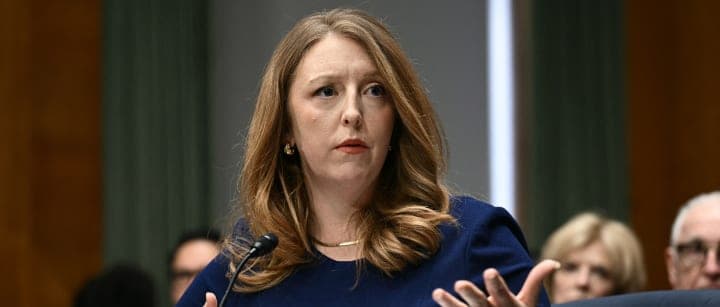
FactChecking Claims in Casey Means’ Surgeon General Confirmation Hearing
During her confirmation hearing to become surgeon general, Dr. Casey Means had various back-and-forths with senators, who pressed her on topics related to vaccines, her qualifications and disclosure of her conflicts of interest. Means was first nominated by President Donald Trump to be surgeon general in May. The president had scrapped his prior pick, Dr. Janette Nesheiwat, after she misled on where she obtained her medical degree. Means testified before the Senate Committee on Health, Education, Labor and Pensions on Feb. 25, after her scheduled October nomination hearing was postponed because she went into labor. Means, an ally of Health and Human Services Secretary Robert F. Kennedy Jr., has a medical degree but is not a practicing physician. In nominating Means, Trump cited her “impeccable ‘MAHA’ credentials” and said she would “work closely” with Kennedy. She is an author, wellness influencer and co-founder of the company Levels, which offers continuous glucose monitoring and other testing for people who sign up for a monthly membership. (For people without diabetes, there isn’t good evidence wearing these monitors improves health, and health insurance doesn’t cover these services.) Means has said in government filings she would divest her Levels stock and stock options if confirmed. We looked into the sometimes-dueling claims from Means and the senators: Senators from multiple parties asked Means about her beliefs on whether vaccines cause autism, correctly noting the extensive scientific literature that has not identified any such link. Means avoided directly sharing her views, instead misleadingly referencing rising autism rates and urging more research into the issue. Experts have said that it’s unclear how much of a true increase in autism there has been. Means said that “anti-vaccine rhetoric has never been a part of my message.” Vaccines are not her primary topic, but Means has made numerous public statements discouraging or questioning vaccines that have included incorrect or misleading information. Sen. Andy Kim, a Democrat from New Jersey, and Means disagreed over whether she doesn’t meet the requirements to be surgeon general because her medical license is inactive. A legal expert told us it’s an “open question” but it’s a break from precedent for a nominated physician to lack an active license. Democratic Sen. Chris Murphy of Connecticut said that Means had failed to disclose financial relationships with companies when promoting products as a wellness influencer, which Means denied. The exact timing of the payments relative to Means’ posts is uncertain, but an analysis by the nonprofit consumer advocacy group Public Citizen suggests “potential” violations of federal rules. The HELP committee includes 11 Democrats and 12 Republicans and is led by Republican Sen. Bill Cassidy of Louisiana, who has emphatically defended vaccination. Two Republicans said following the hearing they were uncertain about their votes to advance Means’ nomination to the full Senate, and Cassidy did not comment. The role of the surgeon general, according to the HHS website, is to be the “nation’s doctor” and to communicate the “best available scientific information” to the American people. The role requires leadership on addressing public health threats and advancing related science. The surgeon general also leads the Commissioned Corps of the U.S. Public Health Service, a branch of the uniformed services dedicated to protecting public health. Autism Means avoided directly answering questions about whether she believes vaccines cause autism, instead repeatedly referencing rising rates of the neurodevelopmental condition. A large variety of studies have looked into whether vaccines cause autism and found no connection, as we have written many times. Moreover, it’s unclear how much of a true increase in autism, if any, there has been. Early in the hearing, Cassidy asked Means whether she believed that “vaccines, whether individually or collectively, contribute to autism.” Means deflected, saying, “The reality is that we have an autism crisis that’s increasing, and this is devastating to many families, and we do not know as a medical community what causes autism.” She added that “until we have a clear understanding of why kids are developing this at higher rates, I think we should not leave any stones unturned.” Means testifies before the Senate Committee on Health, Education, Labor and Pensions on Feb. 25. Photo by Brendan Smialowski / AFP via Getty Images. Sen. Bernie Sanders, an independent from Vermont, later asked Means about whether vaccines cause autism. “We have a situation where autism is rising,” Means replied. “This is a huge problem.” She added: “I don’t think it’s responsible to say that we’re not going to study, when kids are getting many medications — I think it’s important to just keep it on the table.” In response to Democratic Sen. John Hickenlooper of Colorado, who asked a similar question, Means referred to the “childhood chronic disease epidemic and the rising rate of childhood neurodevelopmental diseases.” The number of people with an autism diagnosis has indeed increased substantially in recent decades. HHS Secretary Kennedy has long claimed there is an autism “epidemic” and invoked the need to find an “environmental toxin” causing the rise. But it’s not clear there is a true rise in the condition’s prevalence. Over time, the diagnostic criteria for autism has broadened to include less severe cases. Screening has also become routine; autism services and awareness have also increased. “It’s not impossible at all, that just these factors added all together might drive the increase entirely, without the need to invoke any other kinds of causal factors or an epidemic due to an environmental toxin,” Dr. Eric Fombonne, a professor emeritus of psychiatry at Oregon Health & Science University, told us for a prior article, referring to the factors that would affect autism diagnosis but not true prevalence. Other experts told us there has likely been some true increase, but not as great a rise as Kennedy has made it out to be. Cassidy further pressed Means, stating that “there’s been a lot of evidence” showing that vaccines are “not implicated” in autism. “Do you not accept that evidence?” he asked. Means acknowledged the research but again referred to the need for more study. “I do accept that evidence,” she said. “I also think that science is never settled.” Regardless of whether there has been an increase in the true prevalence of autism, many researchers are interested in further understanding the causes of the condition. Autism researchers have responded positively to $50 million in research projects the National Institutes of Health funded last fall, including efforts to better understand how environmental exposures — from pesticides to air pollution — combine with a person’s genetics to cause autism. However, researchers have also previously told us that calls for more research into vaccines and autism in particular can be harmful, as there has already been substantial investment into answering the question and it can distract from other priorities. Moreover, claims about the unsettled nature of science have long been used to mislead on the topic. Pediatrician and vaccine expert Dr. Paul Offit explained previously that anti-vaccine activists have long taken advantage of a “technicality in the scientific method” that it is not possible to prove a negative, using this strategy to “promote fear of vaccines despite overwhelming evidence” contradicting a link between vaccines and autism. Past Remarks on Vaccines In answering Sanders’ questions about vaccines, Means elided her past remarks on the topic. “Anti-vaccine rhetoric has never been a part of my message,” she said. “I don’t mention the word ‘vaccine’ in my book. This is not a part of my core message.” It’s true that her 2024 bestseller, “Good Energy,” does not discuss vaccines, and that overall, her comments are far more focused on nutrition and chronic disease. But Means has made numerous public statements discouraging or questioning vaccines that have included incorrect or misleading information. In a complete flip of her Senate remarks, she has previously touted her extensive record of criticizing vaccines. In an August 2024 post on X, Means called it “absolute insanity” to give a newborn the hepatitis B vaccine if the parents don’t have hepatitis B. She incorrectly added that the disease is “transmitted through needles and sex exclusively” so there is “no benefit” and “only risk” to getting vaccinated. She also called the shot an “unnecessary pharmaceutical.” “There is no benefit to the baby or the wider population for a child to get this vaccine who is not at risk for sexual or IV transmission. There is only risk,” she added. This is false. Hepatitis B is highly contagious and is transmitted via small amounts of blood. Babies and children can get the virus from caregivers, who may not know they are infected, through casual contact, such as by sharing contaminated washcloths, toothbrushes or pre-chewed food. While most pregnant women are screened for the virus, not everyone is tested, and there can be errors or delays in testing. As a result, a birth dose acts as a “safety net” to ensure babies born to mothers who are infected but aren’t known to be can remain virus-free. Moreover, there are no known serious risks of hepatitis B vaccination, other than extremely rare allergic reactions. Another senator, Democrat Angela Alsobrooks of Maryland, also noted during the hearing that Means had previously called the birth dose of the hepatitis B vaccine “a crime” on X. “That is not the full tweet,” Means replied. Alsobrooks then asked her how the vaccine could be “a crime.” “I support vaccines. I believe vaccines save lives. I believe they’re a key part of our public health strategy,” Means said, which were some of the strongest statements she said in support of vaccines during the hearing. “I also believe that this administration is committing to making sure we have the … safest vaccine schedule in the world and that we are continually studying the vaccine schedule, vaccine injuries, making sure we’re eradicating conflicts of interest in vaccine research and doing gold standard science on vaccines,” she continued. “These are all things that I support. And I think there’s a nuanced conversation that American families are looking to have about shared clinical decision-making with their doctors about specific vaccines that their children may not be as seriously at risk for. And I think that — that that is the nature and the thrust of my comments.” Means is correct that the “crime” statement was not her full post. But the rest of the post is hardly vaccine-positive. In the September 2024 post, Means was responding to the podcaster Shannon Joy, who was complaining that Means and her brother, Calley Means, who co-wrote Means’ book and is now a senior adviser to HHS, had not spoken forcefully enough against vaccines. “I’m flabbergasted, Shannon,” Means wrote. “The wild part to me is that on some of the largest platforms in the world I have spoken out against the current culture of vaccines. On Tucker (the second largest podcast in America) I said the hepatitis B vaccine at birth is a crime.” She went on to say that she had shared a particular Substack article and the work of Paul Thomas “to my newsletter of over 100,000 people and on social and we are working around the clock to get corruption out of the FDA (which is a lynchpin of actually making progress on vaccine safety), and supporting RFK who is a huge whistleblower about vaccines.” “I spoke on the record at the Senate about neurotoxin heavy metals in vaccines,” she added at the end. The Substack article, which Means has indeed shared on a number of occasions to her audience, is a post from J.B. Handley, an anti-vaccine activist. The post is paywalled, but claims “[i]nternational scientists have found autism’s cause” and appears to implicate vaccines — and in particular, aluminum. As we’ve written, after rigorous investigation, there is no evidence that the small amount of aluminum present in some vaccines to boost the immune response causes autism. And while there are some known genetic causes of autism, scientists do not think that autism has just one cause, nor have they discovered the causes yet. Paul Thomas is a prominent anti-vaccine pediatrician in Oregon who wrote a 2016 book promoting an alternative vaccine schedule that he falsely claims will prevent autism. In late 2022, Thomas surrendered his medical licence via a stipulated order following allegations of negligence and unprofessional conduct, some related to vaccination. Previously, the medical board had forbidden Thomas from discussing vaccine protocols with patients. Means recommended Thomas’ book on two occasions in her popular newsletter in September 2024. Means has responded similarly to others who have criticized her for not speaking enough about vaccines, at times calling the vaccine schedule “insane,” saying that she has called vaccine mandates “criminal,” and noting that she seeks out “vaccine safety experts like JB Handley and others to learn more.” In her Tucker Carlson podcast appearance in August 2024, Means did not actually use the words “a crime” to describe the hepatitis B vaccine birth dose. But she did speak skeptically of the need to vaccinate babies born to mothers who test negative for the hepatitis B virus and misleadingly suggested that certain vaccine components are unsafe. “Two of the handful of inactive ingredients are formaldehyde and aluminum, which is a neurotoxin,” she said of the hepatitis B vaccine, going on to suggest that it would be better for kids to get vaccinated as teenagers when “they’re much bigger and their bodies can handle more of these, you know, these chemicals and … toxins that are in these shots.” In a review of her past comments in interviews and on her website about vaccines, we found essentially no positive remarks about them (in one instance, she said that “in many cases” a vaccine “might be useful,” but then said there is “increasing scientific evidence that the current vaccine schedule may be causing harm to children”). Instead, she repeatedly suggested the shots could be dangerous because of their ingredients, and pointed to the seemingly high number of shots given to children (“70+ injected medications”) and the 1986 National Childhood Vaccine Injury Act, which gives partial immunity to vaccine makers. These are all well-known tactics of anti-vaccine activists that distort reality. There is no evidence that the previous vaccine schedule, which only might reach 70 or more shots if including annual flu and COVID-19 vaccines until age 18, is dangerous. Nor have any vaccine ingredients — as scary as they might sound — been shown to cause any serious harm. The NCVIA does not give immunity to vaccine makers in all instances, and in any case, this has little bearing on safety. Vaccines must still pass review by the Food and Drug Administration and are continually monitored for safety; vaccines that have been found to have serious safety concerns have been removed from the market. We reached out to Means for comment and to ask for examples of when she has spoken positively of vaccines, but we did not receive a reply. Qualifications to be Surgeon General Kim, the Democratic senator from New Jersey, raised questions about whether Means met the requirements to be the surgeon general due to having an inactive medical license. Dr. Jerome Adams, who was surgeon general during the first Trump administration, has contended that Means is required to have an active medical license to be surgeon general. Means replied that she has an unexpired medical license from Oregon, albeit one that is voluntarily inactive because she is not seeing patients. (Her website says it became inactive in January 2024.) She also said that Adm. Brian Christine, assistant secretary for health at the Department of Health and Human Services, “has testified that I’m eligible to serve in this role.” Doctors need a medical license to practice medicine, including prescribing medications and using other methods to diagnose, treat and prevent disease. Oregon defines an inactive license as being for physicians who do not practice in the state. Lawrence Gostin, a global health law professor at Georgetown University, told us it was an “open question” whether a surgeon general needs to have an active medical license. The law states that the surgeon general must be appointed from the Commissioned Corps of the U.S. Public Health Service. The Commissioned Corps website says that members of the Commissioned Corps are required to maintain “active and unrestricted licenses and certifications.” However, Gostin raised the possibility that this requirement might not apply to Means’ situation. “While having a medical license has been the historical tradition, the law is unclear whether it is actually required” to be surgeon general, he said. “I do not think the courts would insist on an active medical license from a person who was nominated by the President and confirmed by the Senate.” What is clear is that Means’ qualifications are a departure from past norms. Gostin said that he did not know of a past surgeon general who lacked an active medical license. He added that another requirement for a surgeon general is “specialized training or significant experience in public health programs,” which he said he does not believe Means has. Dr. Richard H. Carmona, surgeon general under President George W. Bush, wrote last spring after Means’ nomination that her qualifications, including her lack of an active license, “raise significant concerns” and that surgeons general historically have been “licensed physicians with deep clinical, scientific and operational credentials.” To be clear, the surgeon general could be a public health professional who is not a doctor. The acting surgeon general for a few months under former President Joe Biden was a nurse, for example, as was the acting surgeon general early in Trump’s first term. But according to our review, all non-acting surgeons general have been doctors. HHS spokesperson Andrew G. Nixon defended Means’ credentials, saying that they “give her the right insights” to be surgeon general. “Dr. Means is a licensed medical doctor who graduated with honors from Stanford University and held full-time biomedical research positions at the NIH, Stanford University School of Medicine, NYU, and Oregon Health and Science University, and served as a faculty lecturer at Stanford University,” he told us in an email, repeating qualifications Means had mentioned in her testimony. “She has published scientific peer-reviewed papers in major medical journals.” According to Oregon state records, Means graduated from Stanford with an M.D. before moving on to a medical residency in otolaryngology at Oregon Health and Science University. She did not complete residency, the standard path for people seeking jobs as practicing physicians, leaving in 2018. She was issued a full medical license in December 2018 and, according to her website, opened a functional medicine private practice the following year, offering a mixture of testing, coaching and classes. Functional medicine is not a medical specialty recognized by the American Board of Medical Specialties, but rather an approach that says it aims to address the “root cause” of disease. Means wrote on her website that she phased out her practice after starting a full-time role as a co-founder at the startup Levels in 2020. As for Means’ research positions, her current website lists work as a high schooler and summer undergraduate intern at the NIH and a stint as a research technician at NYU between college and medical school, as well as various research roles during her education at Stanford and OHSU. A May statement from Stanford says that Means taught classes in 2022 on food and health as a lecturer. Means is an author on a total of eight research papers listed on PubMed and her website, mainly related to otolaryngology and published in the course of her training. The most recent paper was published in 2019. The latest PubMed entry is a letter to the editor published in 2020. During her testimony, Means also said that she has “served as an associate editor of an international journal.” However, the International Journal of Disease Reversal and Prevention, where she has served as an editor, is not indexed on MEDLINE, a baseline standard indicating a journal has received some vetting. Alleged FTC Violations Murphy, the Democratic senator from Connecticut, brought up a Feb. 4 letter the nonprofit consumer advocacy group Public Citizen sent to the Federal Trade Commission asking it to investigate whether Means had violated FTC policies as a wellness influencer. Under current rules, influencers who are paid by companies must clearly disclose those financial relationships in each post. Means reported receiving more than $450,000 in compensation from sponsorship and affiliate deals between January 2024 and early August 2025, according to our review of her U.S. Office of Government Ethics financial disclosure report. Speaking of the alleged violations, and noting that the committee had verified the underlying data, Murphy told Means that the Public Citizen complaint found she “routinely violated” FTC policy. “In fact, in the majority of your posts for many of the products you recommend, you did not transparently reveal your financial connection,” he told her. “That’s false,” she replied. Murphy then gave an example involving a prenatal vitamin from WeNatal. He said that filings before the committee showed she had started to be compensated by the company in the spring of 2024, but in posts a few months later, she promoted products and specifically said she did not have a relationship with the company. “In any post where I said I am not receiving money, I had not been receiving money at that time,” Means said in response. “I’m happy to look at whatever documentation you’re talking about, but …. it’s incorrect and it’s a false representation.” She went on to emphasize that she had spent several months working with the OGE “to be fully compliant with this process,” adding that she takes it “very seriously.” When Murphy asked her to acknowledge that she did not disclose a financial relationship in “many” cases, Means replied, “I don’t think that’s true. … And if it has happened — if it inadvertently has happened — I would rectify that immediately,” adding that she takes conflicts of interest “incredibly seriously.” We are unable to referee the dispute with certainty, but will lay out the facts as they are known for context. We reached out to Means to ask her about these allegations, but did not receive a reply. Murphy’s comments are generally supported by the Public Citizen letter, which states that Means made disclosures “inconsistently and ambiguously.” According to its analysis of her posts, the group found that she had failed to disclose “79 out of 140 (56%) times she promoted affiliated products.” The products included supplements, meal kits, lab tests and basil seeds. Still, the letter does not claim that she definitely violated FTC policy. Instead, it refers to “potential” FTC violations. In its letter, Public Citizen explains that its analysis was based on a review of her Instagram, TikTok, newsletter and website posts for the same period covered by Means’ required OGE filings. “However, it is not possible to know [the] exact timing of her affiliate marketing arrangements vis-à-vis her posts based on the information that is publicly available,” the group wrote. Lacking that information, Public Citizen only counted instances without disclosure that came after Means has previously disclosed a relationship, for the companies listed on her financial disclosure report. “This methodology means that our estimated rate of failed disclosure is likely conservative,” the group wrote. The alleged examples of failure to disclose are documented in a publicly accessible spreadsheet. Separately, Democratic Sen. Tammy Baldwin of Wisconsin asked Means about her relationship with Genova Diagnostics, a functional medicine lab testing company that previously agreed to pay up to $43 million to settle allegations that it violated the False Claims Act. Baldwin noted that Means received $10,000 from the company and asked if she was aware of the settlement or the allegations when she began promoting the company’s tests. (Means’ disclosure twice lists $10,000 from Genova, for book tour and newsletter sponsorships. Genova was one of the lab companies Means had a financial relationship with but did not always disclose, according to Public Citizen’s analysis.) “Frankly, I was not familiar with that settlement,” Means said. “There’s a particular test that they make about nutrient quality that I find very compelling because I do think we need to understand a little bit more transparently about how the nutrients from our food are affecting our health. And I would just highlight that I have worked extremely closely with the Office of Government Ethics over the last several months and taken this process very seriously.” In April 2020, the Department of Justice announced that Genova had agreed to pay at least around $17 million — and as much as $43 million — to resolve allegations that it had billed Medicare and other federally supported health insurance for medically unnecessary lab tests, among other claims. The company has denied all allegations and any wrongdoing. One of the tests mentioned in the lawsuit is the company’s nutritional NutrEval test. The complaint alleged that there was insufficient evidence the test was medically necessary. Means has partnered with Genova to promote its Metabolomix+ test, which costs $475 and is an at-home version of the NutrEval test. In a July 2024 YouTube video, Means spent over an hour going over her Metabolomix+ test results with two Genova employees, whom she called her “dear friends.” She said that she had been an “admirer of and fan” and user of the company for “about six years” starting when she opened her functional medicine practice. “Genova was the first lab that I had a contract with,” Means said, adding that she “was really in love with specifically their nutritional testing, which is called NutrEval.” The video description includes a personalized discount code for the company’s tests but does not clearly state whether Means has a relationship with the company at the time. We don’t know the exact timing of the payments she received from Genova, but Genova did back Means’ book tour, which began a few months prior to the video. She also thanked the company for its support of her book’s launch in a social media post in June 2024. Editor’s note: FactCheck.org does not accept advertising. We rely on grants and individual donations from people like you. Please consider a donation. Credit card donations may be made through our “Donate” page. If you prefer to give by check, send to: FactCheck.org, Annenberg Public Policy Center, P.O. Box 58100, Philadelphia, PA 19102. The post FactChecking Claims in Casey Means’ Surgeon General Confirmation Hearing appeared first on FactCheck.org.
FactChecking Claims in Casey Means’ Surgeon General Confirmation Hearing
During her confirmation hearing to become surgeon general, Dr. Casey Means had various back-and-forths with senators, who pressed her on topics related to vaccines, her qualifications and disclosure of her conflicts of interest. Means was first nominated by President Donald Trump to be surgeon general in May. The president had scrapped his prior pick, Dr. Janette Nesheiwat, after she misled on where she obtained her medical degree. Means testified before the Senate Committee on Health, Education, Labor and Pensions on Feb. 25, after her scheduled October nomination hearing was postponed because she went into labor. Means, an ally of Health and Human Services Secretary Robert F. Kennedy Jr., has a medical degree but is not a practicing physician. In nominating Means, Trump cited her “impeccable ‘MAHA’ credentials” and said she would “work closely” with Kennedy. She is an author, wellness influencer and co-founder of the company Levels, which offers continuous glucose monitoring and other testing for people who sign up for a monthly membership. (For people without diabetes, there isn’t good evidence wearing these monitors improves health, and health insurance doesn’t cover these services.) Means has said in government filings she would divest her Levels stock and stock options if confirmed. We looked into the sometimes-dueling claims from Means and the senators: Senators from multiple parties asked Means about her beliefs on whether vaccines cause autism, correctly noting the extensive scientific literature that has not identified any such link. Means avoided directly sharing her views, instead misleadingly referencing rising autism rates and urging more research into the issue. Experts have said that it’s unclear how much of a true increase in autism there has been. Means said that “anti-vaccine rhetoric has never been a part of my message.” Vaccines are not her primary topic, but Means has made numerous public statements discouraging or questioning vaccines that have included incorrect or misleading information. Sen. Andy Kim, a Democrat from New Jersey, and Means disagreed over whether she doesn’t meet the requirements to be surgeon general because her medical license is inactive. A legal expert told us it’s an “open question” but it’s a break from precedent for a nominated physician to lack an active license. Democratic Sen. Chris Murphy of Connecticut said that Means had failed to disclose financial relationships with companies when promoting products as a wellness influencer, which Means denied. The exact timing of the payments relative to Means’ posts is uncertain, but an analysis by the nonprofit consumer advocacy group Public Citizen suggests “potential” violations of federal rules. The HELP committee includes 11 Democrats and 12 Republicans and is led by Republican Sen. Bill Cassidy of Louisiana, who has emphatically defended vaccination. Two Republicans said following the hearing they were uncertain about their votes to advance Means’ nomination to the full Senate, and Cassidy did not comment. The role of the surgeon general, according to the HHS website, is to be the “nation’s doctor” and to communicate the “best available scientific information” to the American people. The role requires leadership on addressing public health threats and advancing related science. The surgeon general also leads the Commissioned Corps of the U.S. Public Health Service, a branch of the uniformed services dedicated to protecting public health. Autism Means avoided directly answering questions about whether she believes vaccines cause autism, instead repeatedly referencing rising rates of the neurodevelopmental condition. A large variety of studies have looked into whether vaccines cause autism and found no connection, as we have written many times. Moreover, it’s unclear how much of a true increase in autism, if any, there has been. Early in the hearing, Cassidy asked Means whether she believed that “vaccines, whether individually or collectively, contribute to autism.” Means deflected, saying, “The reality is that we have an autism crisis that’s increasing, and this is devastating to many families, and we do not know as a medical community what causes autism.” She added that “until we have a clear understanding of why kids are developing this at higher rates, I think we should not leave any stones unturned.” Means testifies before the Senate Committee on Health, Education, Labor and Pensions on Feb. 25. Photo by Brendan Smialowski / AFP via Getty Images. Sen. Bernie Sanders, an independent from Vermont, later asked Means about whether vaccines cause autism. “We have a situation where autism is rising,” Means replied. “This is a huge problem.” She added: “I don’t think it’s responsible to say that we’re not going to study, when kids are getting many medications — I think it’s important to just keep it on the table.” In response to Democratic Sen. John Hickenlooper of Colorado, who asked a similar question, Means referred to the “childhood chronic disease epidemic and the rising rate of childhood neurodevelopmental diseases.” The number of people with an autism diagnosis has indeed increased substantially in recent decades. HHS Secretary Kennedy has long claimed there is an autism “epidemic” and invoked the need to find an “environmental toxin” causing the rise. But it’s not clear there is a true rise in the condition’s prevalence. Over time, the diagnostic criteria for autism has broadened to include less severe cases. Screening has also become routine; autism services and awareness have also increased. “It’s not impossible at all, that just these factors added all together might drive the increase entirely, without the need to invoke any other kinds of causal factors or an epidemic due to an environmental toxin,” Dr. Eric Fombonne, a professor emeritus of psychiatry at Oregon Health & Science University, told us for a prior article, referring to the factors that would affect autism diagnosis but not true prevalence. Other experts told us there has likely been some true increase, but not as great a rise as Kennedy has made it out to be. Cassidy further pressed Means, stating that “there’s been a lot of evidence” showing that vaccines are “not implicated” in autism. “Do you not accept that evidence?” he asked. Means acknowledged the research but again referred to the need for more study. “I do accept that evidence,” she said. “I also think that science is never settled.” Regardless of whether there has been an increase in the true prevalence of autism, many researchers are interested in further understanding the causes of the condition. Autism researchers have responded positively to $50 million in research projects the National Institutes of Health funded last fall, including efforts to better understand how environmental exposures — from pesticides to air pollution — combine with a person’s genetics to cause autism. However, researchers have also previously told us that calls for more research into vaccines and autism in particular can be harmful, as there has already been substantial investment into answering the question and it can distract from other priorities. Moreover, claims about the unsettled nature of science have long been used to mislead on the topic. Pediatrician and vaccine expert Dr. Paul Offit explained previously that anti-vaccine activists have long taken advantage of a “technicality in the scientific method” that it is not possible to prove a negative, using this strategy to “promote fear of vaccines despite overwhelming evidence” contradicting a link between vaccines and autism. Past Remarks on Vaccines In answering Sanders’ questions about vaccines, Means elided her past remarks on the topic. “Anti-vaccine rhetoric has never been a part of my message,” she said. “I don’t mention the word ‘vaccine’ in my book. This is not a part of my core message.” It’s true that her 2024 bestseller, “Good Energy,” does not discuss vaccines, and that overall, her comments are far more focused on nutrition and chronic disease. But Means has made numerous public statements discouraging or questioning vaccines that have included incorrect or misleading information. In a complete flip of her Senate remarks, she has previously touted her extensive record of criticizing vaccines. In an August 2024 post on X, Means called it “absolute insanity” to give a newborn the hepatitis B vaccine if the parents don’t have hepatitis B. She incorrectly added that the disease is “transmitted through needles and sex exclusively” so there is “no benefit” and “only risk” to getting vaccinated. She also called the shot an “unnecessary pharmaceutical.” “There is no benefit to the baby or the wider population for a child to get this vaccine who is not at risk for sexual or IV transmission. There is only risk,” she added. This is false. Hepatitis B is highly contagious and is transmitted via small amounts of blood. Babies and children can get the virus from caregivers, who may not know they are infected, through casual contact, such as by sharing contaminated washcloths, toothbrushes or pre-chewed food. While most pregnant women are screened for the virus, not everyone is tested, and there can be errors or delays in testing. As a result, a birth dose acts as a “safety net” to ensure babies born to mothers who are infected but aren’t known to be can remain virus-free. Moreover, there are no known serious risks of hepatitis B vaccination, other than extremely rare allergic reactions. Another senator, Democrat Angela Alsobrooks of Maryland, also noted during the hearing that Means had previously called the birth dose of the hepatitis B vaccine “a crime” on X. “That is not the full tweet,” Means replied. Alsobrooks then asked her how the vaccine could be “a crime.” “I support vaccines. I believe vaccines save lives. I believe they’re a key part of our public health strategy,” Means said, which were some of the strongest statements she said in support of vaccines during the hearing. “I also believe that this administration is committing to making sure we have the … safest vaccine schedule in the world and that we are continually studying the vaccine schedule, vaccine injuries, making sure we’re eradicating conflicts of interest in vaccine research and doing gold standard science on vaccines,” she continued. “These are all things that I support. And I think there’s a nuanced conversation that American families are looking to have about shared clinical decision-making with their doctors about specific vaccines that their children may not be as seriously at risk for. And I think that — that that is the nature and the thrust of my comments.” Means is correct that the “crime” statement was not her full post. But the rest of the post is hardly vaccine-positive. In the September 2024 post, Means was responding to the podcaster Shannon Joy, who was complaining that Means and her brother, Calley Means, who co-wrote Means’ book and is now a senior adviser to HHS, had not spoken forcefully enough against vaccines. “I’m flabbergasted, Shannon,” Means wrote. “The wild part to me is that on some of the largest platforms in the world I have spoken out against the current culture of vaccines. On Tucker (the second largest podcast in America) I said the hepatitis B vaccine at birth is a crime.” She went on to say that she had shared a particular Substack article and the work of Paul Thomas “to my newsletter of over 100,000 people and on social and we are working around the clock to get corruption out of the FDA (which is a lynchpin of actually making progress on vaccine safety), and supporting RFK who is a huge whistleblower about vaccines.” “I spoke on the record at the Senate about neurotoxin heavy metals in vaccines,” she added at the end. The Substack article, which Means has indeed shared on a number of occasions to her audience, is a post from J.B. Handley, an anti-vaccine activist. The post is paywalled, but claims “[i]nternational scientists have found autism’s cause” and appears to implicate vaccines — and in particular, aluminum. As we’ve written, after rigorous investigation, there is no evidence that the small amount of aluminum present in some vaccines to boost the immune response causes autism. And while there are some known genetic causes of autism, scientists do not think that autism has just one cause, nor have they discovered the causes yet. Paul Thomas is a prominent anti-vaccine pediatrician in Oregon who wrote a 2016 book promoting an alternative vaccine schedule that he falsely claims will prevent autism. In late 2022, Thomas surrendered his medical licence via a stipulated order following allegations of negligence and unprofessional conduct, some related to vaccination. Previously, the medical board had forbidden Thomas from discussing vaccine protocols with patients. Means recommended Thomas’ book on two occasions in her popular newsletter in September 2024. Means has responded similarly to others who have criticized her for not speaking enough about vaccines, at times calling the vaccine schedule “insane,” saying that she has called vaccine mandates “criminal,” and noting that she seeks out “vaccine safety experts like JB Handley and others to learn more.” In her Tucker Carlson podcast appearance in August 2024, Means did not actually use the words “a crime” to describe the hepatitis B vaccine birth dose. But she did speak skeptically of the need to vaccinate babies born to mothers who test negative for the hepatitis B virus and misleadingly suggested that certain vaccine components are unsafe. “Two of the handful of inactive ingredients are formaldehyde and aluminum, which is a neurotoxin,” she said of the hepatitis B vaccine, going on to suggest that it would be better for kids to get vaccinated as teenagers when “they’re much bigger and their bodies can handle more of these, you know, these chemicals and … toxins that are in these shots.” In a review of her past comments in interviews and on her website about vaccines, we found essentially no positive remarks about them (in one instance, she said that “in many cases” a vaccine “might be useful,” but then said there is “increasing scientific evidence that the current vaccine schedule may be causing harm to children”). Instead, she repeatedly suggested the shots could be dangerous because of their ingredients, and pointed to the seemingly high number of shots given to children (“70+ injected medications”) and the 1986 National Childhood Vaccine Injury Act, which gives partial immunity to vaccine makers. These are all well-known tactics of anti-vaccine activists that distort reality. There is no evidence that the previous vaccine schedule, which only might reach 70 or more shots if including annual flu and COVID-19 vaccines until age 18, is dangerous. Nor have any vaccine ingredients — as scary as they might sound — been shown to cause any serious harm. The NCVIA does not give immunity to vaccine makers in all instances, and in any case, this has little bearing on safety. Vaccines must still pass review by the Food and Drug Administration and are continually monitored for safety; vaccines that have been found to have serious safety concerns have been removed from the market. We reached out to Means for comment and to ask for examples of when she has spoken positively of vaccines, but we did not receive a reply. Qualifications to be Surgeon General Kim, the Democratic senator from New Jersey, raised questions about whether Means met the requirements to be the surgeon general due to having an inactive medical license. Dr. Jerome Adams, who was surgeon general during the first Trump administration, has contended that Means is required to have an active medical license to be surgeon general. Means replied that she has an unexpired medical license from Oregon, albeit one that is voluntarily inactive because she is not seeing patients. (Her website says it became inactive in January 2024.) She also said that Adm. Brian Christine, assistant secretary for health at the Department of Health and Human Services, “has testified that I’m eligible to serve in this role.” Doctors need a medical license to practice medicine, including prescribing medications and using other methods to diagnose, treat and prevent disease. Oregon defines an inactive license as being for physicians who do not practice in the state. Lawrence Gostin, a global health law professor at Georgetown University, told us it was an “open question” whether a surgeon general needs to have an active medical license. The law states that the surgeon general must be appointed from the Commissioned Corps of the U.S. Public Health Service. The Commissioned Corps website says that members of the Commissioned Corps are required to maintain “active and unrestricted licenses and certifications.” However, Gostin raised the possibility that this requirement might not apply to Means’ situation. “While having a medical license has been the historical tradition, the law is unclear whether it is actually required” to be surgeon general, he said. “I do not think the courts would insist on an active medical license from a person who was nominated by the President and confirmed by the Senate.” What is clear is that Means’ qualifications are a departure from past norms. Gostin said that he did not know of a past surgeon general who lacked an active medical license. He added that another requirement for a surgeon general is “specialized training or significant experience in public health programs,” which he said he does not believe Means has. Dr. Richard H. Carmona, surgeon general under President George W. Bush, wrote last spring after Means’ nomination that her qualifications, including her lack of an active license, “raise significant concerns” and that surgeons general historically have been “licensed physicians with deep clinical, scientific and operational credentials.” To be clear, the surgeon general could be a public health professional who is not a doctor. The acting surgeon general for a few months under former President Joe Biden was a nurse, for example, as was the acting surgeon general early in Trump’s first term. But according to our review, all non-acting surgeons general have been doctors. HHS spokesperson Andrew G. Nixon defended Means’ credentials, saying that they “give her the right insights” to be surgeon general. “Dr. Means is a licensed medical doctor who graduated with honors from Stanford University and held full-time biomedical research positions at the NIH, Stanford University School of Medicine, NYU, and Oregon Health and Science University, and served as a faculty lecturer at Stanford University,” he told us in an email, repeating qualifications Means had mentioned in her testimony. “She has published scientific peer-reviewed papers in major medical journals.” According to Oregon state records, Means graduated from Stanford with an M.D. before moving on to a medical residency in otolaryngology at Oregon Health and Science University. She did not complete residency, the standard path for people seeking jobs as practicing physicians, leaving in 2018. She was issued a full medical license in December 2018 and, according to her website, opened a functional medicine private practice the following year, offering a mixture of testing, coaching and classes. Functional medicine is not a medical specialty recognized by the American Board of Medical Specialties, but rather an approach that says it aims to address the “root cause” of disease. Means wrote on her website that she phased out her practice after starting a full-time role as a co-founder at the startup Levels in 2020. As for Means’ research positions, her current website lists work as a high schooler and summer undergraduate intern at the NIH and a stint as a research technician at NYU between college and medical school, as well as various research roles during her education at Stanford and OHSU. A May statement from Stanford says that Means taught classes in 2022 on food and health as a lecturer. Means is an author on a total of eight research papers listed on PubMed and her website, mainly related to otolaryngology and published in the course of her training. The most recent paper was published in 2019. The latest PubMed entry is a letter to the editor published in 2020. During her testimony, Means also said that she has “served as an associate editor of an international journal.” However, the International Journal of Disease Reversal and Prevention, where she has served as an editor, is not indexed on MEDLINE, a baseline standard indicating a journal has received some vetting. Alleged FTC Violations Murphy, the Democratic senator from Connecticut, brought up a Feb. 4 letter the nonprofit consumer advocacy group Public Citizen sent to the Federal Trade Commission asking it to investigate whether Means had violated FTC policies as a wellness influencer. Under current rules, influencers who are paid by companies must clearly disclose those financial relationships in each post. Means reported receiving more than $450,000 in compensation from sponsorship and affiliate deals between January 2024 and early August 2025, according to our review of her U.S. Office of Government Ethics financial disclosure report. Speaking of the alleged violations, and noting that the committee had verified the underlying data, Murphy told Means that the Public Citizen complaint found she “routinely violated” FTC policy. “In fact, in the majority of your posts for many of the products you recommend, you did not transparently reveal your financial connection,” he told her. “That’s false,” she replied. Murphy then gave an example involving a prenatal vitamin from WeNatal. He said that filings before the committee showed she had started to be compensated by the company in the spring of 2024, but in posts a few months later, she promoted products and specifically said she did not have a relationship with the company. “In any post where I said I am not receiving money, I had not been receiving money at that time,” Means said in response. “I’m happy to look at whatever documentation you’re talking about, but …. it’s incorrect and it’s a false representation.” She went on to emphasize that she had spent several months working with the OGE “to be fully compliant with this process,” adding that she takes it “very seriously.” When Murphy asked her to acknowledge that she did not disclose a financial relationship in “many” cases, Means replied, “I don’t think that’s true. … And if it has happened — if it inadvertently has happened — I would rectify that immediately,” adding that she takes conflicts of interest “incredibly seriously.” We are unable to referee the dispute with certainty, but will lay out the facts as they are known for context. We reached out to Means to ask her about these allegations, but did not receive a reply. Murphy’s comments are generally supported by the Public Citizen letter, which states that Means made disclosures “inconsistently and ambiguously.” According to its analysis of her posts, the group found that she had failed to disclose “79 out of 140 (56%) times she promoted affiliated products.” The products included supplements, meal kits, lab tests and basil seeds. Still, the letter does not claim that she definitely violated FTC policy. Instead, it refers to “potential” FTC violations. In its letter, Public Citizen explains that its analysis was based on a review of her Instagram, TikTok, newsletter and website posts for the same period covered by Means’ required OGE filings. “However, it is not possible to know [the] exact timing of her affiliate marketing arrangements vis-à-vis her posts based on the information that is publicly available,” the group wrote. Lacking that information, Public Citizen only counted instances without disclosure that came after Means has previously disclosed a relationship, for the companies listed on her financial disclosure report. “This methodology means that our estimated rate of failed disclosure is likely conservative,” the group wrote. The alleged examples of failure to disclose are documented in a publicly accessible spreadsheet. Separately, Democratic Sen. Tammy Baldwin of Wisconsin asked Means about her relationship with Genova Diagnostics, a functional medicine lab testing company that previously agreed to pay up to $43 million to settle allegations that it violated the False Claims Act. Baldwin noted that Means received $10,000 from the company and asked if she was aware of the settlement or the allegations when she began promoting the company’s tests. (Means’ disclosure twice lists $10,000 from Genova, for book tour and newsletter sponsorships. Genova was one of the lab companies Means had a financial relationship with but did not always disclose, according to Public Citizen’s analysis.) “Frankly, I was not familiar with that settlement,” Means said. “There’s a particular test that they make about nutrient quality that I find very compelling because I do think we need to understand a little bit more transparently about how the nutrients from our food are affecting our health. And I would just highlight that I have worked extremely closely with the Office of Government Ethics over the last several months and taken this process very seriously.” In April 2020, the Department of Justice announced that Genova had agreed to pay at least around $17 million — and as much as $43 million — to resolve allegations that it had billed Medicare and other federally supported health insurance for medically unnecessary lab tests, among other claims. The company has denied all allegations and any wrongdoing. One of the tests mentioned in the lawsuit is the company’s nutritional NutrEval test. The complaint alleged that there was insufficient evidence the test was medically necessary. Means has partnered with Genova to promote its Metabolomix+ test, which costs $475 and is an at-home version of the NutrEval test. In a July 2024 YouTube video, Means spent over an hour going over her Metabolomix+ test results with two Genova employees, whom she called her “dear friends.” She said that she had been an “admirer of and fan” and user of the company for “about six years” starting when she opened her functional medicine practice. “Genova was the first lab that I had a contract with,” Means said, adding that she “was really in love with specifically their nutritional testing, which is called NutrEval.” The video description includes a personalized discount code for the company’s tests but does not clearly state whether Means has a relationship with the company at the time. We don’t know the exact timing of the payments she received from Genova, but Genova did back Means’ book tour, which began a few months prior to the video. She also thanked the company for its support of her book’s launch in a social media post in June 2024. Editor’s note: FactCheck.org does not accept advertising. We rely on grants and individual donations from people like you. Please consider a donation. Credit card donations may be made through our “Donate” page. If you prefer to give by check, send to: FactCheck.org, Annenberg Public Policy Center, P.O. Box 58100, Philadelphia, PA 19102. The post FactChecking Claims in Casey Means’ Surgeon General Confirmation Hearing appeared first on FactCheck.org.