Egypt Independent
egyptindependent.com
1 story credited to Egypt Independent
1 story on egyptindependent.com credited to other publishers
Latest story Apr 15, 2026 · on ChamberLight since Apr 2026
A story can appear as several articles (copies of the same piece), so counts of stories and of articles differ.
Scores for Egypt Independent
Scores last checked Sep 25, 2026.
Articles this site reproduces
How provenance is decidedOriginal publishers of articles on egyptindependent.com
Counted from articles on egyptindependent.com whose original publisher is verified from the page itself or confirmed by an independent signal.
Stories ChamberLight collected, by month
Stories credited to Egypt Independent, by publication date. ChamberLight collects articles that mention the officials it tracks, so this shows its own coverage of this source, not how much the source publishes.
- Stories from Egypt Independent
- Shaded: ChamberLight collected no stories, or almost none, from any outlet (a gap in its collection, not in the outlet’s publishing)
Show as a table
| Month | Stories | All outlets |
|---|---|---|
| April 2026 | 1 | 2,577 |
| May 2026 | 0 | none collected |
| June 2026 | 0 | none collected |
| July 2026 | 0 | none collected |
| August 2026 | 0 | 1 (collection gap) |
| September 2026 | 0 | 1,320 |
Top topics
Share of this source’s stories tagged with each topic. A story can carry several topics, so the shares do not add up to 100%.
- Defense/Military1
100% of 1 stories · 25% across all outlets
- Economy1
100% of 1 stories · 26% across all outlets
- Foreign Policy1
100% of 1 stories · 29% across all outlets
The thin mark on each bar is the topic’s share across all outlets.
Who they cover
Party of the officials these stories are mainly about, across all 1 officials named. A story counts once for each official it is mainly about, so the split is over 1 story–official pair, from 1 story.
- Republican100% · 1 pair
Most covered
Stories mainly about each official, and their share of the source’s 1 story.
Article tone
ChamberLight’s article analysis assigns each story a tone toward the official it covers. It describes the coverage of that official, not Egypt Independent’s stance, and reader votes do not change it. 1 story.
- Good Look
- 0 (0%)
- Mixed
- 1 (100%)
- Informational
- 0 (0%)
- Bad Look
- 0 (0%)
Challenges to these scores
No one has challenged a score on this page yet. Anyone can; editors publish every outcome here.
Articles served from egyptindependent.com
3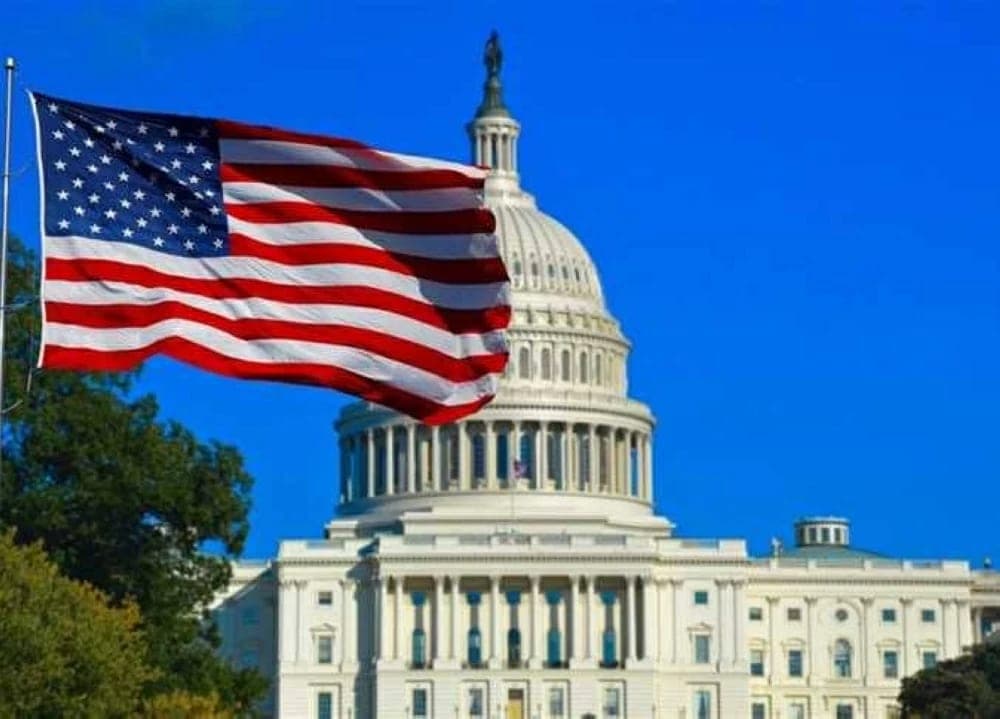
FM lauds strategic partnership with US during meeting with US House majority leader
Minister of Foreign Affairs, International Cooperation and Egyptian Expatriates Badr Abdelatty praised the strong strategic partnership between Egypt and the US during his meeting with Republican Majority Leader in the US House of Representatives Steve Scalise. He emphasized that this partnership serves as a fundamental pillar for supporting security, stability and development in the Middle East. The meeting took place as part of Abdelatty’s meetings with members of US Congress during his current visit to Washington. Abdelatty expressed Egypt’s aspiration to further advance bilateral cooperation across various fields, including political, economic, trade and investment sectors. Meanwhile, Representative Scalise lauded Egypt’s leadership role in promoting peace in the Middle East and strengthening the strategic partnership between the two countries. He also commended the distinguished relations between Egypt and the US, highlighting Egypt’s pivotal role in supporting regional security and stability. The discussions addressed recent regional developments amid the ongoing crisis in the region. Abdelatty reviewed Egypt’s intensive efforts to achieve regional stability through active communication with various parties, in coordination with regional partners, to advance de-escalation, reduce tensions, and contain the crisis. He stressed that negotiations remain the optimal path toward resolving the current conflict. The two sides also discussed a number of regional issues, including developments related to the Palestinian cause and the situation in Lebanon. Abdelatty outlined the key parameters of Egypt’s position regarding developments in the Gaza Strip and the West Bank as well as Israeli actions in Lebanon. The post FM lauds strategic partnership with US during meeting with US House majority leader appeared first on Egypt Independent.
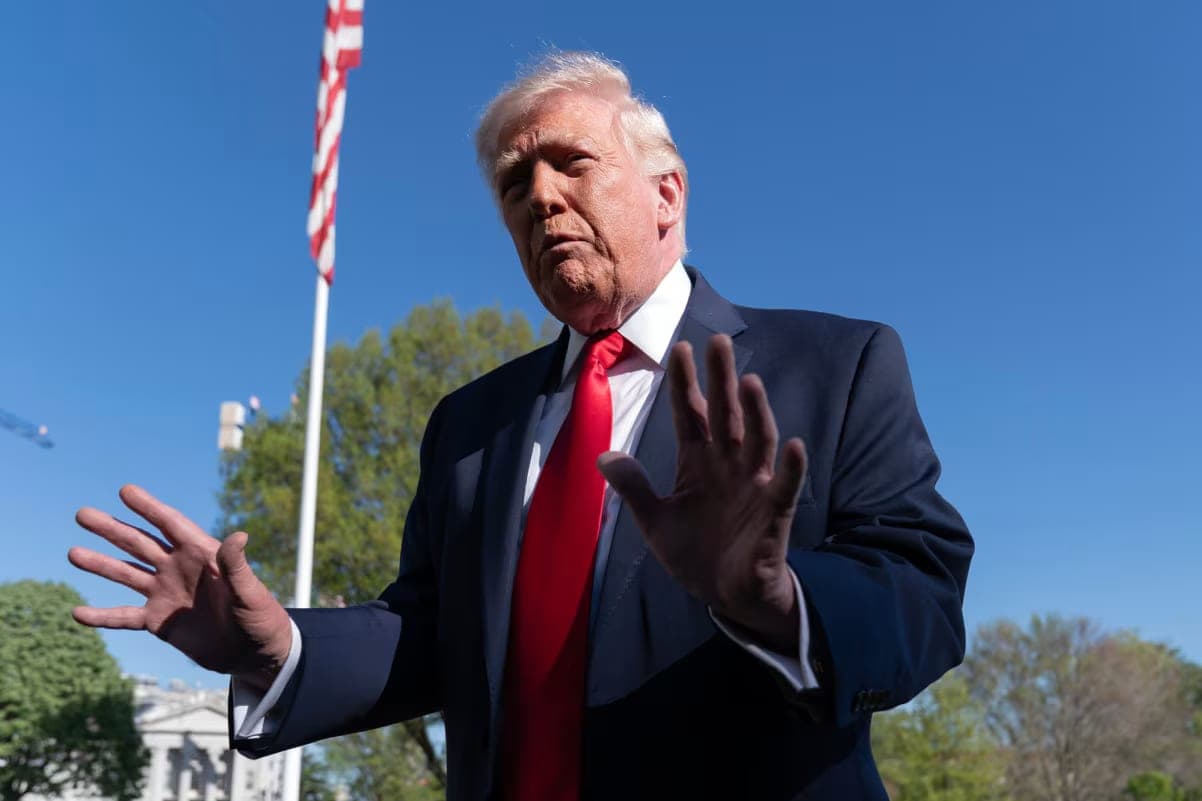
Trump’s strait blockade risks another serious blow to the global economy
The failure of US-Iran peace talks leaves President Donald Trump with a set of unattractive options that are unlikely to hand him a decisive or swift victory. But he’s doubling down with a plan to impose a blockade on the Strait of Hormuz that comes with its own risks of serious and unforeseen consequences. The administration’s depiction of weekend talks in Islamabad, Pakistan, suggested it was hoping to win capitulation from Iran on demands including a promise not to seek nuclear weapons and the reopening of the strait. But Iran is refusing to cede this critical leverage and doesn’t accept the US claim that it’s already lost the war. The result is a deadlock that challenges one of Trump’s core beliefs: that US military might will bend all adversaries to his will. So Trump is now under pressure to narrow Iran’s options. He told reporters Sunday evening that he ordered the US military to enforce a blockade on the strait from 10 a.m. ET. The idea is to strangle Iran’s oil revenues and collapse its economy. The measure is also designed to frustrate Tehran’s plan to raise revenues by charging safe passage for oil tankers in the vital waterway. Trump’s plan could certainly be disastrous for Iran’s economy, already devastated by years of sanctions and the new war. But it also threatens to worsen the war’s economic impact on the US and global economies. Oil prices immediately spiked again on news of the blockade, with the price of a barrel of Brent crude rising 8% to $104. This reaction will test Trump’s resolve, since Americans are already frustrated by high prices for food and housing and are now paying more than $4 a gallon on average for gasoline. Rising oil prices helped spike the inflation rate up to 3.3% in March from 2.4% in February and are having a negative impact throughout the economy. Trump acknowledged in an interview with Fox News’ Maria Bartiromo earlier Sunday that gas prices could be “the same or maybe a little bit higher” by the midterm elections. The Callisto tanker sits anchored in the Strait of Hormuz in Muscat, Oman, on March 10. Benoit Tessier/Reuters The president also explained the blockade in his Fox News interview. But he did little to clarify how it would work. “It’s called all in, all out. Yes, it’s called all in and all out,” Trump said. “There will be a time when we will have them all come in and all come out,” Trump added, referring to hundreds of oil tankers stranded in the Persian Gulf. “But it won’t be a percentage. It won’t be a friend of yours, like a country that’s your ally or a country that’s your friend. It’s all or nothing. And that won’t be in too long a distance.” US Central Command said Sunday the blockade would be enforced on all traffic entering and exiting Iranian ports. “CENTCOM forces will not impede freedom of navigation for vessels transiting the Strait of Hormuz to and from non-Iranian ports,” it said in a post on X. A lot of bad options The United States and Iran each left their marathon talks in Pakistan accusing the other of inflexibility. The impasse immediately raised doubts about the durability of a two-week ceasefire that began last week. But Trump told reporters Sunday that it was “holding well.” The plan to blockade the strait will bring its own risks. But Trump’s other options are bad. The president could recommit to the relentless US and Israeli bombing campaign, but it’s unclear whether redoubling an onslaught that has already devastated Iran’s military and industrial complex will make its leaders more likely to cave. Should Trump follow through on a chilling threat to take out power plants and bridges, he could hurt the civilians he once vowed to help and risk Iranian reprisals against US allies, raising the war’s already-steep costs. And any attempt by Trump to leave the region after declaring US military goals complete would be undermined by Iran’s stranglehold on the strait — a vital global oil exporting choke point — and its retention of its enriched uranium stockpile. Trump has no choice but to try to open the strait Former US Ambassador to the UN Nikki Haley said Trump had no choice but to try to open the strait. “If we did not do anything to stop them, not only would they have leverage; they would have even more money than they had before to funnel money to their proxies, even more money to buy supplies for ballistic missiles and continue their nuclear production,” Haley told CNN’s Dana Bash on “State of the Union” on Sunday. The Port of Kharg Island Oil Terminal in Iran on March 12, 2017. Fatemeh Bahrami/Anadolu Agency/Getty Images/File The president’s idea of blockading the strait might be a way of testing Iran’s control over the waterway without the high-risk move of committing US ground troops to attack shore-based missile facilities, which could lead to American casualties. But the operation might also make US ships more vulnerable to Iranian attacks. Blocking the strait would also raise the risks of diplomatic confrontations with large powers such as China if the US sought to halt any of their vessels transiting the strait. Trump has invested substantial political capital in his summit next month with Chinese leader Xi Jinping, which has already been postponed once because of the war. A US blockade halting all ships that agreed to Iran’s terms of passage might also harm allies like Japan and those in Europe that Trump has already alienated with the war and which rely heavily on Gulf oil supplies. Small wonder that some Trump critics doubt his latest attempt to wrest control of the war will work, seeing it as another example of erratic leadership featuring shifting rationales for the conflict, grave threats and climb downs. “I don’t understand how blockading the strait is going to somehow push the Iranians into opening it. I don’t get the connection there,” Sen. Mark Warner, a Virginia Democrat, said on “State of the Union.” White House explains how the Iran talks foundered The White House on Sunday listed the US demands that Iran refused to accept. They included an end to all uranium enrichment and the dismantling of nuclear facilities damaged during US raids last year. To forestall future development of nuclear programs, the administration wants to ensure the retrieval of more than 400 kilograms of highly enriched uranium believed to be buried in the wreckage of Iran’s nuclear facilities. US and Israeli war aims also include thwarting of Iran’s regional threat, which it’s imposed for years through a network of proxy radical groups. Vice President JD Vance, leading the US delegation, therefore asked the Iranians to end funding for Hamas, Hezbollah and the Houthis in Yemen. In what he said was Washington’s “final and best offer,” he included a demand for the opening of the strait for toll-free navigation. Vice President JD Vance speaks during a news conference after meeting with representatives from Pakistan and Iran in Islamabad on April 12. Jacquelyn Martin/Pool/AFP/Getty Images From a US perspective, these are all reasonable strategic demands. But it’s arguable whether the war has advanced Trump’s capacity to deliver them. Iran’s rejection of US demands raises the question of exactly what Washington has achieved strategically in six weeks of war. Iran’s position is little changed since talks the US broke off before launching the conflict. And it now has a new point of leverage — its control of the strait. Iran is accusing Washington of being inflexible, and its intransigence seems to give Trump no option but to consider more military action. Iranian negotiator and Speaker of Parliament Mohammad Bagher Ghalibaf said it’s up to the US to respond to what he described as constructive proposals. “America understood our logic and principles, and now it is time for it to decide whether it can gain our trust or not,” he said. For economic and political reasons, as well as strategic ones, the administration is under increasing pressure to end the war quickly — a factor likely playing into the calculations of a blockade of the strait. Iran’s defiance is again challenging administration claims that the war is an unqualified success and that thousands of missile and air strikes have destroyed Tehran’s navy and air defenses; exacted a harsh toll on its military; and eliminated layers of the Islamic Republic’s senior leadership. Vice President JD Vance meets with Pakistani Prime Minister Shehbaz Sharif on April 11 in Islamabad. Jacquelyn Martin/Pool/AP A war that Trump had hoped would be quick and decisive is dragging on with no end in sight. The economic damage is huge and growing — bad news for the president’s eroded approval ratings. Trump’s fury that US European allies refused to join a war they were not informed about in advance and did not want has meanwhile caused new splits in NATO. It is too soon to make definitive judgments on whether the war will reshape Iranian politics. But a regime that brutally represses its people has survived after defying US and Israeli military might, and it continues to threaten US Gulf allies. The proposed blockade is Trump’s latest attempt to disprove the maxim that foreign wars are easy for presidents to start and hard for them to stop. But even if it works, it will come with heavy costs that reflect the many consequences Trump failed to foresee. This story has been updated with additional information. The post Trump’s strait blockade risks another serious blow to the global economy appeared first on Egypt Independent.
Trump’s strait blockade risks another serious blow to the global economy
The failure of US-Iran peace talks leaves President Donald Trump with a set of unattractive options that are unlikely to hand him a decisive or swift victory. But he’s doubling down with a plan to impose a blockade on the Strait of Hormuz that comes with its own risks of serious and unforeseen consequences. The administration’s depiction of weekend talks in Islamabad, Pakistan, suggested it was hoping to win capitulation from Iran on demands including a promise not to seek nuclear weapons and the reopening of the strait. But Iran is refusing to cede this critical leverage and doesn’t accept the US claim that it’s already lost the war. The result is a deadlock that challenges one of Trump’s core beliefs: that US military might will bend all adversaries to his will. So Trump is now under pressure to narrow Iran’s options. He told reporters Sunday evening that he ordered the US military to enforce a blockade on the strait from 10 a.m. ET. The idea is to strangle Iran’s oil revenues and collapse its economy. The measure is also designed to frustrate Tehran’s plan to raise revenues by charging safe passage for oil tankers in the vital waterway. Trump’s plan could certainly be disastrous for Iran’s economy, already devastated by years of sanctions and the new war. But it also threatens to worsen the war’s economic impact on the US and global economies. Oil prices immediately spiked again on news of the blockade, with the price of a barrel of Brent crude rising 8% to $104. This reaction will test Trump’s resolve, since Americans are already frustrated by high prices for food and housing and are now paying more than $4 a gallon on average for gasoline. Rising oil prices helped spike the inflation rate up to 3.3% in March from 2.4% in February and are having a negative impact throughout the economy. Trump acknowledged in an interview with Fox News’ Maria Bartiromo earlier Sunday that gas prices could be “the same or maybe a little bit higher” by the midterm elections. The Callisto tanker sits anchored in the Strait of Hormuz in Muscat, Oman, on March 10. Benoit Tessier/Reuters The president also explained the blockade in his Fox News interview. But he did little to clarify how it would work. “It’s called all in, all out. Yes, it’s called all in and all out,” Trump said. “There will be a time when we will have them all come in and all come out,” Trump added, referring to hundreds of oil tankers stranded in the Persian Gulf. “But it won’t be a percentage. It won’t be a friend of yours, like a country that’s your ally or a country that’s your friend. It’s all or nothing. And that won’t be in too long a distance.” US Central Command said Sunday the blockade would be enforced on all traffic entering and exiting Iranian ports. “CENTCOM forces will not impede freedom of navigation for vessels transiting the Strait of Hormuz to and from non-Iranian ports,” it said in a post on X. A lot of bad options The United States and Iran each left their marathon talks in Pakistan accusing the other of inflexibility. The impasse immediately raised doubts about the durability of a two-week ceasefire that began last week. But Trump told reporters Sunday that it was “holding well.” The plan to blockade the strait will bring its own risks. But Trump’s other options are bad. The president could recommit to the relentless US and Israeli bombing campaign, but it’s unclear whether redoubling an onslaught that has already devastated Iran’s military and industrial complex will make its leaders more likely to cave. Should Trump follow through on a chilling threat to take out power plants and bridges, he could hurt the civilians he once vowed to help and risk Iranian reprisals against US allies, raising the war’s already-steep costs. And any attempt by Trump to leave the region after declaring US military goals complete would be undermined by Iran’s stranglehold on the strait — a vital global oil exporting choke point — and its retention of its enriched uranium stockpile. Trump has no choice but to try to open the strait Former US Ambassador to the UN Nikki Haley said Trump had no choice but to try to open the strait. “If we did not do anything to stop them, not only would they have leverage; they would have even more money than they had before to funnel money to their proxies, even more money to buy supplies for ballistic missiles and continue their nuclear production,” Haley told CNN’s Dana Bash on “State of the Union” on Sunday. The Port of Kharg Island Oil Terminal in Iran on March 12, 2017. Fatemeh Bahrami/Anadolu Agency/Getty Images/File The president’s idea of blockading the strait might be a way of testing Iran’s control over the waterway without the high-risk move of committing US ground troops to attack shore-based missile facilities, which could lead to American casualties. But the operation might also make US ships more vulnerable to Iranian attacks. Blocking the strait would also raise the risks of diplomatic confrontations with large powers such as China if the US sought to halt any of their vessels transiting the strait. Trump has invested substantial political capital in his summit next month with Chinese leader Xi Jinping, which has already been postponed once because of the war. A US blockade halting all ships that agreed to Iran’s terms of passage might also harm allies like Japan and those in Europe that Trump has already alienated with the war and which rely heavily on Gulf oil supplies. Small wonder that some Trump critics doubt his latest attempt to wrest control of the war will work, seeing it as another example of erratic leadership featuring shifting rationales for the conflict, grave threats and climb downs. “I don’t understand how blockading the strait is going to somehow push the Iranians into opening it. I don’t get the connection there,” Sen. Mark Warner, a Virginia Democrat, said on “State of the Union.” White House explains how the Iran talks foundered The White House on Sunday listed the US demands that Iran refused to accept. They included an end to all uranium enrichment and the dismantling of nuclear facilities damaged during US raids last year. To forestall future development of nuclear programs, the administration wants to ensure the retrieval of more than 400 kilograms of highly enriched uranium believed to be buried in the wreckage of Iran’s nuclear facilities. US and Israeli war aims also include thwarting of Iran’s regional threat, which it’s imposed for years through a network of proxy radical groups. Vice President JD Vance, leading the US delegation, therefore asked the Iranians to end funding for Hamas, Hezbollah and the Houthis in Yemen. In what he said was Washington’s “final and best offer,” he included a demand for the opening of the strait for toll-free navigation. Vice President JD Vance speaks during a news conference after meeting with representatives from Pakistan and Iran in Islamabad on April 12. Jacquelyn Martin/Pool/AFP/Getty Images From a US perspective, these are all reasonable strategic demands. But it’s arguable whether the war has advanced Trump’s capacity to deliver them. Iran’s rejection of US demands raises the question of exactly what Washington has achieved strategically in six weeks of war. Iran’s position is little changed since talks the US broke off before launching the conflict. And it now has a new point of leverage — its control of the strait. Iran is accusing Washington of being inflexible, and its intransigence seems to give Trump no option but to consider more military action. Iranian negotiator and Speaker of Parliament Mohammad Bagher Ghalibaf said it’s up to the US to respond to what he described as constructive proposals. “America understood our logic and principles, and now it is time for it to decide whether it can gain our trust or not,” he said. For economic and political reasons, as well as strategic ones, the administration is under increasing pressure to end the war quickly — a factor likely playing into the calculations of a blockade of the strait. Iran’s defiance is again challenging administration claims that the war is an unqualified success and that thousands of missile and air strikes have destroyed Tehran’s navy and air defenses; exacted a harsh toll on its military; and eliminated layers of the Islamic Republic’s senior leadership. Vice President JD Vance meets with Pakistani Prime Minister Shehbaz Sharif on April 11 in Islamabad. Jacquelyn Martin/Pool/AP A war that Trump had hoped would be quick and decisive is dragging on with no end in sight. The economic damage is huge and growing — bad news for the president’s eroded approval ratings. Trump’s fury that US European allies refused to join a war they were not informed about in advance and did not want has meanwhile caused new splits in NATO. It is too soon to make definitive judgments on whether the war will reshape Iranian politics. But a regime that brutally represses its people has survived after defying US and Israeli military might, and it continues to threaten US Gulf allies. The proposed blockade is Trump’s latest attempt to disprove the maxim that foreign wars are easy for presidents to start and hard for them to stop. But even if it works, it will come with heavy costs that reflect the many consequences Trump failed to foresee. This story has been updated with additional information. The post Trump’s strait blockade risks another serious blow to the global economy appeared first on Egypt Independent.