4 stories credited to Duluth News Tribune
Latest story Apr 16, 2026 · on ChamberLight since Apr 2026
A story can appear as several articles (copies of the same piece), so counts of stories and of articles differ.
Scores for Duluth News Tribune
Writing quality not enough rated stories yet: 3 of 10. How it is measured
Scores last checked Sep 25, 2026.
Stories ChamberLight collected, by month
Stories credited to Duluth News Tribune, by publication date. ChamberLight collects articles that mention the officials it tracks, so this shows its own coverage of this source, not how much the source publishes.
- Stories from Duluth News Tribune
- Shaded: ChamberLight collected no stories, or almost none, from any outlet (a gap in its collection, not in the outlet’s publishing)
Show as a table
| Month | Stories | All outlets |
|---|---|---|
| April 2026 | 4 | 3,361 |
| May 2026 | 0 | none collected |
| June 2026 | 0 | none collected |
| July 2026 | 0 | none collected |
| August 2026 | 0 | 1 (collection gap) |
| September 2026 | 0 | 1,320 |
Top topics
Share of this source’s stories tagged with each topic. A story can carry several topics, so the shares do not add up to 100%.
- Economy3
75% of 4 stories · 26% across all outlets
- Environment/Climate3
75% of 4 stories · 5% across all outlets
- Ethics/Corruption2
50% of 4 stories · 58% across all outlets
- Foreign Policy1
25% of 4 stories · 29% across all outlets
- Healthcare1
25% of 4 stories · 8% across all outlets
- Immigration1
25% of 4 stories · 13% across all outlets
- Technology/Privacy1
25% of 4 stories · 10% across all outlets
The thin mark on each bar is the topic’s share across all outlets.
Who they cover
Party of the officials these stories are mainly about, across all 5 officials named. A story counts once for each official it is mainly about, so the split is over 8 story–official pairs, from 4 stories.
- Republican50% · 4 pairs
- Democrat38% · 3 pairs
- Independent13% · 1 pair
Most covered
Stories mainly about each official, and their share of the source’s 4 stories.
Article tone
ChamberLight’s article analysis assigns each story a tone toward the official it covers. It describes the coverage of that official, not Duluth News Tribune’s stance, and reader votes do not change it. 4 stories.
- Good Look
- 0 (0%)
- Mixed
- 3 (75%)
- Informational
- 0 (0%)
- Bad Look
- 1 (25%)
Challenges to these scores
No one has challenged a score on this page yet. Anyone can; editors publish every outcome here.
Articles served from duluthnewstribune.com
8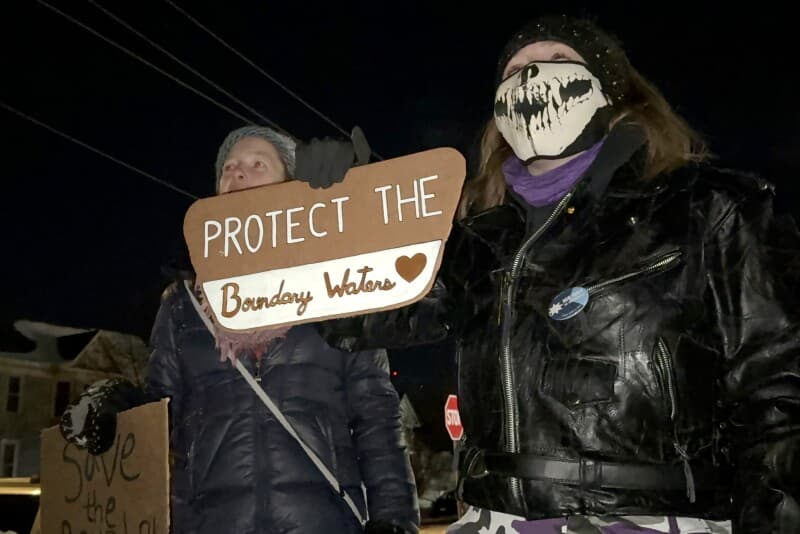
Senate narrowly votes to end mining ban near Boundary Waters
WASHINGTON — The U.S. Senate voted Thursday to end a ban on mining within the same watershed as the Boundary Waters Canoe Area Wilderness. The measure reverses a 20-year moratorium on mining and mining activities on more than 225,000 acres of Superior National Forest land in the Rainy River Watershed. It passed with a 50 to 49 vote. It now heads to the desk of President Donald Trump, who is expected to sign it. Minnesota Sens. Amy Klobuchar and Tina Smith, both Democrats, opposed the resolution. The resolution passed the U.S. House of Representatives in January, where it was introduced by Rep. Pete Stauber, R-Hermantown. Since the 2023 mineral withdrawal was published in the Federal Register and not the Congressional Record, Stauber argued the Biden administration failed to properly notify Congress, which violates a 50-year-old law requiring presidents to notify Congress of public land orders affecting more than 5,000 acres. In January, the Trump administration notified Congress of Biden's land withdrawal, which, under the Congressional Review Act, gave legislators 60 working days to vote on whether to reject it. Passage of the resolution nullifies the withdrawal and prevents a future presidential administration from restoring it. In a speech urging her colleagues to reject the resolution Thursday morning, Smith said the novel use of the Congressional Review Act in this way risks setting a precedent. "If this is the step that the Senate takes today, what this would mean is that any public land order that has been done over potentially decades could potentially be rescinded by some partisan act of Congress just willy-nilly," Smith said. On Wednesday evening, Smith and colleagues opposed to the resolution spent hours speaking out against the resolution on the floor. Reversing the withdrawal is a win for Twin Metals, which is owned by Chilean company Antofagasta. Twin Metals wants to build an underground copper-nickel mine, processing facility and tailings storage facility along Birch Lake, which flows into the BWCAW via the Kawishiwi River. Supporters of the mine argue it would bring much-needed jobs to the region while opponents say it will pollute the downstream wilderness area. Between the 20-year moratorium, which began in 2023, and the cancellation of a pair of key mineral leases, the Biden administration effectively killed the project. The company still needs to go through years of state and federal environmental review and permitting before it could begin mining. This is a developing story; check back for updates.
Senate narrowly votes to end mining ban near Boundary Waters
WASHINGTON — The U.S. Senate voted Thursday to end a ban on mining within the same watershed as the Boundary Waters Canoe Area Wilderness. The measure reverses a 20-year moratorium on mining and mining activities on more than 225,000 acres of Superior National Forest land in the Rainy River Watershed. It passed with a 50 to 49 vote. It now heads to the desk of President Donald Trump, who is expected to sign it. Minnesota Sens. Amy Klobuchar and Tina Smith, both Democrats, opposed the resolution. The resolution passed the U.S. House of Representatives in January, where it was introduced by Rep. Pete Stauber, R-Hermantown. Since the 2023 mineral withdrawal was published in the Federal Register and not the Congressional Record, Stauber argued the Biden administration failed to properly notify Congress, which violates a 50-year-old law requiring presidents to notify Congress of public land orders affecting more than 5,000 acres. In January, the Trump administration notified Congress of Biden's land withdrawal, which, under the Congressional Review Act, gave legislators 60 working days to vote on whether to reject it. Passage of the resolution nullifies the withdrawal and prevents a future presidential administration from restoring it. In a speech urging her colleagues to reject the resolution Thursday morning, Smith said the novel use of the Congressional Review Act in this way risks setting a precedent. "If this is the step that the Senate takes today, what this would mean is that any public land order that has been done over potentially decades could potentially be rescinded by some partisan act of Congress just willy-nilly," Smith said. On Wednesday evening, Smith and colleagues opposed to the resolution spent hours speaking out against the resolution on the floor. Reversing the withdrawal is a win for Twin Metals, which is owned by Chilean company Antofagasta. Twin Metals wants to build an underground copper-nickel mine, processing facility and tailings storage facility along Birch Lake, which flows into the BWCAW via the Kawishiwi River. Supporters of the mine argue it would bring much-needed jobs to the region while opponents say it will pollute the downstream wilderness area. Between the 20-year moratorium, which began in 2023, and the cancellation of a pair of key mineral leases, the Biden administration effectively killed the project. The company still needs to go through years of state and federal environmental review and permitting before it could begin mining. This is a developing story; check back for updates.
Senate narrowly votes to end mining ban near Boundary Waters
WASHINGTON — The U.S. Senate voted Thursday to end a ban on mining within the same watershed as the Boundary Waters Canoe Area Wilderness. The measure reverses a 20-year moratorium on mining and mining activities on more than 225,000 acres of Superior National Forest land in the Rainy River Watershed. It passed with a 50 to 49 vote. It now heads to the desk of President Donald Trump, who is expected to sign it. Minnesota Sens. Amy Klobuchar and Tina Smith, both Democrats, opposed the resolution. The resolution passed the U.S. House of Representatives in January, where it was introduced by Rep. Pete Stauber, R-Hermantown. Since the 2023 mineral withdrawal was published in the Federal Register and not the Congressional Record, Stauber argued the Biden administration failed to properly notify Congress, which violates a 50-year-old law requiring presidents to notify Congress of public land orders affecting more than 5,000 acres. In January, the Trump administration notified Congress of Biden's land withdrawal, which, under the Congressional Review Act, gave legislators 60 working days to vote on whether to reject it. Passage of the resolution nullifies the withdrawal and prevents a future presidential administration from restoring it. In a speech urging her colleagues to reject the resolution Thursday morning, Smith said the novel use of the Congressional Review Act in this way risks setting a precedent. "If this is the step that the Senate takes today, what this would mean is that any public land order that has been done over potentially decades could potentially be rescinded by some partisan act of Congress just willy-nilly," Smith said. On Wednesday evening, Smith and colleagues opposed to the resolution spent hours speaking out against the resolution on the floor. Reversing the withdrawal is a win for Twin Metals, which is owned by Chilean company Antofagasta. Twin Metals wants to build an underground copper-nickel mine, processing facility and tailings storage facility along Birch Lake, which flows into the BWCAW via the Kawishiwi River. Supporters of the mine argue it would bring much-needed jobs to the region while opponents say it will pollute the downstream wilderness area. Between the 20-year moratorium, which began in 2023, and the cancellation of a pair of key mineral leases, the Biden administration effectively killed the project. The company still needs to go through years of state and federal environmental review and permitting before it could begin mining. This is a developing story; check back for updates.
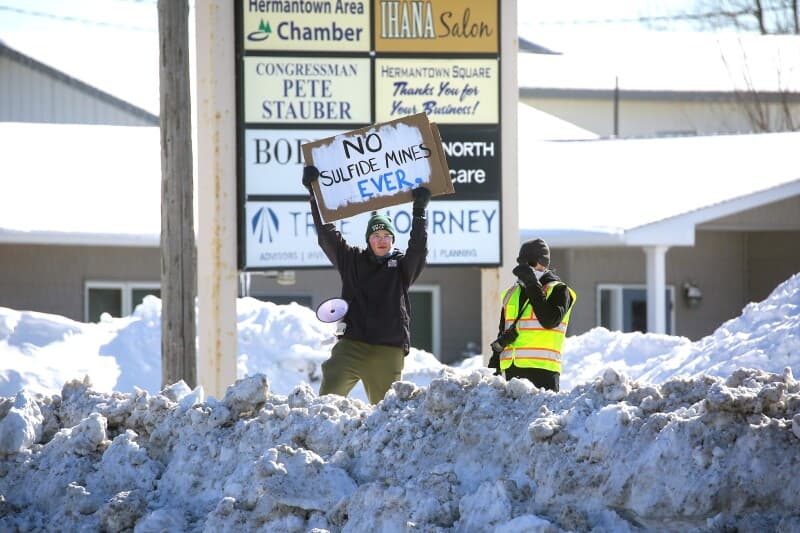
Smith to hold Senate floor 'for hours' in protest of effort to reverse mining ban near BWCAW
WASHINGTON — Sen. Tina Smith said she'll "hold the Senate floor for hours" Wednesday evening ahead of the chamber's vote on whether to end a mining ban within the same watershed as the Boundary Waters Canoe Area Wilderness. "If they want to go against the will of Minnesotans, then I am going to hold the Senate floor for hours to give them every opportunity to change their minds and do the right thing," Smith, a Democratic senator from Minnesota, said in a statement ahead of her speech. "This is a special place beloved by Minnesota and the country, and this mine poses an unacceptable threat.” Smith spoke for approximately 13 minutes in front of a photo of two canoes resting on the shore of a BWCAW lake before yielding the floor to Sen. Amy Klobuchar, the senior Democratic senator from Minnesota, and then Sen. Tammy Baldwin, D-Wisconsin. Both Klobuchar and Baldwin also oppose the resolution. The resolution passed the U.S. House of Representatives in January, where it was introduced by Rep. Pete Stauber, R-Hermantown. In a statement late Wednesday, Stauber said he expected the resolution to pass. “I am excited that the Senate is expected to pass my Congressional Review Act resolution soon, repealing Biden’s illegal mining ban in the Superior National Forest and opening the door for the responsible development of critical minerals, helium, and other natural resources that will allow us to compete in the 21st century,” Stauber said. “The passage of this legislation is not an automatic green light for any proposed project. This CRA puts an end to the back-and-forth uncertainty created by harmful political games that have delayed prosperity in our area for far too long. Now, established federal and state permitting processes will determine the outcome.” Since the 2023 mineral withdrawal was published in the Federal Register and not the Congressional Record, Stauber argued the Biden administration failed to properly notify Congress, which violates a 50-year-old law requiring presidents to notify Congress of public land orders affecting more than 5,000 acres. In January, the Trump administration notified Congress of Biden's land withdrawal, which, under the Congressional Review Act, gave them 60 working days to vote on whether to reject it. That clock will run out by late April. Passage of the resolution would nullify the withdrawal and prevent a future presidential administration from restoring it. Smith spoke on the Senate floor Tuesday against the resolution, arguing that the withdrawals reversal would risk polluting the BWCAW, violate tribal treaty rights and "be an unprecedented and dangerous use of the Congressional Review Act." Smith said the law is meant to give Congress 60 days to overturn a regulation proposed by the executive branch and that it was never the law's intention to revisit a former president's public land orders years later. "What they want to do with the CRA is to claw back a public land order that was put into place three years ago," Smith said. "This was never the intention of the Congressional Review Act." "What would it look like if Congress gets into the business of repealing administrative actions that have been in place for years?" Smith said. "I think many people look at that and think that would just be chaos." Reversing the withdrawal would be a win for Twin Metals, which is owned by Chilean company Antofagasta. Twin Metals wants to build an underground copper-nickel mine, processing facility and tailings storage facility along Birch Lake, which flows into the BWCAW via the Kawishiwi River. Supporters of the mine argue it would bring much-needed jobs to the region while opponents say it will pollute the downstream wilderness area. Between the 20-year moratorium, which began in 2023, and the cancellation of a pair of key mineral leases, the Biden administration effectively killed the project. The company would still need to go through years of state and federal environmental review and permitting before it could begin mining. This story was updated at 9:26 p.m. on April 15 with comment from Rep. Pete Stauber. It was originally published at 8:37 p.m. on April 15.
Smith to hold Senate floor 'for hours' in protest of effort to reverse mining ban near BWCAW
WASHINGTON — Sen. Tina Smith said she'll "hold the Senate floor for hours" Wednesday evening ahead of the chamber's vote on whether to end a mining ban within the same watershed as the Boundary Waters Canoe Area Wilderness. "If they want to go against the will of Minnesotans, then I am going to hold the Senate floor for hours to give them every opportunity to change their minds and do the right thing," Smith, a Democratic senator from Minnesota, said in a statement ahead of her speech. "This is a special place beloved by Minnesota and the country, and this mine poses an unacceptable threat.” Smith spoke for approximately 13 minutes in front of a photo of two canoes resting on the shore of a BWCAW lake before yielding the floor to Sen. Amy Klobuchar, the senior Democratic senator from Minnesota, and then Sen. Tammy Baldwin, D-Wisconsin. Both Klobuchar and Baldwin also oppose the resolution. The resolution passed the U.S. House of Representatives in January, where it was introduced by Rep. Pete Stauber, R-Hermantown. In a statement late Wednesday, Stauber said he expected the resolution to pass. “I am excited that the Senate is expected to pass my Congressional Review Act resolution soon, repealing Biden’s illegal mining ban in the Superior National Forest and opening the door for the responsible development of critical minerals, helium, and other natural resources that will allow us to compete in the 21st century,” Stauber said. “The passage of this legislation is not an automatic green light for any proposed project. This CRA puts an end to the back-and-forth uncertainty created by harmful political games that have delayed prosperity in our area for far too long. Now, established federal and state permitting processes will determine the outcome.” Since the 2023 mineral withdrawal was published in the Federal Register and not the Congressional Record, Stauber argued the Biden administration failed to properly notify Congress, which violates a 50-year-old law requiring presidents to notify Congress of public land orders affecting more than 5,000 acres. In January, the Trump administration notified Congress of Biden's land withdrawal, which, under the Congressional Review Act, gave them 60 working days to vote on whether to reject it. That clock will run out by late April. Passage of the resolution would nullify the withdrawal and prevent a future presidential administration from restoring it. Smith spoke on the Senate floor Tuesday against the resolution, arguing that the withdrawals reversal would risk polluting the BWCAW, violate tribal treaty rights and "be an unprecedented and dangerous use of the Congressional Review Act." Smith said the law is meant to give Congress 60 days to overturn a regulation proposed by the executive branch and that it was never the law's intention to revisit a former president's public land orders years later. "What they want to do with the CRA is to claw back a public land order that was put into place three years ago," Smith said. "This was never the intention of the Congressional Review Act." "What would it look like if Congress gets into the business of repealing administrative actions that have been in place for years?" Smith said. "I think many people look at that and think that would just be chaos." Reversing the withdrawal would be a win for Twin Metals, which is owned by Chilean company Antofagasta. Twin Metals wants to build an underground copper-nickel mine, processing facility and tailings storage facility along Birch Lake, which flows into the BWCAW via the Kawishiwi River. Supporters of the mine argue it would bring much-needed jobs to the region while opponents say it will pollute the downstream wilderness area. Between the 20-year moratorium, which began in 2023, and the cancellation of a pair of key mineral leases, the Biden administration effectively killed the project. The company would still need to go through years of state and federal environmental review and permitting before it could begin mining. This story was updated at 9:26 p.m. on April 15 with comment from Rep. Pete Stauber. It was originally published at 8:37 p.m. on April 15.
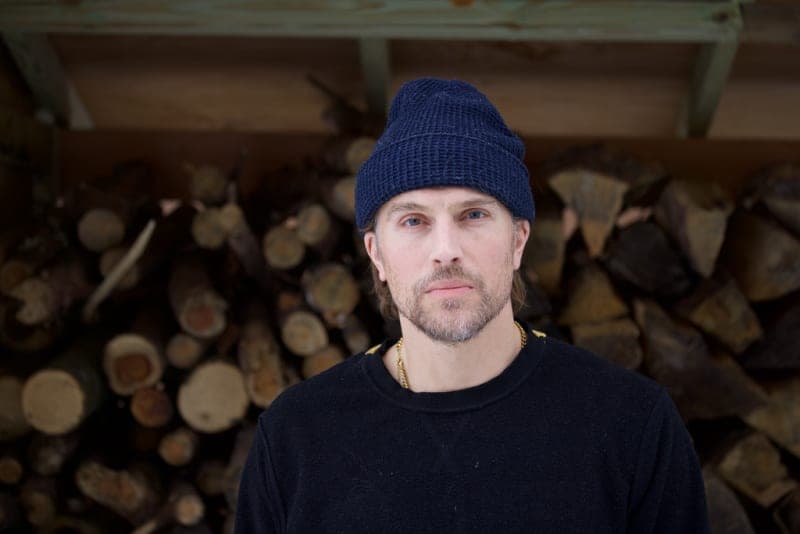
Luke Gulbranson, reality TV star and model, to challenge Stauber
EVELETH — A reality TV star and model from the Iron Range is running for Minnesota's 8th Congressional District seat. Luke Gulbranson, 42, announced his candidacy against incumbent Republican Rep. Pete Stauber, of Hermantown, in a video Wednesday morning. He's seeking the Democratic-Farmer-Labor Party nomination. The Eveleth native and cast member of Bravo's "Summer House" and Netflix's "Selling the OC" said he grew up during periods of economic hardship and relied on food assistance and Medicaid and wants to expand access to affordable health care after recent cuts. He also cited Immigration and Customs Enforcement agents "wreaking havoc to our communities" and the war in Iran as reasons he's running. "Yeah, I've been on reality TV, but that's drama for show," Gulbranson said. "But what's happening in D.C. is real drama, with real consequences and the stakes couldn't be higher. I wake up every morning and there's this dangerous rhetoric and madness coming out of D.C., and I can't stand it." Gulbranson's campaign said he planned to file his candidacy with the Federal Election Commission on Wednesday. Other 8th District DFL candidates who have filed include Trina Swanson, of Hermantown; John-Paul McBride, of Duluth; Emanuel Anastos, of Tower; and Wendell Smith, of Virginia. Another candidate, Bob Helland, of Duluth, also announced he's running for the seat but said he will not file with the FEC. Two DFL candidates have dropped out: Cyle Cramer and Chad McKenna. Stauber, a staunch supporter of President Donald Trump, has held the 8th District seat since 2019 and has filed for reelection. He is the only GOP candidate in the race as of Wednesday. A reality TV star from the Northland has made his way to Washington, D.C. before. Sean Duffy, a cast member of MTV's "The Real World: Boston" in the 1990s, represented northern Wisconsin in Congress from 2010 to 2019. He is now Trump's secretary of the Department of Transportation.
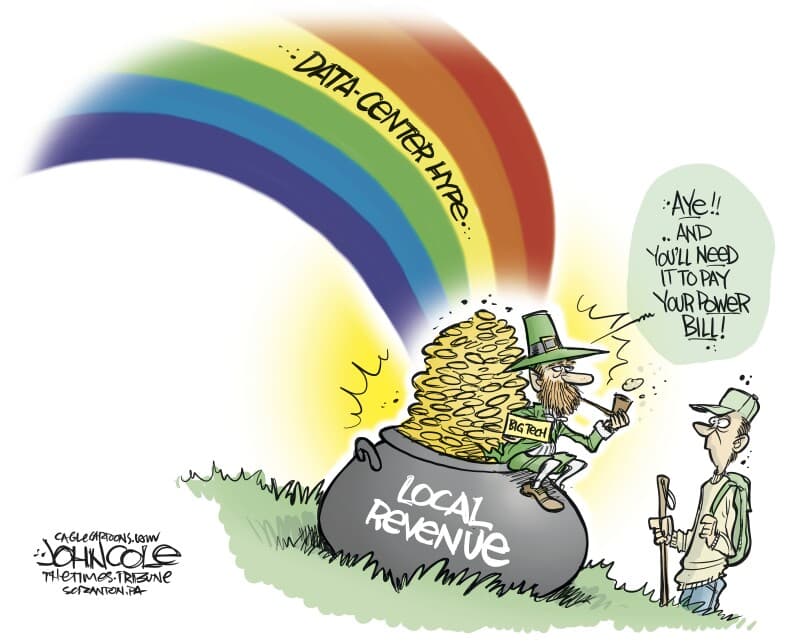
Pro/Con: Moratorium needed to pause the attack of data centers
Gasoline prices have nearly doubled nationwide over the last month, as President Donald Trump’s war with Iran continued. As a result, many consumer staples that rely on diesel-fueled trucks to reach store shelves are also rising in cost. And food prices are climbing especially quickly in part due to a logjam of global fertilizer supply, nearly a third of which depends on the Strait of Hormuz for transit to farmers worldwide. The situation is remarkable given the president’s many years of bold claims and arrogant pledges of dirt-cheap fossil fuels, lower energy prices, and shrinking inflation — to say nothing of his supposed allegiance to a populist “America first” doctrine. Energy prices in many areas of the country were already skyrocketing before the conflict with Iran. The driver of these inflated electric bills hasn’t been the Middle East conflict and Big Oil. It’s been AI data centers and Big Tech. Indeed, the nation’s recent boom in hyperscale data center construction, driven by the massive demand for computing power from the artificial intelligence and cryptocurrency industries, is dramatically reshaping communities around the country and starkly reorienting Americans’ budgets — and not for the better. Last year, as a sudden wave of hyperscale AI data center construction started to overwhelm local leaders in dozens of states, we at Food & Water Watch began looking closely at the environmental, consumer, and community effects of these massive industrial facilities. What we discovered was alarming. Energy demand from AI data centers in the United States is expected to increase up to threefold from 2020 to 2030. Our analysis found that these facilities could consume up to 580 terawatt-hours of energy annually, 12% of the total national demand and the equivalent energy of more than 55 million households. The largest of these massive hyperscale projects, which may house 5,000 or more computer servers over millions of square feet, could consume as much power as 2 million households. This extreme surge in energy demand across the American grid is completely unsustainable and is already having grave effects on the environment, the climate, and countless families’ finances. More than half the energy needed for AI data centers is produced by fossil fuels — the coal and fracked gas that are driving our ever-deepening climate crisis, producing stronger and more violent storms, raising our sea levels, and slowly cooking our planet. Additionally, hyperscale data centers require vast amounts of water to operate. By 2028, U.S. data centers could use as many as 720 billion gallons of water each year just to cool AI servers. This is equal to more than 1 million Olympic-sized swimming pools, or enough water to meet the indoor needs of 18.5 million American households. All this as communities nationwide increasingly struggle to provide clean, affordable water for everyday use. Speaking of affordability, the most direct effect of the AI data center boom is on Americans’ wallets. Driven largely by new data centers, surging power demand compelled U.S. electric and gas utilities to request $31 billion in consumer rate increases in 2025 — double the total request in 2024. Average residential electricity rates in the United States soared 31% from 2020 to 2025, compared to just 4% from 2015 to 2020. This cost crisis has only deepened in recent months. It should come as no surprise that people and communities are fighting back. In October, Food & Water Watch became the first national organization to call for a full nationwide moratorium on new AI data center construction, citing the massive and growing burden on electricity and water resources. Months later, 250 additional local, state, and national groups joined in our demand. Responding to the growing public outcry, Sen. Bernie Sanders of Vermont introduced a bill to enact just such a moratorium. Meanwhile, community leaders nationwide are taking matters into their own hands, rejecting scores of new AI data center proposals in recent months and pursuing multi-year local and statewide halts to the industry’s expansion. Simply put, we need a nationwide pause on the explosive growth of new AI data center construction now, because it has yet to be determined if — not how — the industry can ever operate in a manner that sufficiently protects people and society from the profusion of inherent hazards and harms that data centers bring wherever they appear. Mitch Jones is the managing director of policy and litigation at Food & Water Watch (foodandwaterwatch.org), an international environmental organization headquartered in Washington, D.C.
Pro/Con: Moratorium needed to pause the attack of data centers
Gasoline prices have nearly doubled nationwide over the last month, as President Donald Trump’s war with Iran continued. As a result, many consumer staples that rely on diesel-fueled trucks to reach store shelves are also rising in cost. And food prices are climbing especially quickly in part due to a logjam of global fertilizer supply, nearly a third of which depends on the Strait of Hormuz for transit to farmers worldwide. The situation is remarkable given the president’s many years of bold claims and arrogant pledges of dirt-cheap fossil fuels, lower energy prices, and shrinking inflation — to say nothing of his supposed allegiance to a populist “America first” doctrine. Energy prices in many areas of the country were already skyrocketing before the conflict with Iran. The driver of these inflated electric bills hasn’t been the Middle East conflict and Big Oil. It’s been AI data centers and Big Tech. Indeed, the nation’s recent boom in hyperscale data center construction, driven by the massive demand for computing power from the artificial intelligence and cryptocurrency industries, is dramatically reshaping communities around the country and starkly reorienting Americans’ budgets — and not for the better. Last year, as a sudden wave of hyperscale AI data center construction started to overwhelm local leaders in dozens of states, we at Food & Water Watch began looking closely at the environmental, consumer, and community effects of these massive industrial facilities. What we discovered was alarming. Energy demand from AI data centers in the United States is expected to increase up to threefold from 2020 to 2030. Our analysis found that these facilities could consume up to 580 terawatt-hours of energy annually, 12% of the total national demand and the equivalent energy of more than 55 million households. The largest of these massive hyperscale projects, which may house 5,000 or more computer servers over millions of square feet, could consume as much power as 2 million households. This extreme surge in energy demand across the American grid is completely unsustainable and is already having grave effects on the environment, the climate, and countless families’ finances. More than half the energy needed for AI data centers is produced by fossil fuels — the coal and fracked gas that are driving our ever-deepening climate crisis, producing stronger and more violent storms, raising our sea levels, and slowly cooking our planet. Additionally, hyperscale data centers require vast amounts of water to operate. By 2028, U.S. data centers could use as many as 720 billion gallons of water each year just to cool AI servers. This is equal to more than 1 million Olympic-sized swimming pools, or enough water to meet the indoor needs of 18.5 million American households. All this as communities nationwide increasingly struggle to provide clean, affordable water for everyday use. Speaking of affordability, the most direct effect of the AI data center boom is on Americans’ wallets. Driven largely by new data centers, surging power demand compelled U.S. electric and gas utilities to request $31 billion in consumer rate increases in 2025 — double the total request in 2024. Average residential electricity rates in the United States soared 31% from 2020 to 2025, compared to just 4% from 2015 to 2020. This cost crisis has only deepened in recent months. It should come as no surprise that people and communities are fighting back. In October, Food & Water Watch became the first national organization to call for a full nationwide moratorium on new AI data center construction, citing the massive and growing burden on electricity and water resources. Months later, 250 additional local, state, and national groups joined in our demand. Responding to the growing public outcry, Sen. Bernie Sanders of Vermont introduced a bill to enact just such a moratorium. Meanwhile, community leaders nationwide are taking matters into their own hands, rejecting scores of new AI data center proposals in recent months and pursuing multi-year local and statewide halts to the industry’s expansion. Simply put, we need a nationwide pause on the explosive growth of new AI data center construction now, because it has yet to be determined if — not how — the industry can ever operate in a manner that sufficiently protects people and society from the profusion of inherent hazards and harms that data centers bring wherever they appear. Mitch Jones is the managing director of policy and litigation at Food & Water Watch (foodandwaterwatch.org), an international environmental organization headquartered in Washington, D.C.