3 stories credited to dissentwatch.com
Latest story Apr 18, 2026 · on ChamberLight since Apr 2026
A story can appear as several articles (copies of the same piece), so counts of stories and of articles differ.
Scores for dissentwatch.com
Scores last checked Sep 25, 2026.
Stories ChamberLight collected, by month
Stories credited to dissentwatch.com, by publication date. ChamberLight collects articles that mention the officials it tracks, so this shows its own coverage of this source, not how much the source publishes.
- Stories from dissentwatch.com
- Shaded: ChamberLight collected no stories, or almost none, from any outlet (a gap in its collection, not in the outlet’s publishing)
Show as a table
| Month | Stories | All outlets |
|---|---|---|
| April 2026 | 3 | 2,577 |
| May 2026 | 0 | none collected |
| June 2026 | 0 | none collected |
| July 2026 | 0 | none collected |
| August 2026 | 0 | 1 (collection gap) |
| September 2026 | 0 | 1,320 |
Top topics
Share of this source’s stories tagged with each topic. A story can carry several topics, so the shares do not add up to 100%.
- Ethics/Corruption2
67% of 3 stories · 58% across all outlets
- Technology/Privacy2
67% of 3 stories · 10% across all outlets
- Budget/Spending1
33% of 3 stories · 31% across all outlets
- Criminal Justice1
33% of 3 stories · 19% across all outlets
- Defense/Military1
33% of 3 stories · 25% across all outlets
The thin mark on each bar is the topic’s share across all outlets.
Who they cover
Party of the officials these stories are mainly about, across all 6 officials named. A story counts once for each official it is mainly about, so the split is over 6 story–official pairs, from 3 stories.
- Democrat50% · 3 pairs
- Republican50% · 3 pairs
Most covered
Stories mainly about each official, and their share of the source’s 3 stories.
Article tone
ChamberLight’s article analysis assigns each story a tone toward the official it covers. It describes the coverage of that official, not dissentwatch.com’s stance, and reader votes do not change it. 3 stories.
- Good Look
- 1 (33%)
- Mixed
- 1 (33%)
- Informational
- 0 (0%)
- Bad Look
- 1 (33%)
Challenges to these scores
No one has challenged a score on this page yet. Anyone can; editors publish every outcome here.
Articles served from dissentwatch.com
6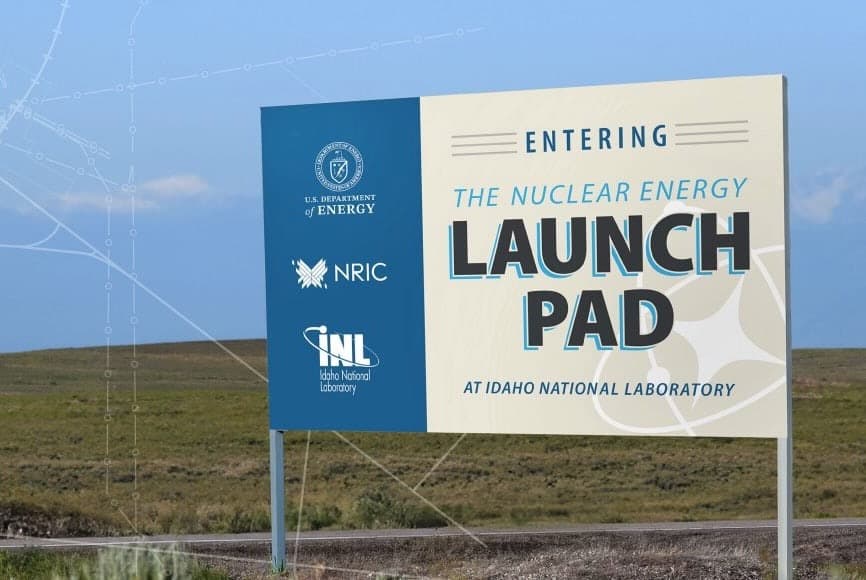
Senate Bill Wants Commercial Reactors On Federal Land
Senate Bill Wants Commercial Reactors On Federal Land Senators Mike Lee (R-UT) and Dave McCormick (R-PA) introduced the Nuclear Energy Innovation and Deployment Act (NEIDA) on April 14th, presenting what could be one of the most significant regulatory shifts for U.S. nuclear power in decades. The legislation would expand the DOE’s authority to license and regulate commercial reactors and fuel-cycle facilities when sited on federal land or built for federal purposes, including electricity supplied to federal power marketing agencies. The United States should lead the nuclear energy renaissance, not watch it from the sidelines. My Nuclear Energy Innovation and Deployment Act with @SenMcCormickPA will help power America’s future. https://t.co/X8mOPRlMIT — Mike Lee (@SenMikeLee) April 14, 2026 It would also create a permanent Nuclear Energy Launch Pad program to streamline demonstration projects on DOE and National Lab sites, with a built-in path to commercial operations under DOE oversight rather than the traditional NRC bottleneck. Under current rules, even projects on federal property like Idaho National Laboratory (INL) typically require full NRC licensing if they want to be used for commercial purposes. NEIDA flips that script. Commercial reactors and related fuel facilities on qualifying federal sites could operate under DOE authority, complete with Price-Anderson liability protections. The bill also repurposes surplus plutonium as reactor fuel through a milestone-driven program, turning a liability into domestic supply while federal power marketing administrations gain explicit authority to purchase and transmit nuclear-generated electricity. The centerpiece is the Nuclear Energy Launch Pad, which would designate secure federal zones (primarily on DOE and National Lab land) for private companies to test and demonstrate advanced nuclear technologies. Private entities pay the bill, but gain infrastructure support and regulatory certainty. After demonstration, projects could transition seamlessly to commercial operation under DOE licensing. As we have covered in recent reporting on surging nuclear interest, this framework directly addresses the “valley of death” between pilot and full deployment that has stalled U.S. progress while China and Russia build out capacity at pace. Take Oklo’s Aurora powerhouse already under construction at INL. The company received DOE approval for its Nuclear Safety Design Agreement (NSDA) in March 2026 under the existing Reactor Pilot Program. If NEIDA made that pathway permanent and explicit, Oklo could complete testing and iteration under DOE oversight, then secure a commercial operations license directly from the agency without restarting with the NRC. The shift would provide exactly the certainty developers have long sought. The bill could also create a natural bridge to the Genesis Mission, DOE’s flagship AI and energy-dominance initiative. Genesis is already pushing co-location of data centers on federal land with advanced nuclear power to meet exploding AI-driven power demand. Under NEIDA, reactors licensed and operated by DOE on those same sites could enter straightforward commercial offtake agreements to supply Genesis-linked data centers. The Launch Pad’s streamlined DOE process, combined with existing experience, could compress timelines dramatically. Consider an AP1000 reactor announced for a federal site: from initial filing to full commercial license, the bill’s framework suggests a matter of months rather than the multi-year NRC odyssey that has become standard. If enacted, NEIDA does not overhaul the entire NRC system. It would simply carve out a fast lane on federal real estate. In an era of record electricity demand from AI and manufacturing, that lane may prove decisive. Tyler Durden Sat, 04/18/2026 – 16:55
Senate Bill Wants Commercial Reactors On Federal Land
Senate Bill Wants Commercial Reactors On Federal Land Senators Mike Lee (R-UT) and Dave McCormick (R-PA) introduced the Nuclear Energy Innovation and Deployment Act (NEIDA) on April 14th, presenting what could be one of the most significant regulatory shifts for U.S. nuclear power in decades. The legislation would expand the DOE’s authority to license and regulate commercial reactors and fuel-cycle facilities when sited on federal land or built for federal purposes, including electricity supplied to federal power marketing agencies. The United States should lead the nuclear energy renaissance, not watch it from the sidelines. My Nuclear Energy Innovation and Deployment Act with @SenMcCormickPA will help power America’s future. https://t.co/X8mOPRlMIT — Mike Lee (@SenMikeLee) April 14, 2026 It would also create a permanent Nuclear Energy Launch Pad program to streamline demonstration projects on DOE and National Lab sites, with a built-in path to commercial operations under DOE oversight rather than the traditional NRC bottleneck. Under current rules, even projects on federal property like Idaho National Laboratory (INL) typically require full NRC licensing if they want to be used for commercial purposes. NEIDA flips that script. Commercial reactors and related fuel facilities on qualifying federal sites could operate under DOE authority, complete with Price-Anderson liability protections. The bill also repurposes surplus plutonium as reactor fuel through a milestone-driven program, turning a liability into domestic supply while federal power marketing administrations gain explicit authority to purchase and transmit nuclear-generated electricity. The centerpiece is the Nuclear Energy Launch Pad, which would designate secure federal zones (primarily on DOE and National Lab land) for private companies to test and demonstrate advanced nuclear technologies. Private entities pay the bill, but gain infrastructure support and regulatory certainty. After demonstration, projects could transition seamlessly to commercial operation under DOE licensing. As we have covered in recent reporting on surging nuclear interest, this framework directly addresses the “valley of death” between pilot and full deployment that has stalled U.S. progress while China and Russia build out capacity at pace. Take Oklo’s Aurora powerhouse already under construction at INL. The company received DOE approval for its Nuclear Safety Design Agreement (NSDA) in March 2026 under the existing Reactor Pilot Program. If NEIDA made that pathway permanent and explicit, Oklo could complete testing and iteration under DOE oversight, then secure a commercial operations license directly from the agency without restarting with the NRC. The shift would provide exactly the certainty developers have long sought. The bill could also create a natural bridge to the Genesis Mission, DOE’s flagship AI and energy-dominance initiative. Genesis is already pushing co-location of data centers on federal land with advanced nuclear power to meet exploding AI-driven power demand. Under NEIDA, reactors licensed and operated by DOE on those same sites could enter straightforward commercial offtake agreements to supply Genesis-linked data centers. The Launch Pad’s streamlined DOE process, combined with existing experience, could compress timelines dramatically. Consider an AP1000 reactor announced for a federal site: from initial filing to full commercial license, the bill’s framework suggests a matter of months rather than the multi-year NRC odyssey that has become standard. If enacted, NEIDA does not overhaul the entire NRC system. It would simply carve out a fast lane on federal real estate. In an era of record electricity demand from AI and manufacturing, that lane may prove decisive. Tyler Durden Sat, 04/18/2026 – 16:55

Trump Urges Extending Foreign Surveillance Program As Some Lawmakers Push For US Privacy Protections
Trump Urges Extending Foreign Surveillance Program As Some Lawmakers Push For US Privacy Protections Via Headline USA, Congress is set to take up the reauthorization of a divisive program that lets U.S. spy agencies pore over foreigners’ calls, texts and emails, with supporters like President Donald Trump saying it has saved lives while critics point to longstanding concerns about warrantless surveillance of Americans. (AP Illustration/Peter Hamlin) A key provision of the Foreign Intelligence Surveillance Act permits the CIA, National Security Agency, FBI and other agencies to collect and analyze vast amounts of overseas communications without a warrant. It incidentally sweeps up the conversations of any Americans who interact with those foreigners targeted for surveillance. The program expires Monday, and critics want changes, including a requirement for warrants before authorities can access the emails, phone calls or text messages of Americans. They also want limits on the government’s use of internet data brokers, who sell large volumes of personal information gleaned online, offering the government what critics say amounts to an end-run around the Constitution. Despite bipartisan criticism, the chances of significant reforms dropped when Trump announced his support for the program’s renewal, saying it had proven its worth in supplying information vital to recent U.S. actions in Venezuela and Iran. “The fact is, whether you like FISA or not, it is extremely important to our military,” Trump said on Truth Social Tuesday. U.S. authorities say the program, known as Section 702 of the law, is vital to national security and has saved lives by uncovering terror plots. Critics question what they call a dangerous infringement on civil liberties and privacy. In a Truth Social post, Trump said a different FISA provision was used to spy on his 2016 campaign but that he supported Section 702’s renewal despite misgivings that political adversaries could use parts of the law against him in the future. He called on lawmakers to extend the foreign surveillance program for another 18 months. “My administration has worked tirelessly to ensure these FISA reforms are being aggressively executed at every level of the Executive Branch to keep Americans safe, while protecting our sacred Civil Liberties guaranteed by our Great Constitution,” Trump wrote. Trump is a longtime critic of the nation’s intelligence services and was once opposed to Section 702 before he reversed himself. “KILL FISA” Trump posted on social media in 2024, when the provision was last reauthorized. Trump isn’t the only one-time critic to change their mind: Director of National Intelligence Tulsi Gabbard sponsored legislation to repeal Section 702 as a Hawaii congresswoman but now supports it after being tapped to coordinate the nation’s 18 intelligence agencies. Gabbard says new protections added since her time in Congress helped change her mind. In addition to a requirement for a warrant to access Americans’ data, critics also want greater protections on how the FBI or other agencies can search communications and how that is reported to the public. “Journalists, foreign aid workers, people with family overseas, all could have their communications swept up in this surveillance merely because they talked to someone outside of this country,” said Sen. Ron Wyden, D-Ore. The longtime critic of the law is pushing for changes that he said will ensure the government isn’t violating civil rights in secret. Several Republicans also have suggested changes, such as the warrant requirement. “National security and civil liberties are not mutually exclusive,” said Rep. Andy Biggs, R-Ariz. “We can give our intelligence professionals the tools they need to target foreign threats while ensuring that Americans are not subjected to unconstitutional surveillance.” Gabbard’s office releases an annual report showing the number of foreign surveillance targets and number of searches likely to identify an American. For 2025, the number of foreign surveillance targets increased to nearly 350,000 from almost 292,000 in 2024. Searches using terms likely to identify an American decreased slightly to 7,724 from 7,845 in 2024. The totals are incomplete because agencies like the FBI have found ways to access the data without reporting the searches publicly, said Elizabeth Goitein, senior director of the Liberty and National Security Program at the Brennan Center for Justice at New York University. FBI officials repeatedly violated their own standards when searching for intelligence related to the Jan. 6, 2021, insurrection at the U.S. Capitol and racial justice protests in 2020, according to a 2024 court order. “It’s reminiscent of J. Edgar Hoover’s tenure at the FBI,” Goitein said, referring to the FBI’s founding director who used illegal surveillance to harass and spy on Americans. “They can pretty much target anyone.” Despite bipartisan concerns about the law and its implications for civil liberties, time is running out for Congress to make any changes before Monday’s expiration. Trump’s support also reduces the odds that enough Republicans will break ranks and join Democrats to push for reforms. Wyden said Section 702 votes are routinely delayed until the last minute, then lawmakers are told that national security demands they vote yes. Lawmakers are told, he said, that “if they vote for any amendments, the program will die and terrible things will happen and it will be all their fault.” The best chance for inserting changes likely is the House, where a large number of lawmakers from both parties have expressed concerns. But Rep. Rick Crawford, an Arkansas Republican who chairs the House Intelligence Committee, is backing Trump’s call for an 18-month renewal. Crawford has taken aim in the past at what he calls the weaponization of intelligence but said last month that he believes the government can empower spy agencies while also holding them accountable. “We can walk and chew gum at the same time,” Crawford said. Adapted from reporting by the Associated Press. Tyler Durden Thu, 04/16/2026 – 13:45
Trump Urges Extending Foreign Surveillance Program As Some Lawmakers Push For US Privacy Protections
Trump Urges Extending Foreign Surveillance Program As Some Lawmakers Push For US Privacy Protections Via Headline USA, Congress is set to take up the reauthorization of a divisive program that lets U.S. spy agencies pore over foreigners’ calls, texts and emails, with supporters like President Donald Trump saying it has saved lives while critics point to longstanding concerns about warrantless surveillance of Americans. (AP Illustration/Peter Hamlin) A key provision of the Foreign Intelligence Surveillance Act permits the CIA, National Security Agency, FBI and other agencies to collect and analyze vast amounts of overseas communications without a warrant. It incidentally sweeps up the conversations of any Americans who interact with those foreigners targeted for surveillance. The program expires Monday, and critics want changes, including a requirement for warrants before authorities can access the emails, phone calls or text messages of Americans. They also want limits on the government’s use of internet data brokers, who sell large volumes of personal information gleaned online, offering the government what critics say amounts to an end-run around the Constitution. Despite bipartisan criticism, the chances of significant reforms dropped when Trump announced his support for the program’s renewal, saying it had proven its worth in supplying information vital to recent U.S. actions in Venezuela and Iran. “The fact is, whether you like FISA or not, it is extremely important to our military,” Trump said on Truth Social Tuesday. U.S. authorities say the program, known as Section 702 of the law, is vital to national security and has saved lives by uncovering terror plots. Critics question what they call a dangerous infringement on civil liberties and privacy. In a Truth Social post, Trump said a different FISA provision was used to spy on his 2016 campaign but that he supported Section 702’s renewal despite misgivings that political adversaries could use parts of the law against him in the future. He called on lawmakers to extend the foreign surveillance program for another 18 months. “My administration has worked tirelessly to ensure these FISA reforms are being aggressively executed at every level of the Executive Branch to keep Americans safe, while protecting our sacred Civil Liberties guaranteed by our Great Constitution,” Trump wrote. Trump is a longtime critic of the nation’s intelligence services and was once opposed to Section 702 before he reversed himself. “KILL FISA” Trump posted on social media in 2024, when the provision was last reauthorized. Trump isn’t the only one-time critic to change their mind: Director of National Intelligence Tulsi Gabbard sponsored legislation to repeal Section 702 as a Hawaii congresswoman but now supports it after being tapped to coordinate the nation’s 18 intelligence agencies. Gabbard says new protections added since her time in Congress helped change her mind. In addition to a requirement for a warrant to access Americans’ data, critics also want greater protections on how the FBI or other agencies can search communications and how that is reported to the public. “Journalists, foreign aid workers, people with family overseas, all could have their communications swept up in this surveillance merely because they talked to someone outside of this country,” said Sen. Ron Wyden, D-Ore. The longtime critic of the law is pushing for changes that he said will ensure the government isn’t violating civil rights in secret. Several Republicans also have suggested changes, such as the warrant requirement. “National security and civil liberties are not mutually exclusive,” said Rep. Andy Biggs, R-Ariz. “We can give our intelligence professionals the tools they need to target foreign threats while ensuring that Americans are not subjected to unconstitutional surveillance.” Gabbard’s office releases an annual report showing the number of foreign surveillance targets and number of searches likely to identify an American. For 2025, the number of foreign surveillance targets increased to nearly 350,000 from almost 292,000 in 2024. Searches using terms likely to identify an American decreased slightly to 7,724 from 7,845 in 2024. The totals are incomplete because agencies like the FBI have found ways to access the data without reporting the searches publicly, said Elizabeth Goitein, senior director of the Liberty and National Security Program at the Brennan Center for Justice at New York University. FBI officials repeatedly violated their own standards when searching for intelligence related to the Jan. 6, 2021, insurrection at the U.S. Capitol and racial justice protests in 2020, according to a 2024 court order. “It’s reminiscent of J. Edgar Hoover’s tenure at the FBI,” Goitein said, referring to the FBI’s founding director who used illegal surveillance to harass and spy on Americans. “They can pretty much target anyone.” Despite bipartisan concerns about the law and its implications for civil liberties, time is running out for Congress to make any changes before Monday’s expiration. Trump’s support also reduces the odds that enough Republicans will break ranks and join Democrats to push for reforms. Wyden said Section 702 votes are routinely delayed until the last minute, then lawmakers are told that national security demands they vote yes. Lawmakers are told, he said, that “if they vote for any amendments, the program will die and terrible things will happen and it will be all their fault.” The best chance for inserting changes likely is the House, where a large number of lawmakers from both parties have expressed concerns. But Rep. Rick Crawford, an Arkansas Republican who chairs the House Intelligence Committee, is backing Trump’s call for an 18-month renewal. Crawford has taken aim in the past at what he calls the weaponization of intelligence but said last month that he believes the government can empower spy agencies while also holding them accountable. “We can walk and chew gum at the same time,” Crawford said. Adapted from reporting by the Associated Press. Tyler Durden Thu, 04/16/2026 – 13:45
Trump Urges Extending Foreign Surveillance Program As Some Lawmakers Push For US Privacy Protections
Trump Urges Extending Foreign Surveillance Program As Some Lawmakers Push For US Privacy Protections Via Headline USA, Congress is set to take up the reauthorization of a divisive program that lets U.S. spy agencies pore over foreigners’ calls, texts and emails, with supporters like President Donald Trump saying it has saved lives while critics point to longstanding concerns about warrantless surveillance of Americans. (AP Illustration/Peter Hamlin) A key provision of the Foreign Intelligence Surveillance Act permits the CIA, National Security Agency, FBI and other agencies to collect and analyze vast amounts of overseas communications without a warrant. It incidentally sweeps up the conversations of any Americans who interact with those foreigners targeted for surveillance. The program expires Monday, and critics want changes, including a requirement for warrants before authorities can access the emails, phone calls or text messages of Americans. They also want limits on the government’s use of internet data brokers, who sell large volumes of personal information gleaned online, offering the government what critics say amounts to an end-run around the Constitution. Despite bipartisan criticism, the chances of significant reforms dropped when Trump announced his support for the program’s renewal, saying it had proven its worth in supplying information vital to recent U.S. actions in Venezuela and Iran. “The fact is, whether you like FISA or not, it is extremely important to our military,” Trump said on Truth Social Tuesday. U.S. authorities say the program, known as Section 702 of the law, is vital to national security and has saved lives by uncovering terror plots. Critics question what they call a dangerous infringement on civil liberties and privacy. In a Truth Social post, Trump said a different FISA provision was used to spy on his 2016 campaign but that he supported Section 702’s renewal despite misgivings that political adversaries could use parts of the law against him in the future. He called on lawmakers to extend the foreign surveillance program for another 18 months. “My administration has worked tirelessly to ensure these FISA reforms are being aggressively executed at every level of the Executive Branch to keep Americans safe, while protecting our sacred Civil Liberties guaranteed by our Great Constitution,” Trump wrote. Trump is a longtime critic of the nation’s intelligence services and was once opposed to Section 702 before he reversed himself. “KILL FISA” Trump posted on social media in 2024, when the provision was last reauthorized. Trump isn’t the only one-time critic to change their mind: Director of National Intelligence Tulsi Gabbard sponsored legislation to repeal Section 702 as a Hawaii congresswoman but now supports it after being tapped to coordinate the nation’s 18 intelligence agencies. Gabbard says new protections added since her time in Congress helped change her mind. In addition to a requirement for a warrant to access Americans’ data, critics also want greater protections on how the FBI or other agencies can search communications and how that is reported to the public. “Journalists, foreign aid workers, people with family overseas, all could have their communications swept up in this surveillance merely because they talked to someone outside of this country,” said Sen. Ron Wyden, D-Ore. The longtime critic of the law is pushing for changes that he said will ensure the government isn’t violating civil rights in secret. Several Republicans also have suggested changes, such as the warrant requirement. “National security and civil liberties are not mutually exclusive,” said Rep. Andy Biggs, R-Ariz. “We can give our intelligence professionals the tools they need to target foreign threats while ensuring that Americans are not subjected to unconstitutional surveillance.” Gabbard’s office releases an annual report showing the number of foreign surveillance targets and number of searches likely to identify an American. For 2025, the number of foreign surveillance targets increased to nearly 350,000 from almost 292,000 in 2024. Searches using terms likely to identify an American decreased slightly to 7,724 from 7,845 in 2024. The totals are incomplete because agencies like the FBI have found ways to access the data without reporting the searches publicly, said Elizabeth Goitein, senior director of the Liberty and National Security Program at the Brennan Center for Justice at New York University. FBI officials repeatedly violated their own standards when searching for intelligence related to the Jan. 6, 2021, insurrection at the U.S. Capitol and racial justice protests in 2020, according to a 2024 court order. “It’s reminiscent of J. Edgar Hoover’s tenure at the FBI,” Goitein said, referring to the FBI’s founding director who used illegal surveillance to harass and spy on Americans. “They can pretty much target anyone.” Despite bipartisan concerns about the law and its implications for civil liberties, time is running out for Congress to make any changes before Monday’s expiration. Trump’s support also reduces the odds that enough Republicans will break ranks and join Democrats to push for reforms. Wyden said Section 702 votes are routinely delayed until the last minute, then lawmakers are told that national security demands they vote yes. Lawmakers are told, he said, that “if they vote for any amendments, the program will die and terrible things will happen and it will be all their fault.” The best chance for inserting changes likely is the House, where a large number of lawmakers from both parties have expressed concerns. But Rep. Rick Crawford, an Arkansas Republican who chairs the House Intelligence Committee, is backing Trump’s call for an 18-month renewal. Crawford has taken aim in the past at what he calls the weaponization of intelligence but said last month that he believes the government can empower spy agencies while also holding them accountable. “We can walk and chew gum at the same time,” Crawford said. Adapted from reporting by the Associated Press. Tyler Durden Thu, 04/16/2026 – 13:45
Swalwell Resigns From Congress – Effective TODAY, After Fresh Rape Allegation And Corroborating Campaign Records
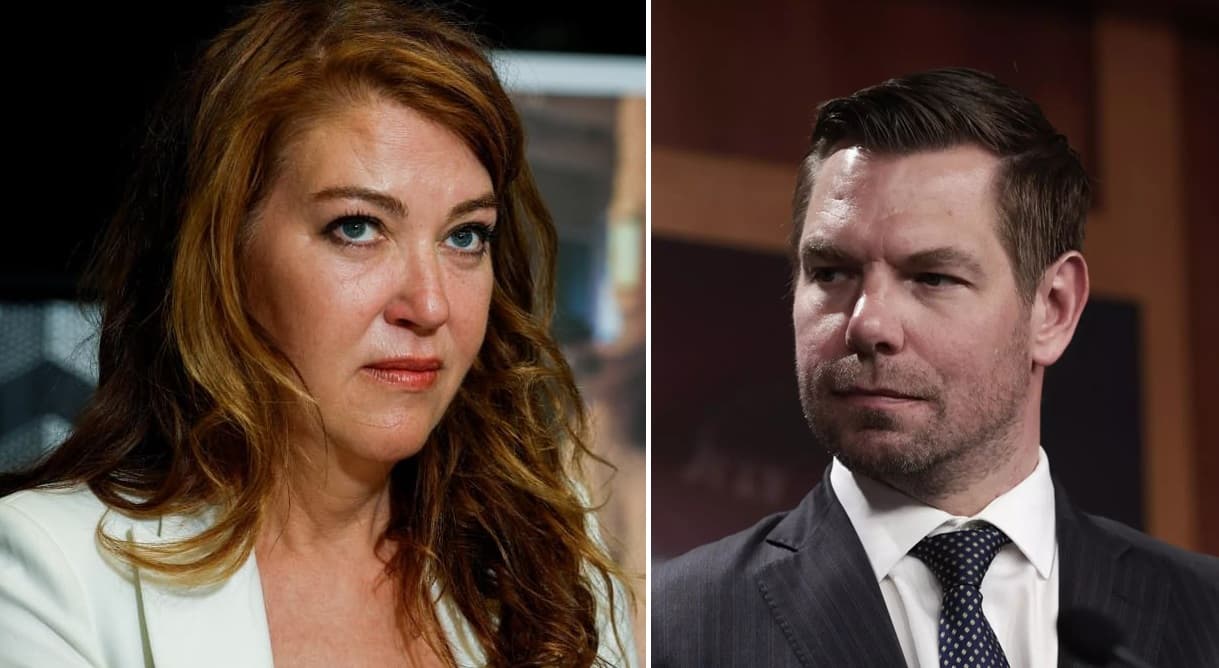
Swalwell Resigns From Congress – Effective TODAY, After Fresh Rape Allegation And Corroborating Campaign Records Rep. Eric Swalwell (D-CA) resigned from Congress on Tuesday, effective today, capping a stunning collapse of his political career just one day after he suspended his bid for California governor. The move came hours after a new accuser, Lonna Drewes, held a press conference in Beverly Hills alleging that Swalwell drugged, raped, and choked her unconscious in a West Hollywood hotel room in July 2018. Drewes, a former model and fashion technology entrepreneur, told reporters she met Swalwell three times that year while he offered political connections for her business. On the third encounter, she claims she had one glass of wine she believes was spiked, became incapacitated, and was assaulted at the Montrose Hotel. She said she thought she was going to die. Drewes did not pursue a rape kit at the time but says she told friends, kept journal entries, and preserved texts and photos. Her team filed a formal complaint with the Los Angeles County Sheriff’s Department the same day. Lonna Drewes on Rep. Eric Swalwell (D-CA): “I had contact with Eric Swalwell on three separate occasions…On the third occasion I believe he drugged my drink…he raped me and he choked me…I did not consent to any sexual activity…I have never doubted what happened. I stand… pic.twitter.com/1mJPrZPQrx — CSPAN (@cspan) April 14, 2026 The allegation is the latest – and most detailed – in a string of at least five public accusations of sexual misconduct against Swalwell. He has denied all of them. What makes Drewes’ claim particularly damaging is fresh documentation tying Swalwell to the scene. The Los Angeles County Sheriff’s Department confirmed the alleged assault occurred in the 900 block of Hammond Street – the exact location of the Montrose Hotel. Campaign finance expert Rob Pyers flagged, and Fox News correspondent Bill Melugin amplified, FEC records showing “Swalwell for Congress” spent $361 ($353 + $8 travel) at that hotel on July 18, 2018 – the precise date referenced in the sheriff’s statement. NEW: The Los Angeles County Sheriff’s Department says the alleged rape of Lonna Drewes by Eric Swalwell took place in July 2018 in the 900 block of Hammond Street. This comes back to the Montrose Hotel. Campaign finance expert @rpyers has flagged a travel expense from Swalwell’s… pic.twitter.com/jEH19r9Ihp — Bill Melugin (@BillMelugin_) April 15, 2026 Swalwell’s office cited the mounting accusations and an ongoing House Ethics Committee investigation as the reason for his exit. He had already faced a separate criminal probe by the Manhattan DA’s office over a prior assault claim. Rumors of a Wider Capitol Hill Reckoning Swalwell’s resignation has sparked online speculation about additional lawmakers potentially facing scrutiny. Much of the chatter has centered on a list of names that originated in a post by former Rep. George Santos (R-NY) on Monday. In it, Santos claimed that while in Congress he had heard “rumors and or allegations” of lewd or alleged sexual misconduct involving several members and staff or reporters. He listed: Eric Swalwell (D-CA) Tony Gonzalez (R-TX) Max Miller (R-OH) Dan Meuser (R-PA) Matt Rosendale (former Rep., R-MT) Ruben Gallego (D-AZ) Nancy Mace (R-SC) Anthony DeEsposito (former Rep., R-NY) Mark Green (former Rep., R-TN) Lori Chavez (former Rep., R-OR) Ritchie Torres (D-NY) Brian Steil (R-WI) Cory Booker (D-NJ) Reality check on the list: At least two names have already acted. Swalwell is out. Rep. Tony Gonzalez (R-TX) also resigned Tuesday after admitting to an affair with a staffer who later died by suicide; TMZ had been covering that story extensively. Several others on the list (Rosendale, DeEsposito, Green, Chavez, Menendez) are already former members of Congress. Tyler Durden Tue, 04/14/2026 – 21:20