3 stories credited to Discern Report
Latest story Apr 13, 2026 · on ChamberLight since Apr 2026
A story can appear as several articles (copies of the same piece), so counts of stories and of articles differ.
Scores for Discern Report
Writing quality not enough rated stories yet: 3 of 10. How it is measured
Scores last checked Sep 25, 2026.
Stories ChamberLight collected, by month
Stories credited to Discern Report, by publication date. ChamberLight collects articles that mention the officials it tracks, so this shows its own coverage of this source, not how much the source publishes.
- Stories from Discern Report
- Shaded: ChamberLight collected no stories, or almost none, from any outlet (a gap in its collection, not in the outlet’s publishing)
Show as a table
| Month | Stories | All outlets |
|---|---|---|
| March 2026 | 2 | 1,043 |
| April 2026 | 1 | 4,538 |
| May 2026 | 0 | none collected |
| June 2026 | 0 | none collected |
| July 2026 | 0 | none collected |
| August 2026 | 0 | 1 (collection gap) |
| September 2026 | 0 | 1,320 |
Top topics
Share of this source’s stories tagged with each topic. A story can carry several topics, so the shares do not add up to 100%.
- Criminal Justice2
67% of 3 stories · 19% across all outlets
- Immigration2
67% of 3 stories · 13% across all outlets
- Budget/Spending1
33% of 3 stories · 31% across all outlets
- Defense/Military1
33% of 3 stories · 25% across all outlets
- Ethics/Corruption1
33% of 3 stories · 58% across all outlets
- Foreign Policy1
33% of 3 stories · 29% across all outlets
The thin mark on each bar is the topic’s share across all outlets.
Who they cover
Party of the officials these stories are mainly about, across all 5 officials named. A story counts once for each official it is mainly about, so the split is over 5 story–official pairs, from 3 stories.
- Republican80% · 4 pairs
- Party not recorded20% · 1 pair
Most covered
Stories mainly about each official, and their share of the source’s 3 stories.
Article tone
ChamberLight’s article analysis assigns each story a tone toward the official it covers. It describes the coverage of that official, not Discern Report’s stance, and reader votes do not change it. 3 stories.
- Good Look
- 0 (0%)
- Mixed
- 3 (100%)
- Informational
- 0 (0%)
- Bad Look
- 0 (0%)
Challenges to these scores
No one has challenged a score on this page yet. Anyone can; editors publish every outcome here.
Articles served from discernreport.com
5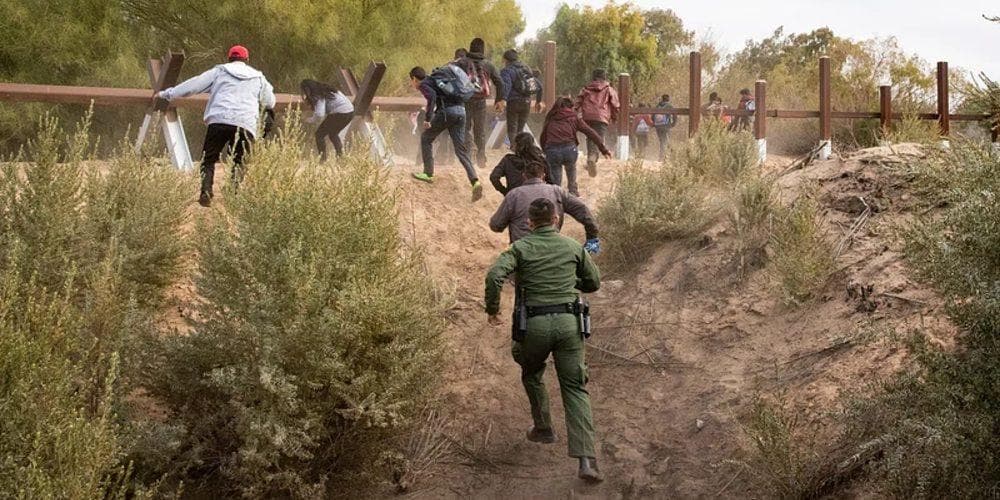
Republicans Indicate Bipartisan Amnesty Bill Dead on Arrival
(Daily Signal)—In the wake of President Donald Trump’s historic pledge to carry out a mass deportation program, a coalition of Republicans is promoting a bill to grant widespread amnesty to millions of illegal immigrants, prompting fierce backlash from fellow congressional Republicans and the GOP base. Rep. María Elvira Salazar, R-Fla., led 19 other Republicans in the House of Representatives in introducing H.R. 4393, the “Dignity for Immigrants while Guarding our Nation to Ignite and Deliver the American Dream Act of 2025” or DIGNIDAD (Spanish for “Dignity”) Act, in July. Late last month, Salazar and her cohorts launched the “Dignity Coalition” in an effort to gain support for the legislation. The renewed interest in the updated legislation, which Salazar touts as “the only serious, bipartisan solution to fix America’s broken immigration system,” has drawn scrutiny and criticism from fellow Republicans and immigration experts, who have declared the bill to be a thinly-veiled bid at widespread amnesty. The DIGNIDAD Act The legislation starts by introducing border security provisions, including the construction of barriers at the southern border, but quickly moves on to establish mass amnesty for illegal immigrants. “Division B — Dignity and American Dream” of the DIGNIDAD Act instructs the Homeland Security Secretary and Attorney General to “adjust to the status of an alien lawfully admitted for permanent residence … an alien who is inadmissible or deportable from the United States, is subject to a grant of Deferred Enforced Departure, has temporary protected status … or is the son or daughter of an alien admitted as a nonimmigrant” if that “alien has been continuously physically present in the United States since January 1, 2021,” and meets a handful of other requirements, including either having been accepted to an institute of higher education or holding a high school diploma. The legislation provides immediate work authorization for illegal immigrants, establishes unlimited access to permanent legal residency (commonly called holding a green card) and allows illegal immigrants who obtain green cards to apply for U.S. citizenship, and introduces a criminal waiver. The bill allows the Homeland Security Secretary to “waive the grounds of inadmissibility … for humanitarian purposes, for family unity, or because the waiver is otherwise in the public interest.” Illegal immigrants who commit most violent crimes or are determined a national security threat are ineligible for the waiver, but crimes including domestic violence and traffic violations are eligible to be waived under the bill. These provisions would be available to an estimated two to three million illegal immigrants. The DIGNIDAD Act also establishes what its authors call the “Dignity Program,” which allows anywhere from 10 to 12 million illegal immigrants currently in the U.S. access to renewable seven-year work authorization permits and travel authorization. The program would also provide for “deferred action” for those eligible, effectively halting deportations. “An alien who appears to be prima facie eligible for status under this subtitle during the 24-month period following the date of enactment of this Act may not be removed or fined based on their immigration status,” the bill states. The “prima facie” eligibility effectively halts deportations for all illegal immigrants who apply for the “Dignity Program,” even those who have been issued final orders of removal by immigration courts. Other provisions in the bill reduce visa caps, create and expand “humanitarian parole” programs, and reduce asylum and visa application backlogs by rapidly approving most applications. One provision even establishes student “loan forgiveness” for law school graduates who have “completed not less than four years of full-time employment as an attorney providing legal services” for illegal immigrants. The provision orders the federal government to use taxpayer dollars to “forgive 75 percent of the eligible student loan obligation of a borrower … that is outstanding after the completion of the fourth year of employment described in such paragraph.” Yet another provision actually allows for illegal immigrants already deported to apply for and receive authorization to return and participate in the “Dignity Program.” In other words, the illegal immigrants that the first Trump administration managed to deport will be invited back and offered a chance to achieve legal permanent residency in most cases. Understanding the Problem George Fishman, senior legal fellow at the Center for Immigration Studies (CIS) and former Deputy General Counsel at the Department of Homeland Security (DHS) under Trump’s first term, explained that the DIGNIDAD Act would grant “first-tier amnesty” to as many as three million illegal immigrants and “second-tier amnesty” to as many as 12 million, and “will increase legal immigration levels by 55 percent — over five million persons over the next decade. This is not what the American people were hoping for in electing Donald Trump as president.” CIS Resident Fellow in Law and Policy Andrew R. Arthur, a former immigration judge and lawyer responsible for drafting federal immigration legislation, referred to the DIGNIDAD Act as “rage bait.” He explained, “This bill was designed to go nowhere, but its filing shows a failure to read the room of voters who brought Donald Trump back to the White House in November 2024.” “The first clue that H.R. 4393 wasn’t written to pass lies in its name,” Arthur observed. “Respectfully, naming your bill the ‘DIGNIDAD Act’ and then providing subtitles is the ‘press one for English’ of legislative drafting,” he added, noting that foreigners who seek permanent residence in the U.S. have an obligation to respect and assimilate to American culture, including the use of American English. Relying on his own experience working with federal legislators, Arthur also pointed out that the DIGNIDAD Act has been referred to seven different House committees. “If the primary sponsor is on a committee with clear jurisdiction over an issue and has a good relationship with the chair and the other members, the smart play is to write the bill in such a way that it is referred to only that committee and no other,” he observed. “Otherwise, it will usually be sent to more than one committee, for serial consideration and mark-up, and if any of the chairs of those other committees refuses to even consider the bill, it will stall and die.” Arthur added, “Unless the legislation is a clear response to an imminent and existential threat to the Republic … more than three referrals generally always spells failure.” “Simply put, the DIGNIDAD Act wasn’t written to pass; it’s a ‘messaging bill’ intended to make a point,” Arthur opined. “There are, admittedly, good-faith arguments for why some aliens who came illegally or overstayed their periods of nonimmigrant admission should be allowed to remain, but most amnesties have failed or, worse, simply encouraged more illegal immigration because would-be illegal migrants don’t read the fine print and smugglers have worse ethics (but better sales pitches) than telephone extended-warranty peddlers,” he continued. “Consequently, selling any amnesty is a heavy lift even for the savviest of politicos, and the DIGNIDAD Act has more poison pills than Dr. Kevorkian’s pharmacopeia.” Arthur observed that the DIGNIDAD Act not only grants explicit amnesties for millions of illegal immigrants but also contains “amnesties in the amnesties.” He noted the provision establishing “prima facie” eligibility for illegal immigrants applying to the “Dignity Program,” commenting, “Government databases aren’t the best or most up-to-date, and this provision would create a logistical nightmare for ICE officers trying to determine whether to investigate, let alone arrest, an alien with a final removal order.” He added, “Moreover, why would ICE bother arresting any aliens, given that they will all immediately turn around and seek amnesty?” The Immigration and Nationality Act (INA) explicitly bars Article III courts from reviewing most administrative immigration court decisions. (Immigration courts are a component of the federal executive branch, governed by Article II of the Constitution, while federal district courts and their appellate divisions, all the way up to the Supreme Court, are established and governed by Article III, which created the federal judiciary system.) The DIGNIDAD Act, however, attempts to skirt this provision by allowing “for judicial review of denials starting at the federal district court level and going up from there.” Arthur stated that, in the INA, Congress intentionally “cut district court judges out of reviews of most administrative immigration decisions because those courts were where immigration cases went to die.” Additionally, there are fewer than 700 federal district court judges “on the bench right now, and if you were to add the hundreds of thousands of amnesty reviews (at a minimum) this bill could create to their dockets, you’d grind every other federal case to a halt,” Arthur pointed out. “As a taxpayer with April 15 coming up, if the DIGNIDAD Act were to pass, I’d beg DHS to rubber-stamp every amnesty application to save the massive litigation costs and prevent judicial-branch calamity.” “Nothing about this bill suggests it’s a serious effort. In fact, it is to lawmaking what graffiti is to art, a near-meta effort to call the very concept of legislating into question,” Arthur concluded. The only goal the DIGNIDAD Act achieves, he suggested, is reminding “the public why amnesty is a bad idea: It’s unfair to those who have followed the costly and laborious process of coming legally; it’s a give-away bordering on pandering to special interests; it’s complicated and thus easily exploited; it’s a veritable ‘lawyers’ relief act’; and it would throw enforcement into chaos.” The legislation has drawn the ire of numerous Republicans and immigration hardliners, allowing many to articulate the dangers of amnesty and reiterate the necessity of stringent immigration enforcement and reform. “Simply put,” Arthur commented, “the DIGNIDAD Act would be Swiftian-level satire if the sponsors’ intent was to rage-bait the Right into demanding more ICE arrests and deportations, and an even-tighter border. That plainly wasn’t the sponsors’ goal, but regardless, it’s the reason why so many on the Right are right now discussing a bill that was built to fail.” ‘No Amnesty’ One of the DIGNIDAD Act’s co-sponsors, Rep. Mike Lawler, D-N.Y., took to the airwaves this week to promote the legislation. The bill, he said, has “broad bipartisan support,” noting the Republicans and Democrats who have signed on as co-sponsors in recent months. “I think folks do recognize that we have a problem,” he said. “If you’ve been here more than five years—so not the people who came under Joe Biden’s disastrous administration, but the people who have been in this country five, 10, 15, 20 years, whose children and grandchildren may in fact be American citizens—they would qualify if they haven’t committed a crime, they paid back taxes, they pay a fine, they have a job, and they do not collect government benefits,” Lawler claimed. “They would qualify for legal status, not citizenship; they would be precluded from citizenship,” he added, referring to the approximately 12 million illegal immigrants who would be eligible to participate in the “Dignity Program,” not the roughly three million who would be classified as “dreamers” and would easily be able to attain U.S. citizenship. The DIGNIDAD Act, the congressman said, would “get people out of the shadows.” Lawler’s fellow Republicans were less enthusiastic. “No amnesty. No amnesty-lite. No ‘path to citizenship.’ No ‘Dignity Act.’ This is a red line,” said Rep. Brandon Gill, R-Texas, noting that the legislation would grant amnesty to over 10 million illegal immigrants. “It’s rank amnesty and everybody knows it. I want dignity for Americans—the people whose interests we represent—not illegal aliens. That means doing what we said we’d do: mass deportations,” he added, in a separate social media post. “The ‘DIGNIDAD’ amnesty bill is two massive middle fingers to the voters who gave President Trump a popular vote victory and handed Republicans a trifecta, all on a platform of mass deportations.” “Amnesty doesn’t fix a broken system,” said Rep. Chip Roy, R-Texas, “it rewards the very lawbreaking that caused it. We should be restoring the rule of law and pausing immigration, not incentivizing more illegal behavior.” In an interview, Roy asserted, “The so-called Dignity Act isn’t about dignity — it’s about eroding accountability.” He continued, “It rewards illegal immigration with sweeping amnesty for millions of lawbreakers while pushing aside the basic duty to put Americans first. A nation that won’t enforce its own laws isn’t compassionate, it’s neglecting its responsibility to its own citizens.” Roy and other members of the House Freedom Caucus have vowed to oppose the legislation in Congress. Roy charged that the bill “belongs in the trash bin of failed ideas.” Rep. Mike Collins, R-Ga., shared a video compilation depicting Americans who have been murdered by illegal immigrants, with the caption, “They deserved dignity.” He added, “Stop rewarding illegal aliens who reject our culture, values, and laws with citizenship. If dignity matters so much, give some to the American people who elites have ripped off for decades. The ‘Dignity Act’ is just amnesty. Throw it in the garbage.” Other Republicans who have signaled their opposition to the legislation include Reps. Lauren Boebert (Colo.), Eric Burlison (Mo.), Mark Harris (N.C.), Keith Self (Texas), Tom Tiffany (Wis.), and Senators Mike Lee (Utah) and Eric Schmitt (Mo.). A number of conservative activists and organizations have also called for the DIGNIDAD Act to be halted. “Perhaps some on the Right missed the memo. The mandate was for mass deportations, NOT mass amnesty,” the Heritage Foundation posted on social media, adding, “The only pathway we need for illegal aliens is a pathway back to where they came from.” Conservative commentator and documentary filmmaker Matt Walsh said that the DIGNIDAD Act is “even worse than you think. If this bill became law it would destroy the country. It would be the most disastrous piece of legislation in decades.” He added, “Every Republican who supports it should be run out of town.” Recent polling published by the Immigration Accountability Project found that nearly 60% of likely voters would oppose amnesty and still support the deportation of all illegal immigrants currently in the U.S. and that Republican voters would be encouraged to vote in November’s crucial midterm elections by an increase in immigration enforcement and discouraged from voting by a failure to follow through on the mass deportation program promised by Trump in 2024. A Cygnal survey from late January also concluded that 61% of voters support the deportation of all illegal immigrants, 73% consider entering the U.S. illegally to be a criminal act, and 54% support the conduct of ICE in arresting and deporting illegal immigrants. Originally published by The Washington Stand.

Concerns Over Iranian Terrorist Attacks Grow Over Attempts to Reach “Prepositioned Sleeper Assets”
Approximately 1,500 Iranians were intercepted at the U.S. southern border during the Biden administration, with roughly half released into the country pending court hearings. Officials express deep concern over the unknown number of Iranians who evaded detection entirely, known as “gotaways,” amid heightened fears of Iranian retaliation following U.S. and Israeli strikes on Iran. Federal alerts have warned of possible encoded communications from Iran intended as “operational triggers” for prepositioned sleeper assets on American soil. Senators from both parties, including Bill Hagerty, Ron Wyden, James Risch, and Rick Scott, have voiced alarms about the potential presence of sleeper cells and the need for vigilance. Recent incidents, such as a car attack on a Michigan synagogue and a shooting at Old Dominion University, have intensified homeland security worries even as no direct link to Iranian direction has been confirmed in every case. President Trump has stated that authorities are monitoring individuals who entered during the previous administration’s border policies and that most are being tracked. Iran remains designated as a state sponsor of terrorism, with a history of using proxies and covert networks for asymmetric attacks. The combination of border encounters, intercepted signals, and ongoing military conflict has prompted increased scrutiny by the FBI, CIA, and Department of Homeland Security. Mounting concerns about potential Iranian sleeper cells inside the United States have surged in recent weeks, driven by the scale of Iranian nationals encountered at the southern border in prior years and fresh intelligence warnings tied to escalating conflict abroad. Roughly 1,500 Iranians were stopped at the U.S.-Mexico border during the Biden administration, according to data referenced by lawmakers and border officials. Of those intercepted, about half were released into the interior of the country while awaiting immigration proceedings. The true scope of the risk, however, lies in those who were never caught. Sen. Bill Hagerty, a Tennessee Republican and former U.S. ambassador to Japan, described the figures as deeply concerning. “We have no idea how many people got around obviously,” he told the New York Post. “The numbers are deeply concerning.” Hagerty noted that many of the encounters involved individuals who traveled through hubs such as Sao Paulo, Brazil, a known corridor for passport fraud and irregular migration. Customs and Border Protection data cited by the Niskanen Center indicate the number of intercepted Iranians climbed to approximately 1,650 between 2022 and 2025. These encounters occurred against the backdrop of Iran’s long-standing designation as a state sponsor of terrorism, a regime that has repeatedly demonstrated its willingness to strike through proxies, lone actors, and covert operatives rather than direct conventional confrontation. A federal security alert issued in recent weeks warned law enforcement of possible efforts by Iran to contact “prepositioned sleeper assets” inside the United States. Intelligence officials reported detecting encoded transmissions—potentially using shortwave radio methods reminiscent of Cold War-era number stations—that could serve as operational triggers for dormant networks. Such communications are difficult to intercept and even harder to attribute in real time, leaving authorities to operate with incomplete visibility. President Trump addressed the issue directly on March 11, acknowledging the vulnerabilities created by earlier border policies while expressing confidence in current monitoring efforts. “A lot of people came in through Biden with his stupid open border, but we know where most of them are: We’ve got our eye on all of them, I think,” he said. His administration has faced the challenge of sorting through legacy cases while confronting an active threat environment shaped by sustained U.S. and Israeli military actions against Iranian leadership and infrastructure. Bipartisan voices in the Senate have echoed the gravity of the situation. Senate Intelligence Committee Vice Chair Sen. Ron Wyden, a Democrat from Oregon, noted the moment carries “a lot of safety challenges” without disclosing classified details. Republican senators, including James Risch of Idaho and Rick Scott of Florida, stressed the need for constant vigilance. “I don’t think there’s any question they’re here,” Scott said. “We’ve got to be so vigilant … it just takes one person.” Recent domestic incidents have added urgency to the warnings. In mid-March, a Lebanese American man drove a car packed with explosives into a synagogue in West Bloomfield, Michigan. Around the same time, an ISIS-linked gunman opened fire at Old Dominion University in Virginia, killing an ROTC instructor. While not every event has been conclusively tied to Iranian direction, the timing amid strikes on Iran has heightened scrutiny of any attack involving individuals with Middle Eastern ties or expressed sympathies. FBI Director Kash Patel and CIA Director John Ratcliffe have engaged with lawmakers on Capitol Hill to discuss surveillance authorities and emerging threats. These briefings occur as federal agencies weigh the balance between protecting civil liberties and disrupting potential plots before they materialize. The challenge is compounded by the diffuse nature of modern terrorism, where state actors like Iran can inspire or direct lone wolves and small cells without leaving clear command-and-control footprints. Iran’s strategy has long relied on asymmetric tools precisely because it lacks the conventional military reach of a superpower. Sleeper cells—operatives who embed quietly, often for years, maintaining normal lives until activated—represent one such tool. Historical precedents include Hezbollah-linked networks uncovered in the United States and Latin America, as well as Iran’s support for proxy militias across the Middle East that have targeted American personnel. The unknown number of “gotaways” from the southern border during the 2021–2024 period remains a central point of contention. Even if only a small fraction of those who crossed carried hostile intent, the absolute numbers involved in special interest alien encounters from terrorism-prone regions raise legitimate questions about exposure. Law enforcement in border states, particularly Texas, has repeatedly flagged the influx of individuals from countries like Iran as requiring heightened vetting and monitoring. President Trump’s team has moved to tighten enforcement and review prior releases, yet the reality of millions of encounters and releases under the previous administration means the work of identification and neutralization is ongoing. Officials emphasize that presence alone does not prove imminent threat, but the combination of opportunity, capability, and motivation from a cornered regime creates a risk profile that cannot be ignored. Broader patterns reinforce the concern. Iran has a documented history of plotting attacks on U.S. soil and against American allies, ranging from assassination attempts to cyber operations. The regime’s leadership, significantly degraded by recent strikes, may calculate that domestic terrorism offers a low-cost way to impose costs on the United States without risking further direct military losses. Americans have every reason to expect their government to treat this threat with the seriousness it demands. That means rigorous vetting at the border, robust intelligence sharing, targeted surveillance where legally justified, and swift action against any confirmed operatives or networks. Complacency is not an option when the stakes involve potential mass casualty events on home soil. The coming months will test the nation’s ability to deter and defend against this shadow war. With Iran’s conventional power diminished but its ideological reach intact, the focus must remain on disrupting pathways of infiltration and activation before they yield tragedy. Vigilance, informed by hard lessons from the recent past, remains the surest safeguard.
Concerns Over Iranian Terrorist Attacks Grow Over Attempts to Reach “Prepositioned Sleeper Assets”
Approximately 1,500 Iranians were intercepted at the U.S. southern border during the Biden administration, with roughly half released into the country pending court hearings. Officials express deep concern over the unknown number of Iranians who evaded detection entirely, known as “gotaways,” amid heightened fears of Iranian retaliation following U.S. and Israeli strikes on Iran. Federal alerts have warned of possible encoded communications from Iran intended as “operational triggers” for prepositioned sleeper assets on American soil. Senators from both parties, including Bill Hagerty, Ron Wyden, James Risch, and Rick Scott, have voiced alarms about the potential presence of sleeper cells and the need for vigilance. Recent incidents, such as a car attack on a Michigan synagogue and a shooting at Old Dominion University, have intensified homeland security worries even as no direct link to Iranian direction has been confirmed in every case. President Trump has stated that authorities are monitoring individuals who entered during the previous administration’s border policies and that most are being tracked. Iran remains designated as a state sponsor of terrorism, with a history of using proxies and covert networks for asymmetric attacks. The combination of border encounters, intercepted signals, and ongoing military conflict has prompted increased scrutiny by the FBI, CIA, and Department of Homeland Security. Mounting concerns about potential Iranian sleeper cells inside the United States have surged in recent weeks, driven by the scale of Iranian nationals encountered at the southern border in prior years and fresh intelligence warnings tied to escalating conflict abroad. Roughly 1,500 Iranians were stopped at the U.S.-Mexico border during the Biden administration, according to data referenced by lawmakers and border officials. Of those intercepted, about half were released into the interior of the country while awaiting immigration proceedings. The true scope of the risk, however, lies in those who were never caught. Sen. Bill Hagerty, a Tennessee Republican and former U.S. ambassador to Japan, described the figures as deeply concerning. “We have no idea how many people got around obviously,” he told the New York Post. “The numbers are deeply concerning.” Hagerty noted that many of the encounters involved individuals who traveled through hubs such as Sao Paulo, Brazil, a known corridor for passport fraud and irregular migration. Customs and Border Protection data cited by the Niskanen Center indicate the number of intercepted Iranians climbed to approximately 1,650 between 2022 and 2025. These encounters occurred against the backdrop of Iran’s long-standing designation as a state sponsor of terrorism, a regime that has repeatedly demonstrated its willingness to strike through proxies, lone actors, and covert operatives rather than direct conventional confrontation. A federal security alert issued in recent weeks warned law enforcement of possible efforts by Iran to contact “prepositioned sleeper assets” inside the United States. Intelligence officials reported detecting encoded transmissions—potentially using shortwave radio methods reminiscent of Cold War-era number stations—that could serve as operational triggers for dormant networks. Such communications are difficult to intercept and even harder to attribute in real time, leaving authorities to operate with incomplete visibility. President Trump addressed the issue directly on March 11, acknowledging the vulnerabilities created by earlier border policies while expressing confidence in current monitoring efforts. “A lot of people came in through Biden with his stupid open border, but we know where most of them are: We’ve got our eye on all of them, I think,” he said. His administration has faced the challenge of sorting through legacy cases while confronting an active threat environment shaped by sustained U.S. and Israeli military actions against Iranian leadership and infrastructure. Bipartisan voices in the Senate have echoed the gravity of the situation. Senate Intelligence Committee Vice Chair Sen. Ron Wyden, a Democrat from Oregon, noted the moment carries “a lot of safety challenges” without disclosing classified details. Republican senators, including James Risch of Idaho and Rick Scott of Florida, stressed the need for constant vigilance. “I don’t think there’s any question they’re here,” Scott said. “We’ve got to be so vigilant … it just takes one person.” Recent domestic incidents have added urgency to the warnings. In mid-March, a Lebanese American man drove a car packed with explosives into a synagogue in West Bloomfield, Michigan. Around the same time, an ISIS-linked gunman opened fire at Old Dominion University in Virginia, killing an ROTC instructor. While not every event has been conclusively tied to Iranian direction, the timing amid strikes on Iran has heightened scrutiny of any attack involving individuals with Middle Eastern ties or expressed sympathies. FBI Director Kash Patel and CIA Director John Ratcliffe have engaged with lawmakers on Capitol Hill to discuss surveillance authorities and emerging threats. These briefings occur as federal agencies weigh the balance between protecting civil liberties and disrupting potential plots before they materialize. The challenge is compounded by the diffuse nature of modern terrorism, where state actors like Iran can inspire or direct lone wolves and small cells without leaving clear command-and-control footprints. Iran’s strategy has long relied on asymmetric tools precisely because it lacks the conventional military reach of a superpower. Sleeper cells—operatives who embed quietly, often for years, maintaining normal lives until activated—represent one such tool. Historical precedents include Hezbollah-linked networks uncovered in the United States and Latin America, as well as Iran’s support for proxy militias across the Middle East that have targeted American personnel. The unknown number of “gotaways” from the southern border during the 2021–2024 period remains a central point of contention. Even if only a small fraction of those who crossed carried hostile intent, the absolute numbers involved in special interest alien encounters from terrorism-prone regions raise legitimate questions about exposure. Law enforcement in border states, particularly Texas, has repeatedly flagged the influx of individuals from countries like Iran as requiring heightened vetting and monitoring. President Trump’s team has moved to tighten enforcement and review prior releases, yet the reality of millions of encounters and releases under the previous administration means the work of identification and neutralization is ongoing. Officials emphasize that presence alone does not prove imminent threat, but the combination of opportunity, capability, and motivation from a cornered regime creates a risk profile that cannot be ignored. Broader patterns reinforce the concern. Iran has a documented history of plotting attacks on U.S. soil and against American allies, ranging from assassination attempts to cyber operations. The regime’s leadership, significantly degraded by recent strikes, may calculate that domestic terrorism offers a low-cost way to impose costs on the United States without risking further direct military losses. Americans have every reason to expect their government to treat this threat with the seriousness it demands. That means rigorous vetting at the border, robust intelligence sharing, targeted surveillance where legally justified, and swift action against any confirmed operatives or networks. Complacency is not an option when the stakes involve potential mass casualty events on home soil. The coming months will test the nation’s ability to deter and defend against this shadow war. With Iran’s conventional power diminished but its ideological reach intact, the focus must remain on disrupting pathways of infiltration and activation before they yield tragedy. Vigilance, informed by hard lessons from the recent past, remains the surest safeguard.
Concerns Over Iranian Terrorist Attacks Grow Over Attempts to Reach “Prepositioned Sleeper Assets”
Approximately 1,500 Iranians were intercepted at the U.S. southern border during the Biden administration, with roughly half released into the country pending court hearings. Officials express deep concern over the unknown number of Iranians who evaded detection entirely, known as “gotaways,” amid heightened fears of Iranian retaliation following U.S. and Israeli strikes on Iran. Federal alerts have warned of possible encoded communications from Iran intended as “operational triggers” for prepositioned sleeper assets on American soil. Senators from both parties, including Bill Hagerty, Ron Wyden, James Risch, and Rick Scott, have voiced alarms about the potential presence of sleeper cells and the need for vigilance. Recent incidents, such as a car attack on a Michigan synagogue and a shooting at Old Dominion University, have intensified homeland security worries even as no direct link to Iranian direction has been confirmed in every case. President Trump has stated that authorities are monitoring individuals who entered during the previous administration’s border policies and that most are being tracked. Iran remains designated as a state sponsor of terrorism, with a history of using proxies and covert networks for asymmetric attacks. The combination of border encounters, intercepted signals, and ongoing military conflict has prompted increased scrutiny by the FBI, CIA, and Department of Homeland Security. Mounting concerns about potential Iranian sleeper cells inside the United States have surged in recent weeks, driven by the scale of Iranian nationals encountered at the southern border in prior years and fresh intelligence warnings tied to escalating conflict abroad. Roughly 1,500 Iranians were stopped at the U.S.-Mexico border during the Biden administration, according to data referenced by lawmakers and border officials. Of those intercepted, about half were released into the interior of the country while awaiting immigration proceedings. The true scope of the risk, however, lies in those who were never caught. Sen. Bill Hagerty, a Tennessee Republican and former U.S. ambassador to Japan, described the figures as deeply concerning. “We have no idea how many people got around obviously,” he told the New York Post. “The numbers are deeply concerning.” Hagerty noted that many of the encounters involved individuals who traveled through hubs such as Sao Paulo, Brazil, a known corridor for passport fraud and irregular migration. Customs and Border Protection data cited by the Niskanen Center indicate the number of intercepted Iranians climbed to approximately 1,650 between 2022 and 2025. These encounters occurred against the backdrop of Iran’s long-standing designation as a state sponsor of terrorism, a regime that has repeatedly demonstrated its willingness to strike through proxies, lone actors, and covert operatives rather than direct conventional confrontation. A federal security alert issued in recent weeks warned law enforcement of possible efforts by Iran to contact “prepositioned sleeper assets” inside the United States. Intelligence officials reported detecting encoded transmissions—potentially using shortwave radio methods reminiscent of Cold War-era number stations—that could serve as operational triggers for dormant networks. Such communications are difficult to intercept and even harder to attribute in real time, leaving authorities to operate with incomplete visibility. President Trump addressed the issue directly on March 11, acknowledging the vulnerabilities created by earlier border policies while expressing confidence in current monitoring efforts. “A lot of people came in through Biden with his stupid open border, but we know where most of them are: We’ve got our eye on all of them, I think,” he said. His administration has faced the challenge of sorting through legacy cases while confronting an active threat environment shaped by sustained U.S. and Israeli military actions against Iranian leadership and infrastructure. Bipartisan voices in the Senate have echoed the gravity of the situation. Senate Intelligence Committee Vice Chair Sen. Ron Wyden, a Democrat from Oregon, noted the moment carries “a lot of safety challenges” without disclosing classified details. Republican senators, including James Risch of Idaho and Rick Scott of Florida, stressed the need for constant vigilance. “I don’t think there’s any question they’re here,” Scott said. “We’ve got to be so vigilant … it just takes one person.” Recent domestic incidents have added urgency to the warnings. In mid-March, a Lebanese American man drove a car packed with explosives into a synagogue in West Bloomfield, Michigan. Around the same time, an ISIS-linked gunman opened fire at Old Dominion University in Virginia, killing an ROTC instructor. While not every event has been conclusively tied to Iranian direction, the timing amid strikes on Iran has heightened scrutiny of any attack involving individuals with Middle Eastern ties or expressed sympathies. FBI Director Kash Patel and CIA Director John Ratcliffe have engaged with lawmakers on Capitol Hill to discuss surveillance authorities and emerging threats. These briefings occur as federal agencies weigh the balance between protecting civil liberties and disrupting potential plots before they materialize. The challenge is compounded by the diffuse nature of modern terrorism, where state actors like Iran can inspire or direct lone wolves and small cells without leaving clear command-and-control footprints. Iran’s strategy has long relied on asymmetric tools precisely because it lacks the conventional military reach of a superpower. Sleeper cells—operatives who embed quietly, often for years, maintaining normal lives until activated—represent one such tool. Historical precedents include Hezbollah-linked networks uncovered in the United States and Latin America, as well as Iran’s support for proxy militias across the Middle East that have targeted American personnel. The unknown number of “gotaways” from the southern border during the 2021–2024 period remains a central point of contention. Even if only a small fraction of those who crossed carried hostile intent, the absolute numbers involved in special interest alien encounters from terrorism-prone regions raise legitimate questions about exposure. Law enforcement in border states, particularly Texas, has repeatedly flagged the influx of individuals from countries like Iran as requiring heightened vetting and monitoring. President Trump’s team has moved to tighten enforcement and review prior releases, yet the reality of millions of encounters and releases under the previous administration means the work of identification and neutralization is ongoing. Officials emphasize that presence alone does not prove imminent threat, but the combination of opportunity, capability, and motivation from a cornered regime creates a risk profile that cannot be ignored. Broader patterns reinforce the concern. Iran has a documented history of plotting attacks on U.S. soil and against American allies, ranging from assassination attempts to cyber operations. The regime’s leadership, significantly degraded by recent strikes, may calculate that domestic terrorism offers a low-cost way to impose costs on the United States without risking further direct military losses. Americans have every reason to expect their government to treat this threat with the seriousness it demands. That means rigorous vetting at the border, robust intelligence sharing, targeted surveillance where legally justified, and swift action against any confirmed operatives or networks. Complacency is not an option when the stakes involve potential mass casualty events on home soil. The coming months will test the nation’s ability to deter and defend against this shadow war. With Iran’s conventional power diminished but its ideological reach intact, the focus must remain on disrupting pathways of infiltration and activation before they yield tragedy. Vigilance, informed by hard lessons from the recent past, remains the surest safeguard.
4 Takeaways From Top Minnesota Officials’ Testimony on State’s Massive Fraud
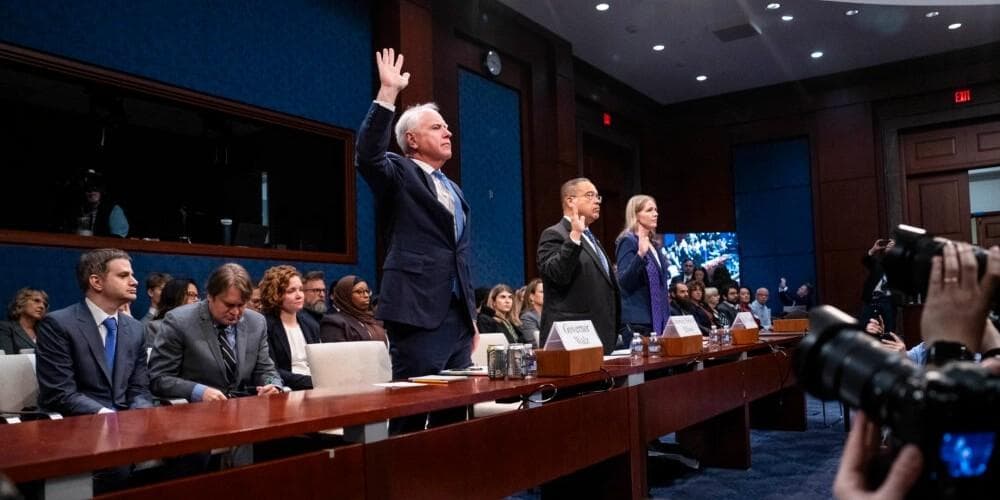
(The Epoch Times)—Two of Minnesota’s top officials—Gov. Tim Walz and Attorney General Keith Ellison—testified before Congress for more than four hours on March 4 about their state’s multibillion-dollar fraud controversies. During the latest hearing on Capitol Hill, Republicans tried to pin down when the two Democratic leaders were alerted to the fraud, why payments continued afterward, and what role politics may have played. Rep. James Comer (R-Ky.) summed up the scandal this way: “While whistleblowers were silenced, fraudsters got rich.” Comer chairs the House Committee on Oversight and Government Reform, which has now held two hearings on Minnesota fraud cases this year. While Democrat members of the committee agreed with Republicans’ demand to hold fraudsters accountable, some Democrats pivoted away from the issue of fraud. They said the committee ought to instead focus on U.S. Immigration and Customs Enforcement (ICE) actions in Minnesota, where confrontations turned deadly twice in January. Here are four takeaways. Payments ‘Kept Flowing’ After Fraud Alarms While Walz has said that his administration acted quickly, Comer said “that claim does not hold up to the facts.” Even after fraud was “known, documented, and repeatedly brought to the attention of state leadership,” state employees “kept payments flowing,” Comer said. Rep. Byron Donalds (R-Fla.) said the committee’s investigation found that state agency leaders directly notified Walz’s chief of staff by May 2020 about concerns regarding Feeding Our Future, a nonprofit organization that was paid to provide meals to children. Its payments skyrocketed from $307,000 in 2018, a year before Walz took office, to nearly $200 million by 2021, Donalds said—despite the fraud alarms. Authorities alleged that the organization stole nearly $300 million; dozens of people, mostly Somalis, have faced related federal charges since 2022. Several Republicans noted that Somalis overwhelmingly vote for Democrats and accused Democrats in Minnesota of turning a blind eye to retain that political support. Walz denied that accusation. Rep. Jim Jordan (R-Ohio) confronted Walz for publicly stating that payments to Feeding Our Future restarted under a court order. Ramsey County District Court Judge John H. Guthmann said he never issued any such order, according to a 2022 statement from the judge. Jordan asked Walz, “Why didn’t you tell the truth?” The governor responded that “the agency believed that the court had required them to make those payments.” Republicans also cited significant Walz-era increases in funding for other programs where fraud was uncovered: autism therapy, child care, and a housing-affordability program. Walz conceded he was aware of systemic fraud allegations before he took office, and said he took steps to address them. However, “We’re not going to shut down programs” that are otherwise worth it, Walz said. Repeatedly, the governor denounced fraud, saying, “one dollar is too much.” Whistleblower Retaliation Alleged and Denied Rep. Tim Burchett (R-Tenn.) told Walz, “Almost 30 whistleblowers accused you and your administration of retaliation.” Walz responded, “I can tell you it didn’t happen. … There’s a zero tolerance for whistleblower retaliation in Minnesota.” Rep. Brandon Gill (R-Texas) pointed to the case of a state employee—a lifelong Democrat—who “was called ‘racist’ and her work responsibilities were diminished” after she blew the whistle on fraud. Many whistleblowers have reported being called “racist” or “Islamophobic” for pointing out fraud allegations against Somalis, who are predominantly black Muslims. In response, Walz said that Minnesota offers “very strong whistleblower protections.” He also said it is illegal to retaliate against whistleblowers or intimidate them. Gill replied, “Your administration has treated whistleblowers like absolute dirt, and that’s a big reason why we’ve seen so much of our hard-earned tax dollars defrauded.” Burchett also named some specific organizations that were never prosecuted. “Every dad-gum one of you all ought to step down,” Burchett said. Other Republicans also called for resignations from Walz and Ellison. ‘Compassion Over Compliance’ Rep. William Timmons (R-S.C.) raised concerns about former and current Minnesota welfare agency employees stating they were told to emphasize “compassion over compliance” when dealing with recipients of government aid. Documents back up statements showing that employees were told that they should behave based on a “mindset” of 70 percent compassion, 30 percent compliance, Timmons said. “After acknowledging how widespread and pervasive fraud is in Minnesota, how should your state employees prioritize program compliance? What is your message to people now relative to this compassion–compliance ratio?” Timmons asked. Walz said he agreed with Timmons. “It’s not an either-or, and it’s not a percentage,” the governor said. “We’re not going to stop these programs … [but] we need to have fraud prevention and program integrity.” Walz, Ellison Defend Record Walz, in a written statement, vowed: “In Minnesota, if you defraud public programs, if you steal taxpayer money, we will find you, we will prosecute you, we will convict you, and we will throw you in jail.” He acknowledged that the governor has an important role in fighting fraud and that “the buck ultimately stops with me.”