Deccan Chronicle
deccanchronicle.com
4 stories credited to Deccan Chronicle
Latest story Apr 16, 2026 · on ChamberLight since Apr 2026
A story can appear as several articles (copies of the same piece), so counts of stories and of articles differ.
Scores for Deccan Chronicle
Writing quality not enough rated stories yet: 3 of 10. How it is measured
Scores last checked Sep 25, 2026.
Stories ChamberLight collected, by month
Stories credited to Deccan Chronicle, by publication date. ChamberLight collects articles that mention the officials it tracks, so this shows its own coverage of this source, not how much the source publishes.
- Stories from Deccan Chronicle
- Shaded: ChamberLight collected no stories, or almost none, from any outlet (a gap in its collection, not in the outlet’s publishing)
Show as a table
| Month | Stories | All outlets |
|---|---|---|
| March 2026 | 2 | 1,043 |
| April 2026 | 2 | 4,538 |
| May 2026 | 0 | none collected |
| June 2026 | 0 | none collected |
| July 2026 | 0 | none collected |
| August 2026 | 0 | 1 (collection gap) |
| September 2026 | 0 | 1,320 |
Top topics
Share of this source’s stories tagged with each topic. A story can carry several topics, so the shares do not add up to 100%.
- Defense/Military4
100% of 4 stories · 25% across all outlets
- Foreign Policy4
100% of 4 stories · 29% across all outlets
- Economy3
75% of 4 stories · 26% across all outlets
- Veterans Affairs1
25% of 4 stories · 1% across all outlets
The thin mark on each bar is the topic’s share across all outlets.
Who they cover
Party of the officials these stories are mainly about, across all 9 officials named. A story counts once for each official it is mainly about, so the split is over 14 story–official pairs, from 4 stories.
- Republican79% · 11 pairs
- Democrat21% · 3 pairs
Most covered
Stories mainly about each official, and their share of the source’s 4 stories.
Article tone
ChamberLight’s article analysis assigns each story a tone toward the official it covers. It describes the coverage of that official, not Deccan Chronicle’s stance, and reader votes do not change it. 4 stories.
- Good Look
- 0 (0%)
- Mixed
- 3 (75%)
- Informational
- 1 (25%)
- Bad Look
- 0 (0%)
Challenges to these scores
No one has challenged a score on this page yet. Anyone can; editors publish every outcome here.
Articles served from deccanchronicle.com
15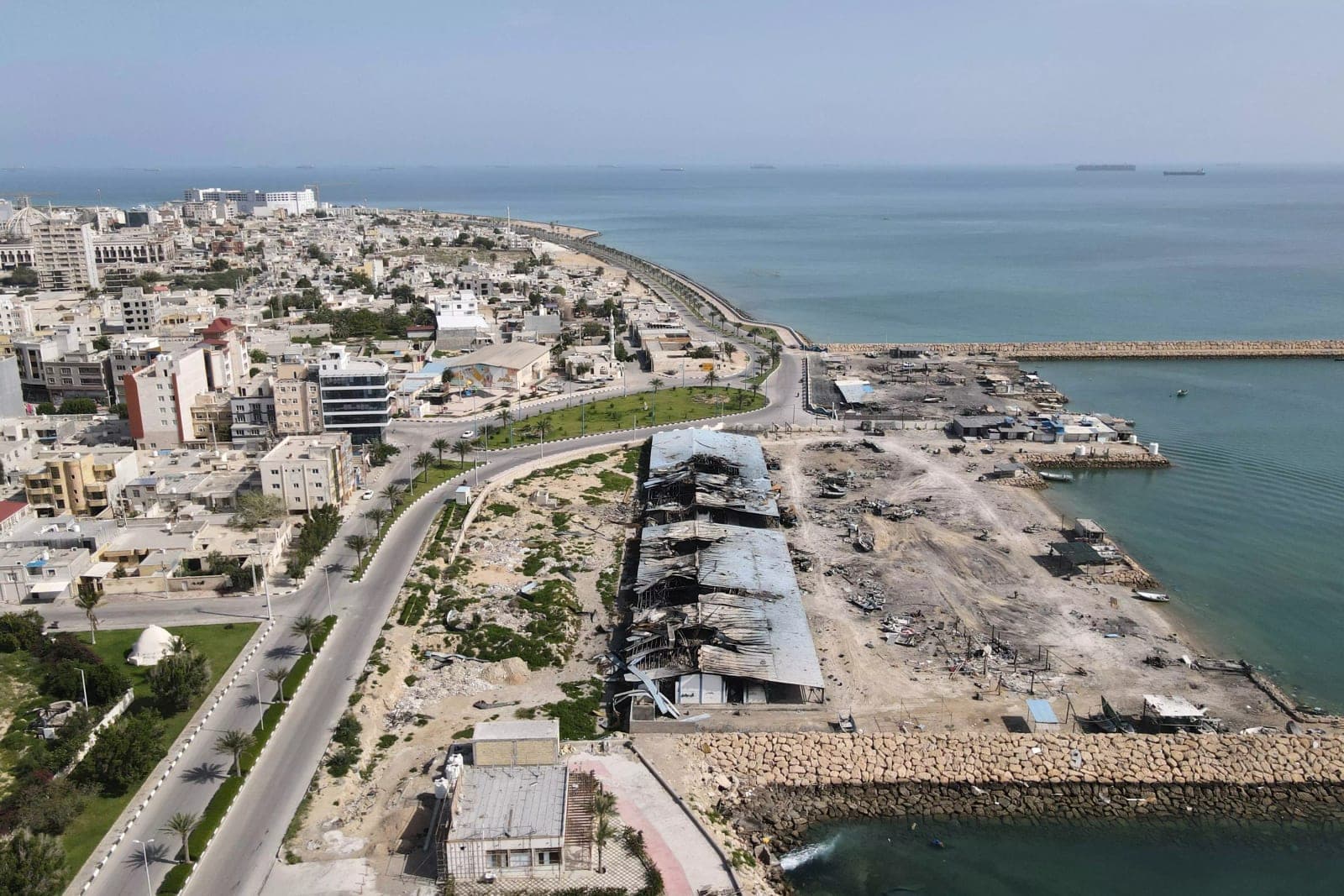
Iran Threatens to Disrupt Gulf Trade in Response to US Naval Blockade
The leader of Iran’s joint military command threatened Wednesday to halt trade in the Gulf region if the U.S. does not lift its blockade of Iranian ports. Even so, U.S. President Donald Trump said the war in Iran was “very close to over” in an interview that aired Wednesday. Separately, Treasury Secretary Scott Bessent warned that the U.S. is preparing to ramp up economic pain on Iran by levying secondary sanctions on financial institutions that do business with the Middle Eastern nation. Bessent called the measure the “financial equivalent” of the bombing campaign. Mediators’ efforts to extend a U.S.-Iran ceasefire made progress as the two sides are expected to hold another round of negotiations, regional officials said. But a senior U.S. official said Washington has not formally agreed to extend the ceasefire. A Pakistani delegation arrived for talks in Tehran in the latest diplomatic move. Israel, meanwhile, is pressing ahead with its aerial and ground war against the militant group Hezbollah in Lebanon, a day after the two nations held their first direct talks in decades . Sharif praises Saudi restraint According to the statement, Sharif assured the Kingdom of Pakistan’s “full solidarity and support” and praised what he described as Saudi Arabia’s restraint under the crown prince’s leadership. Pakistan has a defense agreement with the Kingdom, which has faced retaliatory attacks from Iran in recent weeks, causing damage. Pakistan’s prime minister briefs Saudi crown prince on efforts to ease US-Iran tensions Prime Minister Shehbaz Sharif met Saudi Crown Prince Mohammed bin Salman during a visit to the Kingdom, briefing him on Pakistan’s efforts to ease U.S.-Iran tensions and assuring him of Islamabad’s “full support,” his office said before dawn Thursday. Wednesday’s meeting lasted more than two hours, and Sharif was accompanied by Foreign Minister Ishaq Dar. The statement said the crown prince praised what it described as the constructive role played by Sharif and Pakistan’s army chief, Field Marshal Asim Munir, in the peace process. Sharif dispatched Munir to Tehran for talks with Iranian leaders. Pakistan has long maintained close ties with Saudi Arabia while also keeping relations with Iran. Military adviser to Iran’s supreme leader says he does not support extending ceasefire, according to state media “We are subject to the decisions of the relevant officials, but personally I do not agree to extend the ceasefire,” said Mohsen Rezaei, formerly a commander in the Iranian Revolutionary Guard Corps who now advises Mojtaba Khamenei on military affairs, Iranian state media reported. Rezaei also urged officials to be more cautious than they had been before in negotiations over economic matters with the U.S. He said Iran was setting the preconditions in the next round of talks, not the U.S. “Unlike the Americans who are afraid of continuous war, we are fully prepared and familiar with a long war,” he said, according to the report. Blockade ‘has been fully implemented,’ US admiral says That’s according to Adm. Brad Cooper, head of U.S. Central Command, who says: “U.S. forces have completely halted economic trade going in and out of Iran by sea.” The command said Wednesday that no vessels have made it past its forces during the blockade’s first 48 hours. The blockade began Monday. Central Command noted that 10 vessels have complied with directions to turn around and return toward an Iranian port or Iran’s coastal area. The blockade is being enforced “impartially against all vessels of all nations entering or leaving coastal areas or ports in Iran,” the Command said. Vessels avoiding Iranian ports are not affected. The action could put serious pressure on the Iranian economy, while Tehran’s earlier cutoff of the waterway crucial to oil and gas supplies has sent energy prices higher . ▶ Read more Wall Street hits a record on hopes for an end to the Iran war The U.S. stock market hit a record Wednesday after adding to its two-week rally built on hopes the war won’t create a worst-case scenario for the global economy. The S&P 500 rose 0.8% and eclipsed its prior all-time high set in January. After falling nearly 10% below its record in late March, the index at the heart of many 401(k) accounts has since roared more than 10% higher. Much of the rally was due to expectations for calming tensions in the war and a resumption of the full flow of oil from the Persian Gulf. Hopes remained high as regional officials told The Associated Press that the U.S. and Iran had an “in principle agreement” to extend a ceasefire to allow for more diplomacy. ▶ Read more US aircraft carrier sets deployment record The world’s largest aircraft carrier, the USS Gerald R. Ford, broke the U.S. record Wednesday for the longest post-Vietnam War deployment, a nearly 10-month span that saw it take part in both the military raid that captured Venezuela’s leader and the Iran war. The ship’s 295th day at sea surpassed the previous longest modern deployment by an aircraft carrier, when the USS Abraham Lincoln was sent out for 294 days in 2020 during the COVID-19 pandemic, according to data compiled by U.S. Naval Institute News, a news outlet run by the nonprofit U.S. Naval Institute. Sen. Tim Kaine said the record-breaking deployment has taken “a serious toll” on the mental health and well-being of the crew. “They should be home with their loved ones, not sent around the world by a President who acts like the U.S. military is his palace guard,” the Virginia Democrat said. Iran’s imprisoned Nobel Peace Prize laureate in ‘critical’ condition after heart attack Narges Mohammadi ’s family and lawyers visited her in Zanjan prison twice in the last month, a statement by the Narges Mohammadi Foundation said on X Wednesday, finding that her health condition was dire. She is weak, pale and has lost weight, said the statement. The report comes after Mohammadi had a heart attack in the prison on March 24, according to a cardiologist she saw soon after, according to the statement. The statement said that following the heart attack Mohammadi was unconscious without anyone resuscitating her for over an hour. Her brother, Hamidreza Mohammadi, said in the Wednesday statement that the cardiologist who saw her after the collapse told the family it was partially due to the medicines she’d been prescribed by prison doctors. He added that she was being kept in a cell with people convicted of murder and that she’d faced threats from them on numerous occasions. Mohammadi is a rights lawyer who won the Nobel Peace Prize in 2023 while in prison. She was arrested in December during a visit to the eastern Iranian city of Mashhad and sentenced to seven more years in prison. Iranian state media says Iran-Pakistan talks have started Iranian foreign minister Abbas Araghchi took part in a preliminary meeting with the Pakistani Army Chief of Staff, Asim Munir, in Tehran Wednesday, according to a report on IRIB, Islamic Republic of Iran Broadcasting. The report said more extensive talks would continue Thursday to discuss latest communications with the US. Pakistan is mediating talks between Washington and Tehran. US official says Trump would welcome an end to the Israel-Hezbollah conflict A U.S. official says President Donald Trump would welcome an end to the Israel-Hezbollah conflict as part of a broader peace agreement between Israel and Lebanon but has not specifically asked for one. The official, speaking on condition of anonymity to discuss the Trump administration’s position during closed-door talks between Israel and Lebanon, said an Israel-Hezbollah truce is not part of peace negotiations the U.S. is having with Iran. Iran has demanded a truce between Israel and its proxy Hezbollah as a condition to return to talks with the United States. Secretary of State Marco Rubio on Tuesday hosted the first talks in decades between high-level Israeli and Lebanese officials. Israeli prime minister says forces will continue push in south Lebanon Prime Minister Benjamin Netanyahu said the current fighting is concentrated in the strategic south Lebanon town of Bint Jbeil, where Israeli troops are about to “eliminate this great stronghold of Hezbollah.” Netanyahu, in a video address Wednesday evening, said he has given instructions for the military to continue to widen the security zone in south Lebanon — a reference to areas close to the border that the Israeli army now occupies — and to spread it eastward. He said Israel is concurrently negotiating with Lebanon, with two central goals: disarming Hezbollah and a sustainable peace. “Peace through strength,” he added. He also said the U.S. was updating Israel on the talks with Iran and that Israel was prepared for any scenario, should the fighting with Iran resume. Senate Republicans again reject effort to halt Trump’s Iran war The Republican-led Senate on Wednesday rejected the latest Democratic attempt to halt President Donald Trump’s war in Iran , turning aside a resolution that would require the U.S. to withdraw forces from the conflict until Congress authorizes further action. The 47-52 vote was the fourth time this year that the Senate has voted to cede its war powers to the president in a conflict that Democrats say is illegal and unjustified. Republicans say they will keep faith in Trump’s wartime leadership, for now, citing Iran’s nuclear capabilities and the high stakes of withdrawal. But GOP lawmakers are also anxious for the conflict to end — and they may not defer to the executive branch indefinitely. Some Republicans have already made clear that they are eyeing future votes that could become an important test for the president if the war drags on. ▶ Read more Treasury sanctions Ali Shamkhani-linked network, warns of secondary sanctions The U.S. is imposing sanctions targeting an Iranian oil smuggling network tied to the deceased senior Iranian security official Ali Shamkhani. Sanctions include dozens of individuals and companies accused of transporting and selling Iranian and Russian oil through front companies, many of which are in the UAE. Treasury Secretary Scott Bessent said in a statement, that banks “should be on notice that Treasury will leverage all tools and authorities, including secondary sanctions, against those that continue to support Tehran’s terrorist activities.” US ready to hit Iran with economic pain equivalent to bombings, top Trump official says Treasury Secretary Scott Bessent warned on Wednesday that the U.S. is preparing to ramp up economic pain on Iran, saying the Republican administration is preparing action that will be the “financial equivalent” of the bombing campaign. Bessent said the administration has “told companies, we have told countries that if you are buying Iranian oil, that if Iranian money is sitting in your banks, we are now willing to apply secondary sanctions, which is a very stern measure. And the Iranians should know that this is going to be the financial equivalent of what we saw in the kinetic activities.” The warning comes the day after Treasury Department sent a letter to financial institutions in China, Hong Kong, the United Arab Emirates, and Oman, threatening to levy secondary sanctions for doing business with Iran. White House says talks with Iran are ongoing White House press secretary Karoline Leavitt said the U.S. had not “formally requested an extension of the ceasefire” with Iran. The ceasefire announced on April 7 is currently slated to expire next Tuesday. “At this moment, we remain very much engaged, in these negotiations, in these talks,” Leavitt said, adding that there are “discussions” about more talks being held unperson “but nothing is official until you hear it from us here at the White House.” She said that the possible next rounds of talks “would very likely” be in the Pakistani capital of Islamabad as they were previously. Bessent says Americans can choose if they want to use their tax refunds to buy increasingly pricey gasoline Asked if the tax refunds would go toward gasoline averaging more than $4 a gallon, Treasury Secretary Scott Bessent said the public is free to spend its money however it wants. “Americans have more money. They can decide how they want to spend it,” Bessent said. Higher prices at the pump because of the Iran war has created the risk that President Donald Trump’s tax cuts will offset the cost of fueling up autos to go to work and run errands, instead of boosting spending in ways that could help overall economic growth. Bessent ‘optimistic’ that gasoline prices going back to $3 a gallon this summer Treasury Secretary Scott Bessent told reporters that he believes gasoline prices will be closer to $3 gallon this summer, saying pumping oil can resume within a week of the Strait of Hormuz opening. “I’m optimistic that sometime between June 20th and September 20th that we can have $3 gas again,” said Bessent. Gas prices are averaging $4.11 a gallon, up from $3.17 a year ago, according to AAA. US Navy says it will use force to compel compliance with Iran blockade U.S. Navy warships are telling merchant ships in and around Iran that they are ready to board them and use force to compel compliance with the blockade on ships trading with Iran. “Vessels will be boarded for interdiction and seizure transiting to or from Iranian port,” a Navy radio message, posted to social media by U.S. Central Command, said. A military official, who spoke on condition of anonymity to discuss an ongoing military operation, confirmed the message is currently being broadcast to all ships in the region. “If you do not comply with this blockade, we will use force,” the radio message added. —- Konstantin Toropin Iranian and Emirati officials discuss de-escalation efforts UAE Vice President Sheikh Mansour bin Zayed Al Nahyan and Iran’s parliamentary Speaker Mohammad Bagher Qalibaf discussed regional developments on a phone call and ways to de-escalate tensions, UAE state-run news agency WAM reported, without further details. UN allocates $12M for Iran aid UN Relief Chief Tom Fletcher said $12 million has been allocated for humanitarian support in Iran. “Thousands of civilians killed. Infrastructure destroyed. Essential services disrupted. This funding will help our partners deliver life-saving assistance at scale,” he wrote on X. House Speaker Mike Johnson defends Trump and Vance’s swipes at Pope Leo “If you wade into political waters, I think you should expect some political response,” the Republican leader said at the Capitol. “The pope’s received some of that.” Johnson insisted he’s not one to criticize clerics or religious leaders, but he leaned into what he called the just war doctrine when it comes to the U.S. military action against Iran. “The stakes are so high,” he said. “I don’t want to engage in a theological debate with the pope,” he said. “These are matters that people of good faith and good sense can debate.” Johnson a day earlier at the Capitol said that he had asked Trump to take down a social media post that was interpreted as the president depicting himself as Jesus. Israel to convene security cabinet to discuss developments with Lebanon An Israeli official said the meeting would be held Wednesday evening. The official spoke on the condition of anonymity because they were not authorized to speak to the media. The meeting comes a day after Lebanon and Israel held their first direct diplomatic talks in decades in Washington, following more than a month of war between Israel and the Iran-backed Hezbollah militant group. —- Melanie Lidman No ships have made it past U.S. naval blockade, military says U.S. Central Command said in a statement Wednesday that no vessels have made it past U.S. naval forces during the first 48 hours of the blockade on ships entering and exiting Iranian ports. Central Command also said nine vessels have complied with direction from U.S. forces to turn around and return toward an Iranian port or Iran’s coastal area. First crude tanker passes Strait of Hormuz since US blockade A Malta-flagged vessel is the first crude oil carrier to head west through Strait of Hormuz since the United States blocked Iranian ports, according to a global shipping tracking monitor. The Malta-flagged VLCC Agios Fanourios I is expected to arrive on Thursday in Basra, Iraq, where ports are not under U.S. blockade. Marine Traffic said the vessel attempted again a transit after anchoring in the Gulf of Oman for nearly two days. US called on Iran to halt uranium enrichment for 20 years The negotiating team led by Vice President JD Vance called for Iran to agree to a uranium enrichment moratorium as part of a potential deal to end the war, according to a regional official involved in the mediation efforts and a person briefed on the matter. The Iranians rejected the U.S. plan laid out during last weekend’s talks in Islamabad and came back with a counteroffer to suspend enrichment for five years, the regional official and a person briefed on the matter. They spoke on condition of anonymity because they were not authorized to comment publicly on the negotiations. The White House rejected the Iranian proposal that was conveyed by Tehran’s negotiators earlier this week. The White House and the vice president’s office did not respond to requests for comment about the proposals. The U.S. and Iranian proposals were first reported by the New York Times. Democrats grill US envoy in first opportunity to question Trump administration on Iran Attending a Senate Foreign Relations Committee hearing on reforms to the United Nations, ambassador Mike Waltz unintentionally became the highest-level U.S. official to testify before Congress since U.S. and Israeli strikes started a war against Iran. Democratic senators, including Chris Coons, Chris Murphy and Tim Kaine, took that opportunity to express their frustration with the Trump administration’s decision not to consult or further brief Capitol Hill on military action it is taking against Tehran. “Those of us on the Democratic side do find it amazing that we still have not had an open hearing on this committee or the Armed Services Committee on this conflict,” Murphy, who represents Connecticut, told Waltz. Asked several times about Trump’s threats last week to end Iranian civilization, Waltz defended it as “tough talk” and a “mean tweet” that yielded diplomatic results. “They clearly got the message, and they clearly came back to the table,” he said. 3 teams of paramedics were struck, Lebanese health ministry says The attacks in southern Lebanon killed three paramedics, wounded six others and left a fourth medic missing in the town of Mayfadoun, the health ministry said. The ministry said Israel struck the first team of paramedics on Wednesday as it was heading to rescue wounded people, killing one paramedic. Another medical worker on that initial mission remains “missing,” the ministry said, without elaborating. Israel struck the second team as it rushed to rescue the first, wounding three more paramedics. In the third and final rescue attempt, Israel again hit ambulances heading to the site, killing two paramedics and wounding three more. The Israeli military did not immediately respond to a request for comment on the strikes. Lebanon’s health ministry denounced Israel’s attacks as “a flagrant crime” and warned that “paramedics have become direct targets, pursued relentlessly in a blatant violation (of) … international humanitarian law.”
Iran Threatens to Disrupt Gulf Trade in Response to US Naval Blockade
The leader of Iran’s joint military command threatened Wednesday to halt trade in the Gulf region if the U.S. does not lift its blockade of Iranian ports. Even so, U.S. President Donald Trump said the war in Iran was “very close to over” in an interview that aired Wednesday. Separately, Treasury Secretary Scott Bessent warned that the U.S. is preparing to ramp up economic pain on Iran by levying secondary sanctions on financial institutions that do business with the Middle Eastern nation. Bessent called the measure the “financial equivalent” of the bombing campaign. Mediators’ efforts to extend a U.S.-Iran ceasefire made progress as the two sides are expected to hold another round of negotiations, regional officials said. But a senior U.S. official said Washington has not formally agreed to extend the ceasefire. A Pakistani delegation arrived for talks in Tehran in the latest diplomatic move. Israel, meanwhile, is pressing ahead with its aerial and ground war against the militant group Hezbollah in Lebanon, a day after the two nations held their first direct talks in decades . Sharif praises Saudi restraint According to the statement, Sharif assured the Kingdom of Pakistan’s “full solidarity and support” and praised what he described as Saudi Arabia’s restraint under the crown prince’s leadership. Pakistan has a defense agreement with the Kingdom, which has faced retaliatory attacks from Iran in recent weeks, causing damage. Pakistan’s prime minister briefs Saudi crown prince on efforts to ease US-Iran tensions Prime Minister Shehbaz Sharif met Saudi Crown Prince Mohammed bin Salman during a visit to the Kingdom, briefing him on Pakistan’s efforts to ease U.S.-Iran tensions and assuring him of Islamabad’s “full support,” his office said before dawn Thursday. Wednesday’s meeting lasted more than two hours, and Sharif was accompanied by Foreign Minister Ishaq Dar. The statement said the crown prince praised what it described as the constructive role played by Sharif and Pakistan’s army chief, Field Marshal Asim Munir, in the peace process. Sharif dispatched Munir to Tehran for talks with Iranian leaders. Pakistan has long maintained close ties with Saudi Arabia while also keeping relations with Iran. Military adviser to Iran’s supreme leader says he does not support extending ceasefire, according to state media “We are subject to the decisions of the relevant officials, but personally I do not agree to extend the ceasefire,” said Mohsen Rezaei, formerly a commander in the Iranian Revolutionary Guard Corps who now advises Mojtaba Khamenei on military affairs, Iranian state media reported. Rezaei also urged officials to be more cautious than they had been before in negotiations over economic matters with the U.S. He said Iran was setting the preconditions in the next round of talks, not the U.S. “Unlike the Americans who are afraid of continuous war, we are fully prepared and familiar with a long war,” he said, according to the report. Blockade ‘has been fully implemented,’ US admiral says That’s according to Adm. Brad Cooper, head of U.S. Central Command, who says: “U.S. forces have completely halted economic trade going in and out of Iran by sea.” The command said Wednesday that no vessels have made it past its forces during the blockade’s first 48 hours. The blockade began Monday. Central Command noted that 10 vessels have complied with directions to turn around and return toward an Iranian port or Iran’s coastal area. The blockade is being enforced “impartially against all vessels of all nations entering or leaving coastal areas or ports in Iran,” the Command said. Vessels avoiding Iranian ports are not affected. The action could put serious pressure on the Iranian economy, while Tehran’s earlier cutoff of the waterway crucial to oil and gas supplies has sent energy prices higher . ▶ Read more Wall Street hits a record on hopes for an end to the Iran war The U.S. stock market hit a record Wednesday after adding to its two-week rally built on hopes the war won’t create a worst-case scenario for the global economy. The S&P 500 rose 0.8% and eclipsed its prior all-time high set in January. After falling nearly 10% below its record in late March, the index at the heart of many 401(k) accounts has since roared more than 10% higher. Much of the rally was due to expectations for calming tensions in the war and a resumption of the full flow of oil from the Persian Gulf. Hopes remained high as regional officials told The Associated Press that the U.S. and Iran had an “in principle agreement” to extend a ceasefire to allow for more diplomacy. ▶ Read more US aircraft carrier sets deployment record The world’s largest aircraft carrier, the USS Gerald R. Ford, broke the U.S. record Wednesday for the longest post-Vietnam War deployment, a nearly 10-month span that saw it take part in both the military raid that captured Venezuela’s leader and the Iran war. The ship’s 295th day at sea surpassed the previous longest modern deployment by an aircraft carrier, when the USS Abraham Lincoln was sent out for 294 days in 2020 during the COVID-19 pandemic, according to data compiled by U.S. Naval Institute News, a news outlet run by the nonprofit U.S. Naval Institute. Sen. Tim Kaine said the record-breaking deployment has taken “a serious toll” on the mental health and well-being of the crew. “They should be home with their loved ones, not sent around the world by a President who acts like the U.S. military is his palace guard,” the Virginia Democrat said. Iran’s imprisoned Nobel Peace Prize laureate in ‘critical’ condition after heart attack Narges Mohammadi ’s family and lawyers visited her in Zanjan prison twice in the last month, a statement by the Narges Mohammadi Foundation said on X Wednesday, finding that her health condition was dire. She is weak, pale and has lost weight, said the statement. The report comes after Mohammadi had a heart attack in the prison on March 24, according to a cardiologist she saw soon after, according to the statement. The statement said that following the heart attack Mohammadi was unconscious without anyone resuscitating her for over an hour. Her brother, Hamidreza Mohammadi, said in the Wednesday statement that the cardiologist who saw her after the collapse told the family it was partially due to the medicines she’d been prescribed by prison doctors. He added that she was being kept in a cell with people convicted of murder and that she’d faced threats from them on numerous occasions. Mohammadi is a rights lawyer who won the Nobel Peace Prize in 2023 while in prison. She was arrested in December during a visit to the eastern Iranian city of Mashhad and sentenced to seven more years in prison. Iranian state media says Iran-Pakistan talks have started Iranian foreign minister Abbas Araghchi took part in a preliminary meeting with the Pakistani Army Chief of Staff, Asim Munir, in Tehran Wednesday, according to a report on IRIB, Islamic Republic of Iran Broadcasting. The report said more extensive talks would continue Thursday to discuss latest communications with the US. Pakistan is mediating talks between Washington and Tehran. US official says Trump would welcome an end to the Israel-Hezbollah conflict A U.S. official says President Donald Trump would welcome an end to the Israel-Hezbollah conflict as part of a broader peace agreement between Israel and Lebanon but has not specifically asked for one. The official, speaking on condition of anonymity to discuss the Trump administration’s position during closed-door talks between Israel and Lebanon, said an Israel-Hezbollah truce is not part of peace negotiations the U.S. is having with Iran. Iran has demanded a truce between Israel and its proxy Hezbollah as a condition to return to talks with the United States. Secretary of State Marco Rubio on Tuesday hosted the first talks in decades between high-level Israeli and Lebanese officials. Israeli prime minister says forces will continue push in south Lebanon Prime Minister Benjamin Netanyahu said the current fighting is concentrated in the strategic south Lebanon town of Bint Jbeil, where Israeli troops are about to “eliminate this great stronghold of Hezbollah.” Netanyahu, in a video address Wednesday evening, said he has given instructions for the military to continue to widen the security zone in south Lebanon — a reference to areas close to the border that the Israeli army now occupies — and to spread it eastward. He said Israel is concurrently negotiating with Lebanon, with two central goals: disarming Hezbollah and a sustainable peace. “Peace through strength,” he added. He also said the U.S. was updating Israel on the talks with Iran and that Israel was prepared for any scenario, should the fighting with Iran resume. Senate Republicans again reject effort to halt Trump’s Iran war The Republican-led Senate on Wednesday rejected the latest Democratic attempt to halt President Donald Trump’s war in Iran , turning aside a resolution that would require the U.S. to withdraw forces from the conflict until Congress authorizes further action. The 47-52 vote was the fourth time this year that the Senate has voted to cede its war powers to the president in a conflict that Democrats say is illegal and unjustified. Republicans say they will keep faith in Trump’s wartime leadership, for now, citing Iran’s nuclear capabilities and the high stakes of withdrawal. But GOP lawmakers are also anxious for the conflict to end — and they may not defer to the executive branch indefinitely. Some Republicans have already made clear that they are eyeing future votes that could become an important test for the president if the war drags on. ▶ Read more Treasury sanctions Ali Shamkhani-linked network, warns of secondary sanctions The U.S. is imposing sanctions targeting an Iranian oil smuggling network tied to the deceased senior Iranian security official Ali Shamkhani. Sanctions include dozens of individuals and companies accused of transporting and selling Iranian and Russian oil through front companies, many of which are in the UAE. Treasury Secretary Scott Bessent said in a statement, that banks “should be on notice that Treasury will leverage all tools and authorities, including secondary sanctions, against those that continue to support Tehran’s terrorist activities.” US ready to hit Iran with economic pain equivalent to bombings, top Trump official says Treasury Secretary Scott Bessent warned on Wednesday that the U.S. is preparing to ramp up economic pain on Iran, saying the Republican administration is preparing action that will be the “financial equivalent” of the bombing campaign. Bessent said the administration has “told companies, we have told countries that if you are buying Iranian oil, that if Iranian money is sitting in your banks, we are now willing to apply secondary sanctions, which is a very stern measure. And the Iranians should know that this is going to be the financial equivalent of what we saw in the kinetic activities.” The warning comes the day after Treasury Department sent a letter to financial institutions in China, Hong Kong, the United Arab Emirates, and Oman, threatening to levy secondary sanctions for doing business with Iran. White House says talks with Iran are ongoing White House press secretary Karoline Leavitt said the U.S. had not “formally requested an extension of the ceasefire” with Iran. The ceasefire announced on April 7 is currently slated to expire next Tuesday. “At this moment, we remain very much engaged, in these negotiations, in these talks,” Leavitt said, adding that there are “discussions” about more talks being held unperson “but nothing is official until you hear it from us here at the White House.” She said that the possible next rounds of talks “would very likely” be in the Pakistani capital of Islamabad as they were previously. Bessent says Americans can choose if they want to use their tax refunds to buy increasingly pricey gasoline Asked if the tax refunds would go toward gasoline averaging more than $4 a gallon, Treasury Secretary Scott Bessent said the public is free to spend its money however it wants. “Americans have more money. They can decide how they want to spend it,” Bessent said. Higher prices at the pump because of the Iran war has created the risk that President Donald Trump’s tax cuts will offset the cost of fueling up autos to go to work and run errands, instead of boosting spending in ways that could help overall economic growth. Bessent ‘optimistic’ that gasoline prices going back to $3 a gallon this summer Treasury Secretary Scott Bessent told reporters that he believes gasoline prices will be closer to $3 gallon this summer, saying pumping oil can resume within a week of the Strait of Hormuz opening. “I’m optimistic that sometime between June 20th and September 20th that we can have $3 gas again,” said Bessent. Gas prices are averaging $4.11 a gallon, up from $3.17 a year ago, according to AAA. US Navy says it will use force to compel compliance with Iran blockade U.S. Navy warships are telling merchant ships in and around Iran that they are ready to board them and use force to compel compliance with the blockade on ships trading with Iran. “Vessels will be boarded for interdiction and seizure transiting to or from Iranian port,” a Navy radio message, posted to social media by U.S. Central Command, said. A military official, who spoke on condition of anonymity to discuss an ongoing military operation, confirmed the message is currently being broadcast to all ships in the region. “If you do not comply with this blockade, we will use force,” the radio message added. —- Konstantin Toropin Iranian and Emirati officials discuss de-escalation efforts UAE Vice President Sheikh Mansour bin Zayed Al Nahyan and Iran’s parliamentary Speaker Mohammad Bagher Qalibaf discussed regional developments on a phone call and ways to de-escalate tensions, UAE state-run news agency WAM reported, without further details. UN allocates $12M for Iran aid UN Relief Chief Tom Fletcher said $12 million has been allocated for humanitarian support in Iran. “Thousands of civilians killed. Infrastructure destroyed. Essential services disrupted. This funding will help our partners deliver life-saving assistance at scale,” he wrote on X. House Speaker Mike Johnson defends Trump and Vance’s swipes at Pope Leo “If you wade into political waters, I think you should expect some political response,” the Republican leader said at the Capitol. “The pope’s received some of that.” Johnson insisted he’s not one to criticize clerics or religious leaders, but he leaned into what he called the just war doctrine when it comes to the U.S. military action against Iran. “The stakes are so high,” he said. “I don’t want to engage in a theological debate with the pope,” he said. “These are matters that people of good faith and good sense can debate.” Johnson a day earlier at the Capitol said that he had asked Trump to take down a social media post that was interpreted as the president depicting himself as Jesus. Israel to convene security cabinet to discuss developments with Lebanon An Israeli official said the meeting would be held Wednesday evening. The official spoke on the condition of anonymity because they were not authorized to speak to the media. The meeting comes a day after Lebanon and Israel held their first direct diplomatic talks in decades in Washington, following more than a month of war between Israel and the Iran-backed Hezbollah militant group. —- Melanie Lidman No ships have made it past U.S. naval blockade, military says U.S. Central Command said in a statement Wednesday that no vessels have made it past U.S. naval forces during the first 48 hours of the blockade on ships entering and exiting Iranian ports. Central Command also said nine vessels have complied with direction from U.S. forces to turn around and return toward an Iranian port or Iran’s coastal area. First crude tanker passes Strait of Hormuz since US blockade A Malta-flagged vessel is the first crude oil carrier to head west through Strait of Hormuz since the United States blocked Iranian ports, according to a global shipping tracking monitor. The Malta-flagged VLCC Agios Fanourios I is expected to arrive on Thursday in Basra, Iraq, where ports are not under U.S. blockade. Marine Traffic said the vessel attempted again a transit after anchoring in the Gulf of Oman for nearly two days. US called on Iran to halt uranium enrichment for 20 years The negotiating team led by Vice President JD Vance called for Iran to agree to a uranium enrichment moratorium as part of a potential deal to end the war, according to a regional official involved in the mediation efforts and a person briefed on the matter. The Iranians rejected the U.S. plan laid out during last weekend’s talks in Islamabad and came back with a counteroffer to suspend enrichment for five years, the regional official and a person briefed on the matter. They spoke on condition of anonymity because they were not authorized to comment publicly on the negotiations. The White House rejected the Iranian proposal that was conveyed by Tehran’s negotiators earlier this week. The White House and the vice president’s office did not respond to requests for comment about the proposals. The U.S. and Iranian proposals were first reported by the New York Times. Democrats grill US envoy in first opportunity to question Trump administration on Iran Attending a Senate Foreign Relations Committee hearing on reforms to the United Nations, ambassador Mike Waltz unintentionally became the highest-level U.S. official to testify before Congress since U.S. and Israeli strikes started a war against Iran. Democratic senators, including Chris Coons, Chris Murphy and Tim Kaine, took that opportunity to express their frustration with the Trump administration’s decision not to consult or further brief Capitol Hill on military action it is taking against Tehran. “Those of us on the Democratic side do find it amazing that we still have not had an open hearing on this committee or the Armed Services Committee on this conflict,” Murphy, who represents Connecticut, told Waltz. Asked several times about Trump’s threats last week to end Iranian civilization, Waltz defended it as “tough talk” and a “mean tweet” that yielded diplomatic results. “They clearly got the message, and they clearly came back to the table,” he said. 3 teams of paramedics were struck, Lebanese health ministry says The attacks in southern Lebanon killed three paramedics, wounded six others and left a fourth medic missing in the town of Mayfadoun, the health ministry said. The ministry said Israel struck the first team of paramedics on Wednesday as it was heading to rescue wounded people, killing one paramedic. Another medical worker on that initial mission remains “missing,” the ministry said, without elaborating. Israel struck the second team as it rushed to rescue the first, wounding three more paramedics. In the third and final rescue attempt, Israel again hit ambulances heading to the site, killing two paramedics and wounding three more. The Israeli military did not immediately respond to a request for comment on the strikes. Lebanon’s health ministry denounced Israel’s attacks as “a flagrant crime” and warned that “paramedics have become direct targets, pursued relentlessly in a blatant violation (of) … international humanitarian law.”
Iran Threatens to Disrupt Gulf Trade in Response to US Naval Blockade
The leader of Iran’s joint military command threatened Wednesday to halt trade in the Gulf region if the U.S. does not lift its blockade of Iranian ports. Even so, U.S. President Donald Trump said the war in Iran was “very close to over” in an interview that aired Wednesday. Separately, Treasury Secretary Scott Bessent warned that the U.S. is preparing to ramp up economic pain on Iran by levying secondary sanctions on financial institutions that do business with the Middle Eastern nation. Bessent called the measure the “financial equivalent” of the bombing campaign. Mediators’ efforts to extend a U.S.-Iran ceasefire made progress as the two sides are expected to hold another round of negotiations, regional officials said. But a senior U.S. official said Washington has not formally agreed to extend the ceasefire. A Pakistani delegation arrived for talks in Tehran in the latest diplomatic move. Israel, meanwhile, is pressing ahead with its aerial and ground war against the militant group Hezbollah in Lebanon, a day after the two nations held their first direct talks in decades . Sharif praises Saudi restraint According to the statement, Sharif assured the Kingdom of Pakistan’s “full solidarity and support” and praised what he described as Saudi Arabia’s restraint under the crown prince’s leadership. Pakistan has a defense agreement with the Kingdom, which has faced retaliatory attacks from Iran in recent weeks, causing damage. Pakistan’s prime minister briefs Saudi crown prince on efforts to ease US-Iran tensions Prime Minister Shehbaz Sharif met Saudi Crown Prince Mohammed bin Salman during a visit to the Kingdom, briefing him on Pakistan’s efforts to ease U.S.-Iran tensions and assuring him of Islamabad’s “full support,” his office said before dawn Thursday. Wednesday’s meeting lasted more than two hours, and Sharif was accompanied by Foreign Minister Ishaq Dar. The statement said the crown prince praised what it described as the constructive role played by Sharif and Pakistan’s army chief, Field Marshal Asim Munir, in the peace process. Sharif dispatched Munir to Tehran for talks with Iranian leaders. Pakistan has long maintained close ties with Saudi Arabia while also keeping relations with Iran. Military adviser to Iran’s supreme leader says he does not support extending ceasefire, according to state media “We are subject to the decisions of the relevant officials, but personally I do not agree to extend the ceasefire,” said Mohsen Rezaei, formerly a commander in the Iranian Revolutionary Guard Corps who now advises Mojtaba Khamenei on military affairs, Iranian state media reported. Rezaei also urged officials to be more cautious than they had been before in negotiations over economic matters with the U.S. He said Iran was setting the preconditions in the next round of talks, not the U.S. “Unlike the Americans who are afraid of continuous war, we are fully prepared and familiar with a long war,” he said, according to the report. Blockade ‘has been fully implemented,’ US admiral says That’s according to Adm. Brad Cooper, head of U.S. Central Command, who says: “U.S. forces have completely halted economic trade going in and out of Iran by sea.” The command said Wednesday that no vessels have made it past its forces during the blockade’s first 48 hours. The blockade began Monday. Central Command noted that 10 vessels have complied with directions to turn around and return toward an Iranian port or Iran’s coastal area. The blockade is being enforced “impartially against all vessels of all nations entering or leaving coastal areas or ports in Iran,” the Command said. Vessels avoiding Iranian ports are not affected. The action could put serious pressure on the Iranian economy, while Tehran’s earlier cutoff of the waterway crucial to oil and gas supplies has sent energy prices higher . ▶ Read more Wall Street hits a record on hopes for an end to the Iran war The U.S. stock market hit a record Wednesday after adding to its two-week rally built on hopes the war won’t create a worst-case scenario for the global economy. The S&P 500 rose 0.8% and eclipsed its prior all-time high set in January. After falling nearly 10% below its record in late March, the index at the heart of many 401(k) accounts has since roared more than 10% higher. Much of the rally was due to expectations for calming tensions in the war and a resumption of the full flow of oil from the Persian Gulf. Hopes remained high as regional officials told The Associated Press that the U.S. and Iran had an “in principle agreement” to extend a ceasefire to allow for more diplomacy. ▶ Read more US aircraft carrier sets deployment record The world’s largest aircraft carrier, the USS Gerald R. Ford, broke the U.S. record Wednesday for the longest post-Vietnam War deployment, a nearly 10-month span that saw it take part in both the military raid that captured Venezuela’s leader and the Iran war. The ship’s 295th day at sea surpassed the previous longest modern deployment by an aircraft carrier, when the USS Abraham Lincoln was sent out for 294 days in 2020 during the COVID-19 pandemic, according to data compiled by U.S. Naval Institute News, a news outlet run by the nonprofit U.S. Naval Institute. Sen. Tim Kaine said the record-breaking deployment has taken “a serious toll” on the mental health and well-being of the crew. “They should be home with their loved ones, not sent around the world by a President who acts like the U.S. military is his palace guard,” the Virginia Democrat said. Iran’s imprisoned Nobel Peace Prize laureate in ‘critical’ condition after heart attack Narges Mohammadi ’s family and lawyers visited her in Zanjan prison twice in the last month, a statement by the Narges Mohammadi Foundation said on X Wednesday, finding that her health condition was dire. She is weak, pale and has lost weight, said the statement. The report comes after Mohammadi had a heart attack in the prison on March 24, according to a cardiologist she saw soon after, according to the statement. The statement said that following the heart attack Mohammadi was unconscious without anyone resuscitating her for over an hour. Her brother, Hamidreza Mohammadi, said in the Wednesday statement that the cardiologist who saw her after the collapse told the family it was partially due to the medicines she’d been prescribed by prison doctors. He added that she was being kept in a cell with people convicted of murder and that she’d faced threats from them on numerous occasions. Mohammadi is a rights lawyer who won the Nobel Peace Prize in 2023 while in prison. She was arrested in December during a visit to the eastern Iranian city of Mashhad and sentenced to seven more years in prison. Iranian state media says Iran-Pakistan talks have started Iranian foreign minister Abbas Araghchi took part in a preliminary meeting with the Pakistani Army Chief of Staff, Asim Munir, in Tehran Wednesday, according to a report on IRIB, Islamic Republic of Iran Broadcasting. The report said more extensive talks would continue Thursday to discuss latest communications with the US. Pakistan is mediating talks between Washington and Tehran. US official says Trump would welcome an end to the Israel-Hezbollah conflict A U.S. official says President Donald Trump would welcome an end to the Israel-Hezbollah conflict as part of a broader peace agreement between Israel and Lebanon but has not specifically asked for one. The official, speaking on condition of anonymity to discuss the Trump administration’s position during closed-door talks between Israel and Lebanon, said an Israel-Hezbollah truce is not part of peace negotiations the U.S. is having with Iran. Iran has demanded a truce between Israel and its proxy Hezbollah as a condition to return to talks with the United States. Secretary of State Marco Rubio on Tuesday hosted the first talks in decades between high-level Israeli and Lebanese officials. Israeli prime minister says forces will continue push in south Lebanon Prime Minister Benjamin Netanyahu said the current fighting is concentrated in the strategic south Lebanon town of Bint Jbeil, where Israeli troops are about to “eliminate this great stronghold of Hezbollah.” Netanyahu, in a video address Wednesday evening, said he has given instructions for the military to continue to widen the security zone in south Lebanon — a reference to areas close to the border that the Israeli army now occupies — and to spread it eastward. He said Israel is concurrently negotiating with Lebanon, with two central goals: disarming Hezbollah and a sustainable peace. “Peace through strength,” he added. He also said the U.S. was updating Israel on the talks with Iran and that Israel was prepared for any scenario, should the fighting with Iran resume. Senate Republicans again reject effort to halt Trump’s Iran war The Republican-led Senate on Wednesday rejected the latest Democratic attempt to halt President Donald Trump’s war in Iran , turning aside a resolution that would require the U.S. to withdraw forces from the conflict until Congress authorizes further action. The 47-52 vote was the fourth time this year that the Senate has voted to cede its war powers to the president in a conflict that Democrats say is illegal and unjustified. Republicans say they will keep faith in Trump’s wartime leadership, for now, citing Iran’s nuclear capabilities and the high stakes of withdrawal. But GOP lawmakers are also anxious for the conflict to end — and they may not defer to the executive branch indefinitely. Some Republicans have already made clear that they are eyeing future votes that could become an important test for the president if the war drags on. ▶ Read more Treasury sanctions Ali Shamkhani-linked network, warns of secondary sanctions The U.S. is imposing sanctions targeting an Iranian oil smuggling network tied to the deceased senior Iranian security official Ali Shamkhani. Sanctions include dozens of individuals and companies accused of transporting and selling Iranian and Russian oil through front companies, many of which are in the UAE. Treasury Secretary Scott Bessent said in a statement, that banks “should be on notice that Treasury will leverage all tools and authorities, including secondary sanctions, against those that continue to support Tehran’s terrorist activities.” US ready to hit Iran with economic pain equivalent to bombings, top Trump official says Treasury Secretary Scott Bessent warned on Wednesday that the U.S. is preparing to ramp up economic pain on Iran, saying the Republican administration is preparing action that will be the “financial equivalent” of the bombing campaign. Bessent said the administration has “told companies, we have told countries that if you are buying Iranian oil, that if Iranian money is sitting in your banks, we are now willing to apply secondary sanctions, which is a very stern measure. And the Iranians should know that this is going to be the financial equivalent of what we saw in the kinetic activities.” The warning comes the day after Treasury Department sent a letter to financial institutions in China, Hong Kong, the United Arab Emirates, and Oman, threatening to levy secondary sanctions for doing business with Iran. White House says talks with Iran are ongoing White House press secretary Karoline Leavitt said the U.S. had not “formally requested an extension of the ceasefire” with Iran. The ceasefire announced on April 7 is currently slated to expire next Tuesday. “At this moment, we remain very much engaged, in these negotiations, in these talks,” Leavitt said, adding that there are “discussions” about more talks being held unperson “but nothing is official until you hear it from us here at the White House.” She said that the possible next rounds of talks “would very likely” be in the Pakistani capital of Islamabad as they were previously. Bessent says Americans can choose if they want to use their tax refunds to buy increasingly pricey gasoline Asked if the tax refunds would go toward gasoline averaging more than $4 a gallon, Treasury Secretary Scott Bessent said the public is free to spend its money however it wants. “Americans have more money. They can decide how they want to spend it,” Bessent said. Higher prices at the pump because of the Iran war has created the risk that President Donald Trump’s tax cuts will offset the cost of fueling up autos to go to work and run errands, instead of boosting spending in ways that could help overall economic growth. Bessent ‘optimistic’ that gasoline prices going back to $3 a gallon this summer Treasury Secretary Scott Bessent told reporters that he believes gasoline prices will be closer to $3 gallon this summer, saying pumping oil can resume within a week of the Strait of Hormuz opening. “I’m optimistic that sometime between June 20th and September 20th that we can have $3 gas again,” said Bessent. Gas prices are averaging $4.11 a gallon, up from $3.17 a year ago, according to AAA. US Navy says it will use force to compel compliance with Iran blockade U.S. Navy warships are telling merchant ships in and around Iran that they are ready to board them and use force to compel compliance with the blockade on ships trading with Iran. “Vessels will be boarded for interdiction and seizure transiting to or from Iranian port,” a Navy radio message, posted to social media by U.S. Central Command, said. A military official, who spoke on condition of anonymity to discuss an ongoing military operation, confirmed the message is currently being broadcast to all ships in the region. “If you do not comply with this blockade, we will use force,” the radio message added. —- Konstantin Toropin Iranian and Emirati officials discuss de-escalation efforts UAE Vice President Sheikh Mansour bin Zayed Al Nahyan and Iran’s parliamentary Speaker Mohammad Bagher Qalibaf discussed regional developments on a phone call and ways to de-escalate tensions, UAE state-run news agency WAM reported, without further details. UN allocates $12M for Iran aid UN Relief Chief Tom Fletcher said $12 million has been allocated for humanitarian support in Iran. “Thousands of civilians killed. Infrastructure destroyed. Essential services disrupted. This funding will help our partners deliver life-saving assistance at scale,” he wrote on X. House Speaker Mike Johnson defends Trump and Vance’s swipes at Pope Leo “If you wade into political waters, I think you should expect some political response,” the Republican leader said at the Capitol. “The pope’s received some of that.” Johnson insisted he’s not one to criticize clerics or religious leaders, but he leaned into what he called the just war doctrine when it comes to the U.S. military action against Iran. “The stakes are so high,” he said. “I don’t want to engage in a theological debate with the pope,” he said. “These are matters that people of good faith and good sense can debate.” Johnson a day earlier at the Capitol said that he had asked Trump to take down a social media post that was interpreted as the president depicting himself as Jesus. Israel to convene security cabinet to discuss developments with Lebanon An Israeli official said the meeting would be held Wednesday evening. The official spoke on the condition of anonymity because they were not authorized to speak to the media. The meeting comes a day after Lebanon and Israel held their first direct diplomatic talks in decades in Washington, following more than a month of war between Israel and the Iran-backed Hezbollah militant group. —- Melanie Lidman No ships have made it past U.S. naval blockade, military says U.S. Central Command said in a statement Wednesday that no vessels have made it past U.S. naval forces during the first 48 hours of the blockade on ships entering and exiting Iranian ports. Central Command also said nine vessels have complied with direction from U.S. forces to turn around and return toward an Iranian port or Iran’s coastal area. First crude tanker passes Strait of Hormuz since US blockade A Malta-flagged vessel is the first crude oil carrier to head west through Strait of Hormuz since the United States blocked Iranian ports, according to a global shipping tracking monitor. The Malta-flagged VLCC Agios Fanourios I is expected to arrive on Thursday in Basra, Iraq, where ports are not under U.S. blockade. Marine Traffic said the vessel attempted again a transit after anchoring in the Gulf of Oman for nearly two days. US called on Iran to halt uranium enrichment for 20 years The negotiating team led by Vice President JD Vance called for Iran to agree to a uranium enrichment moratorium as part of a potential deal to end the war, according to a regional official involved in the mediation efforts and a person briefed on the matter. The Iranians rejected the U.S. plan laid out during last weekend’s talks in Islamabad and came back with a counteroffer to suspend enrichment for five years, the regional official and a person briefed on the matter. They spoke on condition of anonymity because they were not authorized to comment publicly on the negotiations. The White House rejected the Iranian proposal that was conveyed by Tehran’s negotiators earlier this week. The White House and the vice president’s office did not respond to requests for comment about the proposals. The U.S. and Iranian proposals were first reported by the New York Times. Democrats grill US envoy in first opportunity to question Trump administration on Iran Attending a Senate Foreign Relations Committee hearing on reforms to the United Nations, ambassador Mike Waltz unintentionally became the highest-level U.S. official to testify before Congress since U.S. and Israeli strikes started a war against Iran. Democratic senators, including Chris Coons, Chris Murphy and Tim Kaine, took that opportunity to express their frustration with the Trump administration’s decision not to consult or further brief Capitol Hill on military action it is taking against Tehran. “Those of us on the Democratic side do find it amazing that we still have not had an open hearing on this committee or the Armed Services Committee on this conflict,” Murphy, who represents Connecticut, told Waltz. Asked several times about Trump’s threats last week to end Iranian civilization, Waltz defended it as “tough talk” and a “mean tweet” that yielded diplomatic results. “They clearly got the message, and they clearly came back to the table,” he said. 3 teams of paramedics were struck, Lebanese health ministry says The attacks in southern Lebanon killed three paramedics, wounded six others and left a fourth medic missing in the town of Mayfadoun, the health ministry said. The ministry said Israel struck the first team of paramedics on Wednesday as it was heading to rescue wounded people, killing one paramedic. Another medical worker on that initial mission remains “missing,” the ministry said, without elaborating. Israel struck the second team as it rushed to rescue the first, wounding three more paramedics. In the third and final rescue attempt, Israel again hit ambulances heading to the site, killing two paramedics and wounding three more. The Israeli military did not immediately respond to a request for comment on the strikes. Lebanon’s health ministry denounced Israel’s attacks as “a flagrant crime” and warned that “paramedics have become direct targets, pursued relentlessly in a blatant violation (of) … international humanitarian law.”
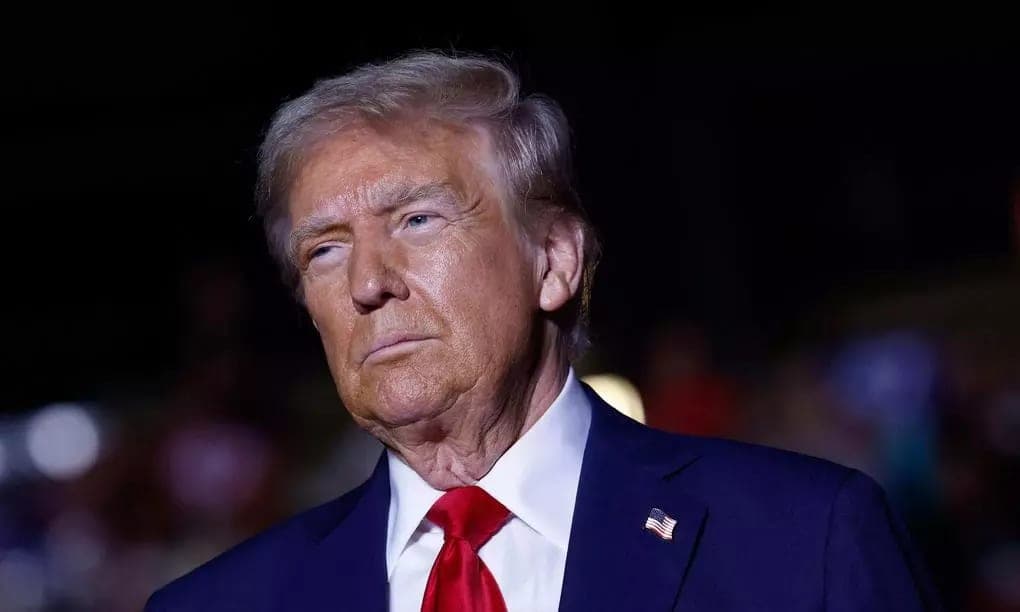
Live: Trump Vows to Destroy Iranian Warships That Get Near US Blockade
United States President Donald Trump said Monday that the U.S. military has begun a blockade of all Iranian ports and coastal areas and Iran responded with threats on ports in the Persian Gulf and the Gulf of Oman. Trump had vowed earlier to block the Strait of Hormuz entirely. Trump later suggested he was willing to engage with Iran, saying he had spoken to “the other side.” This came after he warned on social media that Iranian warships coming “anywhere close” to the U.S. blockade would be destroyed. Ceasefire talks between the U.S. and Iran ended Sunday without an agreement, raising questions about what happens when the current two-week truce expires on April 22. The Israeli military, meanwhile, pushed ahead with its offensive in southern Lebanon, engaging in fierce fighting with Hezbollah militants over a strategic town, while the group fires rockets and drones at northern Israel. Here is the latest: Vance says Iranians made ‘some progress’ in talks on nuclear issues Vice President JD Vance said in an interview with FOX News Channel’s “Special Report” that negotiations “did make some progress” in the Islamabad talks on the U.S. insistence on the removal of nuclear material from Iran as well as a mechanism to ensure uranium cannot be enriched in the future. “They moved in our direction,” Vance said in the interview. He said he thought Iranian negotiators were “unable to cut a deal” and needed to get approval from others in Tehran. Vance also said that U.S. negotiators made clear that Trump “would be very happy if Iran was treated like a normal country, if it had a normal economy,” but he did not go into details about what he meant. “There really is, I think, a grand deal to be had here. But, it’s up to the Iranians, I think, to take the next step,” Vance said. The White House won’t say if talks are in the works The White House was not responsive to queries about whether new talks were being weighed. “President Trump, Vice President Vance and the negotiating team have made the U.S. red lines very clear. The Iranians desperation for a deal will only increase with President Trump’s highly effective Naval blockade now in effect,” White House press secretary Karoline Leavitt said. US and Iran could be headed toward a second round of talks, AP sources say The sides are weighing new in-person negotiations in a bid to reach a deal aimed at ending their six-week war before the ceasefire expires next week, two U.S. officials and person familiar with the development said. The three said discussions were still underway about a new round of talks, while a diplomat from one of the mediating countries went further to say Tehran and Washington have agreed to it. All four spoke on condition of anonymity to discuss sensitive diplomatic negotiations. It’s unclear if the same level of delegation would be expected to attend, the diplomat and U.S. officials said. The diplomat and U.S. officials said Islamabad, Pakistan, was once again being discussed as the host location. The U.S. officials also said Geneva was a possibility, and that while the venue and timing had not been decided, the talks could happen Thursday. The White House didn’t immediately respond to a message seeking comment. Trump told reporters earlier Monday that “we’ve been called by the other side” and “they want to work a deal.” —By Farnoush Amiri, Aamer Madhani and Matthew Lee Official says Iran is seeking compensation from 5 Middle East countries Iran’s representative to the United Nations has demanded compensation from countries it says participated in the U.S. and Israeli war effort against Iran. Iran’s state media report the nations include Bahrain, Saudi Arabia, Qatar, the United Arab Emirates and Jordan. Iran’s official news agency, IRNA, said that the U.N. representative, Amir-Saeid Iravani, claimed the countries had violated international law and had to “make full compensation for the damages caused to the Islamic Republic of Iran, including payment of compensation for all material and moral damages resulting from their international violations.” Many US Catholics dismayed by Trump’s verbal attack on Pope Leo A majority of U.S. Catholic voters supported Trump in his 2024 presidential victory. Yet across the broad Catholic political spectrum – even among conservative-leaning bishops – there is dismay over Trump’s unprecedented verbal assault on Pope Leo XIV, the first American to lead their church. Leo says he is sharing a Gospel message and not directly attacking Trump or anyone else with his appeals for peace and criticism of attitudes fueling the Iran war. Criticism of Trump came from Archbishop Paul Coakley , head of the U.S. Conference of Catholic Bishops, and from Minnesota-based Bishop Robert Barron, who only a few days ago was applauding Trump as an Easter guest at the White House. Barron called the president’s remarks “entirely inappropriate and disrespectful” and urged him to apologize. ▶ Read more Thune says US has been ‘effective’ in Iran war but needs a plan to end it “They do need a plan for how to wind this down, how to get an outcome that actually leads to a safer, more secure Middle East and, by extension, a stronger national security position for the United States,” the Senate majority leader told reporters after returning from a two-week recess Monday. On Trump’s blockade of ships entering or leaving the Strait of Hormuz, Thune said that “penalizing those who do business with the Iranians may get people’s attention,” including China, which depends on energy in the region. “That probably more than anything else right now, is going to be the key issue to resolving the situation, getting the Iranians to the table,” Thune said. Majority Leader Thune says White House spending request for war ‘has been scaled back’ Senate Majority Leader John Thune says it’s his understanding that a potential request from the White House to pay for the Iran war has been scaled back, but he did not give a specific number. Congress is still waiting for the request, which could total hundreds of billions of dollars. The Pentagon sent the White House a request for $200 billion last month, but Trump has not yet asked Congress to approve any new amount for the war. Thune, a Republican from South Dakota, told reporters that the request will be an “inflection point” for Republicans, as Congress will have to vote to approve it. That is a “power that Congress has to influence what happens there,” he said. UN says Israel has opened second crossing for aid deliveries to Gaza The U.N. humanitarian office reports that Israeli authorities reopened the Zikim crossing into northern Gaza for the first time in more than 40 days, the U.N. spokesman said. Five international aid groups recently said humanitarian conditions in Gaza have deteriorated further since the Iran war began. Over the weekend, supplies were unloaded, and the U.N. resumed collecting the cargo inside Gaza on Monday, starting with food, nutrition products and other humanitarian items, spokesman Stephane Dujarric said. Opening the Zikim crossing “will help address a critical need by allowing supplies to enter northern Gaza directly, so we don’t have to truck them from the south,” where Kemen Shalom is the only other crossing open for goods, he said. But despite the opening, Dujarric said, “Major constraints remain.” He pointed to Israeli customs clearance delays, insufficient screening capacity, which makes approval for critical items difficult, and blanket bans on some U.N. agencies and partner organizations “that are central and critical to the joint humanitarian response in Gaza.” Global financial organizations warn of oil shock The directors of the International Monetary Fund, the World Bank and the International Energy Agency said Monday that the war’s damage to energy facilities could keep fuel and fertilizer prices high for “a prolonged period.” Fatih Birol, executive director of the IEA, said the disruptions to oil supplies from the conflict is “the greatest energy security challenge in history.” One-third of the 80 Mideast energy facilities his agency is monitoring have been damaged. Birol spoke at IMF headquarters after meeting with Kristalina Georgieva, managing director of the IMF, and Ajay Banga, president of the World Bank. Birol warned that April could be worse than March for the world economy because many fuel shipments from before the war were still arriving in ports last month. U.S. oil prices were $98 a barrel in afternoon trading, after topping $100 earlier Monday. US military has 16 warships in the Middle East But military officials have offered few details about how a blockade of Iranian ports would actually work. Aside from the aircraft carrier USS Abraham Lincoln, the U.S. Navy has 11 destroyers, three amphibious assault ships, and a littoral combat ship, all in the waters of the Middle East, a defense official said. A second defense official says no U.S. warships are in the Persian Gulf — the body of water that forms most of Iran’s coastline. Both officials spoke on condition of anonymity to discuss sensitive military operations. Trump said the blockade had taken effect Monday. The second defense official pointed to a notice to mariners as a more accurate representation of the military’s plans. It says access to Iranian ports is being restricted, but how these measures “will be applied in practice ... are in development.” — By Konstantin Toropin Oil prices ease back from their morning spurts as US stocks rally on a still-hopeful Wall Street The S&P 500 rallied 1% Monday and is back to within 1.3% of its record. The Dow Jones Industrial Average added 0.6%, and the Nasdaq composite rose 1.2%. Even in the oil market, where prices jumped above $100 per barrel after ceasefire talks failed to end the war, prices pared their leaps as Monday progressed. The moves for financial markets overall were much more modest than the extreme swings that have hit since the war began in late February. ▶ Read more Naval blockades can be a tool for applying pressure Blockades alone typically don’t settle military conflicts, but they can be a way of exerting pressure on an adversary’s economy, experts tell the AP. That’s likely President Donald Trump’s intention in declaring a U.S. blockade of Iranian ports. Blockades are “very much a gradual tool,” said Sidharth Kaushal, a naval power expert at the Royal United Services Institute defense and security think tank in London. Throughout history, blockades have been a way for one power to drain another’s economy by disrupting the flow of goods in and out of a country. But they take time, and can also require significant resources by the blockading force. “It’s a form of economic warfare,” said Raul Pedrozo, professor of international law at the U.S. Naval War College. Navigating the legal questions of a US blockade To meet international law, a blockade of the Strait of Hormuz must be officially announced and effectively and impartially enforced, legal experts tell the AP. “You have to apply it to everybody going in and out of Iran,” said Raul Pedrozo, professor of international law at the U.S. Naval War College. “It doesn’t just apply to people we don’t like.” The requirements are to warn mariners of any blockade and ensure it is enforced fairly and responsibly. International law experts will also be watching to see if the U.S. allows humanitarian aid, food or medicine to reach Iran. “How it is carried out will determine whether it is lawful or not,” Todd Huntley, a retired Navy captain and director of Georgetown University’s National Security Law Program. Netanyahu focuses on Iran in Holocaust speech The Israeli leader says the war against Iran was a powerful contrast to the Holocaust. In an address marking Israel’s annual Holocaust memorial day, Netanyahu said that while Jews were like an “abused animal crying in agony” at the hands of the Nazis, the modern state of Israel fights back against its enemies. He then listed several Iranian nuclear sites alongside Nazi death camps. “Had we not acted, the names Natanz, Fordow, Isfahan and Parchin might have been remembered eternally in infamy, just like Auschwitz, Treblinka, Majdanek, and Sobibor,” he said. Netanyahu often uses the annual address to lash out at Iran. Finnish president says he doesn’t see US withdrawal from NATO; allies will assist after Iran war ends During a panel on Monday, Finland’s President Alexander Stubb said that he “sees no signs” of America abandoning the trans-Atlantic alliance despite Trump’s threats over NATO countries’ refusal to help with the Strait of Hormuz. “So don’t underestimate the interest of the United States to stay engaged with the alliance,” Stubb said at an event at the Brookings Institution. The European leader has often leveraged his good relationship with Trump — the two men have played golf together and speak regularly — to argue against his “America First” posturing. Stubb also reiterated that a “coalition of the willing” would help ensure the critical waterway was opened after the war ended. “It’s my job as president of Finland to try to save the situation and convince the Americans that without allies, it’s difficult to project power,” he said. At least 2 tankers turn around after approaching the Strait of Hormuz The vessel-tracker MarineTraffic said in a post on the social platform X that the ships reversed course within minutes of approaching the critical waterway, shortly after the U.S. blockade began. It said one of the tankers departed the United Arab Emirates’ Sharjah anchorage on Monday, bound for China. It was not immediately clear where the second vessel was headed. Iran war has some US water utilities facing a fluoride shortage It’s not just gas prices: Some U.S. water utilities are reporting that the war is disrupting their ability to maintain recommended fluoride levels in the drinking water. The Association of Metropolitan Water Agencies says it expects additional shortages as the war stresses the supply chain. Israel is a major supplier of the chemical used to fluoridate drinking water. The number of water utilities affected so far is small, but the shortage is affecting hundreds of thousands of people. Dentists say a short-term drop in fluoride levels should be fine for most people, but longer-term disruptions could put Americans, especially young children, at higher risk for tooth decay. ▶ Read more Trump says ‘we’ve been called by the other side’ but offers no details on conversation Speaking outside the Oval Office on Monday, Trump suggested the U.S. is still willing to engage with Iran to negotiate a resolution. “I can tell you that we’ve been called by the other side,” Trump said, adding, “We’ve been called this morning by the right people, the appropriate people, and they want to work a deal.” Trump did not say who called or what was discussed. Trump confirms that Strait of Hormuz blockade started at 10 am Monday “We can’t let a country blackmail or extort the world because that’s what they’re doing,” Trump said of Iran. Trump repeated his argument that safeguarding the strait is of greater concern to other parts of the globe than the United States. The effective closure of the strait since the start of the war, however, impacts global oil prices — which has led to surging gas prices for American motorists and rising inflation on other goods. “We don’t use this strait,” Trump said. “We have our own oil and gas, much more than we need.” Trump says he won’t apologize to Pope Leo over Iran war criticisms Trump is refusing to apologize for sharply criticizing Pope Leo, saying that the pontiff “went public” in his criticisms of the war in Iran, and “I’m just responding.” In comments to reporters outside the Oval Office, Trump added, “There’s nothing to apologize for” and said of Leo, “He’s wrong.” Trump was also asked about posting an image of himself as a saint-like healer, which seemed to draw comparisons between himself and Jesus Christ. The image was posted Sunday night and drew widespread condemnation from Evangelical Christian leaders and has since been taken down. Trump said, “I did post it.” But he suggested it had something to do with the Red Cross and insisted: “It’s supposed to be me as a doctor making people better.” Iranian official says US blockade will backfire Foreign Ministry spokesman Esmaeil Baqaei derided the blockade as a “revenge of choice” against the global economy. “Is it ever worthwhile to cut off one’s nose to spite one’s face?!” he wrote on the social platform X. OPEC oil production tumbled before US threatened blockade The closure of the strait severely crimped output from OPEC last month. The 12-nation oil cartel, with members in the Middle East, Africa and Venezuela, said Monday that production tumbled by 7.89 million barrels a day in March, to 20.79 million barrels. “Disruptions to shipping operations in the region raised persistent concerns about regional supply flows, while strong buying of prompt spot market barrels, production cuts, and declarations of force majeure further supported the upward price momentum,” OPEC said. The organization said demand appears to be steady this year, but cut its forecast for the current quarter, citing the war. Netanyahu spokeswoman rules out a ceasefire with Hezbollah Shosh Bedrosian told reporters Monday that Israel’s upcoming talks with Lebanon will focus on disarming Hezbollah and establishing peaceful relations between the two countries. “We will not discuss a ceasefire with Hezbollah, which continues to carry out indiscriminate attacks against Israel and our civilians,” she said. Israel and the Lebanese army have both been unable to forcibly disarm Hezbollah . US-Iran ceasefire is holding despite failed peace talks, Pakistan’s prime minister says Efforts are underway to resolve the remaining disputes between Washington and Tehran as a two-week ceasefire brokered by Pakistan remains intact, said the country’s prime minister, Shehbaz Sharif. In televised remarks at a Cabinet meeting, Sharif cautioned that peace efforts take time, citing past agreements such as the Geneva accords. Trump says Iranian ships that come ‘anywhere close’ to US blockade will be destroyed The president made the comment on social media just after the blockade of Iran was expected to begin. Trump said Iran has some “fast attack ships” remaining even after much of its navy was destroyed by U.S. strikes. “Warning: If any of these ships come anywhere close to our BLOCKADE, they will be immediately ELIMINATED, using the same system of kill that we use against the drug dealers on boats at Sea,” Trump wrote on his Truth Social platform. He added: “It is quick and brutal.” Where things stand on ceasefire talks The current truce between the U.S. and Iran appears to be holding, with no word on whether negotiations will resume before it expires on April 22. Pakistan’s foreign minister, Ishaq Dar, said his country will try to facilitate a new round of dialogue between Iran and the U.S. in the coming days. There was no immediate reaction from either side. A key obstacle seems to be a perception on both sides that they won the war and that each has time on its side. ▶ Read more Israeli airstrikes in Lebanon have killed 2,089 people during the latest Hezbollah-Israel war That’s an increase of 34 deaths since the previous day’s count, according to the Lebanese Health Ministry. It said Monday that among those killed were 252 women, 166 children, and 88 medical workers. The number of wounded has increased to 6,762 people since the war began on March 2, when Hezbollah fired rockets toward northern Israel in solidarity with Iran, sparking Israel’s ground invasion and aerial bombardment campaign that has displaced over one million people. Ahead of anticipated direct talks in Washington on Tuesday, the strikes across both sides of the tense frontier and fierce ground fighting in southern Lebanon have intensified. Stage is set for an extraordinary showdown over shipping off Iran’s coast The U.S. military has vowed to blockade all Iranian ports to pressure Tehran into agreeing to open the crucial Strait of Hormuz and accepting a peace deal . Iran responded with threats on all the ports of U.S. allies in the Persian Gulf and the Gulf of Oman. The showdown contains serious risks for the global economy and raises the specter that a ceasefire that is currently holding could collapse. It was not clear if the blockade had started when the designated time of 10 a.m. EDT (2 p.m. GMT) arrived. Minutes earlier, a notice to mariners issued by the United Kingdom Maritime Trade Operations agency, which monitors maritime security, said the restrictions included “the entirety of the Iranian coastline, including ports and energy infrastructure.” The notice added that transit through the strait “to or from non-Iranian destinations is not reported to be impeded by these measures,” but it added that ships “may encounter military presence” in the strait.
Live: Trump Vows to Destroy Iranian Warships That Get Near US Blockade
United States President Donald Trump said Monday that the U.S. military has begun a blockade of all Iranian ports and coastal areas and Iran responded with threats on ports in the Persian Gulf and the Gulf of Oman. Trump had vowed earlier to block the Strait of Hormuz entirely. Trump later suggested he was willing to engage with Iran, saying he had spoken to “the other side.” This came after he warned on social media that Iranian warships coming “anywhere close” to the U.S. blockade would be destroyed. Ceasefire talks between the U.S. and Iran ended Sunday without an agreement, raising questions about what happens when the current two-week truce expires on April 22. The Israeli military, meanwhile, pushed ahead with its offensive in southern Lebanon, engaging in fierce fighting with Hezbollah militants over a strategic town, while the group fires rockets and drones at northern Israel. Here is the latest: Vance says Iranians made ‘some progress’ in talks on nuclear issues Vice President JD Vance said in an interview with FOX News Channel’s “Special Report” that negotiations “did make some progress” in the Islamabad talks on the U.S. insistence on the removal of nuclear material from Iran as well as a mechanism to ensure uranium cannot be enriched in the future. “They moved in our direction,” Vance said in the interview. He said he thought Iranian negotiators were “unable to cut a deal” and needed to get approval from others in Tehran. Vance also said that U.S. negotiators made clear that Trump “would be very happy if Iran was treated like a normal country, if it had a normal economy,” but he did not go into details about what he meant. “There really is, I think, a grand deal to be had here. But, it’s up to the Iranians, I think, to take the next step,” Vance said. The White House won’t say if talks are in the works The White House was not responsive to queries about whether new talks were being weighed. “President Trump, Vice President Vance and the negotiating team have made the U.S. red lines very clear. The Iranians desperation for a deal will only increase with President Trump’s highly effective Naval blockade now in effect,” White House press secretary Karoline Leavitt said. US and Iran could be headed toward a second round of talks, AP sources say The sides are weighing new in-person negotiations in a bid to reach a deal aimed at ending their six-week war before the ceasefire expires next week, two U.S. officials and person familiar with the development said. The three said discussions were still underway about a new round of talks, while a diplomat from one of the mediating countries went further to say Tehran and Washington have agreed to it. All four spoke on condition of anonymity to discuss sensitive diplomatic negotiations. It’s unclear if the same level of delegation would be expected to attend, the diplomat and U.S. officials said. The diplomat and U.S. officials said Islamabad, Pakistan, was once again being discussed as the host location. The U.S. officials also said Geneva was a possibility, and that while the venue and timing had not been decided, the talks could happen Thursday. The White House didn’t immediately respond to a message seeking comment. Trump told reporters earlier Monday that “we’ve been called by the other side” and “they want to work a deal.” —By Farnoush Amiri, Aamer Madhani and Matthew Lee Official says Iran is seeking compensation from 5 Middle East countries Iran’s representative to the United Nations has demanded compensation from countries it says participated in the U.S. and Israeli war effort against Iran. Iran’s state media report the nations include Bahrain, Saudi Arabia, Qatar, the United Arab Emirates and Jordan. Iran’s official news agency, IRNA, said that the U.N. representative, Amir-Saeid Iravani, claimed the countries had violated international law and had to “make full compensation for the damages caused to the Islamic Republic of Iran, including payment of compensation for all material and moral damages resulting from their international violations.” Many US Catholics dismayed by Trump’s verbal attack on Pope Leo A majority of U.S. Catholic voters supported Trump in his 2024 presidential victory. Yet across the broad Catholic political spectrum – even among conservative-leaning bishops – there is dismay over Trump’s unprecedented verbal assault on Pope Leo XIV, the first American to lead their church. Leo says he is sharing a Gospel message and not directly attacking Trump or anyone else with his appeals for peace and criticism of attitudes fueling the Iran war. Criticism of Trump came from Archbishop Paul Coakley , head of the U.S. Conference of Catholic Bishops, and from Minnesota-based Bishop Robert Barron, who only a few days ago was applauding Trump as an Easter guest at the White House. Barron called the president’s remarks “entirely inappropriate and disrespectful” and urged him to apologize. ▶ Read more Thune says US has been ‘effective’ in Iran war but needs a plan to end it “They do need a plan for how to wind this down, how to get an outcome that actually leads to a safer, more secure Middle East and, by extension, a stronger national security position for the United States,” the Senate majority leader told reporters after returning from a two-week recess Monday. On Trump’s blockade of ships entering or leaving the Strait of Hormuz, Thune said that “penalizing those who do business with the Iranians may get people’s attention,” including China, which depends on energy in the region. “That probably more than anything else right now, is going to be the key issue to resolving the situation, getting the Iranians to the table,” Thune said. Majority Leader Thune says White House spending request for war ‘has been scaled back’ Senate Majority Leader John Thune says it’s his understanding that a potential request from the White House to pay for the Iran war has been scaled back, but he did not give a specific number. Congress is still waiting for the request, which could total hundreds of billions of dollars. The Pentagon sent the White House a request for $200 billion last month, but Trump has not yet asked Congress to approve any new amount for the war. Thune, a Republican from South Dakota, told reporters that the request will be an “inflection point” for Republicans, as Congress will have to vote to approve it. That is a “power that Congress has to influence what happens there,” he said. UN says Israel has opened second crossing for aid deliveries to Gaza The U.N. humanitarian office reports that Israeli authorities reopened the Zikim crossing into northern Gaza for the first time in more than 40 days, the U.N. spokesman said. Five international aid groups recently said humanitarian conditions in Gaza have deteriorated further since the Iran war began. Over the weekend, supplies were unloaded, and the U.N. resumed collecting the cargo inside Gaza on Monday, starting with food, nutrition products and other humanitarian items, spokesman Stephane Dujarric said. Opening the Zikim crossing “will help address a critical need by allowing supplies to enter northern Gaza directly, so we don’t have to truck them from the south,” where Kemen Shalom is the only other crossing open for goods, he said. But despite the opening, Dujarric said, “Major constraints remain.” He pointed to Israeli customs clearance delays, insufficient screening capacity, which makes approval for critical items difficult, and blanket bans on some U.N. agencies and partner organizations “that are central and critical to the joint humanitarian response in Gaza.” Global financial organizations warn of oil shock The directors of the International Monetary Fund, the World Bank and the International Energy Agency said Monday that the war’s damage to energy facilities could keep fuel and fertilizer prices high for “a prolonged period.” Fatih Birol, executive director of the IEA, said the disruptions to oil supplies from the conflict is “the greatest energy security challenge in history.” One-third of the 80 Mideast energy facilities his agency is monitoring have been damaged. Birol spoke at IMF headquarters after meeting with Kristalina Georgieva, managing director of the IMF, and Ajay Banga, president of the World Bank. Birol warned that April could be worse than March for the world economy because many fuel shipments from before the war were still arriving in ports last month. U.S. oil prices were $98 a barrel in afternoon trading, after topping $100 earlier Monday. US military has 16 warships in the Middle East But military officials have offered few details about how a blockade of Iranian ports would actually work. Aside from the aircraft carrier USS Abraham Lincoln, the U.S. Navy has 11 destroyers, three amphibious assault ships, and a littoral combat ship, all in the waters of the Middle East, a defense official said. A second defense official says no U.S. warships are in the Persian Gulf — the body of water that forms most of Iran’s coastline. Both officials spoke on condition of anonymity to discuss sensitive military operations. Trump said the blockade had taken effect Monday. The second defense official pointed to a notice to mariners as a more accurate representation of the military’s plans. It says access to Iranian ports is being restricted, but how these measures “will be applied in practice ... are in development.” — By Konstantin Toropin Oil prices ease back from their morning spurts as US stocks rally on a still-hopeful Wall Street The S&P 500 rallied 1% Monday and is back to within 1.3% of its record. The Dow Jones Industrial Average added 0.6%, and the Nasdaq composite rose 1.2%. Even in the oil market, where prices jumped above $100 per barrel after ceasefire talks failed to end the war, prices pared their leaps as Monday progressed. The moves for financial markets overall were much more modest than the extreme swings that have hit since the war began in late February. ▶ Read more Naval blockades can be a tool for applying pressure Blockades alone typically don’t settle military conflicts, but they can be a way of exerting pressure on an adversary’s economy, experts tell the AP. That’s likely President Donald Trump’s intention in declaring a U.S. blockade of Iranian ports. Blockades are “very much a gradual tool,” said Sidharth Kaushal, a naval power expert at the Royal United Services Institute defense and security think tank in London. Throughout history, blockades have been a way for one power to drain another’s economy by disrupting the flow of goods in and out of a country. But they take time, and can also require significant resources by the blockading force. “It’s a form of economic warfare,” said Raul Pedrozo, professor of international law at the U.S. Naval War College. Navigating the legal questions of a US blockade To meet international law, a blockade of the Strait of Hormuz must be officially announced and effectively and impartially enforced, legal experts tell the AP. “You have to apply it to everybody going in and out of Iran,” said Raul Pedrozo, professor of international law at the U.S. Naval War College. “It doesn’t just apply to people we don’t like.” The requirements are to warn mariners of any blockade and ensure it is enforced fairly and responsibly. International law experts will also be watching to see if the U.S. allows humanitarian aid, food or medicine to reach Iran. “How it is carried out will determine whether it is lawful or not,” Todd Huntley, a retired Navy captain and director of Georgetown University’s National Security Law Program. Netanyahu focuses on Iran in Holocaust speech The Israeli leader says the war against Iran was a powerful contrast to the Holocaust. In an address marking Israel’s annual Holocaust memorial day, Netanyahu said that while Jews were like an “abused animal crying in agony” at the hands of the Nazis, the modern state of Israel fights back against its enemies. He then listed several Iranian nuclear sites alongside Nazi death camps. “Had we not acted, the names Natanz, Fordow, Isfahan and Parchin might have been remembered eternally in infamy, just like Auschwitz, Treblinka, Majdanek, and Sobibor,” he said. Netanyahu often uses the annual address to lash out at Iran. Finnish president says he doesn’t see US withdrawal from NATO; allies will assist after Iran war ends During a panel on Monday, Finland’s President Alexander Stubb said that he “sees no signs” of America abandoning the trans-Atlantic alliance despite Trump’s threats over NATO countries’ refusal to help with the Strait of Hormuz. “So don’t underestimate the interest of the United States to stay engaged with the alliance,” Stubb said at an event at the Brookings Institution. The European leader has often leveraged his good relationship with Trump — the two men have played golf together and speak regularly — to argue against his “America First” posturing. Stubb also reiterated that a “coalition of the willing” would help ensure the critical waterway was opened after the war ended. “It’s my job as president of Finland to try to save the situation and convince the Americans that without allies, it’s difficult to project power,” he said. At least 2 tankers turn around after approaching the Strait of Hormuz The vessel-tracker MarineTraffic said in a post on the social platform X that the ships reversed course within minutes of approaching the critical waterway, shortly after the U.S. blockade began. It said one of the tankers departed the United Arab Emirates’ Sharjah anchorage on Monday, bound for China. It was not immediately clear where the second vessel was headed. Iran war has some US water utilities facing a fluoride shortage It’s not just gas prices: Some U.S. water utilities are reporting that the war is disrupting their ability to maintain recommended fluoride levels in the drinking water. The Association of Metropolitan Water Agencies says it expects additional shortages as the war stresses the supply chain. Israel is a major supplier of the chemical used to fluoridate drinking water. The number of water utilities affected so far is small, but the shortage is affecting hundreds of thousands of people. Dentists say a short-term drop in fluoride levels should be fine for most people, but longer-term disruptions could put Americans, especially young children, at higher risk for tooth decay. ▶ Read more Trump says ‘we’ve been called by the other side’ but offers no details on conversation Speaking outside the Oval Office on Monday, Trump suggested the U.S. is still willing to engage with Iran to negotiate a resolution. “I can tell you that we’ve been called by the other side,” Trump said, adding, “We’ve been called this morning by the right people, the appropriate people, and they want to work a deal.” Trump did not say who called or what was discussed. Trump confirms that Strait of Hormuz blockade started at 10 am Monday “We can’t let a country blackmail or extort the world because that’s what they’re doing,” Trump said of Iran. Trump repeated his argument that safeguarding the strait is of greater concern to other parts of the globe than the United States. The effective closure of the strait since the start of the war, however, impacts global oil prices — which has led to surging gas prices for American motorists and rising inflation on other goods. “We don’t use this strait,” Trump said. “We have our own oil and gas, much more than we need.” Trump says he won’t apologize to Pope Leo over Iran war criticisms Trump is refusing to apologize for sharply criticizing Pope Leo, saying that the pontiff “went public” in his criticisms of the war in Iran, and “I’m just responding.” In comments to reporters outside the Oval Office, Trump added, “There’s nothing to apologize for” and said of Leo, “He’s wrong.” Trump was also asked about posting an image of himself as a saint-like healer, which seemed to draw comparisons between himself and Jesus Christ. The image was posted Sunday night and drew widespread condemnation from Evangelical Christian leaders and has since been taken down. Trump said, “I did post it.” But he suggested it had something to do with the Red Cross and insisted: “It’s supposed to be me as a doctor making people better.” Iranian official says US blockade will backfire Foreign Ministry spokesman Esmaeil Baqaei derided the blockade as a “revenge of choice” against the global economy. “Is it ever worthwhile to cut off one’s nose to spite one’s face?!” he wrote on the social platform X. OPEC oil production tumbled before US threatened blockade The closure of the strait severely crimped output from OPEC last month. The 12-nation oil cartel, with members in the Middle East, Africa and Venezuela, said Monday that production tumbled by 7.89 million barrels a day in March, to 20.79 million barrels. “Disruptions to shipping operations in the region raised persistent concerns about regional supply flows, while strong buying of prompt spot market barrels, production cuts, and declarations of force majeure further supported the upward price momentum,” OPEC said. The organization said demand appears to be steady this year, but cut its forecast for the current quarter, citing the war. Netanyahu spokeswoman rules out a ceasefire with Hezbollah Shosh Bedrosian told reporters Monday that Israel’s upcoming talks with Lebanon will focus on disarming Hezbollah and establishing peaceful relations between the two countries. “We will not discuss a ceasefire with Hezbollah, which continues to carry out indiscriminate attacks against Israel and our civilians,” she said. Israel and the Lebanese army have both been unable to forcibly disarm Hezbollah . US-Iran ceasefire is holding despite failed peace talks, Pakistan’s prime minister says Efforts are underway to resolve the remaining disputes between Washington and Tehran as a two-week ceasefire brokered by Pakistan remains intact, said the country’s prime minister, Shehbaz Sharif. In televised remarks at a Cabinet meeting, Sharif cautioned that peace efforts take time, citing past agreements such as the Geneva accords. Trump says Iranian ships that come ‘anywhere close’ to US blockade will be destroyed The president made the comment on social media just after the blockade of Iran was expected to begin. Trump said Iran has some “fast attack ships” remaining even after much of its navy was destroyed by U.S. strikes. “Warning: If any of these ships come anywhere close to our BLOCKADE, they will be immediately ELIMINATED, using the same system of kill that we use against the drug dealers on boats at Sea,” Trump wrote on his Truth Social platform. He added: “It is quick and brutal.” Where things stand on ceasefire talks The current truce between the U.S. and Iran appears to be holding, with no word on whether negotiations will resume before it expires on April 22. Pakistan’s foreign minister, Ishaq Dar, said his country will try to facilitate a new round of dialogue between Iran and the U.S. in the coming days. There was no immediate reaction from either side. A key obstacle seems to be a perception on both sides that they won the war and that each has time on its side. ▶ Read more Israeli airstrikes in Lebanon have killed 2,089 people during the latest Hezbollah-Israel war That’s an increase of 34 deaths since the previous day’s count, according to the Lebanese Health Ministry. It said Monday that among those killed were 252 women, 166 children, and 88 medical workers. The number of wounded has increased to 6,762 people since the war began on March 2, when Hezbollah fired rockets toward northern Israel in solidarity with Iran, sparking Israel’s ground invasion and aerial bombardment campaign that has displaced over one million people. Ahead of anticipated direct talks in Washington on Tuesday, the strikes across both sides of the tense frontier and fierce ground fighting in southern Lebanon have intensified. Stage is set for an extraordinary showdown over shipping off Iran’s coast The U.S. military has vowed to blockade all Iranian ports to pressure Tehran into agreeing to open the crucial Strait of Hormuz and accepting a peace deal . Iran responded with threats on all the ports of U.S. allies in the Persian Gulf and the Gulf of Oman. The showdown contains serious risks for the global economy and raises the specter that a ceasefire that is currently holding could collapse. It was not clear if the blockade had started when the designated time of 10 a.m. EDT (2 p.m. GMT) arrived. Minutes earlier, a notice to mariners issued by the United Kingdom Maritime Trade Operations agency, which monitors maritime security, said the restrictions included “the entirety of the Iranian coastline, including ports and energy infrastructure.” The notice added that transit through the strait “to or from non-Iranian destinations is not reported to be impeded by these measures,” but it added that ships “may encounter military presence” in the strait.
US Claims Destruction of 16 Mine-Laying Vessels Amid Iran's Threats
Dubai: The U.S. said it took out more than a dozen mine-laying Iranian vessels Tuesday, and the Islamic Republic vowed to block the region's oil exports , saying it would not allow “even a single liter” to be shipped to its enemies. As concerns grew about the war's effect on a strategic waterway, the American military said it destroyed 16 minelayers, though President Donald Trump said in social media posts that there were no reports of Iran planting explosives in the Strait of Hormuz , through which 20% of the world’s oil is shipped. The American military released the figure, along with unclassified footage of some of the vessels, after Trump threatened to hit Iran at “a level never seen before” if the country failed to immediately remove any mines it might have deployed in the channel. Both sides sharpened their rhetoric as the war entered its 11th day . U.S. Defense Secretary Pete Hegseth promised the most intense strikes yet while the Pentagon detailed the broader toll of injuries sustained by U.S. troops. The conflict's effects rippled across the Middle East and beyond . Iranian leaders ruled out talks, threatened Trump and launched new attacks against Israel and Gulf Arab countries. In Iran, residents of Tehran said they experienced some of the war's heaviest strikes. A woman said she saw a residential building get hit. She and others reached by The Associated Press spoke on condition of anonymity to prevent reprisals. Tens of thousands of Iranians have sought shelter in the countryside . Lebanon reports more deaths Multiple Israeli strikes across southern Lebanon killed seven people, the Lebanese Health Ministry said early Wednesday. Other deaths included a Red Cross member who died early Wednesday after an Israeli strike targeted his team Monday while they were rescuing people following an earlier attack, the health ministry said. On Tuesday, Israeli airstrikes killed four people, including a paramedic who worked for the Hezbollah-affiliated Islamic Health Authority who was treating the wounded. Also Tuesday, an Israeli strike killed a Lebanese soldier, the Lebanese army said, bringing the number of troops killed there to five since the conflict began. Israel said it was working to intercept missiles from Iran and Hezbollah , which began firing on Israel after the start of the war. Saudi Arabia’s Defense Ministry said early Wednesday that it intercepted multiple missiles launched toward several sites, including Prince Sultan Air Base, a major U.S.- and Saudi-operated air facility. The ministry said it also destroyed drones near two major cities. In Iraq, drones targeted military bases inside Baghdad International Airport late Tuesday, two security officials told AP on condition of anonymity because they were not authorized to speak to the press. Some drones fell near Iraqi security positions, while others landed near logistical support sites used by U.S.-led coalition forces, one official said. The United Arab Emirates said early Wednesday that its air defenses were firing at incoming Iranian fire. The wealthy Gulf nation — home to the business and travel hub of Dubai — said Iranian attacks have killed six people and wounded 122 others. Bahrain sounded sirens early Wednesday, warning of an incoming Iranian attack. The warnings came a day after an Iranian attack hit a residential building in the capital, Manama, and killed a 29-year-old woman and wounding eight people. Pentagon says 140 US troops wounded since war began Gen. Dan Caine, chairman of the Joint Chiefs of Staff, said U.S. forces hit more than 5,000 targets. The Pentagon separately said Tuesday that about 140 U.S. service members have been wounded in the war, and the “vast majority” of the injuries were minor, with 108 service members already back on duty. Eight U.S. service members suffered severe injuries, and seven have been killed. In Iran, at least 1,230 people have been killed, while the death toll is more than 480 in Lebanon and 12 in Israel, according to officials. Iran's leaders have remained defiant after days of heavy strikes targeting the country's leadership, military, ballistic missiles and its disputed nuclear program. Iran's parliament speaker, Mohammad Bagher Qalibaf, said on X that Iran was “definitely not looking for a ceasefire.” “We believe that the aggressor should be punched in the mouth so that he learns a lesson so that he will never think of attacking our beloved Iran again,” he said. A top Iranian security official, Ali Larijani, posted a warning to Trump, writing on X that “Even those bigger than you couldn’t eliminate Iran. Be careful not to get eliminated yourself.” Iran has been accused of plotting attempts to kill Trump in the past. The Trump administration, meanwhile, faced growing scrutiny at home about the war. “I’m not sure what the end game is, or what their plans are,” Democratic Sen. Jacky Rosen of Nevada said after a classified briefing that the Trump administration held Tuesday for some lawmakers. Saudi Arabia's oil giant says tankers being rerouted to avoid Strait of Hormuz Iran has repeatedly targeted energy infrastructure with attacks that appear aimed at generating enough global economic pain to pressure the U.S. and Israel to end their strikes. It has also fired on Israel and U.S. military bases in the region. The U.S. stock market held steadier Tuesday as Wall Street waited for the next clue on when the war with Iran may end. Oil prices , meanwhile, remained well below their peaks hit on Monday. Such spikes have been rocking financial markets worldwide because of worries that the war could block the global flow of oil and natural gas for a long time. Iran’s paramilitary Revolutionary Guard said it “will not allow the export of even a single liter of oil from the region to the hostile side and its partners until further notice.” Amin Nasser, the president and CEO of Saudi Arabia’s oil giant Aramco, said tankers were being rerouted to avoid the strait, and that the company's east-west pipeline would reach its full capacity this week of 7 million barrels a day being brought to the Red Sea port of the Yanbu. “The situation at the Strait of Hormuz is blocking sizable volumes of oil from the whole region,” he said. “If this takes a long time, that will have serious impact on the global economy.” Foreign nationals get out of region The U.N. refugee agency said Tuesday that more than 667,000 people in Lebanon had registered as displaced — an increase of over 100,000 since a day earlier — and more than 85,000 people from Lebanon, mostly Syrians, had entered neighboring Syria. The British government said the number of commercial flights from the UAE to the U.K. is returning to normal levels, with 32 flights operated Monday from Dubai to Britain and another 36 scheduled Tuesday. British Airways, however, said it suspended flights to and from Jordan, Bahrain, Qatar, Dubai and Tel Aviv until later this month. Many foreign nationals have been getting out of the Persian Gulf region since the war began, including over 45,000 U.K. citizens, the British Foreign Office said. Some 40,000 people returned to the United States, according to the State Department.
US Claims Destruction of 16 Mine-Laying Vessels Amid Iran's Threats
Dubai: The U.S. said it took out more than a dozen mine-laying Iranian vessels Tuesday, and the Islamic Republic vowed to block the region's oil exports , saying it would not allow “even a single liter” to be shipped to its enemies. As concerns grew about the war's effect on a strategic waterway, the American military said it destroyed 16 minelayers, though President Donald Trump said in social media posts that there were no reports of Iran planting explosives in the Strait of Hormuz , through which 20% of the world’s oil is shipped. The American military released the figure, along with unclassified footage of some of the vessels, after Trump threatened to hit Iran at “a level never seen before” if the country failed to immediately remove any mines it might have deployed in the channel. Both sides sharpened their rhetoric as the war entered its 11th day . U.S. Defense Secretary Pete Hegseth promised the most intense strikes yet while the Pentagon detailed the broader toll of injuries sustained by U.S. troops. The conflict's effects rippled across the Middle East and beyond . Iranian leaders ruled out talks, threatened Trump and launched new attacks against Israel and Gulf Arab countries. In Iran, residents of Tehran said they experienced some of the war's heaviest strikes. A woman said she saw a residential building get hit. She and others reached by The Associated Press spoke on condition of anonymity to prevent reprisals. Tens of thousands of Iranians have sought shelter in the countryside . Lebanon reports more deaths Multiple Israeli strikes across southern Lebanon killed seven people, the Lebanese Health Ministry said early Wednesday. Other deaths included a Red Cross member who died early Wednesday after an Israeli strike targeted his team Monday while they were rescuing people following an earlier attack, the health ministry said. On Tuesday, Israeli airstrikes killed four people, including a paramedic who worked for the Hezbollah-affiliated Islamic Health Authority who was treating the wounded. Also Tuesday, an Israeli strike killed a Lebanese soldier, the Lebanese army said, bringing the number of troops killed there to five since the conflict began. Israel said it was working to intercept missiles from Iran and Hezbollah , which began firing on Israel after the start of the war. Saudi Arabia’s Defense Ministry said early Wednesday that it intercepted multiple missiles launched toward several sites, including Prince Sultan Air Base, a major U.S.- and Saudi-operated air facility. The ministry said it also destroyed drones near two major cities. In Iraq, drones targeted military bases inside Baghdad International Airport late Tuesday, two security officials told AP on condition of anonymity because they were not authorized to speak to the press. Some drones fell near Iraqi security positions, while others landed near logistical support sites used by U.S.-led coalition forces, one official said. The United Arab Emirates said early Wednesday that its air defenses were firing at incoming Iranian fire. The wealthy Gulf nation — home to the business and travel hub of Dubai — said Iranian attacks have killed six people and wounded 122 others. Bahrain sounded sirens early Wednesday, warning of an incoming Iranian attack. The warnings came a day after an Iranian attack hit a residential building in the capital, Manama, and killed a 29-year-old woman and wounding eight people. Pentagon says 140 US troops wounded since war began Gen. Dan Caine, chairman of the Joint Chiefs of Staff, said U.S. forces hit more than 5,000 targets. The Pentagon separately said Tuesday that about 140 U.S. service members have been wounded in the war, and the “vast majority” of the injuries were minor, with 108 service members already back on duty. Eight U.S. service members suffered severe injuries, and seven have been killed. In Iran, at least 1,230 people have been killed, while the death toll is more than 480 in Lebanon and 12 in Israel, according to officials. Iran's leaders have remained defiant after days of heavy strikes targeting the country's leadership, military, ballistic missiles and its disputed nuclear program. Iran's parliament speaker, Mohammad Bagher Qalibaf, said on X that Iran was “definitely not looking for a ceasefire.” “We believe that the aggressor should be punched in the mouth so that he learns a lesson so that he will never think of attacking our beloved Iran again,” he said. A top Iranian security official, Ali Larijani, posted a warning to Trump, writing on X that “Even those bigger than you couldn’t eliminate Iran. Be careful not to get eliminated yourself.” Iran has been accused of plotting attempts to kill Trump in the past. The Trump administration, meanwhile, faced growing scrutiny at home about the war. “I’m not sure what the end game is, or what their plans are,” Democratic Sen. Jacky Rosen of Nevada said after a classified briefing that the Trump administration held Tuesday for some lawmakers. Saudi Arabia's oil giant says tankers being rerouted to avoid Strait of Hormuz Iran has repeatedly targeted energy infrastructure with attacks that appear aimed at generating enough global economic pain to pressure the U.S. and Israel to end their strikes. It has also fired on Israel and U.S. military bases in the region. The U.S. stock market held steadier Tuesday as Wall Street waited for the next clue on when the war with Iran may end. Oil prices , meanwhile, remained well below their peaks hit on Monday. Such spikes have been rocking financial markets worldwide because of worries that the war could block the global flow of oil and natural gas for a long time. Iran’s paramilitary Revolutionary Guard said it “will not allow the export of even a single liter of oil from the region to the hostile side and its partners until further notice.” Amin Nasser, the president and CEO of Saudi Arabia’s oil giant Aramco, said tankers were being rerouted to avoid the strait, and that the company's east-west pipeline would reach its full capacity this week of 7 million barrels a day being brought to the Red Sea port of the Yanbu. “The situation at the Strait of Hormuz is blocking sizable volumes of oil from the whole region,” he said. “If this takes a long time, that will have serious impact on the global economy.” Foreign nationals get out of region The U.N. refugee agency said Tuesday that more than 667,000 people in Lebanon had registered as displaced — an increase of over 100,000 since a day earlier — and more than 85,000 people from Lebanon, mostly Syrians, had entered neighboring Syria. The British government said the number of commercial flights from the UAE to the U.K. is returning to normal levels, with 32 flights operated Monday from Dubai to Britain and another 36 scheduled Tuesday. British Airways, however, said it suspended flights to and from Jordan, Bahrain, Qatar, Dubai and Tel Aviv until later this month. Many foreign nationals have been getting out of the Persian Gulf region since the war began, including over 45,000 U.K. citizens, the British Foreign Office said. Some 40,000 people returned to the United States, according to the State Department.
US Senate Republicans Reject Bill to Halt War Against Iran
WASHINGTON: Senate Republicans voted down an effort Wednesday to halt President Donald Trump’s war against Iran, demonstrating early support for a conflict that has rapidly spread across the Middle East with no clear U.S. exit strategy. The legislation, known as a war powers resolution, failed on a 47-53 vote tally. The vote fell mostly along party lines, though Republican Sen. Rand Paul of Kentucky voted in favor and Democratic Sen. John Fetterman of Pennsylvania voted against. The war powers resolution gave lawmakers an opportunity to demand congressional approval before any further attacks are carried out. The vote forced them to take a stand on a war shaping the fate of U.S. military members, countless other lives and the future of the region. Underscoring the gravity of the moment, Democratic senators filled the Senate chamber and sat at their desks as the voting got underway. Typically, senators step into the chamber to cast their vote, then leave. “Today every senator — every single one — will pick a side,” Senate Democratic Leader Chuck Schumer said before the vote. “Do you stand with the American people who are exhausted with forever wars in the Middle East or stand with Donald Trump and Pete Hegseth as they bumble us headfirst into another war?” Sen. John Barrasso, second in Senate Republican leadership, said during the debate that GOP senators were sending a message that Democrats are wrong for forcing a vote on the war powers resolution. “Democrats would rather obstruct Donald Trump than obliterate Iran’s national nuclear program,” he added. Trump administration scrambles for congressional support After launching a surprise attack against Iran on Saturday, Trump has scrambled to win support for a conflict that Americans of all political persuasions were already wary of entering. Trump administration officials have been a frequent presence on Capitol Hill this week as they try to reassure lawmakers that they have the situation under control. Defense Secretary Pete Hegseth said Wednesday that the war could extend eight weeks, a longer time frame than has previously been floated by the Trump administration. He also acknowledged that Iran is still able to carry out missile attacks even as the U.S. tries to control the country’s airspace. U.S. service members “remain in harm’s way, and we must be clear-eyed that the risk is still high,” Gen. Dan Caine, chairman of the Joint Chiefs of Staff, said at the same press conference. Six U.S. military members were killed over the weekend in a drone strike in Kuwait. Republican Sen. Joni Ernst of Iowa acknowledged the human costs of the war in her floor speech. Two of the soldiers killed Sunday were from Iowa and a National Guard unit from her state was also attacked in Syria in December, resulting in the deaths of two other soldiers. “But now is our opportunity to bring an end to the decades of chaos,” said Ernst, who herself served as an officer in the Iowa National Guard for two decades. “The sooner the better,” she added. Trump has also not ruled out deploying U.S. ground troops. He has said he is hoping to end the bombing campaign within a few weeks, but his goals for the war have shifted from regime change to stopping Iran from developing nuclear capabilities to crippling its navy and missile programs. “We should be careful about opening a door into chaos in the Middle East when we cannot see the other side of it,” Democratic Sen. Chris Coons of Delaware said in a solemn floor speech after the vote concluded. He said he was praying for “grace to find a path forward together where more do not needlessly join those who have already fallen in this new war in the Middle East.” Lawmakers go on record The votes in Congress this week represented potentially consequential markers of just where lawmakers stand on the war as they look ahead to midterm elections and the consequences of the conflict. “Nobody gets to hide and give the president an easy pass or an end-run around the Constitution,” said Sen. Tim Kaine, the Virginia Democrat leading the war powers resolution. Republican leaders have successfully, though narrowly, defeated a series of war powers resolutions pertaining to several other conflicts that Trump has entered or threatened to enter. This one, however, was different. Unlike Trump’s military campaigns against alleged drug boats or even Venezuelan leader Nicolás Maduro, the attack on Iran represents an open-ended conflict that is already ricocheting across the region. Several senators who have voted for previous war powers resolutions noted that they opposed this one because it applied to a conflict that is already raging. “Passing this resolution now would send the wrong message to Iran and to our troops,” said GOP Sen. Susan Collins of Maine. “At this juncture, providing unequivocal support to our service members is critically important, as is ongoing consultation by the administration with Congress.” House vote looms On the other side of the Capitol, an intense debate over the war unfolded before a vote Thursday. The House first debated a resolution presented by GOP leadership affirming that Iran is the world’s largest state sponsor of terrorism. Rep. Brian Mast, the GOP chairman of the House Foreign Affairs Committee, publicly thanked Trump for taking action against Iran, saying the president is using his own constitutional authority to defend the U.S. against the “imminent threat” of Iran. Mast, an Army veteran who worked as a bomb disposal expert in Afghanistan, said the Democratic resolution was effectively asking “that the president do nothing.” Rep. Gregory Meeks, the top Democrat on the Foreign Affairs panel, said before the debate that the hardest votes he has taken in Congress have been to decide whether to send U.S. troops to war. “Our young men and women’s lives are on the line,” he said, his voice showing emotion as he emerged from a closed-door briefing late Tuesday with Trump officials. At a news conference Wednesday, several Democratic members who are also veterans of the Iraq and Afghanistan wars spoke about the heavy costs of those conflicts. One of them was Rep. Jason Crow, D-Colo. “I learned when I was fighting in Iraq and Afghanistan, that when elites in Washington bang the war drums, pound their chest, talk about the costs of war and act tough, they’re not talking about them doing it, they’re not talking about their kids,” Crow said. “They’re talking about working class kids like us.”
US Senate Republicans Reject Bill to Halt War Against Iran
WASHINGTON: Senate Republicans voted down an effort Wednesday to halt President Donald Trump’s war against Iran, demonstrating early support for a conflict that has rapidly spread across the Middle East with no clear U.S. exit strategy. The legislation, known as a war powers resolution, failed on a 47-53 vote tally. The vote fell mostly along party lines, though Republican Sen. Rand Paul of Kentucky voted in favor and Democratic Sen. John Fetterman of Pennsylvania voted against. The war powers resolution gave lawmakers an opportunity to demand congressional approval before any further attacks are carried out. The vote forced them to take a stand on a war shaping the fate of U.S. military members, countless other lives and the future of the region. Underscoring the gravity of the moment, Democratic senators filled the Senate chamber and sat at their desks as the voting got underway. Typically, senators step into the chamber to cast their vote, then leave. “Today every senator — every single one — will pick a side,” Senate Democratic Leader Chuck Schumer said before the vote. “Do you stand with the American people who are exhausted with forever wars in the Middle East or stand with Donald Trump and Pete Hegseth as they bumble us headfirst into another war?” Sen. John Barrasso, second in Senate Republican leadership, said during the debate that GOP senators were sending a message that Democrats are wrong for forcing a vote on the war powers resolution. “Democrats would rather obstruct Donald Trump than obliterate Iran’s national nuclear program,” he added. Trump administration scrambles for congressional support After launching a surprise attack against Iran on Saturday, Trump has scrambled to win support for a conflict that Americans of all political persuasions were already wary of entering. Trump administration officials have been a frequent presence on Capitol Hill this week as they try to reassure lawmakers that they have the situation under control. Defense Secretary Pete Hegseth said Wednesday that the war could extend eight weeks, a longer time frame than has previously been floated by the Trump administration. He also acknowledged that Iran is still able to carry out missile attacks even as the U.S. tries to control the country’s airspace. U.S. service members “remain in harm’s way, and we must be clear-eyed that the risk is still high,” Gen. Dan Caine, chairman of the Joint Chiefs of Staff, said at the same press conference. Six U.S. military members were killed over the weekend in a drone strike in Kuwait. Republican Sen. Joni Ernst of Iowa acknowledged the human costs of the war in her floor speech. Two of the soldiers killed Sunday were from Iowa and a National Guard unit from her state was also attacked in Syria in December, resulting in the deaths of two other soldiers. “But now is our opportunity to bring an end to the decades of chaos,” said Ernst, who herself served as an officer in the Iowa National Guard for two decades. “The sooner the better,” she added. Trump has also not ruled out deploying U.S. ground troops. He has said he is hoping to end the bombing campaign within a few weeks, but his goals for the war have shifted from regime change to stopping Iran from developing nuclear capabilities to crippling its navy and missile programs. “We should be careful about opening a door into chaos in the Middle East when we cannot see the other side of it,” Democratic Sen. Chris Coons of Delaware said in a solemn floor speech after the vote concluded. He said he was praying for “grace to find a path forward together where more do not needlessly join those who have already fallen in this new war in the Middle East.” Lawmakers go on record The votes in Congress this week represented potentially consequential markers of just where lawmakers stand on the war as they look ahead to midterm elections and the consequences of the conflict. “Nobody gets to hide and give the president an easy pass or an end-run around the Constitution,” said Sen. Tim Kaine, the Virginia Democrat leading the war powers resolution. Republican leaders have successfully, though narrowly, defeated a series of war powers resolutions pertaining to several other conflicts that Trump has entered or threatened to enter. This one, however, was different. Unlike Trump’s military campaigns against alleged drug boats or even Venezuelan leader Nicolás Maduro, the attack on Iran represents an open-ended conflict that is already ricocheting across the region. Several senators who have voted for previous war powers resolutions noted that they opposed this one because it applied to a conflict that is already raging. “Passing this resolution now would send the wrong message to Iran and to our troops,” said GOP Sen. Susan Collins of Maine. “At this juncture, providing unequivocal support to our service members is critically important, as is ongoing consultation by the administration with Congress.” House vote looms On the other side of the Capitol, an intense debate over the war unfolded before a vote Thursday. The House first debated a resolution presented by GOP leadership affirming that Iran is the world’s largest state sponsor of terrorism. Rep. Brian Mast, the GOP chairman of the House Foreign Affairs Committee, publicly thanked Trump for taking action against Iran, saying the president is using his own constitutional authority to defend the U.S. against the “imminent threat” of Iran. Mast, an Army veteran who worked as a bomb disposal expert in Afghanistan, said the Democratic resolution was effectively asking “that the president do nothing.” Rep. Gregory Meeks, the top Democrat on the Foreign Affairs panel, said before the debate that the hardest votes he has taken in Congress have been to decide whether to send U.S. troops to war. “Our young men and women’s lives are on the line,” he said, his voice showing emotion as he emerged from a closed-door briefing late Tuesday with Trump officials. At a news conference Wednesday, several Democratic members who are also veterans of the Iraq and Afghanistan wars spoke about the heavy costs of those conflicts. One of them was Rep. Jason Crow, D-Colo. “I learned when I was fighting in Iraq and Afghanistan, that when elites in Washington bang the war drums, pound their chest, talk about the costs of war and act tough, they’re not talking about them doing it, they’re not talking about their kids,” Crow said. “They’re talking about working class kids like us.”
US Senate Republicans Reject Bill to Halt War Against Iran
WASHINGTON: Senate Republicans voted down an effort Wednesday to halt President Donald Trump’s war against Iran, demonstrating early support for a conflict that has rapidly spread across the Middle East with no clear U.S. exit strategy. The legislation, known as a war powers resolution, failed on a 47-53 vote tally. The vote fell mostly along party lines, though Republican Sen. Rand Paul of Kentucky voted in favor and Democratic Sen. John Fetterman of Pennsylvania voted against. The war powers resolution gave lawmakers an opportunity to demand congressional approval before any further attacks are carried out. The vote forced them to take a stand on a war shaping the fate of U.S. military members, countless other lives and the future of the region. Underscoring the gravity of the moment, Democratic senators filled the Senate chamber and sat at their desks as the voting got underway. Typically, senators step into the chamber to cast their vote, then leave. “Today every senator — every single one — will pick a side,” Senate Democratic Leader Chuck Schumer said before the vote. “Do you stand with the American people who are exhausted with forever wars in the Middle East or stand with Donald Trump and Pete Hegseth as they bumble us headfirst into another war?” Sen. John Barrasso, second in Senate Republican leadership, said during the debate that GOP senators were sending a message that Democrats are wrong for forcing a vote on the war powers resolution. “Democrats would rather obstruct Donald Trump than obliterate Iran’s national nuclear program,” he added. Trump administration scrambles for congressional support After launching a surprise attack against Iran on Saturday, Trump has scrambled to win support for a conflict that Americans of all political persuasions were already wary of entering. Trump administration officials have been a frequent presence on Capitol Hill this week as they try to reassure lawmakers that they have the situation under control. Defense Secretary Pete Hegseth said Wednesday that the war could extend eight weeks, a longer time frame than has previously been floated by the Trump administration. He also acknowledged that Iran is still able to carry out missile attacks even as the U.S. tries to control the country’s airspace. U.S. service members “remain in harm’s way, and we must be clear-eyed that the risk is still high,” Gen. Dan Caine, chairman of the Joint Chiefs of Staff, said at the same press conference. Six U.S. military members were killed over the weekend in a drone strike in Kuwait. Republican Sen. Joni Ernst of Iowa acknowledged the human costs of the war in her floor speech. Two of the soldiers killed Sunday were from Iowa and a National Guard unit from her state was also attacked in Syria in December, resulting in the deaths of two other soldiers. “But now is our opportunity to bring an end to the decades of chaos,” said Ernst, who herself served as an officer in the Iowa National Guard for two decades. “The sooner the better,” she added. Trump has also not ruled out deploying U.S. ground troops. He has said he is hoping to end the bombing campaign within a few weeks, but his goals for the war have shifted from regime change to stopping Iran from developing nuclear capabilities to crippling its navy and missile programs. “We should be careful about opening a door into chaos in the Middle East when we cannot see the other side of it,” Democratic Sen. Chris Coons of Delaware said in a solemn floor speech after the vote concluded. He said he was praying for “grace to find a path forward together where more do not needlessly join those who have already fallen in this new war in the Middle East.” Lawmakers go on record The votes in Congress this week represented potentially consequential markers of just where lawmakers stand on the war as they look ahead to midterm elections and the consequences of the conflict. “Nobody gets to hide and give the president an easy pass or an end-run around the Constitution,” said Sen. Tim Kaine, the Virginia Democrat leading the war powers resolution. Republican leaders have successfully, though narrowly, defeated a series of war powers resolutions pertaining to several other conflicts that Trump has entered or threatened to enter. This one, however, was different. Unlike Trump’s military campaigns against alleged drug boats or even Venezuelan leader Nicolás Maduro, the attack on Iran represents an open-ended conflict that is already ricocheting across the region. Several senators who have voted for previous war powers resolutions noted that they opposed this one because it applied to a conflict that is already raging. “Passing this resolution now would send the wrong message to Iran and to our troops,” said GOP Sen. Susan Collins of Maine. “At this juncture, providing unequivocal support to our service members is critically important, as is ongoing consultation by the administration with Congress.” House vote looms On the other side of the Capitol, an intense debate over the war unfolded before a vote Thursday. The House first debated a resolution presented by GOP leadership affirming that Iran is the world’s largest state sponsor of terrorism. Rep. Brian Mast, the GOP chairman of the House Foreign Affairs Committee, publicly thanked Trump for taking action against Iran, saying the president is using his own constitutional authority to defend the U.S. against the “imminent threat” of Iran. Mast, an Army veteran who worked as a bomb disposal expert in Afghanistan, said the Democratic resolution was effectively asking “that the president do nothing.” Rep. Gregory Meeks, the top Democrat on the Foreign Affairs panel, said before the debate that the hardest votes he has taken in Congress have been to decide whether to send U.S. troops to war. “Our young men and women’s lives are on the line,” he said, his voice showing emotion as he emerged from a closed-door briefing late Tuesday with Trump officials. At a news conference Wednesday, several Democratic members who are also veterans of the Iraq and Afghanistan wars spoke about the heavy costs of those conflicts. One of them was Rep. Jason Crow, D-Colo. “I learned when I was fighting in Iraq and Afghanistan, that when elites in Washington bang the war drums, pound their chest, talk about the costs of war and act tough, they’re not talking about them doing it, they’re not talking about their kids,” Crow said. “They’re talking about working class kids like us.”
US Senate Republicans Reject Bill to Halt War Against Iran
WASHINGTON: Senate Republicans voted down an effort Wednesday to halt President Donald Trump’s war against Iran, demonstrating early support for a conflict that has rapidly spread across the Middle East with no clear U.S. exit strategy. The legislation, known as a war powers resolution, failed on a 47-53 vote tally. The vote fell mostly along party lines, though Republican Sen. Rand Paul of Kentucky voted in favor and Democratic Sen. John Fetterman of Pennsylvania voted against. The war powers resolution gave lawmakers an opportunity to demand congressional approval before any further attacks are carried out. The vote forced them to take a stand on a war shaping the fate of U.S. military members, countless other lives and the future of the region. Underscoring the gravity of the moment, Democratic senators filled the Senate chamber and sat at their desks as the voting got underway. Typically, senators step into the chamber to cast their vote, then leave. “Today every senator — every single one — will pick a side,” Senate Democratic Leader Chuck Schumer said before the vote. “Do you stand with the American people who are exhausted with forever wars in the Middle East or stand with Donald Trump and Pete Hegseth as they bumble us headfirst into another war?” Sen. John Barrasso, second in Senate Republican leadership, said during the debate that GOP senators were sending a message that Democrats are wrong for forcing a vote on the war powers resolution. “Democrats would rather obstruct Donald Trump than obliterate Iran’s national nuclear program,” he added. Trump administration scrambles for congressional support After launching a surprise attack against Iran on Saturday, Trump has scrambled to win support for a conflict that Americans of all political persuasions were already wary of entering. Trump administration officials have been a frequent presence on Capitol Hill this week as they try to reassure lawmakers that they have the situation under control. Defense Secretary Pete Hegseth said Wednesday that the war could extend eight weeks, a longer time frame than has previously been floated by the Trump administration. He also acknowledged that Iran is still able to carry out missile attacks even as the U.S. tries to control the country’s airspace. U.S. service members “remain in harm’s way, and we must be clear-eyed that the risk is still high,” Gen. Dan Caine, chairman of the Joint Chiefs of Staff, said at the same press conference. Six U.S. military members were killed over the weekend in a drone strike in Kuwait. Republican Sen. Joni Ernst of Iowa acknowledged the human costs of the war in her floor speech. Two of the soldiers killed Sunday were from Iowa and a National Guard unit from her state was also attacked in Syria in December, resulting in the deaths of two other soldiers. “But now is our opportunity to bring an end to the decades of chaos,” said Ernst, who herself served as an officer in the Iowa National Guard for two decades. “The sooner the better,” she added. Trump has also not ruled out deploying U.S. ground troops. He has said he is hoping to end the bombing campaign within a few weeks, but his goals for the war have shifted from regime change to stopping Iran from developing nuclear capabilities to crippling its navy and missile programs. “We should be careful about opening a door into chaos in the Middle East when we cannot see the other side of it,” Democratic Sen. Chris Coons of Delaware said in a solemn floor speech after the vote concluded. He said he was praying for “grace to find a path forward together where more do not needlessly join those who have already fallen in this new war in the Middle East.” Lawmakers go on record The votes in Congress this week represented potentially consequential markers of just where lawmakers stand on the war as they look ahead to midterm elections and the consequences of the conflict. “Nobody gets to hide and give the president an easy pass or an end-run around the Constitution,” said Sen. Tim Kaine, the Virginia Democrat leading the war powers resolution. Republican leaders have successfully, though narrowly, defeated a series of war powers resolutions pertaining to several other conflicts that Trump has entered or threatened to enter. This one, however, was different. Unlike Trump’s military campaigns against alleged drug boats or even Venezuelan leader Nicolás Maduro, the attack on Iran represents an open-ended conflict that is already ricocheting across the region. Several senators who have voted for previous war powers resolutions noted that they opposed this one because it applied to a conflict that is already raging. “Passing this resolution now would send the wrong message to Iran and to our troops,” said GOP Sen. Susan Collins of Maine. “At this juncture, providing unequivocal support to our service members is critically important, as is ongoing consultation by the administration with Congress.” House vote looms On the other side of the Capitol, an intense debate over the war unfolded before a vote Thursday. The House first debated a resolution presented by GOP leadership affirming that Iran is the world’s largest state sponsor of terrorism. Rep. Brian Mast, the GOP chairman of the House Foreign Affairs Committee, publicly thanked Trump for taking action against Iran, saying the president is using his own constitutional authority to defend the U.S. against the “imminent threat” of Iran. Mast, an Army veteran who worked as a bomb disposal expert in Afghanistan, said the Democratic resolution was effectively asking “that the president do nothing.” Rep. Gregory Meeks, the top Democrat on the Foreign Affairs panel, said before the debate that the hardest votes he has taken in Congress have been to decide whether to send U.S. troops to war. “Our young men and women’s lives are on the line,” he said, his voice showing emotion as he emerged from a closed-door briefing late Tuesday with Trump officials. At a news conference Wednesday, several Democratic members who are also veterans of the Iraq and Afghanistan wars spoke about the heavy costs of those conflicts. One of them was Rep. Jason Crow, D-Colo. “I learned when I was fighting in Iraq and Afghanistan, that when elites in Washington bang the war drums, pound their chest, talk about the costs of war and act tough, they’re not talking about them doing it, they’re not talking about their kids,” Crow said. “They’re talking about working class kids like us.”
US Senate Republicans Reject Bill to Halt War Against Iran
WASHINGTON: Senate Republicans voted down an effort Wednesday to halt President Donald Trump’s war against Iran, demonstrating early support for a conflict that has rapidly spread across the Middle East with no clear U.S. exit strategy. The legislation, known as a war powers resolution, failed on a 47-53 vote tally. The vote fell mostly along party lines, though Republican Sen. Rand Paul of Kentucky voted in favor and Democratic Sen. John Fetterman of Pennsylvania voted against. The war powers resolution gave lawmakers an opportunity to demand congressional approval before any further attacks are carried out. The vote forced them to take a stand on a war shaping the fate of U.S. military members, countless other lives and the future of the region. Underscoring the gravity of the moment, Democratic senators filled the Senate chamber and sat at their desks as the voting got underway. Typically, senators step into the chamber to cast their vote, then leave. “Today every senator — every single one — will pick a side,” Senate Democratic Leader Chuck Schumer said before the vote. “Do you stand with the American people who are exhausted with forever wars in the Middle East or stand with Donald Trump and Pete Hegseth as they bumble us headfirst into another war?” Sen. John Barrasso, second in Senate Republican leadership, said during the debate that GOP senators were sending a message that Democrats are wrong for forcing a vote on the war powers resolution. “Democrats would rather obstruct Donald Trump than obliterate Iran’s national nuclear program,” he added. Trump administration scrambles for congressional support After launching a surprise attack against Iran on Saturday, Trump has scrambled to win support for a conflict that Americans of all political persuasions were already wary of entering. Trump administration officials have been a frequent presence on Capitol Hill this week as they try to reassure lawmakers that they have the situation under control. Defense Secretary Pete Hegseth said Wednesday that the war could extend eight weeks, a longer time frame than has previously been floated by the Trump administration. He also acknowledged that Iran is still able to carry out missile attacks even as the U.S. tries to control the country’s airspace. U.S. service members “remain in harm’s way, and we must be clear-eyed that the risk is still high,” Gen. Dan Caine, chairman of the Joint Chiefs of Staff, said at the same press conference. Six U.S. military members were killed over the weekend in a drone strike in Kuwait. Republican Sen. Joni Ernst of Iowa acknowledged the human costs of the war in her floor speech. Two of the soldiers killed Sunday were from Iowa and a National Guard unit from her state was also attacked in Syria in December, resulting in the deaths of two other soldiers. “But now is our opportunity to bring an end to the decades of chaos,” said Ernst, who herself served as an officer in the Iowa National Guard for two decades. “The sooner the better,” she added. Trump has also not ruled out deploying U.S. ground troops. He has said he is hoping to end the bombing campaign within a few weeks, but his goals for the war have shifted from regime change to stopping Iran from developing nuclear capabilities to crippling its navy and missile programs. “We should be careful about opening a door into chaos in the Middle East when we cannot see the other side of it,” Democratic Sen. Chris Coons of Delaware said in a solemn floor speech after the vote concluded. He said he was praying for “grace to find a path forward together where more do not needlessly join those who have already fallen in this new war in the Middle East.” Lawmakers go on record The votes in Congress this week represented potentially consequential markers of just where lawmakers stand on the war as they look ahead to midterm elections and the consequences of the conflict. “Nobody gets to hide and give the president an easy pass or an end-run around the Constitution,” said Sen. Tim Kaine, the Virginia Democrat leading the war powers resolution. Republican leaders have successfully, though narrowly, defeated a series of war powers resolutions pertaining to several other conflicts that Trump has entered or threatened to enter. This one, however, was different. Unlike Trump’s military campaigns against alleged drug boats or even Venezuelan leader Nicolás Maduro, the attack on Iran represents an open-ended conflict that is already ricocheting across the region. Several senators who have voted for previous war powers resolutions noted that they opposed this one because it applied to a conflict that is already raging. “Passing this resolution now would send the wrong message to Iran and to our troops,” said GOP Sen. Susan Collins of Maine. “At this juncture, providing unequivocal support to our service members is critically important, as is ongoing consultation by the administration with Congress.” House vote looms On the other side of the Capitol, an intense debate over the war unfolded before a vote Thursday. The House first debated a resolution presented by GOP leadership affirming that Iran is the world’s largest state sponsor of terrorism. Rep. Brian Mast, the GOP chairman of the House Foreign Affairs Committee, publicly thanked Trump for taking action against Iran, saying the president is using his own constitutional authority to defend the U.S. against the “imminent threat” of Iran. Mast, an Army veteran who worked as a bomb disposal expert in Afghanistan, said the Democratic resolution was effectively asking “that the president do nothing.” Rep. Gregory Meeks, the top Democrat on the Foreign Affairs panel, said before the debate that the hardest votes he has taken in Congress have been to decide whether to send U.S. troops to war. “Our young men and women’s lives are on the line,” he said, his voice showing emotion as he emerged from a closed-door briefing late Tuesday with Trump officials. At a news conference Wednesday, several Democratic members who are also veterans of the Iraq and Afghanistan wars spoke about the heavy costs of those conflicts. One of them was Rep. Jason Crow, D-Colo. “I learned when I was fighting in Iraq and Afghanistan, that when elites in Washington bang the war drums, pound their chest, talk about the costs of war and act tough, they’re not talking about them doing it, they’re not talking about their kids,” Crow said. “They’re talking about working class kids like us.”
US Senate Republicans Reject Bill to Halt War Against Iran
WASHINGTON: Senate Republicans voted down an effort Wednesday to halt President Donald Trump’s war against Iran, demonstrating early support for a conflict that has rapidly spread across the Middle East with no clear U.S. exit strategy. The legislation, known as a war powers resolution, failed on a 47-53 vote tally. The vote fell mostly along party lines, though Republican Sen. Rand Paul of Kentucky voted in favor and Democratic Sen. John Fetterman of Pennsylvania voted against. The war powers resolution gave lawmakers an opportunity to demand congressional approval before any further attacks are carried out. The vote forced them to take a stand on a war shaping the fate of U.S. military members, countless other lives and the future of the region. Underscoring the gravity of the moment, Democratic senators filled the Senate chamber and sat at their desks as the voting got underway. Typically, senators step into the chamber to cast their vote, then leave. “Today every senator — every single one — will pick a side,” Senate Democratic Leader Chuck Schumer said before the vote. “Do you stand with the American people who are exhausted with forever wars in the Middle East or stand with Donald Trump and Pete Hegseth as they bumble us headfirst into another war?” Sen. John Barrasso, second in Senate Republican leadership, said during the debate that GOP senators were sending a message that Democrats are wrong for forcing a vote on the war powers resolution. “Democrats would rather obstruct Donald Trump than obliterate Iran’s national nuclear program,” he added. Trump administration scrambles for congressional support After launching a surprise attack against Iran on Saturday, Trump has scrambled to win support for a conflict that Americans of all political persuasions were already wary of entering. Trump administration officials have been a frequent presence on Capitol Hill this week as they try to reassure lawmakers that they have the situation under control. Defense Secretary Pete Hegseth said Wednesday that the war could extend eight weeks, a longer time frame than has previously been floated by the Trump administration. He also acknowledged that Iran is still able to carry out missile attacks even as the U.S. tries to control the country’s airspace. U.S. service members “remain in harm’s way, and we must be clear-eyed that the risk is still high,” Gen. Dan Caine, chairman of the Joint Chiefs of Staff, said at the same press conference. Six U.S. military members were killed over the weekend in a drone strike in Kuwait. Republican Sen. Joni Ernst of Iowa acknowledged the human costs of the war in her floor speech. Two of the soldiers killed Sunday were from Iowa and a National Guard unit from her state was also attacked in Syria in December, resulting in the deaths of two other soldiers. “But now is our opportunity to bring an end to the decades of chaos,” said Ernst, who herself served as an officer in the Iowa National Guard for two decades. “The sooner the better,” she added. Trump has also not ruled out deploying U.S. ground troops. He has said he is hoping to end the bombing campaign within a few weeks, but his goals for the war have shifted from regime change to stopping Iran from developing nuclear capabilities to crippling its navy and missile programs. “We should be careful about opening a door into chaos in the Middle East when we cannot see the other side of it,” Democratic Sen. Chris Coons of Delaware said in a solemn floor speech after the vote concluded. He said he was praying for “grace to find a path forward together where more do not needlessly join those who have already fallen in this new war in the Middle East.” Lawmakers go on record The votes in Congress this week represented potentially consequential markers of just where lawmakers stand on the war as they look ahead to midterm elections and the consequences of the conflict. “Nobody gets to hide and give the president an easy pass or an end-run around the Constitution,” said Sen. Tim Kaine, the Virginia Democrat leading the war powers resolution. Republican leaders have successfully, though narrowly, defeated a series of war powers resolutions pertaining to several other conflicts that Trump has entered or threatened to enter. This one, however, was different. Unlike Trump’s military campaigns against alleged drug boats or even Venezuelan leader Nicolás Maduro, the attack on Iran represents an open-ended conflict that is already ricocheting across the region. Several senators who have voted for previous war powers resolutions noted that they opposed this one because it applied to a conflict that is already raging. “Passing this resolution now would send the wrong message to Iran and to our troops,” said GOP Sen. Susan Collins of Maine. “At this juncture, providing unequivocal support to our service members is critically important, as is ongoing consultation by the administration with Congress.” House vote looms On the other side of the Capitol, an intense debate over the war unfolded before a vote Thursday. The House first debated a resolution presented by GOP leadership affirming that Iran is the world’s largest state sponsor of terrorism. Rep. Brian Mast, the GOP chairman of the House Foreign Affairs Committee, publicly thanked Trump for taking action against Iran, saying the president is using his own constitutional authority to defend the U.S. against the “imminent threat” of Iran. Mast, an Army veteran who worked as a bomb disposal expert in Afghanistan, said the Democratic resolution was effectively asking “that the president do nothing.” Rep. Gregory Meeks, the top Democrat on the Foreign Affairs panel, said before the debate that the hardest votes he has taken in Congress have been to decide whether to send U.S. troops to war. “Our young men and women’s lives are on the line,” he said, his voice showing emotion as he emerged from a closed-door briefing late Tuesday with Trump officials. At a news conference Wednesday, several Democratic members who are also veterans of the Iraq and Afghanistan wars spoke about the heavy costs of those conflicts. One of them was Rep. Jason Crow, D-Colo. “I learned when I was fighting in Iraq and Afghanistan, that when elites in Washington bang the war drums, pound their chest, talk about the costs of war and act tough, they’re not talking about them doing it, they’re not talking about their kids,” Crow said. “They’re talking about working class kids like us.”
US Senate Republicans Reject Bill to Halt War Against Iran
WASHINGTON: Senate Republicans voted down an effort Wednesday to halt President Donald Trump’s war against Iran, demonstrating early support for a conflict that has rapidly spread across the Middle East with no clear U.S. exit strategy. The legislation, known as a war powers resolution, failed on a 47-53 vote tally. The vote fell mostly along party lines, though Republican Sen. Rand Paul of Kentucky voted in favor and Democratic Sen. John Fetterman of Pennsylvania voted against. The war powers resolution gave lawmakers an opportunity to demand congressional approval before any further attacks are carried out. The vote forced them to take a stand on a war shaping the fate of U.S. military members, countless other lives and the future of the region. Underscoring the gravity of the moment, Democratic senators filled the Senate chamber and sat at their desks as the voting got underway. Typically, senators step into the chamber to cast their vote, then leave. “Today every senator — every single one — will pick a side,” Senate Democratic Leader Chuck Schumer said before the vote. “Do you stand with the American people who are exhausted with forever wars in the Middle East or stand with Donald Trump and Pete Hegseth as they bumble us headfirst into another war?” Sen. John Barrasso, second in Senate Republican leadership, said during the debate that GOP senators were sending a message that Democrats are wrong for forcing a vote on the war powers resolution. “Democrats would rather obstruct Donald Trump than obliterate Iran’s national nuclear program,” he added. Trump administration scrambles for congressional support After launching a surprise attack against Iran on Saturday, Trump has scrambled to win support for a conflict that Americans of all political persuasions were already wary of entering. Trump administration officials have been a frequent presence on Capitol Hill this week as they try to reassure lawmakers that they have the situation under control. Defense Secretary Pete Hegseth said Wednesday that the war could extend eight weeks, a longer time frame than has previously been floated by the Trump administration. He also acknowledged that Iran is still able to carry out missile attacks even as the U.S. tries to control the country’s airspace. U.S. service members “remain in harm’s way, and we must be clear-eyed that the risk is still high,” Gen. Dan Caine, chairman of the Joint Chiefs of Staff, said at the same press conference. Six U.S. military members were killed over the weekend in a drone strike in Kuwait. Republican Sen. Joni Ernst of Iowa acknowledged the human costs of the war in her floor speech. Two of the soldiers killed Sunday were from Iowa and a National Guard unit from her state was also attacked in Syria in December, resulting in the deaths of two other soldiers. “But now is our opportunity to bring an end to the decades of chaos,” said Ernst, who herself served as an officer in the Iowa National Guard for two decades. “The sooner the better,” she added. Trump has also not ruled out deploying U.S. ground troops. He has said he is hoping to end the bombing campaign within a few weeks, but his goals for the war have shifted from regime change to stopping Iran from developing nuclear capabilities to crippling its navy and missile programs. “We should be careful about opening a door into chaos in the Middle East when we cannot see the other side of it,” Democratic Sen. Chris Coons of Delaware said in a solemn floor speech after the vote concluded. He said he was praying for “grace to find a path forward together where more do not needlessly join those who have already fallen in this new war in the Middle East.” Lawmakers go on record The votes in Congress this week represented potentially consequential markers of just where lawmakers stand on the war as they look ahead to midterm elections and the consequences of the conflict. “Nobody gets to hide and give the president an easy pass or an end-run around the Constitution,” said Sen. Tim Kaine, the Virginia Democrat leading the war powers resolution. Republican leaders have successfully, though narrowly, defeated a series of war powers resolutions pertaining to several other conflicts that Trump has entered or threatened to enter. This one, however, was different. Unlike Trump’s military campaigns against alleged drug boats or even Venezuelan leader Nicolás Maduro, the attack on Iran represents an open-ended conflict that is already ricocheting across the region. Several senators who have voted for previous war powers resolutions noted that they opposed this one because it applied to a conflict that is already raging. “Passing this resolution now would send the wrong message to Iran and to our troops,” said GOP Sen. Susan Collins of Maine. “At this juncture, providing unequivocal support to our service members is critically important, as is ongoing consultation by the administration with Congress.” House vote looms On the other side of the Capitol, an intense debate over the war unfolded before a vote Thursday. The House first debated a resolution presented by GOP leadership affirming that Iran is the world’s largest state sponsor of terrorism. Rep. Brian Mast, the GOP chairman of the House Foreign Affairs Committee, publicly thanked Trump for taking action against Iran, saying the president is using his own constitutional authority to defend the U.S. against the “imminent threat” of Iran. Mast, an Army veteran who worked as a bomb disposal expert in Afghanistan, said the Democratic resolution was effectively asking “that the president do nothing.” Rep. Gregory Meeks, the top Democrat on the Foreign Affairs panel, said before the debate that the hardest votes he has taken in Congress have been to decide whether to send U.S. troops to war. “Our young men and women’s lives are on the line,” he said, his voice showing emotion as he emerged from a closed-door briefing late Tuesday with Trump officials. At a news conference Wednesday, several Democratic members who are also veterans of the Iraq and Afghanistan wars spoke about the heavy costs of those conflicts. One of them was Rep. Jason Crow, D-Colo. “I learned when I was fighting in Iraq and Afghanistan, that when elites in Washington bang the war drums, pound their chest, talk about the costs of war and act tough, they’re not talking about them doing it, they’re not talking about their kids,” Crow said. “They’re talking about working class kids like us.”
US Senate Republicans Reject Bill to Halt War Against Iran
WASHINGTON: Senate Republicans voted down an effort Wednesday to halt President Donald Trump’s war against Iran, demonstrating early support for a conflict that has rapidly spread across the Middle East with no clear U.S. exit strategy. The legislation, known as a war powers resolution, failed on a 47-53 vote tally. The vote fell mostly along party lines, though Republican Sen. Rand Paul of Kentucky voted in favor and Democratic Sen. John Fetterman of Pennsylvania voted against. The war powers resolution gave lawmakers an opportunity to demand congressional approval before any further attacks are carried out. The vote forced them to take a stand on a war shaping the fate of U.S. military members, countless other lives and the future of the region. Underscoring the gravity of the moment, Democratic senators filled the Senate chamber and sat at their desks as the voting got underway. Typically, senators step into the chamber to cast their vote, then leave. “Today every senator — every single one — will pick a side,” Senate Democratic Leader Chuck Schumer said before the vote. “Do you stand with the American people who are exhausted with forever wars in the Middle East or stand with Donald Trump and Pete Hegseth as they bumble us headfirst into another war?” Sen. John Barrasso, second in Senate Republican leadership, said during the debate that GOP senators were sending a message that Democrats are wrong for forcing a vote on the war powers resolution. “Democrats would rather obstruct Donald Trump than obliterate Iran’s national nuclear program,” he added. Trump administration scrambles for congressional support After launching a surprise attack against Iran on Saturday, Trump has scrambled to win support for a conflict that Americans of all political persuasions were already wary of entering. Trump administration officials have been a frequent presence on Capitol Hill this week as they try to reassure lawmakers that they have the situation under control. Defense Secretary Pete Hegseth said Wednesday that the war could extend eight weeks, a longer time frame than has previously been floated by the Trump administration. He also acknowledged that Iran is still able to carry out missile attacks even as the U.S. tries to control the country’s airspace. U.S. service members “remain in harm’s way, and we must be clear-eyed that the risk is still high,” Gen. Dan Caine, chairman of the Joint Chiefs of Staff, said at the same press conference. Six U.S. military members were killed over the weekend in a drone strike in Kuwait. Republican Sen. Joni Ernst of Iowa acknowledged the human costs of the war in her floor speech. Two of the soldiers killed Sunday were from Iowa and a National Guard unit from her state was also attacked in Syria in December, resulting in the deaths of two other soldiers. “But now is our opportunity to bring an end to the decades of chaos,” said Ernst, who herself served as an officer in the Iowa National Guard for two decades. “The sooner the better,” she added. Trump has also not ruled out deploying U.S. ground troops. He has said he is hoping to end the bombing campaign within a few weeks, but his goals for the war have shifted from regime change to stopping Iran from developing nuclear capabilities to crippling its navy and missile programs. “We should be careful about opening a door into chaos in the Middle East when we cannot see the other side of it,” Democratic Sen. Chris Coons of Delaware said in a solemn floor speech after the vote concluded. He said he was praying for “grace to find a path forward together where more do not needlessly join those who have already fallen in this new war in the Middle East.” Lawmakers go on record The votes in Congress this week represented potentially consequential markers of just where lawmakers stand on the war as they look ahead to midterm elections and the consequences of the conflict. “Nobody gets to hide and give the president an easy pass or an end-run around the Constitution,” said Sen. Tim Kaine, the Virginia Democrat leading the war powers resolution. Republican leaders have successfully, though narrowly, defeated a series of war powers resolutions pertaining to several other conflicts that Trump has entered or threatened to enter. This one, however, was different. Unlike Trump’s military campaigns against alleged drug boats or even Venezuelan leader Nicolás Maduro, the attack on Iran represents an open-ended conflict that is already ricocheting across the region. Several senators who have voted for previous war powers resolutions noted that they opposed this one because it applied to a conflict that is already raging. “Passing this resolution now would send the wrong message to Iran and to our troops,” said GOP Sen. Susan Collins of Maine. “At this juncture, providing unequivocal support to our service members is critically important, as is ongoing consultation by the administration with Congress.” House vote looms On the other side of the Capitol, an intense debate over the war unfolded before a vote Thursday. The House first debated a resolution presented by GOP leadership affirming that Iran is the world’s largest state sponsor of terrorism. Rep. Brian Mast, the GOP chairman of the House Foreign Affairs Committee, publicly thanked Trump for taking action against Iran, saying the president is using his own constitutional authority to defend the U.S. against the “imminent threat” of Iran. Mast, an Army veteran who worked as a bomb disposal expert in Afghanistan, said the Democratic resolution was effectively asking “that the president do nothing.” Rep. Gregory Meeks, the top Democrat on the Foreign Affairs panel, said before the debate that the hardest votes he has taken in Congress have been to decide whether to send U.S. troops to war. “Our young men and women’s lives are on the line,” he said, his voice showing emotion as he emerged from a closed-door briefing late Tuesday with Trump officials. At a news conference Wednesday, several Democratic members who are also veterans of the Iraq and Afghanistan wars spoke about the heavy costs of those conflicts. One of them was Rep. Jason Crow, D-Colo. “I learned when I was fighting in Iraq and Afghanistan, that when elites in Washington bang the war drums, pound their chest, talk about the costs of war and act tough, they’re not talking about them doing it, they’re not talking about their kids,” Crow said. “They’re talking about working class kids like us.”