5 stories credited to The Crypto Times
Latest story Apr 15, 2026 · on ChamberLight since Apr 2026
A story can appear as several articles (copies of the same piece), so counts of stories and of articles differ.
Scores for The Crypto Times
Writing quality not enough rated stories yet: 1 of 10. How it is measured
Scores last checked Sep 25, 2026.
Stories ChamberLight collected, by month
Stories credited to The Crypto Times, by publication date. ChamberLight collects articles that mention the officials it tracks, so this shows its own coverage of this source, not how much the source publishes.
- Stories from The Crypto Times
- Shaded: ChamberLight collected no stories, or almost none, from any outlet (a gap in its collection, not in the outlet’s publishing)
Show as a table
| Month | Stories | All outlets |
|---|---|---|
| March 2026 | 2 | 296 |
| April 2026 | 3 | 4,538 |
| May 2026 | 0 | none collected |
| June 2026 | 0 | none collected |
| July 2026 | 0 | none collected |
| August 2026 | 0 | 1 (collection gap) |
| September 2026 | 0 | 1,320 |
Top topics
Share of this source’s stories tagged with each topic. A story can carry several topics, so the shares do not add up to 100%.
- Economy5
100% of 5 stories · 26% across all outlets
- Technology/Privacy5
100% of 5 stories · 10% across all outlets
- Ethics/Corruption2
40% of 5 stories · 58% across all outlets
- Budget/Spending1
20% of 5 stories · 31% across all outlets
- Foreign Policy1
20% of 5 stories · 29% across all outlets
The thin mark on each bar is the topic’s share across all outlets.
Who they cover
Party of the officials these stories are mainly about, across all 7 officials named. A story counts once for each official it is mainly about, so the split is over 10 story–official pairs, from 5 stories.
- Republican70% · 7 pairs
- Democrat20% · 2 pairs
- Party not recorded10% · 1 pair
Most covered
Stories mainly about each official, and their share of the source’s 5 stories.
Article tone
ChamberLight’s article analysis assigns each story a tone toward the official it covers. It describes the coverage of that official, not The Crypto Times’s stance, and reader votes do not change it. 5 stories.
- Good Look
- 1 (20%)
- Mixed
- 4 (80%)
- Informational
- 0 (0%)
- Bad Look
- 0 (0%)
Challenges to these scores
No one has challenged a score on this page yet. Anyone can; editors publish every outcome here.
Articles served from cryptotimes.io
10
Ripple CEO Sees CLARITY Act Breakthrough as Window Opens After D.C. Meetings
Key Highlights Ripple CEO Brad Garlinghouse cites a decisive shift in Washington following a White House report that debunked banking industry fears regarding stablecoin yields. The CEO now targets late May for final passage, noting that previous opposition from Coinbase and banking lobbyists has largely dissipated. Senator Thom Tillis is expected to release a revised text this week that bans passive yields while protecting activity-based rewards like transaction rebates. Ripple CEO Brad Garlinghouse has signaled that the long-stalled Digital Asset Market Clarity Act (CLARITY Act) is closer to becoming law than at any point since it cleared the House last July. Following a week of high-level meetings with Senators Hagerty, Scott, and Boozman, Garlinghouse characterized the current political climate as a rare moment of alignment. Marking his 11th anniversary at Ripple on April 13, 2026, Garlinghouse posted on X: “The CLARITY Act window is open. And now is our moment to act.” He reiterated this sentiment at the Semafor World Economy Summit, explaining that the “peak frustration” of stakeholders has finally forced a functional compromise. Yesterday, I celebrated 11 years at Ripple. Back then, I couldn’t have predicted that we’d still be fighting for regulatory clarity. The fight has been worth it. After a day in DC having great conversations with @SenatorHagerty, @berniemoreno, @SenatorTimScott, @JohnBoozman and… https://t.co/YGM7KKoMT0 pic.twitter.com/zAmBr6hIyX — Brad Garlinghouse (@bgarlinghouse) April 14, 2026 The Digital Asset Market Clarity Act (H.R. 3633) passed the US House of Representatives in July 2025 by a bipartisan 294–134 vote. The bill would create the first comprehensive federal market-structure framework for digital assets, splitting oversight between the Securities and Exchange Commission (SEC) and the Commodity Futures Trading Commission (CFTC). It has been stuck in the Senate Banking Committee for months over the issue of stablecoin interest. What has changed in the past week Garlinghouse’s optimism follows a rapid chain of political breakthroughs in April. On April 8, the White House Council of Economic Advisers released a report finding that a full ban on passive yield on stablecoin balances would cost US consumers roughly $800 million annually while delivering only “negligible” benefit to bank deposit stability — a finding that effectively undercut the banking industry’s core objection to the bill. On 9 April, Coinbase CEO Brian Armstrong reversed his opposition to the legislation after previously blocking it twice earlier in 2026, publicly endorsing the bill in response to Treasury Secretary Scott Bessent. The same day, SEC Chair Paul Atkins backed fast-track approval, writing that “Project Crypto is designed so once Congress acts, SECGov and CFTC are ready to implement the CLARITY Act.” Additionally, Senator Cynthia Lummis called the current moment the industry’s “last chance” to pass the bill before the 2026 midterms. The stablecoin yield dispute also appears close to resolution. The Tillis-Alsobrooks compromise drafted in late March would ban passive yield paid simply for holding a stablecoin balance while permitting narrowly defined activity-based rewards such as transaction rebates and loyalty programmes. Senator Thom Tillis is expected to release the formalized legislative text this week, which would trigger the markup process before the end of April. A narrow path to the President’s desk Despite the optimism, the calendar is a formidable enemy. Garlinghouse has adjusted his forecast for final passage to late May 2026. To reach President Donald Trump’s desk, the bill must clear a 60-vote threshold in the Senate, undergo reconciliation with the Senate Agriculture Committee version (passed in January), and return to the House for a final vote. Senator Cynthia Lummis has warned that if the bill is not on the Senate floor by May, the 2026 midterm election cycle will likely shelve the legislation until 2030. For Ripple specifically, CLARITY Act passage would codify into law the regulatory status that XRP achieved through Ripple’s 2023 court ruling, and would remove the remaining federal-level uncertainty for the company’s broader institutional push. Also Read: Coinbase CEO’s Dramatic U-Turn: “It’s Time to Pass the CLARITY Act”
Ripple CEO Sees CLARITY Act Breakthrough as Window Opens After D.C. Meetings
Key Highlights Ripple CEO Brad Garlinghouse cites a decisive shift in Washington following a White House report that debunked banking industry fears regarding stablecoin yields. The CEO now targets late May for final passage, noting that previous opposition from Coinbase and banking lobbyists has largely dissipated. Senator Thom Tillis is expected to release a revised text this week that bans passive yields while protecting activity-based rewards like transaction rebates. Ripple CEO Brad Garlinghouse has signaled that the long-stalled Digital Asset Market Clarity Act (CLARITY Act) is closer to becoming law than at any point since it cleared the House last July. Following a week of high-level meetings with Senators Hagerty, Scott, and Boozman, Garlinghouse characterized the current political climate as a rare moment of alignment. Marking his 11th anniversary at Ripple on April 13, 2026, Garlinghouse posted on X: “The CLARITY Act window is open. And now is our moment to act.” He reiterated this sentiment at the Semafor World Economy Summit, explaining that the “peak frustration” of stakeholders has finally forced a functional compromise. Yesterday, I celebrated 11 years at Ripple. Back then, I couldn’t have predicted that we’d still be fighting for regulatory clarity. The fight has been worth it. After a day in DC having great conversations with @SenatorHagerty, @berniemoreno, @SenatorTimScott, @JohnBoozman and… https://t.co/YGM7KKoMT0 pic.twitter.com/zAmBr6hIyX — Brad Garlinghouse (@bgarlinghouse) April 14, 2026 The Digital Asset Market Clarity Act (H.R. 3633) passed the US House of Representatives in July 2025 by a bipartisan 294–134 vote. The bill would create the first comprehensive federal market-structure framework for digital assets, splitting oversight between the Securities and Exchange Commission (SEC) and the Commodity Futures Trading Commission (CFTC). It has been stuck in the Senate Banking Committee for months over the issue of stablecoin interest. What has changed in the past week Garlinghouse’s optimism follows a rapid chain of political breakthroughs in April. On April 8, the White House Council of Economic Advisers released a report finding that a full ban on passive yield on stablecoin balances would cost US consumers roughly $800 million annually while delivering only “negligible” benefit to bank deposit stability — a finding that effectively undercut the banking industry’s core objection to the bill. On 9 April, Coinbase CEO Brian Armstrong reversed his opposition to the legislation after previously blocking it twice earlier in 2026, publicly endorsing the bill in response to Treasury Secretary Scott Bessent. The same day, SEC Chair Paul Atkins backed fast-track approval, writing that “Project Crypto is designed so once Congress acts, SECGov and CFTC are ready to implement the CLARITY Act.” Additionally, Senator Cynthia Lummis called the current moment the industry’s “last chance” to pass the bill before the 2026 midterms. The stablecoin yield dispute also appears close to resolution. The Tillis-Alsobrooks compromise drafted in late March would ban passive yield paid simply for holding a stablecoin balance while permitting narrowly defined activity-based rewards such as transaction rebates and loyalty programmes. Senator Thom Tillis is expected to release the formalized legislative text this week, which would trigger the markup process before the end of April. A narrow path to the President’s desk Despite the optimism, the calendar is a formidable enemy. Garlinghouse has adjusted his forecast for final passage to late May 2026. To reach President Donald Trump’s desk, the bill must clear a 60-vote threshold in the Senate, undergo reconciliation with the Senate Agriculture Committee version (passed in January), and return to the House for a final vote. Senator Cynthia Lummis has warned that if the bill is not on the Senate floor by May, the 2026 midterm election cycle will likely shelve the legislation until 2030. For Ripple specifically, CLARITY Act passage would codify into law the regulatory status that XRP achieved through Ripple’s 2023 court ruling, and would remove the remaining federal-level uncertainty for the company’s broader institutional push. Also Read: Coinbase CEO’s Dramatic U-Turn: “It’s Time to Pass the CLARITY Act”
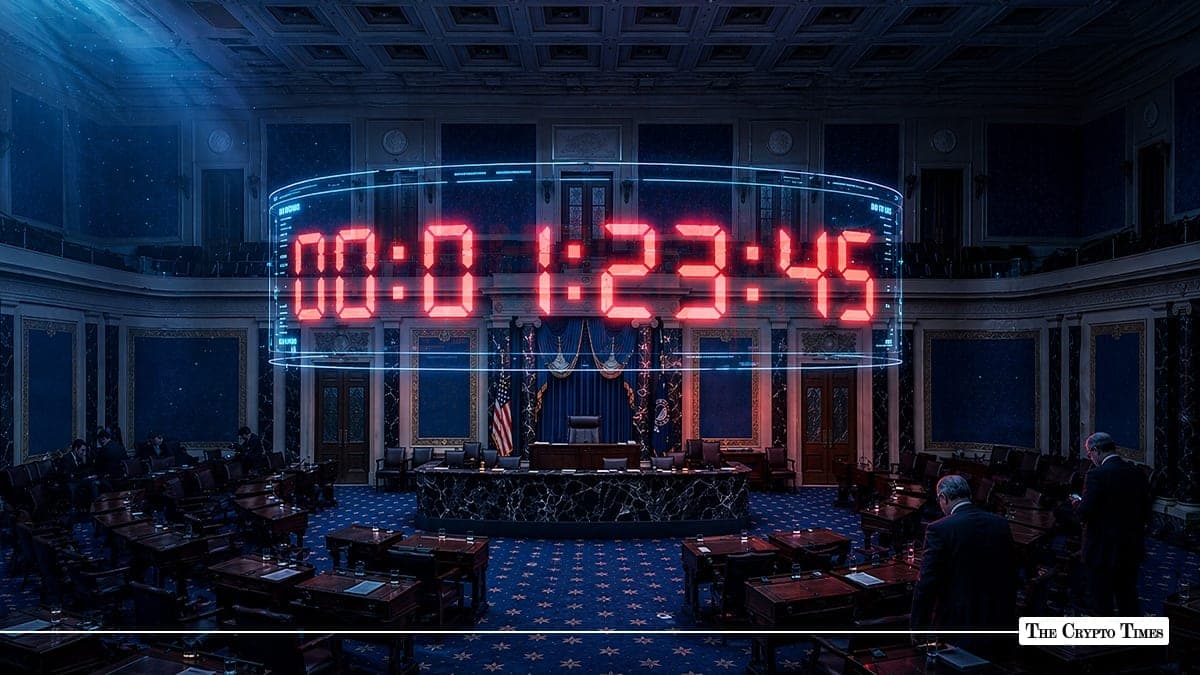
The CLARITY Act Countdown: Will the Senate Deliver a Crypto Win or Run Out the Clock?
Key Highlights For the first time, the White House, the SEC, Treasury, and major industry players like Coinbase are fully united in backing the CLARITY Act framework. The bill faces a “do or die” deadline in May; industry leaders warn that any further delays will push the legislation into the 2026 election freeze, risking a return to hostile regulations. With consensus reached, the fate of the multi-trillion-dollar crypto market now rests entirely on whether the Senate Banking Committee will schedule the markup before time runs out. The U.S. Senate returned from its Easter recess yesterday, April 13, stepping into a political pressure cooker. For the first time in history, a comprehensive digital asset market structure framework—the Digital Asset Market Clarity Act (H.R. 3633)—has the backing of the White House, the Treasury, the Securities and Exchange Commission (SEC), and the largest players in the crypto industry. Yet, the biggest question in Washington remains unanswered: Will the Senate Banking Committee actually schedule the markup, or is the clock quietly running out? A rare alignment, a closing window The legislative landscape for crypto transformed at lightning speed over the past week. Just days after Treasury Secretary Scott Bessent called for swift passage, the industry witnessed a massive breakthrough. The trigger wasn’t a single moment — it was a chain reaction. On March 20, Senators Thom Tillis (R-NC) and Angela Alsobrooks (D-MD) circulated a compromise that bans passive yield on stablecoin balances but permits activity-based rewards like transaction rebates and loyalty programs. Coinbase initially rejected that text on March 25. Then, on April 8, the White House Council of Economic Advisers released a report finding that a full passive-yield ban would cost consumers roughly $800 million annually while delivering only negligible benefit to bank deposit stability—undercutting the banking industry’s core objection. The next day, on April 9–10, Coinbase CEO Brian Armstrong made a dramatic U-turn, officially endorsing the bill after blocking it twice earlier this year. Momentum continued to build through the weekend as SEC Chair Paul Atkins backed fast-track approval, a stunning pivot from the agency’s previous “regulation by enforcement” posture. Senator Tillis is now preparing to release the revised stablecoin yield draft text this week, according to Politico. The draft converts the Tillis-Alsobrooks agreement in principle into formal legislative language—passive yield on stablecoin balances banned, activity-based rewards (payments, transfers, platform engagement) preserved—and is the last procedural piece needed before Chairman Tim Scott can schedule a markup. This was less of a “stunning pivot” than a continuation of the Atkins-era SEC’s friendlier posture; the “regulation by enforcement” era ended with the departure of former Chair Gary Gensler, not this week. But as any veteran of Capitol Hill knows, consensus means nothing without calendar space. Will the Senate actually move? The 14-day clock explained The Senate Banking Committee has roughly 14 working days left in its realistic markup window before midterm politics consumes the calendar. Best-case scenario: Markup notice this week → committee vote late April → full Senate floor vote by late May. Worst-case scenario: No date by April 20–25 → bill slips past midterms and dies. Even the best case is harder than it looks. After a Banking Committee markup, the bill must be reconciled with the Senate Agriculture Committee version (which passed on January 29, 2026), then survive a full Senate floor vote requiring 60 votes—meaning meaningful Democratic support is mandatory—then be reconciled with the House-passed version before reaching the President’s desk. Each step is a potential veto point. Sen. Cynthia Lummis and Sen. Bill Hagerty have publicly urged immediate action, echoing our earlier reporting on the pre-midterm urgency. White House pressure (Treasury Secretary Scott Bessent + SEC Chair backing) remains high, but Scott’s silence is the current bottleneck. The midterm threat: Why May is the “do or die” deadline The urgency surrounding the CLARITY Act is no longer just about market structure; it’s about electoral survival. If the bill is not marked up by late April and brought to the Senate floor by May, it risks bleeding into the 2026 midterm election cycle. Historically, bipartisan cooperation evaporates entirely by late summer during an election year. Senator Cynthia Lummis recently urged immediate action, echoing a profound anxiety within the industry. Crypto Super PACs spent hundreds of millions of dollars to secure a pro-crypto administration and friendly majorities. There is a palpable fear that failing to codify these rules now could leave the industry vulnerable if the political winds shift post-midterms, dragging digital assets back into the hostile regulatory environment of the previous administration. Despite the recent breakthroughs, some legal experts remain cautious. Earlier this month, a pro-XRP lawyer warned that the CLARITY Act could still fail to pass this year, pointing to the glacial pace of the Senate as the ultimate hurdle. All eyes on Chairman Tim Scott The fate of the multi-trillion-dollar digital asset market now rests squarely on the desk of Senate Banking Committee Chairman Tim Scott. Scott controls the committee’s calendar. While he has been broadly supportive of establishing U.S. leadership in digital assets, he must balance the CLARITY Act against a crowded legislative docket. Moving the bill requires navigating residual skepticism from a few traditional banking hardliners who are still wary of the stablecoin yield compromise, even if major institutions have laid down their arms. Market implications: The danger of delay While Washington deliberates, the market is already repositioning. Projects like Polymarket and Aster are actively shifting dollar rails in anticipation of the new framework. A successful markup announcement in the coming days would likely serve as a massive catalyst for tokens seeking CFTC commodity status, such as XRP and SOL, and supercharge the tokenized real-world asset (RWA) sector. Conversely, if April closes without a scheduled committee vote, expect institutional capital to hedge its bets as the reality of a stalled bill sets in. The table is perfectly set. The industry has mostly compromised. The regulators are on board. But the 60-vote Senate threshold, the reconciliation gauntlet, and an active legislative calendar mean the final stretch is anything but a formality. Now, the Senate simply has to move before the clock strikes midnight on the 2026 legislative session.
The CLARITY Act Countdown: Will the Senate Deliver a Crypto Win or Run Out the Clock?
Key Highlights For the first time, the White House, the SEC, Treasury, and major industry players like Coinbase are fully united in backing the CLARITY Act framework. The bill faces a “do or die” deadline in May; industry leaders warn that any further delays will push the legislation into the 2026 election freeze, risking a return to hostile regulations. With consensus reached, the fate of the multi-trillion-dollar crypto market now rests entirely on whether the Senate Banking Committee will schedule the markup before time runs out. The U.S. Senate returned from its Easter recess yesterday, April 13, stepping into a political pressure cooker. For the first time in history, a comprehensive digital asset market structure framework—the Digital Asset Market Clarity Act (H.R. 3633)—has the backing of the White House, the Treasury, the Securities and Exchange Commission (SEC), and the largest players in the crypto industry. Yet, the biggest question in Washington remains unanswered: Will the Senate Banking Committee actually schedule the markup, or is the clock quietly running out? A rare alignment, a closing window The legislative landscape for crypto transformed at lightning speed over the past week. Just days after Treasury Secretary Scott Bessent called for swift passage, the industry witnessed a massive breakthrough. The trigger wasn’t a single moment — it was a chain reaction. On March 20, Senators Thom Tillis (R-NC) and Angela Alsobrooks (D-MD) circulated a compromise that bans passive yield on stablecoin balances but permits activity-based rewards like transaction rebates and loyalty programs. Coinbase initially rejected that text on March 25. Then, on April 8, the White House Council of Economic Advisers released a report finding that a full passive-yield ban would cost consumers roughly $800 million annually while delivering only negligible benefit to bank deposit stability—undercutting the banking industry’s core objection. The next day, on April 9–10, Coinbase CEO Brian Armstrong made a dramatic U-turn, officially endorsing the bill after blocking it twice earlier this year. Momentum continued to build through the weekend as SEC Chair Paul Atkins backed fast-track approval, a stunning pivot from the agency’s previous “regulation by enforcement” posture. Senator Tillis is now preparing to release the revised stablecoin yield draft text this week, according to Politico. The draft converts the Tillis-Alsobrooks agreement in principle into formal legislative language—passive yield on stablecoin balances banned, activity-based rewards (payments, transfers, platform engagement) preserved—and is the last procedural piece needed before Chairman Tim Scott can schedule a markup. This was less of a “stunning pivot” than a continuation of the Atkins-era SEC’s friendlier posture; the “regulation by enforcement” era ended with the departure of former Chair Gary Gensler, not this week. But as any veteran of Capitol Hill knows, consensus means nothing without calendar space. Will the Senate actually move? The 14-day clock explained The Senate Banking Committee has roughly 14 working days left in its realistic markup window before midterm politics consumes the calendar. Best-case scenario: Markup notice this week → committee vote late April → full Senate floor vote by late May. Worst-case scenario: No date by April 20–25 → bill slips past midterms and dies. Even the best case is harder than it looks. After a Banking Committee markup, the bill must be reconciled with the Senate Agriculture Committee version (which passed on January 29, 2026), then survive a full Senate floor vote requiring 60 votes—meaning meaningful Democratic support is mandatory—then be reconciled with the House-passed version before reaching the President’s desk. Each step is a potential veto point. Sen. Cynthia Lummis and Sen. Bill Hagerty have publicly urged immediate action, echoing our earlier reporting on the pre-midterm urgency. White House pressure (Treasury Secretary Scott Bessent + SEC Chair backing) remains high, but Scott’s silence is the current bottleneck. The midterm threat: Why May is the “do or die” deadline The urgency surrounding the CLARITY Act is no longer just about market structure; it’s about electoral survival. If the bill is not marked up by late April and brought to the Senate floor by May, it risks bleeding into the 2026 midterm election cycle. Historically, bipartisan cooperation evaporates entirely by late summer during an election year. Senator Cynthia Lummis recently urged immediate action, echoing a profound anxiety within the industry. Crypto Super PACs spent hundreds of millions of dollars to secure a pro-crypto administration and friendly majorities. There is a palpable fear that failing to codify these rules now could leave the industry vulnerable if the political winds shift post-midterms, dragging digital assets back into the hostile regulatory environment of the previous administration. Despite the recent breakthroughs, some legal experts remain cautious. Earlier this month, a pro-XRP lawyer warned that the CLARITY Act could still fail to pass this year, pointing to the glacial pace of the Senate as the ultimate hurdle. All eyes on Chairman Tim Scott The fate of the multi-trillion-dollar digital asset market now rests squarely on the desk of Senate Banking Committee Chairman Tim Scott. Scott controls the committee’s calendar. While he has been broadly supportive of establishing U.S. leadership in digital assets, he must balance the CLARITY Act against a crowded legislative docket. Moving the bill requires navigating residual skepticism from a few traditional banking hardliners who are still wary of the stablecoin yield compromise, even if major institutions have laid down their arms. Market implications: The danger of delay While Washington deliberates, the market is already repositioning. Projects like Polymarket and Aster are actively shifting dollar rails in anticipation of the new framework. A successful markup announcement in the coming days would likely serve as a massive catalyst for tokens seeking CFTC commodity status, such as XRP and SOL, and supercharge the tokenized real-world asset (RWA) sector. Conversely, if April closes without a scheduled committee vote, expect institutional capital to hedge its bets as the reality of a stalled bill sets in. The table is perfectly set. The industry has mostly compromised. The regulators are on board. But the 60-vote Senate threshold, the reconciliation gauntlet, and an active legislative calendar mean the final stretch is anything but a formality. Now, the Senate simply has to move before the clock strikes midnight on the 2026 legislative session.
The CLARITY Act Countdown: Will the Senate Deliver a Crypto Win or Run Out the Clock?
Key Highlights For the first time, the White House, the SEC, Treasury, and major industry players like Coinbase are fully united in backing the CLARITY Act framework. The bill faces a “do or die” deadline in May; industry leaders warn that any further delays will push the legislation into the 2026 election freeze, risking a return to hostile regulations. With consensus reached, the fate of the multi-trillion-dollar crypto market now rests entirely on whether the Senate Banking Committee will schedule the markup before time runs out. The U.S. Senate returned from its Easter recess yesterday, April 13, stepping into a political pressure cooker. For the first time in history, a comprehensive digital asset market structure framework—the Digital Asset Market Clarity Act (H.R. 3633)—has the backing of the White House, the Treasury, the Securities and Exchange Commission (SEC), and the largest players in the crypto industry. Yet, the biggest question in Washington remains unanswered: Will the Senate Banking Committee actually schedule the markup, or is the clock quietly running out? A rare alignment, a closing window The legislative landscape for crypto transformed at lightning speed over the past week. Just days after Treasury Secretary Scott Bessent called for swift passage, the industry witnessed a massive breakthrough. The trigger wasn’t a single moment — it was a chain reaction. On March 20, Senators Thom Tillis (R-NC) and Angela Alsobrooks (D-MD) circulated a compromise that bans passive yield on stablecoin balances but permits activity-based rewards like transaction rebates and loyalty programs. Coinbase initially rejected that text on March 25. Then, on April 8, the White House Council of Economic Advisers released a report finding that a full passive-yield ban would cost consumers roughly $800 million annually while delivering only negligible benefit to bank deposit stability—undercutting the banking industry’s core objection. The next day, on April 9–10, Coinbase CEO Brian Armstrong made a dramatic U-turn, officially endorsing the bill after blocking it twice earlier this year. Momentum continued to build through the weekend as SEC Chair Paul Atkins backed fast-track approval, a stunning pivot from the agency’s previous “regulation by enforcement” posture. Senator Tillis is now preparing to release the revised stablecoin yield draft text this week, according to Politico. The draft converts the Tillis-Alsobrooks agreement in principle into formal legislative language—passive yield on stablecoin balances banned, activity-based rewards (payments, transfers, platform engagement) preserved—and is the last procedural piece needed before Chairman Tim Scott can schedule a markup. This was less of a “stunning pivot” than a continuation of the Atkins-era SEC’s friendlier posture; the “regulation by enforcement” era ended with the departure of former Chair Gary Gensler, not this week. But as any veteran of Capitol Hill knows, consensus means nothing without calendar space. Will the Senate actually move? The 14-day clock explained The Senate Banking Committee has roughly 14 working days left in its realistic markup window before midterm politics consumes the calendar. Best-case scenario: Markup notice this week → committee vote late April → full Senate floor vote by late May. Worst-case scenario: No date by April 20–25 → bill slips past midterms and dies. Even the best case is harder than it looks. After a Banking Committee markup, the bill must be reconciled with the Senate Agriculture Committee version (which passed on January 29, 2026), then survive a full Senate floor vote requiring 60 votes—meaning meaningful Democratic support is mandatory—then be reconciled with the House-passed version before reaching the President’s desk. Each step is a potential veto point. Sen. Cynthia Lummis and Sen. Bill Hagerty have publicly urged immediate action, echoing our earlier reporting on the pre-midterm urgency. White House pressure (Treasury Secretary Scott Bessent + SEC Chair backing) remains high, but Scott’s silence is the current bottleneck. The midterm threat: Why May is the “do or die” deadline The urgency surrounding the CLARITY Act is no longer just about market structure; it’s about electoral survival. If the bill is not marked up by late April and brought to the Senate floor by May, it risks bleeding into the 2026 midterm election cycle. Historically, bipartisan cooperation evaporates entirely by late summer during an election year. Senator Cynthia Lummis recently urged immediate action, echoing a profound anxiety within the industry. Crypto Super PACs spent hundreds of millions of dollars to secure a pro-crypto administration and friendly majorities. There is a palpable fear that failing to codify these rules now could leave the industry vulnerable if the political winds shift post-midterms, dragging digital assets back into the hostile regulatory environment of the previous administration. Despite the recent breakthroughs, some legal experts remain cautious. Earlier this month, a pro-XRP lawyer warned that the CLARITY Act could still fail to pass this year, pointing to the glacial pace of the Senate as the ultimate hurdle. All eyes on Chairman Tim Scott The fate of the multi-trillion-dollar digital asset market now rests squarely on the desk of Senate Banking Committee Chairman Tim Scott. Scott controls the committee’s calendar. While he has been broadly supportive of establishing U.S. leadership in digital assets, he must balance the CLARITY Act against a crowded legislative docket. Moving the bill requires navigating residual skepticism from a few traditional banking hardliners who are still wary of the stablecoin yield compromise, even if major institutions have laid down their arms. Market implications: The danger of delay While Washington deliberates, the market is already repositioning. Projects like Polymarket and Aster are actively shifting dollar rails in anticipation of the new framework. A successful markup announcement in the coming days would likely serve as a massive catalyst for tokens seeking CFTC commodity status, such as XRP and SOL, and supercharge the tokenized real-world asset (RWA) sector. Conversely, if April closes without a scheduled committee vote, expect institutional capital to hedge its bets as the reality of a stalled bill sets in. The table is perfectly set. The industry has mostly compromised. The regulators are on board. But the 60-vote Senate threshold, the reconciliation gauntlet, and an active legislative calendar mean the final stretch is anything but a formality. Now, the Senate simply has to move before the clock strikes midnight on the 2026 legislative session.

Senator Lummis Urges Action on CLARITY Act Before 2026 Midterms
Key Highlights Cynthia Lummis warns that the current Congress may be the last opportunity until 2030 to approve the Digital Asset Market Clarity Act. The initiative is gaining momentum with support from individuals such as Scott Bessent, Brian Armstrong, and Donald Trump. Senator Cynthia Lummis warned that the current congressional session may represent the last realistic opportunity to pass the Digital Asset Market Clarity Act (CLARITY Act) before 2030, urging colleagues not to “surrender America’s financial future.” In an X post on Friday, she referred to ongoing efforts by the Trump administration to advance the stalled legislation aimed at creating a federal framework for digital assets. This is our last chance to pass the Clarity Act until at least 2030. We can’t afford to surrender America’s financial future. — Senator Cynthia Lummis (@SenLummis) April 10, 2026 The Digital Asset Market Clarity Act, which had been approved by the House of Representatives back in July 2025 with solid bipartisan backing (294-134), seeks to define the SEC’s and CFTC’s regulatory jurisdiction over the digital assets market. It also aims to create a framework for the registration of trading platforms and intermediaries, protect against money laundering, ensure DeFi safe harbors, and regulate stablecoins to ensure that innovation is not moved abroad. Urgency around the act On April 9, Treasury Secretary Scott Bessent reiterated the need for action by urging the Senate Banking Committee to move forward with a markup and send the bill to President Donald Trump’s desk. “Congress has been working on passing a framework that would onshore the future of finance for the better part of half a decade now,” Bessent said. “Senate time is valuable, and it’s time to move forward.” In response, Coinbase CEO Brian Armstrong concurred, stating, “We agree. Thanks @SecScottBessent for saying it. It’s time to pass the Clarity Act. Appreciative of the bipartisan efforts made by senators and their teams over the last few months to ensure this bill becomes a great one.” We agree. Thank you @SecScottBessent for saying it. It's time to pass the Clarity Act. Grateful for all the bipartisan work among Senators and staff over the past several months to make this a strong bill. https://t.co/jHoZ1bfLVZ pic.twitter.com/YBKebDkq8B — Brian Armstrong (@brian_armstrong) April 10, 2026 Senator Lummis echoed the sentiment, asserting that the U.S. currently has everything in place to enact the legislation. “With the administration behind us, momentum and bipartisan work among the senators and their staff for the last few months to produce a bill that can become the best thing for the DeFi community,” she said. Ongoing negotiations The discussions have centered around finding solutions for the disparities regarding the interest payments on stablecoins and ensuring a balance between traditional banks and crypto companies. Though some previous versions were rejected by the industries, current compromises have led to the bill being close to the process of Senate markup, which may happen at the end of April. SEC Chairman Paul Atkins has also expressed support, stating that both bodies are ready for the immediate execution of the law when it is enacted. Moreover, Bessent warned that without regulatory clarity, the U.S. risks losing its position in digital finance as companies and talent move to other jurisdictions. What’s next As midterm elections approach toward the end of 2026, the legislative schedule will be tight. Backers such as Lummis, Bessent, and industry insiders like Armstrong consider the CLARITY Act a crucial component in making the country’s financial system future-proof and leveraging the crypto-friendly approach of the government. If the Senate Banking Committee manages to produce a markup before the year-end, it will mean that the United States will capitalize on its opportunity and take action on crypto market structure reform now. Otherwise, Lummis and company fear that they may be conceding the upper hand to foreign countries. Also Read:Securitize Integrates with TRON to Expand RWA Tokenization
Senator Lummis Urges Action on CLARITY Act Before 2026 Midterms
Key Highlights Cynthia Lummis warns that the current Congress may be the last opportunity until 2030 to approve the Digital Asset Market Clarity Act. The initiative is gaining momentum with support from individuals such as Scott Bessent, Brian Armstrong, and Donald Trump. Senator Cynthia Lummis warned that the current congressional session may represent the last realistic opportunity to pass the Digital Asset Market Clarity Act (CLARITY Act) before 2030, urging colleagues not to “surrender America’s financial future.” In an X post on Friday, she referred to ongoing efforts by the Trump administration to advance the stalled legislation aimed at creating a federal framework for digital assets. This is our last chance to pass the Clarity Act until at least 2030. We can’t afford to surrender America’s financial future. — Senator Cynthia Lummis (@SenLummis) April 10, 2026 The Digital Asset Market Clarity Act, which had been approved by the House of Representatives back in July 2025 with solid bipartisan backing (294-134), seeks to define the SEC’s and CFTC’s regulatory jurisdiction over the digital assets market. It also aims to create a framework for the registration of trading platforms and intermediaries, protect against money laundering, ensure DeFi safe harbors, and regulate stablecoins to ensure that innovation is not moved abroad. Urgency around the act On April 9, Treasury Secretary Scott Bessent reiterated the need for action by urging the Senate Banking Committee to move forward with a markup and send the bill to President Donald Trump’s desk. “Congress has been working on passing a framework that would onshore the future of finance for the better part of half a decade now,” Bessent said. “Senate time is valuable, and it’s time to move forward.” In response, Coinbase CEO Brian Armstrong concurred, stating, “We agree. Thanks @SecScottBessent for saying it. It’s time to pass the Clarity Act. Appreciative of the bipartisan efforts made by senators and their teams over the last few months to ensure this bill becomes a great one.” We agree. Thank you @SecScottBessent for saying it. It's time to pass the Clarity Act. Grateful for all the bipartisan work among Senators and staff over the past several months to make this a strong bill. https://t.co/jHoZ1bfLVZ pic.twitter.com/YBKebDkq8B — Brian Armstrong (@brian_armstrong) April 10, 2026 Senator Lummis echoed the sentiment, asserting that the U.S. currently has everything in place to enact the legislation. “With the administration behind us, momentum and bipartisan work among the senators and their staff for the last few months to produce a bill that can become the best thing for the DeFi community,” she said. Ongoing negotiations The discussions have centered around finding solutions for the disparities regarding the interest payments on stablecoins and ensuring a balance between traditional banks and crypto companies. Though some previous versions were rejected by the industries, current compromises have led to the bill being close to the process of Senate markup, which may happen at the end of April. SEC Chairman Paul Atkins has also expressed support, stating that both bodies are ready for the immediate execution of the law when it is enacted. Moreover, Bessent warned that without regulatory clarity, the U.S. risks losing its position in digital finance as companies and talent move to other jurisdictions. What’s next As midterm elections approach toward the end of 2026, the legislative schedule will be tight. Backers such as Lummis, Bessent, and industry insiders like Armstrong consider the CLARITY Act a crucial component in making the country’s financial system future-proof and leveraging the crypto-friendly approach of the government. If the Senate Banking Committee manages to produce a markup before the year-end, it will mean that the United States will capitalize on its opportunity and take action on crypto market structure reform now. Otherwise, Lummis and company fear that they may be conceding the upper hand to foreign countries. Also Read:Securitize Integrates with TRON to Expand RWA Tokenization

Ripple CEO Stays Neutral on Clarity Act, Predicts May Passage
Key Highlights Ripple CEO Brad Garlinghouse said the company is neutral on the Clarity Act and is not actively supporting or opposing it. XRP is already recognized as a commodity by the SEC and CFTC, giving Ripple some legal clarity. Garlinghouse criticized the large number of USD-backed stablecoins and said Ripple could issue its own compliant stablecoin. Brad Garlinghouse, the CEO of Ripple Labs, stated the company is not taking sides on the Digital Asset Market Clarity Act. During his appearance at the FII PRIORITY Miami Summit on Thursday, he said the White House supports the bill, which has helped it move forward. Even though the U.S. Senate has delayed discussions and crypto exchange Coinbase rejected a recent compromise, Garlinghouse expects the law to pass by May 31, 2026. “Ripple doesn’t have a big dog in this fight and so we have kind of on this particular point let people who care more deeply about it fight……I’ll predict by the end of May we’ll get something across,” he said. Garlinghouse says XRP already has legal clarity Garlinghouse pointed out that XRP, the native token of Ripple, already has some legal clarity because it has been officially recognized as a commodity by both the Securities and Exchange Commission (SEC) and the Commodity Futures Trading Commission (CFTC). Commodities are assets such as gold or oil that are regulated under specific government rules. This recognition, he said, is important for Ripple’s long-term planning. He also addressed stablecoins, stating there is no need for dozens of U.S. dollar-backed tokens, as having too many can create confusion. He noted that Ripple once minted about 20% of the USDC supply, a stablecoin managed by Circle. Because of this experience, Garlinghouse said the company could create its own stablecoin for large companies like banks and investment firms. He added that the crypto industry should show more transparency, especially about the money backing stablecoins, to build trust in the market. Clarity Act timeline amid ongoing negotiations Garlinghouse had earlier predicted that the Clarity Act could pass by April 30, but he revised the timeline as lawmakers from both political parties are still negotiating. Meanwhile, Senator Cynthia Lummis, a Republican from Wyoming who supports crypto-friendly laws, said cross-party agreement is still needed. She noted that efforts are being made to protect stablecoin rewards and prevent deposits from leaving community banks. Despite the delay, the political environment, including support from the White House, favors the Act’s eventual passage. The Clarity Act is meant to make rules for digital assets clear for companies and investors in the U.S., so they know what is allowed. By staying neutral, Ripple can follow the law while watching how rules develop, without taking a public side in the debate. Also Read: Prediction Markets Face Scrutiny as U.S. Senators Introduce New Bill

US Lawmaker Questions Fed’s Approval of Kraken Access to Payment Rails
Key Highlights Legal & Transparency Concerns: Maxine Waters questioned the legal basis of Kraken’s “limited-purpose” Fed account, noting no clear backing in federal law or Federal Reserve guidelines. Scope of Access Under Scrutiny: The letter seeks clarity on whether Kraken can use critical Fed services like FedACH, Fedwire, or FedCash, and how extensive its access really is. Regulatory Oversight & Deadline: Waters is probing whether the approval involved coordination with the Federal Reserve Board or other regulators, with a response deadline set for April 10, 2026. Congresswoman Maxine Waters (D-CA), the ranking Democrat on the House Financial Services Committee, is pressing the Federal Reserve Bank of Kansas City for answers after it approved a so-called “limited purpose account” for Payward Financial, doing business as Kraken Financial, earlier this month. In a letter sent Thursday to Kansas City Fed President and CEO Jeff Schmid, Waters raised concerns about the transparency, legal grounding, and regulatory implications of the decision. The move made Kraken the first crypto firm in U.S. history to gain direct access to the Federal Reserve’s core payment infrastructure. What is the concern Waters’ central issue is that the term “limited purpose account” does not appear in any federal statute or in the Federal Reserve Board’s Account Access Guidelines. That, she argues, raises questions about whether the approval has a clear legal foundation. “Innovations in payments, digital assets, tokenization, and even artificial intelligence are rapidly outpacing statutory frameworks developed to mitigate risk, promote competition, and protect consumers in a traditional financial environment,” Waters wrote in the letter. She added that access to the nation’s core payments infrastructure carries significant public responsibility and should not be extended without full transparency and confidence that risks are being properly managed. Waters also flagged that the Kansas City Fed’s own announcement stated it would not disclose specific details about the account, citing “the confidentiality of business information provided by applicants.” What Waters is asking for The letter lays out a detailed list of questions. Waters wants to know whether Kraken’s account includes access to key Federal Reserve services such as FedACH, Fedwire, FedCash, or Fedwire Securities Services. She is also asking whether the account is subject to any restrictions on daylight overdrafts, overnight balance caps, or enhanced supervisory and risk-management requirements beyond what Wyoming state law already mandates. Beyond that, Waters wants clarity on whether the Kansas City Fed coordinated with the Federal Reserve Board, other Reserve Banks, or any federal or state government officials before approving the account. She also asked whether any outside influence played a role in the decision. The letter requests a written response no later than April 10, 2026. What led to this The Kansas City Fed announced on March 4 that it had approved a limited-purpose account for Kraken Financial under the Federal Reserve Board of Governors’ Account Access Guidelines. Kraken Financial is chartered as a Wyoming Special Purpose Depository Institution (SPDI) and was classified as a Tier 3 entity, meaning it went through the Fed’s strictest level of review. The account has been approved for an initial term of one year with restrictions tailored to Kraken’s business model and risk profile. Kansas City Fed President Jeff Schmid said at the time that the payments landscape is actively evolving, adding that “the integrity and stability of the U.S. payments system remain our priority.” Kraken Co-CEO Arjun Sethi called the approval a milestone, saying it represents “the convergence of crypto infrastructure and sovereign financial rails.” He noted that the account allows Kraken to settle directly on Fedwire, reduce its reliance on correspondent banks, and integrate regulated fiat liquidity into digital asset markets. The approval also drew strong reactions from the banking industry. The Bank Policy Institute said it was “deeply concerned” that the Kansas City Fed moved ahead before the Federal Reserve Board finalized its broader policy framework for limited accounts. The American Bankers Association also pushed back, with SVP Brooke Ybarra saying the decision “puts the cart so far ahead, that the horse will never be able to catch up.” On the other side, crypto advocates and Wyoming officials celebrated the move. Senator Cynthia Lummis called it “a watershed moment for the digital asset industry,” and Wyoming Governor Mark Gordon said the approval “signals support for Wyoming’s banking and digital asset laws.” Why this matters The approval came at a time when Congress had been actively debating who should get access to the Federal Reserve’s payment rails and on what terms. The Federal Reserve Board itself requested public input in December 2025 on creating a more limited “payment account” for certain institutions, and the comment period closed in February 2026. The fact that the Kansas City Fed approved Kraken’s account before that broader rulemaking process was completed is a key part of the criticism from both Waters and banking trade groups. Other crypto firms are also in line for similar access. Custodia Bank, another Wyoming-chartered institution, had its master account application denied by the Kansas City Fed in early 2023. A federal appeals court recently rejected Custodia’s final bid to challenge that denial, even as the landscape for crypto access to the Fed appears to be shifting. Ripple’s Standard Custody & Trust Company and Anchorage Digital Bank have also applied for Fed master accounts. Also Read: Sen. Warren Questions MrBeast Over Youth-Focused Crypto Plans
US Lawmaker Questions Fed’s Approval of Kraken Access to Payment Rails
Key Highlights Legal & Transparency Concerns: Maxine Waters questioned the legal basis of Kraken’s “limited-purpose” Fed account, noting no clear backing in federal law or Federal Reserve guidelines. Scope of Access Under Scrutiny: The letter seeks clarity on whether Kraken can use critical Fed services like FedACH, Fedwire, or FedCash, and how extensive its access really is. Regulatory Oversight & Deadline: Waters is probing whether the approval involved coordination with the Federal Reserve Board or other regulators, with a response deadline set for April 10, 2026. Congresswoman Maxine Waters (D-CA), the ranking Democrat on the House Financial Services Committee, is pressing the Federal Reserve Bank of Kansas City for answers after it approved a so-called “limited purpose account” for Payward Financial, doing business as Kraken Financial, earlier this month. In a letter sent Thursday to Kansas City Fed President and CEO Jeff Schmid, Waters raised concerns about the transparency, legal grounding, and regulatory implications of the decision. The move made Kraken the first crypto firm in U.S. history to gain direct access to the Federal Reserve’s core payment infrastructure. What is the concern Waters’ central issue is that the term “limited purpose account” does not appear in any federal statute or in the Federal Reserve Board’s Account Access Guidelines. That, she argues, raises questions about whether the approval has a clear legal foundation. “Innovations in payments, digital assets, tokenization, and even artificial intelligence are rapidly outpacing statutory frameworks developed to mitigate risk, promote competition, and protect consumers in a traditional financial environment,” Waters wrote in the letter. She added that access to the nation’s core payments infrastructure carries significant public responsibility and should not be extended without full transparency and confidence that risks are being properly managed. Waters also flagged that the Kansas City Fed’s own announcement stated it would not disclose specific details about the account, citing “the confidentiality of business information provided by applicants.” What Waters is asking for The letter lays out a detailed list of questions. Waters wants to know whether Kraken’s account includes access to key Federal Reserve services such as FedACH, Fedwire, FedCash, or Fedwire Securities Services. She is also asking whether the account is subject to any restrictions on daylight overdrafts, overnight balance caps, or enhanced supervisory and risk-management requirements beyond what Wyoming state law already mandates. Beyond that, Waters wants clarity on whether the Kansas City Fed coordinated with the Federal Reserve Board, other Reserve Banks, or any federal or state government officials before approving the account. She also asked whether any outside influence played a role in the decision. The letter requests a written response no later than April 10, 2026. What led to this The Kansas City Fed announced on March 4 that it had approved a limited-purpose account for Kraken Financial under the Federal Reserve Board of Governors’ Account Access Guidelines. Kraken Financial is chartered as a Wyoming Special Purpose Depository Institution (SPDI) and was classified as a Tier 3 entity, meaning it went through the Fed’s strictest level of review. The account has been approved for an initial term of one year with restrictions tailored to Kraken’s business model and risk profile. Kansas City Fed President Jeff Schmid said at the time that the payments landscape is actively evolving, adding that “the integrity and stability of the U.S. payments system remain our priority.” Kraken Co-CEO Arjun Sethi called the approval a milestone, saying it represents “the convergence of crypto infrastructure and sovereign financial rails.” He noted that the account allows Kraken to settle directly on Fedwire, reduce its reliance on correspondent banks, and integrate regulated fiat liquidity into digital asset markets. The approval also drew strong reactions from the banking industry. The Bank Policy Institute said it was “deeply concerned” that the Kansas City Fed moved ahead before the Federal Reserve Board finalized its broader policy framework for limited accounts. The American Bankers Association also pushed back, with SVP Brooke Ybarra saying the decision “puts the cart so far ahead, that the horse will never be able to catch up.” On the other side, crypto advocates and Wyoming officials celebrated the move. Senator Cynthia Lummis called it “a watershed moment for the digital asset industry,” and Wyoming Governor Mark Gordon said the approval “signals support for Wyoming’s banking and digital asset laws.” Why this matters The approval came at a time when Congress had been actively debating who should get access to the Federal Reserve’s payment rails and on what terms. The Federal Reserve Board itself requested public input in December 2025 on creating a more limited “payment account” for certain institutions, and the comment period closed in February 2026. The fact that the Kansas City Fed approved Kraken’s account before that broader rulemaking process was completed is a key part of the criticism from both Waters and banking trade groups. Other crypto firms are also in line for similar access. Custodia Bank, another Wyoming-chartered institution, had its master account application denied by the Kansas City Fed in early 2023. A federal appeals court recently rejected Custodia’s final bid to challenge that denial, even as the landscape for crypto access to the Fed appears to be shifting. Ripple’s Standard Custody & Trust Company and Anchorage Digital Bank have also applied for Fed master accounts. Also Read: Sen. Warren Questions MrBeast Over Youth-Focused Crypto Plans