6 stories credited to Breaking Defense
Latest story Apr 16, 2026 · on ChamberLight since Apr 2026
A story can appear as several articles (copies of the same piece), so counts of stories and of articles differ.
Scores for Breaking Defense
Writing quality not enough rated stories yet: 1 of 10. How it is measured
Scores last checked Sep 25, 2026.
Stories ChamberLight collected, by month
Stories credited to Breaking Defense, by publication date. ChamberLight collects articles that mention the officials it tracks, so this shows its own coverage of this source, not how much the source publishes.
- Stories from Breaking Defense
- Shaded: ChamberLight collected no stories, or almost none, from any outlet (a gap in its collection, not in the outlet’s publishing)
Show as a table
| Month | Stories | All outlets |
|---|---|---|
| September 2025 | 1 | 42 |
| October 2025 | 0 | 50 |
| November 2025 | 0 | 79 |
| December 2025 | 0 | 27 |
| January 2026 | 1 | 87 |
| February 2026 | 0 | 180 |
| March 2026 | 2 | 1,094 |
| April 2026 | 2 | 4,538 |
| May 2026 | 0 | none collected |
| June 2026 | 0 | none collected |
| July 2026 | 0 | none collected |
| August 2026 | 0 | 1 (collection gap) |
| September 2026 | 0 | 1,320 |
Top topics
Share of this source’s stories tagged with each topic. A story can carry several topics, so the shares do not add up to 100%.
- Defense/Military6
100% of 6 stories · 25% across all outlets
- Budget/Spending4
67% of 6 stories · 31% across all outlets
- Foreign Policy4
67% of 6 stories · 29% across all outlets
- Economy1
17% of 6 stories · 26% across all outlets
- Ethics/Corruption1
17% of 6 stories · 58% across all outlets
- Immigration1
17% of 6 stories · 13% across all outlets
- Infrastructure1
17% of 6 stories · 8% across all outlets
The thin mark on each bar is the topic’s share across all outlets.
Who they cover
Party of the officials these stories are mainly about, across all 9 officials named. A story counts once for each official it is mainly about, so the split is over 11 story–official pairs, from 6 stories.
- Republican55% · 6 pairs
- Democrat27% · 3 pairs
- Party not recorded18% · 2 pairs
Most covered
Stories mainly about each official, and their share of the source’s 6 stories.
Article tone
ChamberLight’s article analysis assigns each story a tone toward the official it covers. It describes the coverage of that official, not Breaking Defense’s stance, and reader votes do not change it. 6 stories.
- Good Look
- 1 (17%)
- Mixed
- 5 (83%)
- Informational
- 0 (0%)
- Bad Look
- 0 (0%)
Challenges to these scores
No one has challenged a score on this page yet. Anyone can; editors publish every outcome here.
Articles served from breakingdefense.com
11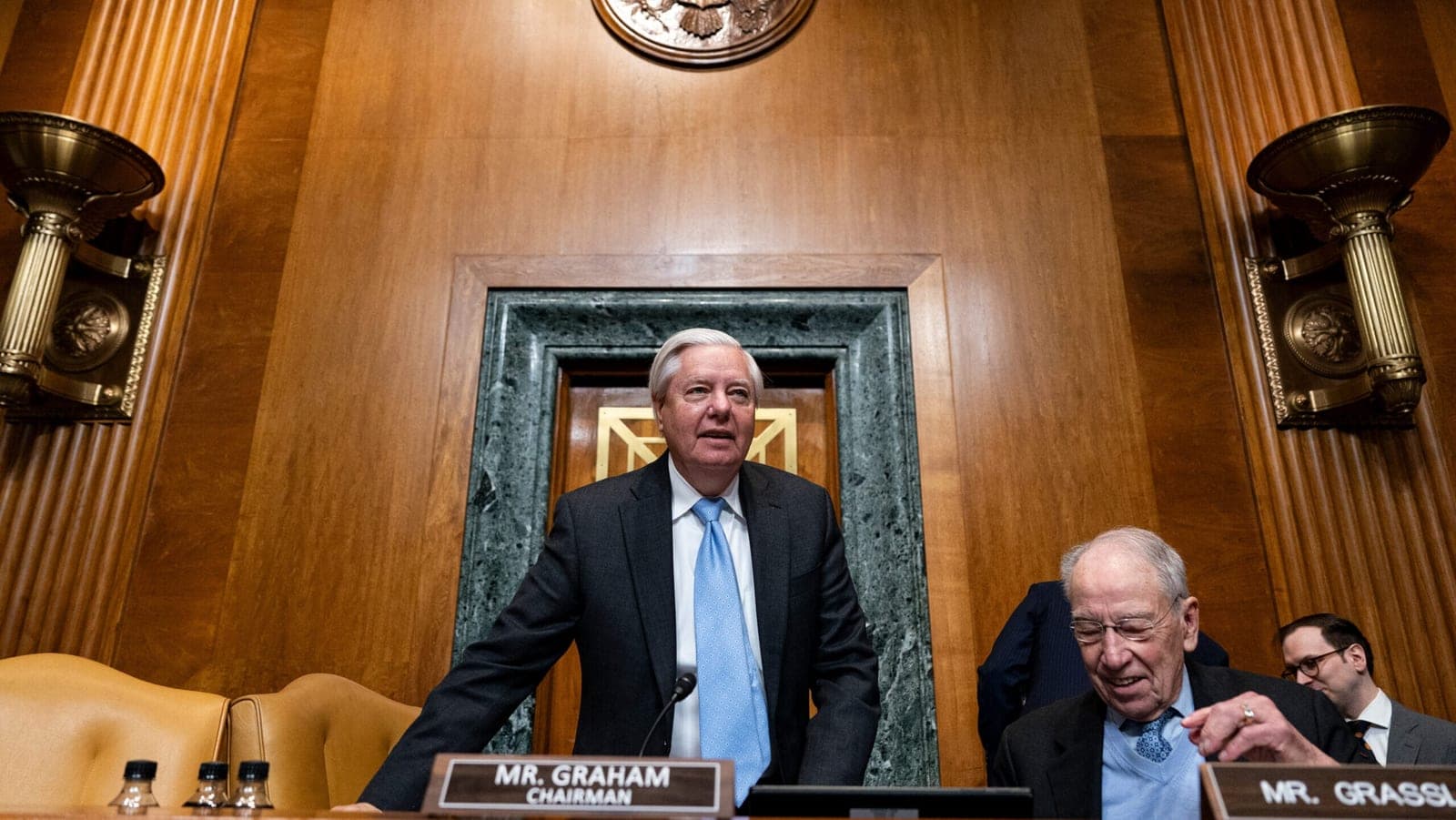
Defense reconciliation bill could come after ICE, border patrol effort: Graham
WASHINGTON — Senate Budget Committee chairman Lindsey Graham wants to keep the year’s first GOP-led reconciliation bill focused on funds for immigration enforcement and not defense, he said today — while leaving open the possibility of a second, defense-focused reconciliation bill in the future. During a hearing on the fiscal 2027 budget, Graham opened by saying that the Senate would move on a reconciliation bill narrowly-tailored on funding Immigration and Customs Enforcement and Customs and Border Patrol for the rest of President Donald Trump’s term. Instead, he seemed to point to a forthcoming supplemental funding request — which will include money for equipment expended during US-Israeli operations against Iran — as a venue to pay for some defense funding requirements laid out in the White House’s $350 billion reconciliation request for defense. “Defense hawks want defense money in the reconciliation bill. I’m trying to keep it as small and focused as possible,” said Graham, R-S.C., said to Office of Management and Budget director Russ Vought. “I have hope that the supplemental will get passed — whenever you send one over — with what you need for the military, that we can work in a bipartisan fashion, pass that supplemental. We’ll have some things in it that my Democratic colleagues want, as well as military funding.” “If that fails, I will urge the president to do another reconciliation bill for defense,” he said, adding that in that case, “the appropriations process would have failed, and we can’t accept failure when it comes to funding the Border Patrol, ICE or additional money for the military.” Graham plays a crucial role in any reconciliation process, as the congressional budget committees write the overarching legislation that determines where, and how much, funding will be obligated. In last year’s reconciliation process, the House and Senate armed services committee crafted the defense-specific funding lines for the reconciliation deal after a budget blueprint with $150 billion for the Pentagon was passed. While Graham expressed enthusiasm for the hike in defense funding, the funding strategy he laid out appears to differ from the White House’s FY27 request, which proposes $1.15 trillion in the base discretionary budget and $350 billion in reconciliation. Office of Management and Budget director Russell Vought, who testified at the hearing, said later in the hearing that “we’re going to need more than one reconciliation bill.” Compared to the House Budget Committee’s hearing on the FY27 budget on Wednesday, senators were much more outspoken about the Pentagon’s spending plan. GOP lawmakers frequently asked questions of Vought that allowed him to highlight the current threat environment and investments in weapons, while Democrats slammed the administration’s cuts to nondefense funding. Asked by Washington state Sen. Patty Murray, the top Democrat on the Appropriations Committee, about reports that Vought — a notorious budget hawk — had opposed the proposed hike in defense spending, the OMB director said he “fully” supports the budget request. “I’ve never been more confident that the administration is doing whatever it can to be efficient at the Department of War, but there are bills that need to be paid with regard to drones and munitions and planes,” he said, noting that the it is a “one-time” increase. Vought declined to give cost estimates for the war in Iran, stating that the figure changes on a daily basis. He also said the administration is “reviewing” the supplemental funding bill but did not give a timeline for when it would be sent to Capitol Hill.
Defense reconciliation bill could come after ICE, border patrol effort: Graham
WASHINGTON — Senate Budget Committee chairman Lindsey Graham wants to keep the year’s first GOP-led reconciliation bill focused on funds for immigration enforcement and not defense, he said today — while leaving open the possibility of a second, defense-focused reconciliation bill in the future. During a hearing on the fiscal 2027 budget, Graham opened by saying that the Senate would move on a reconciliation bill narrowly-tailored on funding Immigration and Customs Enforcement and Customs and Border Patrol for the rest of President Donald Trump’s term. Instead, he seemed to point to a forthcoming supplemental funding request — which will include money for equipment expended during US-Israeli operations against Iran — as a venue to pay for some defense funding requirements laid out in the White House’s $350 billion reconciliation request for defense. “Defense hawks want defense money in the reconciliation bill. I’m trying to keep it as small and focused as possible,” said Graham, R-S.C., said to Office of Management and Budget director Russ Vought. “I have hope that the supplemental will get passed — whenever you send one over — with what you need for the military, that we can work in a bipartisan fashion, pass that supplemental. We’ll have some things in it that my Democratic colleagues want, as well as military funding.” “If that fails, I will urge the president to do another reconciliation bill for defense,” he said, adding that in that case, “the appropriations process would have failed, and we can’t accept failure when it comes to funding the Border Patrol, ICE or additional money for the military.” Graham plays a crucial role in any reconciliation process, as the congressional budget committees write the overarching legislation that determines where, and how much, funding will be obligated. In last year’s reconciliation process, the House and Senate armed services committee crafted the defense-specific funding lines for the reconciliation deal after a budget blueprint with $150 billion for the Pentagon was passed. While Graham expressed enthusiasm for the hike in defense funding, the funding strategy he laid out appears to differ from the White House’s FY27 request, which proposes $1.15 trillion in the base discretionary budget and $350 billion in reconciliation. Office of Management and Budget director Russell Vought, who testified at the hearing, said later in the hearing that “we’re going to need more than one reconciliation bill.” Compared to the House Budget Committee’s hearing on the FY27 budget on Wednesday, senators were much more outspoken about the Pentagon’s spending plan. GOP lawmakers frequently asked questions of Vought that allowed him to highlight the current threat environment and investments in weapons, while Democrats slammed the administration’s cuts to nondefense funding. Asked by Washington state Sen. Patty Murray, the top Democrat on the Appropriations Committee, about reports that Vought — a notorious budget hawk — had opposed the proposed hike in defense spending, the OMB director said he “fully” supports the budget request. “I’ve never been more confident that the administration is doing whatever it can to be efficient at the Department of War, but there are bills that need to be paid with regard to drones and munitions and planes,” he said, noting that the it is a “one-time” increase. Vought declined to give cost estimates for the war in Iran, stating that the figure changes on a daily basis. He also said the administration is “reviewing” the supplemental funding bill but did not give a timeline for when it would be sent to Capitol Hill.
Defense reconciliation bill could come after ICE, border patrol effort: Graham
WASHINGTON — Senate Budget Committee chairman Lindsey Graham wants to keep the year’s first GOP-led reconciliation bill focused on funds for immigration enforcement and not defense, he said today — while leaving open the possibility of a second, defense-focused reconciliation bill in the future. During a hearing on the fiscal 2027 budget, Graham opened by saying that the Senate would move on a reconciliation bill narrowly-tailored on funding Immigration and Customs Enforcement and Customs and Border Patrol for the rest of President Donald Trump’s term. Instead, he seemed to point to a forthcoming supplemental funding request — which will include money for equipment expended during US-Israeli operations against Iran — as a venue to pay for some defense funding requirements laid out in the White House’s $350 billion reconciliation request for defense. “Defense hawks want defense money in the reconciliation bill. I’m trying to keep it as small and focused as possible,” said Graham, R-S.C., said to Office of Management and Budget director Russ Vought. “I have hope that the supplemental will get passed — whenever you send one over — with what you need for the military, that we can work in a bipartisan fashion, pass that supplemental. We’ll have some things in it that my Democratic colleagues want, as well as military funding.” “If that fails, I will urge the president to do another reconciliation bill for defense,” he said, adding that in that case, “the appropriations process would have failed, and we can’t accept failure when it comes to funding the Border Patrol, ICE or additional money for the military.” Graham plays a crucial role in any reconciliation process, as the congressional budget committees write the overarching legislation that determines where, and how much, funding will be obligated. In last year’s reconciliation process, the House and Senate armed services committee crafted the defense-specific funding lines for the reconciliation deal after a budget blueprint with $150 billion for the Pentagon was passed. While Graham expressed enthusiasm for the hike in defense funding, the funding strategy he laid out appears to differ from the White House’s FY27 request, which proposes $1.15 trillion in the base discretionary budget and $350 billion in reconciliation. Office of Management and Budget director Russell Vought, who testified at the hearing, said later in the hearing that “we’re going to need more than one reconciliation bill.” Compared to the House Budget Committee’s hearing on the FY27 budget on Wednesday, senators were much more outspoken about the Pentagon’s spending plan. GOP lawmakers frequently asked questions of Vought that allowed him to highlight the current threat environment and investments in weapons, while Democrats slammed the administration’s cuts to nondefense funding. Asked by Washington state Sen. Patty Murray, the top Democrat on the Appropriations Committee, about reports that Vought — a notorious budget hawk — had opposed the proposed hike in defense spending, the OMB director said he “fully” supports the budget request. “I’ve never been more confident that the administration is doing whatever it can to be efficient at the Department of War, but there are bills that need to be paid with regard to drones and munitions and planes,” he said, noting that the it is a “one-time” increase. Vought declined to give cost estimates for the war in Iran, stating that the figure changes on a daily basis. He also said the administration is “reviewing” the supplemental funding bill but did not give a timeline for when it would be sent to Capitol Hill.

The HH-60W helped rescue a pilot in Iran. Here’s why the Air Force might not buy more.
WASHINGTON — While briefing the public on how a rescue operation for a downed F-15 pilot in Iran played out, President Donald Trump made sure to shout out a specific part of America’s arsenal: the HH-60W, the US Air Force’s latest combat rescue helicopter. Trump called the Jolly Green II a “fabulous machine” during a Monday presser, adding that the operation was “amazing.” An Air Force spokesperson told Breaking Defense that this was the first time the helicopter was used in combat to retrieve an operator behind enemy lines, although the rotorcraft has been used in “civil rescues and completed casualty evacuations in deployed environments” previously. It is a bit of strong publicity for the Jolly Green II. And it came just days after the US Air Force revealed its fiscal 2027 budget request — in which it has no money to buy more HH-60Ws, potentially setting up a fight with Congress for the fourth straight year. Built by Lockheed Martin subsidiary Sikorsky, the HH-60W is a derivative of the Army’s iconic Black Hawk. The helicopter is actually the Air Force’s second attempt to replace the HH-60G; the first, known as the CSAR-X program that was originally awarded to Boeing, was terminated after successful protests from Sikorsky and Lockheed Martin. (Lockheed acquired Sikorsky in 2015.) However, service officials sought to cap the fleet of Jolly Green IIs at 75 aircraft in the fiscal 2023 budget, short of an original program of record for 113. The argument from the Air Force has been consistent: The service is absolutely dedicated to the CSAR mission, which is why it would still have a considerable number of HH-60Ws. Furthermore, there are other assets the service can use in combat search and rescue and personnel recovery operations — a notion apparently proven out by the rescue of the downed F-15’s weapon systems officer, conducted two days after the pilot was rescued, that did not seem to have involved the Jolly Green II. Additionally, service leaders have argued, the fleet is useful in the Middle East, but not for a China scenario, the department’s focused threat. However, Congress has repeatedly balked at the service’s move, worried that a smaller fleet could create gaps in perilous search and rescue missions — the kind of operation that happened last Friday in Iran. Over the years, budget documents show the helicopter’s program of record has been raised to at least 89, along with a $100 million congressional plus-up for “additional aircraft” in FY26. Budget documents released by the Trump administration on Friday show that the Air Force does not plan to request any more copies of the helicopter in FY27, consistent with previous spending plans. At least one member of the Senate Armed Services Committee, Democratic Sen. Richard Blumenthal, whose home state of Connecticut hosts the HH-60W’s assembly line, plans to continue pushing for more aircraft. “Senator Blumenthal has and will continue to champion additional procurement of the HH-60W, including as a member of the Senate Armed Services Committee during negotiations on the upcoming National Defense Authorization Act,” a Blumenthal spokesperson said in a statement to Breaking Defense. Beyond the HH-60W, future platforms could also step up to fill its role. One candidate could be the Army’s MV-75, which is aiming to begin deliveries in 2028. Another potential platform could be a high-speed, runway-independent aircraft under development at DARPA, called SPRINT. On March 9, DARPA revealed that manufacturer Bell Textron entered the “build phase” for the prototype SPRINT aircraft officially christened the X-76. Flight testing is expected to begin in “early 2028,” according to the agency. In the meantime, the Air Force plans to upgrade the HH-60W with anti-missile countermeasures. In a request for information released today, the service is searching for vendors who can equip the helicopter with an advanced infrared countermeasures system, the lack of which “significantly increases the risk of infrared guided missile engagement, jeopardizing mission success, aircraft survivability, and crew safety,” the notice says. The Air Force plans to offer either the common infrared countermeasure system or the distributed aperture infrared countermeasure system as government-furnished equipment, which a contractor would then integrate on the aircraft. Valerie Insinna contributed reporting.
The HH-60W helped rescue a pilot in Iran. Here’s why the Air Force might not buy more.
WASHINGTON — While briefing the public on how a rescue operation for a downed F-15 pilot in Iran played out, President Donald Trump made sure to shout out a specific part of America’s arsenal: the HH-60W, the US Air Force’s latest combat rescue helicopter. Trump called the Jolly Green II a “fabulous machine” during a Monday presser, adding that the operation was “amazing.” An Air Force spokesperson told Breaking Defense that this was the first time the helicopter was used in combat to retrieve an operator behind enemy lines, although the rotorcraft has been used in “civil rescues and completed casualty evacuations in deployed environments” previously. It is a bit of strong publicity for the Jolly Green II. And it came just days after the US Air Force revealed its fiscal 2027 budget request — in which it has no money to buy more HH-60Ws, potentially setting up a fight with Congress for the fourth straight year. Built by Lockheed Martin subsidiary Sikorsky, the HH-60W is a derivative of the Army’s iconic Black Hawk. The helicopter is actually the Air Force’s second attempt to replace the HH-60G; the first, known as the CSAR-X program that was originally awarded to Boeing, was terminated after successful protests from Sikorsky and Lockheed Martin. (Lockheed acquired Sikorsky in 2015.) However, service officials sought to cap the fleet of Jolly Green IIs at 75 aircraft in the fiscal 2023 budget, short of an original program of record for 113. The argument from the Air Force has been consistent: The service is absolutely dedicated to the CSAR mission, which is why it would still have a considerable number of HH-60Ws. Furthermore, there are other assets the service can use in combat search and rescue and personnel recovery operations — a notion apparently proven out by the rescue of the downed F-15’s weapon systems officer, conducted two days after the pilot was rescued, that did not seem to have involved the Jolly Green II. Additionally, service leaders have argued, the fleet is useful in the Middle East, but not for a China scenario, the department’s focused threat. However, Congress has repeatedly balked at the service’s move, worried that a smaller fleet could create gaps in perilous search and rescue missions — the kind of operation that happened last Friday in Iran. Over the years, budget documents show the helicopter’s program of record has been raised to at least 89, along with a $100 million congressional plus-up for “additional aircraft” in FY26. Budget documents released by the Trump administration on Friday show that the Air Force does not plan to request any more copies of the helicopter in FY27, consistent with previous spending plans. At least one member of the Senate Armed Services Committee, Democratic Sen. Richard Blumenthal, whose home state of Connecticut hosts the HH-60W’s assembly line, plans to continue pushing for more aircraft. “Senator Blumenthal has and will continue to champion additional procurement of the HH-60W, including as a member of the Senate Armed Services Committee during negotiations on the upcoming National Defense Authorization Act,” a Blumenthal spokesperson said in a statement to Breaking Defense. Beyond the HH-60W, future platforms could also step up to fill its role. One candidate could be the Army’s MV-75, which is aiming to begin deliveries in 2028. Another potential platform could be a high-speed, runway-independent aircraft under development at DARPA, called SPRINT. On March 9, DARPA revealed that manufacturer Bell Textron entered the “build phase” for the prototype SPRINT aircraft officially christened the X-76. Flight testing is expected to begin in “early 2028,” according to the agency. In the meantime, the Air Force plans to upgrade the HH-60W with anti-missile countermeasures. In a request for information released today, the service is searching for vendors who can equip the helicopter with an advanced infrared countermeasures system, the lack of which “significantly increases the risk of infrared guided missile engagement, jeopardizing mission success, aircraft survivability, and crew safety,” the notice says. The Air Force plans to offer either the common infrared countermeasure system or the distributed aperture infrared countermeasure system as government-furnished equipment, which a contractor would then integrate on the aircraft. Valerie Insinna contributed reporting.

Europe can lead its conventional defense ‘by 2035’, EUCOM commander says
WASHINGTON — Efforts to ramp up military spending in Europe should culminate in the continent being able to take the lead role in defending itself in roughly a decade, America’s top military commander in the region said today. In testimony before the Senate Armed Services Committee, Air Force Gen. Alexus Grynkewich, the commander of US European Command (EUCOM) and NATO’s supreme allied commander of Europe, said a handful of nations are near or have already met an alliance-wide target to spend 5 percent of their GDP on defense. And as more countries increase their expenditures on military equipment, the general noted it will take some time for the indigenous industrial base to catch up. “So I would say by the end of this decade, they will have made great progress toward that,” Grynkewich said in response to a question from Missouri Republican Sen. Roger Wicker, who asked how long it will take for “our European friends” to “build the capabilities and force structure needed to actually assume the lead role in the conventional defense of Europe.” As long as European countries remain on the path of increasing spending in line with NATO targets, Grynkewich noted, they “won’t be all the way there,” by 2030, “but certainly by 2035 they will be.” RELATED: Europe leads global arms imports market as demand surges: SIPRI report The date could mark a key inflection point for America’s relationship with NATO, where the US has maintained the lead in both conventional and nuclear deterrence since the formation of the alliance in 1949. The shift comes amid a strategy by the Trump administration to cajole European allies to spend more on their collective defense so that America can shrink its footprint on the continent and free up resources for other theaters like the Indo-Pacific. The approach has not come without controversy. In remarks today, Wicker, SASC chairman, rejected a vision to draw down US forces in Europe dubbed by some in Trump administration as “NATO 3.0.” Such a step “would have us take an unnecessary vulnerability on at a precarious moment” as Russia’s invasion of Ukraine enters its fifth year, Wicker said. That’s why, he continued, his committee placed a “floor on the US military’s force posture in Europe.” According to Grynkewich, the US military’s force posture on the continent has only changed by withdrawing one brigade combat team at the end of last year — an apparent reference to a removal of troops from Romania that some American officials said blindsided Bucharest. Faced with the specter of further Russian aggression, many European leaders have endorsed rearmament, though wariness about US commitment to the region lingers. Countries like France, for instance, have discussed assuming a leading role in European nuclear deterrence, though the topic was not broached during the committee hearing today. Separately, Grynkewich said an ongoing plan to revise NATO’s “standing defense plan for integrated air and missile defense” should be completed this summer. It’s the first rewrite of the plan “in decades,” the general said. TRANSCOM At War Testifying beside Grynkewich today, Air Force Gen. Randall Reed, the Commander of US Transportation Command, fielded several questions about the impact of the US and Israel’s ongoing war against Iran, an operation whose tempo is closely dependent on mobility forces. As concerns center around the closing of the Strait of Hormuz due to Iranian attacks, Reed acknowledged in an exchange with Arizona Democratic Sen. Mark Kelly that recent damage to a vessel covered by the Maritime Administration’s Tanker Security Program — one of just 10 — can have an outsized impact due to the small size of the fleet. The tanker, dubbed the Stena Imperative, was hit on March 2 in a Bahraini port. (USNI News reported the ship was previously chartered by Military Sealift Command but is not currently under contract.) In a separate line of questioning from Michigan Democratic Sen. Gary Peters, Reed said there have been “disruptions” to the flow of commercial traffic, which TRANSCOM relies on heavily to move supplies. But, he added, firms “are able to deliver to points that are safe.” After that, Reed said TRANSCOM can handle the rest. Additionally, he noted there are “alternatives” to moving shipments through the embattled Strait. In spite of the conflict that poses perils for commercial carriers, “We can absolutely rely on them,” Reed said. Notably, though the war has led to a surging demand for air defenses — including the movement of part of a THAAD air defense battery from South Korea to the Middle East — Grynkewich said he has not been asked to relocate any air defense systems from Europe for a similar purpose.

‘Strong and clear, but quiet’: Pentagon policy head faces Senate questions over NDS
WASHINGTON — Key members of the Senate Armed Services Committee took aim at the Pentagon’s new National Defense Strategy (NDS) today, when one of its architects, Undersecretary of Defense for Policy Elbridge Colby, appeared before the committee to defend it. The most notable criticisms came from Chairman Sen. Roger Wicker, R-Miss., who specifically called the document out for numerous “flaws,” which, he said, ranged from not mentioning Taiwan in the document, to deemphasizing Europe, to simply not addressing US competitors working together. “In effect, it obfuscates the threat posed by the Chinese Communist Party, and they are our pacing threat,” Wicker told the Pentagon’s policy head. “Any clear eyed assessment of the military situation in Europe,” he later added, “makes it clear we cannot fully delegate the Russia problem to our European allies. In my view, the NDS essentially ignores the implications of the war in Ukraine to US security. The NDS, which lays out how the Defense Department will follow the guidance of the NSS, is traditionally considered a foundational document for the Pentagon. But in a contrast with past releases, the department rolled it out with an unusual lack of fanfare: it emailed the document with no warning at almost 7:00 pm on a Friday in late January. The document places the homeland as the department’s number one priority and created ambiguity for analysts and lawmakers alike. Colby said that is, in part, by design, as the Trump administration’s goal was to be “strong and clear, but quiet.” “I don’t think anybody can doubt our focus on making sure that we support the NSS [National Security Strategy] presidential direction to have the ability to deny aggression along the first island chain,” he added. Wicker, for his part, did acknowledge that the NDS talks widely about the first island chain, which “seems to be a way of talking about Taiwan without mentioning it.” On Europe, Colby acknowledged Wicker’s concerns but said the intent was to emphasis the role that wealthy allies and partners in the region should play. “We recognize our interests in Europe… The basic logic here, senator, is not to ignore or downplay, but rather to array our overall strategy in a way that works with the warp and woof of our allies,” Colby told Wicker. While Wicker pointed to a number of other problems he has with the new NDS, he pointed to the “most troubling” one as silence on the threat of nuclear weapons, noting that the lack of language in the NDS around those systems could be inferred as the US “ignoring the existential dangers that China, Russia and North Korea.” Sen. Deb Fischer, R-Neb., also homed in on the nuclear weapon angle, asking if more information would be forthcoming in a Nuclear Posture Review — a strategy document which traditionally follows the NDS and covers the modernization of the US nuclear triad to counter threats from foreign adversaries. In response, Colby revealed that there would be no Nuclear Posture Review forthcoming. “One thing about this [NDS] strategy is that it’s designed to move the bureaucracy and the organization in a certain direction,” Colby later told Fischer. “It’s not designed to kind of do things just because we’ve done them. But rest assured, nuclear forces are at the top of our priority list.” Threading the needle While Democrats also pointed to perceived problems with the NDS today, they also used the hearing to draw out inconsistencies between the newly published document and this weekend’s US-Israel attack on Iran. Specifically, several democratic senators pointed towards the Middle East not being listed as a chief priority, and two lines that says, “No longer will the Department be distracted by interventionism, endless wars, regime change, and nation building. Instead, we will put our people’s practical, concrete interests first.” “The NDS is a flawed proposal and is now, in many respects, already obsolete,” said the top Democrat on the committee, Sen. Jack Reed of Rhode Island. “As we sit here today, the president has engaged the United States in major combat operations against Iran.” “President Trump has unilaterally started a conflict that is rapidly spreading throughout the Middle East,” Reed later added. “The end state is unknown. Even administration officials cannot say clearly what objectives they are trying to achieve, nor what happens when those objectives are met. In the meantime, there will be immense costs for the Department of Defense, in readiness, in opportunity, and most importantly, in American lives.” Committee Democrats, including New Hampshire’s Jeanne Shaheen, Massachusetts’s Elizabeth Warren and Arizona’s Mark Kelly picked at similar lines of questioning, while also trying to drill down on the rationale behind the Iran attack and the objectives. Throughout his testimony, Colby pointed to the fact that Iran is mentioned in the NDS, there is a standalone section about Iran, and asserted that the objectives of the military campaign are focused on degrading the Islamic Republic’s ability to hit US bases in the region, as well as partners and allies, either via missiles or seapower. Colby also said Secretary of State Marco Rubio told the “truth” yesterday when he told reporters and lawmakers that the “imminent threat” and reason to strike Iran first was because “we knew that if Iran was attacked, and we believed they would be attacked, that they would immediately come after us, and we were not going to sit there and absorb a blow before we responded.” Shortly after the Senate hearing wrapped up, though, Trump refuted both Rubio and Colby’s assertion, instead saying there was a fear that Iran would attack first. “Based on the way the negotiation was going, I think they were going to attack first and I didn’t want that to happen,” he told reporters in the White House. “So, if anything, I might have forced Israel’s hand.”
‘Strong and clear, but quiet’: Pentagon policy head faces Senate questions over NDS
WASHINGTON — Key members of the Senate Armed Services Committee took aim at the Pentagon’s new National Defense Strategy (NDS) today, when one of its architects, Undersecretary of Defense for Policy Elbridge Colby, appeared before the committee to defend it. The most notable criticisms came from Chairman Sen. Roger Wicker, R-Miss., who specifically called the document out for numerous “flaws,” which, he said, ranged from not mentioning Taiwan in the document, to deemphasizing Europe, to simply not addressing US competitors working together. “In effect, it obfuscates the threat posed by the Chinese Communist Party, and they are our pacing threat,” Wicker told the Pentagon’s policy head. “Any clear eyed assessment of the military situation in Europe,” he later added, “makes it clear we cannot fully delegate the Russia problem to our European allies. In my view, the NDS essentially ignores the implications of the war in Ukraine to US security. The NDS, which lays out how the Defense Department will follow the guidance of the NSS, is traditionally considered a foundational document for the Pentagon. But in a contrast with past releases, the department rolled it out with an unusual lack of fanfare: it emailed the document with no warning at almost 7:00 pm on a Friday in late January. The document places the homeland as the department’s number one priority and created ambiguity for analysts and lawmakers alike. Colby said that is, in part, by design, as the Trump administration’s goal was to be “strong and clear, but quiet.” “I don’t think anybody can doubt our focus on making sure that we support the NSS [National Security Strategy] presidential direction to have the ability to deny aggression along the first island chain,” he added. Wicker, for his part, did acknowledge that the NDS talks widely about the first island chain, which “seems to be a way of talking about Taiwan without mentioning it.” On Europe, Colby acknowledged Wicker’s concerns but said the intent was to emphasis the role that wealthy allies and partners in the region should play. “We recognize our interests in Europe… The basic logic here, senator, is not to ignore or downplay, but rather to array our overall strategy in a way that works with the warp and woof of our allies,” Colby told Wicker. While Wicker pointed to a number of other problems he has with the new NDS, he pointed to the “most troubling” one as silence on the threat of nuclear weapons, noting that the lack of language in the NDS around those systems could be inferred as the US “ignoring the existential dangers that China, Russia and North Korea.” Sen. Deb Fischer, R-Neb., also homed in on the nuclear weapon angle, asking if more information would be forthcoming in a Nuclear Posture Review — a strategy document which traditionally follows the NDS and covers the modernization of the US nuclear triad to counter threats from foreign adversaries. In response, Colby revealed that there would be no Nuclear Posture Review forthcoming. “One thing about this [NDS] strategy is that it’s designed to move the bureaucracy and the organization in a certain direction,” Colby later told Fischer. “It’s not designed to kind of do things just because we’ve done them. But rest assured, nuclear forces are at the top of our priority list.” Threading the needle While Democrats also pointed to perceived problems with the NDS today, they also used the hearing to draw out inconsistencies between the newly published document and this weekend’s US-Israel attack on Iran. Specifically, several democratic senators pointed towards the Middle East not being listed as a chief priority, and two lines that says, “No longer will the Department be distracted by interventionism, endless wars, regime change, and nation building. Instead, we will put our people’s practical, concrete interests first.” “The NDS is a flawed proposal and is now, in many respects, already obsolete,” said the top Democrat on the committee, Sen. Jack Reed of Rhode Island. “As we sit here today, the president has engaged the United States in major combat operations against Iran.” “President Trump has unilaterally started a conflict that is rapidly spreading throughout the Middle East,” Reed later added. “The end state is unknown. Even administration officials cannot say clearly what objectives they are trying to achieve, nor what happens when those objectives are met. In the meantime, there will be immense costs for the Department of Defense, in readiness, in opportunity, and most importantly, in American lives.” Committee Democrats, including New Hampshire’s Jeanne Shaheen, Massachusetts’s Elizabeth Warren and Arizona’s Mark Kelly picked at similar lines of questioning, while also trying to drill down on the rationale behind the Iran attack and the objectives. Throughout his testimony, Colby pointed to the fact that Iran is mentioned in the NDS, there is a standalone section about Iran, and asserted that the objectives of the military campaign are focused on degrading the Islamic Republic’s ability to hit US bases in the region, as well as partners and allies, either via missiles or seapower. Colby also said Secretary of State Marco Rubio told the “truth” yesterday when he told reporters and lawmakers that the “imminent threat” and reason to strike Iran first was because “we knew that if Iran was attacked, and we believed they would be attacked, that they would immediately come after us, and we were not going to sit there and absorb a blow before we responded.” Shortly after the Senate hearing wrapped up, though, Trump refuted both Rubio and Colby’s assertion, instead saying there was a fear that Iran would attack first. “Based on the way the negotiation was going, I think they were going to attack first and I didn’t want that to happen,” he told reporters in the White House. “So, if anything, I might have forced Israel’s hand.”

More turmoil in Congress? Probably: 2026 preview
Author’s note: My editors vetoed my first pitch (which was to basically post the meme from “The Babadook” in which a frustrated mom asks, “Why can’t you just be normal?” and her young son shrieks in response). This reporter regrets that she was blocked from making congressional reporting fun again. With midterm elections on the horizon, 2026 may be the Trump administration’s last chance to enact their agenda without facing Democratic opposition that, in 2027, could be coupled with control of the House. Midterms are typically bad for the party who holds the White House and 2026 appears to be moving that direction. Democrats swept (an albeit small number of) gubernatorial and state elections in 2025, and a Nov. 19 Marist poll of 1,443 individuals found that 55 percent would vote for Democrats in the midterms. [This article is one of many in a series in which Breaking Defense reporters look back on the most significant (and entertaining) news stories of 2025 and look forward to what 2026 may hold.] It appears that Office of Management and Budget director Russ Vought is already considering the administration’s next moves. During a keynote speech at the Reagan National Defense Forum in December, Vought lauded Republicans’ use of budget reconciliation as a “paradigm shift” allowing the administration to garner funding for Trump budget priorities — including an additional $150 billion for defense — without any of the messy compromise that could result in tit-for-tat increases for Democrat priorities. He also left the idea of a second reconciliation bill on the table, saying, “Have we made another decision yet on another reconciliation bill? No, we have not.” But Democrats are already warning Republicans that further gains in 2027 could be difficult unless they are ready to compromise. “Do you think they’ll get reconciliation again next year? They sure as hell won’t get it after the midterms,” Delaware Sen. Chris Coons, the top Democrat on the Senate Appropriations defense subcommittee, told reporters later during the Reagan Forum. “This has happened to several presidents,” he added. “You get to the midterms, you lose one of the chambers, you go, ‘Oh my God, we need the other party.’ Surprise!” And while defense spending is typically an issue that Republicans and Democrats can unite on, the bad blood between political parties and general level of chaos prompts another huge question: Are we ever going to have a regular defense budget ever again? And can we expect defense spending to continue to grow? The first test for this will be the expiration of the current continuing resolution at the end of Jan. 30. It’s still completely up in the air whether Congress will be able to successfully broker an omnibus spending agreement, or whether another continuing resolution or government shutdown is on the horizon. If (and it’s a big “if”) Congress is able to come to pass a defense appropriations bill for FY26, lawmakers will have to resolve whether to move forward with the House’s topline — which, like the president’s budget request keeps the discretionary defense spending flat — or go with a higher amount like the Senate bill, which added another $22 billion. And what might that FY27 budget topline look like? Your guess is as good as mine, as the Pentagon failed to put out a five-year spending plan with its FY26 request. In a note to investors on the 2026 outlook, Byron Callan of Capital Alpha Partners says the Wall Street consensus is that the FY27 defense budget could grow “slightly” from FY26, but it’s unclear by how much. He notes that only $37 billion remains for defense from this year’s reconciliation bill. If added to another flat $848 billion topline, that would bump spending about 4 percent compared to FY25. So far, defense executives are putting on a happy face despite the looming budget questions. Earlier this month, Lockheed Martin Chief Financial Officer Evan Scott acknowledged that the situation is “still very fluid” but noted positive signs for industry. “What I’ve seen is, first of all, strong demand picture domestically in terms of the products that we provide and others in our industry do, as well as good alignment between our direct customer in Congress with a priority of making sure our war fighters have everything they need to perform their missions and to keep them safe,” he said at an investors conference. “So that alignment gives me makes me more bullish than bearish in terms of how this process would play out.”
More turmoil in Congress? Probably: 2026 preview
Author’s note: My editors vetoed my first pitch (which was to basically post the meme from “The Babadook” in which a frustrated mom asks, “Why can’t you just be normal?” and her young son shrieks in response). This reporter regrets that she was blocked from making congressional reporting fun again. With midterm elections on the horizon, 2026 may be the Trump administration’s last chance to enact their agenda without facing Democratic opposition that, in 2027, could be coupled with control of the House. Midterms are typically bad for the party who holds the White House and 2026 appears to be moving that direction. Democrats swept (an albeit small number of) gubernatorial and state elections in 2025, and a Nov. 19 Marist poll of 1,443 individuals found that 55 percent would vote for Democrats in the midterms. [This article is one of many in a series in which Breaking Defense reporters look back on the most significant (and entertaining) news stories of 2025 and look forward to what 2026 may hold.] It appears that Office of Management and Budget director Russ Vought is already considering the administration’s next moves. During a keynote speech at the Reagan National Defense Forum in December, Vought lauded Republicans’ use of budget reconciliation as a “paradigm shift” allowing the administration to garner funding for Trump budget priorities — including an additional $150 billion for defense — without any of the messy compromise that could result in tit-for-tat increases for Democrat priorities. He also left the idea of a second reconciliation bill on the table, saying, “Have we made another decision yet on another reconciliation bill? No, we have not.” But Democrats are already warning Republicans that further gains in 2027 could be difficult unless they are ready to compromise. “Do you think they’ll get reconciliation again next year? They sure as hell won’t get it after the midterms,” Delaware Sen. Chris Coons, the top Democrat on the Senate Appropriations defense subcommittee, told reporters later during the Reagan Forum. “This has happened to several presidents,” he added. “You get to the midterms, you lose one of the chambers, you go, ‘Oh my God, we need the other party.’ Surprise!” And while defense spending is typically an issue that Republicans and Democrats can unite on, the bad blood between political parties and general level of chaos prompts another huge question: Are we ever going to have a regular defense budget ever again? And can we expect defense spending to continue to grow? The first test for this will be the expiration of the current continuing resolution at the end of Jan. 30. It’s still completely up in the air whether Congress will be able to successfully broker an omnibus spending agreement, or whether another continuing resolution or government shutdown is on the horizon. If (and it’s a big “if”) Congress is able to come to pass a defense appropriations bill for FY26, lawmakers will have to resolve whether to move forward with the House’s topline — which, like the president’s budget request keeps the discretionary defense spending flat — or go with a higher amount like the Senate bill, which added another $22 billion. And what might that FY27 budget topline look like? Your guess is as good as mine, as the Pentagon failed to put out a five-year spending plan with its FY26 request. In a note to investors on the 2026 outlook, Byron Callan of Capital Alpha Partners says the Wall Street consensus is that the FY27 defense budget could grow “slightly” from FY26, but it’s unclear by how much. He notes that only $37 billion remains for defense from this year’s reconciliation bill. If added to another flat $848 billion topline, that would bump spending about 4 percent compared to FY25. So far, defense executives are putting on a happy face despite the looming budget questions. Earlier this month, Lockheed Martin Chief Financial Officer Evan Scott acknowledged that the situation is “still very fluid” but noted positive signs for industry. “What I’ve seen is, first of all, strong demand picture domestically in terms of the products that we provide and others in our industry do, as well as good alignment between our direct customer in Congress with a priority of making sure our war fighters have everything they need to perform their missions and to keep them safe,” he said at an investors conference. “So that alignment gives me makes me more bullish than bearish in terms of how this process would play out.”

Who’s Who in Defense: Dan Sullivan, Chairman, Senate Armed Services (SASC) Subcommittee on Readiness and Management Support
Chairman, Senate Armed Services (SASC) Subcommittee on Readiness and Management Support Senator Dan Sullivan, R-Alaska Responsibilities Once again, the Republican senator from Alaska is leading the Subcommittee on Readiness and Management Support, which is given responsibility for military readiness across the DoD including: training, logistics and maintenance-related issues; military and housing construction; privatization; base realignment and closure; defense energy and environmental programs; conventional ammunition procurement; National Defense Stockpile; RDT&E infrastructure; and defense industrial base policies. The subcommittee is a solid constituency fit for Sullivan, a longtime proponent of “arctic readiness.” Alaska’s latitudinal and longitudinal coordinates give this US arctic state its military value, along with access to the Arctic Ocean and its sea lanes and natural resources. In mid 2024, Alaska-based F-16s and F-35s along with Royal Canadian Air Force CF-18 fighters intercepted the first joint Russian and Chinese bomber task force to enter America’s Air Defense Identification Zone off the Alaskan coast. Four months later, the Air Force announced that it would redistribute four KC-135 refueling aircraft to Alaskan Eielson Air Force Base. Quote “I recently delivered my annual address to the legislature in Juneau,” wrote Sullivan in April 2025, “[and] spoke about the success we’ve had in continuing our military build-up, including the possibility of re-opening the US Navy base in Adak, to counter the unprecedented number of Russian and Chinese incursions near our air and waters.” Adak is located roughly 1,200 air miles from Anchorage. The western Aleutian island’s military base has been closed since 1997. Alaska has a network of nine military bases including Fort Wainwright and Fort Richardson. The Navy and Marine Corps do not have any permanent bases there. Committees Chair of the Subcommittee on Readiness and Management Support and the Subcommittee on Coast Guard, Maritime, and Fisheries. Serves on: Committee on Commerce, Science, and Transportation; Committee on Environment and Public Works; Committee on Veterans’ Affairs; Subcommittee on Seapower; Subcommittee on Airland; Subcommittee on Chemical Safety, Waste Management; Subcommittee on Fisheries, Wildlife, and Water; and the Subcommittee on Transportation and Infrastructure, among others. Military Served in the Marine Corps (active duty) from 1993 to 1997, and in the Marine Corps, retiring in 2024 as a colonel. Held a variety of command and staff billets, both on active duty and in the reserves, some of which are listed below: TRAP (tactical recovery of aircraft personnel) force commander and 81mm mortar platoon commander, 31st Marine Expeditionary Unit (Special Operations Capable); Weapons Company executive officer, Second Battalion, Fifth Marines; commanding officer, Delta Company, Anti-Terrorism Battalion; executive officer, Echo Company, Fourth Reconnaissance Battalion; and commanding officer, 6th Air Naval Gunfire Liaison Company; deployed to Afghanistan as executive officer of the 4th Marine Division’s Anti-Terrism Battalion in 2013. Recalled to active duty in 2004, serving as a staff officer to Gen. John Abizaidat of US Central Command, deployed in the Middle East, the Horn of Africa, and Central Asia. Political/Professional Career Elected to the US Senate in 2014; reelected in 2020. Attorney general and commissioner of the Alaska Department of Natural Resources, from 2010 to 2013. Assistant secretary of state for Economic, Energy, and Business Affairs under Secretary of State Condoleezza Rice during the George W. Bush administration, from 2006 to 2009. Director of the International Economics Directorate of the National Security Council and White House National Economic Council staff, from 2002 to 2004. Lawyer for the Anchorage office of Perkins Coie, LLP, focusing on corporate law and commercial litigation, from 2000 to 2002. Education Georgetown University – Joint JD/MFS degrees in 1993. Harvard University – BA in Economics in 1987. Personal Daniel Scott Sullivan was born on Nov.13, 1964, to Thomas and Sandra Sullivan. He grew up in Fairview Park, OH. His father was president and CEO of RPM International, a manufacturing company established in 1947 by Daniel’s grandfather, Frank Sullivan. He and his wife Julie, were married in 1994 in her hometown of Fairbanks. They have three daughters.