U.S. Senator John Boozman
boozman.senate.gov
5 stories credited to U.S. Senator John Boozman
Latest story Apr 20, 2026 · on ChamberLight since Apr 2026
A story can appear as several articles (copies of the same piece), so counts of stories and of articles differ.
Scores for U.S. Senator John Boozman
Writing quality not enough rated stories yet: 3 of 10. How it is measured
Scores last checked Sep 25, 2026.
Stories ChamberLight collected, by month
Stories credited to U.S. Senator John Boozman, by publication date. ChamberLight collects articles that mention the officials it tracks, so this shows its own coverage of this source, not how much the source publishes.
- Stories from U.S. Senator John Boozman
- Shaded: ChamberLight collected no stories, or almost none, from any outlet (a gap in its collection, not in the outlet’s publishing)
Show as a table
| Month | Stories | All outlets |
|---|---|---|
| April 2026 | 5 | 4,161 |
| May 2026 | 0 | none collected |
| June 2026 | 0 | none collected |
| July 2026 | 0 | none collected |
| August 2026 | 0 | 1 (collection gap) |
| September 2026 | 0 | 1,320 |
Top topics
Share of this source’s stories tagged with each topic. A story can carry several topics, so the shares do not add up to 100%.
- Veterans Affairs3
60% of 5 stories · 1% across all outlets
- Healthcare2
40% of 5 stories · 8% across all outlets
- Agriculture1
20% of 5 stories · 2% across all outlets
- Budget/Spending1
20% of 5 stories · 31% across all outlets
- Economy1
20% of 5 stories · 26% across all outlets
- Education1
20% of 5 stories · 3% across all outlets
- Environment/Climate1
20% of 5 stories · 5% across all outlets
- Ethics/Corruption1
20% of 5 stories · 58% across all outlets
The thin mark on each bar is the topic’s share across all outlets.
Who they cover
Party of the officials these stories are mainly about, across all 6 officials named. A story counts once for each official it is mainly about, so the split is over 10 story–official pairs, from 5 stories.
- Republican70% · 7 pairs
- Democrat30% · 3 pairs
Most covered
Stories mainly about each official, and their share of the source’s 5 stories.
Article tone
ChamberLight’s article analysis assigns each story a tone toward the official it covers. It describes the coverage of that official, not U.S. Senator John Boozman’s stance, and reader votes do not change it. 5 stories.
- Good Look
- 5 (100%)
- Mixed
- 0 (0%)
- Informational
- 0 (0%)
- Bad Look
- 0 (0%)
Challenges to these scores
No one has challenged a score on this page yet. Anyone can; editors publish every outcome here.
Articles served from boozman.senate.gov
10Boozman Recognized for Military Family Advocacy
Sen. Boozman addresses the audience upon receiving an award from MOAA for bipartisan leadership on Capitol Hill. WASHINGTON—The Military Officers Association of America (MOAA) presented U.S. Senator John Boozman (R-AR) with its 2026 Colonel Arthur T. Matrix Congressional Leadership Award for his bipartisan efforts to advance policies that prioritize support for military spouses and families. “Growing up in a military family, I learned firsthand about the sacrifices servicemembers’ loved ones endure to support them, and how this calling truly is a family affair,” said Boozman. “It is an honor to advocate policies like our military spouse hiring initiative that can help raise their quality of life and strengthen our military community. I look forward to working with my colleagues on both sides of the aisle and MOAA on this and other efforts to fulfill our promises to those who serve and their families.” “Senator Boozman’s commitment to expanding employment opportunities for military spouses reflects a deep understanding of our military families. MOAA is proud to recognize him with the 2026 Colonel Arthur T. Marix Congressional Leadership Award and we look forward to working with him and his colleagues to ensure military spouses have the recognition and the opportunities they consistently earn,” said president and CEO of the Military Officers Association of America Lt Gen Brian Kelly. Boozman joined Senators Kaine, Hassan and Rounds in introducing the Military Spouse Hiring Act that would expand the existing Work Opportunity Tax Credit (WOTC) program – which provides tax credits to employers who hire people facing unique barriers to employment – to include military spouses. Military spouses experience rates of unemployment and underemployment higher than the national average, as frequent moves often stall military spouses’ upward career progression and increase difficulty finding employment after relocation. MOAA featured Boozman in an interview also published in Military Officer magazine for his support of the Military Spouse Hiring Act and background as the son of a former Master Sergeant in the U.S. Air Force. Boozman serves on multiple committees that impact defense and veterans policy, including Senate Appropriations subcommittee panels that fund the Departments of Defense and Veterans Affairs, in addition to being a senior member of the Senate Veterans’ Affairs Committee. MOAA, an independent, nonprofit, nonpartisan association of officers from America’s military services and the commissioned corps of the U.S. Public Health Service and National Oceanographic and Atmospheric Administration, has 350,000 members comprised of active duty, retired, former, and National Guard and Reserve officers, as well as surviving spouses, who work to preserve and protect servicemembers, veterans and families’ earned benefits.
AMP: Arkansas Senator Scores Wins, Pushes Colleagues to Deliver Last Section of Farm Bill
It has been just four years since the American farmer was selling his or her products at record-high crop prices, but like a serial dieter whose weight swings in an ever-widening arc, the lows that have followed have plunged deeper than they have across four decades. According to the U.S. Department of Agriculture Economic Research Service’s December update to Commodity Costs and Returns, average total costs per acre are expected to increase for every one of the nine principal row crops in 2026. Costs for producing these crops, including corn, soybeans, wheat, cotton, rice, barley, oats, peanuts and sorghum, are forecast to be up 2.2 to 3.3 percent in operational costs, which include farmwide expenses such as equipment, land and management. Cost to produce is also expected to be up on an operational basis, which are the direct expenses of producing a crop, such as seed, fertilizer, chemicals, fuel and labor. The expenses are expected to bump upward from $160 per acre for wheat to $774 per acre for rice, the latter being particularly bad news for Arkansas ag, being a national leader in rice production. The report noted the drivers of the operational cost increase are led by interest expenses, up 71 percent since 2020; followed by labor, up 47 percent; fertilizer, up 37 percent; fuel and oil, up 32 percent; maintenance, up 27 percent; chemicals, up 25 percent; and seed and marketing costs, which are both up 18 percent. The subject of President Donald Trump’s trade spats during the first year of his second term did not help matters as rising tariffs impacted farm exports to major trading partners, including China and Mexico. However, sentiment on the measures is not that cut and dried. Purdue University in Indiana found last year that 70 percent of U.S. farmers believe the president’s tariffs will strengthen U.S. agriculture by pressuring China to boost its imports. Farmers are much quicker to blame the Biden administration for what they perceive as weak leadership and the lack of a comprehensive Farm Bill for aggravating the situation. A multiyear omnibus law Congress typically passes every five years, the Farm Bill includes such things as disaster support, loan and credit programs, and rural development and infrastructure. The Farm Bill has not been renewed since 2018; that measure expired in 2023 and has since been triaged along by extensions that have done nothing to bring the bill to current economic conditions. It does not take a Harvard MBA to do the math: Rising input costs married to sluggish-at-best commodity prices and a moribund response from Washington is a recipe that is leavening as we speak — to the detriment of ag land. Last year, farm sector debt reached a record $561.8 billion in 2025, a year-over-year increase of 3.7 percent, the USDA states. Researchers at the University of Arkansas Division of Agriculture, meanwhile, reported Chapter 12 bankruptcy filings — specifically for farmers and family fishermen — reached 88 in the first quarter of 2025, nearly doubling the previous year’s figure. Arkansas has a ringside seat to the gear-grinding in Washington when it comes to ag. As chairman of the Senate Committee on Agriculture, Nutrition and Forestry, Sen. John Boozman has been a key figure in pushing the needs of the farmer and agribusiness to the front of the line. Boozman’s persistence paid off with several key elements of the One Big Beautiful Bill Act and various emergency relief, the latest of which was last December’s announcement of $12 billion in bridge funds headed to the heartland. Boozman sat down with Arkansas Money & Politics to discuss the work done thus far and the lifting left to do to help America’s farmers and ranchers keep the nation strong and the world fed. Arkansas Money & Politics: Some of the ag issues were covered in the One Big Beautiful Bill Act, and then in December, the president authorized some emergency funds. How much of that action covers what the Farm Bill would have? Sen. John Boozman: Well, what we did was essentially about 85 percent of the Farm Bill in the One Big Beautiful Bill. The things that we were able to get done were the things that cost a lot of money, and those are really reinforcing the safety nets that the farmers depend on — the risk management tools that they use, crop insurance, a number of different things that they use so that they can cut their risk as they plant crops, not knowing what they’re going to be able to receive for that crop until it’s harvested. Because of that, and investing in research, investing in advertising so that we could market the crops that they’re producing, we spent about $68 billion, which is by far a record Farm Bill amount. We can be very pleased with that. There were some things, though, that we weren’t able to do because the One Big Beautiful Bill was a reconciliation package, and what that means is that there’s certain things, certain policy things, that you can’t get passed using that particular bill. That would include things like the loan limits that people have right now. Those were all done several years ago. Now, with inflation, all of that needs to be adjusted upward, making sure that we’ve got adequate funding for rural America. We also want to make sure that quality-of-life issues are addressed, such as help for rural hospitals, broadband, just everyday life, that we can plus that up a little bit so that we’re not losing the population that we’re losing in rural America. Those are the things that we’re going to be concentrating on in doing the rest of the Farm Bill, that 15 or 20 percent that we were unable to do in the One Big Beautiful Bill under reconciliation. Along with that, we listened to our farmers, listened to their lenders, the bankers and how they were going to be in a very difficult position with what they needed to be able to plant this upcoming crop. At the end of this last year, we worked with the president, and we were able to come up with $12 billion — $11 billion for row crops, $1 billion for specialty crops — and that was a big help. It turns out that things have not gotten any better; in fact, things probably have deteriorated a little bit, and we really feel like that we need additional funding. We’re working hard with the administration, with USDA and Congress, in order to come up with additional dollars, again, to get our farmers through this difficult time. The things that we’ve already done will kick in and help a bunch, but we’ve got to get our farmers through until that period of time so that they’ll be able to continue providing the safest, cheapest food supply of any place in the world. AMP: Are there other things that previously may not have been part of the Farm Bill but, because we are looking at these extraordinary circumstances, that are being considered or might be considered — things like some sort of credit or rebates on new equipment or farm loan forgiveness or things along that line? Boozman: Well, what we’ve done so far is essentially give the money to the farmers and let them decide what their most pressing needs are. That might be loan repayments. It might be some other aspect of the farm economy that is unique to their particular circumstance. What we do know is that right now, when you consider everything — bank loans, loans to the USDA, equipment dealers, seed dealers, all of those kinds of things — we’re really looking at a situation where we’re more in debt as farmers than we were during the 1980s, when it was so difficult. The problem is that we just don’t have the markets that we used to have as countries like Brazil have become much more productive and they’re now in a position where they actually can grow two crops per season. They also have worked with the Chinese to really make it such that their infrastructure is so much better. Now they can get the crop onto a paved road, to a nice port where they can ship it. Until recently, that hasn’t been the case. That’s not just Brazil. It’s India. It’s Vietnam. The list just goes on and on, so we’ve got to create more markets. The other thing that we’ve got to do is work hard to value-add products that we have and not just sell those as regular commodities, giving farmers more and different areas of income. There’s a lot of things we can do now with mechanization, but it’s going to take a different way of thinking. That really is the challenge as we go forward. AMP: Knowing that these countries were gaining in sophistication — you’ve mentioned specifically Brazil, India, Vietnam, there’s probably others — were the president’s tariffs ill timed? Did that give some of these countries some cover to take, for lack of a better word, market share away from the U.S. that we’re going to struggle to recoup? Boozman: No, the president used those [tariffs] to create new markets, and we’re really seeing a lot of the new markets that he talked about coming to fruition, whereby the previous administration did not create any new markets. Unions don’t like trade, and as a result, they just didn’t create new markets for our producers. Besides that, this has been going on for a long time in the sense that the Chinese have to import about 60 percent of their food, which is a huge amount. Instead of becoming a fair trading partner with the United States over the last several years, the Chinese have turned into an adversary in order to diversify where they’re buying their crops from. Instead of buying it mostly from us, they’ve looked to these other countries, and they’ve spent money supporting their infrastructure. That’s where they’re getting the food they’re counting on, from them rather than us. But we have to remember that the December before President Trump became president, we came up, and we worked really hard together to come up with a $10 billion economic package for our farmers in distress and $21 billion of disaster relief, a massive amount of money, and that was before President Trump even took office. President Trump didn’t create the inflation that we’re experiencing now. That came in the early part of the Biden presidency, so this is something that there’s just lots of factors going into it. AMP: For the average citizen, funding agriculture would seem like the closest thing to a slam dunk there is in modern politics. How frustrated are you with how long a Farm Bill has taken, and do you have confidence that the remainder of this is going to happen, particularly heading into midterms? Should the balance of power shift in Congress, is the Farm Bill going to get pushed to the back burner again as it has since 2018? What’s your outlook when you look forward? Boozman: I’m really encouraged when you look at what we’ve done for farmers in the last year and a half. At the end of the Biden administration, farmers were coming off of a horrible year, and then the year before was really bad also. Since then, $10 billion in economic aid, $21 billion for disaster relief and coming back a year later and providing another $12 billion and then also doing about 85 percent of the Farm Bill to the tune of another $68 billion — these are massive amounts of money that haven’t ever been done before. Thankfully, Congress really has responded, working together to do whatever we’ve needed to do to support our farming economy. Most of our states, [ag is] No. 1 in their economy. Just like when you get outside of any town in Arkansas, when you get outside of any town of any size throughout the country, it’s not 25 percent of the economy. It’s 85 or 90 percent, so I think people really do understand how important this is, how important it is to provide aid, and we’ve been able to do that. The question is how do we get our farmers into this new world order? Where we’ve got so much competition overseas, how do we make them more competitive? How do we give them the tools to be more competitive? You do that through research. You do it through mechanization and then, besides creating farm markets, creating more markets for farmers at home. We want to help them use more of this produce to value-add products but also just for us to consume it in our schools. All those kind of things I think we can do a much better job at. Overall, it’s been a good story. We’ve got this 15 percent left to do. I’ve got a really good partner with Sen. Amy Klobuchar from Minnesota, and we’re working hard to come up with these last few things that we need to do. The good news is they’re not very expensive. They don’t cost a lot of money. I think that we have a good chance of just knocking out these few things that really would help farmers, make their lives a little bit easier, which is really what it’s all about, in a very bipartisan way. Click here to read this story on Arkansas Money & Politics' website.
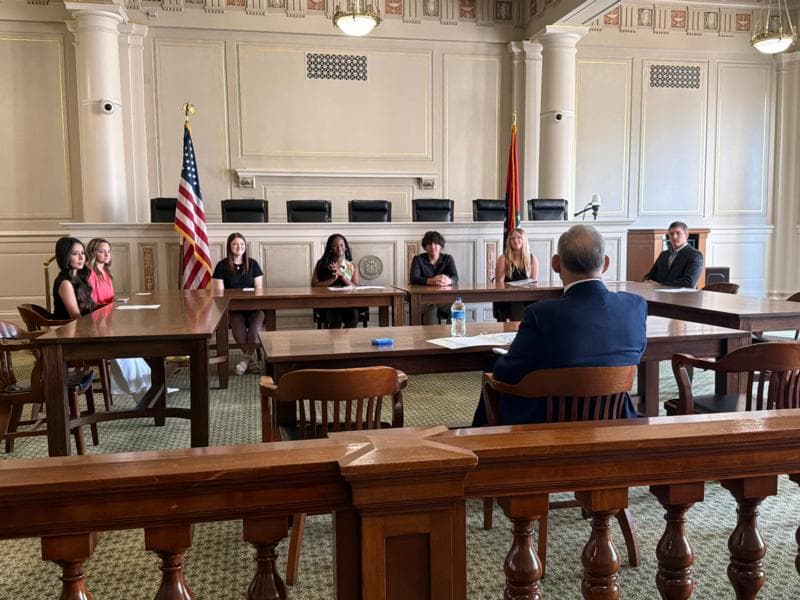
Boozman’s 2025-2026 Congressional Youth Cabinet Wraps Up with Legislative Presentations
Congressional Youth Cabinet participants present to Sen. Boozman at the Arkansas State Capitol. LITTLE ROCK, Ark.—U.S. Senator John Boozman (R-AR) applauded members of his 2025-2026 Congressional Youth Cabinet following their legislative proposal presentations at the Arkansas State Capitol this month. Throughout the school year, 80 accomplished students participated in the senator’s initiative to foster public policy engagement. “For many years now, I have had the privilege to convene bright and motivated Natural State students to explore public policy issues they care about,” Boozman said. “This year’s CYC was another excellent demonstration of young Arkansans bringing their passion for civics to this unique opportunity to research, debate and offer solutions that impact them, our state and nation. I am immensely proud of their hard work and how they represented themselves, their families and schools, and we look forward to what they will accomplish in the future.” Boozman presents certificates to Congressional Youth Cabinet participants. Designed by the senator’s office as a nonpartisan, civics-based program, the Congressional Youth Cabinet offers students first-hand experience with the democratic process and an opportunity to develop research, collaboration and leadership skills while engaging in meaningful policy discussions. This year’s CYC brought together dozens of high school juniors, grouping them with peers from other schools in their respective congressional districts to select a legislative topic of interest and craft policy solutions with guidance from the senator and his staff. Their proposals covered a wide variety of topics including maternal and infant health, artificial intelligence, financial literacy, livestock disease prevention and telehealth. Boozman convened the participants in Little Rock in October for a kick-off event, urging the students to embrace the opportunity and enjoy building relationships with one another over the course of the program. Boozman addressed Congressional Youth Cabinet participants during their presentation.
Boozman, Sheehy Introduce Veterans Health Administration Novel Therapeutics Preparedness Act
WASHINGTON—U.S. Senator John Boozman (R-AR) joined Senators Tim Sheehy (R-MT), Tammy Duckworth (D-IL) and Ruben Gallego (D-AZ) in introducing the bipartisan Veterans Health Administration Novel Therapeutics Preparedness Act to increase veterans’ access to innovative health care and ensure the Department of Veterans Affairs (VA) is prepared to better care for veterans through emerging mental health therapies. “We owe it to veterans to ensure the VA can effectively facilitate access to new therapies and care upon FDA approval. Doing so will give them more options to improve their health, including recovering from the invisible wounds that represent a unique challenge to their well-being. I am proud of this bipartisan, proactive effort to meet the needs of our former servicemembers who have earned this support for all they have given to defend our nation and freedoms,” said Boozman. “After young Americans who signed up to fight for our nation and were willing to give up their own lives for others come home, we better make sure the VA is ready to care for them and that they have access to the best, most innovative care available. The VA’s core mission is to care for veterans, and this bipartisan bill will help the hardworking men and women at the VA fulfill that critical mission,” said Sheehy. “Veterans suffering from invisible wounds like PTSD and depression deserve the same level of care from their VA as those with physical wounds, and it’s past time we do more to ensure our VA is equipped and prepared to navigate these veterans’ unique needs. Our bipartisan legislation recognizes that the VA is uniquely positioned to oversee and administer this care as our veterans’ medical center home and would cut red tape and establish groundbreaking infrastructure to more quickly review and approve emerging therapeutics for our wounded warriors. Equally important, it would require annual reports to Congress on clinical outcomes, research and success from innovative therapies so we could evaluate what works and establish those best practices Department-wide. Our bill is about making our VA work better for our heroes, and that should always be a bipartisan matter,” said Duckworth. “When I got back from Iraq, I saw fellow Marines struggle in ways we weren’t prepared to treat. There’s no one way to address veterans’ mental health, and for those who don’t respond to existing treatments, we need to look at new ones. Emerging therapies like psychedelic treatment may offer real hope for veterans with PTSD when nothing else has. This bill makes sure we’re exploring every option to support them,” said Gallego. This bill would establish a dedicated Office of Novel Therapeutics within the VA to ensure the department is prepared to safely evaluate and implement emerging therapies by establishing centralized governance, workforce readiness planning and clinical implementation infrastructure within the Veterans Health Administration. Emerging therapeutic interventions, including certain psychedelic-assisted therapies currently under FDA review, may significantly change how conditions such as PTSD, treatment-resistant depression, substance use disorders, traumatic brain injury and chronic pain are treated. These therapies often require intensive clinical oversight, interdisciplinary care teams and structured preparation and integration that differ from traditional outpatient care. The bill aims to ensure the VA is prepared to safely implement emerging mental health treatments as they become available; strengthen coordination between research, clinical operations, and workforce training within VA; position the VA to lead the responsible evaluation and implementation of innovative therapies for veterans with complex mental health and brain health conditions; and help ensure veterans can access emerging treatments within VA’s integrated healthcare system rather than relying on costly or fragmented care externally. The legislation is supported by Iraq and Afghanistan Veterans of America (IAVA) and Disabled American Veterans (DAV). “As innovation in alternative therapies accelerates and studies on their effectiveness show increasingly clear results, our healthcare system has not kept pace and veterans are the ones paying the price: physically, mentally, and too often, financially. After 20 years of war, the post-9/11 generation is still carrying invisible and visible wounds, and we owe them access to the most effective care available today, not years from now. We welcome the VHA Novel Therapeutics Preparedness Act, which lays the foundation needed to responsibly deliver breakthrough treatments to veterans effectively and efficiently. After two decades of war, we owe them more than promises — we owe them delivery. This legislation moves innovation into real access for veterans now and we applaud this meaningful action,” said IAVA CEO Dr. Kyleanne Hunter. “Veterans suffering from PTSD, treatment-resistant depression, and other complex mental health conditions deserve access to the most promising emerging therapies — and they deserve a VA that is prepared to deliver them safely and effectively. This legislation takes a critical step by building the necessary infrastructure, workforce capacity, and clinical standards before these therapies arrive — not after. We thank Sens. Sheehy, Boozman, Duckworth, and Gallego for their leadership on this important legislation, which will help ensure veterans can access cutting-edge treatments when they need them most — especially as they transition from the battlefield, rather than decades later,” said DAV Washington Headquarters Executive Director Jim Marszalek.
Boozman, Sheehy Introduce Veterans Health Administration Novel Therapeutics Preparedness Act
WASHINGTON—U.S. Senator John Boozman (R-AR) joined Senators Tim Sheehy (R-MT), Tammy Duckworth (D-IL) and Ruben Gallego (D-AZ) in introducing the bipartisan Veterans Health Administration Novel Therapeutics Preparedness Act to increase veterans’ access to innovative health care and ensure the Department of Veterans Affairs (VA) is prepared to better care for veterans through emerging mental health therapies. “We owe it to veterans to ensure the VA can effectively facilitate access to new therapies and care upon FDA approval. Doing so will give them more options to improve their health, including recovering from the invisible wounds that represent a unique challenge to their well-being. I am proud of this bipartisan, proactive effort to meet the needs of our former servicemembers who have earned this support for all they have given to defend our nation and freedoms,” said Boozman. “After young Americans who signed up to fight for our nation and were willing to give up their own lives for others come home, we better make sure the VA is ready to care for them and that they have access to the best, most innovative care available. The VA’s core mission is to care for veterans, and this bipartisan bill will help the hardworking men and women at the VA fulfill that critical mission,” said Sheehy. “Veterans suffering from invisible wounds like PTSD and depression deserve the same level of care from their VA as those with physical wounds, and it’s past time we do more to ensure our VA is equipped and prepared to navigate these veterans’ unique needs. Our bipartisan legislation recognizes that the VA is uniquely positioned to oversee and administer this care as our veterans’ medical center home and would cut red tape and establish groundbreaking infrastructure to more quickly review and approve emerging therapeutics for our wounded warriors. Equally important, it would require annual reports to Congress on clinical outcomes, research and success from innovative therapies so we could evaluate what works and establish those best practices Department-wide. Our bill is about making our VA work better for our heroes, and that should always be a bipartisan matter,” said Duckworth. “When I got back from Iraq, I saw fellow Marines struggle in ways we weren’t prepared to treat. There’s no one way to address veterans’ mental health, and for those who don’t respond to existing treatments, we need to look at new ones. Emerging therapies like psychedelic treatment may offer real hope for veterans with PTSD when nothing else has. This bill makes sure we’re exploring every option to support them,” said Gallego. This bill would establish a dedicated Office of Novel Therapeutics within the VA to ensure the department is prepared to safely evaluate and implement emerging therapies by establishing centralized governance, workforce readiness planning and clinical implementation infrastructure within the Veterans Health Administration. Emerging therapeutic interventions, including certain psychedelic-assisted therapies currently under FDA review, may significantly change how conditions such as PTSD, treatment-resistant depression, substance use disorders, traumatic brain injury and chronic pain are treated. These therapies often require intensive clinical oversight, interdisciplinary care teams and structured preparation and integration that differ from traditional outpatient care. The bill aims to ensure the VA is prepared to safely implement emerging mental health treatments as they become available; strengthen coordination between research, clinical operations, and workforce training within VA; position the VA to lead the responsible evaluation and implementation of innovative therapies for veterans with complex mental health and brain health conditions; and help ensure veterans can access emerging treatments within VA’s integrated healthcare system rather than relying on costly or fragmented care externally. The legislation is supported by Iraq and Afghanistan Veterans of America (IAVA) and Disabled American Veterans (DAV). “As innovation in alternative therapies accelerates and studies on their effectiveness show increasingly clear results, our healthcare system has not kept pace and veterans are the ones paying the price: physically, mentally, and too often, financially. After 20 years of war, the post-9/11 generation is still carrying invisible and visible wounds, and we owe them access to the most effective care available today, not years from now. We welcome the VHA Novel Therapeutics Preparedness Act, which lays the foundation needed to responsibly deliver breakthrough treatments to veterans effectively and efficiently. After two decades of war, we owe them more than promises — we owe them delivery. This legislation moves innovation into real access for veterans now and we applaud this meaningful action,” said IAVA CEO Dr. Kyleanne Hunter. “Veterans suffering from PTSD, treatment-resistant depression, and other complex mental health conditions deserve access to the most promising emerging therapies — and they deserve a VA that is prepared to deliver them safely and effectively. This legislation takes a critical step by building the necessary infrastructure, workforce capacity, and clinical standards before these therapies arrive — not after. We thank Sens. Sheehy, Boozman, Duckworth, and Gallego for their leadership on this important legislation, which will help ensure veterans can access cutting-edge treatments when they need them most — especially as they transition from the battlefield, rather than decades later,” said DAV Washington Headquarters Executive Director Jim Marszalek.
Boozman, Sheehy Introduce Veterans Health Administration Novel Therapeutics Preparedness Act
WASHINGTON—U.S. Senator John Boozman (R-AR) joined Senators Tim Sheehy (R-MT), Tammy Duckworth (D-IL) and Ruben Gallego (D-AZ) in introducing the bipartisan Veterans Health Administration Novel Therapeutics Preparedness Act to increase veterans’ access to innovative health care and ensure the Department of Veterans Affairs (VA) is prepared to better care for veterans through emerging mental health therapies. “We owe it to veterans to ensure the VA can effectively facilitate access to new therapies and care upon FDA approval. Doing so will give them more options to improve their health, including recovering from the invisible wounds that represent a unique challenge to their well-being. I am proud of this bipartisan, proactive effort to meet the needs of our former servicemembers who have earned this support for all they have given to defend our nation and freedoms,” said Boozman. “After young Americans who signed up to fight for our nation and were willing to give up their own lives for others come home, we better make sure the VA is ready to care for them and that they have access to the best, most innovative care available. The VA’s core mission is to care for veterans, and this bipartisan bill will help the hardworking men and women at the VA fulfill that critical mission,” said Sheehy. “Veterans suffering from invisible wounds like PTSD and depression deserve the same level of care from their VA as those with physical wounds, and it’s past time we do more to ensure our VA is equipped and prepared to navigate these veterans’ unique needs. Our bipartisan legislation recognizes that the VA is uniquely positioned to oversee and administer this care as our veterans’ medical center home and would cut red tape and establish groundbreaking infrastructure to more quickly review and approve emerging therapeutics for our wounded warriors. Equally important, it would require annual reports to Congress on clinical outcomes, research and success from innovative therapies so we could evaluate what works and establish those best practices Department-wide. Our bill is about making our VA work better for our heroes, and that should always be a bipartisan matter,” said Duckworth. “When I got back from Iraq, I saw fellow Marines struggle in ways we weren’t prepared to treat. There’s no one way to address veterans’ mental health, and for those who don’t respond to existing treatments, we need to look at new ones. Emerging therapies like psychedelic treatment may offer real hope for veterans with PTSD when nothing else has. This bill makes sure we’re exploring every option to support them,” said Gallego. This bill would establish a dedicated Office of Novel Therapeutics within the VA to ensure the department is prepared to safely evaluate and implement emerging therapies by establishing centralized governance, workforce readiness planning and clinical implementation infrastructure within the Veterans Health Administration. Emerging therapeutic interventions, including certain psychedelic-assisted therapies currently under FDA review, may significantly change how conditions such as PTSD, treatment-resistant depression, substance use disorders, traumatic brain injury and chronic pain are treated. These therapies often require intensive clinical oversight, interdisciplinary care teams and structured preparation and integration that differ from traditional outpatient care. The bill aims to ensure the VA is prepared to safely implement emerging mental health treatments as they become available; strengthen coordination between research, clinical operations, and workforce training within VA; position the VA to lead the responsible evaluation and implementation of innovative therapies for veterans with complex mental health and brain health conditions; and help ensure veterans can access emerging treatments within VA’s integrated healthcare system rather than relying on costly or fragmented care externally. The legislation is supported by Iraq and Afghanistan Veterans of America (IAVA) and Disabled American Veterans (DAV). “As innovation in alternative therapies accelerates and studies on their effectiveness show increasingly clear results, our healthcare system has not kept pace and veterans are the ones paying the price: physically, mentally, and too often, financially. After 20 years of war, the post-9/11 generation is still carrying invisible and visible wounds, and we owe them access to the most effective care available today, not years from now. We welcome the VHA Novel Therapeutics Preparedness Act, which lays the foundation needed to responsibly deliver breakthrough treatments to veterans effectively and efficiently. After two decades of war, we owe them more than promises — we owe them delivery. This legislation moves innovation into real access for veterans now and we applaud this meaningful action,” said IAVA CEO Dr. Kyleanne Hunter. “Veterans suffering from PTSD, treatment-resistant depression, and other complex mental health conditions deserve access to the most promising emerging therapies — and they deserve a VA that is prepared to deliver them safely and effectively. This legislation takes a critical step by building the necessary infrastructure, workforce capacity, and clinical standards before these therapies arrive — not after. We thank Sens. Sheehy, Boozman, Duckworth, and Gallego for their leadership on this important legislation, which will help ensure veterans can access cutting-edge treatments when they need them most — especially as they transition from the battlefield, rather than decades later,” said DAV Washington Headquarters Executive Director Jim Marszalek.
Boozman, Sheehy Introduce Veterans Health Administration Novel Therapeutics Preparedness Act
WASHINGTON—U.S. Senator John Boozman (R-AR) joined Senators Tim Sheehy (R-MT), Tammy Duckworth (D-IL) and Ruben Gallego (D-AZ) in introducing the bipartisan Veterans Health Administration Novel Therapeutics Preparedness Act to increase veterans’ access to innovative health care and ensure the Department of Veterans Affairs (VA) is prepared to better care for veterans through emerging mental health therapies. “We owe it to veterans to ensure the VA can effectively facilitate access to new therapies and care upon FDA approval. Doing so will give them more options to improve their health, including recovering from the invisible wounds that represent a unique challenge to their well-being. I am proud of this bipartisan, proactive effort to meet the needs of our former servicemembers who have earned this support for all they have given to defend our nation and freedoms,” said Boozman. “After young Americans who signed up to fight for our nation and were willing to give up their own lives for others come home, we better make sure the VA is ready to care for them and that they have access to the best, most innovative care available. The VA’s core mission is to care for veterans, and this bipartisan bill will help the hardworking men and women at the VA fulfill that critical mission,” said Sheehy. “Veterans suffering from invisible wounds like PTSD and depression deserve the same level of care from their VA as those with physical wounds, and it’s past time we do more to ensure our VA is equipped and prepared to navigate these veterans’ unique needs. Our bipartisan legislation recognizes that the VA is uniquely positioned to oversee and administer this care as our veterans’ medical center home and would cut red tape and establish groundbreaking infrastructure to more quickly review and approve emerging therapeutics for our wounded warriors. Equally important, it would require annual reports to Congress on clinical outcomes, research and success from innovative therapies so we could evaluate what works and establish those best practices Department-wide. Our bill is about making our VA work better for our heroes, and that should always be a bipartisan matter,” said Duckworth. “When I got back from Iraq, I saw fellow Marines struggle in ways we weren’t prepared to treat. There’s no one way to address veterans’ mental health, and for those who don’t respond to existing treatments, we need to look at new ones. Emerging therapies like psychedelic treatment may offer real hope for veterans with PTSD when nothing else has. This bill makes sure we’re exploring every option to support them,” said Gallego. This bill would establish a dedicated Office of Novel Therapeutics within the VA to ensure the department is prepared to safely evaluate and implement emerging therapies by establishing centralized governance, workforce readiness planning and clinical implementation infrastructure within the Veterans Health Administration. Emerging therapeutic interventions, including certain psychedelic-assisted therapies currently under FDA review, may significantly change how conditions such as PTSD, treatment-resistant depression, substance use disorders, traumatic brain injury and chronic pain are treated. These therapies often require intensive clinical oversight, interdisciplinary care teams and structured preparation and integration that differ from traditional outpatient care. The bill aims to ensure the VA is prepared to safely implement emerging mental health treatments as they become available; strengthen coordination between research, clinical operations, and workforce training within VA; position the VA to lead the responsible evaluation and implementation of innovative therapies for veterans with complex mental health and brain health conditions; and help ensure veterans can access emerging treatments within VA’s integrated healthcare system rather than relying on costly or fragmented care externally. The legislation is supported by Iraq and Afghanistan Veterans of America (IAVA) and Disabled American Veterans (DAV). “As innovation in alternative therapies accelerates and studies on their effectiveness show increasingly clear results, our healthcare system has not kept pace and veterans are the ones paying the price: physically, mentally, and too often, financially. After 20 years of war, the post-9/11 generation is still carrying invisible and visible wounds, and we owe them access to the most effective care available today, not years from now. We welcome the VHA Novel Therapeutics Preparedness Act, which lays the foundation needed to responsibly deliver breakthrough treatments to veterans effectively and efficiently. After two decades of war, we owe them more than promises — we owe them delivery. This legislation moves innovation into real access for veterans now and we applaud this meaningful action,” said IAVA CEO Dr. Kyleanne Hunter. “Veterans suffering from PTSD, treatment-resistant depression, and other complex mental health conditions deserve access to the most promising emerging therapies — and they deserve a VA that is prepared to deliver them safely and effectively. This legislation takes a critical step by building the necessary infrastructure, workforce capacity, and clinical standards before these therapies arrive — not after. We thank Sens. Sheehy, Boozman, Duckworth, and Gallego for their leadership on this important legislation, which will help ensure veterans can access cutting-edge treatments when they need them most — especially as they transition from the battlefield, rather than decades later,” said DAV Washington Headquarters Executive Director Jim Marszalek.
Boozman, Cramer, Hassan, Slotkin Push Expanded Outdoor Rehabilitation for Veterans
WASHINGTON—U.S. Senator John Boozman (R-AR) joined Senators Kevin Cramer (R-ND), Maggie Hassan (D-NH) and Elissa Slotkin (D-MI) in introducing the Veterans Outdoor Rehabilitation Act, legislation aimed at helping former servicemembers access outdoor recreation opportunities to improve their well-being. The effort comes as the U.S. Department of Veterans Affairs (VA) released its 2025 National Veteran Suicide Prevention Annual Report, which highlighted persistent struggles with anxiety, depression and Post-Traumatic Stress Disorder (PTSD) among former servicemembers. “Veterans often find comfort and healing in the great outdoors, so helping increase their opportunities for healthy rehabilitation in those settings is important,” said Boozman. “Our former servicemembers in Arkansas and nationwide struggling with anxiety, depression and the effects of PTSD will benefit from this commonsense, bipartisan solution that taps into their love for outdoor recreation through programs close to where they are. I am pleased to join my colleagues in this effort to support their mental health.” “Let’s face it, for a lot of veterans, healing doesn’t happen in a doctor’s office,” said Cramer. “One of our nation’s greatest veterans and of course, eventually the Commander in Chief, the President, Theodore Roosevelt, escaped to North Dakota’s badlands after the death of his wife and mother on the same day. After that inexplicable great grief, he credits North Dakota’s outdoors as the place where the romance of his life began. Sometimes healing begins in places like a quiet trail, by the water, or under an open sky. Our bill helps state veterans’ agencies expand outdoor recreation opportunities, so that more of the men and women who served our country can find their healing, hope, and a sense of calm in the outdoors once again, much like Theodore Roosevelt did.” “This bipartisan bill will expand access to outdoor rehabilitative and wellness programs for the brave men and women who have sacrificed to keep us safe, secure, and free,” said Hassan. “Outdoor recreation is good not only for our physical health, but it has also been shown to improve our mental health. This bill is one more way to get veterans the support that they have earned and deserved.” The bill would create a federal grant program for state veterans’ agencies to develop or expand outdoor recreation opportunities for former servicemembers. Under the proposal, states could run programs directly or partner with local outfitters and recreation providers to offer nature-based activities. States and contracted partners would be encouraged to coordinate with relevant federal land management agencies to support veterans-focused programs, with each state that applies receiving a minimum of $200,000 to deliver these services. Veterans have increasingly pointed to outdoor recreation as a tool for recovery and reintegration after leaving military service, noting time in nature and shared activities can help rebuild community, reduce stress and support long-term mental health. Early studies show outdoor programs are an effective tool in reducing symptoms of depression and anxiety among veterans. This effort builds on progress made through the Veterans COMPACT Act of 2020 that established a task force to provide recommendations regarding the benefits of outdoor recreation activities for veterans and the use of federal lands to support these activities. The Veterans Outdoor Rehabilitation Act is supported by the American Legion, Veterans Outdoor Advocacy Group, Veterans of Foreign Wars, National Association of State Park Directors and the Action Foundation. “Veterans continue processing the experiences of their service long after their military career ends,” said Navy SEAL Veteran and Veterans’ Outdoor Advocacy Group Executive Director Ben Davis. “With millions of Americans transitioning from more than two decades of conflict, that work is happening across the country right now. Studies increasingly show that time spent in the outdoors can improve well-being, strengthen community, and support veterans as they move forward in civilian life. Expanding access to structured outdoor recreation ensures more veterans have the opportunity to benefit from those experiences.” “The National Association of State Park Directors supports the Veterans Outdoor Recreation Rehabilitation Act, which would help state park systems give veterans more options to access the outdoors,” said National Association of State Park Directors CEO & President Paul McCormack. “State parks across the country are already improving accessibility through trails, boat ramps, campsites, and adaptive technologies. This grant program would allow state parks and our partners to scale these efforts to serve more veterans and their families.” “On behalf of the Action Foundation, I am pleased to express our strong support for the Veterans Outdoor Rehabilitation Act,” said Executive Director of the Action Foundation Audra Klinker. “This bill aligns closely with our mission by increasing access for veterans across the United States to beneficial outdoor and nature-based activities. It will also strengthen collaborative ties with nonprofit organizations and veterans service organizations, facilitating more effective program delivery and broader impact.”
Boozman, Cramer, Hassan, Slotkin Push Expanded Outdoor Rehabilitation for Veterans
WASHINGTON—U.S. Senator John Boozman (R-AR) joined Senators Kevin Cramer (R-ND), Maggie Hassan (D-NH) and Elissa Slotkin (D-MI) in introducing the Veterans Outdoor Rehabilitation Act, legislation aimed at helping former servicemembers access outdoor recreation opportunities to improve their well-being. The effort comes as the U.S. Department of Veterans Affairs (VA) released its 2025 National Veteran Suicide Prevention Annual Report, which highlighted persistent struggles with anxiety, depression and Post-Traumatic Stress Disorder (PTSD) among former servicemembers. “Veterans often find comfort and healing in the great outdoors, so helping increase their opportunities for healthy rehabilitation in those settings is important,” said Boozman. “Our former servicemembers in Arkansas and nationwide struggling with anxiety, depression and the effects of PTSD will benefit from this commonsense, bipartisan solution that taps into their love for outdoor recreation through programs close to where they are. I am pleased to join my colleagues in this effort to support their mental health.” “Let’s face it, for a lot of veterans, healing doesn’t happen in a doctor’s office,” said Cramer. “One of our nation’s greatest veterans and of course, eventually the Commander in Chief, the President, Theodore Roosevelt, escaped to North Dakota’s badlands after the death of his wife and mother on the same day. After that inexplicable great grief, he credits North Dakota’s outdoors as the place where the romance of his life began. Sometimes healing begins in places like a quiet trail, by the water, or under an open sky. Our bill helps state veterans’ agencies expand outdoor recreation opportunities, so that more of the men and women who served our country can find their healing, hope, and a sense of calm in the outdoors once again, much like Theodore Roosevelt did.” “This bipartisan bill will expand access to outdoor rehabilitative and wellness programs for the brave men and women who have sacrificed to keep us safe, secure, and free,” said Hassan. “Outdoor recreation is good not only for our physical health, but it has also been shown to improve our mental health. This bill is one more way to get veterans the support that they have earned and deserved.” The bill would create a federal grant program for state veterans’ agencies to develop or expand outdoor recreation opportunities for former servicemembers. Under the proposal, states could run programs directly or partner with local outfitters and recreation providers to offer nature-based activities. States and contracted partners would be encouraged to coordinate with relevant federal land management agencies to support veterans-focused programs, with each state that applies receiving a minimum of $200,000 to deliver these services. Veterans have increasingly pointed to outdoor recreation as a tool for recovery and reintegration after leaving military service, noting time in nature and shared activities can help rebuild community, reduce stress and support long-term mental health. Early studies show outdoor programs are an effective tool in reducing symptoms of depression and anxiety among veterans. This effort builds on progress made through the Veterans COMPACT Act of 2020 that established a task force to provide recommendations regarding the benefits of outdoor recreation activities for veterans and the use of federal lands to support these activities. The Veterans Outdoor Rehabilitation Act is supported by the American Legion, Veterans Outdoor Advocacy Group, Veterans of Foreign Wars, National Association of State Park Directors and the Action Foundation. “Veterans continue processing the experiences of their service long after their military career ends,” said Navy SEAL Veteran and Veterans’ Outdoor Advocacy Group Executive Director Ben Davis. “With millions of Americans transitioning from more than two decades of conflict, that work is happening across the country right now. Studies increasingly show that time spent in the outdoors can improve well-being, strengthen community, and support veterans as they move forward in civilian life. Expanding access to structured outdoor recreation ensures more veterans have the opportunity to benefit from those experiences.” “The National Association of State Park Directors supports the Veterans Outdoor Recreation Rehabilitation Act, which would help state park systems give veterans more options to access the outdoors,” said National Association of State Park Directors CEO & President Paul McCormack. “State parks across the country are already improving accessibility through trails, boat ramps, campsites, and adaptive technologies. This grant program would allow state parks and our partners to scale these efforts to serve more veterans and their families.” “On behalf of the Action Foundation, I am pleased to express our strong support for the Veterans Outdoor Rehabilitation Act,” said Executive Director of the Action Foundation Audra Klinker. “This bill aligns closely with our mission by increasing access for veterans across the United States to beneficial outdoor and nature-based activities. It will also strengthen collaborative ties with nonprofit organizations and veterans service organizations, facilitating more effective program delivery and broader impact.”
Boozman, Cramer, Hassan, Slotkin Push Expanded Outdoor Rehabilitation for Veterans
WASHINGTON—U.S. Senator John Boozman (R-AR) joined Senators Kevin Cramer (R-ND), Maggie Hassan (D-NH) and Elissa Slotkin (D-MI) in introducing the Veterans Outdoor Rehabilitation Act, legislation aimed at helping former servicemembers access outdoor recreation opportunities to improve their well-being. The effort comes as the U.S. Department of Veterans Affairs (VA) released its 2025 National Veteran Suicide Prevention Annual Report, which highlighted persistent struggles with anxiety, depression and Post-Traumatic Stress Disorder (PTSD) among former servicemembers. “Veterans often find comfort and healing in the great outdoors, so helping increase their opportunities for healthy rehabilitation in those settings is important,” said Boozman. “Our former servicemembers in Arkansas and nationwide struggling with anxiety, depression and the effects of PTSD will benefit from this commonsense, bipartisan solution that taps into their love for outdoor recreation through programs close to where they are. I am pleased to join my colleagues in this effort to support their mental health.” “Let’s face it, for a lot of veterans, healing doesn’t happen in a doctor’s office,” said Cramer. “One of our nation’s greatest veterans and of course, eventually the Commander in Chief, the President, Theodore Roosevelt, escaped to North Dakota’s badlands after the death of his wife and mother on the same day. After that inexplicable great grief, he credits North Dakota’s outdoors as the place where the romance of his life began. Sometimes healing begins in places like a quiet trail, by the water, or under an open sky. Our bill helps state veterans’ agencies expand outdoor recreation opportunities, so that more of the men and women who served our country can find their healing, hope, and a sense of calm in the outdoors once again, much like Theodore Roosevelt did.” “This bipartisan bill will expand access to outdoor rehabilitative and wellness programs for the brave men and women who have sacrificed to keep us safe, secure, and free,” said Hassan. “Outdoor recreation is good not only for our physical health, but it has also been shown to improve our mental health. This bill is one more way to get veterans the support that they have earned and deserved.” The bill would create a federal grant program for state veterans’ agencies to develop or expand outdoor recreation opportunities for former servicemembers. Under the proposal, states could run programs directly or partner with local outfitters and recreation providers to offer nature-based activities. States and contracted partners would be encouraged to coordinate with relevant federal land management agencies to support veterans-focused programs, with each state that applies receiving a minimum of $200,000 to deliver these services. Veterans have increasingly pointed to outdoor recreation as a tool for recovery and reintegration after leaving military service, noting time in nature and shared activities can help rebuild community, reduce stress and support long-term mental health. Early studies show outdoor programs are an effective tool in reducing symptoms of depression and anxiety among veterans. This effort builds on progress made through the Veterans COMPACT Act of 2020 that established a task force to provide recommendations regarding the benefits of outdoor recreation activities for veterans and the use of federal lands to support these activities. The Veterans Outdoor Rehabilitation Act is supported by the American Legion, Veterans Outdoor Advocacy Group, Veterans of Foreign Wars, National Association of State Park Directors and the Action Foundation. “Veterans continue processing the experiences of their service long after their military career ends,” said Navy SEAL Veteran and Veterans’ Outdoor Advocacy Group Executive Director Ben Davis. “With millions of Americans transitioning from more than two decades of conflict, that work is happening across the country right now. Studies increasingly show that time spent in the outdoors can improve well-being, strengthen community, and support veterans as they move forward in civilian life. Expanding access to structured outdoor recreation ensures more veterans have the opportunity to benefit from those experiences.” “The National Association of State Park Directors supports the Veterans Outdoor Recreation Rehabilitation Act, which would help state park systems give veterans more options to access the outdoors,” said National Association of State Park Directors CEO & President Paul McCormack. “State parks across the country are already improving accessibility through trails, boat ramps, campsites, and adaptive technologies. This grant program would allow state parks and our partners to scale these efforts to serve more veterans and their families.” “On behalf of the Action Foundation, I am pleased to express our strong support for the Veterans Outdoor Rehabilitation Act,” said Executive Director of the Action Foundation Audra Klinker. “This bill aligns closely with our mission by increasing access for veterans across the United States to beneficial outdoor and nature-based activities. It will also strengthen collaborative ties with nonprofit organizations and veterans service organizations, facilitating more effective program delivery and broader impact.”