2 stories credited to Blockzeit
Latest story Apr 21, 2026 · on ChamberLight since Apr 2026
A story can appear as several articles (copies of the same piece), so counts of stories and of articles differ.
Scores for Blockzeit
Writing quality not enough rated stories yet: 1 of 10. How it is measured
Scores last checked Sep 25, 2026.
Stories ChamberLight collected, by month
Stories credited to Blockzeit, by publication date. ChamberLight collects articles that mention the officials it tracks, so this shows its own coverage of this source, not how much the source publishes.
- Stories from Blockzeit
- Shaded: ChamberLight collected no stories, or almost none, from any outlet (a gap in its collection, not in the outlet’s publishing)
Show as a table
| Month | Stories | All outlets |
|---|---|---|
| March 2026 | 1 | 850 |
| April 2026 | 1 | 4,538 |
| May 2026 | 0 | none collected |
| June 2026 | 0 | none collected |
| July 2026 | 0 | none collected |
| August 2026 | 0 | 1 (collection gap) |
| September 2026 | 0 | 1,320 |
Top topics
Share of this source’s stories tagged with each topic. A story can carry several topics, so the shares do not add up to 100%.
- Economy2
100% of 2 stories · 26% across all outlets
- Technology/Privacy2
100% of 2 stories · 10% across all outlets
- Budget/Spending1
50% of 2 stories · 31% across all outlets
- Housing1
50% of 2 stories · 1% across all outlets
The thin mark on each bar is the topic’s share across all outlets.
Who they cover
Party of the officials these stories are mainly about, across all 3 officials named. A story counts once for each official it is mainly about, so the split is over 3 story–official pairs, from 2 stories.
- Republican100% · 3 pairs
Most covered
Stories mainly about each official, and their share of the source’s 2 stories.
Article tone
ChamberLight’s article analysis assigns each story a tone toward the official it covers. It describes the coverage of that official, not Blockzeit’s stance, and reader votes do not change it. 2 stories.
- Good Look
- 1 (50%)
- Mixed
- 1 (50%)
- Informational
- 0 (0%)
- Bad Look
- 0 (0%)
Challenges to these scores
No one has challenged a score on this page yet. Anyone can; editors publish every outcome here.
Articles served from blockzeit.com
3
Clarity Act Markup Pushed For May Because Of These 3 Reasons
Kevin Warsh’s nomination hearing, ongoing lobbying by banks, and the recent DeFi hack are likely to postpone the Clarity Act markup into May. The pending Clarity Act faces another setback despite the Senate’s push for its markup by the final two weeks of April. New estimates say it could be delayed further in May. One reason hindering the passage of the bill is the nomination hearing of Kevin Warsh under the Senate Banking Committee. There’s also the incessant lobbying by banks against the legislation’s existing stablecoin provisions, and a recent decentralized finance (DeFi) hack has raised concerns about digital assets. Kevin Warsh Nomination Senate Banking Committee members currently have their attention on the hearing of Warsh’s nomination as Federal Reserve chairman. The former member of the central bank’s Board of Governors faces scrutiny for his strong links to US President Donald Trump and years-long crusade against outgoing Fed chair Jerome Powell. Critics doubt Warsh’s partisan character, which may impede his ability to make independent decisions on the country’s monetary policies amid executive pressure if he succeeds Powell. Nonetheless, the digital asset sector is bullish on his nomination due to his affiliation with several crypto infrastructure projects. President Donald Trump has selected Kevin Warsh as his pick to succeed Jerome Powell as Federal Reserve Chair, setting the stage for what could be the first openly crypto-friendly chair in the central bank’s history. Warsh previously served on the Fed’s Board of Governors and… pic.twitter.com/ryk92HI5jF — Blockzeit (@BlockzeitE) April 15, 2026 Warsh’s nomination hearing is set for this Tuesday, leaving the committee only until Friday to post a notice for the markup of the Clarity Act. Bank Lobbying Just when it appeared that banking and crypto representatives had already found common ground in the stablecoin yield debate, reports revealed that banks are still pressuring several senators to strike down provisions related to it. Punchbowl’s insider claimed that Senator Thom Tillis, a Republican from North Carolina, proposed to move the pending bill’s Senate markup by May. Tillis reportedly urged Banking Committee Chair Tim Scott, a fellow Republican from South Carolina, “not to accelerate things” to allow parties at the negotiating table to present a “rational basis” for their arguments about the matter of stablecoins. News: Sen. Tillis (R-NC) told Senate Banking Committee Chair Tim Scott (R-SC) the panel should not plan to advance a major crypto bill in April. Negotiators need more time to finalize a bank-crypto compromise on stablecoin yield, Tillis said, pointing to a potential May markup pic.twitter.com/PIaAjPCb24 — Brendan Pedersen (@BrendanPedersen) April 20, 2026 Several sources alleged that banks and trade groups have been urging their members to intensify lobbying efforts in Congress to block any possible compromise on stablecoin yields. The situation led White House advisor Patrick Witt to call their motivation stemming from either “greed or ignorance” at this point. DeFi Hack Concerns The opposition to the Clarity Act has apparently found a way to delay the legislation further, citing the high-profile KelpDAO hack over the weekend as the reason. The more than $290 million heist had lawmakers mulling the possible inclusion of strict illicit activity provisions in decentralized finance (DeFi) in the pending bill, which could raise further arguments that could significantly prolong its passage. The post Clarity Act Markup Pushed For May Because Of These 3 Reasons appeared first on Blockzeit.
Clarity Act Markup Pushed For May Because Of These 3 Reasons
Kevin Warsh’s nomination hearing, ongoing lobbying by banks, and the recent DeFi hack are likely to postpone the Clarity Act markup into May. The pending Clarity Act faces another setback despite the Senate’s push for its markup by the final two weeks of April. New estimates say it could be delayed further in May. One reason hindering the passage of the bill is the nomination hearing of Kevin Warsh under the Senate Banking Committee. There’s also the incessant lobbying by banks against the legislation’s existing stablecoin provisions, and a recent decentralized finance (DeFi) hack has raised concerns about digital assets. Kevin Warsh Nomination Senate Banking Committee members currently have their attention on the hearing of Warsh’s nomination as Federal Reserve chairman. The former member of the central bank’s Board of Governors faces scrutiny for his strong links to US President Donald Trump and years-long crusade against outgoing Fed chair Jerome Powell. Critics doubt Warsh’s partisan character, which may impede his ability to make independent decisions on the country’s monetary policies amid executive pressure if he succeeds Powell. Nonetheless, the digital asset sector is bullish on his nomination due to his affiliation with several crypto infrastructure projects. President Donald Trump has selected Kevin Warsh as his pick to succeed Jerome Powell as Federal Reserve Chair, setting the stage for what could be the first openly crypto-friendly chair in the central bank’s history. Warsh previously served on the Fed’s Board of Governors and… pic.twitter.com/ryk92HI5jF — Blockzeit (@BlockzeitE) April 15, 2026 Warsh’s nomination hearing is set for this Tuesday, leaving the committee only until Friday to post a notice for the markup of the Clarity Act. Bank Lobbying Just when it appeared that banking and crypto representatives had already found common ground in the stablecoin yield debate, reports revealed that banks are still pressuring several senators to strike down provisions related to it. Punchbowl’s insider claimed that Senator Thom Tillis, a Republican from North Carolina, proposed to move the pending bill’s Senate markup by May. Tillis reportedly urged Banking Committee Chair Tim Scott, a fellow Republican from South Carolina, “not to accelerate things” to allow parties at the negotiating table to present a “rational basis” for their arguments about the matter of stablecoins. News: Sen. Tillis (R-NC) told Senate Banking Committee Chair Tim Scott (R-SC) the panel should not plan to advance a major crypto bill in April. Negotiators need more time to finalize a bank-crypto compromise on stablecoin yield, Tillis said, pointing to a potential May markup pic.twitter.com/PIaAjPCb24 — Brendan Pedersen (@BrendanPedersen) April 20, 2026 Several sources alleged that banks and trade groups have been urging their members to intensify lobbying efforts in Congress to block any possible compromise on stablecoin yields. The situation led White House advisor Patrick Witt to call their motivation stemming from either “greed or ignorance” at this point. DeFi Hack Concerns The opposition to the Clarity Act has apparently found a way to delay the legislation further, citing the high-profile KelpDAO hack over the weekend as the reason. The more than $290 million heist had lawmakers mulling the possible inclusion of strict illicit activity provisions in decentralized finance (DeFi) in the pending bill, which could raise further arguments that could significantly prolong its passage. The post Clarity Act Markup Pushed For May Because Of These 3 Reasons appeared first on Blockzeit.
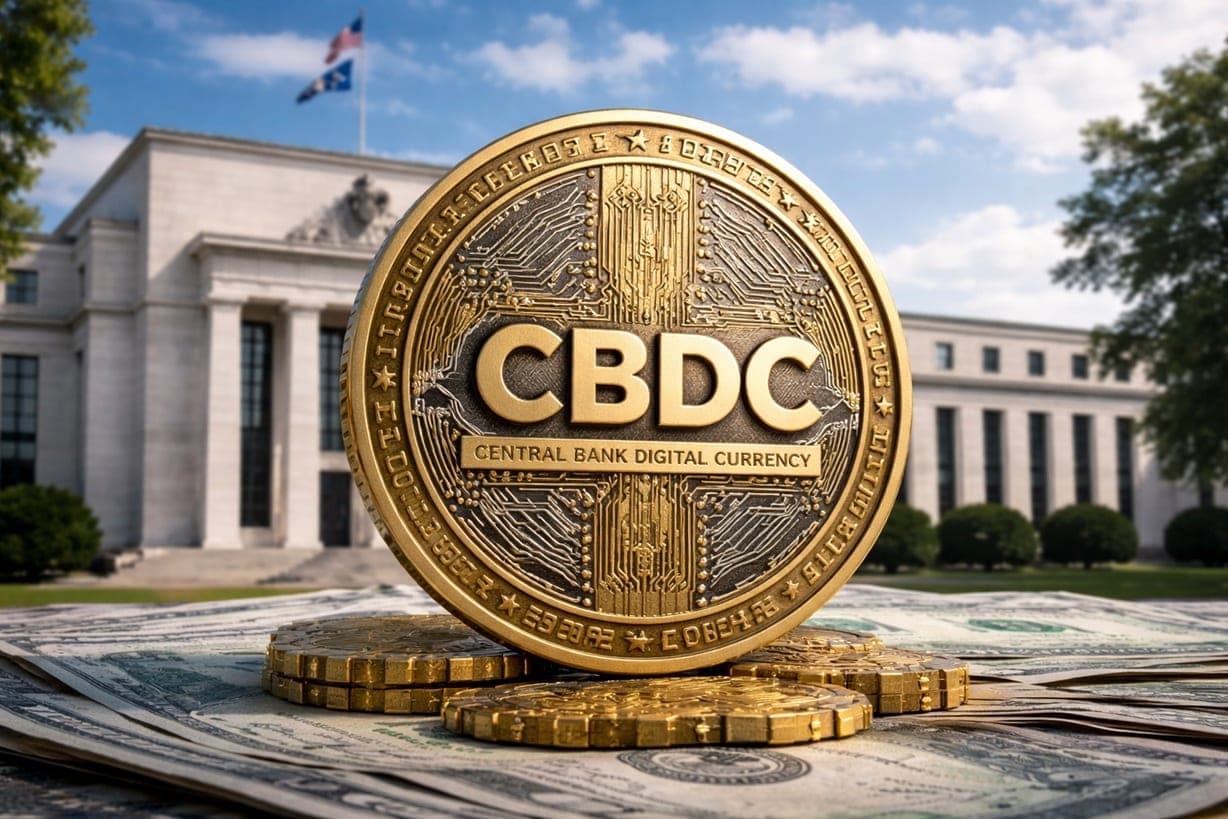
Is The Future Fed Setting Up For Another Shot At A CBDC?
A recent meeting between a pro-digital asset senator and a Fed chair nominee sparked discussion on social media about whether the government is planning to have another shot at a CBDC. Discussions about a Central Bank Digital Currency (CBDC) are flaring up again as several lawmakers in the US Senate inserted a clause about it as a sweetener in a housing bill. A recent meeting between Senator Cynthia Lummis, a Republican from Wyoming, and Kevin Warsh, a Federal Reserve chairman nominee, has inflamed speculations about the subject. A Recent Meeting Between Senator Cynthia Lummis and Former Fed Brendan Warsh Brendan Pedersen, a senior reporter at Punchbowl News, revealed Lummis’s meeting with Warsh on Tuesday evening. The Wyoming senator called their conversation “incredibly productive,” which focused on establishing a “transparent, accountable Fed.” Additionally, she highlighted that their dialogue centered on a central bank ready to embrace financial innovations, such as digital assets, instead of stifling them. Lummis stated that she’s willing to speak with Warsh again about modernizing the Fed, and for the sake of the USA’s financial future. Sen. Cynthia Lummis (R-Wyo.) met with Fed chair nominee Kevin Warsh this afternoon, saying in a statement they had an "incredibly productive, thoughtful conversation." A quick nod to digital assets here too. Warsh has previously been an advocate for CDBCs, which crypto hates. pic.twitter.com/fWzpvQVvW3 — Brendan Pedersen (@BrendanPedersen) March 10, 2026 What was the Meeting Really All About? Pedersen’s mention of Warsh’s advocacy of a CBDC got people riled up on social media. They strongly opposed the idea of the central bank exerting greater influence and oversight over how they use their money. US President Donald Trump strongly criticized the issue, too, which is why he made it a point to ban CBDC outright in an Executive Order upon taking office for his second non-consecutive term. The ambiguity of Lummis’s statement got the public divided on whether they are talking about crypto, which the senator advocates, or a CBDC, which Warsh allegedly supports. Does the Fed Chair Nominee Really Support CBDC? It didn’t take long for Blockzeit to verify Warsh’s thoughts about a CBDC. In a YouTube clip, taken at what appears to be a convention or an interview, he said that it’s up to Congress or the executive branch to decide whether to create a US dollar stablecoin or a CBDC. Warsh explained that central banks should focus on wholesale business, not retail. Hence, he opposed the Fed having anything to do with a retail CBDC. At an economic forum at the Reagan Institute last year, he reiterated his stance on the retail aspect of the program. However, he supported the idea of a wholesale CBDC, which would be exclusive to the Fed’s dealings with financial institutions, to mitigate counterparty risk while promoting efficiency and transparency. So, breaking down where the Fed nominee stands on the idea of a CBDC, he was actually against issuing a retail CBDC that could raise privacy concerns for the general public. On the other hand, he is open to a wholesale version that offers convenience in settlement liquidity management exclusively for high-profile financial institutions. The post Is The Future Fed Setting Up For Another Shot At A CBDC? appeared first on Blockzeit.