2 stories credited to bigleaguepolitics.substack.com
Latest story Apr 11, 2026 · on ChamberLight since Apr 2026 · on substack.com
A story can appear as several articles (copies of the same piece), so counts of stories and of articles differ.
Scores for bigleaguepolitics.substack.com
Credibility
An individual writer or an online community, not a news organization, so the newsroom rating does not apply.
Political lean
An individual writer or an online community, not a news organization, so the newsroom rating does not apply.
Scores last checked Sep 25, 2026.
Stories ChamberLight collected, by month
Stories credited to bigleaguepolitics.substack.com, by publication date. ChamberLight collects articles that mention the officials it tracks, so this shows its own coverage of this source, not how much the source publishes.
- Stories from bigleaguepolitics.substack.com
- Shaded: ChamberLight collected no stories, or almost none, from any outlet (a gap in its collection, not in the outlet’s publishing)
Show as a table
| Month | Stories | All outlets |
|---|---|---|
| April 2026 | 2 | 3,467 |
| May 2026 | 0 | none collected |
| June 2026 | 0 | none collected |
| July 2026 | 0 | none collected |
| August 2026 | 0 | 1 (collection gap) |
| September 2026 | 0 | 1,320 |
Top topics
Share of this source’s stories tagged with each topic. A story can carry several topics, so the shares do not add up to 100%.
- Ethics/Corruption2
100% of 2 stories · 58% across all outlets
- Budget/Spending1
50% of 2 stories · 31% across all outlets
- Economy1
50% of 2 stories · 26% across all outlets
- Foreign Policy1
50% of 2 stories · 29% across all outlets
- Voting Rights1
50% of 2 stories · 19% across all outlets
The thin mark on each bar is the topic’s share across all outlets.
Who they cover
Party of the officials these stories are mainly about, across all 3 officials named. A story counts once for each official it is mainly about, so the split is over 3 story–official pairs, from 2 stories.
- Republican100% · 3 pairs
Most covered
Stories mainly about each official, and their share of the source’s 2 stories.
Article tone
ChamberLight’s article analysis assigns each story a tone toward the official it covers. It describes the coverage of that official, not bigleaguepolitics.substack.com’s stance, and reader votes do not change it. 2 stories.
- Good Look
- 1 (50%)
- Mixed
- 0 (0%)
- Informational
- 0 (0%)
- Bad Look
- 1 (50%)
Challenges to these scores
No one has challenged a score on this page yet. Anyone can; editors publish every outcome here.
Articles served from bigleaguepolitics.substack.com
3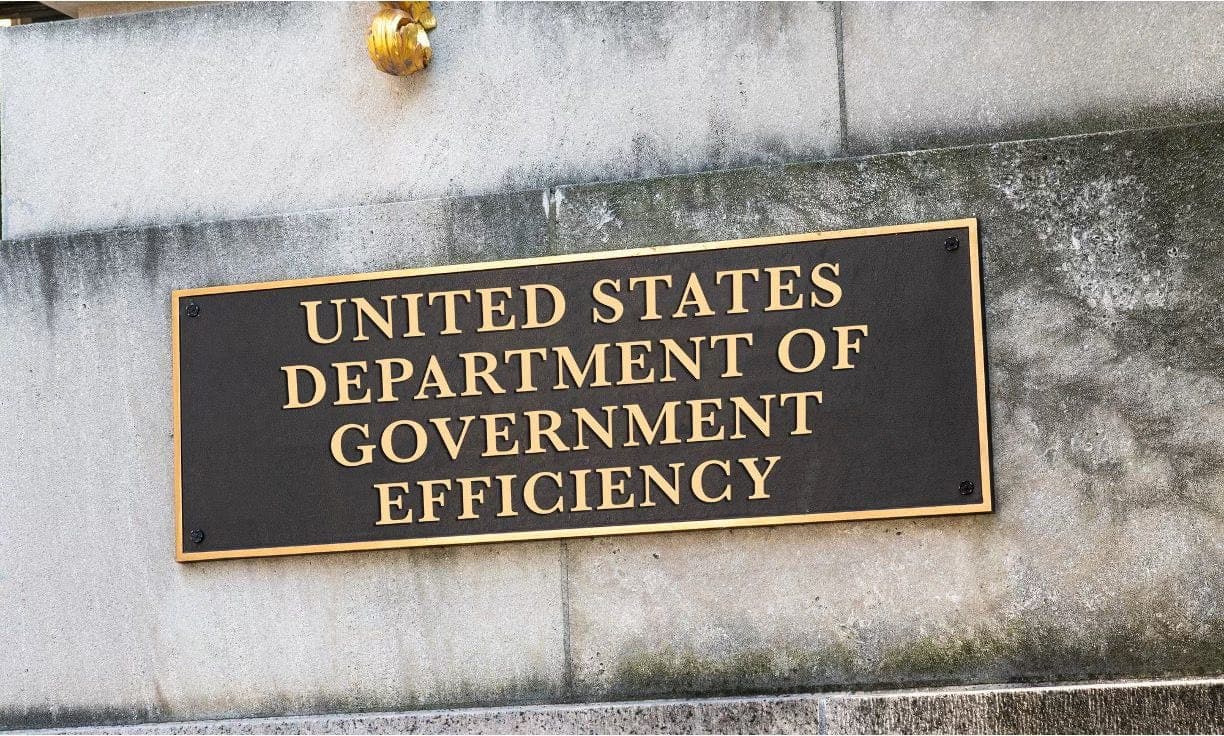
Federal Workforce Plummets by Over 350,000 as Bureaucracy Faces Historic Downsizing
The size of the federal government is shrinking at a historic pace under President Donald Trump, with new data showing a dramatic drop of more than 350,000 federal employees since he returned to office. According to figures from the U.S. Bureau of Labor Statistics compiled through Federal Reserve Economic Data, the federal workforce has fallen to levels not seen in decades—marking one of the most aggressive reductions in modern U.S. history. As of February 2026, the federal civilian workforce stood at roughly 2.68 million employees, excluding active-duty military. That’s down about 355,000 workers—or nearly 12 percent—from its peak in October 2024. Early estimates suggest the number dipped even further in March. The total workforce is now smaller than at any point since 1966, according to a report from The Washington Times. Much of the decline has come from a combination of layoffs, buyouts, retirements, and deferred resignation programs. In January alone, federal employment dropped by 34,000 as previously approved departures were finalized. Sen. Mike Lee (R-UT) celebrated the cuts in a post on X, writing: “I voted for this. Did you?” For decades, the federal workforce remained largely unchanged, hovering between 2.7 and 2.8 million employees—even after major downsizing efforts during the Clinton era. That makes the current contraction particularly notable. The reductions are part of a broader restructuring push across federal agencies, including efforts tied to the Department of Government Efficiency—an initiative initially led by Elon Musk during the early months of Trump’s second term. Major agencies have been hit hard. The Department of Education saw nearly half its workforce targeted for cuts as the administration, alongside Education Secretary Linda McMahon, moves to dismantle the agency. Meanwhile, the Internal Revenue Service has shed more than 26,000 employees, with plans to reduce staffing to under 60,000—down from over 100,000 during the previous administration. Officials also pointed to aggressive cuts in federal contracts. The Department of Government Efficiency reported eliminating or scaling back nearly 100 contracts worth over $5 billion if fully implemented, targeting what it described as wasteful spending on consulting and strategic planning. Additional savings—including $29 million from a single canceled consulting contract—underscore the administration’s focus on slashing bureaucratic overhead. The sweeping reductions highlight a central pillar of Trump’s second-term agenda: dramatically shrinking the size and scope of the federal government. Updated data from the U.S. Bureau of Labor Statistics in the coming months will determine just how far the cuts ultimately go.
Federal Workforce Plummets by Over 350,000 as Bureaucracy Faces Historic Downsizing
The size of the federal government is shrinking at a historic pace under President Donald Trump, with new data showing a dramatic drop of more than 350,000 federal employees since he returned to office. According to figures from the U.S. Bureau of Labor Statistics compiled through Federal Reserve Economic Data, the federal workforce has fallen to levels not seen in decades—marking one of the most aggressive reductions in modern U.S. history. As of February 2026, the federal civilian workforce stood at roughly 2.68 million employees, excluding active-duty military. That’s down about 355,000 workers—or nearly 12 percent—from its peak in October 2024. Early estimates suggest the number dipped even further in March. The total workforce is now smaller than at any point since 1966, according to a report from The Washington Times. Much of the decline has come from a combination of layoffs, buyouts, retirements, and deferred resignation programs. In January alone, federal employment dropped by 34,000 as previously approved departures were finalized. Sen. Mike Lee (R-UT) celebrated the cuts in a post on X, writing: “I voted for this. Did you?” For decades, the federal workforce remained largely unchanged, hovering between 2.7 and 2.8 million employees—even after major downsizing efforts during the Clinton era. That makes the current contraction particularly notable. The reductions are part of a broader restructuring push across federal agencies, including efforts tied to the Department of Government Efficiency—an initiative initially led by Elon Musk during the early months of Trump’s second term. Major agencies have been hit hard. The Department of Education saw nearly half its workforce targeted for cuts as the administration, alongside Education Secretary Linda McMahon, moves to dismantle the agency. Meanwhile, the Internal Revenue Service has shed more than 26,000 employees, with plans to reduce staffing to under 60,000—down from over 100,000 during the previous administration. Officials also pointed to aggressive cuts in federal contracts. The Department of Government Efficiency reported eliminating or scaling back nearly 100 contracts worth over $5 billion if fully implemented, targeting what it described as wasteful spending on consulting and strategic planning. Additional savings—including $29 million from a single canceled consulting contract—underscore the administration’s focus on slashing bureaucratic overhead. The sweeping reductions highlight a central pillar of Trump’s second-term agenda: dramatically shrinking the size and scope of the federal government. Updated data from the U.S. Bureau of Labor Statistics in the coming months will determine just how far the cuts ultimately go.

“Time to Go”: Lindsey Graham Faces Boos as Voters Signal Breaking Point
Sen. Lindsey Graham is facing a political landscape that looks increasingly unstable back home, as a rising challenger gains traction with voters eager for change. New polling out of South Carolina shows Graham stuck well below the 50% threshold needed to avoid a Republican primary runoff—an ominous sign for a longtime incumbent who has relied on strong name recognition and institutional backing for decades. But this cycle is different. Businessman and political outsider Mark Lynch is rapidly emerging as the top challenger, consolidating support among voters who are ready to move on from establishment politics. A Challenger Takes Shape Lynch’s rise in the polls marks a turning point in what had once been viewed as a relatively safe race for Graham. While multiple candidates have entered the primary, Lynch has separated himself from the pack, climbing into a clear second-place position and building momentum among grassroots conservatives. His message is simple—and resonating. Running on an America First platform, Lynch has focused his campaign on securing the border, slashing federal spending, defending constitutional freedoms, and rejecting the foreign policy priorities that many voters believe have defined Graham’s time in Washington. Growing Frustration With the Incumbent For years, Graham has walked a political tightrope—at times aligning with President Donald Trump, while at other moments drawing criticism from the Republican base over bipartisan deals and interventionist foreign policy stances. That balancing act appears to be catching up with him. Across South Carolina, there are increasing signs that voters are no longer willing to give the incumbent the benefit of the doubt. Concerns about his long tenure, shifting positions, and ties to the Washington establishment are fueling a growing appetite for an alternative. And Lynch is capitalizing on that moment. The Runoff Factor Under South Carolina law, candidates must receive more than 50% of the vote to secure the nomination outright. If no one reaches that mark, the race moves to a runoff between the top two finishers. With Graham polling in the low 40s, that scenario is becoming increasingly likely. And in a one-on-one contest, the dynamics shift dramatically. Voters who initially backed other challengers often consolidate behind the remaining alternative—creating a direct referendum on the incumbent. For Graham, that could prove to be a serious vulnerability. For Lynch, it could be the opportunity that changes everything. Momentum Building Lynch’s campaign is leaning heavily into the outsider vs. insider contrast, presenting the race as a choice between a career politician and a candidate who has never held office. That message is gaining traction with voters who feel disconnected from Washington and frustrated with the direction of the country. With a large share of undecided voters still in play, the race remains fluid—but the trajectory is clear. What was once a long shot challenge is quickly becoming a credible threat. Support Mark Lynch for Senate South Carolina voters finally have a real opportunity to replace Lindsey Graham with a candidate who represents them—not the political establishment. Mark Lynch is the leading challenger, and the momentum is building. But taking on a decades-long incumbent backed by the Washington machine won’t be easy. It will take grassroots conservatives stepping up—right now. CLICK HERE TO SUPPORT MARK LYNCH AND HELP RETIRE LINDSEY GRAHAM The path is there. Now it’s up to voters to take it.