1 story credited to Backpacker
Latest story Apr 16, 2026 · on ChamberLight since Apr 2026
A story can appear as several articles (copies of the same piece), so counts of stories and of articles differ.
Scores for Backpacker
Writing quality not enough rated stories yet: 1 of 10. How it is measured
Scores last checked Sep 25, 2026.
Stories ChamberLight collected, by month
Stories credited to Backpacker, by publication date. ChamberLight collects articles that mention the officials it tracks, so this shows its own coverage of this source, not how much the source publishes.
- Stories from Backpacker
- Shaded: ChamberLight collected no stories, or almost none, from any outlet (a gap in its collection, not in the outlet’s publishing)
Show as a table
| Month | Stories | All outlets |
|---|---|---|
| April 2026 | 1 | 1,806 |
| May 2026 | 0 | none collected |
| June 2026 | 0 | none collected |
| July 2026 | 0 | none collected |
| August 2026 | 0 | 1 (collection gap) |
| September 2026 | 0 | 1,320 |
Top topics
Share of this source’s stories tagged with each topic. A story can carry several topics, so the shares do not add up to 100%.
- Budget/Spending1
100% of 1 stories · 31% across all outlets
- Economy1
100% of 1 stories · 26% across all outlets
- Environment/Climate1
100% of 1 stories · 5% across all outlets
The thin mark on each bar is the topic’s share across all outlets.
Who they cover
Party of the officials these stories are mainly about, across all 2 officials named. A story counts once for each official it is mainly about, so the split is over 2 story–official pairs, from 1 story.
- Democrat50% · 1 pair
- Republican50% · 1 pair
Most covered
Stories mainly about each official, and their share of the source’s 1 story.
Article tone
ChamberLight’s article analysis assigns each story a tone toward the official it covers. It describes the coverage of that official, not Backpacker’s stance, and reader votes do not change it. 1 story.
- Good Look
- 0 (0%)
- Mixed
- 1 (100%)
- Informational
- 0 (0%)
- Bad Look
- 0 (0%)
Challenges to these scores
No one has challenged a score on this page yet. Anyone can; editors publish every outcome here.
Articles served from backpacker.com
2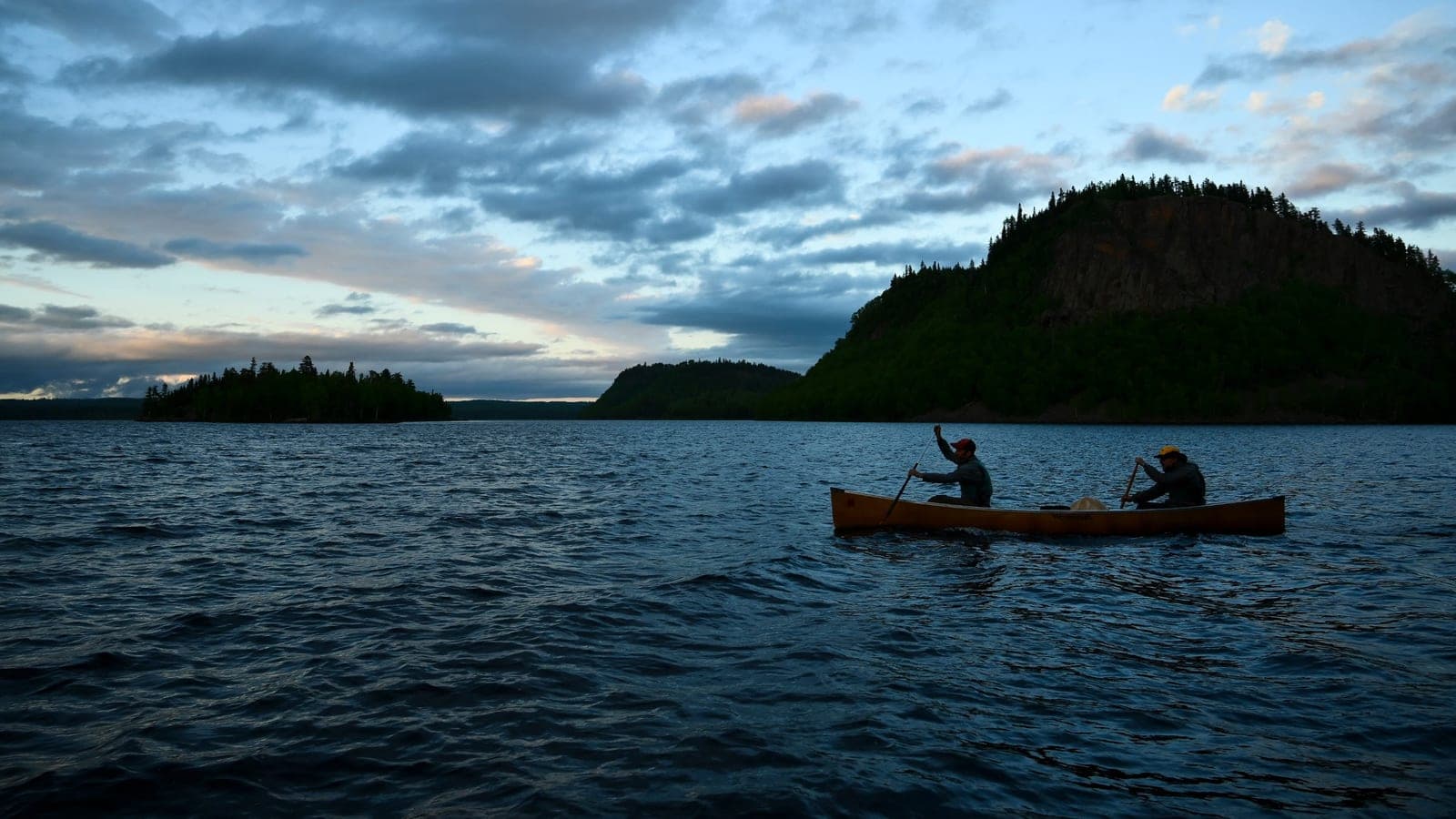
The Senate Just Greenlit a Mine Next to the Boundary Waters, America’s Most Popular Wilderness
The Senate voted on Thursday to repeal a 20-year moratorium on mining near Minnesota’s Boundary Waters Canoe Area Wilderness, undoing a 2023 ban that sought to prevent pollution in the popular paddling and hiking destination. Senators voted 50 to 49, largely along party lines, to rescind the Biden-era ban using an arcane law called the Congressional Review Act. The act, which had only been used once prior to 2017, allows Congress to repeal rules put in place by federal agencies by a simple majority vote. Rules repealed under the act cannot be reinstated without Congress’s assent. The Senate had originally been scheduled to vote on the measure, sponsored by Representative Pete Stauber (R-MN), on April 15, but Senator Tina Smith (D-MN) held the floor for several hours late that night to speak in protest of the resolution. Before today’s vote, Smith compared the resolution to other pushes by the current administration to open wilderness areas and national park gateways to drilling and mining. “We can support the need for mining, but that doesn’t mean that we mine on the edge of Chaco Canyon or on the rim of the Grand Canyon, and it does not mean that we think that a copper-sulfide mine on the doorstep of the Boundary Waters is a good idea,” she said. Established in 1978, the Boundary Waters include more than a million acres of clear lakes and deep forest along Minnesota’s border with Ontario. The Boundary Waters are the most-visited wilderness in the United States, drawing some 200,000 canoeists, hikers, and campers every year, and an important habitat for wildlife including loons, moose, beavers, and wolves. Protesters demonstrate against a proposed mine near the Boundary Waters at a 2025 Earth Day rally in Minnesota. (Photo: UCG / Contributor via Getty) The vote clears a major obstacle for Antofagasta PLC, the Chilean mining conglomerate behind the proposed Twin Metals Mine. First proposed in 2013, the underground mine would extract some 20,000 tons of copper sulfide ore per day, process it, and store the tailings onsite in an area bordering the Boundary Waters. While Antofagasta and its supporters say the mine would create an estimated 1,400 jobs and provide access to critical minerals, environmentalists and outdoor recreation organizations have fought against the project, arguing that it would pollute one of the most critical watersheds in America with acids and heavy metals. Former Forest Service chief Tom Tidwell, who conducted a review of the proposed project when he ran the agency, said in a 2018 op-ed for the Duluth News-Tribune that a spill from the mine would be “catastrophic” for the BWCA and other nearby wilderness areas. “The waterways along the Minnesota-Ontario border would carry pollution from a Twin Metals Mine downstream to Voyageurs National Park in the U.S. and to Quetico Provincial Park in Ontario …The review process proved conclusively that the watershed of the Boundary Waters is absolutely the wrong place for this type of mining.” While the mine no longer faces a federal ban, it will still require as many as 18 state permits before it can begin operating, and could face challenges in court. In a statement following the vote, Athan Manuel, director of the Sierra Club’s Lands Protection Program, criticized the repeal. “The Boundary Waters is one of the country’s most iconic wilderness areas, visited by thousands every year,” he wrote. “It should be a place for recreation and conservation, not for pollution and exploitation. Allowing a foreign company to open a toxic mine on its doorstep puts a fragile ecosystem at risk and shows the Trump Administration will always act to benefit corporations over the American people.” The resolution now goes to President Trump for his signature. See the Boundary Waters for Yourself The best way to understand the Boundary Waters? Go deep into them. You’ll need 8 to 10 days for this canoe trip to Ogishkemuncie Lake, in the wilderness’s heart. The post The Senate Just Greenlit a Mine Next to the Boundary Waters, America’s Most Popular Wilderness appeared first on Backpacker.
The Senate Just Greenlit a Mine Next to the Boundary Waters, America’s Most Popular Wilderness
The Senate voted on Thursday to repeal a 20-year moratorium on mining near Minnesota’s Boundary Waters Canoe Area Wilderness, undoing a 2023 ban that sought to prevent pollution in the popular paddling and hiking destination. Senators voted 50 to 49, largely along party lines, to rescind the Biden-era ban using an arcane law called the Congressional Review Act. The act, which had only been used once prior to 2017, allows Congress to repeal rules put in place by federal agencies by a simple majority vote. Rules repealed under the act cannot be reinstated without Congress’s assent. The Senate had originally been scheduled to vote on the measure, sponsored by Representative Pete Stauber (R-MN), on April 15, but Senator Tina Smith (D-MN) held the floor for several hours late that night to speak in protest of the resolution. Before today’s vote, Smith compared the resolution to other pushes by the current administration to open wilderness areas and national park gateways to drilling and mining. “We can support the need for mining, but that doesn’t mean that we mine on the edge of Chaco Canyon or on the rim of the Grand Canyon, and it does not mean that we think that a copper-sulfide mine on the doorstep of the Boundary Waters is a good idea,” she said. Established in 1978, the Boundary Waters include more than a million acres of clear lakes and deep forest along Minnesota’s border with Ontario. The Boundary Waters are the most-visited wilderness in the United States, drawing some 200,000 canoeists, hikers, and campers every year, and an important habitat for wildlife including loons, moose, beavers, and wolves. Protesters demonstrate against a proposed mine near the Boundary Waters at a 2025 Earth Day rally in Minnesota. (Photo: UCG / Contributor via Getty) The vote clears a major obstacle for Antofagasta PLC, the Chilean mining conglomerate behind the proposed Twin Metals Mine. First proposed in 2013, the underground mine would extract some 20,000 tons of copper sulfide ore per day, process it, and store the tailings onsite in an area bordering the Boundary Waters. While Antofagasta and its supporters say the mine would create an estimated 1,400 jobs and provide access to critical minerals, environmentalists and outdoor recreation organizations have fought against the project, arguing that it would pollute one of the most critical watersheds in America with acids and heavy metals. Former Forest Service chief Tom Tidwell, who conducted a review of the proposed project when he ran the agency, said in a 2018 op-ed for the Duluth News-Tribune that a spill from the mine would be “catastrophic” for the BWCA and other nearby wilderness areas. “The waterways along the Minnesota-Ontario border would carry pollution from a Twin Metals Mine downstream to Voyageurs National Park in the U.S. and to Quetico Provincial Park in Ontario …The review process proved conclusively that the watershed of the Boundary Waters is absolutely the wrong place for this type of mining.” While the mine no longer faces a federal ban, it will still require as many as 18 state permits before it can begin operating, and could face challenges in court. In a statement following the vote, Athan Manuel, director of the Sierra Club’s Lands Protection Program, criticized the repeal. “The Boundary Waters is one of the country’s most iconic wilderness areas, visited by thousands every year,” he wrote. “It should be a place for recreation and conservation, not for pollution and exploitation. Allowing a foreign company to open a toxic mine on its doorstep puts a fragile ecosystem at risk and shows the Trump Administration will always act to benefit corporations over the American people.” The resolution now goes to President Trump for his signature. See the Boundary Waters for Yourself The best way to understand the Boundary Waters? Go deep into them. You’ll need 8 to 10 days for this canoe trip to Ogishkemuncie Lake, in the wilderness’s heart. The post The Senate Just Greenlit a Mine Next to the Boundary Waters, America’s Most Popular Wilderness appeared first on Backpacker.