1 story credited to Australian National Review
Latest story Mar 5, 2026 · on ChamberLight since Apr 2026
A story can appear as several articles (copies of the same piece), so counts of stories and of articles differ.
Scores for Australian National Review
Writing quality not enough rated stories yet: 1 of 10. How it is measured
Scores last checked Sep 25, 2026.
Stories ChamberLight collected, by month
Stories credited to Australian National Review, by publication date. ChamberLight collects articles that mention the officials it tracks, so this shows its own coverage of this source, not how much the source publishes.
- Stories from Australian National Review
- Shaded: ChamberLight collected no stories, or almost none, from any outlet (a gap in its collection, not in the outlet’s publishing)
Show as a table
| Month | Stories | All outlets |
|---|---|---|
| March 2026 | 1 | 1,043 |
| April 2026 | 0 | 4,538 |
| May 2026 | 0 | none collected |
| June 2026 | 0 | none collected |
| July 2026 | 0 | none collected |
| August 2026 | 0 | 1 (collection gap) |
| September 2026 | 0 | 1,320 |
Top topics
Share of this source’s stories tagged with each topic. A story can carry several topics, so the shares do not add up to 100%.
- Budget/Spending1
100% of 1 stories · 31% across all outlets
- Criminal Justice1
100% of 1 stories · 19% across all outlets
- Ethics/Corruption1
100% of 1 stories · 58% across all outlets
The thin mark on each bar is the topic’s share across all outlets.
Who they cover
Party of the officials these stories are mainly about, across all 2 officials named. A story counts once for each official it is mainly about, so the split is over 2 story–official pairs, from 1 story.
- Republican100% · 2 pairs
Most covered
Stories mainly about each official, and their share of the source’s 1 story.
Article tone
ChamberLight’s article analysis assigns each story a tone toward the official it covers. It describes the coverage of that official, not Australian National Review’s stance, and reader votes do not change it. 1 story.
- Good Look
- 1 (100%)
- Mixed
- 0 (0%)
- Informational
- 0 (0%)
- Bad Look
- 0 (0%)
Challenges to these scores
No one has challenged a score on this page yet. Anyone can; editors publish every outcome here.
Articles served from anr.news
2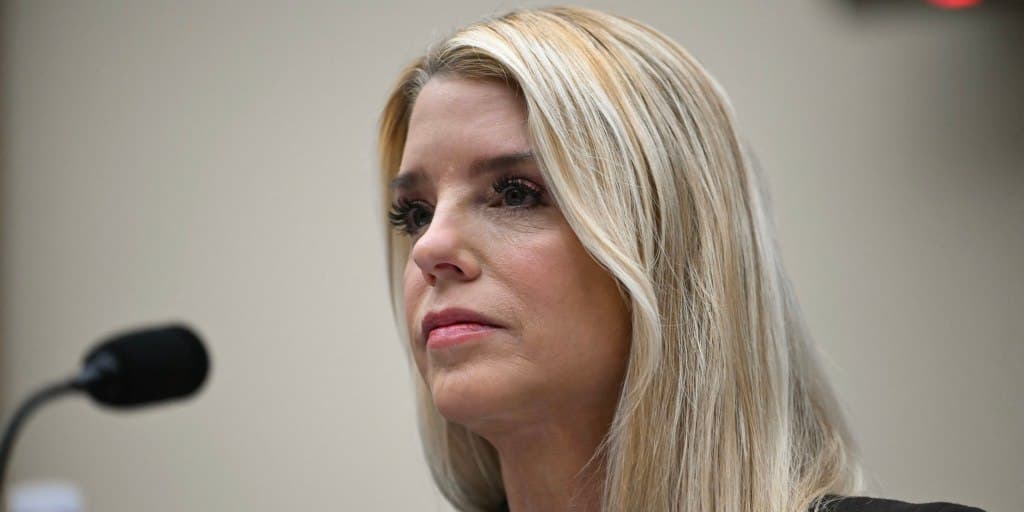
House Oversight Committee Votes to Subpoena Pam Bondi for Testimony on Epstein Files
House Oversight Committee Votes to Subpoena Pam Bondi for Testimony on Epstein Files By Dareh Gregorian, Kyle Stewart, Owen Hayes and Michael Kosnar The Republican-led committee voted to subpoena the attorney general after a motion by Rep. Nancy Mace, R-S.C. The Republican-led House Oversight Committee voted Wednesday to subpoena Attorney General Pam Bondi for testimony on the department’s handling of records related to Jeffrey Epstein. The motion to subpoena Bondi passed by a vote of 24-19. Five Republicans voted for it, including Nancy Mace of South Carolina, who put the motion forward. The Republicans voting with Mace and the Democrats were: Tim Burchett of Tennessee, Lauren Boebert of Colorado, Michael Cloud of Texas and Scott Perry of Pennsylvania. The Justice Department did not immediately respond to a request for comment. The department acknowledged Wednesday that tens of thousands of Epstein files are “offline” as it deals with redaction and privacy issues that it hopes to have addressed by the end of the week. “AG Bondi claims the DOJ has released all of the Epstein files. The record is clear: they have not,” Mace wrote on X. “The Epstein case is one of the greatest cover-ups in American history. His global sex trafficking network is larger than what is being revealed. Three million documents have been released, and we still don’t have the full truth. Videos are missing. Audio is missing. Logs are missing. There are millions more documents out there. We want to know why the DOJ is more focused on shielding the powerful than delivering justice.” Mace told reporters after the vote: “I know that Bondi has testified before the Judiciary Committee, but she’s not testified before me or the Oversight Committee. I need to get to the bottom of this for other survivors of Jeffrey Epstein.” “I have a lot more questions, and I don’t expect to be talking about the stock market, so she better not bring those notes when she comes to the Oversight Committee,” Mace said, referring to Bondi’s contentious hearing with the House Judiciary Committee last month, when she brought up the stock market’s performance under President Donald Trump. Mace said the subpoena is for closed-door testimony with video that would be released to the public afterward. There is no date yet for the testimony. At last month’s House Judiciary Committee hearing, Bondi touted the Justice Department’s efforts to comply with the Epstein Files Transparency Act, which mandated the public release of most information from the investigative files into Epstein and his co-conspirator, Ghislaine Maxwell. “More than 500 attorneys and reviewers spent thousands of hours painstakingly reviewing millions of pages to comply with Congress’s law. We’ve released more than 3 million pages, including 180,000 images, all to the public, while doing our very best in the time frame allotted by the legislation to protect victims,” Bondi said then. Congress passed the bill after the Justice Department and the FBI said in a memo in July that they had conducted an “exhaustive” review of the files and would not charge anyone else as part of Epstein’s sex trafficking ring, which they said affected over 1,000 victims, and would not be release any more information about the case. The Oversight Committee then subpoenaed the Justice Department to turn the files over to Congress, but it had turned over only about 30,000 documents, most of which had already been made public. The Epstein Files Transparency Act (EFTA), which Trump signed into law in November, required that all the documents be made public within 30 days, with some exceptions. Deputy Attorney General Todd Blanche announced the release of 3 million pages of files at the end of January, but he said the department was withholding roughly 3 million more documents. Blanche said that many of them were duplicates but that some were being withheld for “various privileges, including deliberative process privilege, the work-product doctrine and attorney-client privilege.” The bill’s co-authors, Reps. Thomas Massie, R-Ky., and Ro Khanna, D-Calif., say that’s a violation of the law, which mandates the department to turn over “Internal DOJ communications, including emails, memos, meeting notes, concerning decisions to charge, not charge, investigate, or decline to investigate Epstein or his associates.” Blanche said other documents that have been withheld include some that are in a foreign language and others that have been sealed by judges. Lawmakers and many Epstein survivors have repeatedly criticized how many of the documents have been redacted, with information about possible accomplices blacked out while some information about victims was not redacted when it should have been. The Justice Department has also been criticized for repeatedly taking down a number of files, sometimes for unspecified reasons. After a Wall Street Journal article this week said tens of thousands of pages are missing from the files, a department spokesperson told NBC News in a statement that it has not “deleted any files.” “In compliance with the EFTA, our team is working around the clock to address victim concerns, redact personally identifiable information and any images of a sexual nature,” the statement said, referring to the bill Trump signed into law in November. The statement added that as of Monday, “47,635 files were offline for further review and should be ready for re-production by the end of the week. This is the most transparent Department of Justice in history, and all responsive documents will be repopulated online once proper redactions are made.” The missing documents include summaries and notes from three interviews the FBI conducted with a South Carolina woman who alleged she was a sexual assault victim of Epstein and also made sexual abuse allegations against Trump, according to an NBC News analysis of the Epstein files and information provided by a source familiar with the investigation. It is not clear whether the sexual abuse allegations against Trump were discussed in the other interviews that the Justice Department did not release. Asked for comment on the documents last week, the White House referred to a statement the Justice Department issued when the Epstein files were released. It said: “Some of the documents contain untrue and sensationalist claims against President Trump that were submitted to the FBI right before the 2020 election. To be clear, the claims are unfounded and false, and if they have a shred of credibility, they certainly would have been weaponized against President Trump already.” Trump, whom law enforcement has not accused of any wrongdoing in connection with Epstein, has said he stopped socializing with Epstein in the early 2000s because he thought he was a “creep.” The post House Oversight Committee Votes to Subpoena Pam Bondi for Testimony on Epstein Files appeared first on Australian National Review.
House Oversight Committee Votes to Subpoena Pam Bondi for Testimony on Epstein Files
House Oversight Committee Votes to Subpoena Pam Bondi for Testimony on Epstein Files By Dareh Gregorian, Kyle Stewart, Owen Hayes and Michael Kosnar The Republican-led committee voted to subpoena the attorney general after a motion by Rep. Nancy Mace, R-S.C. The Republican-led House Oversight Committee voted Wednesday to subpoena Attorney General Pam Bondi for testimony on the department’s handling of records related to Jeffrey Epstein. The motion to subpoena Bondi passed by a vote of 24-19. Five Republicans voted for it, including Nancy Mace of South Carolina, who put the motion forward. The Republicans voting with Mace and the Democrats were: Tim Burchett of Tennessee, Lauren Boebert of Colorado, Michael Cloud of Texas and Scott Perry of Pennsylvania. The Justice Department did not immediately respond to a request for comment. The department acknowledged Wednesday that tens of thousands of Epstein files are “offline” as it deals with redaction and privacy issues that it hopes to have addressed by the end of the week. “AG Bondi claims the DOJ has released all of the Epstein files. The record is clear: they have not,” Mace wrote on X. “The Epstein case is one of the greatest cover-ups in American history. His global sex trafficking network is larger than what is being revealed. Three million documents have been released, and we still don’t have the full truth. Videos are missing. Audio is missing. Logs are missing. There are millions more documents out there. We want to know why the DOJ is more focused on shielding the powerful than delivering justice.” Mace told reporters after the vote: “I know that Bondi has testified before the Judiciary Committee, but she’s not testified before me or the Oversight Committee. I need to get to the bottom of this for other survivors of Jeffrey Epstein.” “I have a lot more questions, and I don’t expect to be talking about the stock market, so she better not bring those notes when she comes to the Oversight Committee,” Mace said, referring to Bondi’s contentious hearing with the House Judiciary Committee last month, when she brought up the stock market’s performance under President Donald Trump. Mace said the subpoena is for closed-door testimony with video that would be released to the public afterward. There is no date yet for the testimony. At last month’s House Judiciary Committee hearing, Bondi touted the Justice Department’s efforts to comply with the Epstein Files Transparency Act, which mandated the public release of most information from the investigative files into Epstein and his co-conspirator, Ghislaine Maxwell. “More than 500 attorneys and reviewers spent thousands of hours painstakingly reviewing millions of pages to comply with Congress’s law. We’ve released more than 3 million pages, including 180,000 images, all to the public, while doing our very best in the time frame allotted by the legislation to protect victims,” Bondi said then. Congress passed the bill after the Justice Department and the FBI said in a memo in July that they had conducted an “exhaustive” review of the files and would not charge anyone else as part of Epstein’s sex trafficking ring, which they said affected over 1,000 victims, and would not be release any more information about the case. The Oversight Committee then subpoenaed the Justice Department to turn the files over to Congress, but it had turned over only about 30,000 documents, most of which had already been made public. The Epstein Files Transparency Act (EFTA), which Trump signed into law in November, required that all the documents be made public within 30 days, with some exceptions. Deputy Attorney General Todd Blanche announced the release of 3 million pages of files at the end of January, but he said the department was withholding roughly 3 million more documents. Blanche said that many of them were duplicates but that some were being withheld for “various privileges, including deliberative process privilege, the work-product doctrine and attorney-client privilege.” The bill’s co-authors, Reps. Thomas Massie, R-Ky., and Ro Khanna, D-Calif., say that’s a violation of the law, which mandates the department to turn over “Internal DOJ communications, including emails, memos, meeting notes, concerning decisions to charge, not charge, investigate, or decline to investigate Epstein or his associates.” Blanche said other documents that have been withheld include some that are in a foreign language and others that have been sealed by judges. Lawmakers and many Epstein survivors have repeatedly criticized how many of the documents have been redacted, with information about possible accomplices blacked out while some information about victims was not redacted when it should have been. The Justice Department has also been criticized for repeatedly taking down a number of files, sometimes for unspecified reasons. After a Wall Street Journal article this week said tens of thousands of pages are missing from the files, a department spokesperson told NBC News in a statement that it has not “deleted any files.” “In compliance with the EFTA, our team is working around the clock to address victim concerns, redact personally identifiable information and any images of a sexual nature,” the statement said, referring to the bill Trump signed into law in November. The statement added that as of Monday, “47,635 files were offline for further review and should be ready for re-production by the end of the week. This is the most transparent Department of Justice in history, and all responsive documents will be repopulated online once proper redactions are made.” The missing documents include summaries and notes from three interviews the FBI conducted with a South Carolina woman who alleged she was a sexual assault victim of Epstein and also made sexual abuse allegations against Trump, according to an NBC News analysis of the Epstein files and information provided by a source familiar with the investigation. It is not clear whether the sexual abuse allegations against Trump were discussed in the other interviews that the Justice Department did not release. Asked for comment on the documents last week, the White House referred to a statement the Justice Department issued when the Epstein files were released. It said: “Some of the documents contain untrue and sensationalist claims against President Trump that were submitted to the FBI right before the 2020 election. To be clear, the claims are unfounded and false, and if they have a shred of credibility, they certainly would have been weaponized against President Trump already.” Trump, whom law enforcement has not accused of any wrongdoing in connection with Epstein, has said he stopped socializing with Epstein in the early 2000s because he thought he was a “creep.” The post House Oversight Committee Votes to Subpoena Pam Bondi for Testimony on Epstein Files appeared first on Australian National Review.