5 stories credited to Algemeiner.com
1 story on algemeiner.com credited to other publishers
Latest story Apr 22, 2026 · on ChamberLight since Apr 2026
A story can appear as several articles (copies of the same piece), so counts of stories and of articles differ.
Scores for Algemeiner.com
Writing quality not enough rated stories yet: 4 of 10. How it is measured
Scores last checked Sep 25, 2026.
Articles this site reproduces
How provenance is decidedOriginal publishers of articles on algemeiner.com
Counted from articles on algemeiner.com whose original publisher is verified from the page itself or confirmed by an independent signal.
Stories ChamberLight collected, by month
Stories credited to Algemeiner.com, by publication date. ChamberLight collects articles that mention the officials it tracks, so this shows its own coverage of this source, not how much the source publishes.
- Stories from Algemeiner.com
- Shaded: ChamberLight collected no stories, or almost none, from any outlet (a gap in its collection, not in the outlet’s publishing)
Show as a table
| Month | Stories | All outlets |
|---|---|---|
| March 2026 | 1 | 653 |
| April 2026 | 4 | 4,538 |
| May 2026 | 0 | none collected |
| June 2026 | 0 | none collected |
| July 2026 | 0 | none collected |
| August 2026 | 0 | 1 (collection gap) |
| September 2026 | 0 | 1,320 |
Top topics
Share of this source’s stories tagged with each topic. A story can carry several topics, so the shares do not add up to 100%.
- Foreign Policy5
100% of 5 stories · 29% across all outlets
- Defense/Military4
80% of 5 stories · 25% across all outlets
- Ethics/Corruption4
80% of 5 stories · 58% across all outlets
- Budget/Spending1
20% of 5 stories · 31% across all outlets
- Economy1
20% of 5 stories · 26% across all outlets
The thin mark on each bar is the topic’s share across all outlets.
Who they cover
Party of the officials these stories are mainly about, across all 8 officials named. A story counts once for each official it is mainly about, so the split is over 8 story–official pairs, from 5 stories.
- Democrat50% · 4 pairs
- Party not recorded25% · 2 pairs
- Independent13% · 1 pair
- Republican13% · 1 pair
Most covered
Stories mainly about each official, and their share of the source’s 5 stories.
Article tone
ChamberLight’s article analysis assigns each story a tone toward the official it covers. It describes the coverage of that official, not Algemeiner.com’s stance, and reader votes do not change it. 5 stories.
- Good Look
- 0 (0%)
- Mixed
- 3 (60%)
- Informational
- 0 (0%)
- Bad Look
- 2 (40%)
Challenges to these scores
No one has challenged a score on this page yet. Anyone can; editors publish every outcome here.
Articles served from algemeiner.com
10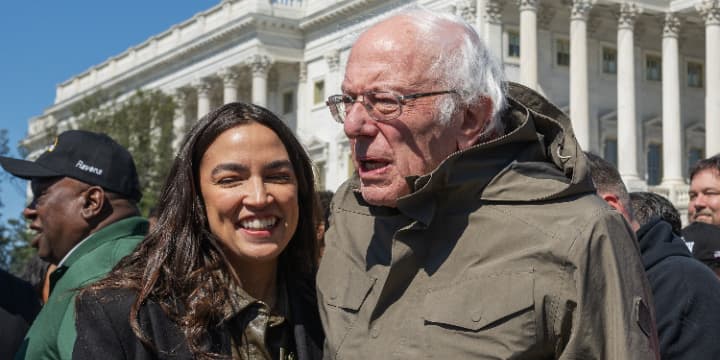
Why Bernie Sanders Is Beyond Wrong on Blocking Aid to Israel
US Sen. Bernie Sanders (I-VT) and US Rep. Alexandria Ocasio-Cortez (D-NY) are seen before a press conference on Capitol Hill in Washington, DC, on March 21, 2024. Photo: Craig Hudson/Sipa USA via Reuters Connect Senator Bernie Sanders (I-VT) opens his recent op-ed in The Guardian by invoking moral authority. “I am a proud Jewish American,” he writes, before recounting his family’s history in the Holocaust. It is a powerful introduction, but it is also a pre-emptive defense — one that insulates what follows from scrutiny. Because what follows is not a coherent policy argument. It is a one-sided case to block US arms sales to Israel, built on sweeping claims and selective framing. Sanders acknowledges that “Israel had the absolute right to respond to the Hamas attack,” referring to the massacre of October 7, 2023. But he immediately pivots, arguing that Israel is waging an “all-out war of enormous destruction against the entire Palestinian people – in what experts have correctly concluded is a genocide.” There is no examination of who these “experts” are, nor any engagement with the legal standard for genocide, which requires demonstrable intent to destroy a people – not simply a civilian casualty figure deemed too high in the course of a war. Competing legal assessments are ignored. The charge is asserted, repeated, and then used as the foundation for policy. Sanders then builds his case through numbers. Israel, he writes, has killed “more than 72,000 Palestinians in Gaza” and destroyed “almost all of Gaza’s infrastructure.” The figures are presented in isolation. There is no mention of how those numbers are compiled, no distinction between civilians and combatants, and no acknowledgment of Hamas embedding its military operations within civilian areas, which is a central fact shaping the battlefield. The same op-ed notes, in a single line, that Hamas “killed more than 1,200 innocent men, women and children and took hundreds of hostages.” But this is treated as background, not cause. The massacre that triggered the war is acknowledged, then effectively set aside, as if Israel’s response emerged in a vacuum. From there, Sanders moves to policy. He announces that he will “force the Senate to vote on two Joint Resolutions of Disapproval” to block arms sales to Israel. One targets “$151.8m in 1,000-pound bombs.” The other blocks “$295m in bulldozers.” “These are not defensive weapons,” he argues. “They are the instruments of ethnic cleansing.” This framing is nothing short of a gross misrepresentation. The same munitions Sanders condemns are standard in modern warfare and are used precisely because they allow for targeted strikes against the very fortified positions that Hamas operates from. Sanders does not grapple with the reality of the US-Israel alliance — one that extends beyond sentiment into intelligence-sharing, missile defense, and joint technological development. Nor does he address what it means, in practice, to restrict an ally’s access to weapons in the middle of an ongoing war. Blocking arms sales to Israel does not isolate Israel. It weakens a key US ally in a volatile region. It signals to adversaries that American commitments can be reversed under political pressure, and it undermines deterrence at a moment when it is most needed. Sanders’ case rests on accusation, omission, and a conspicuous refusal to engage with the realities of the war he is condemning. The result is not a serious policy argument, but a political one, built to persuade, not to withstand scrutiny. And that is what makes his argument fall apart. It is no surprise his Senate effort failed too. The author is a contributor to HonestReporting, a Jerusalem-based media watchdog with a focus on antisemitism and anti-Israel bias — where a version of this article first appeared.
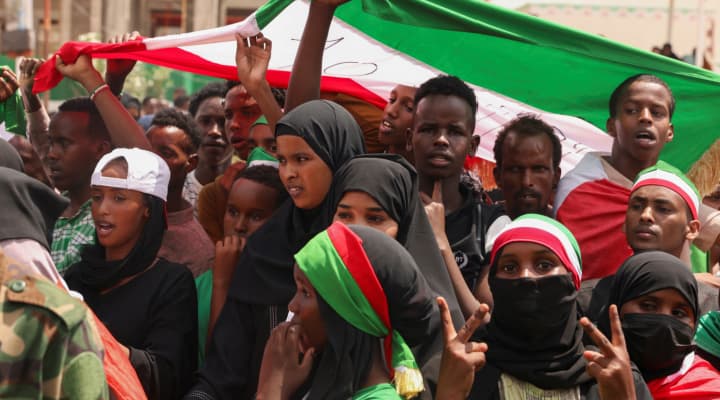
Israel Names First Ambassador to Somaliland as US Strengthens Ties to Counter Houthi Threat
People hold the flag of Somaliland during the parade in Hargeisa, Somaliland, May 18, 2024. Photo: REUTERS/Tiksa Negeri Israel’s Foreign Ministry announced the appointment of its first ambassador to Somaliland on Wednesday, less than four months after Israel became the first country to officially recognize the self-declared Africa republic as an independent and sovereign state. Michael Lotem, who currently serves as a non-resident economic ambassador to Africa, will now shift to work as a non-resident ambassador to Somaliland, which has sought global support in breaking away from Somalia in the Horn of Africa. He previously served as Israel’s ambassador to Kenya, Uganda, Tanzania, Malawi, and Seychelles, a position he concluded in August. Somaliland, which has claimed independence for decades in East Africa but remains largely unrecognized, is situated on the southern coast of the Gulf of Aden and bordered by Djibouti to the northwest, Ethiopia to the south and west, and Somalia to the south and east. It has sought to break off from Somalia since 1991 and utilized its own passports, currency, military, and law enforcement. Unlike most states in its region, Somaliland has relative security, regular elections, and a degree of political stability. In December, Israel recognized Somaliland’s independence, becoming the first UN-recognized country in the world to do so — Taiwan did in 2020 — while igniting a diplomatic firestorm in Mogadishu and across dozens of Muslim nations which condemned the decision. Somalia’s Foreign Ministry has likewise released a statement blasting Lotem’s appointment, calling the move “a direct breach” of the nation’s sovereignty and saying it “categorically rejects” the announcement. “Such actions risk destabilizing regional progress and emboldening divisive narratives,” the Somali ministry said on Wednesday. Beyond Israel, the United States has also started strengthening ties with Somaliland. A senior American delegation including US Air Force Gen. Dagvin R.M. Anderson, the commander of US Africa Command, reportedly met with Major General Nimcaan Yusuf Osman, Somaliland’s Chief of the General Staff of the Somaliland Armed Forces, on Tuesday. After the meeting, Somaliland officials said that “control near the Bab el-Mandeb Strait and the Red Sea would significantly change the US approach to dealing with the Houthis and Iran,” according to Israel’s Channel 12. Last month, Iran threatened to take control of the Bab el-Mandeb Strait — a key maritime chokepoint connecting the Red Sea to the Gulf of Aden — using the Houthis, its proxy in Yemen and an internationally designated terrorist group. The waterway — an energy highway through which up to 14 percent of the world’s shipping passes, including 30 percent of container shipping — also functions as a strategic link between the Indian Ocean and the Mediterranean Sea via the Red Sea and Suez Canal. The US has a Red Sea base in Djibouti, but the government there has been less supportive of some of Washington’s policies. A foothold in Somaliland could be a major strategic asset for the US, Israel, and other partners in confronting the Houthis and protecting global shipping lanes, according to experts. “Djibouti becomes an increasingly reluctant, unwilling ally to the US in helping enforce sanctions on the Houthis. Somaliland, which is almost equally well-placed to address issues on the western and southwestern coasts of Yemen, can help the US, Israel, and the UAE combat the Houthis,” Edmund Fitton-Brown, a former UK ambassador to Yemen and a senior fellow at the Foundation for Defense of Democracies, told Fox News Digital. Since the outbreak of the Israel-Hamas war in Gaza in 2023, the Houthis have been routinely attacking Red Sea shipping, forcing shippers to avoid the waterway and thereby raising costs. The US delegation’s visit this week came after Somaliland’s top diplomat in Washington expressed optimism about the prospects of US recognition. “From [Capitol] Hill we have very good support,” Bashir Goth, who has represented Somaliland in the US since 2018, told Military.com last week. In an interview with The Algemeiner in March discussing his legislation to support studying boosting economic ties, US Rep. John Rose (R-TN) said, “We think it’s in the best interest of the United States to develop a stronger relationship and to provide a path forward for what I would ultimately hope might be a full recognition of Somaliland as an independent nation.” Last week, a spokesperson for the State Department issued a statement to Fox News Digital clarfiying that the US “continues to recognize the sovereignty and territorial integrity of the Federal Republic of Somalia, which includes the territory of Somaliland.” In addition to countering the influence of Iran in the region, Goth also pointed out that support for Somaliland would serve to check Chinese interests. “We sometimes call ourselves the Taiwan of Africa because we are in a similar position in global politics,” Goth said. “Somaliland is the only country in the Horn of Africa that is countering Chinese influence. We are the second country in Africa that has relations with Taiwan.” In August 2017, China established its only overseas military base in Djibouti, where the communist government has established major influence as a significant creditor for infrastructure projects. Beyond strategic interests, Somaliland has functioned as a stable democracy for decades, conducting democratic elections since 2003 with delegations from the US and Europe observing the 2017 presidential election. In 2024, Somaliland held one of only five elections in Africa, voting in an opposition party in a peaceful contest.
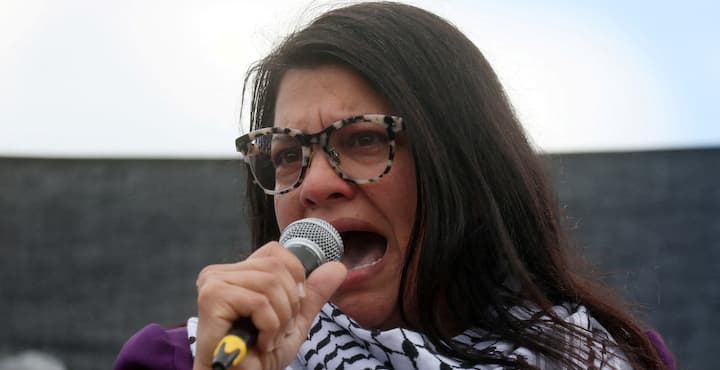
Hezbollah’s Useful Idiots in Congress
US Rep. Rashida Tlaib (D-MI) addresses attendees as she takes part in a protest calling for a ceasefire in Gaza outside the US Capitol, in Washington, DC, US, Oct. 18, 2023. Photo: REUTERS/Leah Millis On March 27, 2026, members of Congress’ Progressive Caucus shared some outrageous thoughts and writing. In the wake of Hezbollah’s (latest) unprovoked attack on Israel, Representative Rashida Tlaib (D-MI), Representative Delia Ramirez (D-IL), and Representative Nydia Velazquez (D-NY) introduced two appalling resolutions — 1) Standing with the People of Lebanon against the illegal invasion; and 2) The Lebanon War Powers Resolution. At their core, the resolutions seek to restrain and punish an American ally for ensuring its security while aiding and rewarding a US-designated foreign terrorist organization (FTO) with American blood on its hands. The resolutions of Tlaib, Ramirez, and Velazquez exhibit the actions and ideas of individuals consumed by ideology. Their progressive zeal blinds them to reality. They ignore basic understandings and abandon commonsense while indulging in hyperbole and hysteria. Their fealty to progressivism runs so deep that they are willing to introduce ideas and advance an agenda that effectively works to jeopardize American security and interests. The first six words of the Tlaib-authored resolution — Standing with the People of Lebanon — immediately raises red flags. Why must the representative “stand” with the Lebanese people? What happened to the Lebanese state? The Lebanese state is internationally recognized. The democratically-elected Lebanese government is tasked with protecting the people of Lebanon. Also, did the people of Lebanon, let alone the state, request her solidarity? The Michigan representative, no less a Palestinian, feels entitled to intervene in domestic Lebanese affairs. She ignores the millions of Lebanese who welcome the further degradation of Hezbollah by Israel. Why do the people of Lebanon welcome this? Because, who else will do it? For the last 26 years, Hezbollah, the scion of Iran, refused to moderate its views on destroying Israel and abandoning its weapons. The Lebanese state repeatedly failed to bring the militia to heel (even in a limited area). Tlaib’s title and resolution are a master class. They epitomize the modus operandi for progressives, particularly when engaging with the Middle East. Tlaib’s progressive beliefs and principles compel her to ignore history while painting a misleading picture. Responsible parties go unaccountable. The aggressor seemingly disappears. The targeted becomes the aggressor. Her resolution portrays Lebanon as passive. According to her, the 82-year-old country has no agency. The labels of aggression and accountability apply only to Israel. Her progressive delusions propound the idea that Lebanon would have “freedom from the threat or use of force,” if it were not for Israel. But is not that freedom responsibly achieved when Lebanon controls its borders and territory? Optimally it would entail the normalization of relations with Israel. But both of those items would require Lebanon to act. Inexplicably, the entire 7-page resolution is devoid of any mention of Hezbollah; the initiator of conflict. The Michigan representative also excuses the failings of the Lebanese state. Did she not celebrate President Biden’s 2024 ceasefire agreement that called on the Lebanese state to disarm Hezbollah? Tlaib makes no mention about how Lebanese authorities dragged their feet for the better part of a year and ultimately lied to US officials about disarming Hezbollah. Why is she not upset? Does she not want Hezbollah disarmed? The glaring voids are intentional. By focusing on the Lebanese people, portraying the Lebanese state as helpless, and erasing Hezbollah from the narrative, she heightens Lebanese helplessness, vulnerability and victimization. Tlaib manipulates the empathy of the ignorant to advance her intervention in Lebanese affairs and a cessation of violence. In reality, Tlaib is not really concerned about the Lebanese. It is about advancing the “Free Palestine: From the River to the Sea” agenda. Her contrived Lebanese narrative transforms Israel into a greater “aggressor” — not limited to “Palestine.” It should be noted that at least 10 Palestinian-focused organizations endorsed the legislation. Absent from the list is an organization with Lebanon in its title. The Lebanon War Powers Resolution (LWPR) drafted by Tlaib and co-sponsored by Ramirez and Velazquez is an exercise in progressive machinations and hysteria. They call for an end to US military assistance and aid to Israel in the Lebanese theater. Representative Ramirez compared the conflict in Lebanon to Gaza. She tweeted that the resolution seeks to hold President Trump and Israeli Prime Minister Benjamin Netanyahu accountable. Is any of this necessary or true? No reports exist of US fighting forces being deployed to Lebanon. Ramirez wants to hold an ally accountable for defending itself? Furthermore, the US cannot provide intel on an enemy that attacked (unprovoked) an ally without Congressional approval? Ridiculous. The LWPR is a tactic here, not a principled approach by progressives. They resort to the WPR as a means to punish a leader they dislike. If the three members of the Progressive Caucus are serious about ending the conflict in Lebanon and alleviating the suffering of the Lebanese, they would draft a resolution calling for the normalization of relations between Lebanon and Israel. How do either of these resolutions advance US interests and security? Does not the US have an interest in seeing Hezbollah (a US-designated FTO) further degraded? Any cessation of violence only benefits Hezbollah by providing them the opportunity to regroup and rearm (once again). Representatives Tlaib, Ramirez, and Velazquez should revise the titles of their resolutions. Call one: Standing with Hezbollah and its Palestinian allies so it can continue to defy the Lebanese state. Call the other: How to handicap an ally fighting a US-designated FTO. The revisions would clearly demonstrate how the progressive Congresswomen’s resolutions make them useful idiots for Hezbollah. Eric Bordenkircher, Ph.D., is a research fellow at UCLA’s Center for Middle East Development. He tweets at @UCLA_Eagle. The views represented in this piece are his own and do not necessarily represent the position of UCLA or the Center for Middle East Development.
Hezbollah’s Useful Idiots in Congress
US Rep. Rashida Tlaib (D-MI) addresses attendees as she takes part in a protest calling for a ceasefire in Gaza outside the US Capitol, in Washington, DC, US, Oct. 18, 2023. Photo: REUTERS/Leah Millis On March 27, 2026, members of Congress’ Progressive Caucus shared some outrageous thoughts and writing. In the wake of Hezbollah’s (latest) unprovoked attack on Israel, Representative Rashida Tlaib (D-MI), Representative Delia Ramirez (D-IL), and Representative Nydia Velazquez (D-NY) introduced two appalling resolutions — 1) Standing with the People of Lebanon against the illegal invasion; and 2) The Lebanon War Powers Resolution. At their core, the resolutions seek to restrain and punish an American ally for ensuring its security while aiding and rewarding a US-designated foreign terrorist organization (FTO) with American blood on its hands. The resolutions of Tlaib, Ramirez, and Velazquez exhibit the actions and ideas of individuals consumed by ideology. Their progressive zeal blinds them to reality. They ignore basic understandings and abandon commonsense while indulging in hyperbole and hysteria. Their fealty to progressivism runs so deep that they are willing to introduce ideas and advance an agenda that effectively works to jeopardize American security and interests. The first six words of the Tlaib-authored resolution — Standing with the People of Lebanon — immediately raises red flags. Why must the representative “stand” with the Lebanese people? What happened to the Lebanese state? The Lebanese state is internationally recognized. The democratically-elected Lebanese government is tasked with protecting the people of Lebanon. Also, did the people of Lebanon, let alone the state, request her solidarity? The Michigan representative, no less a Palestinian, feels entitled to intervene in domestic Lebanese affairs. She ignores the millions of Lebanese who welcome the further degradation of Hezbollah by Israel. Why do the people of Lebanon welcome this? Because, who else will do it? For the last 26 years, Hezbollah, the scion of Iran, refused to moderate its views on destroying Israel and abandoning its weapons. The Lebanese state repeatedly failed to bring the militia to heel (even in a limited area). Tlaib’s title and resolution are a master class. They epitomize the modus operandi for progressives, particularly when engaging with the Middle East. Tlaib’s progressive beliefs and principles compel her to ignore history while painting a misleading picture. Responsible parties go unaccountable. The aggressor seemingly disappears. The targeted becomes the aggressor. Her resolution portrays Lebanon as passive. According to her, the 82-year-old country has no agency. The labels of aggression and accountability apply only to Israel. Her progressive delusions propound the idea that Lebanon would have “freedom from the threat or use of force,” if it were not for Israel. But is not that freedom responsibly achieved when Lebanon controls its borders and territory? Optimally it would entail the normalization of relations with Israel. But both of those items would require Lebanon to act. Inexplicably, the entire 7-page resolution is devoid of any mention of Hezbollah; the initiator of conflict. The Michigan representative also excuses the failings of the Lebanese state. Did she not celebrate President Biden’s 2024 ceasefire agreement that called on the Lebanese state to disarm Hezbollah? Tlaib makes no mention about how Lebanese authorities dragged their feet for the better part of a year and ultimately lied to US officials about disarming Hezbollah. Why is she not upset? Does she not want Hezbollah disarmed? The glaring voids are intentional. By focusing on the Lebanese people, portraying the Lebanese state as helpless, and erasing Hezbollah from the narrative, she heightens Lebanese helplessness, vulnerability and victimization. Tlaib manipulates the empathy of the ignorant to advance her intervention in Lebanese affairs and a cessation of violence. In reality, Tlaib is not really concerned about the Lebanese. It is about advancing the “Free Palestine: From the River to the Sea” agenda. Her contrived Lebanese narrative transforms Israel into a greater “aggressor” — not limited to “Palestine.” It should be noted that at least 10 Palestinian-focused organizations endorsed the legislation. Absent from the list is an organization with Lebanon in its title. The Lebanon War Powers Resolution (LWPR) drafted by Tlaib and co-sponsored by Ramirez and Velazquez is an exercise in progressive machinations and hysteria. They call for an end to US military assistance and aid to Israel in the Lebanese theater. Representative Ramirez compared the conflict in Lebanon to Gaza. She tweeted that the resolution seeks to hold President Trump and Israeli Prime Minister Benjamin Netanyahu accountable. Is any of this necessary or true? No reports exist of US fighting forces being deployed to Lebanon. Ramirez wants to hold an ally accountable for defending itself? Furthermore, the US cannot provide intel on an enemy that attacked (unprovoked) an ally without Congressional approval? Ridiculous. The LWPR is a tactic here, not a principled approach by progressives. They resort to the WPR as a means to punish a leader they dislike. If the three members of the Progressive Caucus are serious about ending the conflict in Lebanon and alleviating the suffering of the Lebanese, they would draft a resolution calling for the normalization of relations between Lebanon and Israel. How do either of these resolutions advance US interests and security? Does not the US have an interest in seeing Hezbollah (a US-designated FTO) further degraded? Any cessation of violence only benefits Hezbollah by providing them the opportunity to regroup and rearm (once again). Representatives Tlaib, Ramirez, and Velazquez should revise the titles of their resolutions. Call one: Standing with Hezbollah and its Palestinian allies so it can continue to defy the Lebanese state. Call the other: How to handicap an ally fighting a US-designated FTO. The revisions would clearly demonstrate how the progressive Congresswomen’s resolutions make them useful idiots for Hezbollah. Eric Bordenkircher, Ph.D., is a research fellow at UCLA’s Center for Middle East Development. He tweets at @UCLA_Eagle. The views represented in this piece are his own and do not necessarily represent the position of UCLA or the Center for Middle East Development.
Hezbollah’s Useful Idiots in Congress
US Rep. Rashida Tlaib (D-MI) addresses attendees as she takes part in a protest calling for a ceasefire in Gaza outside the US Capitol, in Washington, DC, US, Oct. 18, 2023. Photo: REUTERS/Leah Millis On March 27, 2026, members of Congress’ Progressive Caucus shared some outrageous thoughts and writing. In the wake of Hezbollah’s (latest) unprovoked attack on Israel, Representative Rashida Tlaib (D-MI), Representative Delia Ramirez (D-IL), and Representative Nydia Velazquez (D-NY) introduced two appalling resolutions — 1) Standing with the People of Lebanon against the illegal invasion; and 2) The Lebanon War Powers Resolution. At their core, the resolutions seek to restrain and punish an American ally for ensuring its security while aiding and rewarding a US-designated foreign terrorist organization (FTO) with American blood on its hands. The resolutions of Tlaib, Ramirez, and Velazquez exhibit the actions and ideas of individuals consumed by ideology. Their progressive zeal blinds them to reality. They ignore basic understandings and abandon commonsense while indulging in hyperbole and hysteria. Their fealty to progressivism runs so deep that they are willing to introduce ideas and advance an agenda that effectively works to jeopardize American security and interests. The first six words of the Tlaib-authored resolution — Standing with the People of Lebanon — immediately raises red flags. Why must the representative “stand” with the Lebanese people? What happened to the Lebanese state? The Lebanese state is internationally recognized. The democratically-elected Lebanese government is tasked with protecting the people of Lebanon. Also, did the people of Lebanon, let alone the state, request her solidarity? The Michigan representative, no less a Palestinian, feels entitled to intervene in domestic Lebanese affairs. She ignores the millions of Lebanese who welcome the further degradation of Hezbollah by Israel. Why do the people of Lebanon welcome this? Because, who else will do it? For the last 26 years, Hezbollah, the scion of Iran, refused to moderate its views on destroying Israel and abandoning its weapons. The Lebanese state repeatedly failed to bring the militia to heel (even in a limited area). Tlaib’s title and resolution are a master class. They epitomize the modus operandi for progressives, particularly when engaging with the Middle East. Tlaib’s progressive beliefs and principles compel her to ignore history while painting a misleading picture. Responsible parties go unaccountable. The aggressor seemingly disappears. The targeted becomes the aggressor. Her resolution portrays Lebanon as passive. According to her, the 82-year-old country has no agency. The labels of aggression and accountability apply only to Israel. Her progressive delusions propound the idea that Lebanon would have “freedom from the threat or use of force,” if it were not for Israel. But is not that freedom responsibly achieved when Lebanon controls its borders and territory? Optimally it would entail the normalization of relations with Israel. But both of those items would require Lebanon to act. Inexplicably, the entire 7-page resolution is devoid of any mention of Hezbollah; the initiator of conflict. The Michigan representative also excuses the failings of the Lebanese state. Did she not celebrate President Biden’s 2024 ceasefire agreement that called on the Lebanese state to disarm Hezbollah? Tlaib makes no mention about how Lebanese authorities dragged their feet for the better part of a year and ultimately lied to US officials about disarming Hezbollah. Why is she not upset? Does she not want Hezbollah disarmed? The glaring voids are intentional. By focusing on the Lebanese people, portraying the Lebanese state as helpless, and erasing Hezbollah from the narrative, she heightens Lebanese helplessness, vulnerability and victimization. Tlaib manipulates the empathy of the ignorant to advance her intervention in Lebanese affairs and a cessation of violence. In reality, Tlaib is not really concerned about the Lebanese. It is about advancing the “Free Palestine: From the River to the Sea” agenda. Her contrived Lebanese narrative transforms Israel into a greater “aggressor” — not limited to “Palestine.” It should be noted that at least 10 Palestinian-focused organizations endorsed the legislation. Absent from the list is an organization with Lebanon in its title. The Lebanon War Powers Resolution (LWPR) drafted by Tlaib and co-sponsored by Ramirez and Velazquez is an exercise in progressive machinations and hysteria. They call for an end to US military assistance and aid to Israel in the Lebanese theater. Representative Ramirez compared the conflict in Lebanon to Gaza. She tweeted that the resolution seeks to hold President Trump and Israeli Prime Minister Benjamin Netanyahu accountable. Is any of this necessary or true? No reports exist of US fighting forces being deployed to Lebanon. Ramirez wants to hold an ally accountable for defending itself? Furthermore, the US cannot provide intel on an enemy that attacked (unprovoked) an ally without Congressional approval? Ridiculous. The LWPR is a tactic here, not a principled approach by progressives. They resort to the WPR as a means to punish a leader they dislike. If the three members of the Progressive Caucus are serious about ending the conflict in Lebanon and alleviating the suffering of the Lebanese, they would draft a resolution calling for the normalization of relations between Lebanon and Israel. How do either of these resolutions advance US interests and security? Does not the US have an interest in seeing Hezbollah (a US-designated FTO) further degraded? Any cessation of violence only benefits Hezbollah by providing them the opportunity to regroup and rearm (once again). Representatives Tlaib, Ramirez, and Velazquez should revise the titles of their resolutions. Call one: Standing with Hezbollah and its Palestinian allies so it can continue to defy the Lebanese state. Call the other: How to handicap an ally fighting a US-designated FTO. The revisions would clearly demonstrate how the progressive Congresswomen’s resolutions make them useful idiots for Hezbollah. Eric Bordenkircher, Ph.D., is a research fellow at UCLA’s Center for Middle East Development. He tweets at @UCLA_Eagle. The views represented in this piece are his own and do not necessarily represent the position of UCLA or the Center for Middle East Development.
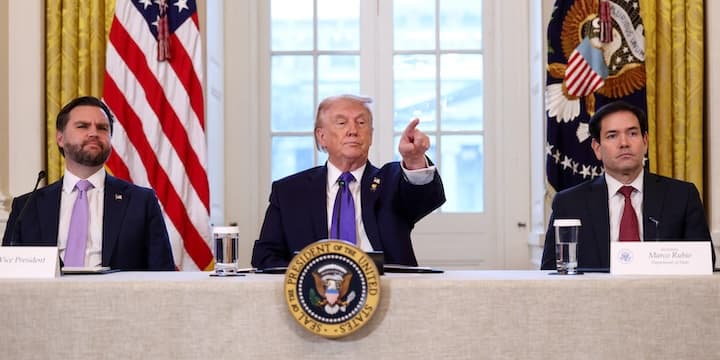
Trump Says Gas Prices May Remain High Through November Midterm Election
U.S. President Donald Trump takes questions from reporters while Vice President JD Vance and Secretary of State Marco Rubio look on, as they attend a meeting with oil industry executives, at the White House in Washington, D.C., U.S., January 9, 2026. REUTERS/Kevin Lamarque US President Donald Trump said on Sunday that the price of oil and gasoline may remain high through November’s midterm elections, a rare acknowledgement of the potential political fallout from his decision to attack Iran six weeks ago. “It could be, or the same, or maybe a little bit higher, but it should be around the same,” Trump, who is in Miami for the weekend, told Fox News’ “Sunday Morning Futures With Maria Bartiromo” when asked whether the cost of oil and gas would be lower by the fall. The average price for regular gas at US service stations has exceeded $4 per gallon for most of April, according to data from GasBuddy. Trump’s comments on Sunday came after weeks of asserting that the spike in prices is a short-term phenomenon, though his top advisers are cognizant of the war’s economic impacts, officials have said. Earlier on Sunday, Trump announced on social media that the US Navy would blockade the Strait of Hormuz and intercept any ship that paid a crossing fee to Iran, after marathon talks between the US and Iran in Pakistan over the weekend did not yield a peace deal. “No one who pays an illegal toll will have safe passage on the high seas,” he wrote on Truth Social. Any US blockade is likely to add more uncertainty to the eventual resolution of the conflict, which is currently subject to a tenuous two-week ceasefire. The new tactic is in response to Iran’s own closure of the strait’s critical shipping lanes, which has caused global oil prices to skyrocket about 50%. UNPOPULAR WAR HITS TRUMP’S APPROVAL The war began on February 28, when the US launched a joint bombing campaign with Israel against Iran. The scope quickly expanded as Iran and its allies attacked nearby countries, while Israel targeted Hezbollah with massive strikes in Lebanon. The war has buffeted global financial markets and caused thousands of civilian deaths, mostly in Iran and Lebanon. Trump’s political standing at home has suffered, with polls showing the war is unpopular among most Americans, who are frustrated by rising gasoline prices. The president’s approval rating has hit the lowest levels of his second term in office, raising concern among Republicans that his party is poised to lose control of Congress in the midterm elections. A Democratic majority in either chamber could launch investigations into the Trump administration while blocking much of his legislative agenda. US Senator Mark Warner of Virginia, the ranking Democrat on the Senate Intelligence Committee, questioned the strategy behind Trump’s planned blockade. “I don’t understand how blockading the strait is going to somehow push the Iranians into opening it,” he told CNN’s “State of the Union” on Sunday. In a separate appearance on CBS’s “Face the Nation,” Warner said the blockade would not undermine Iranian control of the waterway. “The Iranians have hundreds of speedboats where they can still mine the strait or put bombs against tankers in closing the strait,” he said. “How is that going to ever bring down gas prices?” Although Trump has repeatedly said that the war would be over soon, Republican US Senator Ron Johnson of Wisconsin told ABC News’ “This Week” on Sunday that achieving US aims in Iran “could take a long time.” “It’s going to be a long-term project,” said Johnson, who was not asked about Trump’s proposed blockade. “I never thought this would be easy.”
Trump Says Gas Prices May Remain High Through November Midterm Election
U.S. President Donald Trump takes questions from reporters while Vice President JD Vance and Secretary of State Marco Rubio look on, as they attend a meeting with oil industry executives, at the White House in Washington, D.C., U.S., January 9, 2026. REUTERS/Kevin Lamarque US President Donald Trump said on Sunday that the price of oil and gasoline may remain high through November’s midterm elections, a rare acknowledgement of the potential political fallout from his decision to attack Iran six weeks ago. “It could be, or the same, or maybe a little bit higher, but it should be around the same,” Trump, who is in Miami for the weekend, told Fox News’ “Sunday Morning Futures With Maria Bartiromo” when asked whether the cost of oil and gas would be lower by the fall. The average price for regular gas at US service stations has exceeded $4 per gallon for most of April, according to data from GasBuddy. Trump’s comments on Sunday came after weeks of asserting that the spike in prices is a short-term phenomenon, though his top advisers are cognizant of the war’s economic impacts, officials have said. Earlier on Sunday, Trump announced on social media that the US Navy would blockade the Strait of Hormuz and intercept any ship that paid a crossing fee to Iran, after marathon talks between the US and Iran in Pakistan over the weekend did not yield a peace deal. “No one who pays an illegal toll will have safe passage on the high seas,” he wrote on Truth Social. Any US blockade is likely to add more uncertainty to the eventual resolution of the conflict, which is currently subject to a tenuous two-week ceasefire. The new tactic is in response to Iran’s own closure of the strait’s critical shipping lanes, which has caused global oil prices to skyrocket about 50%. UNPOPULAR WAR HITS TRUMP’S APPROVAL The war began on February 28, when the US launched a joint bombing campaign with Israel against Iran. The scope quickly expanded as Iran and its allies attacked nearby countries, while Israel targeted Hezbollah with massive strikes in Lebanon. The war has buffeted global financial markets and caused thousands of civilian deaths, mostly in Iran and Lebanon. Trump’s political standing at home has suffered, with polls showing the war is unpopular among most Americans, who are frustrated by rising gasoline prices. The president’s approval rating has hit the lowest levels of his second term in office, raising concern among Republicans that his party is poised to lose control of Congress in the midterm elections. A Democratic majority in either chamber could launch investigations into the Trump administration while blocking much of his legislative agenda. US Senator Mark Warner of Virginia, the ranking Democrat on the Senate Intelligence Committee, questioned the strategy behind Trump’s planned blockade. “I don’t understand how blockading the strait is going to somehow push the Iranians into opening it,” he told CNN’s “State of the Union” on Sunday. In a separate appearance on CBS’s “Face the Nation,” Warner said the blockade would not undermine Iranian control of the waterway. “The Iranians have hundreds of speedboats where they can still mine the strait or put bombs against tankers in closing the strait,” he said. “How is that going to ever bring down gas prices?” Although Trump has repeatedly said that the war would be over soon, Republican US Senator Ron Johnson of Wisconsin told ABC News’ “This Week” on Sunday that achieving US aims in Iran “could take a long time.” “It’s going to be a long-term project,” said Johnson, who was not asked about Trump’s proposed blockade. “I never thought this would be easy.”

DNC Fails to Pass Resolutions Condemning AIPAC, Pushing for Conditioning Aid to Israel
Crews prepare the stage at the annual AIPAC Policy Conference in Washington, DC, March 6, 2018. Photo: Reuters / Brian Snyder A panel at the Democratic National Committee (DNC) on Thursday voted down a resolution to condemn the influence of the American Israel Public Affairs Committee (AIPAC), the foremost pro-Israel lobbying group in the US, in Democratic primary elections. The panel also deferred a decision on resolutions to push for conditioning military aid to Israel and to recognize a Palestinian state. The resolutions, which were considered within the newly created Middle East Working Group, were introduced into the agenda by Florida DNC member Allison Minnerly, who saw it as an opportunity to bring those who have not been “seeing their party support Palestinian rights or stand against military conflict” back into the fold of the Democratic Party, she told The Intercept. Minnerly’s effort comes as the gap continues to widen between the official stance of the Democratic Party, which has largely supported aid to Israel in recent decades, and the views of the Democratic base, which now has an overwhelmingly unfavorable view of Israel, according to recent polling. In recent months, a number of potential Democratic presidential hopefuls — including some who were former donors and speakers at AIPAC conferences — have been distancing themselves from AIPAC, saying they would not take money from the bipartisan group in the future. Illinois Governor J.B. Pritzker, for example, recently said he abandoned his support for AIPAC when it “began to lean much more to the right and much more pro-Trump.” Another prominent Democrat, US Sen. Cory Booker (NJ) told Politico in March that he is no longer going to receive funds from AIPAC. Others who have made sure to have no association with AIPAC include California Gov. Gavin Newsom and former Chicago Mayor Rahm Emmanuel. Aside from the fact that Israel is now seen less favorably by Democratic voters, AIPAC has also become a hot topic on the left as its allied super PACs have become increasingly influential in Democratic primaries, spending millions to back candidates aligned with their positions. Critics within the party argue that this influx of money, including donations from Republican-aligned contributors, risks distorting Democratic contests and elevating outside influence. Even so, the resolutions specifically calling out AIPAC, aiming to condition aid to Israel, and pushing to recognize a Palestinian state did not pass. Meanwhile, a separate resolution calling out all dark money went through. “Let’s be clear on what really happened: Today, the Resolutions Committee voted to pass a resolution condemning the corrosive influence of ALL dark money in Democratic primaries,” DNC chair Ken Martin posted on X. “We had various resolutions that focused on different industries and groups, and instead of going one-by-one, we passed a blanket repudiation.” Meanwhile, Democratic Majority for Israel President & CEO Brian Romick said in a statement that the Democratic pro-Israel group was “pleased” with the outcome of the vote. “We’re pleased that the DNC Rules Committee rejected a set of divisive, anti-Israel resolutions,” he said. “These measures would be a gift to Republicans, would further fracture our party, and do nothing to bring Israelis and Palestinians closer to peace.” “DMFI will continue to stay engaged with the DNC and its Task Force on the Middle East as it relates to these harmful resolutions,” he added. “The DNC and party advocates need to keep focus where it belongs — on building a united Democratic Party that can win back Congress this November.” AIPAC spokesperson Deryn Sousa said in a statement to Politico that the DNC “made clear today that all Democrats, including millions who are AIPAC members, have the right to participate fully in the democratic process. And we plan to do just that.” Halie Soifer, CEO of the Jewish Democratic Council of America — an organization that aims to bring Jews into the Democratic Party — told Politico that the DNC “as a whole has not shifted from where it has been … which is an organization that is inclusive of Jewish Americans and is supportive of the US-Israel security relationship, as well as Israel’s future as a Jewish and Democratic state.” She argues that “misconceptions” about this have been driven by “a vocal, far-left faction of our party.” “But they are in no way leading here,” Soifer said.

Extremist Yesterday, Authority Today: The Media Whitewashes Joe Kent
National Counterterrorism Center Director Joseph Kent attends a House Homeland Security hearing entitled “Worldwide Threats to the Homeland,” on Capitol Hill in Washington, DC, US, Dec. 11, 2025. Photo: REUTERS/Elizabeth Frantz Within hours of publishing his resignation letter on X, Joe Kent, the Director of the National Counterterrorism Center, had reached millions. The media, predictably, was enthralled. “‘Iran posed no imminent threat to our nation’: Trump-appointed intelligence official resigns over Iran war,” CNN blared. Axios followed suit, presenting Kent’s claims with little skepticism: “‘No imminent threat’: U.S. Counterterrorism Center head resigns over Iran war.” The Hill amplified another conspiratorial voice, headlining Tucker Carlson’s warning that “neocons” would now try to destroy Kent. The New York Times published multiple pieces within hours, including one that packaged his resignation letter as a standalone piece. Readers were invited to see Kent’s words as a serious, insider indictment of both the war against Iran and President Donald Trump’s administration itself. Director Kent is entitled to resign on a matter of principle. He is not entitled, however, to falsely smear Israel on his way out by abusing the tragic death of his wife. Shannon Kent died not in a “war manufactured by Israel,” but at the hands of ISIS in Syria in 2019. The… https://t.co/mKKVm3epVH — HonestReporting (@HonestReporting) March 17, 2026 After all, this was a man personally appointed by the president, working under Director of National Intelligence Tulsi Gabbard. The Daily Mail went further still, elevating Kent’s rhetoric about the “Israel lobby” in a headline that nodded to one of the oldest conspiratorial tropes in circulation. The Associated Press soberly reported that Kent had resigned because “Iran posed no immediate threat.” Across outlets, the framing was clear: Kent was to be taken seriously. His claims — that the war was driven by Israel and its American “lobby,” that Trump had been “deceived,” and that Iran posed no imminent threat — were not meaningfully interrogated, but simply transmitted. Even his more outlandish assertions were handled with care. Kent claimed that his wife, Shannon, had died in a “war manufactured by Israel.” In reality, Shannon Kent was killed in Syria in 2019 by an ISIS suicide bomber, a fact Kent himself stated plainly in a 2020 NBC op-ed. That article did not mention Israel once. Odd how you didn’t mention Israel when you wrote this in 2020, isn’t it? pic.twitter.com/leDBGWP1t7 — HonestReporting (@HonestReporting) March 17, 2026 Apparently, it is only in retrospect that Kent has decided ISIS — an Islamist terrorist group that broadcast the executions of Western hostages from the Syrian desert — was somehow a product of Israel. Yet even here, major outlets softened the reality. NPR avoided stating how she was killed, noting only that she “died serving in Syria in 2019.” The BBC similarly declined to mention ISIS, reporting merely that she “was killed in a bombing in Syria.” This is how credibility is quietly manufactured: not through explicit endorsement, but through omission. But there is a deeper problem: The same media outlets now treating Kent as a credible whistleblower were, until recently, describing him very differently. When Kent first entered national politics, his record was viewed — quite rightly — as something far more troubling. Kent, 44, has twice run unsuccessfully for Congress in Washington state. During his 2022 campaign, he gave an interview to a neo-Nazi YouTuber who had praised Adolf Hitler as a “complicated historical figure.” He also engaged with figures from white nationalist circles and reportedly complained that America was “anti-white.” He sought support from Holocaust denier and white supremacist Nick Fuentes during a GOP primary. Though Kent later attempted to distance himself from Fuentes, the outreach itself was not in dispute. His campaign drew endorsements from figures like Paul Gosar, who has long associated with white nationalists, and Marjorie Taylor Greene, who has a long and well-documented history of antisemitic rhetoric. Kent’s website also featured support from Arizona state senator Wendy Rogers (R), who was later censured after appearing at a white nationalist conference and invoking anti-Jewish tropes. Kent even hired a member of the Proud Boys as a campaign consultant. At the time, much of the media covered this record in detail. CNN itself reported extensively on Kent’s “past association with extremists” and his interactions with Nazi sympathizers and Holocaust deniers. Now, that same outlet reduces this history to a paragraph that references his “past associations with far-right figures became a key issue,” while dedicating far more space to his peddling of conspiracy theories about the murder of Charlie Kirk. The Daily Mail omitted it entirely, opting instead to highlight his “decorated military career” and a spat with Laura Loomer. Equally absent from much of the coverage was the extent to which Kent’s claims were rejected across the political spectrum. Rep. Josh Gottheimer (D-NJ) pushed back publicly, while White House press secretary Karoline Leavitt directly called his central claim — that Iran posed no imminent threat — “false,” stressing that President Trump had “strong and compelling evidence” of an impending attack. Joe Kent resigning and immediately pivoting to blaming Israel for everything is as predictable as it is unserious. Scapegoating Israel isn’t just a tired antisemitic trope – it’s anti-American. This is a guy with ties to white supremacists and has “PANZER” tattooed on his arm,… https://t.co/qbZRqf0s0c — Rep Josh Gottheimer (@RepJoshG) March 17, 2026 In other words, the man has not changed; he is still peddling the same absurd conspiracies as he always has. What has changed is the media’s willingness to contextualize him. When Kent was politically inconvenient, his extremism was central to his identity. Now that his claims can be used to undermine a war involving Israel — and, by extension, the Trump administration — that same extremism is quietly set aside. The result is that a figure once treated as beyond the pale is suddenly recast as a credible authority on matters of national security and foreign policy. His claims are not strengthened by evidence, but by the selective amnesia of the outlets amplifying them. And the public is left with a dangerously distorted picture: not just of Joe Kent, but of the issues he is now being used to comment on. Because when the media decides who is credible based not on consistency, but on convenience, it does more than mislead. It erodes the very standard by which credibility is judged in the first place. The author is a contributor to HonestReporting, a Jerusalem-based media watchdog with a focus on antisemitism and anti-Israel bias — where a version of this article first appeared.
Extremist Yesterday, Authority Today: The Media Whitewashes Joe Kent
National Counterterrorism Center Director Joseph Kent attends a House Homeland Security hearing entitled “Worldwide Threats to the Homeland,” on Capitol Hill in Washington, DC, US, Dec. 11, 2025. Photo: REUTERS/Elizabeth Frantz Within hours of publishing his resignation letter on X, Joe Kent, the Director of the National Counterterrorism Center, had reached millions. The media, predictably, was enthralled. “‘Iran posed no imminent threat to our nation’: Trump-appointed intelligence official resigns over Iran war,” CNN blared. Axios followed suit, presenting Kent’s claims with little skepticism: “‘No imminent threat’: U.S. Counterterrorism Center head resigns over Iran war.” The Hill amplified another conspiratorial voice, headlining Tucker Carlson’s warning that “neocons” would now try to destroy Kent. The New York Times published multiple pieces within hours, including one that packaged his resignation letter as a standalone piece. Readers were invited to see Kent’s words as a serious, insider indictment of both the war against Iran and President Donald Trump’s administration itself. Director Kent is entitled to resign on a matter of principle. He is not entitled, however, to falsely smear Israel on his way out by abusing the tragic death of his wife. Shannon Kent died not in a “war manufactured by Israel,” but at the hands of ISIS in Syria in 2019. The… https://t.co/mKKVm3epVH — HonestReporting (@HonestReporting) March 17, 2026 After all, this was a man personally appointed by the president, working under Director of National Intelligence Tulsi Gabbard. The Daily Mail went further still, elevating Kent’s rhetoric about the “Israel lobby” in a headline that nodded to one of the oldest conspiratorial tropes in circulation. The Associated Press soberly reported that Kent had resigned because “Iran posed no immediate threat.” Across outlets, the framing was clear: Kent was to be taken seriously. His claims — that the war was driven by Israel and its American “lobby,” that Trump had been “deceived,” and that Iran posed no imminent threat — were not meaningfully interrogated, but simply transmitted. Even his more outlandish assertions were handled with care. Kent claimed that his wife, Shannon, had died in a “war manufactured by Israel.” In reality, Shannon Kent was killed in Syria in 2019 by an ISIS suicide bomber, a fact Kent himself stated plainly in a 2020 NBC op-ed. That article did not mention Israel once. Odd how you didn’t mention Israel when you wrote this in 2020, isn’t it? pic.twitter.com/leDBGWP1t7 — HonestReporting (@HonestReporting) March 17, 2026 Apparently, it is only in retrospect that Kent has decided ISIS — an Islamist terrorist group that broadcast the executions of Western hostages from the Syrian desert — was somehow a product of Israel. Yet even here, major outlets softened the reality. NPR avoided stating how she was killed, noting only that she “died serving in Syria in 2019.” The BBC similarly declined to mention ISIS, reporting merely that she “was killed in a bombing in Syria.” This is how credibility is quietly manufactured: not through explicit endorsement, but through omission. But there is a deeper problem: The same media outlets now treating Kent as a credible whistleblower were, until recently, describing him very differently. When Kent first entered national politics, his record was viewed — quite rightly — as something far more troubling. Kent, 44, has twice run unsuccessfully for Congress in Washington state. During his 2022 campaign, he gave an interview to a neo-Nazi YouTuber who had praised Adolf Hitler as a “complicated historical figure.” He also engaged with figures from white nationalist circles and reportedly complained that America was “anti-white.” He sought support from Holocaust denier and white supremacist Nick Fuentes during a GOP primary. Though Kent later attempted to distance himself from Fuentes, the outreach itself was not in dispute. His campaign drew endorsements from figures like Paul Gosar, who has long associated with white nationalists, and Marjorie Taylor Greene, who has a long and well-documented history of antisemitic rhetoric. Kent’s website also featured support from Arizona state senator Wendy Rogers (R), who was later censured after appearing at a white nationalist conference and invoking anti-Jewish tropes. Kent even hired a member of the Proud Boys as a campaign consultant. At the time, much of the media covered this record in detail. CNN itself reported extensively on Kent’s “past association with extremists” and his interactions with Nazi sympathizers and Holocaust deniers. Now, that same outlet reduces this history to a paragraph that references his “past associations with far-right figures became a key issue,” while dedicating far more space to his peddling of conspiracy theories about the murder of Charlie Kirk. The Daily Mail omitted it entirely, opting instead to highlight his “decorated military career” and a spat with Laura Loomer. Equally absent from much of the coverage was the extent to which Kent’s claims were rejected across the political spectrum. Rep. Josh Gottheimer (D-NJ) pushed back publicly, while White House press secretary Karoline Leavitt directly called his central claim — that Iran posed no imminent threat — “false,” stressing that President Trump had “strong and compelling evidence” of an impending attack. Joe Kent resigning and immediately pivoting to blaming Israel for everything is as predictable as it is unserious. Scapegoating Israel isn’t just a tired antisemitic trope – it’s anti-American. This is a guy with ties to white supremacists and has “PANZER” tattooed on his arm,… https://t.co/qbZRqf0s0c — Rep Josh Gottheimer (@RepJoshG) March 17, 2026 In other words, the man has not changed; he is still peddling the same absurd conspiracies as he always has. What has changed is the media’s willingness to contextualize him. When Kent was politically inconvenient, his extremism was central to his identity. Now that his claims can be used to undermine a war involving Israel — and, by extension, the Trump administration — that same extremism is quietly set aside. The result is that a figure once treated as beyond the pale is suddenly recast as a credible authority on matters of national security and foreign policy. His claims are not strengthened by evidence, but by the selective amnesia of the outlets amplifying them. And the public is left with a dangerously distorted picture: not just of Joe Kent, but of the issues he is now being used to comment on. Because when the media decides who is credible based not on consistency, but on convenience, it does more than mislead. It erodes the very standard by which credibility is judged in the first place. The author is a contributor to HonestReporting, a Jerusalem-based media watchdog with a focus on antisemitism and anti-Israel bias — where a version of this article first appeared.