Critical Mineral Executive Coordination Act of 2026
Requires supply-chain training for certain Foreign Service Economic Officers and recommends a White House critical-minerals coordinator.
In the Senate Foreign Relations Committee since Sept. 24, 2026, 14 days after it was introduced. Most bills never leave committee.
- INTRODUCEDINTROSEP 24, 2026
- COMMITTEECOMM.IN COMMITTEE
- SENATESENATE—
- HOUSEHOUSE—
- LAWLAW—
What the bill would do, and why it matters
Critical minerals and energy supplies are important to industries, technology and national security, and diplomats may work on issues involving those supply chains. The bill would require certain Foreign Service Economic Officers to take supply-chain and critical-mineral training before specified assignments. It also says there should be a White House advisor to coordinate critical-mineral and supply-chain policy.
- INTRODUCED ONLY This bill has been introduced and possibly referred to a committee, but it has not passed any vote. Most introduced bills never become law — they die in committee without a hearing.
- DATA NOTE No Congressional Research Service summary was available.
- Require supply-chain coursework
The Secretary of State would create a program on global supply chains and strategic competition. It would be mandatory for entry-level Foreign Service Officers identified as Economic Officers by the end of their second Department tour, and for Economic Officers before deployment to an overseas mission billet focused mainly on critical minerals or energy.
- Add training for critical-mineral posts
Economic Officers would have to complete specialized critical-mineral training before deployment to U.S. presence posts in countries that produce, process, refine or export significant quantities of critical minerals, host strategically important reserves, or play a significant supply-chain role. Officers assigned to posts in countries with heightened supply-disruption risks, resource conflict or strategic resource vulnerabilities would also receive training on risk assessment and mitigation.
- Recommend a White House coordinator
The bill states that there should be a Special Advisor to the President for Critical Minerals and Supply Chains within the National Security Council staff, at a level equivalent to a Deputy National Security Advisor. The advisor would coordinate agencies, recommend policy, and serve as a liaison to Congress, relevant private-sector industries and the State Department’s Under Secretary for Economic Affairs, with deputy advisors and senior directors for domestic and international coordination.
- Share training materials across agencies
The Secretary of State would make materials developed under section 104 available to specified War Department offices and other federal departments and agencies with personnel stationed abroad. The training requirements would end three years after enactment.
The bill cites critical minerals and energy resources as important to national security, economic competitiveness and technological leadership. It says diplomats need knowledge of global supply chains and their vulnerabilities to carry out foreign-policy, commercial and energy-security work.
The bill also points to risks in supply chains, including strategic competition with China and other adversaries. Its training requirements would be temporary, ending three years after enactment.
Written from the bill text.
The path it took, step by step
- IntroducedSEP 24, 2026SENATESEP 24, 2026By Sen. Scott with 5 original cosponsorsReferred to Foreign Relations
- SAME DAYNOWSenate committeeSEP 24, 2026FOREIGN RELATIONS NOWSEP 24, 2026In committee for 14 daysNo hearing yet
- 14 DAYS SO FARPassed the Senate—SENATE FLOOR—Not scheduled
- House committee—HOUSE—
- Passed the House—HOUSE FLOOR—Not scheduled
- Resolve differencesONLY IF NEEDEDBOTH CHAMBERSONLY IF NEEDEDSkipped if the other chamber passes the same text
- Signed into law—PRESIDENT—10 days to sign or veto
- SEP 242026SEP 24, 2026REFERREDRead twice and referred to the Committee on Foreign Relations.
- SEP 242026SEP 24, 2026INTRODUCEDSENATEIntroduced in Senate
At day 14, this bill is already older than 3% of the laws passed this Congress were when they were signed.
Where your members stand on it
A coalition from 5 states
Plus the sponsor, a Republican. The smaller side has 1 member.
Plus the sponsor, a Republican. The smaller side has 1 member.
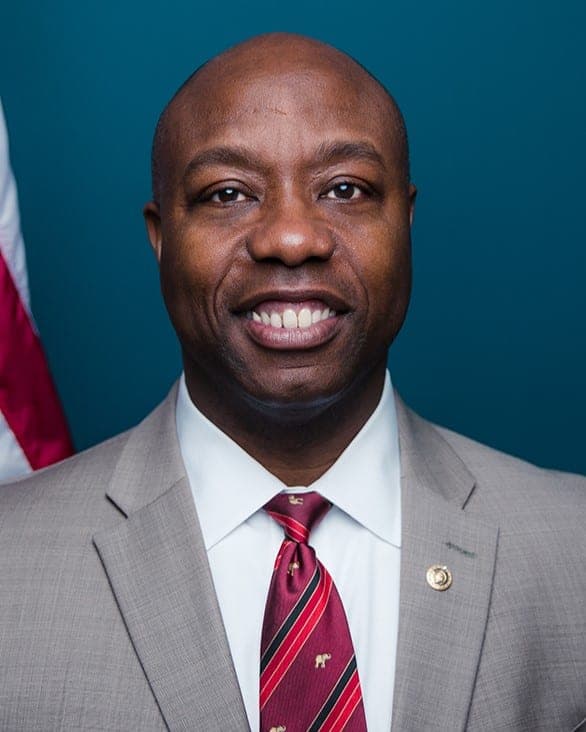
Sen. Scott’s record: sponsored 69 bills this Congress. 10 passed the Senate; 1 became law.
- Christopher A. CoonsD-DEORIGINAL
- John R. CurtisR-UTORIGINAL
- Tim KaineD-VAORIGINAL
- Jacky RosenD-NVORIGINAL
- Raphael G. WarnockD-GAORIGINAL
What readers think
Discussion
Get an alert when it changes stage, gets a floor vote in the Senate, or is signed into law.