Bringing the Discount Window into the 21st Century Act
Requires the Federal Reserve Board to review discount-window operations, plan improvements, and report progress to Congress.
In the Senate Banking, Housing, and Urban Affairs Committee since Sept. 23, 2026, 15 days after it was introduced. Most bills never leave committee.
- INTRODUCEDINTROSEP 23, 2026
- COMMITTEECOMM.IN COMMITTEE
- SENATESENATE—
- HOUSEHOUSE—
- LAWLAW—
What the bill would do, and why it matters
The Federal Reserve’s discount window can provide liquidity to financial institutions. The bill would require the Federal Reserve Board to review how it works, identify problems, and plan improvements. It would also require reports to Congress and ongoing progress checks until the plan is fully implemented.
- INTRODUCED ONLY This bill has been introduced and possibly referred to a committee, but it has not passed any vote. Most introduced bills never become law — they die in committee without a hearing.
- DATA NOTE No Congressional Research Service summary was available.
- Review discount window operations
The Federal Reserve Board would review how Federal Reserve banks’ discount-window lending works, including its ability to provide liquidity during financial stress. The review would cover technology and cybersecurity, agency communications and oversight, operating hours, mobile banking’s effect on liquidity risks, access and pricing, and the stigma associated with using the window.
- Create a plan to fix deficiencies
After the review, the Board, working with the Federal Reserve banks, would identify shortcomings and improvements and write a plan to address them. The plan would set out actions, timelines and milestones, ways to keep improvements in place, and how to manage deficiencies until the plan is fully implemented.
- Report findings and track progress
The Board would send Congress the review findings and plan, after giving specified financial agencies and the Treasury Secretary a chance to comment; the Board Chair would testify about the report at a required semiannual hearing. The Board and the Federal Reserve Board’s and Consumer Financial Protection Bureau’s inspectors general would also submit annual reports on effectiveness and implementation progress.
- End requirements after full implementation
The new requirements would end when the Board tells Congress and posts on its public website that it has fully implemented the remediation plan. Reports could include a confidential annex for information whose public release could affect monetary policy, financial stability, cybersecurity, or the stability of a financial institution.
The discount window is a source of liquidity for financial institutions. The review would examine whether its operations, technology, and coordination can support timely lending, including during financial stress, and whether it can respond to rapid liquidity shortfalls linked to mobile banking and instant communications.
Written from the bill text.
The path it took, step by step
- IntroducedSEP 23, 2026SENATESEP 23, 2026By Sen. Masto with 1 original cosponsorReferred to Banking, Housing, and Urban Affairs
- SAME DAYNOWSenate committeeSEP 23, 2026BANKING, HOUSING, & URBAN AFFAIRS NOWSEP 23, 2026In committee for 15 daysNo hearing yet
- 15 DAYS SO FARPassed the Senate—SENATE FLOOR—Not scheduled
- House committee—HOUSE—
- Passed the House—HOUSE FLOOR—Not scheduled
- Resolve differencesONLY IF NEEDEDBOTH CHAMBERSONLY IF NEEDEDSkipped if the other chamber passes the same text
- Signed into law—PRESIDENT—10 days to sign or veto
- SEP 232026SEP 23, 2026REFERREDRead twice and referred to the Committee on Banking, Housing, and Urban Affairs.
- SEP 232026SEP 23, 2026INTRODUCEDSENATEIntroduced in Senate
At day 15, this bill is already older than 4% of the laws passed this Congress were when they were signed.
Where your members stand on it
Support from one state
Plus the sponsor, a Democrat. Every cosponsor is from one party.
Plus the sponsor, a Democrat. Every cosponsor is from one party.
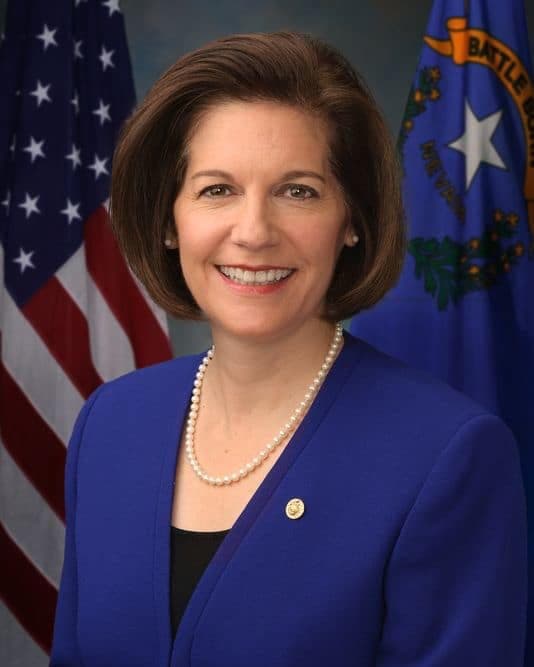
Sen. Cortez Masto’s record: sponsored 123 bills this Congress. 14 passed the Senate; 0 became law.
- Mike RoundsR-SDORIGINAL
What readers think
Discussion
Get an alert when it changes stage, gets a floor vote in the Senate, or is signed into law.