Bills · HRES 519
PASSED HOUSE· 119TH CONGRESS
House Res.HRES 519Violent crimeMinnesota
Condemning the attacks on Minnesota lawmakers in Brooklyn Park and Champlin, Minnesota, and calling for unity and the rejection of political violence in Minnesota and across the United States.
INTRO JUN 17· LAST ACTION JUN 25
READING
2MIN
COSPONSORS
7BIPARTISAN
READER REACTIONS0 TOTAL
NO VOTES YET · BE THE FIRST
- Non-binding
LEGISLATIVE PROGRESS
STEP 4 / 8Introduced
In Committee
Reported
Passed House
Passed Senate
Conference
To President
Became Law
WHAT THE BILL DOES
AI-writtenThis resolution matters because it represents a unified stance by the U.S. House of Representatives against political violence, which is a significant issue when divisions run deep. While it doesn't create new laws or allocate funds, it serves as a powerful message that attacks on elected officials, or anyone based on political differences, are unacceptable and threaten the core principles of democracy. If this resolution becomes law (meaning, it passes the House), it demonstrates that Congress is actively acknowledging and responding to acts of violence that target public servants.
Without such a resolution, there would be no formal condemnation from the House regarding these specific tragic events, potentially sending a different message about the seriousness with which political violence is viewed. By passing this resolution, Congress aims to reinforce the importance of civil discourse and the peaceful resolution of disagreements, reminding voters that the safety of representatives and the democratic process itself rely on the rejection of violence.
KEY PROVISIONS
5AI-extractedPROVISION 01
The House strongly condemns the attacks on Minnesota State Senator John Hoffman and State House Speaker Emerita Melissa Hortman and their spouses.
This establishes a clear and unified condemnation of targeted political violence by the federal legislative body.
PROVISION 02
The House honors the lives of Melissa Hortman and Mark Hortman, and wishes Senator John Hoffman and Yvette Hoffman a full recovery, acknowledging their devotion to public service.
This provides formal recognition and respect for the victims and their families from the U.S. House of Representatives.
PROVISION 03
The House honors the courageous law enforcement officers who responded rapidly and apprehended the suspected perpetrator.
This recognizes and supports the crucial role of law enforcement in protecting public safety and responding to violent acts.
PROVISION 04
The House calls on all community leaders and elected officials to publicly and unequivocally denounce political violence.
This encourages a broader, consistent message from all levels of leadership that political violence is unacceptable.
PROVISION 05
The House calls on all people in the United States to unite and reaffirm commitment to a safe, civil, and peaceful democracy.
This promotes a national stance against violent rhetoric and acts, encouraging civic responsibility and unity among the populace.
SPONSORSHIP
1 + 7
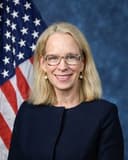
D· Minnesota
YRS IN OFFICE
1
BILLS LED
17
COSPONSOR BREAKDOWNBIPARTISAN · 85%
DEM 3 REP 4 IND 0
ACTION TIMELINE
10 EVENTSJUN 25
Considered as unfinished business. (consideration: CR H2956-2957)
JUN 25
Passed/agreed to in House: On motion to suspend the rules and agree to the resolution, as amended Agreed to by the Yeas and Nays: (2/3 required): 424 - 0 (Roll no. 179). (text: 06/24/2025 CR H2909-2910)
JUN 25
On motion to suspend the rules and agree to the resolution, as amended Agreed to by the Yeas and Nays: (2/3 required): 424 - 0 (Roll no. 179). (text: 06/24/2025 CR H2909-2910)
JUN 25
Motion to reconsider laid on the table Agreed to without objection.
BILL INFO
TypeHouse Resolution
NumberHRES 519
Congress119th
StatusPassed House
IntroducedJun 17, 2025
Last actionJun 25, 2025
READER REACTIONS
OVERALL SENTIMENT
No reactions yet. Be the first to weigh in.
Discussion
Loading comments...
PASSED HOUSE· 119TH CONGRESS · OVERSIGHT AND GOVERNMENT REFORM COMMITTEE · INTRODUCED JUN 17, 2025
House Res.HRES 519Violent crimeMinnesota
Condemning the attacks on Minnesota lawmakers in Brooklyn Park and Champlin, Minnesota, and calling for unity and the rejection of political violence in Minnesota and across the United States.
INTRODUCED JUN 17, 2025· LAST ACTION JUN 25, 2025
PASSAGE CHANCES
—%
READING
2 min
COSPONSORS
7
COMPLEXITY
Moderate