Bills · HR 730
PASSED HOUSE· 119TH CONGRESS
House BillHR 730Adoption and foster careRural conditions and development
Mathematical and Statistical Modeling Education Act
INTRO JAN 24· LAST ACTION MAR 25
READING
12MIN
COSPONSORS
2
READER REACTIONS0 TOTAL
NO VOTES YET · BE THE FIRST
- One chamber only
LEGISLATIVE PROGRESS
STEP 4 / 8Introduced
In Committee
Reported
Passed House
Passed Senate
Conference
To President
Became Law
WHAT THE BILL DOES
AI-writtenVoters should care because this bill addresses a perceived gap between current math education and the skills needed for many high-demand jobs. If passed, it could lead to students being better equipped for careers in rapidly growing fields like data science, artificial intelligence, and engineering, which are crucial for the economy and national competitiveness. This means more job opportunities for young people and a stronger workforce for the country.
Without this bill, the current pace of math education reform might continue to lag behind technological advancements, potentially exacerbating the existing shortage of skilled STEM professionals. This could leave American students less competitive globally and force businesses to spend more on training new hires, impacting economic growth and innovation.
KEY PROVISIONS
4AI-extractedPROVISION 01
Directs the National Science Foundation (NSF) to issue competitive awards to colleges, universities, and non-profit groups for research and development into new ways of teaching mathematical and statistical modeling.
This creates a specific federal mechanism to fund innovation in math education, aiming to make it more relevant to modern careers.
PROVISION 02
Encourages funded projects to focus on "data-driven and computational thinking, problem, project, and performance-based learning," and "interdisciplinary exploration."
This guides the research towards practical, real-world skills that are highly valued in today's workforce.
PROVISION 03
Requires grant applicants to describe how their research will promote engagement and achievement for all students, including those from groups typically underrepresented in STEM fields.
This aims to broaden participation in STEM and ensure that the benefits of modernized math education reach a diverse student population.
PROVISION 04
Encourages partnerships between institutions of higher education, non-profit organizations, and local or Tribal educational agencies in the development and implementation of these new teaching methods.
Such collaborations can help bridge the gap between academic research and practical application in classrooms, ensuring effective implementation.
SPONSORSHIP
1 + 2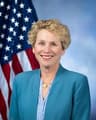
D· Pennsylvania
YRS IN OFFICE
7
BILLS LED
36
COSPONSOR BREAKDOWNBIPARTISAN · 0%
DEM 0 REP 2 IND 0
ACTION TIMELINE
9 EVENTSMAR 25
Received in the Senate and Read twice and referred to the Committee on Health, Education, Labor, and Pensions.
MAR 24
Mr. Babin moved to suspend the rules and pass the bill, as amended.
MAR 24
Considered under suspension of the rules. (consideration: CR H1197-1201)
MAR 24
DEBATE - The House proceeded with forty minutes of debate on H.R. 730.
BILL INFO
TypeHouse Bill
NumberHR 730
Congress119th
StatusPassed House
IntroducedJan 24, 2025
Last actionMar 25, 2025
READER REACTIONS
OVERALL SENTIMENT
No reactions yet. Be the first to weigh in.
Discussion
Loading comments...
PASSED HOUSE· 119TH CONGRESS · SCIENCE, SPACE, AND TECHNOLOGY COMMITTEE · INTRODUCED JAN 24, 2025
House BillHR 730Adoption and foster careRural conditions and development
Mathematical and Statistical Modeling Education Act
INTRODUCED JAN 24, 2025· LAST ACTION MAR 25, 2025
PASSAGE CHANCES
—%
READING
12 min
COSPONSORS
2
COMPLEXITY
Moderate