This bill matters because it directly links U.S. security assistance and foreign policy to specific actions taken by Azerbaijan regarding Armenia and the Nagorno-Karabakh region. If it becomes law, it would significantly change how the U.S. approaches the ongoing conflict and humanitarian concerns in the South Caucasus.
Voters should care because it could shift the balance of U.S. support in a volatile region. If Azerbaijan does not meet the specified conditions, the bill would trigger a review of Armenia's defense needs and could lead to increased U.S. military assistance for Armenia, while simultaneously restricting aid to Azerbaijan. This could impact regional stability, U.S. diplomatic leverage, and the well-being of populations affected by the conflict, including the right of return for ethnic Armenians and the protection of cultural heritage.
KEY PROVISIONS
4AI-extracted
PROVISION 01
Requires the Secretary of Defense to certify, every year, that Azerbaijan has taken meaningful steps towards peace and humanitarian conditions in the region.
This makes U.S. foreign policy conditional, ensuring regular accountability for Azerbaijan's actions.
PROVISION 02
Lists specific actions Azerbaijan must take, including withdrawing military forces from Armenia, releasing Armenian prisoners, ceasing hostilities, and protecting Armenian rights in Nagorno-Karabakh.
These are concrete benchmarks for judging Azerbaijan's compliance and progress towards de-escalation.
PROVISION 03
If Azerbaijan does not meet the conditions, the Secretary of Defense must review Armenia's defense needs and recommend increased security assistance for Armenia.
This directly links Azerbaijan's actions to potential increases in U.S. aid for Armenia's self-defense.
PROVISION 04
If Azerbaijan does not meet the conditions, the President is disqualified from using the Section 907 waiver of the FREEDOM Support Act, which currently allows aid to Azerbaijan despite statutory restrictions.
This would likely halt certain U.S. assistance to Azerbaijan, imposing a direct consequence for non-compliance.
This bill matters because it directly links U.S. security assistance and foreign policy to specific actions taken by Azerbaijan regarding Armenia and the Nagorno-Karabakh region. If it becomes law, it would significantly change how the U.S. approaches the ongoing conflict and humanitarian concerns in the South Caucasus.
Voters should care because it could shift the balance of U.S. support in a volatile region. If Azerbaijan does not meet the specified conditions, the bill would trigger a review of Armenia's defense needs and could lead to increased U.S. military assistance for Armenia, while simultaneously restricting aid to Azerbaijan. This could impact regional stability, U.S. diplomatic leverage, and the well-being of populations affected by the conflict, including the right of return for ethnic Armenians and the protection of cultural heritage.
KEY PROVISIONS
AI-extracted
high
Requires the Secretary of Defense to certify, every year, that Azerbaijan has taken meaningful steps towards peace and humanitarian conditions in the region.
This makes U.S. foreign policy conditional, ensuring regular accountability for Azerbaijan's actions.
high
Lists specific actions Azerbaijan must take, including withdrawing military forces from Armenia, releasing Armenian prisoners, ceasing hostilities, and protecting Armenian rights in Nagorno-Karabakh.
These are concrete benchmarks for judging Azerbaijan's compliance and progress towards de-escalation.
med
If Azerbaijan does not meet the conditions, the Secretary of Defense must review Armenia's defense needs and recommend increased security assistance for Armenia.
This directly links Azerbaijan's actions to potential increases in U.S. aid for Armenia's self-defense.
high
If Azerbaijan does not meet the conditions, the President is disqualified from using the Section 907 waiver of the FREEDOM Support Act, which currently allows aid to Azerbaijan despite statutory restrictions.
This would likely halt certain U.S. assistance to Azerbaijan, imposing a direct consequence for non-compliance.
Not later than 180 days after the date of enactment
Initial certification by the Secretary of Defense regarding Azerbaijan's actions
Not less than annually thereafter
Subsequent annual certifications by the Secretary of Defense regarding Azerbaijan's actions
Not later than 14 days after the date on which certification is required
Immediate review of U.S. security assistance for Armenia if certification is not made
After the date that is 14 days after the date on which certification is required
Disqualification of the FREEDOM Support Act waiver for the President if certification is not made
GLOSSARY
AI-written
Secretary of Defense
The head of the U.S. Department of Defense, responsible for military matters and advising the President on defense policy.
Joint Declaration
A formal statement or agreement between two or more parties. The specific 'Joint Declaration' referred to in this bill is not defined within the text provided.
Sovereign territory
Land that is recognized as belonging entirely to an independent country, meaning that country has full authority and control over it.
Security assistance
Aid provided by the United States to foreign countries to help them improve their defense capabilities, maintain stability, and enhance their security forces. This can include military training, equipment, or financial support.
FREEDOM Support Act Waiver
A specific legal provision that allows the U.S. President to temporarily set aside restrictions on U.S. assistance to Azerbaijan (Section 907 of the FREEDOM Support Act) if it is deemed necessary for U.S. national security interests.
Congressional defense committees
The Committees on Armed Services and Appropriations in both the U.S. Senate and House of Representatives, which are responsible for overseeing military funding and policy.
ACTION TIMELINE
2 EVENTS
DEC 18, 25
Introduced in House
INTROREFERRAL
DEC 18, 25
Referred to the House Committee on Foreign Affairs.
A region in the South Caucasus that is internationally recognized as part of Azerbaijan but has been historically populated and contested by ethnic Armenians.
In the News
10
(opens in new tab)
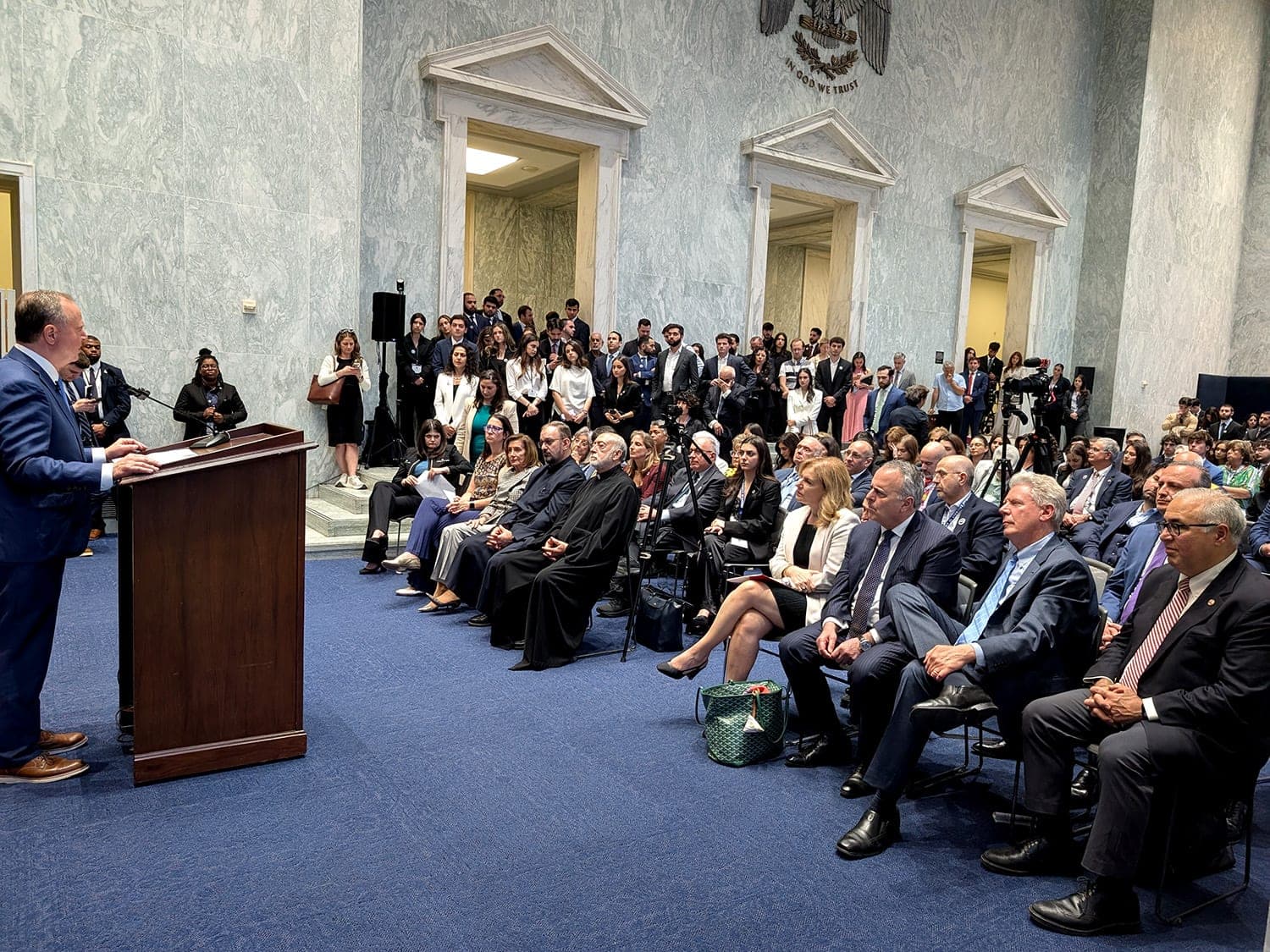
Congressional leaders join Armenian Americans on Capitol Hill in demanding justice for a century of genocide