Bills · HR 4632
IN COMMITTEE· 119TH CONGRESS
House BillHR 4632Government Operations and Politics
Fair Representation Act
INTRO JUL 23· LAST ACTION JUL 23
READING
48MIN
COSPONSORS
7
READER REACTIONS0 TOTAL
NO VOTES YET · BE THE FIRST
- Introduced only
LEGISLATIVE PROGRESS
STEP 2 / 8Introduced
In Committee
Reported
Passed House
Passed Senate
Conference
To President
Became Law
WHAT THE BILL DOES
AI-writtenVoters should care about this bill because it aims to fundamentally reshape the American electoral system for Congress. If it becomes law, it could lead to election winners having broader support, as ranked choice voting ensures the eventual winner has a majority of votes, potentially reducing outcomes where a candidate wins with only a small plurality. The shift to multi-member districts combined with ranked choice voting could also change the dynamics of representation, possibly allowing more diverse candidates or third parties a better chance to win seats, reflecting a wider range of voter preferences.
Perhaps most significantly, the bill directly tackles gerrymandering by requiring nonpartisan criteria for drawing district lines and banning mid-decade redistricting. This means district boundaries would be drawn to create fair, competitive races based on population and geography rather than partisan advantage, addressing a long-standing concern about how electoral maps are manipulated. Without this bill, states would continue to set their own rules for district drawing and voting methods, often resulting in highly partisan maps and winner-take-all elections that can make many votes feel inconsequential.
KEY PROVISIONS
5AI-extractedPROVISION 01
Requires all states to use ranked choice voting (RCV) for elections of Senators and Representatives in Congress.
This changes how voters cast ballots and how winners are determined, ensuring the winning candidate receives majority support.
PROVISION 02
Mandates states with more than one Representative to establish multi-member congressional districts, where several representatives are elected from one large district.
This aims to provide more proportional representation and could give diverse groups a better chance to elect a candidate of their choice.
PROVISION 03
Requires states to conduct congressional redistricting based on nonpartisan criteria, such as population equality, and bans considering political data to favor a party.
This directly addresses gerrymandering, seeking to create fairer districts that are not manipulated for partisan advantage.
PROVISION 04
Prohibits states from drawing new congressional district maps in the middle of a decade.
This prevents politicians from redrawing maps outside the decennial census cycle to gain a political advantage.
PROVISION 05
Applies the enforcement provisions of the Help America Vote Act of 2002 to ensure states comply with the new ranked choice voting requirements.
This provides a legal framework for federal oversight and enforcement of the new election administration rules.
SPONSORSHIP
1 + 7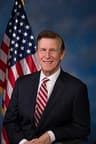
D· Virginia
YRS IN OFFICE
11
BILLS LED
63
COSPONSOR BREAKDOWNBIPARTISAN · 0%
DEM 7 REP 0 IND 0
ACTION TIMELINE
2 EVENTSJUL 23
Introduced in House
JUL 23
Referred to the Committee on the Judiciary, and in addition to the Committee on House Administration, for a period to be subsequently determined by the Speaker, in each case for consideration of such provisions as fall within the jurisdiction of the committee concerned.
BILL INFO
TypeHouse Bill
NumberHR 4632
Congress119th
StatusIn Committee
IntroducedJul 23, 2025
Last actionJul 23, 2025
READER REACTIONS
OVERALL SENTIMENT
No reactions yet. Be the first to weigh in.
Discussion
Loading comments...
IN COMMITTEE· 119TH CONGRESS · JUDICIARY COMMITTEE · INTRODUCED JUL 23, 2025
House BillHR 4632Government Operations and Politics
Fair Representation Act
INTRODUCED JUL 23, 2025· LAST ACTION JUL 23, 2025
PASSAGE CHANCES
—%
READING
48 min
COSPONSORS
7
COMPLEXITY
Moderate