Bills · HR 1600
IN COMMITTEE· 119TH CONGRESS
House BillHR 1600UkraineEurope
Crimea Annexation Non-Recognition Act
INTRO FEB 26· LAST ACTION JAN 8
READING
1MIN
COSPONSORS
13
READER REACTIONS0 TOTAL
NO VOTES YET · BE THE FIRST
- Introduced only
LEGISLATIVE PROGRESS
STEP 2 / 8Introduced
In Committee
Reported
Passed House
Passed Senate
Conference
To President
Became Law
WHAT THE BILL DOES
AI-writtenVoters should care about this bill because it solidifies a core principle of U.S. foreign policy regarding international law and territorial integrity. If this bill becomes law, it legally prevents any future U.S. administration or government agency from unilaterally shifting the U.S. position on Crimea without a new act of Congress. This provides a clear and consistent message to Russia, Ukraine, and the international community that the U.S. stance on the annexation of Crimea remains firm.
Without this bill, while the U.S. currently has a policy of non-recognition, it is not codified into law. This bill would make it a legal requirement for all government actions to align with this policy, ensuring consistency and potentially preventing actions that could be misconstrued as recognition. It signals continued U.S. support for Ukraine's sovereignty and sends a message against territorial conquest by force.
KEY PROVISIONS
2AI-extractedPROVISION 01
Establishes a formal U.S. policy that the Russian Federation's claim of sovereignty over Crimea, its airspace, or its territorial waters is not recognized by the United States.
This provision legally codifies the U.S. government's long-standing policy regarding Crimea, making it a matter of law rather than just executive policy.
PROVISION 02
Prohibits any U.S. federal department or agency from taking actions or extending assistance that implies recognition of Russian sovereignty over Crimea, its airspace, or its territorial waters.
This ensures all branches of the U.S. government consistently adhere to the non-recognition policy in their operations and interactions.
SPONSORSHIP
1 + 13
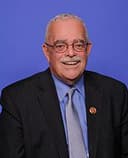
D· Virginia
YRS IN OFFICE
17
BILLS LED
27
COSPONSOR BREAKDOWNBIPARTISAN · 46%
DEM 10 REP 3 IND 0
ACTION TIMELINE
3 EVENTSJAN 8
ASSUMING FIRST SPONSORSHIP - Mr. Walkinshaw asked unanimous consent that he may hereafter be considered as the first sponsor of H.R. 1600, a bill originally introduced by Representative Connolly, for the purpose of adding cosponsors and requesting reprintings pursuant to clause 7 of rule XII. Agreed to without objection.
FEB 26
Introduced in House
FEB 26
Referred to the House Committee on Foreign Affairs.
BILL INFO
TypeHouse Bill
NumberHR 1600
Congress119th
StatusIn Committee
IntroducedFeb 26, 2025
Last actionJan 8, 2026
READER REACTIONS
OVERALL SENTIMENT
No reactions yet. Be the first to weigh in.
Discussion
Loading comments...
IN COMMITTEE· 119TH CONGRESS · FOREIGN AFFAIRS COMMITTEE · INTRODUCED FEB 26, 2025
House BillHR 1600UkraineEurope
Crimea Annexation Non-Recognition Act
INTRODUCED FEB 26, 2025· LAST ACTION JAN 8, 2026
PASSAGE CHANCES
—%
READING
1 min
COSPONSORS
13
COMPLEXITY
Moderate