Bills · HR 1386
IN COMMITTEE· 119TH CONGRESS
House BillHR 1386International Affairs
To establish a Department of State Domestic Protection Mission relating to unmanned aircraft system and unmanned aircraft.
INTRO FEB 14· LAST ACTION FEB 14
READING
13MIN
COSPONSORS
2
READER REACTIONS0 TOTAL
NO VOTES YET · BE THE FIRST
- Introduced only
LEGISLATIVE PROGRESS
STEP 2 / 8Introduced
In Committee
Reported
Passed House
Passed Senate
Conference
To President
Became Law
WHAT THE BILL DOES
AI-writtenIn an era where drones are increasingly accessible, they also pose potential security risks for government facilities, including diplomatic missions, which might be targets for surveillance or attack. Currently, agencies have limited explicit authority to counter these threats. This bill matters because it would give the Department of State specific, broad powers to actively defend its locations against threatening drones, moving beyond current restrictions.
If this bill becomes law, it would significantly boost the State Department's ability to ensure the safety and security of its operations and personnel. However, it also introduces questions about the scope of these powers, how they might intersect with legitimate drone use, and potential implications for privacy, despite provisions for coordination and privacy protection. If the bill doesn't pass, the State Department would continue to rely on existing legal frameworks, which some may view as insufficient to address the rapidly evolving nature of drone threats.
KEY PROVISIONS
5AI-extractedPROVISION 01
Grants the Secretary of State and designated personnel authority to take actions against unmanned aircraft systems or unmanned aircraft posing a credible threat to covered facilities or assets.
This provision fundamentally changes the Department of State's ability to respond to drone incidents at its sites, giving it proactive counter-drone capabilities.
PROVISION 02
Authorizes specific actions against drones, including detecting, identifying, monitoring, tracking, warning, disrupting control, seizing, or using reasonable force to disable, damage, or destroy the drone.
These are broad powers that allow for physical intervention and electronic interference with drones, overriding existing laws related to communications and property.
PROVISION 03
Requires the Department of State to conduct research, testing, training, and evaluation of drone countermeasure equipment, coordinating with the Federal Aviation Administration.
This ensures that any technologies used for countering drones are properly vetted and developed, while also considering their impact on safe air operations.
PROVISION 04
Mandates coordination with the Federal Aviation Administration, the Federal Communications Commission, and the National Telecommunications and Information Administration for all activities and guidance.
This aims to prevent unintended consequences of drone countermeasures on the national airspace, airport operations, and communication systems.
PROVISION 05
Includes privacy protection requirements for intercepted drone communications, ensuring consistency with constitutional rights, limiting retention to 180 days (with exceptions), and restricting disclosure.
Addresses potential civil liberties concerns by setting boundaries on how information from drone communications can be collected, stored, and shared.
SPONSORSHIP
1 + 2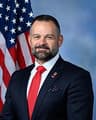
R· Florida
YRS IN OFFICE
3
BILLS LED
30
COSPONSOR BREAKDOWNBIPARTISAN · 0%
DEM 0 REP 2 IND 0
ACTION TIMELINE
3 EVENTSFEB 14
Introduced in House
FEB 14
Referred to the Committee on Foreign Affairs, and in addition to the Committees on Transportation and Infrastructure, the Judiciary, and Energy and Commerce, for a period to be subsequently determined by the Speaker, in each case for consideration of such provisions as fall within the jurisdiction of the committee concerned.
FEB 14
Referred to the Subcommittee on Aviation.
BILL INFO
TypeHouse Bill
NumberHR 1386
Congress119th
StatusIn Committee
IntroducedFeb 14, 2025
Last actionFeb 14, 2025
READER REACTIONS
OVERALL SENTIMENT
No reactions yet. Be the first to weigh in.
Discussion
Loading comments...
IN COMMITTEE· 119TH CONGRESS · TRANSPORTATION AND INFRASTRUCTURE COMMITTEE · INTRODUCED FEB 14, 2025
House BillHR 1386International Affairs
To establish a Department of State Domestic Protection Mission relating to unmanned aircraft system and unmanned aircraft.
INTRODUCED FEB 14, 2025· LAST ACTION FEB 14, 2025
PASSAGE CHANCES
—%
READING
13 min
COSPONSORS
2
COMPLEXITY
Moderate