Bills · HR 1294
IN COMMITTEE· 119TH CONGRESS
House BillHR 1294Immigration
BEST Facilitation Act
INTRO FEB 13· LAST ACTION FEB 13
READING
9MIN
COSPONSORS
4BIPARTISAN
READER REACTIONS0 TOTAL
NO VOTES YET · BE THE FIRST
- Introduced only
LEGISLATIVE PROGRESS
STEP 2 / 8Introduced
In Committee
Reported
Passed House
Passed Senate
Conference
To President
Became Law
WHAT THE BILL DOES
AI-writtenThis bill is important because it seeks to enhance border security and efficiency without solely relying on increasing the number of armed law enforcement officers. Currently, uniformed CBP officers often manage both direct interactions with people and cargo, and the technical review of complex X-ray images. By creating dedicated civilian "Image Technician" roles, this bill aims to free up CBP officers for their frontline duties while ensuring trained experts are focused solely on analyzing inspection images.
If this bill becomes law, it could lead to quicker processing times at ports of entry, benefiting trade and travel, while simultaneously improving the ability to detect illicit drugs, weapons, and human smuggling through specialized image analysis. If the bill does not pass, border operations would likely continue under the current staffing model, potentially missing opportunities for these specialized efficiencies and enhanced detection capabilities.
KEY PROVISIONS
5AI-extractedPROVISION 01
Establishes a pilot program for "Image Technician" positions within the U.S. Customs and Border Protection's Office of Field Operations.
This creates a new, specialized civilian role dedicated to reviewing border inspection images to enhance security.
PROVISION 02
Defines two levels of Image Technicians (IT1 and IT2) with specific duties, where IT2s also interact with the National Targeting Center for intelligence sharing.
This differentiates responsibilities and integrates intelligence sharing for improved threat detection at the border.
PROVISION 03
Specifies that Image Technicians are not law enforcement officers, must be federal employees (not contractors), and can be filled by existing CBP personnel.
This clarifies the civilian nature of the role and offers career development for current staff without expanding the law enforcement footprint.
PROVISION 04
Requires the Executive Assistant Commissioner of the Office of Field Operations to establish five regional command centers where Image Technicians will work.
This centralizes the image analysis function, potentially improving consistency and resource allocation across various ports of entry.
PROVISION 05
Mandates annual and ad hoc training, as well as annual assessments, for Image Technicians on image analysis, privacy, civil rights, and smuggling tactics.
This ensures high levels of skill, accuracy, and adherence to legal standards among the technicians, which is crucial for effective and lawful operations.
SPONSORSHIP
1 + 4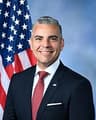
R· Arizona
YRS IN OFFICE
3
BILLS LED
32
COSPONSOR BREAKDOWNBIPARTISAN · 50%
DEM 3 REP 1 IND 0
ACTION TIMELINE
3 EVENTSFEB 13
Introduced in House
FEB 13
Referred to the House Committee on Homeland Security.
FEB 13
Referred to the Subcommittee on Border Security and Enforcement.
BILL INFO
TypeHouse Bill
NumberHR 1294
Congress119th
StatusIn Committee
IntroducedFeb 13, 2025
Last actionFeb 13, 2025
READER REACTIONS
OVERALL SENTIMENT
No reactions yet. Be the first to weigh in.
Discussion
Loading comments...
IN COMMITTEE· 119TH CONGRESS · HOMELAND SECURITY COMMITTEE · INTRODUCED FEB 13, 2025
House BillHR 1294Immigration
BEST Facilitation Act
INTRODUCED FEB 13, 2025· LAST ACTION FEB 13, 2025
PASSAGE CHANCES
—%
READING
9 min
COSPONSORS
4
COMPLEXITY
Moderate