Protecting Kids from Human-Like Chatbots Act
Requires covered AI chatbots to use settings that limit human-like behavior and emotional relationship cues for minors.
In two House committees since Oct. 1, 2026, 7 days after it was introduced. Most bills never leave committee.
- INTRODUCEDINTROOCT 1, 2026
- COMMITTEECOMM.IN COMMITTEE
- HOUSEHOUSE—
- SENATESENATE—
- LAWLAW—
What the bill would do, and why it matters
AI chatbots can hold open-ended conversations that may feel personal to users. The bill would require covered chatbots to use a setting for minors that clearly identifies the system as AI and limits simulated human identity and emotional relationships. It would give parents and schools control over that setting and prohibit companies from nudging minors to turn it off.
- INTRODUCED ONLY This bill has been introduced and possibly referred to a committee, but it has not passed any vote. Most introduced bills never become law — they die in committee without a hearing.
- DATA NOTE No Congressional Research Service summary was available.
- Set a non-personified default for minors
Developers of chatbots reasonably likely to be used by minors would have to design them to start in a non-personified setting unless the developer reasonably determines the user is not a minor. For users providers know or have reason to know are minors, the setting would have to be the default and remain technically separable from other settings.
- Give parents and schools control
Providers would have to offer parental controls so a parent or legal guardian can manage the setting for a minor’s account. In school-managed deployments, an authorized educator could adjust it for a bona fide educational purpose on accounts provisioned by the school.
- Prohibit nudges to change the setting
Developers and providers could not encourage minors, or users whose age has not been determined, to turn off or get around the setting or misrepresent their age. This includes prompts in chatbot responses, interface designs, and claims that disabling the setting would improve the chatbot’s performance or relationship with the user.
- Set guidance and enforce safeguards
The National Institute of Standards and Technology would develop voluntary technical guidance and support voluntary standards, with input from the Federal Trade Commission and the public. The FTC could enforce violations, and state officials could bring civil actions on behalf of residents.
The bill addresses how a chatbot may present itself to a minor and whether it can encourage emotional reliance or continued interaction. The practical stakes are whether minors using covered services receive clear signals that they are interacting with AI, and whether parents or schools can manage the relevant settings.
The bill would make violations enforceable by the FTC and allow state officials to seek relief for residents. It also sets limits on those requirements, including exceptions for services that bar minors and a provision preserving state rules that offer greater protection.
Written from the bill text.
The path it took, step by step
- IntroducedOCT 1, 2026HOUSEOCT 1, 2026By Rep. Whitesides with 3 original cosponsorsReferred to Energy and Commerce and Science, Space, and Technology
- SAME DAYNOWHouse committeesOCT 1, 2026ENERGY & COMMERCE · SCIENCE, SPACE, & TECHNOLOGY NOWOCT 1, 2026In committee for 7 daysNo hearing yet
- 7 DAYS SO FARPassed the House—HOUSE FLOOR—Not scheduled
- Senate committee—SENATE—
- Passed the Senate—SENATE FLOOR—Not scheduled
- Resolve differencesONLY IF NEEDEDBOTH CHAMBERSONLY IF NEEDEDSkipped if the other chamber passes the same text
- Signed into law—PRESIDENT—10 days to sign or veto
- OCT 12026OCT 1, 2026REFERREDReferred to the Committee on Energy and Commerce, and in addition to the Committee on Science, Space, and Technology, for a period to be subsequently determined by the Speaker, in each case for consideration of such provisions as fall within the jurisdiction of the committee concerned.
- OCT 12026OCT 1, 2026INTRODUCEDHOUSEIntroduced in House
At day 7, this bill is already older than 3% of the laws passed this Congress were when they were signed.
Where your members stand on it
A coalition from 3 states
Plus the sponsor, a Democrat. The smaller side has 1 member.
Plus the sponsor, a Democrat. The smaller side has 1 member.
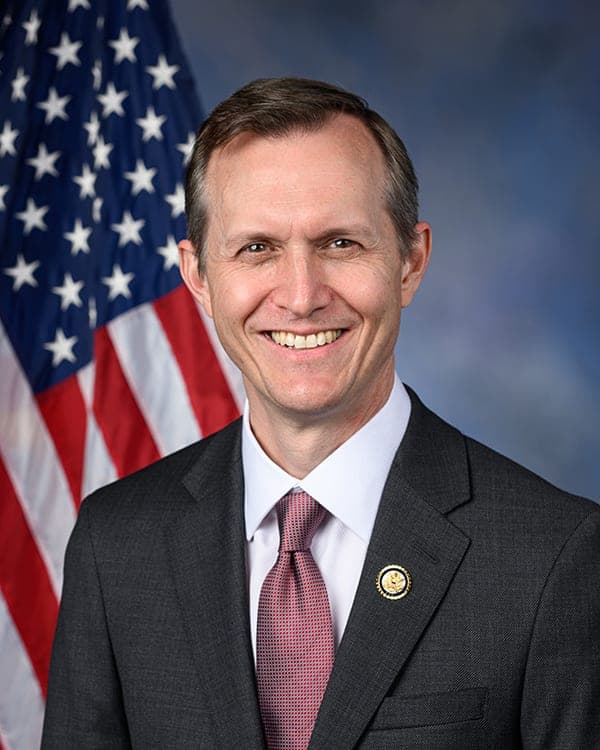
Rep. Whitesides’s record: sponsored 25 bills this Congress. 0 passed the House; 0 became law.
- Mike KennedyR-UT-3ORIGINAL
- Doris O. MatsuiD-CA-7ORIGINAL
- Mariannette Miller-MeeksR-IA-1ORIGINAL
What readers think
Discussion
Get an alert when it changes stage, gets a floor vote in the House, or is signed into law.