First Responder Behavioral Health Access Act
Expands behavioral health grant eligibility and creates a pilot to support care and peer programs for first responders.
In the House Energy and Commerce Committee since Oct. 1, 2026, 7 days after it was introduced. Most bills never leave committee.
- INTRODUCEDINTROOCT 1, 2026
- COMMITTEECOMM.IN COMMITTEE
- HOUSEHOUSE—
- SENATESENATE—
- LAWLAW—
What the bill would do, and why it matters
First responders may need confidential behavioral health care and peer support. The bill would make certain emergency response providers eligible for an existing training grant program and create a three-year grant pilot for counseling, peer programs, and related training. It authorizes $10 million for each of fiscal years 2027 through 2029.
- INTRODUCED ONLY This bill has been introduced and possibly referred to a committee, but it has not passed any vote. Most introduced bills never become law — they die in committee without a hearing.
- DATA NOTE No Congressional Research Service summary was available.
- Open training grants to emergency responders
The bill would make qualified emergency response providers eligible institutions under an existing mental and behavioral health education and training grant program. For these providers, grants could support placing and recruiting clinicians or behavioral health service providers.
- Create a first-responder care pilot
The Health and Human Services secretary would run a three-year grant pilot to help emergency response providers and public safety telecommunicators support their behavioral health needs. Grants could pay for confidential counseling from licensed or certified clinicians, peer counseling programs, program support, or training peer counselors.
- Prioritize under-resourced providers
Eligible grant applicants would include public health departments, behavioral health agencies, and nonprofits experienced in improving first responders’ behavioral health. The secretary would prioritize applicants serving providers with fewer behavioral health and peer-support resources and ensure an equitable geographic distribution of funds.
- Report on pilot results
After the pilot ends, the secretary would report to Congress on whether and how it improved behavioral health outcomes, along with the number of peer-to-peer contacts and peer counselors trained.
The bill does not cite a specific estimate of unmet need or describe a particular crisis. Its practical effect would be to make emergency response providers eligible for an existing training grant program and offer grants for behavioral health care and peer support through a separate pilot.
Written from the bill text.
The path it took, step by step
- IntroducedOCT 1, 2026HOUSEOCT 1, 2026By Rep. Subramanyam with 1 original cosponsorReferred to Energy and Commerce
- SAME DAYNOWHouse committeeOCT 1, 2026ENERGY & COMMERCE NOWOCT 1, 2026In committee for 7 daysNo hearing yet
- 7 DAYS SO FARPassed the House—HOUSE FLOOR—Not scheduled
- Senate committee—SENATE—
- Passed the Senate—SENATE FLOOR—Not scheduled
- Resolve differencesONLY IF NEEDEDBOTH CHAMBERSONLY IF NEEDEDSkipped if the other chamber passes the same text
- Signed into law—PRESIDENT—10 days to sign or veto
- OCT 12026OCT 1, 2026REFERREDHOUSEReferred to the House Committee on Energy and Commerce.
- OCT 12026OCT 1, 2026INTRODUCEDHOUSEIntroduced in House
At day 7, this bill is already older than 3% of the laws passed this Congress were when they were signed.
Where your members stand on it
Support from one state
Plus the sponsor, a Democrat. Every cosponsor is from one party.
Plus the sponsor, a Democrat. Every cosponsor is from one party.
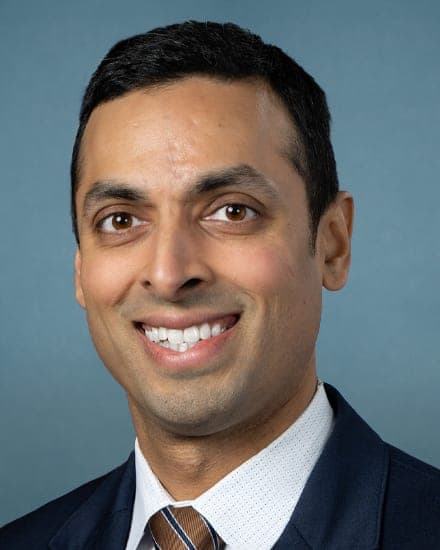
Rep. Subramanyam’s record: sponsored 49 bills this Congress. 2 passed the House; 0 became law.
- John H. RutherfordR-FL-5ORIGINAL
What readers think
Discussion
Get an alert when it changes stage, gets a floor vote in the House, or is signed into law.