Barron’s Law
Tightens commercial-driver eligibility, carrier accountability, and enforcement of domestic hauling rules for foreign carriers.
In the House Transportation and Infrastructure Committee since Sept. 28, 2026, 7 days after it was introduced. Most bills never leave committee.
- INTRODUCEDINTROSEP 28, 2026
- COMMITTEECOMM.IN COMMITTEE
- HOUSEHOUSE—
- SENATESENATE—
- LAWLAW—
What the bill would do, and why it matters
Federal rules determine who can drive commercial trucks and how carriers are held accountable. Barron’s Law would add work-authorization and English-test requirements for commercial drivers, target carriers that evade safety rules under new identities, and tighten enforcement of limits on domestic hauling by foreign carriers. It would also add penalties and require agency reporting and reviews.
- INTRODUCED ONLY This bill has been introduced and possibly referred to a committee, but it has not passed any vote. Most introduced bills never become law — they die in committee without a hearing.
- DATA NOTE No Congressional Research Service summary was available.
- Set driver work-authorization checks
A person would need to be a U.S. citizen, lawful permanent resident, or otherwise authorized under federal law to work in a job that includes driving a commercial motor vehicle. The driver-license information system would show whether the person meets the requirement, but could not store the underlying immigration records.
- Require English proficiency tests
States would have to require applicants to pass a federally approved English test before issuing or renewing a commercial driver’s license or learner’s permit. The test would cover reading signs and safety instructions, understanding spoken and emergency instructions, and completing required records, with procedures for applicants who use American Sign Language.
- Block chameleon carrier registration
The Transportation Department would have to deny registration to a carrier found to be using a new or affiliated identity to evade a safety order or other listed requirements, penalties, enforcement, or insurance consequences. The bill would also allow a fine of up to $25,000, imprisonment for up to one year, or both for knowingly making a materially false statement or using an entity to evade a federal safety sanction.
- Enforce limits on domestic hauling
Foreign motor carriers, foreign motor private carriers, and drivers operating under authority for international transportation could not haul freight between points within the United States unless federal law expressly allows it. A knowing violation could bring a civil penalty of up to $100,000 per vehicle for each day; states would have to cooperate with enforcement or could have 10 percent of specified highway funds withheld.
- Penalize hiring ineligible drivers
A motor carrier found, after notice and a chance for a hearing, to have knowingly employed or contracted with an operator ineligible under federal law would face a civil penalty of at least $25,000 per offense. If the conduct results in serious injury or death, the minimum would be $100,000.
- Require reports and an enforcement pilot
Transportation and Homeland Security officials would report annually on implementation and enforcement. The bill would also create a technology pilot to identify unlawful domestic hauling by foreign-domiciled carriers, require a report on cross-border data-sharing gaps, and direct the Comptroller General to evaluate implementation and effectiveness.
The bill’s stated purpose is to strengthen commercial motor vehicle safety and accountability, prevent carriers from evading safety requirements under new identities, and improve enforcement of driver eligibility and domestic-hauling rules. It seeks to make driver licensing, carrier registration, and enforcement information more connected across federal and state systems.
The changes would also put new compliance duties on states and carriers and give agencies additional enforcement tools. The bill includes penalties for violations and a possible reduction in specified highway funds for states that do not cooperate.
Written from the bill text.
The path it took, step by step
- IntroducedSEP 28, 2026HOUSESEP 28, 2026By Rep. Gill with 3 original cosponsorsReferred to Transportation and Infrastructure
- SAME DAYNOWHouse committeeSEP 28, 2026TRANSPORTATION & INFRASTRUCTURE NOWSEP 28, 2026In committee for 7 daysNo hearing yet
- 7 DAYS SO FARPassed the House—HOUSE FLOOR—Not scheduled
- Senate committee—SENATE—
- Passed the Senate—SENATE FLOOR—Not scheduled
- Resolve differencesONLY IF NEEDEDBOTH CHAMBERSONLY IF NEEDEDSkipped if the other chamber passes the same text
- Signed into law—PRESIDENT—10 days to sign or veto
- SEP 282026SEP 28, 2026REFERREDHOUSEReferred to the House Committee on Transportation and Infrastructure.
- SEP 282026SEP 28, 2026INTRODUCEDHOUSEIntroduced in House
At day 7, this bill is already older than 3% of the laws passed this Congress were when they were signed.
Where your members stand on it
A coalition from 2 states
Plus the sponsor, a Republican. Every cosponsor is from one party.
Plus the sponsor, a Republican. Every cosponsor is from one party.
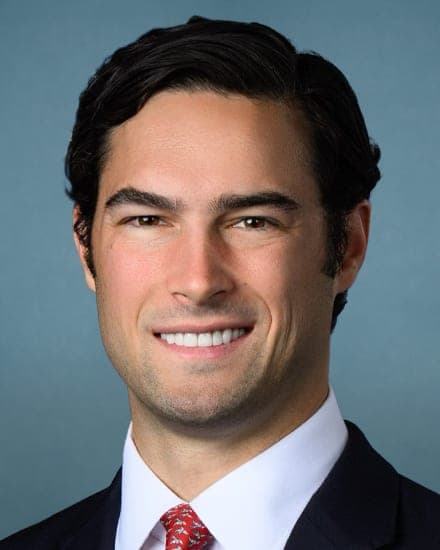
Rep. Gill’s record: sponsored 27 bills this Congress. 2 passed the House; 1 became law.
- Keith SelfR-TX-3ORIGINAL
- Randy K. Weber, Sr.R-TX-14ORIGINAL
- Roger WilliamsR-TX-25ORIGINAL
- Ken CalvertR-CA-41OCT 1, 2026
- Lance GoodenR-TX-5OCT 1, 2026
Coverage at a glance
Outlets that covered this bill, by their lean; 1 more are not rated.
What readers think
Discussion
Get an alert when it changes stage, gets a floor vote in the House, or is signed into law.