Public Access to HHS Health Data Act of 2026
Creates a free online repository for publicly available HHS datasets and requires regular reports to Congress.
In four House committees since Sept. 28, 2026, 8 days after it was introduced. Most bills never leave committee.
- INTRODUCEDINTROSEP 28, 2026
- COMMITTEECOMM.IN COMMITTEE
- HOUSEHOUSE—
- SENATESENATE—
- LAWLAW—
What the bill would do, and why it matters
Public access to government health data depends on whether datasets can be found and used. The bill would require HHS to create an online repository of its publicly available datasets, with free search, download, and automated access. It would also require regular reports to Congress on the data posted and barriers to publishing more.
- INTRODUCED ONLY This bill has been introduced and possibly referred to a committee, but it has not passed any vote. Most introduced bills never become law — they die in committee without a hearing.
- DATA NOTE No Congressional Research Service summary was available.
- Create an online data repository
The HHS Secretary would have to create a repository on opendata.hhs.gov, or a successor website, for all publicly available datasets generated or maintained by the Department of Health and Human Services. The datasets would need to be machine-readable, include metadata, and be available to the public for free access, use, and reuse.
- Make datasets searchable and downloadable
The website would have to let people search, sort, and download datasets at no cost. Standardized interfaces would also support automated retrieval, including bulk downloads and queries, and the website would be updated regularly and on time.
- Report on datasets and publishing limits
The HHS Secretary would report to Congress on the number and types of datasets posted, how often they are updated, and constraints that limit or delay publishing more data. The report would address possible privacy, security, data quality, and resource constraints, among others.
The practical difference would be a single HHS website with consistent ways to find and retrieve the department’s publicly available datasets. The reports would also give Congress information about what is posted, how regularly it is updated, and what constraints affect broader publication.
Written from the bill text.
The path it took, step by step
- IntroducedSEP 28, 2026HOUSESEP 28, 2026By Rep. BentzReferred to Education and Workforce, Energy and Commerce, Natural Resources and Ways and Means
- SAME DAYNOWHouse committeesSEP 28, 2026EDUCATION & WORKFORCE · ENERGY & COMMERCE +2 NOWSEP 28, 2026In committee for 8 daysNo hearing yet
- 8 DAYS SO FARPassed the House—HOUSE FLOOR—Not scheduled
- Senate committee—SENATE—
- Passed the Senate—SENATE FLOOR—Not scheduled
- Resolve differencesONLY IF NEEDEDBOTH CHAMBERSONLY IF NEEDEDSkipped if the other chamber passes the same text
- Signed into law—PRESIDENT—10 days to sign or veto
- SEP 282026SEP 28, 2026REFERREDReferred to the Committee on Energy and Commerce, and in addition to the Committees on Ways and Means, Education and Workforce, and Natural Resources, for a period to be subsequently determined by the Speaker, in each case for consideration of such provisions as fall within the jurisdiction of the committee concerned.
- SEP 282026SEP 28, 2026INTRODUCEDHOUSEIntroduced in House
At day 8, this bill is already older than 3% of the laws passed this Congress were when they were signed.
Where your members stand on it
Support from one state
Plus the sponsor, a Republican. Every cosponsor is from one party.
Plus the sponsor, a Republican. Every cosponsor is from one party.
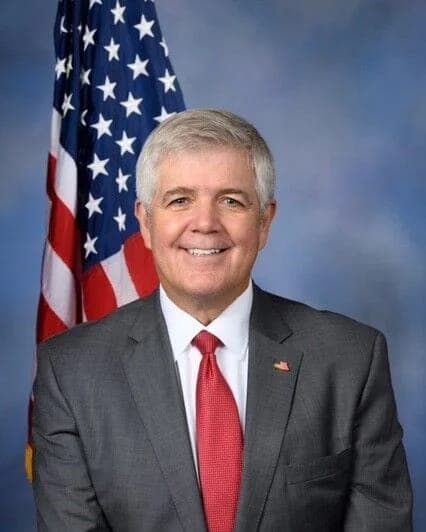
Rep. Bentz’s record: sponsored 17 bills this Congress. 1 passed the House; 0 became law.
- Michael A. RulliR-OH-6OCT 1, 2026
What readers think
Discussion
Get an alert when it changes stage, gets a floor vote in the House, or is signed into law.