Shenandoah VALOR Act
Expands the Shenandoah Valley Battlefields National Historic District into West Virginia and authorizes continued support for its preservation partnership.
In the House Natural Resources Committee since Sept. 24, 2026, 12 days after it was introduced. Most bills never leave committee.
- INTRODUCEDINTROSEP 24, 2026
- COMMITTEECOMM.IN COMMITTEE
- HOUSEHOUSE—
- SENATESENATE—
- LAWLAW—
What the bill would do, and why it matters
Historic districts help preserve and interpret places tied to important events. The Shenandoah Valley Battlefields National Historic District currently covers areas in Virginia. The bill would add parts of Virginia and West Virginia, continue its partnership-based management and support, and authorize funding for operations, site upkeep, grants, technical assistance, and land purchases. It would also request recommendations on using the partnership model elsewhere in the National Park System.
- INTRODUCED ONLY This bill has been introduced and possibly referred to a committee, but it has not passed any vote. Most introduced bills never become law — they die in committee without a hearing.
- DATA NOTE No Congressional Research Service summary was available.
- Expands the historic district
The district would extend beyond Virginia to include Rockbridge County, Virginia, and Berkeley, Jefferson, and Morgan Counties, West Virginia. The bill also changes references to Virginia in the district’s governing law and plan to refer to both states.
- Sets funding levels for the district
For fiscal year 2027 and each year after, the bill authorizes $1,250,000 annually for the management entity, with up to $625,000 for its operations and up to $625,000 for battlefield parks, visitor facilities, and preserved historic properties. For fiscal years 2027 through 2033, it also authorizes $2,500,000 each year for grants, technical assistance, and land acquisition from willing sellers.
- Continues support under a partnership model
The management entity would continue to manage the district as a distinct National Historic District partnership model, with the plan updated as needed for the added areas. The district and management entity would continue to receive at least the amount of management and administration funding provided in fiscal year 2026 and remain eligible for technical assistance and grants available to National Heritage Areas; the district would not be subject to certain administrative rules and funding formulas for that system.
- Requests recommendations for other locations
The Secretary of the Interior would report to Congress within two years after enactment with recommendations for replicating the district’s partnership model at other locations in the National Park System.
The bill would extend the district’s historic-preservation partnership across state lines and provide funding authorizations for its management, facilities, grants, and possible land acquisitions. It would also preserve the district’s eligibility for certain National Heritage Area support while exempting it from some of that system’s administrative rules and funding formulas.
The proposed report would examine whether the district’s partnership approach could be used at other National Park System locations.
Written from the bill text.
The path it took, step by step
- IntroducedSEP 24, 2026HOUSESEP 24, 2026By Rep. Moore with 12 original cosponsorsReferred to Natural Resources
- SAME DAYNOWHouse committeeSEP 24, 2026NATURAL RESOURCES NOWSEP 24, 2026In committee for 12 daysNo hearing yet
- 12 DAYS SO FARPassed the House—HOUSE FLOOR—Not scheduled
- Senate committee—SENATE—
- Passed the Senate—SENATE FLOOR—Not scheduled
- Resolve differencesONLY IF NEEDEDBOTH CHAMBERSONLY IF NEEDEDSkipped if the other chamber passes the same text
- Signed into law—PRESIDENT—10 days to sign or veto
- SEP 242026SEP 24, 2026REFERREDHOUSEReferred to the House Committee on Natural Resources.
- SEP 242026SEP 24, 2026INTRODUCEDHOUSEIntroduced in House
At day 12, this bill is already older than 3% of the laws passed this Congress were when they were signed.
Where your members stand on it
A coalition from 2 states
Plus the sponsor, a Republican. The smaller side has 6 members.
Plus the sponsor, a Republican. The smaller side has 6 members.
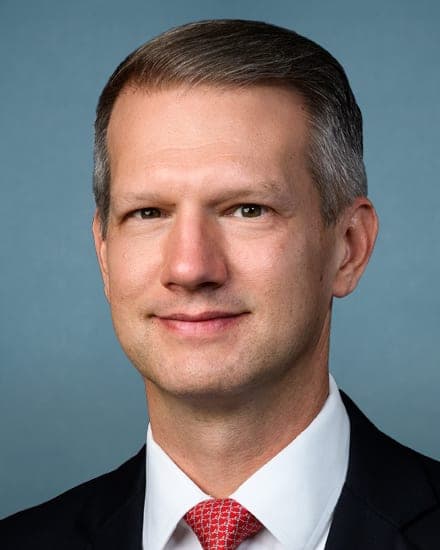
Rep. Moore’s record: sponsored 18 bills this Congress. 1 passed the House; 0 became law.
- Donald S. Beyer, Jr.D-VA-8ORIGINAL
- Ben ClineR-VA-6ORIGINAL
- H. Morgan GriffithR-VA-9ORIGINAL
- Jennifer A. KiggansR-VA-2ORIGINAL
- Jennifer L. McClellanD-VA-4ORIGINAL
- John J. McGuire IIIR-VA-5ORIGINAL
- Carol D. MillerR-WV-1ORIGINAL
- Bobby ScottD-VA-3ORIGINAL
- Suhas SubramanyamD-VA-10ORIGINAL
- Eugene Simon VindmanD-VA-7ORIGINAL
- James R. WalkinshawD-VA-11ORIGINAL
- Robert J. WittmanR-VA-1ORIGINAL
What readers think
Discussion
Get an alert when it changes stage, gets a floor vote in the House, or is signed into law.