Students Not Profits Act of 2026
Ends federal student aid eligibility for for-profit institutions and adds safeguards for nonprofit colleges.
In the House Education and Workforce Committee since Sept. 24, 2026, 14 days after it was introduced. Most bills never leave committee.
- INTRODUCEDINTROSEP 24, 2026
- COMMITTEECOMM.IN COMMITTEE
- HOUSEHOUSE—
- SENATESENATE—
- LAWLAW—
What the bill would do, and why it matters
Federal student aid is available to eligible colleges and other higher education institutions under rules in the Higher Education Act. The Students Not Profits Act would make for-profit institutions ineligible for that aid and add conditions for schools to qualify. It would also tighten rules for nonprofit conversions and impose new accountability requirements related to some school closures and borrower-defense claims.
- INTRODUCED ONLY This bill has been introduced and possibly referred to a committee, but it has not passed any vote. Most introduced bills never become law — they die in committee without a hearing.
- DATA NOTE No Congressional Research Service summary was available.
- End aid eligibility for for-profit schools
The bill would make for-profit institutions ineligible for federal student aid and revise the Higher Education Act’s definitions and references to proprietary institutions.
- Set rules for nonprofit conversions
A school seeking to convert to nonprofit status would have to show, among other things, that it paid no more than fair value for assets or services from former owners and that outside entities do not control its core functions. The application and the Secretary’s decision would be published for public review, and converted schools would remain subject to rules for proprietary institutions for at least 5 years.
- Add student enrollment requirements
To qualify as an institution of higher education, a school would generally have to limit enrollment in distance education courses to 50 percent of its students, incarcerated students to 25 percent, and students without a high school diploma or equivalent to 50 percent. Exceptions to the distance-learning limit apply to certain public or nonprofit technical and career and technical education schools.
- Require accountability for federal losses
The Secretary would have to require one or more people with substantial control over an institution to assume personal liability for certain financial losses to the federal government, student aid recipients, and other program participants. This applies to losses tied to loan discharges after a school closes or successful borrower-defense claims involving the school.
- Restrict tuition-based recruitment payments
The ban on certain incentive payments would also cover payments to unaffiliated people or entities that provide recruitment services when the payment is based on tuition those services generate for a school.
The bill’s stated purpose is to keep for-profit institutions from receiving federal student aid and to protect the integrity of nonprofit institutions. Its rules would affect which schools can qualify for federal aid and the terms under which a school can represent itself as nonprofit.
The changes would also put more responsibility on people who substantially control a school when certain federal or student losses follow a closure or successful borrower-defense claim.
Written from the bill text.
The path it took, step by step
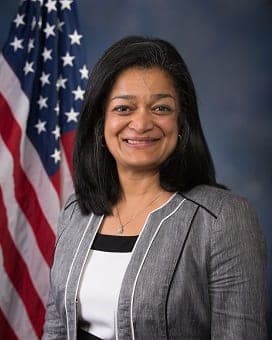
- IntroducedSEP 24, 2026HOUSESEP 24, 2026By Rep. Jayapal with 4 original cosponsorsReferred to Education and Workforce
- SAME DAYNOWHouse committeeSEP 24, 2026EDUCATION & WORKFORCE NOWSEP 24, 2026In committee for 14 daysNo hearing yet
- 14 DAYS SO FARPassed the House—HOUSE FLOOR—Not scheduled
- Senate committee—SENATE—
- Passed the Senate—SENATE FLOOR—Not scheduled
- Resolve differencesONLY IF NEEDEDBOTH CHAMBERSONLY IF NEEDEDSkipped if the other chamber passes the same text
- Signed into law—PRESIDENT—10 days to sign or veto
- SEP 242026SEP 24, 2026REFERREDHOUSEReferred to the House Committee on Education and Workforce.
- SEP 242026SEP 24, 2026INTRODUCEDHOUSEIntroduced in House
At day 14, this bill is already older than 3% of the laws passed this Congress were when they were signed.
Where your members stand on it
A coalition from 4 states
Plus the sponsor, a Democrat. Every cosponsor is from one party.
Plus the sponsor, a Democrat. Every cosponsor is from one party.
Rep. Jayapal’s record: sponsored 51 bills this Congress. 1 passed the House; 0 became law.
- Chuy GarcíaD-IL-4ORIGINAL
- Chellie PingreeD-ME-1ORIGINAL
- Ayanna PressleyD-MA-7ORIGINAL
- Rashida TlaibD-MI-12ORIGINAL
What readers think
Discussion
Get an alert when it changes stage, gets a floor vote in the House, or is signed into law.