John Fetterman stands with the GOP on resolution calling for Donald Trump to end the Iran war
Tillis voiced concerns about the administration’s briefings and the war’s effects, though the article gives conflicting accounts of his vote.

SOURCE CHECK
TAP FOR WHYCredibility rates Wonderwall.com, where this article appeared. The other scores rate the article itself.
The publisher’s recorded credibility rating is 47, and there is no clear page-level evidence that warrants a substantial departure from it. The article includes a Newsweek-specific comment-status line, which raises uncertainty about the page’s reporting provenance.
- Track record — The publisher’s rating of 47 is based on 33 stories and indicates below-average confidence.
- Source type — Recorded as national news, but the available text does not establish the outlet’s reporting standards.
- Transparency — The author is listed as unknown.
- Editorial standards — The text contains conflicting descriptions of two senators’ votes.
The article includes vote tallies, statements attributed to named senators and advocates, and a poll result. However, it gives contradictory accounts of Collins’s and Tillis’s votes, and offers limited independent context for the legal and political claims.
HOW WE SCORE ↗The article presents arguments for and against the resolution and includes legal challengers’ claims, but it does not provide a response from the White House and its contradictory descriptions of senators’ votes weaken precision.
- Counterarguments presented — Includes Collins’s argument against the resolution and Tillis’s concerns about the administration’s handling of the conflict.
- Source diversity — Quotes senators, a lawyer, and an advocacy group executive director; the White House response was still pending.
- Omitted context — The article provides little independent legal or policy analysis of the competing claims.
- Precision — The text gives conflicting accounts of Collins’s and Tillis’s votes.
The article reports the vote, quotes senators on both sides, and includes arguments against the war and in support of the resolution. Its neutral presentation is undermined somewhat by conflicting descriptions of senators’ votes.
- Language tone — Mostly straightforward reporting language without sustained partisan characterization.
- Source selection — Includes statements from senators supporting and opposing the resolution, as well as advocates challenging the war.
- Framing — Frames the story around the Senate vote and political stakes without clear partisan advocacy.
Original publisher not identified
This article may be republished from another publisher, which has not been identified, so the scores are Wonderwall.com's own.
The Senate rejected a resolution directing President Donald Trump to withdraw U.S. forces from the conflict with Iran, 49-50. The article describes Sen. John Fetterman as the lone Democrat voting against it, while its accounts of Susan Collins’s and Thom Tillis’s votes conflict.
The article reports that the Senate rejected the Iran war powers resolution 49-50, with John Fetterman the lone Democrat voting against it. It says the measure was based on H.Con.Res. 89, which passed the House 214-208. The article gives conflicting accounts of Susan Collins’s and Thom Tillis’s votes: its opening says both supported the measure, while later passages say Collins opposed it and Tillis ultimately voted against it.
Tillis said he needed answers about the conflict and criticized the administration’s lack of briefings, while Collins said the resolution would send the wrong message to Iran and U.S. troops. The article also describes a lawsuit challenging the military campaign’s constitutionality, a separate resolution introduced by Rep. Gregory Meeks, and polling that found 64 percent of respondents did not believe the United States was winning the war.
Community verdict
11 VOTES
People in this story
SWIPE →Senator whose vote and statements about the resolution and Iran conflict are discussed
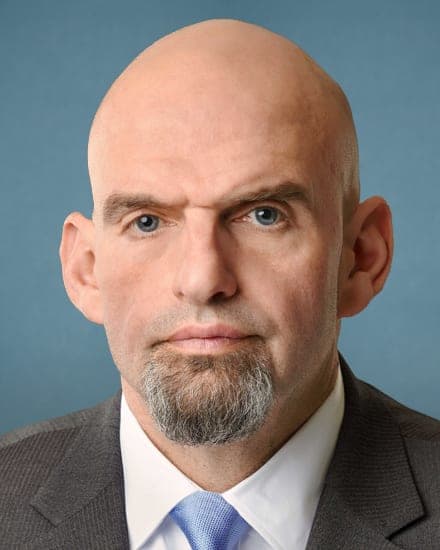
Senator who voted against the resolution
Fetterman's version of this story ↗
Representative who introduced a resolution seeking legal action over the war

Senator whose vote and objection to the resolution are described

President targeted by the withdrawal resolution and the legal challenge

Senator reported to have supported the resolution
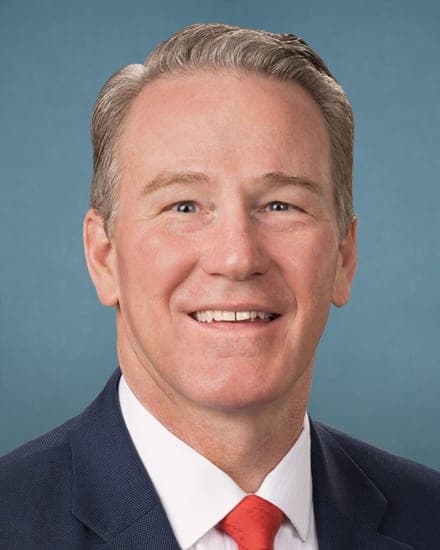
Senator who opposed the resolution despite saying the war should end quickly

Senator who did not vote on the resolution

Senator reported to have opposed the resolution

Democratic Senate candidate running against Husted

Senator reported to have supported the resolution
Part of a bigger story
12 OUTLETSThe Senate rejected, 49-50, a resolution seeking to end the Iran conflict, and Tillis was among the Republicans who supported it. Left-leaning outlets cast the defections as a possible break with Trump and stress the gap between Republicans’ stated desire to end the war and votes against restraining him. Center outlets focus on the failed vote as a test of congressional authority and the political rift among Republicans, including Tillis’s stated concerns about authorization, costs and the war’s direction. Right-leaning outlets emphasize Republicans’ effort to limit Trump’s authority and the oversight and political stakes.
- ARTICLES
- 12
- OUTLETS
- 12
- AVG CRED
- 67
Discussion · 0
Loading comments…